

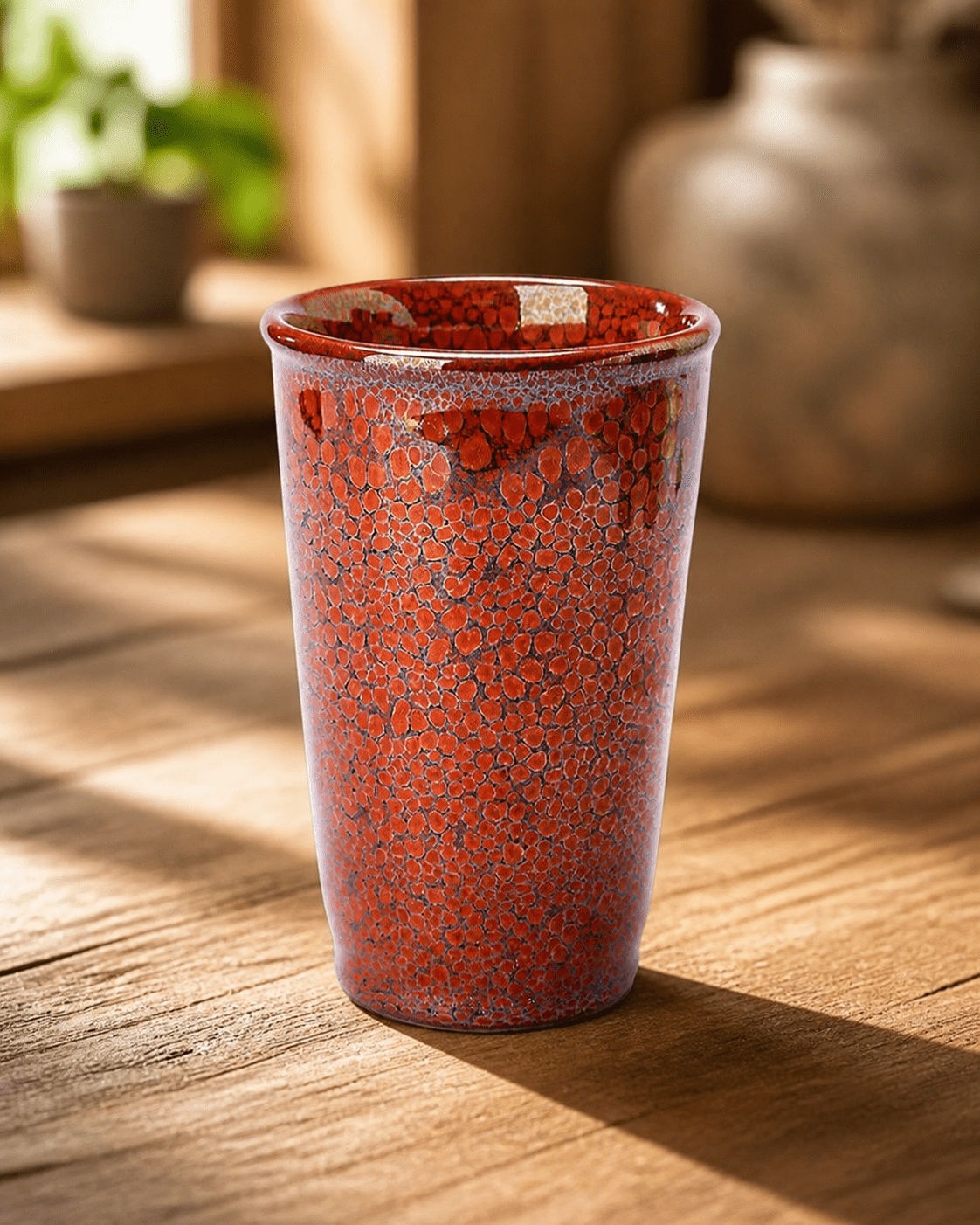

Tenmoku Tea Bowl Authenticity Guide: Buy the Real Beauty, Avoid the Fake
A real tenmoku tea bowl, also called Jianzhan in its Chinese origin, is a high-fired ceramic cup known for an iron-rich glaze that blooms into natural patterns during firing. If you use it for gongfu tea, a quiet evening tea ceremony, or as a thoughtful gift for tea lovers, authenticity matters because the beauty comes from kiln transformation, not painted decoration.
The fastest answer: look for a dense iron clay body, natural glaze movement, subtle variation inside the cup, and believable craftsmanship. A fake often looks too perfect, too glossy, too light, or too obviously decorated.

Key takeaways: how can beginners spot a real tenmoku tea bowl?
- Authentic Jianzhan is usually heavier than it looks because it uses dense, iron-bearing clay and high-temperature firing.
- The glaze should feel alive: oil spots, hare's fur, or partridge feather patterns should vary naturally across the surface.
- Look inside the bowl. Real glaze effects often deepen, pool, or shift at curves and near the bottom.
- Avoid pieces with identical dots or stripes. Repetition can signal transfer printing, spray decoration, or low-cost imitation.
- Price can be a clue, not proof. Extremely cheap “museum-grade” claims are a warning sign.
- Buy from sellers who explain origin, clay, firing, and artist process, not just decorative buzzwords.
For a curated starting point, Explore our handmade Jianzhan tea cups and compare shapes, glaze styles, and cup sizes before you buy.
What is a tenmoku tea bowl, and why is authenticity so important?
A tenmoku tea bowl is a dark-glazed tea vessel connected to the Jian kilns of Fujian, China, and later admired in Japan. In the Song Dynasty, Jianzhan bowls were prized for whisked tea because the dark glaze highlighted pale tea foam. Japanese monks brought similar bowls back to Japan, where the name “tenmoku” became closely associated with tea culture and japanese pottery collecting.
Today, many US buyers discover tenmoku through matcha, sencha, oolong, or gongfu tea. The challenge is that “tenmoku” is now used broadly online. Some listings describe any dark cup with shiny spots as tenmoku, even when it is not made with traditional materials or firing methods.
Authenticity matters for three reasons. First, an authentic bowl carries the character of kiln transformation: minerals, flame, oxygen, temperature, and chance working together. Second, it affects price and collectability. Third, if you are buying a gift, an authentic piece feels meaningful because it represents hand skill, not mass decoration.
Think of it like buying a natural leather bag versus a printed leather-look accessory. Both may be useful, but only one has the material depth, aging character, and craft story buyers expect at a premium level.
How to identify real jian zhan from clay, weight, and foot ring?
If you are wondering how to identify real jian zhan, start with the body of the cup before getting dazzled by the glaze. Traditional Jianzhan uses local clay rich in iron. After high-temperature firing, the clay body often appears dark gray, black-brown, or iron-toned where unglazed areas are visible.
The cup should usually feel substantial in the hand. It does not need to be clunky, but an authentic Jianzhan tea cup often has a reassuring density. Very light pieces can still be handmade ceramics, but if the seller claims traditional Jianzhan and the piece feels like thin hotel porcelain, ask questions.
Next, examine the foot ring. The unglazed foot can reveal a lot. On many real pieces, you will see a rougher clay texture, trimming marks, and natural color variation. The base should not look like perfectly white porcelain if the listing claims iron-rich Jian ware. Some modern makers polish or refine the foot more than historical examples, but the clay should still make sense.
Here are practical signs to check:
- Clay color: dark, iron-toned, or brown-black exposed clay is more consistent with Jianzhan.
- Foot ring: hand-trimmed marks are common; a molded-looking base may suggest mass production.
- Wall thickness: many pieces feel robust, especially compared with delicate porcelain teacups.
- Sound: when gently tapped, high-fired ceramics often have a clear tone, though this is not a stand-alone test.
- Interior depth: real bowls often have glaze pooling, subtle speckles, and depth under the surface.
Do not rely on one sign alone. Fakes have improved. Instead, build a full picture: clay, glaze, process, seller transparency, and price all need to align.
Real vs fake tenmoku: what glaze clues should you look for?
The phrase real vs fake tenmoku often comes down to the glaze. Traditional tenmoku effects are produced by an iron-rich glaze reacting in a kiln. The minerals separate, crystallize, streak, or form spots depending on the firing atmosphere and cooling process.
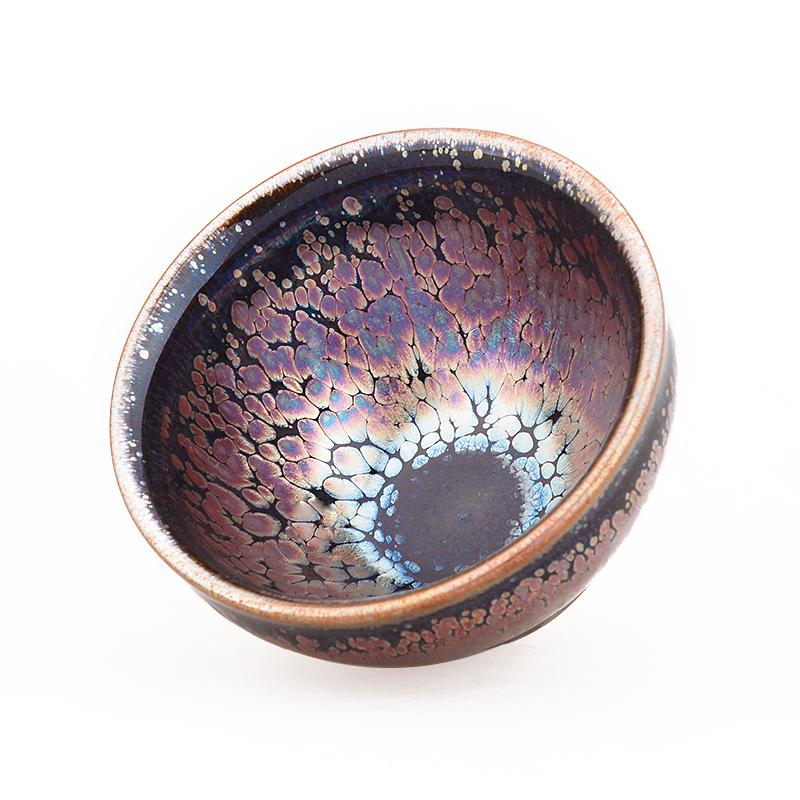
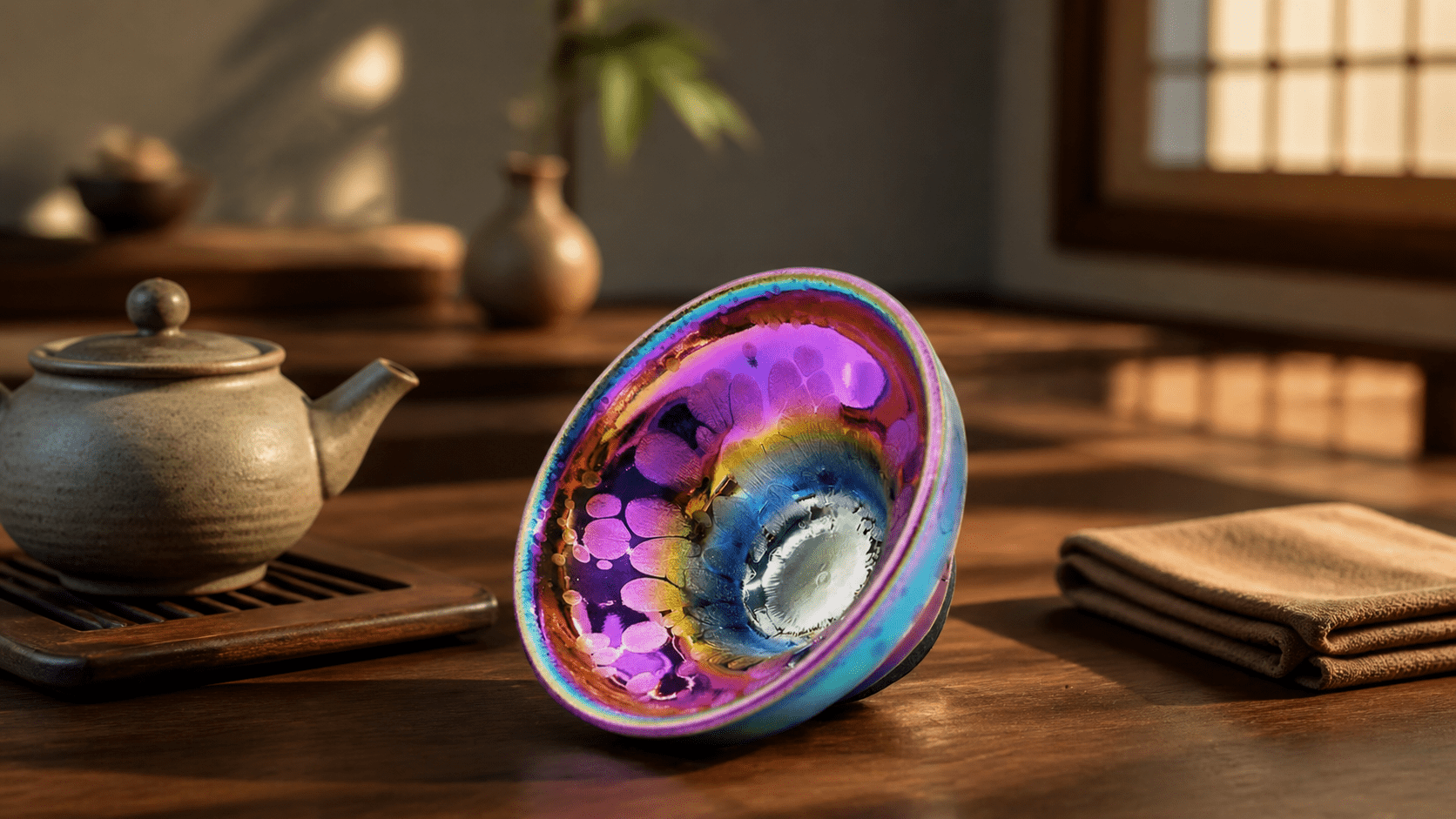
Real patterns are rarely perfectly uniform. In a true oil spot tenmoku cup, the spots may vary in size, brightness, spacing, and color. Some appear silver, bronze, blue, or gold under different light. The effect should look embedded in or emerging from the glaze, not sitting on top like glitter paint.
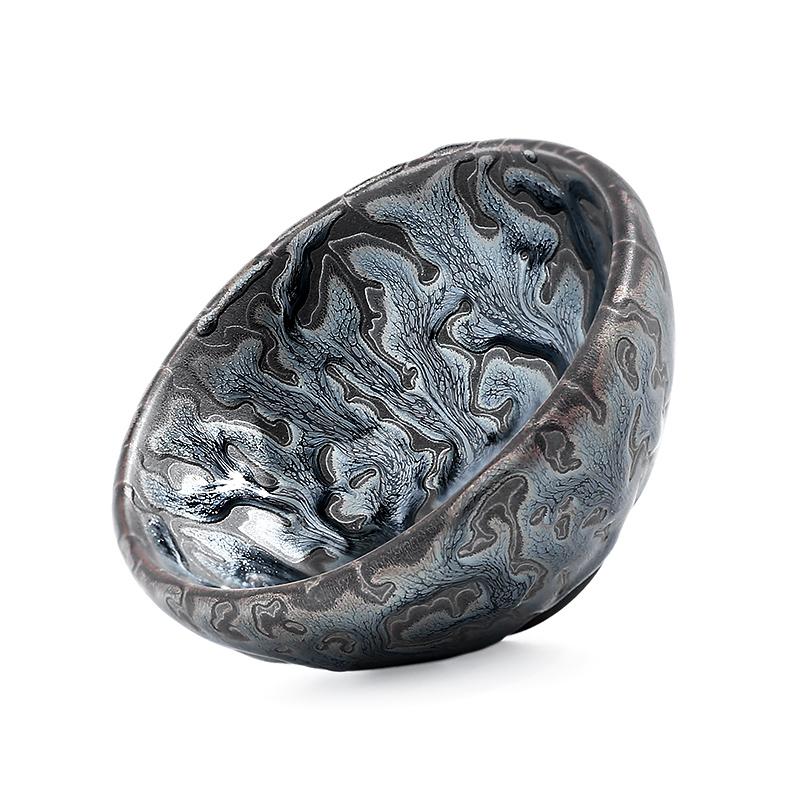
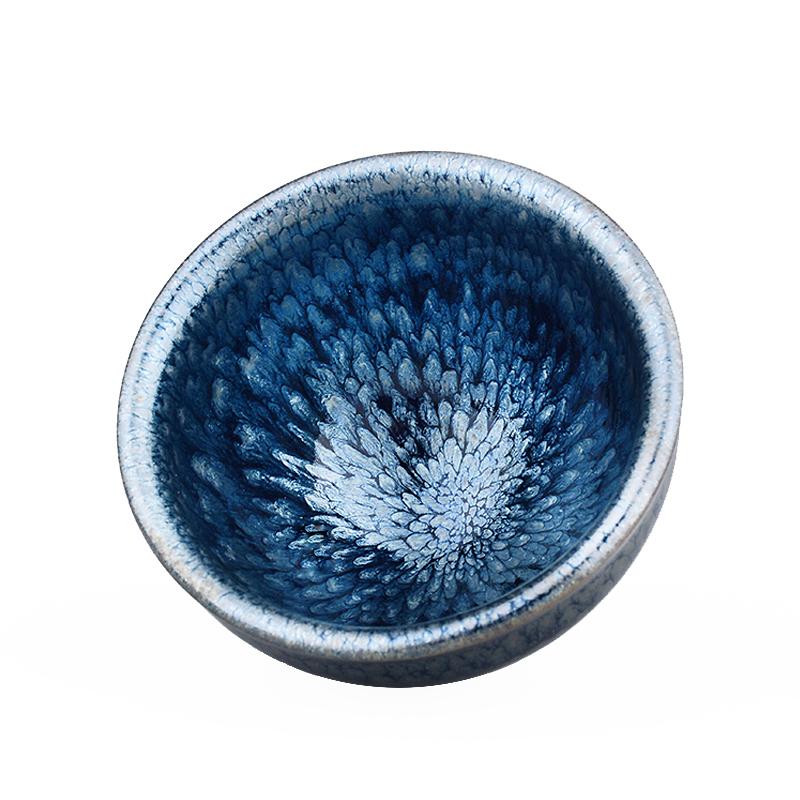
Common authentic pattern names include hare's fur, where the glaze forms fine vertical streaks, and partridge feather, where feather-like mottling appears across the surface. These names are poetic, but they also describe real visual structures formed in the kiln.
Fake or low-quality decorative versions may show:
- Dots that are identical in size and spacing, like a printed fabric pattern.
- Metallic paint sitting on the surface rather than integrated into the glaze.
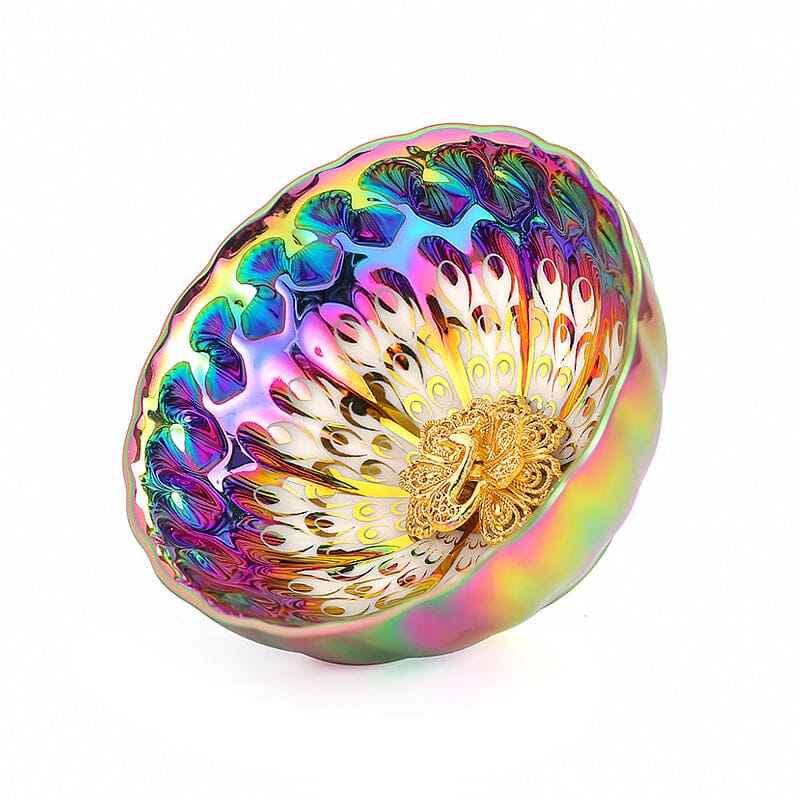
- Overly bright rainbow coating with no depth when viewed from an angle.
- Patterns that stop abruptly at edges or look masked off.
- A plastic-like gloss that feels more like coating than fired ceramic glaze.
When possible, rotate the bowl under natural light. A real tenmoku tea bowl often reveals different tones as the angle changes. The glaze may look quiet in one position and luminous in another. That subtle shift is part of the charm.
Jian zhan oil spot vs fake: what are the most common imitation methods?
The search for jian zhan oil spot vs fake is popular because oil spot glaze is one of the most copied styles. Genuine oil spot effects are difficult to control. The spots form through iron crystals and kiln atmosphere, which means each cup is unique.
Common fakes use shortcuts. Some are spray-painted with metallic dots, then covered with a clear coat. Some use decals or transfer printing. Others are ordinary black ceramics decorated with chemical luster finishes. These can look flashy in product photos, especially under studio lights, but they often lack depth in person.
Here is a comparison table to help beginners evaluate a cup before buying:
| Feature | Authentic Jianzhan / Tenmoku | Common Fake or Imitation |
|---|---|---|
| Glaze pattern | Natural variation, uneven spacing, depth under the surface | Identical dots, printed look, overly uniform pattern |
| Material | Iron-rich clay and iron-rich glaze, high-fired | Generic ceramic, porcelain, or coated stoneware |
| Foot ring | Dark clay body, trimming marks, honest handmade details | White base, molded look, or hidden with heavy coating |
| Visual effect | Changes with light angle; subtle metallic or mineral glow | Flat shine, glittery surface, or painted metallic dots |
| Seller information | Explains origin, glaze type, firing, size, and care | Uses vague claims like “ancient royal cup” with no details |
| Price signal | Varies by maker and glaze success; usually not suspiciously cheap | Very low price paired with exaggerated rarity claims |
If you love the oil spot look, Discover our collection of oil spot tenmoku cups and study how each handmade cup has its own pattern personality.
How does Japanese tenmoku for sale differ from Chinese Jianzhan?
Many US shoppers search for japanese tenmoku for sale because tenmoku is closely associated with Japan and Japanese tea culture. The distinction can be confusing: Jianzhan is the Chinese origin tradition, while tenmoku is the Japanese name that became widely used after these bowls entered Japan and influenced tea practice.
In Japan, tenmoku bowls became important in the tea ceremony, especially among collectors and tea masters who admired Chinese Song Dynasty ceramics. Over time, Japanese kilns also created their own tenmoku-style glazes. These can be authentic Japanese pottery, but they are not necessarily Jianzhan from the original Jian kiln tradition.
That does not mean one is “better” than the other. It means you should know what you are buying. A Japanese tenmoku bowl may be a beautiful handmade piece from a Japanese ceramic artist. An authentic Jianzhan tea cup should connect to the Jianzhan material and firing tradition, often referencing Fujian clay, iron glaze, and kiln transformation.
Before purchasing, read the listing carefully:
- If it says Japanese tenmoku, look for the kiln, artist, region, and clay description.
- If it says Jianzhan, look for iron-rich body, high firing, and glaze type such as oil spot, hare's fur, or partridge feather.
- If it says both but gives no details, contact the seller.
For premium lifestyle buyers, the best choice is not only about national origin. It is about whether the object is honestly described, beautifully made, and suitable for the way you drink tea.
What process markers reveal an authentic jian zhan tea cup?
An authentic jian zhan tea cup carries signs of process. Handmade does not mean messy; it means the maker's decisions are visible in balanced proportions, trimmed foot details, glaze application, and firing results.
Look for natural glaze flow. On many real pieces, the glaze thickens near the lower wall or foot area. You may see a small area where the glaze stops before the foot ring, because the maker avoids having molten glaze stick to the kiln shelf. This is normal and often desirable.
Also look at the lip. A well-made tenmoku tea bowl should feel comfortable when drinking. The lip may be slightly rounded, not sharp. For gongfu tea, smaller cups should pour and sip comfortably. For matcha-style use, a larger bowl may be more appropriate.
Process markers can include:
- Hand-thrown or carefully formed profile: slight human variation without warping that affects use.
- Controlled glaze line: glaze stops cleanly before the foot or shows intentional movement.
- Kiln-transformed surface: depth, mineral activity, and non-repeating pattern.
- Functional balance: the bowl sits flat and feels stable in the hand.
- Honest imperfections: tiny pinholes or subtle firing marks can appear, but cracks, sharp burrs, or leaking are defects.
Some sellers overuse the word “flawless.” With Jianzhan, the more important word is “alive.” The cup should feel like a ceramic landscape: controlled by the maker, completed by fire.
What common fake tenmoku claims should buyers avoid?
Fakes often sell a fantasy, not a cup. Be careful with listings that promise “ancient Song Dynasty original” at a low price, “royal museum quality” without documentation, or “one-of-one masterwork” while showing dozens of identical product photos.
Another common tactic is overusing Japanese and Chinese terms to create confusion. A listing might say “Japan Song Dynasty Jianzhan Tenmoku Yohen National Treasure Style Cup” without explaining where the cup was made or how the glaze was fired. Big words do not equal authenticity.
Watch for these red flags:
- Stock photos only: no image of the exact cup you will receive.
- No base photo: sellers hide the foot ring because it reveals generic clay.
- Too many perfect pieces: kiln transformation creates variation; identical results are suspicious.
- Unrealistic discounts: a $300 “master” cup always on sale for $19 may not be what it claims.
- No care instructions: serious sellers usually explain cleaning, first use, and safe tea use.
Do not be afraid to ask for extra photos in natural light. A reputable seller should be comfortable showing the interior, exterior, foot ring, and lip. For premium gifts, this extra step is worth it.
How should you choose a real tenmoku tea bowl for gongfu tea or gifting?
Once authenticity checks out, choose based on use. For gongfu tea, smaller cups are popular because they focus aroma and allow repeated short infusions. A 60–120 ml cup often works well for oolong, pu-erh, black tea, and roasted teas. For matcha or a more formal tea ceremony setting, you may want a wider bowl.
If buying a gift for tea lovers, consider the recipient's style. A quiet black hare's fur cup feels refined and classic. A bold oil spot tenmoku cup feels dramatic and collectible. A partridge feather pattern offers a softer, organic look that pairs well with wood trays and neutral interiors.

For US buyers, also consider practical details: Is the cup size listed in ounces or milliliters? Is it ready to ship domestically? Does the product page show the exact item? Is the return policy clear? These details matter when buying ceramics online.
A good tenmoku tea bowl is not just a display object. It should invite use. The best piece is one you want to reach for during a quiet morning, after dinner, or when serving tea to a friend.
FAQ: real vs fake tenmoku tea bowl questions
How to identify real jian zhan if I am buying online?
Ask for clear photos of the exact cup, including the interior, exterior, foot ring, and lip. Look for dark iron-rich clay, natural glaze variation, and seller details about firing and origin. Avoid listings that use only stock photos or vague claims.
Real vs fake tenmoku: is a perfect pattern a bad sign?
Not always, but extreme perfection is suspicious. Real tenmoku glaze forms through kiln chemistry, so patterns usually vary. Identical dots, perfectly repeated streaks, or a printed look may indicate decoration rather than kiln transformation.
What is the difference between authentic jian zhan and Japanese tenmoku?
Authentic Jianzhan refers to the Chinese Jian ware tradition, typically using iron-rich clay and glaze. Japanese tenmoku refers to bowls and glaze styles admired and developed in Japan. Both can be authentic, but they should be described accurately.
Jian zhan oil spot vs fake: can metallic spots be painted?
Yes. Some fakes use metallic paint, decals, or luster coatings to imitate oil spots. Real oil spots should appear integrated into the glaze and show depth, variation, and light response rather than sitting flat on the surface.
Is an authentic jian zhan tea cup safe to drink from?
A properly made modern Jianzhan from a reputable seller should be safe for tea use. Buy from sellers who state that the cup is intended for drinking tea, and avoid unknown decorative pieces with questionable coatings or strong chemical odors.
Does a tenmoku tea bowl need to be expensive to be real?
No. Price depends on maker, size, glaze success, rarity, and finishing quality. However, a very cheap cup marketed as rare, antique, or master-grade should raise caution. Authentic handmade work has real labor and firing costs.
Conclusion: buy the bowl, not the buzzwords
A real tenmoku tea bowl is more than a dark cup with shiny decoration. It is a meeting point of iron-rich glaze, clay, heat, timing, and human judgment. Whether you love Japanese tea culture, Song Dynasty glaze history, or everyday gongfu tea, authenticity begins with careful looking.
Check the clay, study the foot ring, rotate the glaze in natural light, and question claims that sound too grand for the price. When a cup has depth, variation, honest materials, and a seller who can explain the process, you are much closer to a genuine piece.
If you are ready to compare handmade options, start with our curated Jianzhan and oil spot collections. Choose the cup that feels both beautiful and usable—the one that makes your next tea session feel a little more intentional.
Explore Our Collection
Ready to experience the world of tenmoku tea bowl? Browse our curated collection:
Disclaimer: This article is for informational purposes. Products and pricing subject to change.
Aktie:
Tenmoku Tea Bowl: Everyday Luxury at Home for Calmer Tea Rituals
Tenmoku Tea Bowl: The Artisan Story Behind a More Meaningful Tea Ritual