

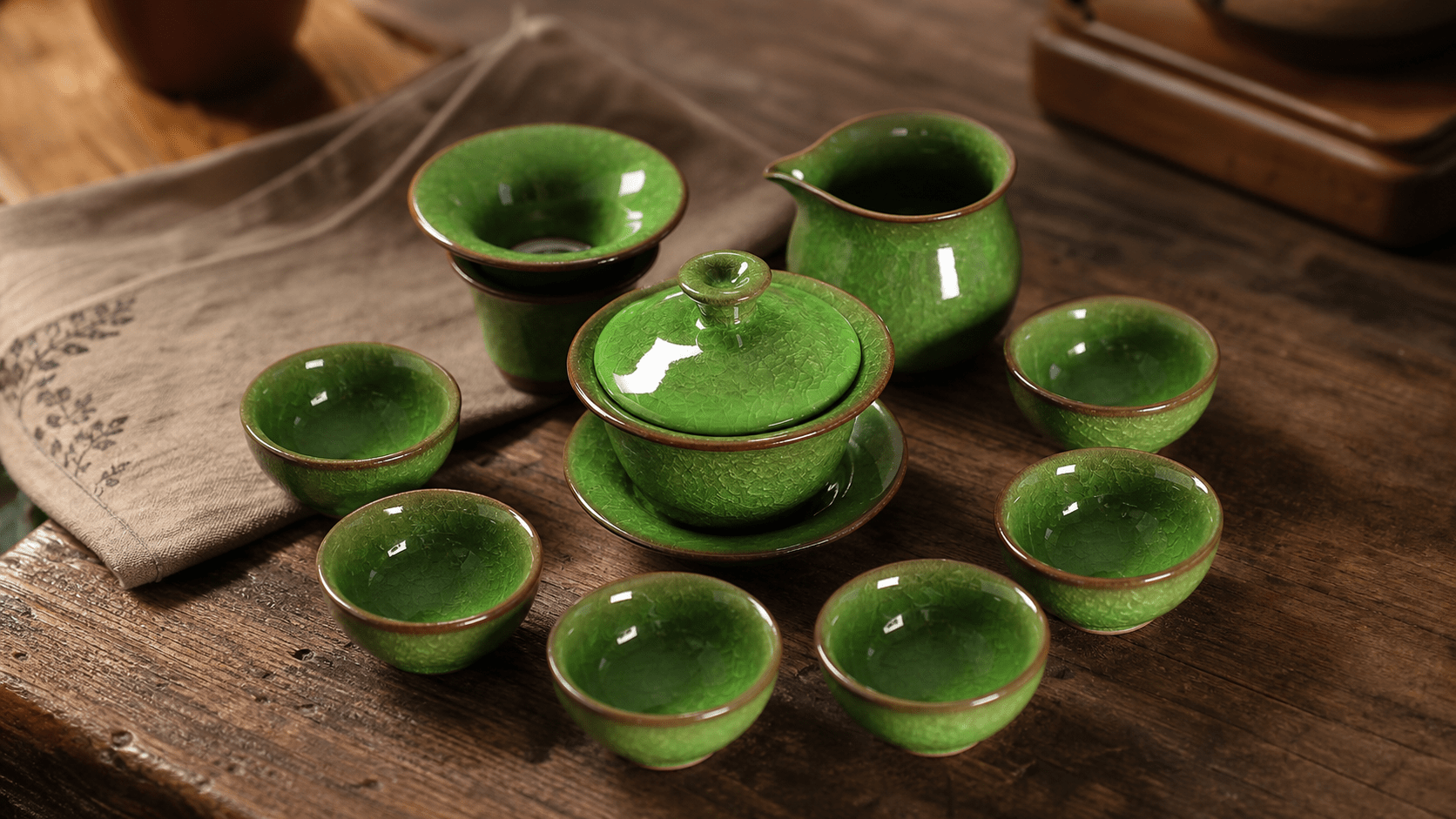

Tenmoku Tea Bowl Authenticity: How to Buy with Confidence
A real tenmoku tea bowl is best recognized through its material, glaze behavior, firing marks, and clear origin story—not one flashy rainbow pattern. If you want a handmade ceramic cup for gongfu tea, pu-erh tea, or a meaningful gift for tea lovers, learning these signals helps you buy for craft rather than marketing.
The word “Tenmoku” can be confusing because it connects Chinese Jianzhan Tenmoku ceramic, Japanese tea culture, historical Song Dynasty glaze traditions, and modern handmade work. Think of it like “champagne”: the visual style may be widely imitated, but provenance and process determine what you are actually buying.
Key Takeaways
- A dramatic pattern alone does not prove a bowl is an authentic Jianzhan.
- True Jianzhan is associated with Jianyang, China, iron-rich clay, dark glaze, and high-temperature kiln firing.
- Natural glaze patterns usually show depth, variation, and a relationship to the bowl’s form—not a flat, repeated surface design.
- A legitimate Japanese tea bowl can be authentic Japanese pottery without being a Jianzhan; those are related but not interchangeable terms.
- Ask sellers for process details, close-up photos, dimensions, care guidance, and the maker or kiln information before purchasing.
How to Identify Real Jianzhan Without Relying on One Visual Trick?
The most reliable answer to how to identify real Jianzhan is to look for a group of consistent markers. A single trait, such as an oil-spot pattern or dark glaze, is easy to copy. A combination of clay, glaze, firing evidence, shape, and seller transparency is much harder to imitate convincingly.
Historically, Jian ware came from the Jianyang area of Fujian, China. It is known for dense, dark-bodied Jianzhan Tenmoku ceramic or stoneware-like tea bowls fired at very high temperatures. Modern work may be inspired by that tradition, but only a seller with a specific, supportable origin claim should market a bowl as Jianzhan from Jianyang.
Start with the bowl body and foot ring
Turn the bowl over. In handmade work, the unglazed foot ring often gives useful information. You may see a dark brown, charcoal, reddish-brown, or iron-rich clay body depending on the material and firing. The foot should feel intentionally finished rather than abruptly rough, sharp, or coated with a thick layer of paint.
Handmade does not mean sloppy. A well-made tenmoku tea bowl may have small variations in trimming, thickness, or symmetry, but it should still sit steadily and feel balanced in the hand. The bowl’s weight should support warm tea without feeling unnecessarily heavy or hollow.
Look for glaze depth, not just surface color
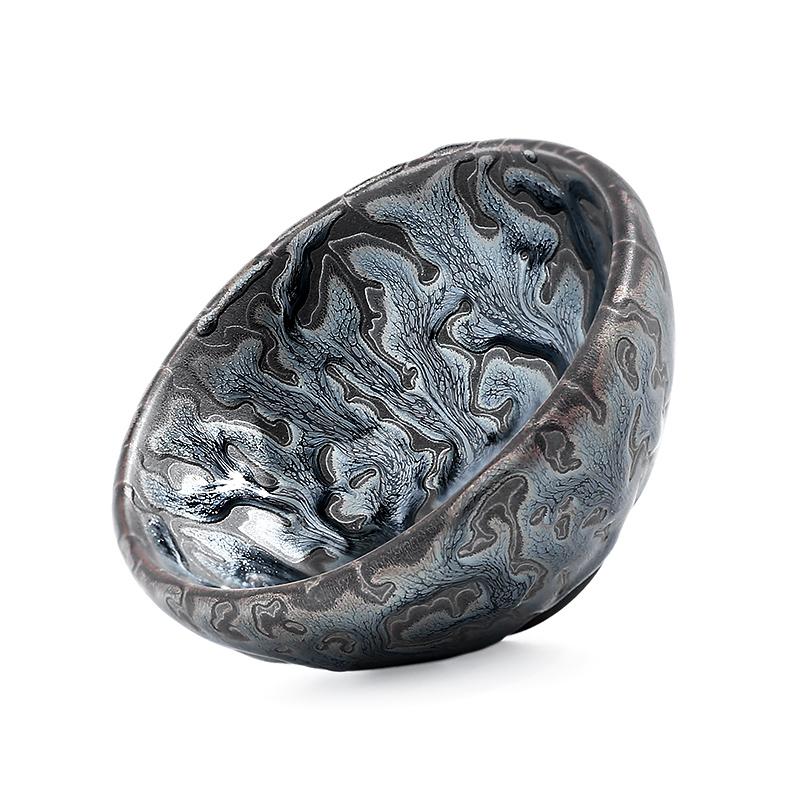
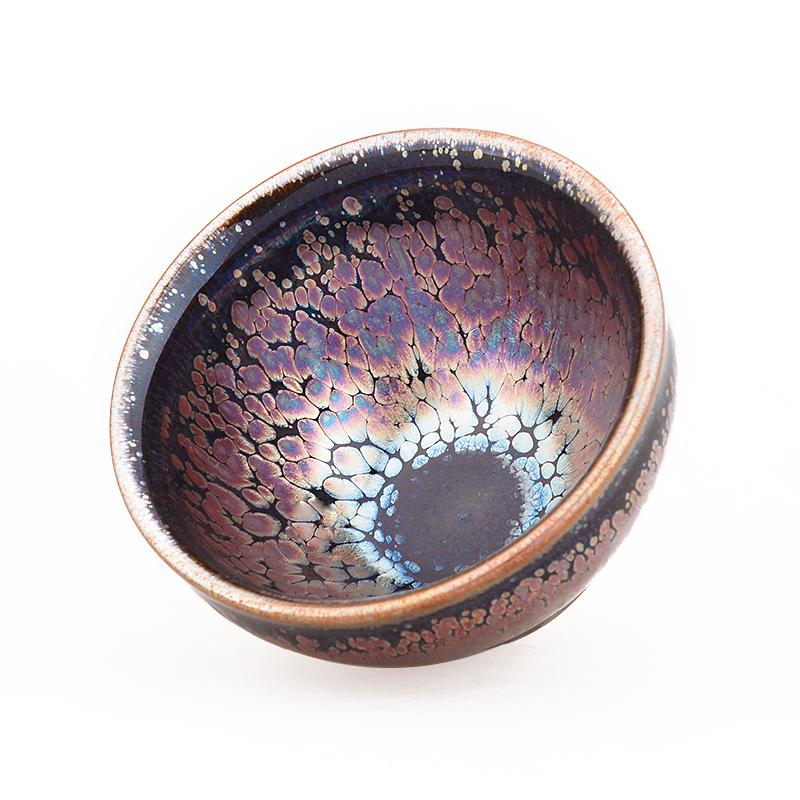
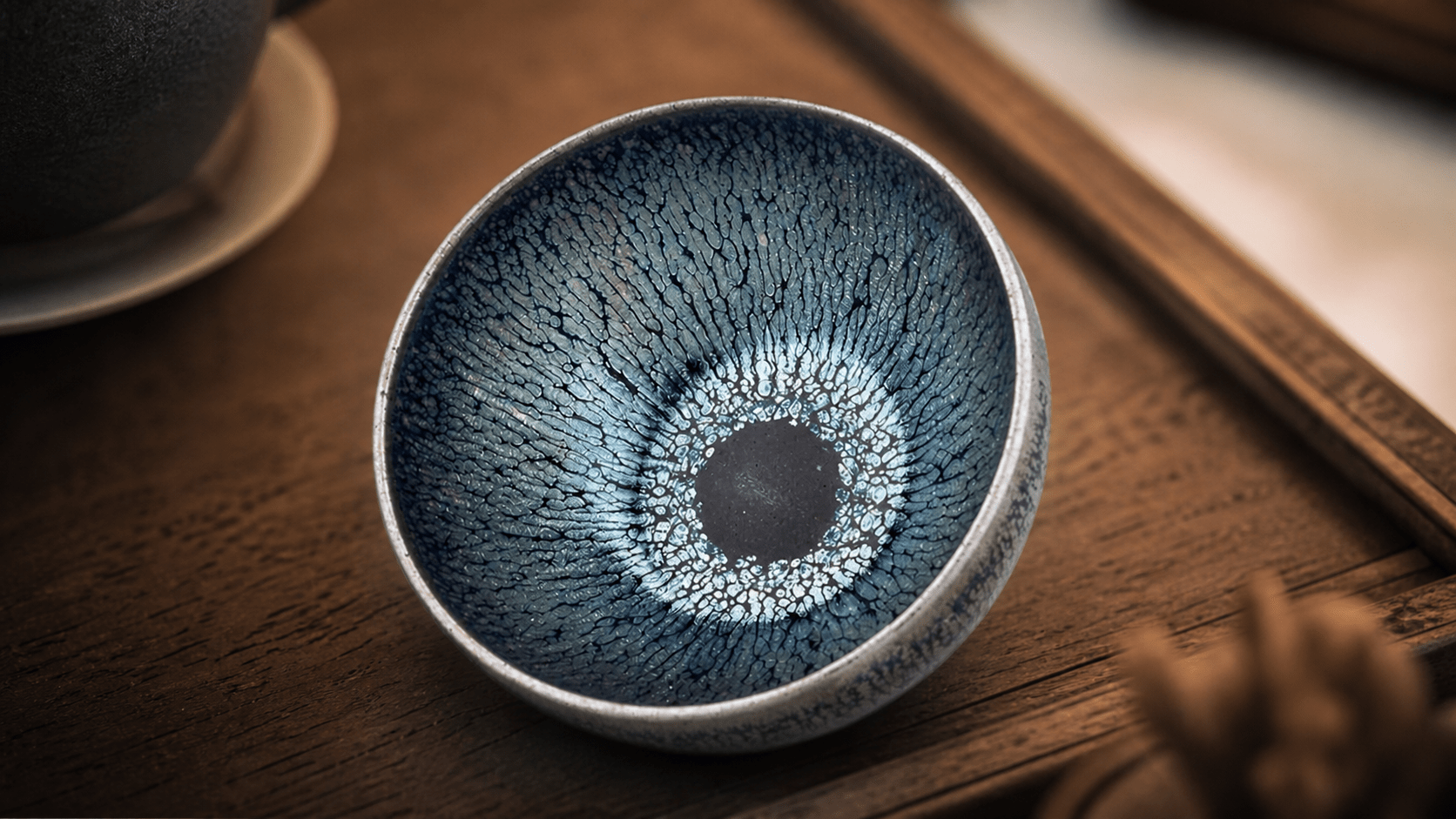
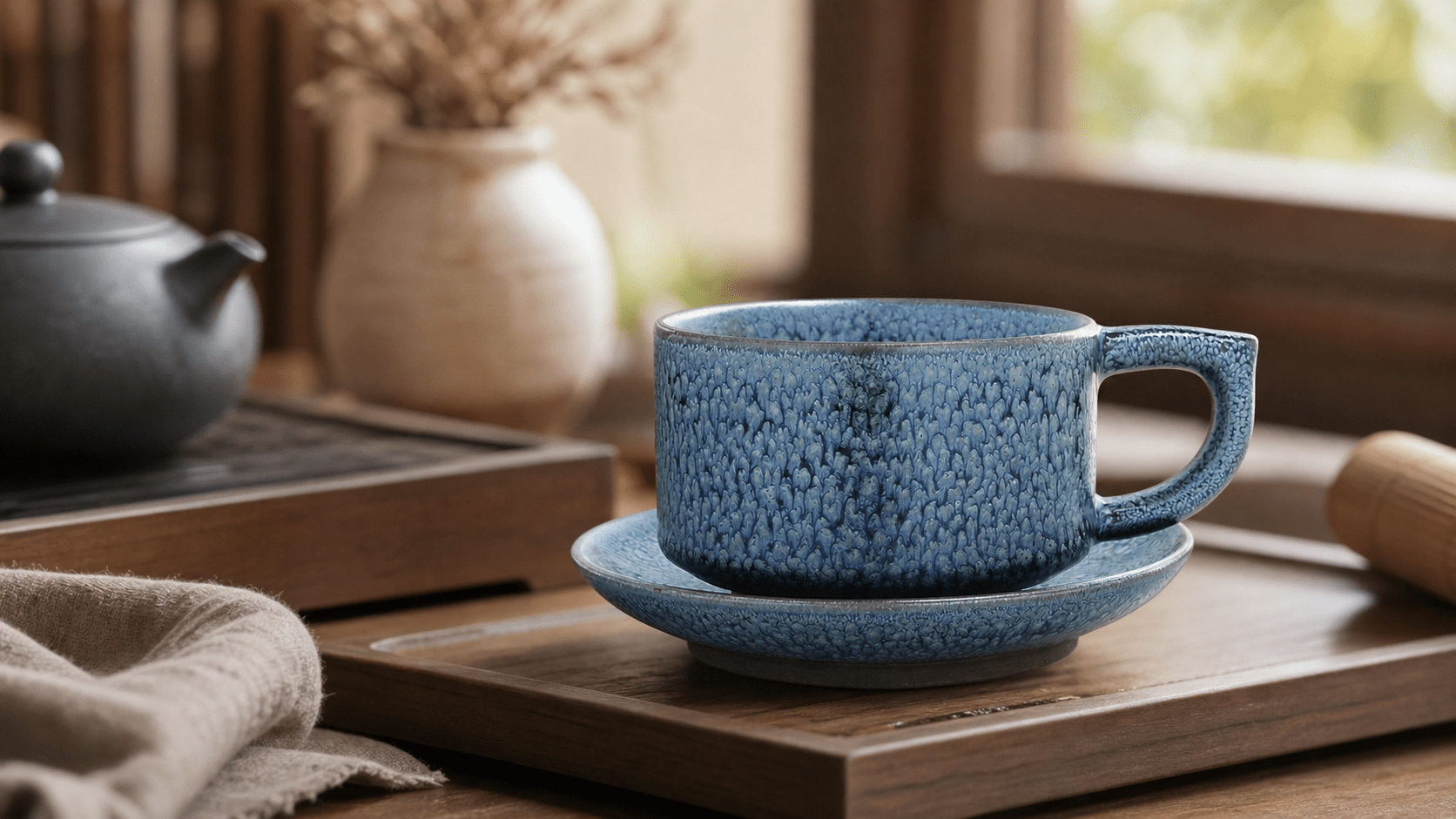
Natural high-fired glaze effects often appear to sit beneath the surface as well as on it. When you slowly rotate the bowl under indirect light, the pattern may shift in intensity because the glaze has visual depth. Hare’s fur streaks, oil spots, and partridge feather effects can be subtle, bold, or partly hidden; they do not need to cover every inch of the interior.
By contrast, a printed or low-fired decorative pattern can look flat, overly graphic, or identical across many bowls. This is not an absolute rule—some handmade production runs can look similar—but an exact copy-and-paste pattern is a reason to ask more questions.
Check whether the story matches the object
If a listing claims a Song Dynasty glaze tradition, ask what that means in practical terms. Does it identify the maker, studio, kiln location, clay, firing approach, and glaze type? A credible seller should be able to explain the work plainly. Vague phrases such as “ancient imperial energy” are not substitutes for production details.
Authenticity is not a mystical test. It is an evidence trail that should make sense from the clay under the foot to the photos and description on the product page.
What Is the Difference Between Real vs Fake Tenmoku?
The phrase real vs fake tenmoku needs a little nuance. “Tenmoku” is often used broadly for dark-glazed tea bowls, especially in Japan and the United States. A handmade Japanese tea bowl with a dark iron glaze may be a genuine piece of Japanese pottery, even if it is not Chinese Jianzhan. It is not fake simply because it comes from Japan.
The problem begins when a product is presented as something more specific than it is. A factory-made cup may be sold as an individual handmade tenmoku tea cup. A generic dark-glazed bowl may be labeled “authentic Jianzhan” without a Jianyang connection. A decorative coating may be described as a naturally kiln-transformed oil-spot glaze.
| What to compare | More credible handmade or provenance-backed work | Common warning sign |
|---|---|---|
| Product description | Names the maker, kiln, material, firing approach, or origin with clear language. | Uses only emotional claims and avoids concrete production details. |
| Glaze pattern | Shows variation, depth, and differences from bowl to bowl. | Looks identical across listings or appears printed on top of the surface. |
| Foot ring | Shows a deliberately trimmed, unglazed contact area and visible clay character. | Feels sharp, looks painted over, or hides the base in every listing photo. |
| Photos | Includes multiple angles, interior, exterior, foot, scale, and natural light. | Uses one heavily filtered image or stock-like images only. |
| Seller support | Answers direct questions and provides care information. | Cannot explain where or how the bowl was made. |
Price can be a clue, but not proof. A low price may reflect mass production, a promotion, or a smaller bowl. A high price may reflect legitimate craftsmanship—or simply aggressive positioning. Judge the evidence first, then decide whether the price is reasonable for the stated process.
When browsing a tenmoku tea bowl for sale, compare listings within the same category. Look for the kind of details you would expect when buying a handmade knife, leather bag, or artwork: clear dimensions, close-up images, care notes, and a specific account of how it was made.
How Can You Tell Jianzhan Oil Spot vs Fake?
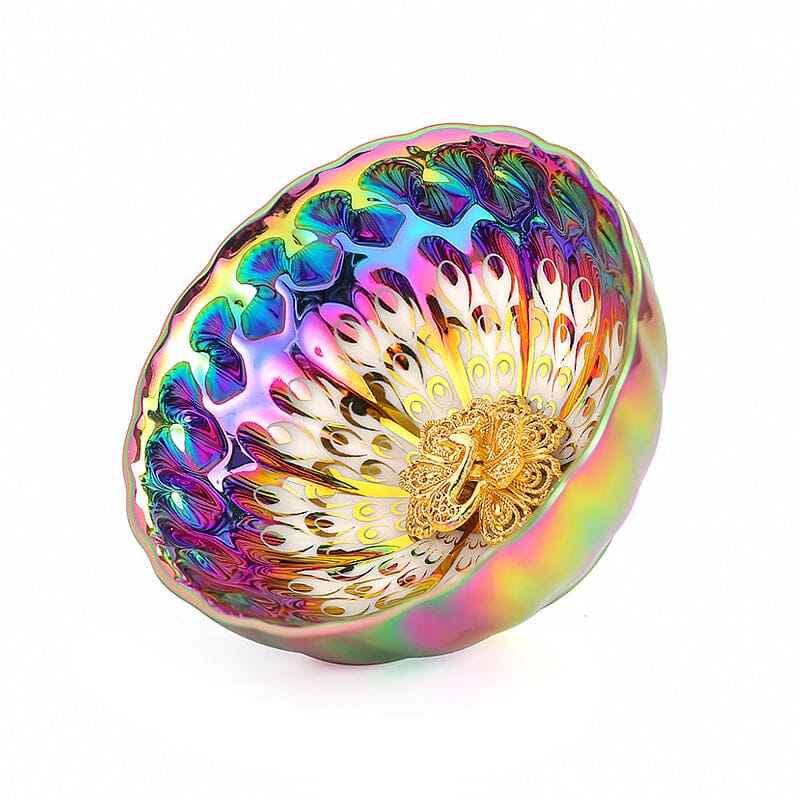
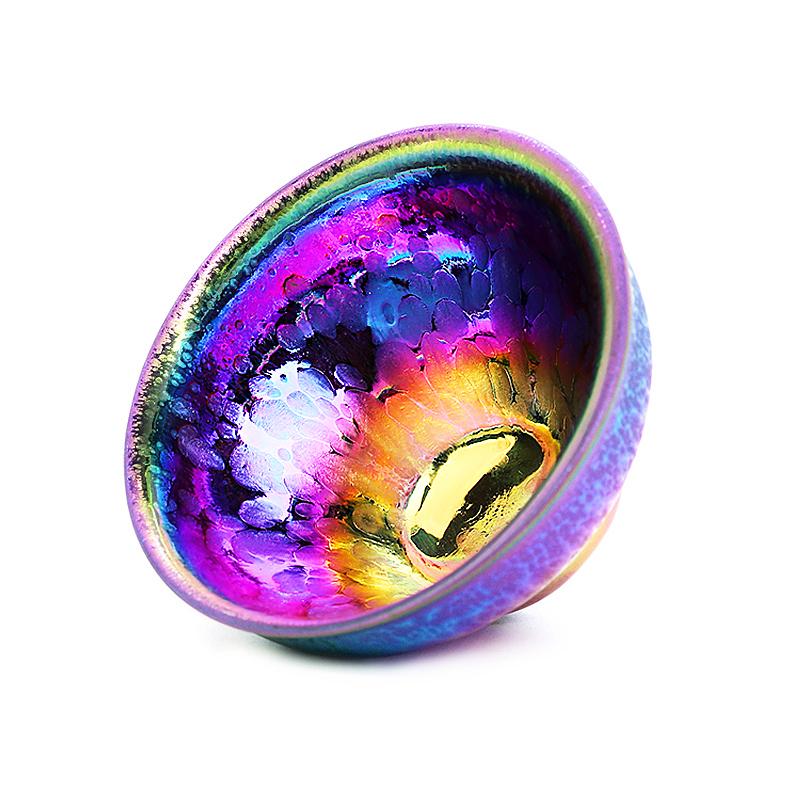
Questions about jian zhan oil spot vs fake often focus on whether a bowl flashes blue, silver, gold, or rainbow colors. Those colors can be beautiful, but they are not a stand-alone authenticity certificate. High-fired iron-rich glazes can develop mineral-like visual effects, while modern coatings, decals, and controlled commercial glazes can also create eye-catching color.
Instead of looking for a “magic” color, examine how the spots behave. In a glaze-created effect, spots may vary in size, edge definition, density, and placement. Some may merge, fade, or become more visible at different angles. The transition between the dark base glaze and the spots often looks integrated rather than stamped on.
Signs worth examining closely
- Pattern rhythm: Natural kiln variation rarely arranges every spot at equal spacing or identical size.
- Surface integration: The effect should appear part of the glaze, not like a separate film sitting above it.
- Interior and exterior relationship: Glaze movement often changes with the bowl’s curves, rim, and pooling areas.
- Light response: View the bowl in daylight and warm indoor light. An authentic-looking pattern should remain visually coherent, not disappear into a flat sticker-like surface.
- Photo consistency: Ask for unedited photos or a short rotating video if the listing uses very intense filters.
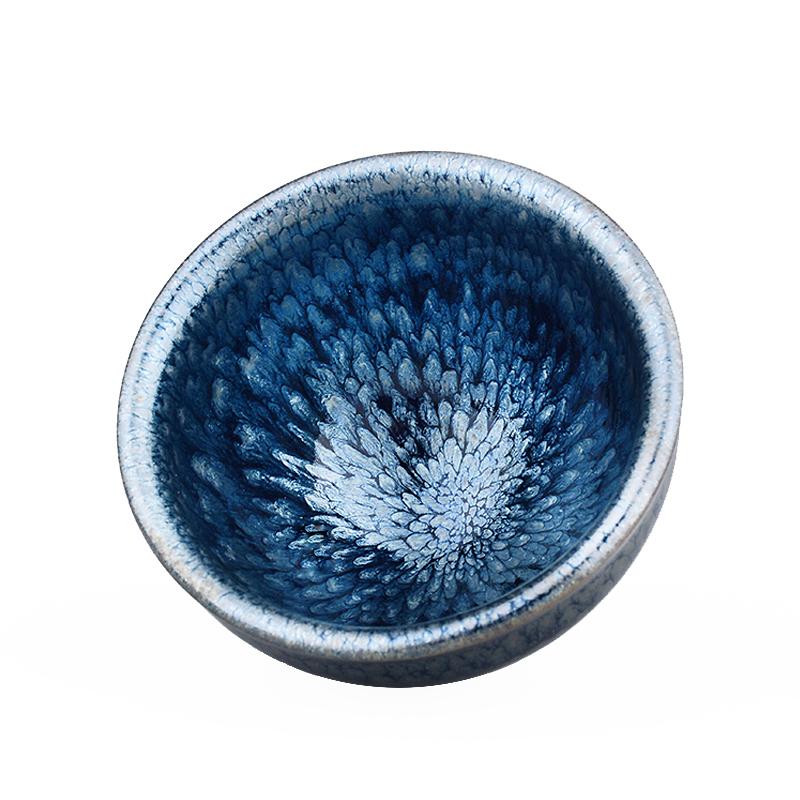
A partridge feather pattern offers another useful example. In traditional descriptions, this name refers to a feather-like, scale-like, or radiating visual effect. It should not be treated as a rigid template. A real handmade bowl can show a quiet, partial interpretation rather than a perfectly symmetrical pattern.
Also avoid the opposite mistake: rejecting any bowl with a clean or subtle glaze. Some excellent Jianzhan Tenmoku ceramic bowls are intentionally restrained. The tea experience, craftsmanship, and truthful description matter more than having the loudest surface.
What Materials and Process Markers Support an Authentic Jianzhan Claim?
An authentic Jianzhan claim should connect to materials and process. Traditionally associated examples are made with iron-rich clay and dark iron-bearing glaze, then fired at high temperatures where heat, atmosphere, and cooling influence the final surface. That is why each handmade ceramic bowl can develop its own character.
For a buyer, you do not need to become a kiln technician. You only need a seller who can explain the basics without evasion. Useful questions include: Where was this made? Is the body clay or porcelain? Is the pattern created during firing? Is each bowl photographed individually? Is the bowl intended for regular tea use?
Be careful with broad health claims. A dark-glazed tea bowl should be sold as food-safe only when the seller can responsibly make that claim for the finished ware. Do not assume that “natural,” “mineral,” “iron-rich,” or “traditional” automatically answers food-safety questions. If this is a daily cup for pu-erh tea or gongfu tea, care instructions and intended use are practical parts of the purchase decision.
There is also no need to confuse historical antiques with contemporary craft. A newly made Jian-style bowl can be a worthy, honest object when it is clearly represented as contemporary work. The issue is not whether a bowl is old; it is whether the seller’s description accurately matches its origin, process, and materials.
Is Japanese Tenmoku for Sale the Same as Chinese Jianzhan?
Not necessarily. Japan adopted and developed tea-bowl traditions influenced by Chinese ceramics, and “Tenmoku” became an important term in Japanese tea culture. A Japanese tenmoku for sale may be a legitimate Japanese tea bowl made by a Japanese potter or workshop. It may reflect Japanese preferences for shape, glaze, tea ceremony use, and finishing.
Jianzhan is more specific. It refers to the Jian ware tradition associated with Jianyang and its modern continuations. The traditions overlap historically, but a seller should not erase their differences. If you want Chinese Jianzhan, ask for the maker and production location. If you want a Japanese tea bowl, evaluate it on its own stated origin and pottery tradition.
This distinction matters especially when buying a gift for tea lovers. A thoughtful gift card can say, “This is a handmade Japanese tenmoku-inspired bowl,” or “This is a contemporary Jianzhan from Jianyang,” when those details are known. Clear language makes the object more meaningful and protects the recipient from misleading lore.
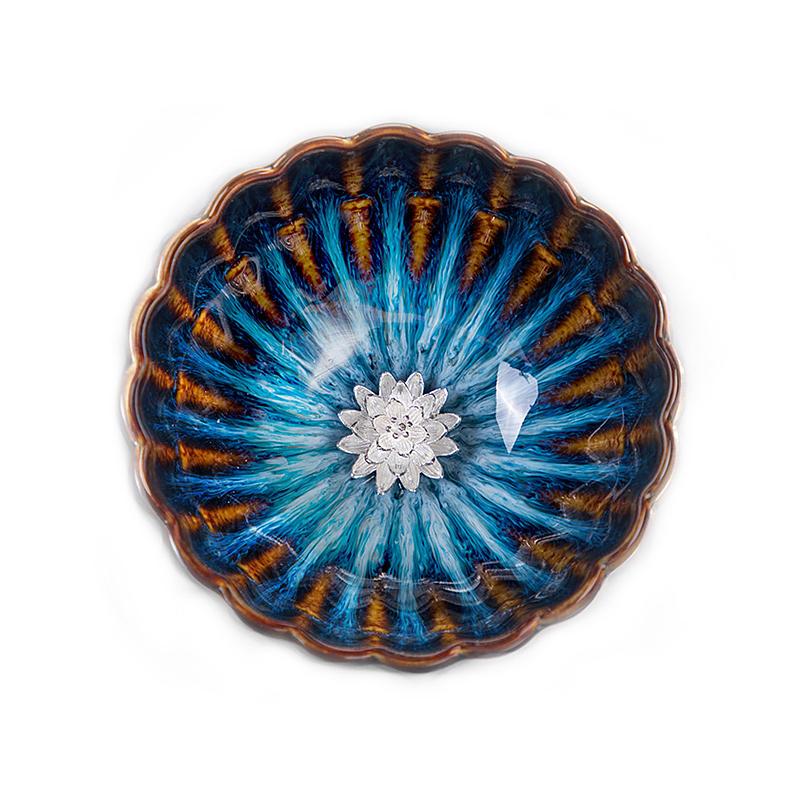
For bowls with a flowing, streaked glaze, Browse our hare's fur Jianzhan series and compare individual photos, glaze variation, and product details. The right bowl is often the one whose honest description matches the way you plan to use it.
What Should You Ask Before Buying a Handmade Tenmoku Tea Cup?
Before purchasing a handmade tenmoku tea cup, use this short buyer checklist. It is simple enough for a first-time buyer and specific enough to reveal weak listings.
- Can I see the exact bowl I will receive? Individual photos matter because handmade glaze variation is part of the value.
- Who made it and where? Look for a maker, studio, workshop, or clearly stated region.
- How was the surface effect created? A direct explanation of firing and glaze is more useful than vague historical language.
- What are the dimensions and capacity? Gongfu tea sessions usually suit a smaller bowl than a large casual mug.
- Is it intended for hot tea and daily use? Ask for care guidance and any limitations.
- What does the return policy cover? This is especially important for a bowl purchased from photos.
For everyday gongfu tea, prioritize comfort at the lip, stable footing, and a size that works with your brewing routine. For a display piece or premium gift, the story, maker connection, and visual character may carry more weight. Neither choice is better; the key is buying the right bowl for the right role.
FAQ: Real vs Fake Tenmoku Tea Bowls
How do I identify real Jianzhan from online photos?
Look for individual photos of the interior, exterior, foot ring, rim, and bowl in natural light. Then check whether the seller states the maker or origin, materials, firing approach, dimensions, and care guidance. Photos alone cannot prove origin, but transparent documentation makes a claim more credible.
Is every dark Japanese tea bowl an authentic Jianzhan?
No. A Japanese tea bowl can be authentic Japanese pottery while not being Jianzhan. Jianzhan is a more specific term connected to the Jianyang tradition in China. Evaluate each item according to the origin and process the seller actually states.
What is the easiest way to spot jian zhan oil spot vs fake?
Do not rely only on bright color. Check for visual depth, irregular variation, and an effect that appears integrated into the glaze. Ask for unfiltered close-ups or a rotating video, especially if the product photos look unusually uniform or heavily edited.
Does an authentic Jianzhan need a perfect hare's fur or partridge feather pattern?
No. Handmade firing produces variation, and strong craftsmanship can be subtle. A bowl does not need a dramatic or perfectly symmetrical pattern to be legitimate. Honest origin, material, process, and finish are more useful than a single visual feature.
Are inexpensive tenmoku tea bowls always fake?
No. Price alone does not determine authenticity. However, extremely low prices paired with claims of rare, hand-fired, individually made Jianyang work deserve closer scrutiny. Compare the price with the evidence provided, the bowl’s size, the maker information, and the quality of documentation.
Can I use a handmade tenmoku tea cup for pu-erh tea every day?
Usually, a bowl sold for hot tea use can work well for daily pu-erh tea sessions, but follow the seller’s care instructions. Confirm that the finished bowl is intended for food and beverage use, avoid sudden temperature shocks, and hand-wash unless the maker says otherwise.
Choose Evidence, Then Choose the Bowl You Love
A tenmoku tea bowl should earn trust through consistent evidence: a truthful origin story, a credible handmade process, well-documented photos, and a finish that feels considered in the hand. The goal is not to memorize every glaze label. It is to recognize when a seller respects both the craft and the buyer.
Once the basics check out, let your own tea ritual guide the final choice. A dark bowl can make pale tea look luminous, add focus to a quiet gongfu session, and become a memorable gift for tea lovers. When you are ready to compare handmade options, Shop authentic Tenmoku tea bowls with the same practical questions in mind.
Explore Our Collection
Ready to experience the world of tenmoku tea bowl? Browse our curated collection:
Disclaimer: This article is for informational purposes. Products and pricing subject to change.
Aktie:
Tenmoku Tea Bowl Authenticity Guide: Buy with Confidence for Gongfu Tea