

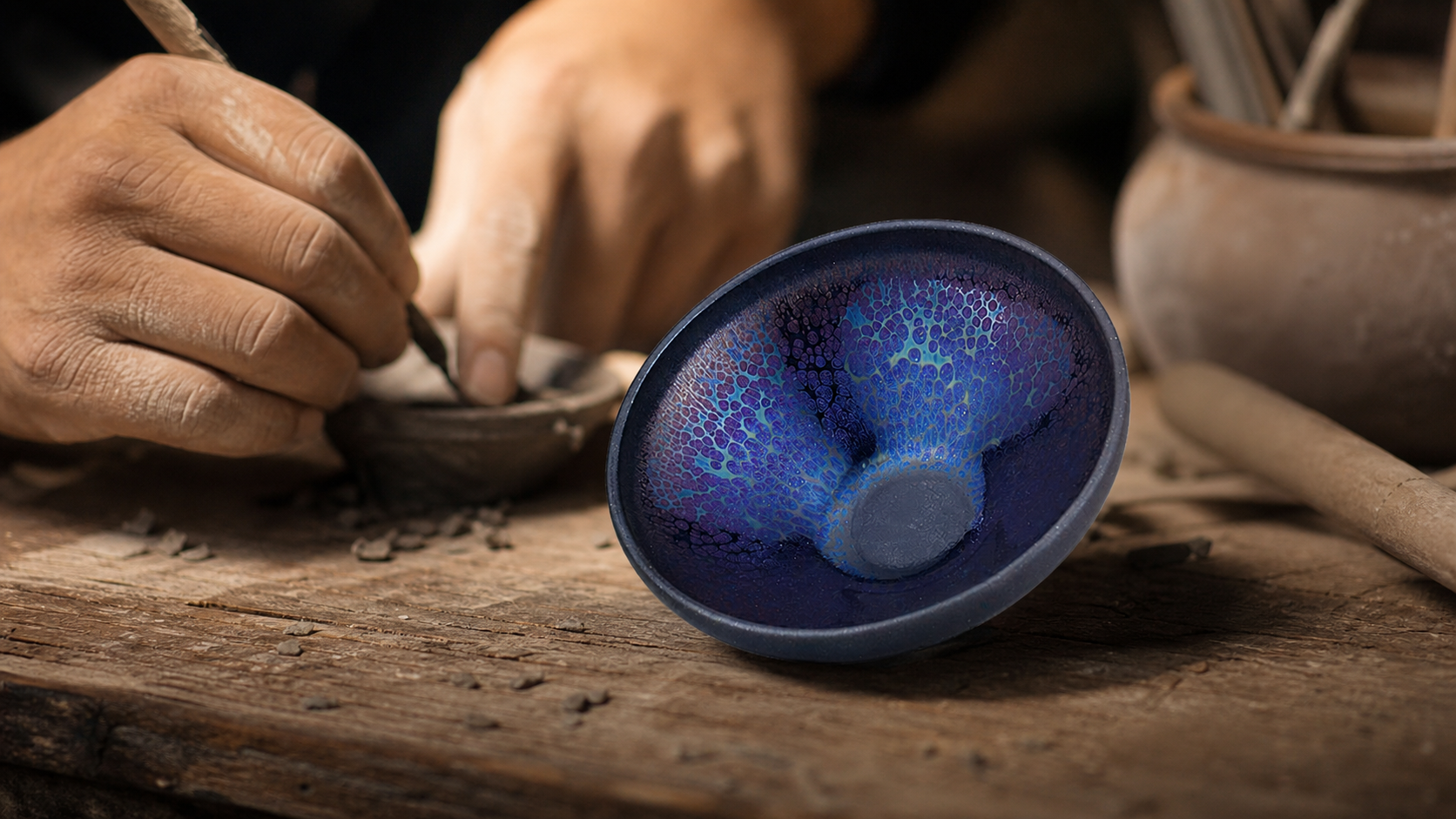

Tenmoku Tea Bowl: Bring Craft and Calm to Every Tea Ritual
A tenmoku tea bowl is more than a dark-glazed vessel: it is a handmade tea cup that makes a daily gongfu tea session feel more deliberate and personal. Whether you are pouring fragrant oolong tea after work or choosing a meaningful gift for a tea lover, a Jianzhan-style bowl connects a simple pour to centuries of kiln craft.
Its beauty is not printed on the surface. The visual character develops in the fire, where glaze, mineral content, atmosphere, and timing meet. That is why no two handmade bowls look exactly alike—and why people often return to them as objects of use, not just display.
Key Takeaways
- A tenmoku tea bowl is a black-glazed bowl associated with Jian ware and the historic kilns of Jianyang, China.
- Its surface effects, including oil spot and hare’s fur patterns, emerge during high-temperature firing rather than being painted on afterward.
- The form works especially well for slow, attentive tea drinking, including gongfu tea and oolong tea.
- For a gift, the strongest choice is a bowl with honest handmade variation, a comfortable rim, and a glaze pattern the recipient will want to revisit.
- Japanese tea culture helped carry appreciation for this style beyond China, giving the word “tenmoku” its familiar international identity.
What does the Fujian tea bowl tradition tell us about a tenmoku tea bowl?
The Fujian tea bowl tradition begins with place. Jian ware developed around Jianyang in northern Fujian, an area historically known for its tea production and kiln activity. In practical terms, these bowls were made in a region where tea was not a decorative idea; it was part of daily life, trade, hospitality, and social ritual.
That context matters because a tenmoku tea bowl was shaped around use. Its open form lets you see the tea, warm your hands around the bowl, and notice the changing light across the glaze. It can feel a little like choosing a favorite cast-iron skillet: the object has presence, but its value becomes clearer through repeated use.
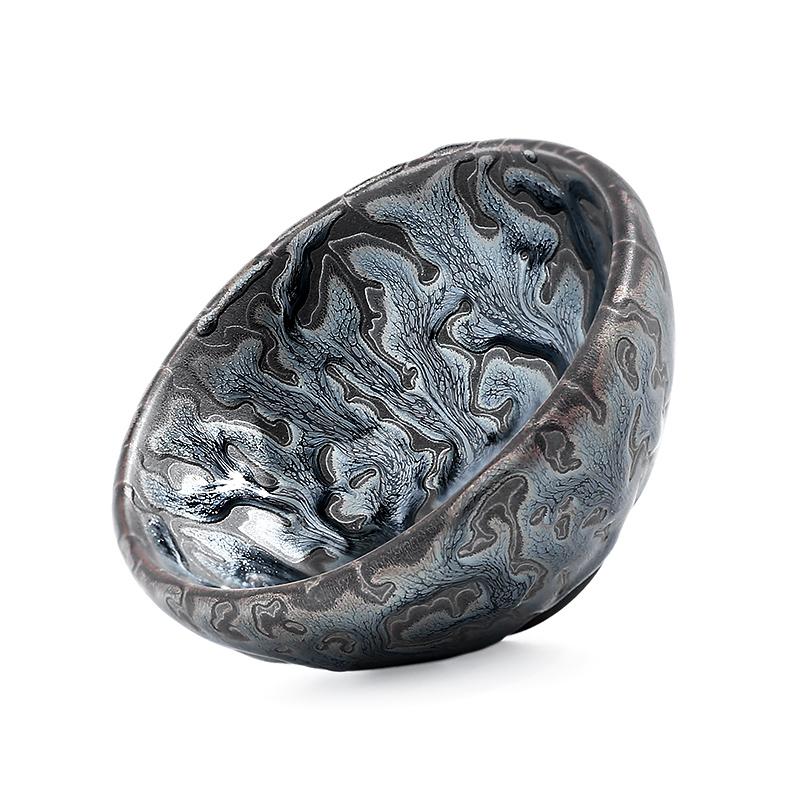
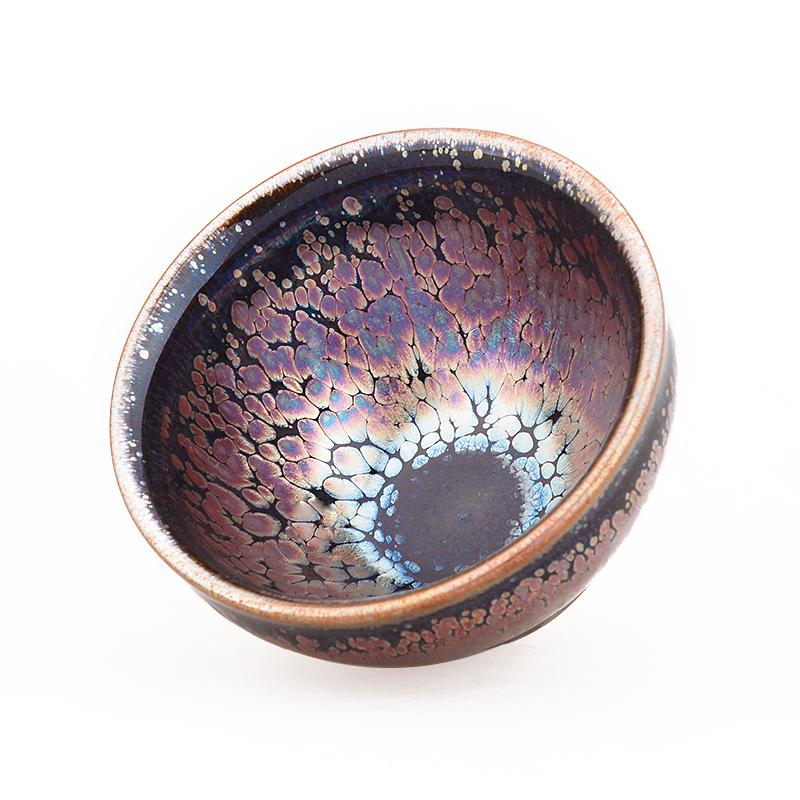
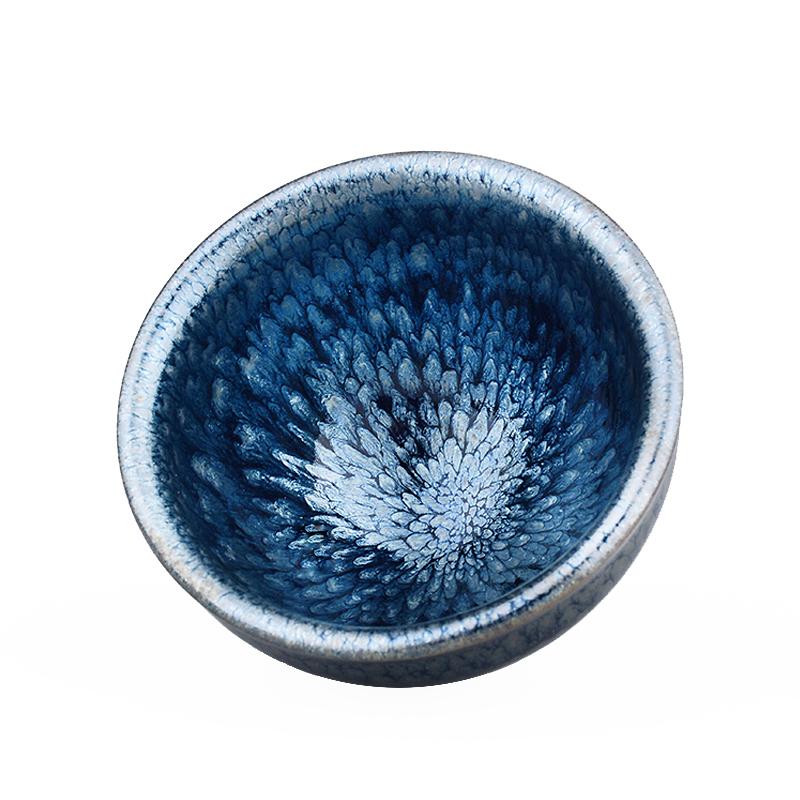
Traditional Jian-style black glazes can appear deep brown, charcoal, black, bronze, or blue-black depending on the light. Some develop fine streaking often called hare’s fur; others show clustered, silvery circles known as oil spot. These are not guarantees of quality by themselves. They are visual records of a demanding firing process and should be appreciated alongside the bowl’s balance, finish, and overall workmanship.
For a beginner, the easiest way to understand the appeal is to make tea in one. Hold it before filling it. Notice whether the foot sits steadily, whether the rim feels comfortable, and whether the interior makes the color of your tea easy to see. A good handmade tenmoku tea cup invites that kind of attention without asking you to be an expert.
How does Song Dynasty tea culture shape the story behind Jianzhan history?
To understand Jianzhan history, it helps to picture tea in the Song Dynasty as both a sensory practice and a refined social activity. Whisked tea was widely enjoyed, and dark bowls created a striking contrast against pale foam. The bowl was not merely a container; it was part of the experience of seeing, preparing, and sharing tea.
Song Dynasty tea culture also valued close observation. People noticed texture, color, proportion, and the effects of light. That mindset still feels modern. Today, many premium lifestyle buyers want fewer objects with more character—pieces that slow down a rushed routine and feel worth keeping.
The historical path of these bowls also reaches Japan. Chinese Jian ware was admired and brought to Japan, where it became associated with tea practice and came to be called tenmoku. A Japanese tea bowl and a Jian-style bowl are not interchangeable categories, and Japanese pottery has its own broad, rich history. But the connection is important: it shows how a compelling tea object can travel across cultures while gaining new meaning.
For American tea drinkers, this is a useful way to approach the bowl. You do not need to recreate a museum ritual or memorize dynastic history. You can respect the heritage by using the bowl thoughtfully, learning what it is, and avoiding exaggerated claims about what it can do. The strongest story is the real one: a functional handmade object, rooted in a long tea tradition, still capable of making a Tuesday evening cup feel special.
What happens during a tenmoku artisan’s journey from clay to glaze?
A tenmoku artisan works with uncertainty. Clay preparation, forming, drying, glazing, loading, firing, cooling, and finishing all influence the result. Unlike a factory-made cup designed for identical repetition, a handmade bowl carries small variations in contour, glaze flow, and surface movement.
The making process starts with proportion. A bowl should feel stable without becoming heavy, and open enough for tea while still sitting naturally in the hand. The maker considers the curve of the wall, the thickness at the rim, and the foot ring beneath it. Those choices may look subtle online, but they strongly affect the experience at the table.
Then comes glaze. Dark iron-rich glazes are especially responsive to firing conditions. During a high-temperature firing, minerals can separate and crystallize in ways that create oil spot, streaks, mottling, or a quieter near-black surface. Heat and cooling are part of the design, but they cannot be controlled like an inkjet printer. That is the essential tension of the craft: skill creates the conditions, while the kiln contributes its own final voice.
For that reason, the word “handmade” should mean something concrete. It should not be used as a shortcut for every dark cup. When considering a handmade tenmoku tea cup, look for clear product photography from multiple angles, a description that identifies the piece honestly, and enough detail to understand its size and use. If a seller makes sweeping claims about age, rarity, health effects, or guaranteed glaze behavior without evidence, treat those claims carefully.
The best objects reward close looking. In daylight, an oil spot glaze may look crisp and metallic; under a warm dining-room lamp, it may appear softer and deeper. That changeability is part of the appeal. It makes the bowl feel less like a fixed product and more like a companion to different moments.
Why is a handmade tenmoku tea cup well suited for gongfu tea and oolong tea?
Gongfu tea is a style of tea preparation centered on small, repeated infusions. It encourages you to notice how aroma, texture, and flavor evolve from one pour to the next. A tenmoku tea bowl fits naturally into that rhythm because its open shape lets you observe the liquor and take in the aroma before sipping.
Oolong tea is an especially approachable pairing. Its range—from floral and bright to roasted and mineral—gives you plenty to explore. A dark bowl can make amber or golden tea stand out visually, much the way a dark picture frame can make a lighter image feel more vivid. That visual contrast is enjoyable, but it is not a rule. Use the bowl with the tea you love, whether that is oolong, black tea, pu-erh, or a simple evening infusion.
For beginners, start with a comfortable size rather than chasing the most dramatic glaze. A bowl that feels easy to hold will be used more often. Warm it briefly with hot water, discard the water, then pour your tea. Sip slowly enough to notice the rim, the temperature, and the way the interior glaze frames the tea.
This is also why the bowl works as a lifestyle object. It does not demand a full tea room or a complicated setup. It can live beside a kettle, on a coffee table, or in a home bar where a quiet after-dinner tea replaces another screen-filled hour.
How do you choose the best Jianzhan tea cup as a personal piece or a gift?
The best Jianzhan tea cup is not necessarily the most dramatic one in a photo. It is the one that combines credible craftsmanship, a glaze you genuinely enjoy, and a shape that suits how the recipient drinks tea. Buying with those priorities makes the choice more personal and less intimidating.
| What to consider | What to look for | Why it matters |
|---|---|---|
| Glaze character | Oil spot, hare’s fur, or a quieter dark finish shown in real photos | Handmade glazes can look different in changing light, so choose a pattern you will enjoy over time. |
| Shape and rim | A balanced profile and a rim that appears smooth and comfortable | Comfort determines whether the bowl becomes part of a real routine. |
| Size | A capacity suited to small gongfu pours or relaxed solo drinking | A practical size makes the bowl easier to use frequently. |
| Product transparency | Clear material, origin, dimensions, care, and handmade-variation details | Honest information is more valuable than vague luxury language. |
| Gift context | A piece that reflects the recipient’s taste, tea habit, and home style | A jianzhan tea cup gift should feel chosen, not generic. |
If you are buying for someone else, think about the message the gift sends. A tenmoku bowl can say, “Take a moment for yourself,” without being overly formal. It suits tea enthusiasts, design-minded hosts, collectors of handmade objects, and anyone building a more intentional daily ritual.
For a focused starting point, Browse our hare's fur Jianzhan series. The repeating streaks offer a recognizable visual entry point for shoppers who want a handcrafted bowl with movement and depth.
What makes a tenmoku tea bowl a meaningful gift for tea lovers?
A memorable gift does not need to be loud. It needs to feel considered. A tenmoku tea bowl offers both a useful object and a story: a form linked to Song Dynasty tea culture, a kiln-made glaze that will not be identical to another, and a role in a recipient’s own tea routine.
This makes a jianzhan tea cup gift especially fitting for birthdays, housewarmings, holidays, weddings, and thank-yous. It can also be a thoughtful choice for someone beginning to explore tea. The gift does not assume expertise. Instead, it creates an easy invitation: boil water, choose a tea, and pay attention for ten minutes.
When presenting the bowl, include a short note describing why you chose it. You might mention the glaze pattern, the connection to Jianyang, or the idea of making room for a slower daily ritual. That small layer of context transforms a beautiful object into a gift with lasting emotional weight.
If you are ready to choose a bowl for your own table or someone else’s, Shop authentic Tenmoku tea bowls and select the glaze and shape that feel most at home in the ritual you want to create.


FAQ: What should buyers know about tenmoku tea bowls?
What is the Fujian tea bowl tradition?
The Fujian tea bowl tradition refers to tea ware associated with Fujian’s historic tea and kiln regions, including Jianyang. Jian-style black-glazed bowls are closely connected to this heritage because they developed in a tea-centered cultural landscape.
How does Song Dynasty tea culture relate to a tenmoku tea bowl?
Song Dynasty tea culture valued the preparation and visual appreciation of tea. Dark bowls made pale whisked tea stand out, and their glaze effects became part of the experience. Today’s tenmoku bowls continue that focus on observation and ritual.
What should I know about Jianzhan history before buying?
Jianzhan history is rooted in black-glazed ware from the Jian kiln tradition. When buying a contemporary piece, distinguish between a historical antique, a modern handmade bowl, and a mass-produced imitation. Read the listing carefully and choose sellers who describe items clearly.
What does a tenmoku artisan do differently from a factory producer?
A tenmoku artisan shapes, glazes, and fires pieces in a process where kiln conditions create natural variation. Factory production may provide greater uniformity, while handmade work typically offers individual differences in form and glaze expression.
Is a tenmoku tea bowl good for oolong tea?
Yes. A tenmoku tea bowl can be an enjoyable choice for oolong tea because its dark interior provides visual contrast for golden or amber liquor. The best pairing is still the tea you enjoy drinking most.
Is a tenmoku tea bowl the same as a Japanese tea bowl?
No. A tenmoku tea bowl refers to a style connected to Chinese Jian ware, while a Japanese tea bowl belongs to Japan’s own diverse tea-ceramic traditions. The two are historically connected through tea culture, but they are not identical.
Explore Our Collection
Ready to experience the world of tenmoku tea bowl? Browse our curated collection:
Disclaimer: This article is for informational purposes. Products and pricing subject to change.
Aktie:
Tenmoku Tea Bowl Authenticity Guide: Buy Jian Zhan with Confidence