Vente de Pâques: Achetez 3 Obtenez le 4e gratuit!

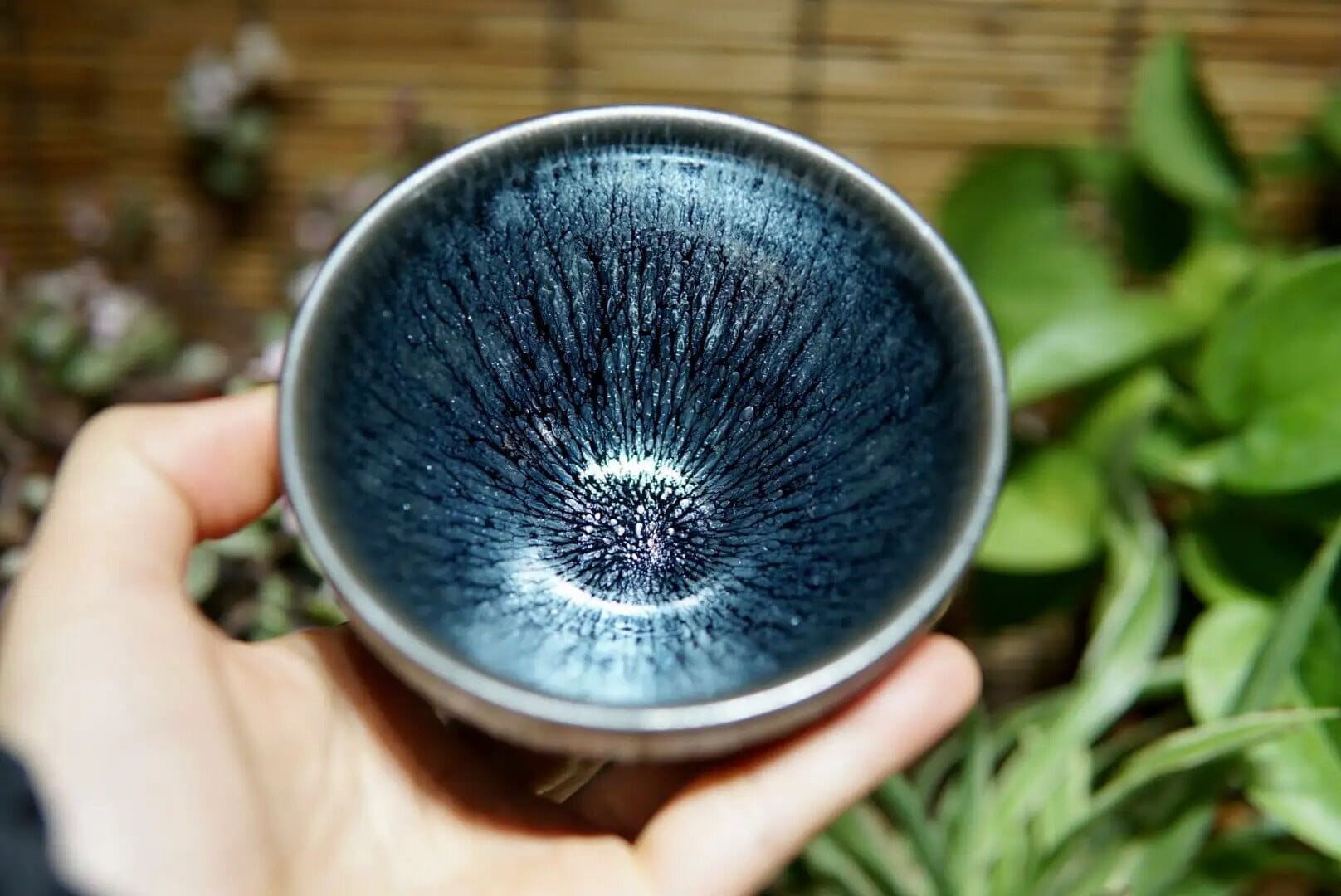
Un amateur de tasses à thé a laissé un message aujourd'hui, expliquant que ses tasses Jian étaient restées inutilisées dans un placard depuis un certain temps. En les sortant, il a constaté qu'elles étaient rouillées. Que faire ? Nous avons déjà abordé ce problème, et aujourd'hui, nous allons l'aborder de manière plus approfondie.

Certains amateurs de tasses à thé ont peut-être remarqué que certaines tasses Jian « rouillent » tandis que d'autres ne rouillent pas. Quelle est la raison de cette différence ? En fait, je veux dire que la rouille d'une tasse à thé se détermine généralement à sa sortie du four.

Pourquoi certaines tasses à thé Jian « rouillent » ?

En fait, cette question mérite d'être abordée séparément. La prétendue « rouille » n'en est pas vraiment une ; ce n'est qu'une illusion. Il y a deux raisons à cela :

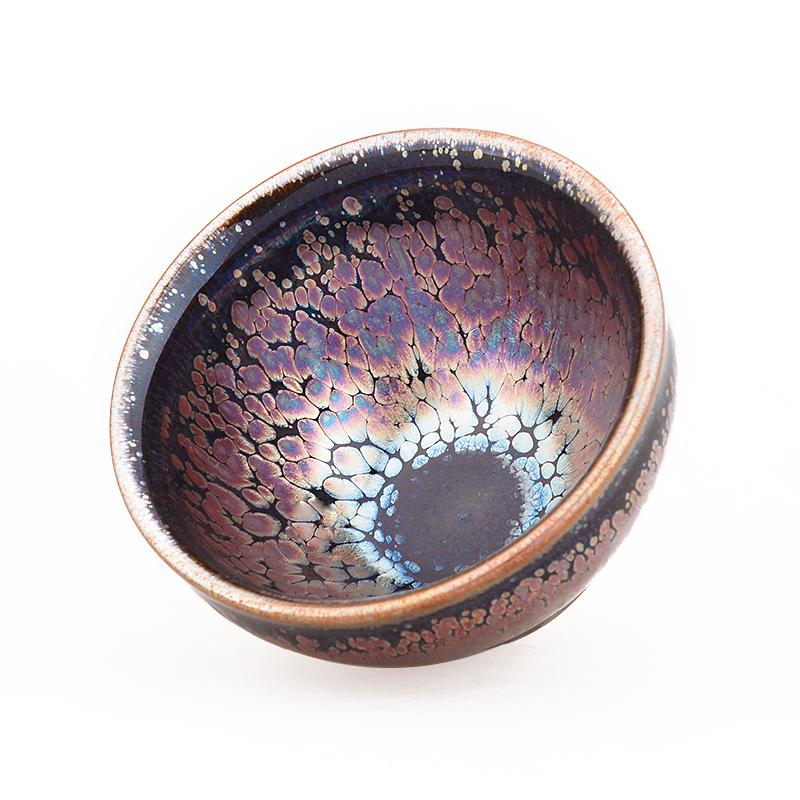
  1. Lors d'une cuisson à haute température, les motifs de la tasse à thé sont déjà secs et peuvent manquer de cristallisation ou de vitrification, ce qui donne une couleur rouille qui n'en est pas réellement. À l'inverse, les motifs bruns créés lors de la cuisson peuvent donner l'impression de rouille.
  2. Les tasses à thé présentant des taches d'huile présentent des motifs principalement composés d'oxyde de fer. Si elles sont laissées tremper dans le thé pendant une longue période sans nettoyage approprié, les tasses à thé insuffisamment vitrifiées, voire pas du tout, peuvent subir une réaction avec l'oxygène et la vapeur d'eau de l'air, transformant le fer bivalent en fer trivalent. La couleur brun rougeâtre qui en résulte peut donner l'impression de rouille (ceci nécessite des investigations complémentaires). Bien sûr, il est également possible que des taches de thé se soient accumulées au fil du temps en raison d'un nettoyage négligé. La clé réside dans la cristallisation sur et sous la glaçure.

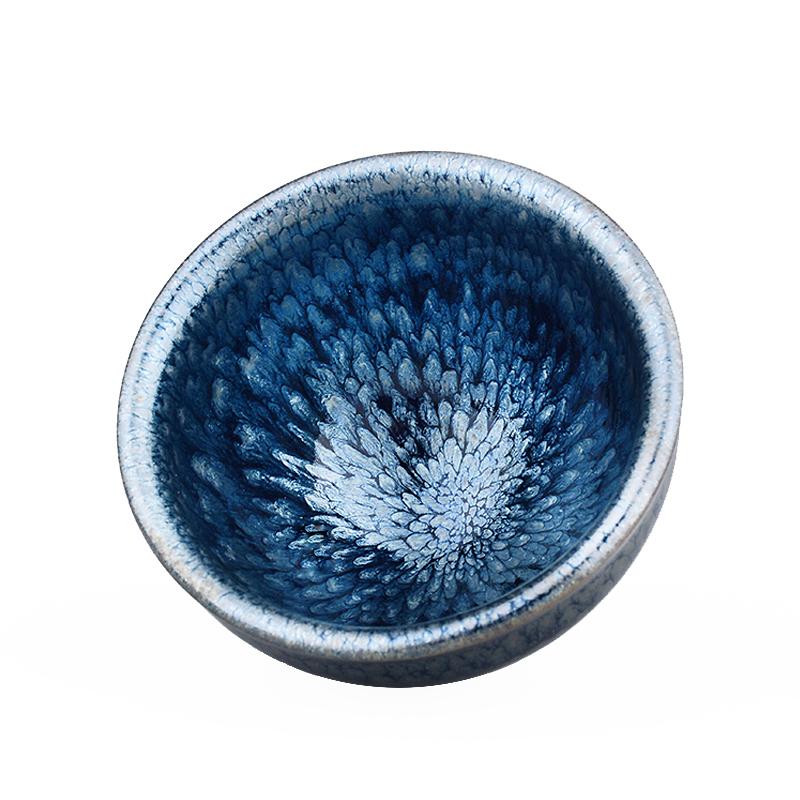
Pour les tasses Jian cuites, si la couche vitrifiée recouvre entièrement la cristallisation, donnant à la tasse une surface aussi lisse que du verre, on parle de cristallisation sous glaçure. En revanche, si la cristallisation se situe au-dessus de la couche vitrifiée (ou n'a pas formé une couche vitrifiée de bonne qualité) et que le motif cristallin dépasse de la surface de l'émail, on parle de cristallisation sur glaçure. Le processus de cristallisation et de vitrification est complexe et incertain, et il est également possible de produire un état de transition entre les deux (avec une couche vitrifiée extrêmement fine, la cristallisation étant sur le point d'apparaître sur l'émail).

Pour les tasses à thé avec cristallisation sous glaçure, il y a une « couche protectrice » semblable au verre sur le dessus du motif, qui le protège du contact direct avec le thé et l'air, et empêche ainsi l'impression de rouille due à l'oxydation ou à la saleté.

Comment conserver les tasses à thé non utilisées ?

  1. Rincez d'abord la tasse à l'eau bouillante pour éliminer les taches de thé incrustées sur la surface émaillée. Ensuite, lavez-la à l'eau claire et laissez-la sécher à l'air libre dans un endroit bien aéré. Vous pouvez également utiliser un torchon spécial pour la nettoyer.
  2. Une fois la surface émaillée parfaitement sèche, rangez soigneusement la tasse à thé. Évitez également de la stocker dans un endroit humide. Si la tasse présente une cristallisation sous émail, inutile de vous inquiéter : rangez-la simplement dans un endroit où elle ne risque pas de se renverser.

Certains utilisent la « rouille » comme argument pour critiquer les tasses à thé Jian, ce qui est tout simplement ridicule. Quoi qu'il en soit, apprécier ou non une tasse à thé ne regarde que nous, et nous savons au fond de nous si elle est bonne ou non, quoi qu'en disent les autres !
Quick answers for Tenmoku teaware shoppers

Use this guide to connect the article topic with practical buying decisions: what Jianzhan Tenmoku teaware is, who it suits, how to choose a piece, and how to care for it after purchase.

What is Jianzhan Tenmoku teaware?

Jianzhan Tenmoku teaware is ceramic tea ware known for dark mineral-glaze effects and natural kiln variation. Common forms include tea cups, bowls, teapots, tea sets, and matcha bowls.

Who is it best for?

It is best for tea drinkers, ceramic collectors, and gift shoppers who value functional objects with visible handmade character. It is not ideal if you need every piece to look exactly identical.

How do I care for it?

Hand wash with warm water, avoid abrasive cleaners, and dry fully before storage. Gentle daily use helps preserve the surface and keeps the glaze easy to inspect over time.

How do I choose the right Tenmoku piece?

Choose by the main use first: daily tea, matcha, Gongfu brewing, display, or gifting. Then compare capacity, rim shape, glaze family, photos, and whether natural variation is acceptable for your needs.

Is Jianzhan Tenmoku teaware good as a gift?

Yes. It works well for tea lovers, ceramic collectors, birthdays, holidays, and housewarming gifts because it is both usable and visually distinctive. For gifts, choose an easy-to-use form and a glaze style with clear photos.

Related products and categories

Compare the guide above with real Tenmokus categories and representative pieces. Start with the use case, then compare glaze style, form, price, and whether the piece is mainly for daily tea, display, collecting, or gifting.

Handmade Tenmoku tea cups

Best for daily tea drinking, first Jianzhan purchases, ceramic gifts, and comparing glaze patterns across cup shapes.

Tenmoku tea sets

Best when you want a coordinated tea table, a hosting setup, or a complete gift instead of one individual cup.

Real vs fake Tenmoku guide

Use this guide to compare seller claims, glaze appearance, photos, and practical buying signals before choosing a piece.

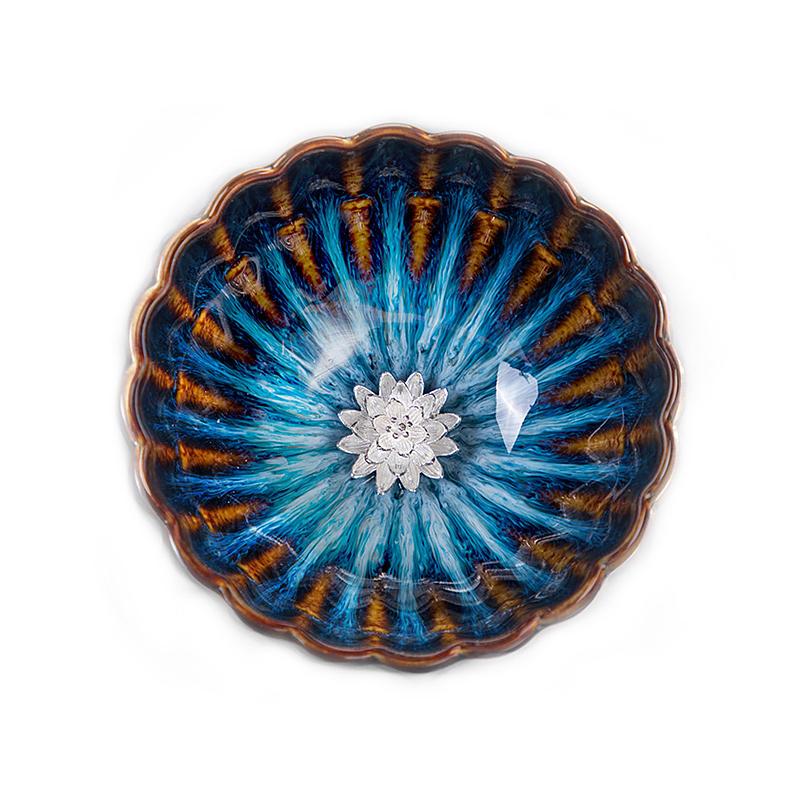
Paon vif

A representative Tenmoku tea cup to compare by glaze depth, cup shape, price, and gift fit.

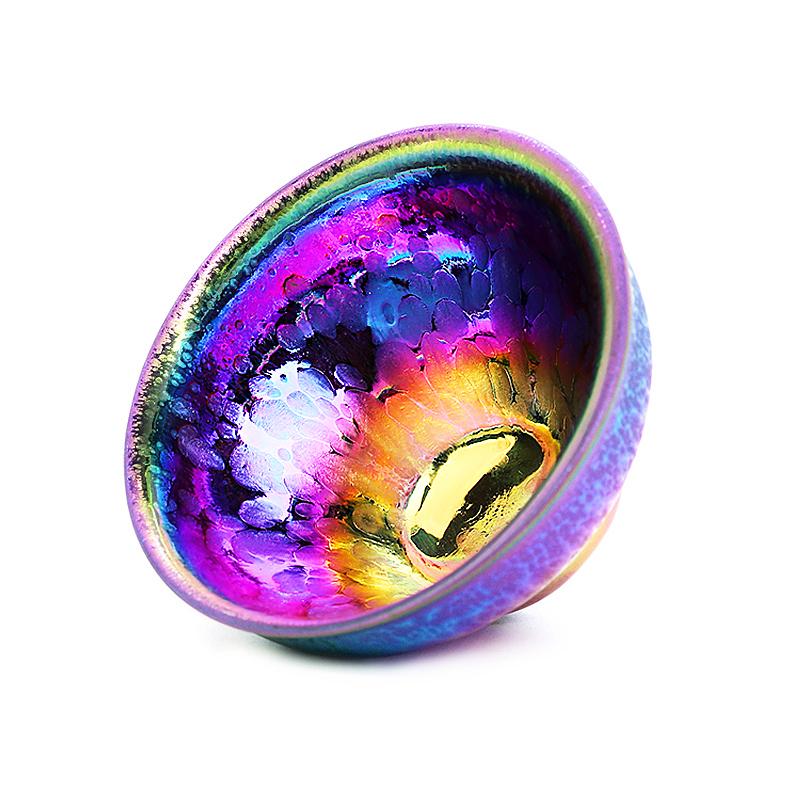
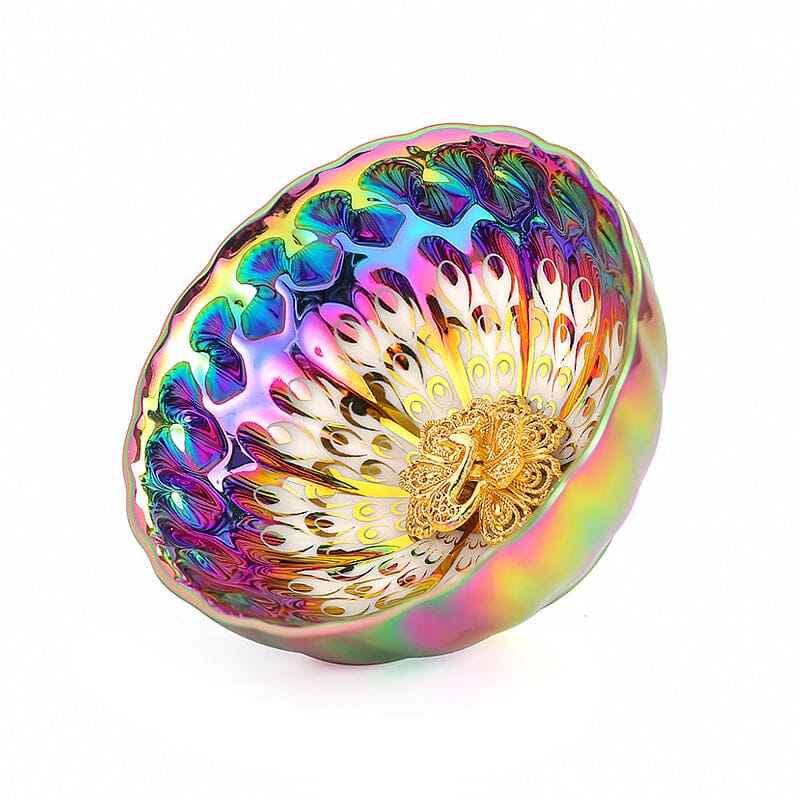
Paon doré

Compare this piece when you want a clear visual reference for a gold-toned Tenmoku glaze style.

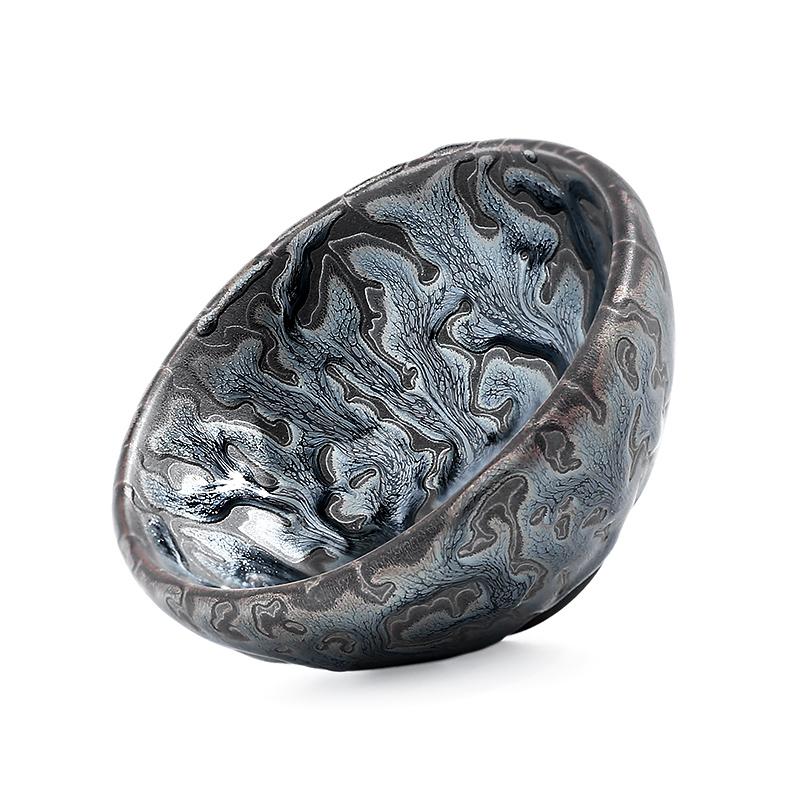
Fée II

Use this product as another comparison point for handmade form, glaze variation, and gift suitability.

shop handmade Tenmoku tea cups compare Jianzhan teapots browse Tenmoku tea sets choose Tenmoku matcha bowls view Tenmoku tea cups read the real vs fake Tenmoku tea bowl guide browse Jianzhan buying guides learn about Tenmokus

From Tenmoku guide to teaware choice

Tenmokus is focused on handmade Jianzhan Tenmoku teaware for tea rituals, display, and gifting. If you are choosing after reading this guide, start with Tenmoku tea cups for daily tea tasting, Tenmoku teapots for loose leaf brewing, Tenmoku tea sets for coordinated gifts, or Tenmoku matcha bowls for matcha preparation.

Dernières histoires

Keep exploring Tenmoku care, gift ideas, teaware selection, and the difference between Tenmoku and Jianzhan.

Afficher tous

Jian Zhan vs Japanese Tenmoku Tea Bowl: Which Offers the Best Value for Gongfu Tea?

Jian Zhan vs Japanese Tenmoku Tea Bowl: Which Offers the Best Value for Gongfu Tea?

Jian Zhan vs Japanese Tenmoku Tea Bowl: Which Offers the Best Value for Gongfu Tea? If you’re diving into gongfu tea ceremony and seeking the perfect tenmoku tea bowl, you’ve likely encountered two alluring paths: the ancient Chinese Jian Zhan...

En savoir plus

Tenmoku Tea Bowl: A Handmade Cup With History, Beauty, and Meaning

Tenmoku Tea Bowl: A Handmade Cup With History, Beauty, and Meaning

Tenmoku Tea Bowl: A Handmade Cup With History, Beauty, and Meaning A tenmoku tea bowl is a dark-glazed tea cup, often called Jianzhan, known for dramatic patterns created by fire, minerals, and chance. For gongfu tea, it gives a quiet,...

En savoir plus

How to Identify Real vs Fake Tenmoku Tea Bowl: A Jian Zhan Buyer’s Guide for US Tea Lovers

How to Identify Real vs Fake Tenmoku Tea Bowl: A Jian Zhan Buyer’s Guide for US Tea Lovers

If you’ve ever brewed a fine oolong tea and wanted an authentic tenmoku tea bowl to match its depth, you’ve likely stumbled into a minefield of fakes. I’m Aiden Wei, and after years of studying Jian Zhan (the Chinese name...

En savoir plus