

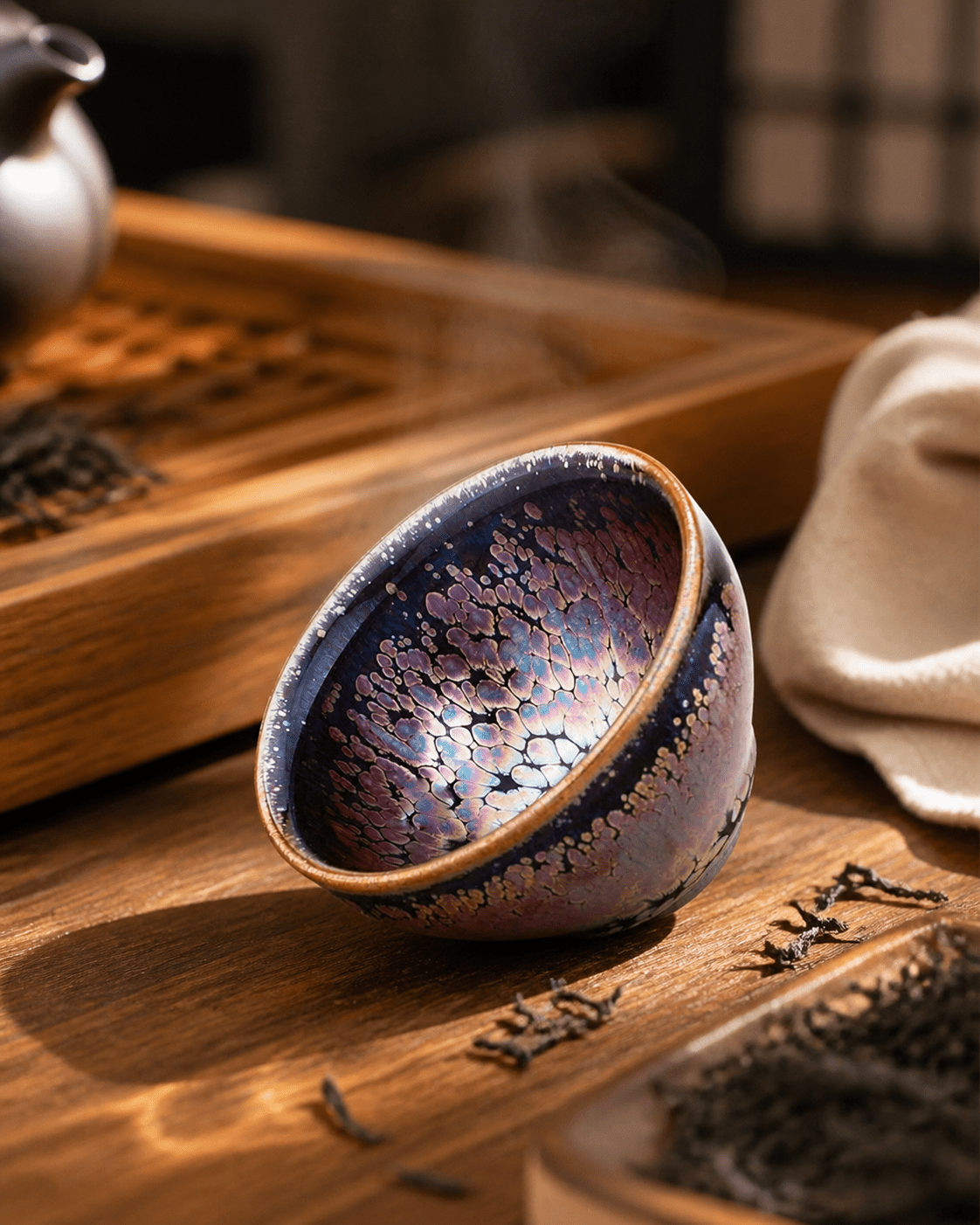
One evening, a friend asked me, 'Aiden, I just bought a tenmoku tea bowl online—how can I tell if it's real?' That's the question that sparked this guide. As a collector and tea enthusiast, I've seen too many counterfeit tenmoku tea bowls flood the US market, especially those pretending to be authentic Jianzhan with oil spot or hare's fur glazes. In this article, I'll share exactly how to identify a real Jianzhan versus a fake, from materials to kiln marks. By the end, you'll know how to confidently spot a genuine tenmoku tea bowl for your gongfu tea sessions or as a stunning jianzhan tea cup gift.
How to Identify Real Jianzhan? The 5 Telltale Signs
Authentic Jianzhan (often called jianzhan) is a Song Dynasty black-glazed tea bowl made in Jianyang, China. But today, the term 'tenmoku tea bowl' is also used in Japan for similar iron-glazed wares. Here are the five non-negotiable signs of an authentic piece:
- Clay body: Real Jianzhan uses iron-rich clay that fires to a dark brown or purplish-black. Fakes often use standard white porcelain or reddish earthenware.
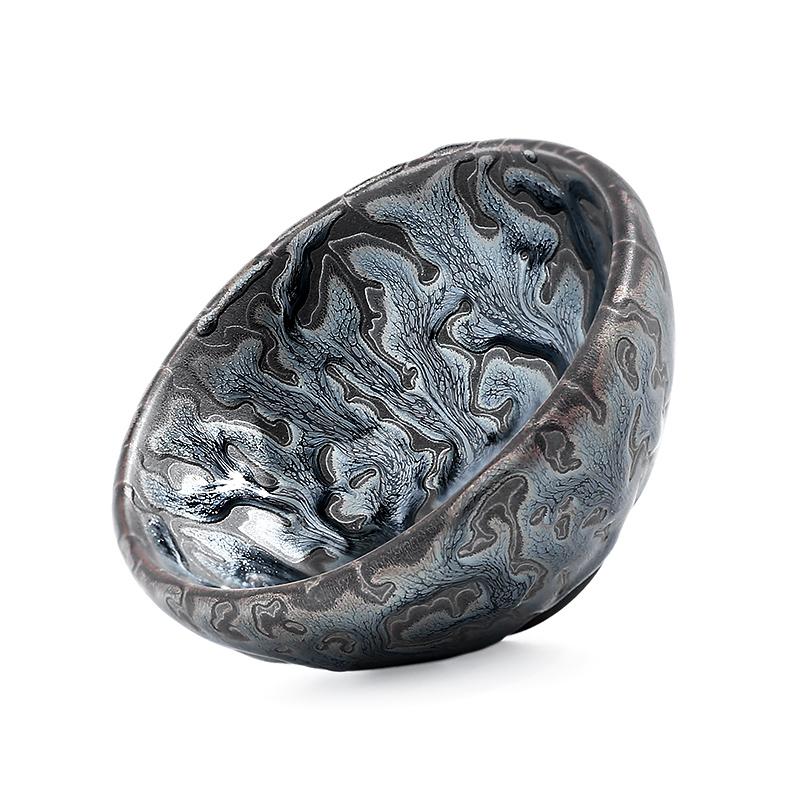
- Thick, layered glaze: The glaze on a genuine tenmoku tea bowl is thick, often pooling at the rim and foot. Imitations have thin, uniform glaze.
- Glaze flow marks: Look for 'teardrops' or 'kiln change' where the glaze drips slightly. This is a natural result of high-temperature firing.
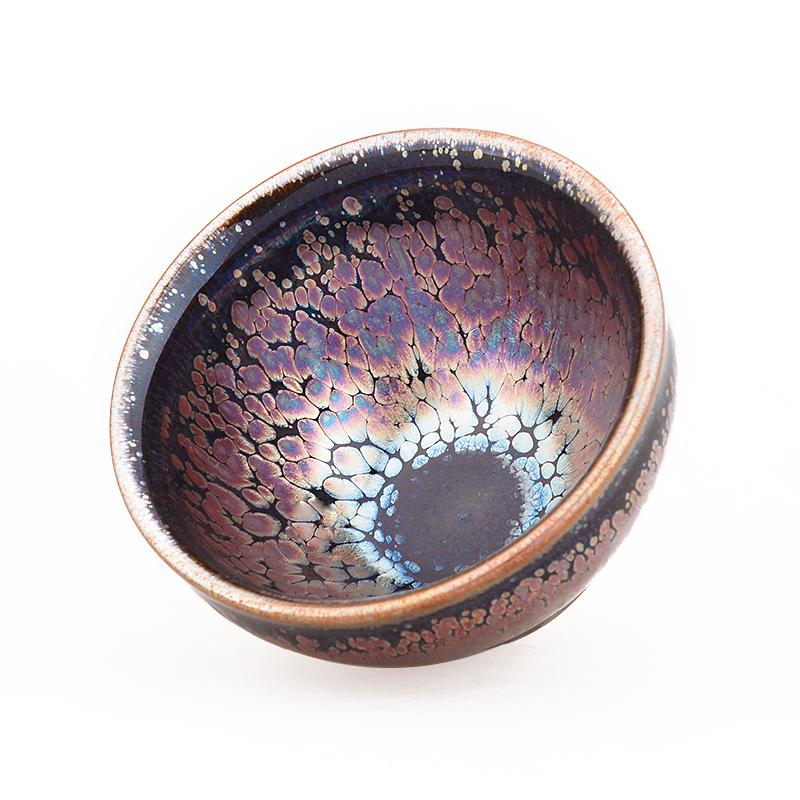
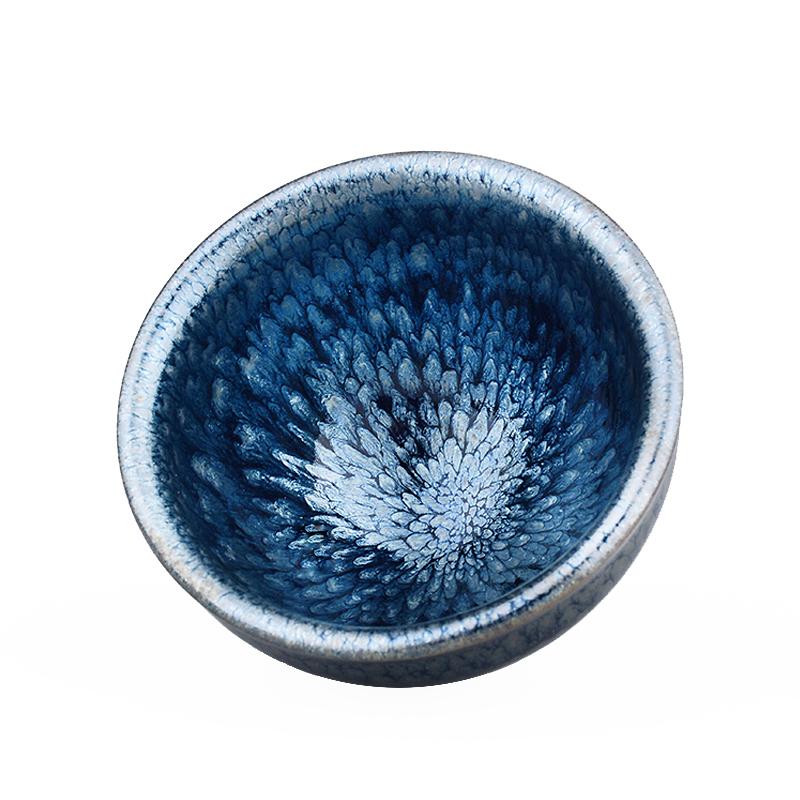
- Oil spot or hare's fur crystals: Real oil spot (you jian) shows metallic spots that shimmer under light. Fake oil spots are painted on or are too uniform.
- Foot rim: The foot is bare, rough, and shows the grayish-black clay. Many fakes have a white or glazed foot.
Jianzhan Oil Spot vs Fake: What's the Difference?
The 'oil spot' effect (also called partridge feather in Chinese) is one of the most coveted tenmoku tea bowl glazes. But how do you distinguish real from fake? Let me break it down:
| Feature | Authentic Oil Spot Jianzhan | Fake Oil Spot Tenmoku |
|---|---|---|
| Surface texture | Irregular, slightly raised metallic spots in a pattern | Flat, painted dots or decals |
| Color variation | Spots change color in different light (blue, silver, gold) | Monochrome, no iridescence |
| Scratch test | Spots are hard (crystals fused in glaze) | Can flake off or feel like paint |
| Edge softness | Spots blend naturally into the dark glaze | Sharp, artificial borders |
| Consistency | Each bowl is unique | Mass-produced, identical pattern |
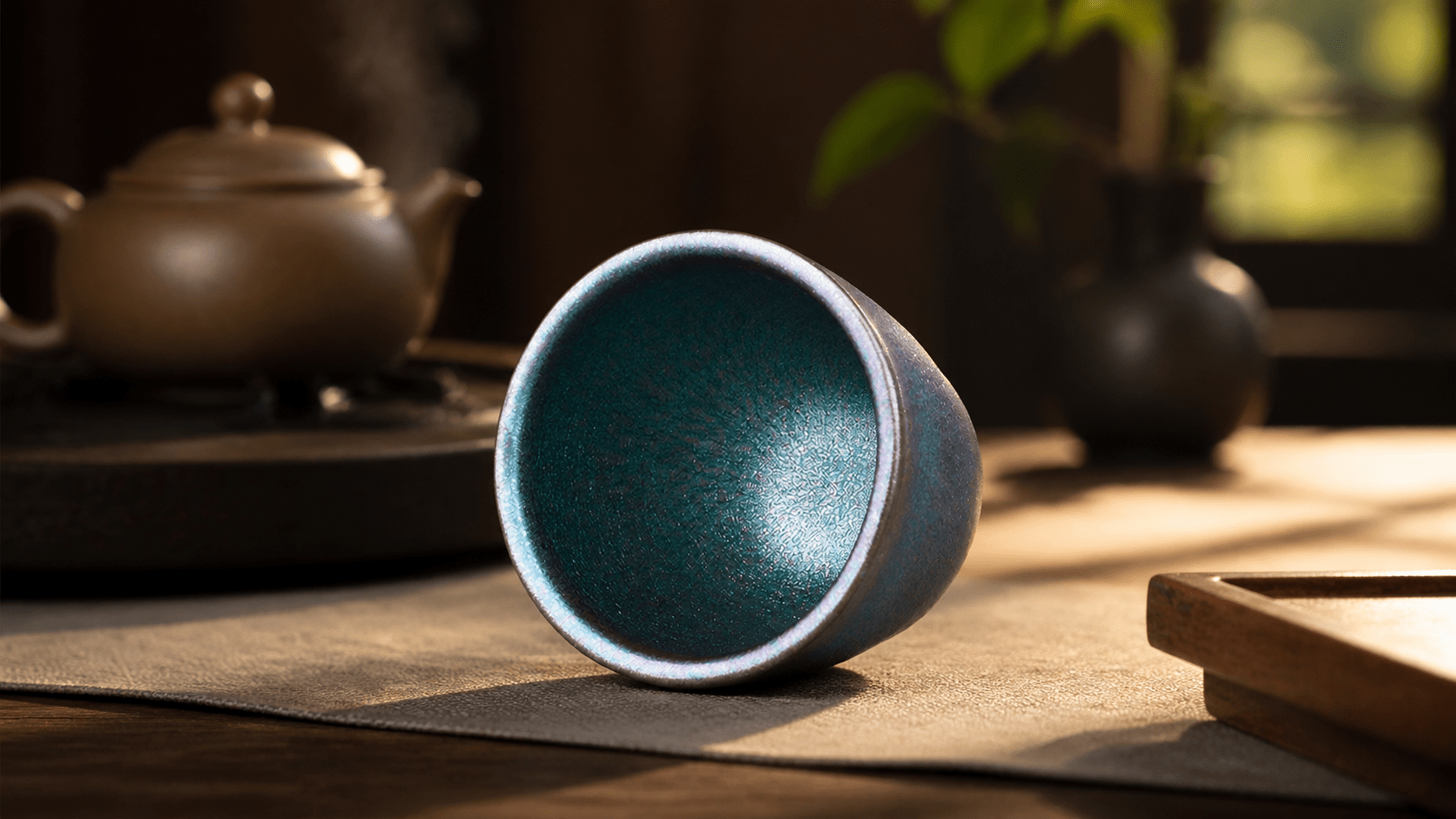
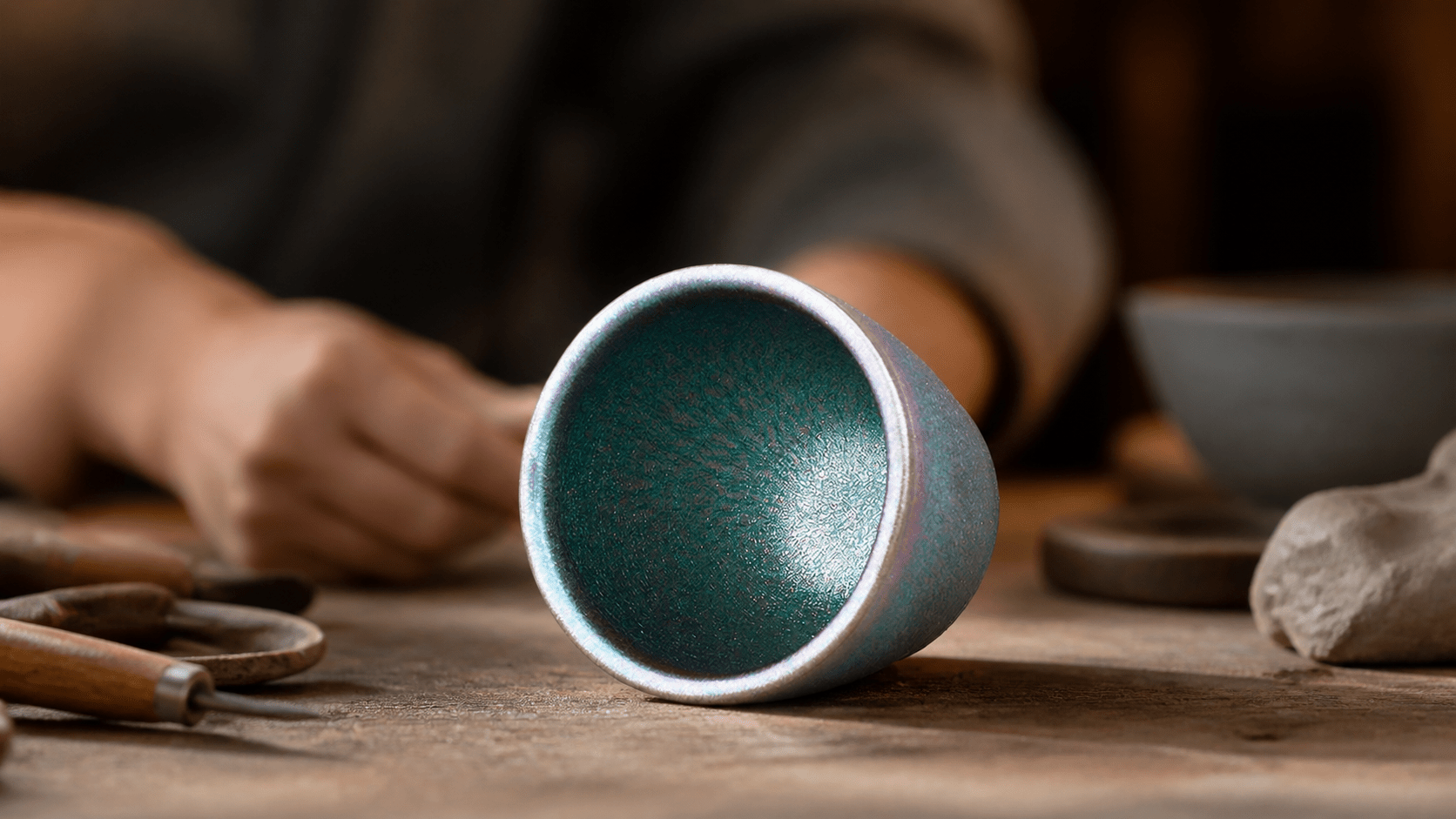
If you're looking for a tenmoku tea bowl for sale, always ask for detailed photos of the inside under natural light. A real oil spot jian zhan will never have two identical bowls.
Kiln Change vs Chemical Glaze: Understanding the Process
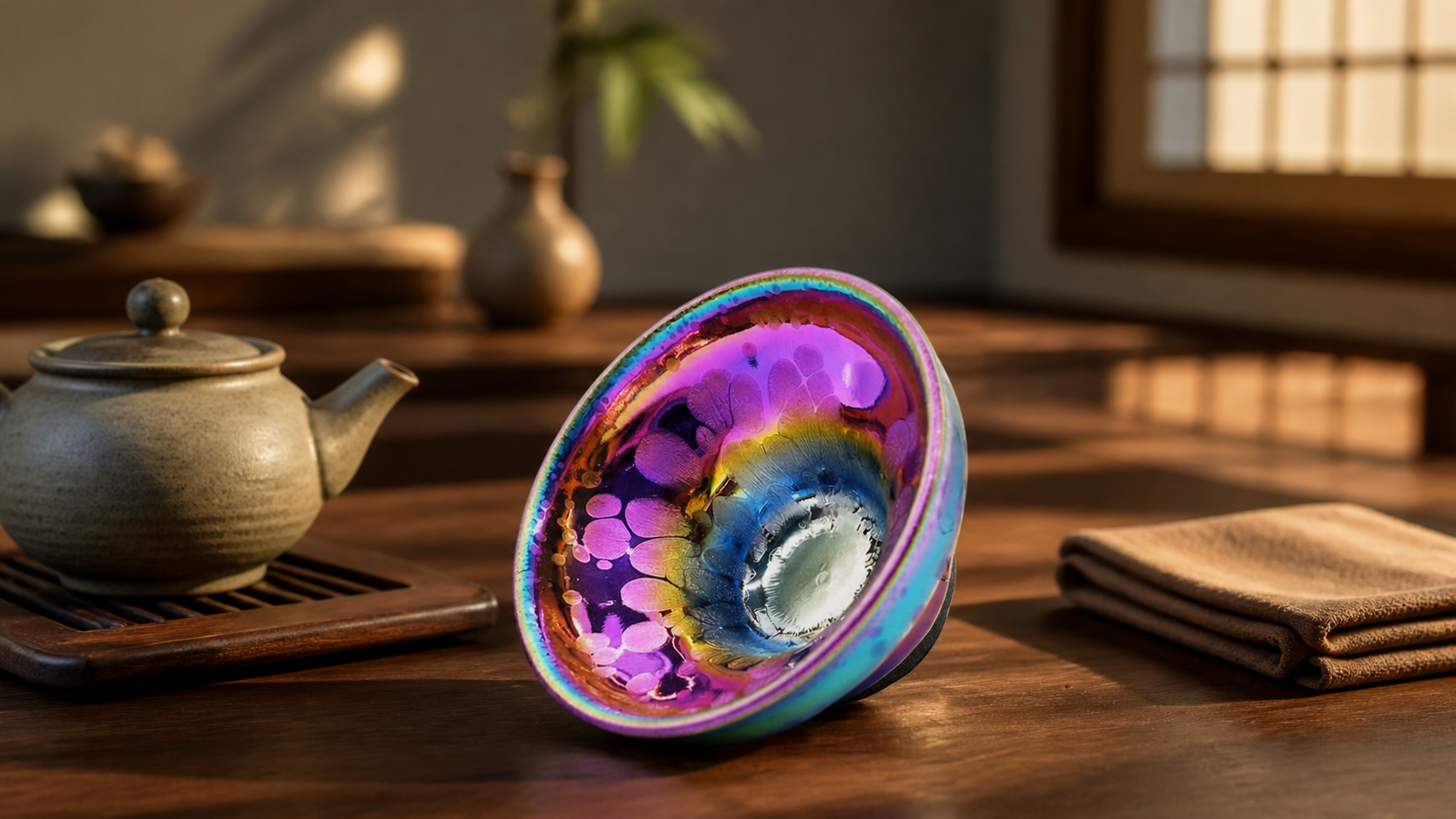
One term you'll hear often in the jianzhan world is 'kiln change' (you bian or yao bian). This refers to the natural transformation that occurs when iron in the glaze crystallizes during reduction firing at 1300°C. Genuine kiln change produces spectacular effects like rainbow reflections or deep blue oil spots.
Fakes rely on chemical additives—cobalt, manganese, or copper oxide—to mimic these colors. How to spot the difference?
- Real kiln change: Colors are subtle, layered, and only appear under direct light. The underlying glaze remains black or deep brown.
- Chemical glaze: Colors are vivid, uniform, and visible even in dim light. The entire bowl looks like it's painted.
- Temperature range: Real jianzhan is fired in a dragon kiln or gas kiln with precise temperature control. Fakes are low-fired around 1000°C and lack the glassy, durable surface.
Fun fact: The Japanese term 'tenmoku' originates from the Tianmu Mountain temple where these bowls were used for matcha. So a true tenmoku tea bowl should be suitable for whisking matcha—fakes often have a rough interior that damages the whisk.
Authentic Jianzhan Materials vs Modern Imitations
Let's get into the nitty-gritty of materials. Authentic Jianzhan clay comes from Jianyang, Fujian—a specific iron-rich deposit. Modern imitations use ordinary porcelain clay or stoneware. Here's a simple test you can do at home:
- Hold the bowl under a bright light. Real jianzhan clay appears dark gray or brownish-purple at the unglazed foot.
- Weigh it: Authentic bowls feel heavier than they look due to high iron content. Fakes are lighter.
- Tap the rim: A genuine tenmoku tea bowl produces a clear, high-pitched ring. Cheap imitations sound dull or thud-like.
- Check the glaze thickness: Real bowls have a thick glaze that feels like glass. Fakes have a thin, matte coating.
If you're shopping for a handmade tenmoku tea cup, ask the seller about the clay source. Many reputable artisans in Japan also produce tenmoku-style bowls using local clays—these can be authentic, but they're not 'Jianzhan' in the strict sense. Both are collectible, but knowing the origin helps you avoid paying jianzhan prices for a Japanese imitation.
Where to Buy a Real Tenmoku Tea Bowl for Sale
After reading this, you're probably wondering where to find an authentic piece. I recommend three paths:
- Direct from Jianyang artisans: Many potters sell online. Look for evidence of their kiln, process, and certificates (though certificates can be faked too—use your eyes).
- Reputable Japanese or US tea shops: Specialty stores that source directly from Japan or China. Always ask for provenance.
- Our own collection: We carefully vet every authentic tenmoku tea bowl we sell, ensuring each matches the historical characteristics of Song Dynasty jianzhan. Explore our handmade Jianzhan tea cups—each piece is individually inspected.
Remember: A real tenmoku tea bowl is an investment in art and history. Don't settle for a painted fake just because it's cheaper. Your gongfu tea sessions deserve a bowl that tells a story.
FAQ: Real vs Fake Tenmoku Tea Bowl
How to identify real Jianzhan vs fake tenmoku?
What is the difference between Jianzhan oil spot and fake oil spot?
Can a tenmoku tea bowl be used for matcha?
Are Japanese tenmoku tea bowls real Jianzhan?
What should I look for when buying a tenmoku tea bowl for sale online?
I hope this guide saves you from buying a fake tenmoku tea bowl. If you're ready to add an authentic piece to your tea setup, I invite you to browse our selection. Every bowl I sell has passed my personal eye test—the same test I've just taught you. Happy tea drinking!
Explore Our Collection
Ready to experience the world of tenmoku tea bowl? Browse our curated collection:
Disclaimer: This article is for informational purposes. Products and pricing subject to change.


Partager:
Tenmoku Tea Bowl for Everyday Luxury: Create a Calming Tea Ritual at Home
Tenmoku Tea Bowl: A Handmade Story That Makes Every Tea Moment Feel Deeper