

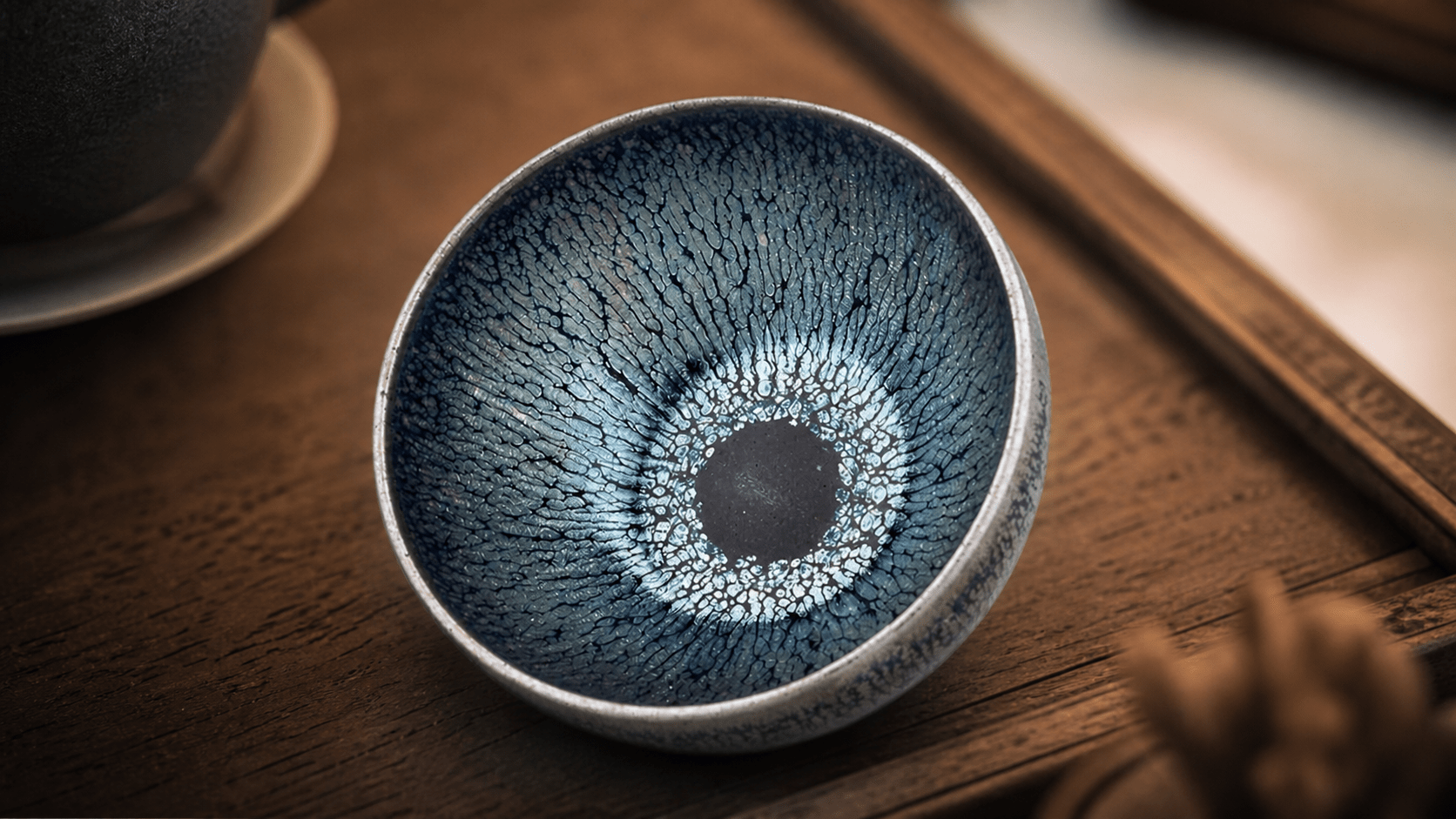

Tenmoku Tea Bowl Authenticity Guide: Buy with Confidence for Gongfu Tea
A real tenmoku tea bowl should show evidence of ceramic material, hand-finishing, and a glaze created by firing—not a decorative pattern printed onto a mass-produced cup. If you are choosing a dark-glazed tea cup for gongfu tea, learning a few visible markers can help you appreciate the piece and avoid paying handmade prices for imitation ware.
“Tenmoku” is often used broadly in the U.S. market, so authenticity starts with asking the right question: are you looking for a modern handmade Jianzhan, a Japanese interpretation of tenmoku, or an antique object with documented provenance? These are related traditions, but they are not interchangeable.
Key Takeaways
- A genuine handmade tenmoku tea bowl has variation in glaze, shape, foot, and finish; perfect visual repetition is a warning sign.
- An authentic Jianzhan is generally a high-fired black-glazed tea bowl associated with the Jian kiln tradition in China, while Japanese tenmoku is a related but distinct ceramic tradition.
- Oil spot and hare’s fur effects should appear integrated into the glaze, with depth and natural variation rather than a flat, repeated surface design.
- Price alone does not prove authenticity. Ask about origin, maker, firing method, material, and whether the bowl is handmade or factory-made.
- Use a tea bowl as it is intended: hold it, turn it in light, and brew tea in it. The best evidence is often in the material and workmanship.
What Does Real vs Fake Tenmoku Mean for Today’s Tea Buyer?
The phrase real vs fake tenmoku can be misleading because “tenmoku” describes a broad visual and historical family rather than one single product category. In the United States, sellers may use it for black-glazed bowls inspired by Chinese Jian ware, Japanese tea bowls, contemporary studio ceramics, or inexpensive cups made to resemble them.
That does not mean every affordable tenmoku-style cup is dishonest. A machine-made black-glazed cup can be useful for daily tea. The problem begins when a seller presents it as a rare handmade Jianzhan, an antique, or a one-of-one kiln transformation without evidence.
Think of it like coffee. A bag labeled “Italian roast” may describe a flavor style; it does not automatically mean the beans were grown, roasted, and packaged in Italy. Likewise, a tenmoku-style glaze may be beautiful without being an authentic Jianzhan.
For buyers, it helps to separate four categories:
- Handmade modern Jianzhan: a contemporary bowl made in the Jianzhan tradition, usually with individual forming, glazing, and firing variation.
- Japanese tenmoku: Japanese ceramic work connected to tea culture and historical tenmoku appreciation, but not necessarily Chinese Jian ware.
- Tenmoku-inspired studio pottery: contemporary work using dark or iron-rich glazes influenced by the tradition.
- Mass-produced imitation ware: factory-made cups with a printed, sprayed, molded, or highly standardized appearance.
A trustworthy listing should make this distinction clear. If the description blurs country of origin, maker, age, and production method, treat the claim cautiously.
How to Identify Real Jianzhan Before You Buy
If you are researching how to identify real Jianzhan, start with the whole bowl rather than one dramatic photograph. Authenticity is not established by a single rainbow reflection or an “oil spot” label. It comes from a consistent story connecting the clay body, glaze, firing, shape, and seller’s disclosure.
1. Look for hand-made variation in the form
Handmade Jianzhan tea bowls are rarely identical. The rim may be gently irregular, the wall thickness may shift slightly, and the bowl may feel balanced but not factory-uniform. Small asymmetries are not automatically defects; they can be normal evidence of throwing, trimming, glazing, and firing by hand.
That said, “handmade” does not excuse poor construction. The rim should feel comfortable, the bowl should sit securely, and there should be no sharp glaze edge where your lips meet the cup.
2. Examine the foot and unglazed base
The foot is one of the most useful places to inspect. A handmade bowl often has a trimmed foot ring with subtle tool marks or natural variation. The unglazed clay may reveal a darker, iron-rich body, though color alone is not conclusive because firing conditions can change it.
Be wary of a base that looks like generic glossy ceramic, has a perfectly repeated molded texture across multiple listings, or carries a vague stamp presented as proof of age. A mark can identify a studio or brand, but it does not independently authenticate a piece.
3. Ask what was actually made by hand
“Handmade” can mean different things. A clear seller should be able to say whether the bowl was wheel-thrown, slip-cast, hand-glazed, wood-fired, electric-fired, or gas-fired. None of these methods automatically makes a cup good or bad. Transparency is the point.
For premium buyers, a useful question is: “Was this bowl made and fired individually, and can you tell me where it was made?” The answer should be specific without relying on exaggerated stories.
4. Judge glaze as a surface with depth
In a real high-fired glaze, patterns sit within the glassy surface rather than on top of it like a decal. Rotate the bowl under daylight or a warm lamp. A genuine-looking glaze often changes subtly as light moves, revealing layers, speckling, flow, or crystalline variation.
Do not confuse visual complexity with guaranteed authenticity. The goal is not to find the flashiest bowl; it is to find a piece whose glaze, clay, and construction make sense together.
What Is the Difference Between Jianzhan Oil Spot vs Fake Patterns?
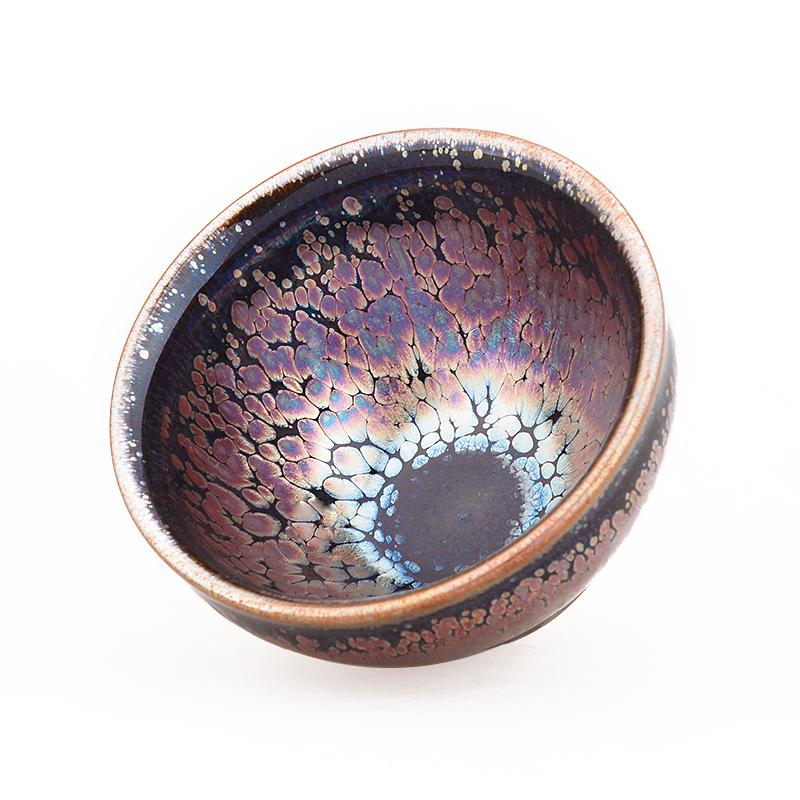
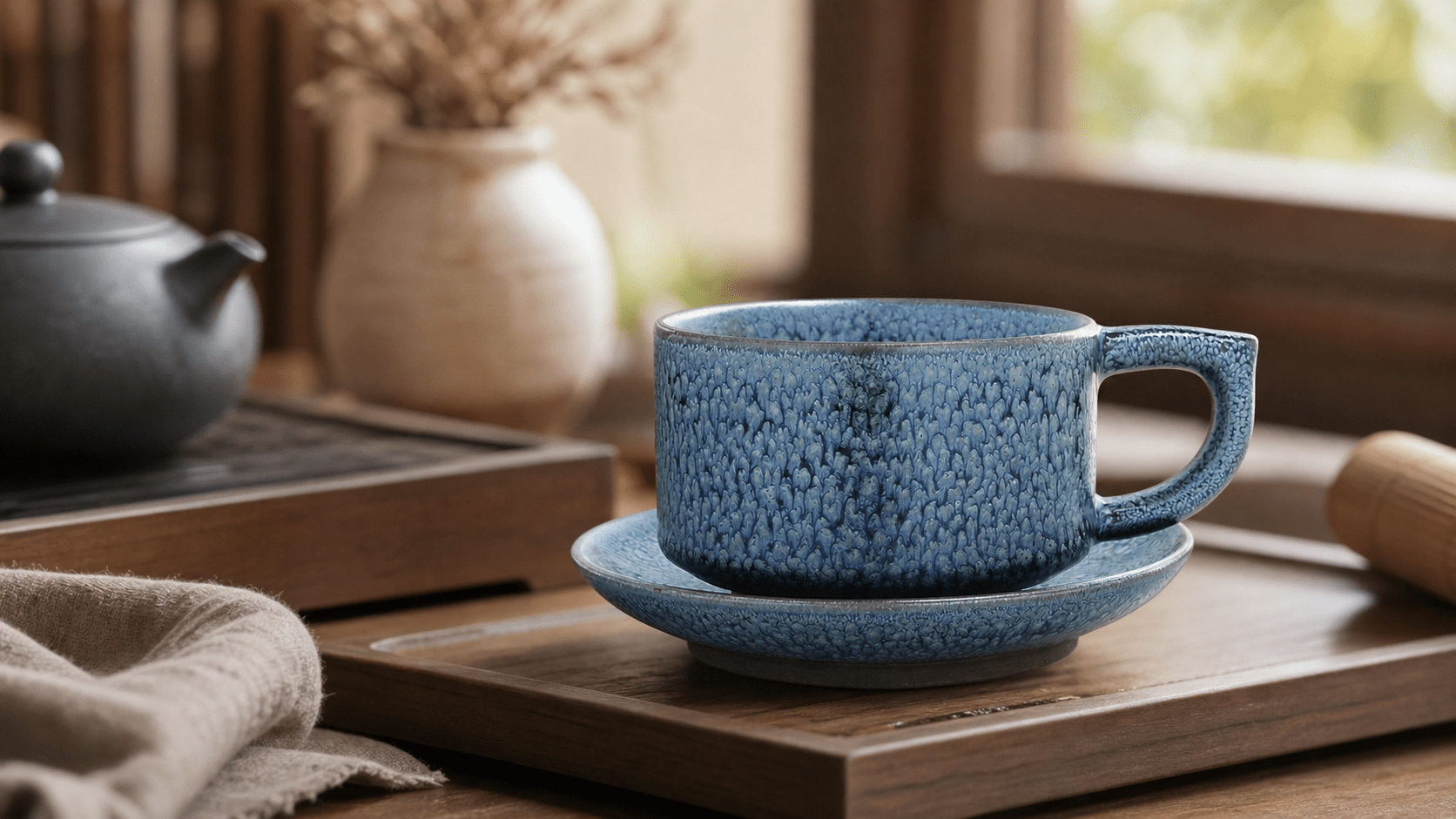
The question of jian zhan oil spot vs fake patterns is especially important because oil spot is one of the most copied visual effects. In high-fired black glazes, iron-rich materials and kiln conditions can produce silvery, bronze, blue, or multicolored spot-like effects. Each firing can develop differently, which is part of the appeal.
In an authentic-looking oil spot glaze, the spots usually vary in size, edge, spacing, and reflectivity. They may appear dense in one area and more open in another. Under changing light, they often look embedded in the glaze rather than printed with the same crisp outline everywhere.
| What to inspect | More consistent with handmade glaze | Possible imitation warning sign |
|---|---|---|
| Pattern repetition | Natural variation across the bowl | Identical spot clusters repeated on many cups |
| Surface depth | Pattern appears within or beneath the glossy glaze | Flat graphic effect or surface coating that looks separate |
| Light response | Subtle changes as the bowl is rotated | Same appearance from every angle |
| Relationship to form | Glaze flows naturally around rim, wall, and foot | Pattern stops abruptly or ignores the bowl’s contours |
| Seller disclosure | Clear material and production details | Only buzzwords, no maker or process information |
A fake-looking pattern is often too consistent. Imagine wallpaper versus a night sky: wallpaper repeats a designed unit, while a night sky feels irregular even when it is densely patterned. A handmade glaze should have that kind of living variation.
Still, visual inspection has limits. Photos can be edited, lighting can intensify color, and modern ceramic techniques vary widely. If a claim matters to your purchase decision, request additional images of the interior, rim, foot, and bowl in neutral light.
Why Do Materials and Process Markers Matter in an Authentic Jianzhan?
Jianzhan became admired during China’s Song Dynasty, when dark bowls created a striking contrast with whipped tea. Today, many people use them for loose-leaf tea, including pu-erh tea, oolong, and everyday gongfu tea sessions. Their modern appeal comes from touch, weight, light, and ritual—not simply from historical labels.
Traditionally associated Jian ware is known for an iron-rich clay body and dark iron-rich glaze. But buyers should avoid amateur “tests” that claim to prove a bowl is real. A magnet, a color change, or a single sound when tapped cannot authenticate a tea bowl. These shortcuts are unreliable and can even damage ceramics.
Instead, look for credible process markers:
- A clear description of where the tea bowl was made.
- A maker, studio, or workshop name when available.
- Specific language about forming and firing, rather than vague claims of “ancient secret technique.”
- Photos that show the rim, interior, exterior, foot, and scale in the hand.
- A return policy or customer support channel for questions before purchase.
For an antique represented as Song Dynasty, the standard should be much higher. Serious antique attribution requires provenance, condition details, and ideally qualified evaluation. A modern retail listing with no documentation should not be treated as proof of medieval origin.
Are Japanese Tenmoku for Sale the Same as Jianzhan?
Not necessarily. The word “tenmoku” entered Japanese tea vocabulary through historical cultural exchange, and Japan developed its own rich ceramic traditions around dark-glazed tea bowls. A Japanese tenmoku cup may be an excellent tea object, but it should not be marketed as an authentic Chinese Jianzhan unless that is truly its origin.
When browsing Japanese tenmoku for sale, read the listing for the maker, kiln, country, and technique. Japanese tenmoku can refer to work made in Japan, Japanese-inspired forms, or a retailer’s aesthetic category. The more exact the description, the easier it is to buy with confidence.
This distinction is good for collectors and gift buyers alike. It respects the history behind each tradition and helps you choose according to what you actually value: Chinese Jian kiln heritage, Japanese tea ceremony aesthetics, a specific studio potter, or simply a beautiful cup for daily use.
Which Details Should You Check When Choosing the Best Jianzhan Tea Cup?
The best Jianzhan tea cup is not always the most expensive or most colorful. It is the one that is honestly described, comfortable to use, and aligned with your tea habits. A small bowl with a smooth rim may suit concentrated gongfu tea. A wider bowl may better suit a slower tea ceremony or a gift recipient who enjoys holding a warm cup.
Use this practical buying checklist:
- Confirm the category: Jianzhan, Japanese tenmoku, tenmoku-inspired pottery, or factory-made tea ware.
- Check the listing photos: look for the interior, exterior, rim, foot, and a scale reference.
- Read the material and process description: favor specific, plain language over dramatic claims.
- Assess usability: check capacity, weight, rim comfort, and care instructions.
- Review return terms: especially for a premium gift or first purchase.
- Choose the glaze you enjoy: oil spot, hare’s fur, and dark black glazes each read differently in your home lighting.
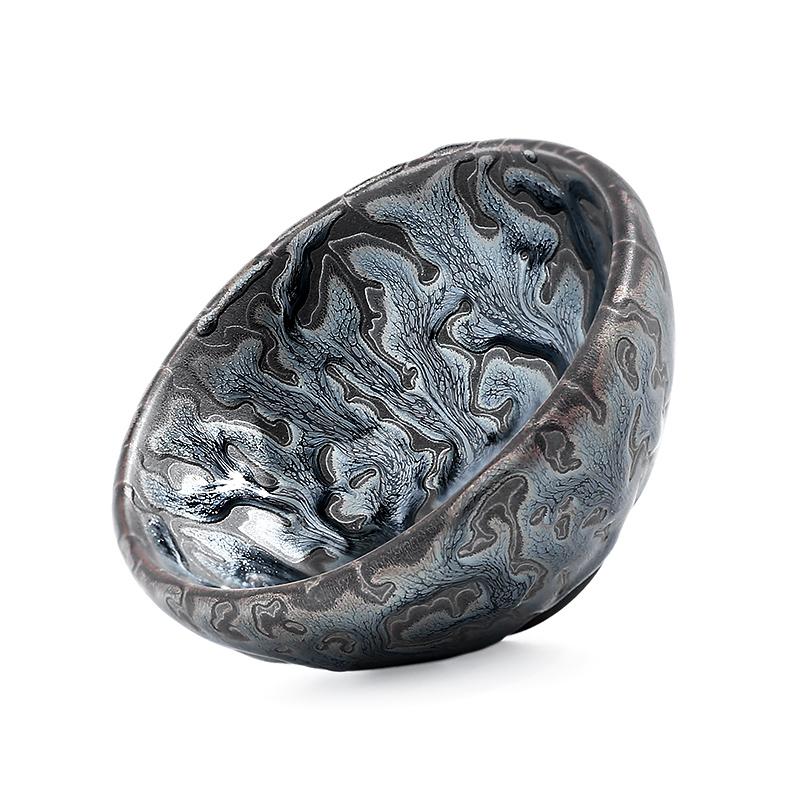
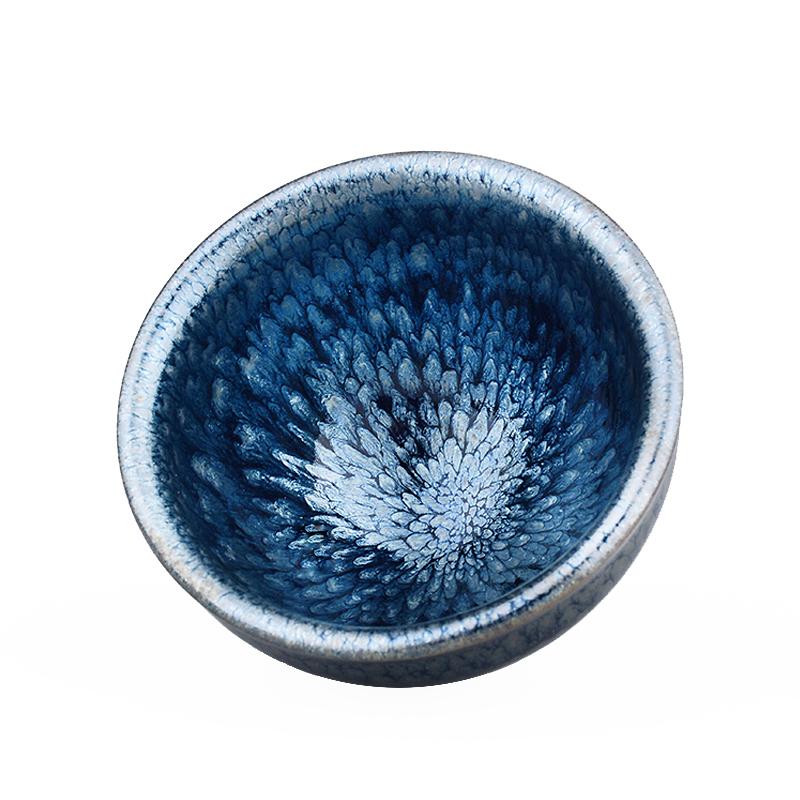
If you love linear, flowing glaze effects, Browse our hare's fur Jianzhan series. For a more celestial, speckled surface, Discover our collection of oil spot tenmoku cups.
For a gift for tea lovers, include a short note that explains what makes the bowl special: it is meant to be used slowly, turned in the hand, and appreciated with tea. That framing gives a handmade object more meaning than a generic “luxury gift” label.
How Should You Care for Handmade Jianzhan Tea Cups?
Good care helps a tea bowl remain enjoyable without turning tea into a museum exercise. Rinse the cup with warm water after use, avoid harsh abrasives, and let it dry fully. Unless the maker specifically says otherwise, hand-washing is usually the gentlest choice.
Do not use boiling water to shock a bowl that is very cold, and do not assume every handmade piece is microwave- or dishwasher-safe. A small amount of tea staining can develop over time, especially with pu-erh tea. Many tea drinkers see this as part of the bowl’s personal history, but regular rinsing keeps the surface clean and pleasant.
Frequently Asked Questions
How can I identify real Jianzhan from online photos?
Look for multiple photos showing the rim, interior, foot, and scale; then check for clear origin and process details. Natural glaze variation, a hand-finished foot, and transparent seller information are stronger signals than one close-up of colorful spots.
Is every tenmoku tea bowl an authentic Jianzhan?
No. Tenmoku is a broader term used for dark-glazed tea ware and related traditions. An authentic Jianzhan should be accurately identified as such, while Japanese tenmoku and tenmoku-inspired ceramics should be described by their own origin and method.
What is the easiest Jianzhan oil spot vs fake comparison?
Check whether the pattern has depth and irregularity. Handmade-looking oil spot glaze varies in shape, density, and reflectivity, while imitation patterns often look flat, repeated, or exactly alike across many products.
Are handmade Jianzhan tea cups safe for gongfu tea?
Use tea ware according to the maker’s care and food-safety information. A reputable seller should provide clear product details and avoid unsupported health claims. If you have a specific concern, ask the seller before purchase.
Does a high price guarantee a real vs fake tenmoku result?
No. Price can reflect workmanship, brand, rarity, shipping, or retail positioning, but it does not prove origin or authenticity. Specific documentation and transparent product details matter more than price alone.
Can I use an authentic Jianzhan for pu-erh tea every day?
Yes, if the maker indicates the bowl is suitable for regular tea use. Many people enjoy Jianzhan with pu-erh tea because the dark glaze and warm bowl complement a focused tea session. Rinse and dry it after use.
Choose a Tenmoku Tea Bowl for the Story You Can Verify
A meaningful tenmoku tea bowl does not need an exaggerated legend. It needs an honest origin, a well-made form, and a glaze you want to meet again at your next tea session. Whether you choose a modern Jianzhan, a Japanese tenmoku, or another handmade dark-glazed cup, buy the object for what it truly is.
Start with the details, ask direct questions, and choose a bowl that feels right in your hand. That is the most practical way to bring a small piece of tea culture into daily life—or select a thoughtful gift for tea lovers.
Explore Our Collection
Ready to experience the world of tenmoku tea bowl? Browse our curated collection:
Disclaimer: This article is for informational purposes. Products and pricing subject to change.


Partager:
Tenmoku Tea Bowl: Turn a Daily Cup of Tea Into a Restorative Ritual
Tenmoku Tea Bowl Authenticity: How to Buy with Confidence