

Tenmoku Tea Bowl Authenticity Guide: How to Buy a Real Jianzhan With Confidence
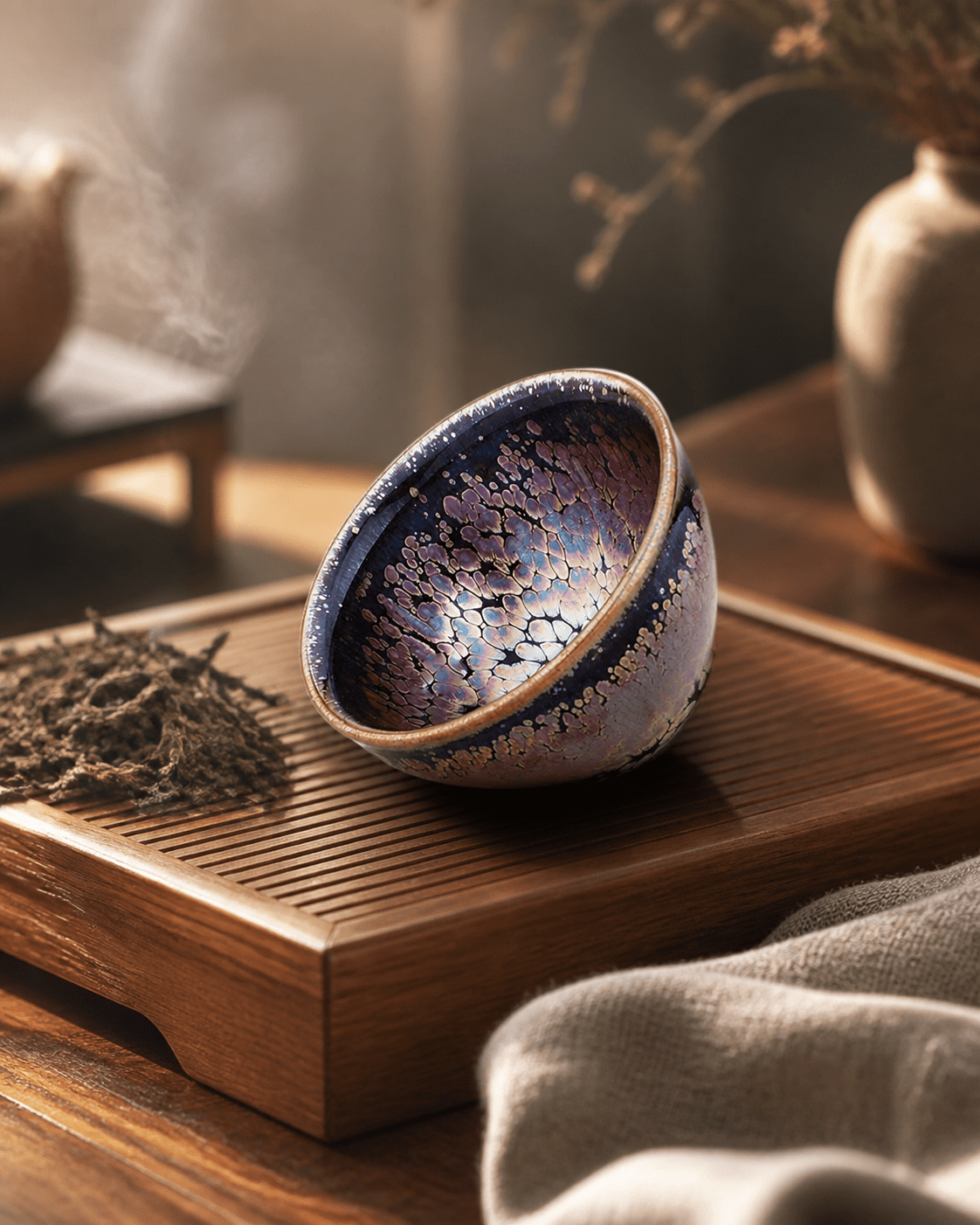
A real tenmoku tea bowl, also called Jianzhan, is a high-iron ceramic cup fired at extreme temperatures to create natural metallic glaze effects. If you are buying a handmade Tenmoku tea cup for gongfu tea, a Japanese-style tea ceremony, or as a gift for tea lovers, the fastest way to avoid fakes is to inspect the clay, glaze movement, firing marks, and seller transparency.
Think of authentic Jianzhan like natural stone or hand-forged steel: no two pieces should look perfectly identical. The beauty comes from minerals, flame, and kiln atmosphere—not printed patterns or painted decoration.

Key Takeaways
- A genuine Jianzhan is traditionally made with iron-rich clay from the Jianyang region of Fujian, China.
- Real Tenmoku glaze effects, such as oil spot and partridge feather, are formed by firing chemistry, not paint.
- Perfectly uniform dots, plastic-like shine, or printed patterns are warning signs.
- The foot ring, weight, glaze pooling, and iron body can reveal a lot about authenticity.
- For US buyers, buying from a specialist seller with clear photos and artist information is safer than chasing the lowest price.
What Is a Real Tenmoku Tea Bowl?
A Tenmoku tea bowl is a dark-glazed ceramic tea vessel with roots in China’s Song Dynasty. The Chinese name is Jianzhan, referring to wares produced around Jianyang in Fujian. These bowls became prized by monks, scholars, and tea drinkers because the dark glaze made powdered tea foam easier to see.
In Japan, these bowls became known as Tenmoku after Japanese monks brought them back from China. That is why you may see both Chinese and Japanese naming in the market. “Tenmoku” is often used broadly in the West, while “Jianzhan” usually points to the Chinese Jian kiln tradition.
Today, collectors and tea drinkers value a good tenmoku tea bowl for both function and beauty. It can be used for gongfu tea, casual daily tea, or displayed as a premium ceramic art piece. The best Jianzhan tea cup should feel grounded in the hand, show natural glaze variation, and enhance the ritual feeling of tea.
How to Identify Real Jianzhan Before You Buy?
If you are wondering how to identify real Jianzhan, start with the basics: material, glaze, firing, and origin. Authentic Jianzhan is not just any black cup with shiny speckles. It is a high-fired ceramic made from iron-rich local clay and mineral glaze.
Here are the strongest signs to check:
- Iron-rich body: The unglazed foot should look dark brown, black-brown, or iron-toned rather than pale white porcelain.
- Natural glaze movement: The glaze should show depth, pooling, flow, and variation. It should not look flat like a sticker.
- High-fired surface: Real Tenmoku glaze often feels glassy but not plasticky. It has depth under light.
- Handmade irregularity: Slight asymmetry, trimming marks, and individual character are normal.
- Seller documentation: Look for clear product photos, maker details, kiln information, and honest descriptions of firing type.
A handmade Tenmoku tea cup does not need to be antique to be real. Many authentic pieces are contemporary works made by trained craftspeople in Jianyang and nearby ceramic centers. The key is whether the cup follows the material and firing logic of Jianzhan rather than merely copying the look.
For a curated starting point, Explore our handmade Jianzhan tea cups and compare glaze types, shapes, and artist-made details side by side.
Real vs Fake Tenmoku: What Are the Biggest Telltale Signs?
The phrase real vs fake Tenmoku can be confusing because “Tenmoku” is sometimes used for any dark studio glaze. For authenticity, focus on whether the piece is truly Jianzhan-style: iron clay, mineral glaze, high-temperature firing, and naturally developed patterns.
Common fakes often rely on surface effects. Some are printed, airbrushed, chemically treated, or made from cheap white clay with a dark coating. These may look dramatic in photos but feel lifeless in person.
| Feature | Authentic Jianzhan | Common Fake or Low-Quality Copy |
|---|---|---|
| Clay body | Dark, iron-rich body visible at foot ring | White or pale clay hidden under dark paint |
| Glaze pattern | Organic, varied, formed during firing | Uniform dots, printed pattern, or repeated design |
| Surface depth | Layered metallic shimmer under light | Flat shine or plastic-like coating |
| Foot ring | Trimmed by hand, often unglazed and earthy | Overly smooth, molded, or fully coated to hide clay |
| Weight | Substantial but balanced | Too light, too thick, or clumsy |
| Seller info | Clear origin, photos, process notes | Vague claims, stock images, unrealistic prices |
One easy test is to examine the pattern under angled light. Real Tenmoku glaze has depth, like looking into dark honey or polished obsidian. Fake patterns often sit on top of the surface, like a decal on a mug.
Jianzhan Oil Spot vs Fake: How Can You Tell the Difference?
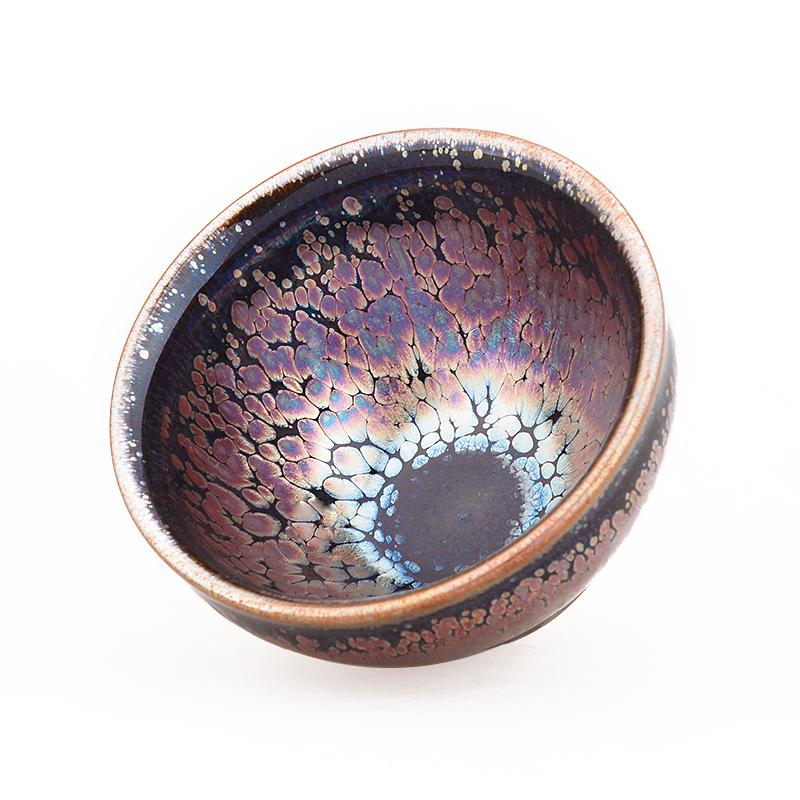
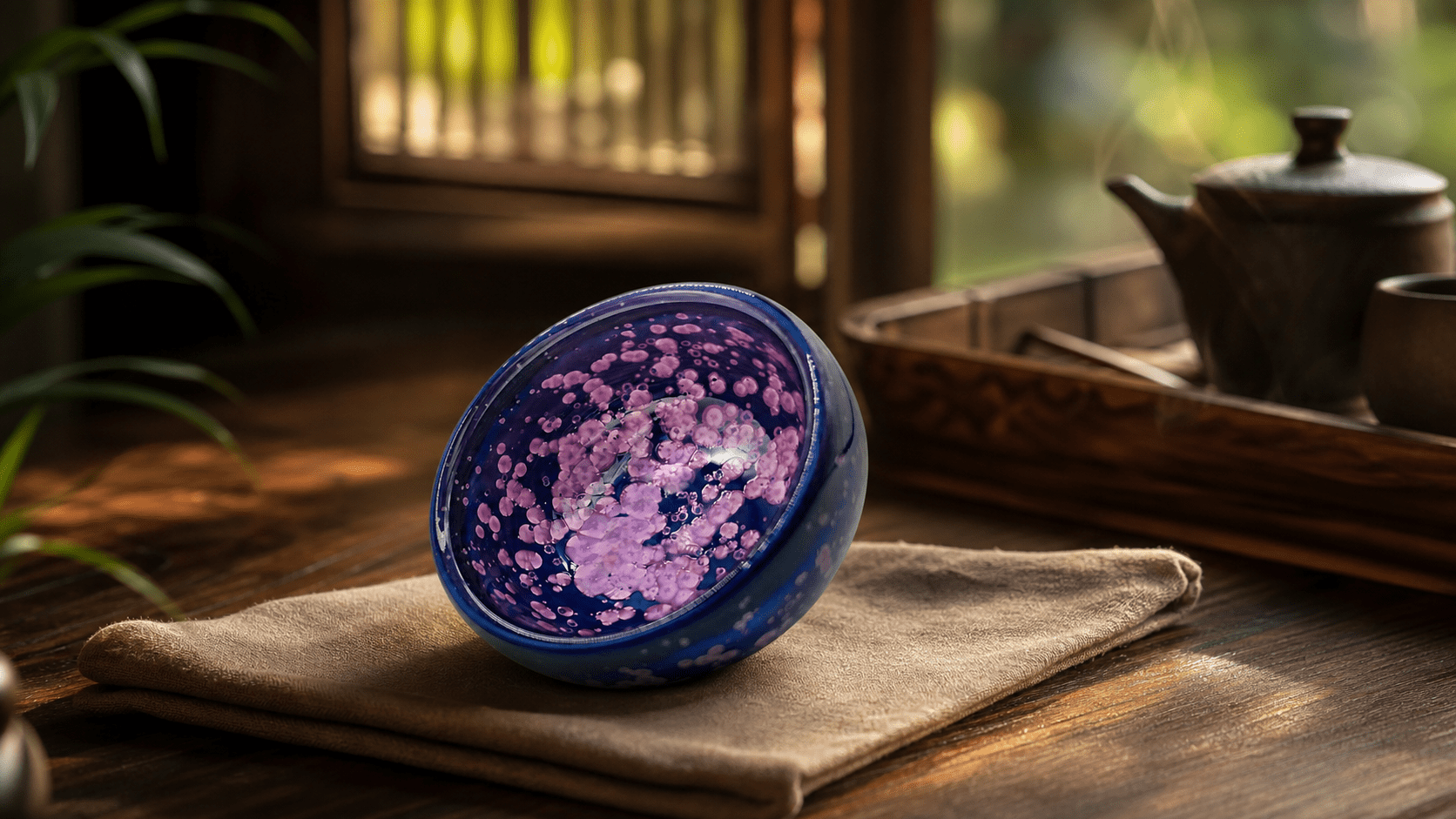
The search term jian zhan oil spot vs fake is popular because oil spot is one of the most copied Jianzhan effects. A real oil spot Tenmoku cup has metallic spots created when iron crystals separate and develop during firing. These spots may look silver, bronze, gold, or blue depending on glaze chemistry and light.
Real oil spot patterns are rarely perfectly even. Some spots are larger, some smaller. Some merge, fade, or stretch as the glaze flows. The pattern should feel alive.
Warning signs of fake oil spot include:
- Dots that are perfectly identical in size and spacing.
- Patterns that stop abruptly in a printed-looking edge.
- Metallic paint that scratches or flakes.
- Glaze with no depth beneath the spots.
- Product photos where every cup looks exactly the same.
Also inspect the inside of the cup. In authentic Jianzhan, the interior often shows the most dramatic glaze because gravity pulls the glaze downward during firing. Look for natural variation near the base, rim, and wall. A fake may have the same pattern intensity everywhere because it was applied mechanically.
Price alone is not proof, but it is a clue. If a seller claims a rare museum-grade oil spot Tenmoku cup at a bargain-bin price, be skeptical. Good firing has a high failure rate. Many pieces crack, warp, blister, or fail to develop attractive patterns, and that labor is reflected in the price.
How Does Tenmoku Glaze Reveal Authentic Craftsmanship?
Tenmoku glaze is famous because it is unpredictable. It contains iron and other minerals that react under intense heat. The kiln atmosphere, oxygen level, cooling speed, glaze thickness, and clay body all affect the final appearance.
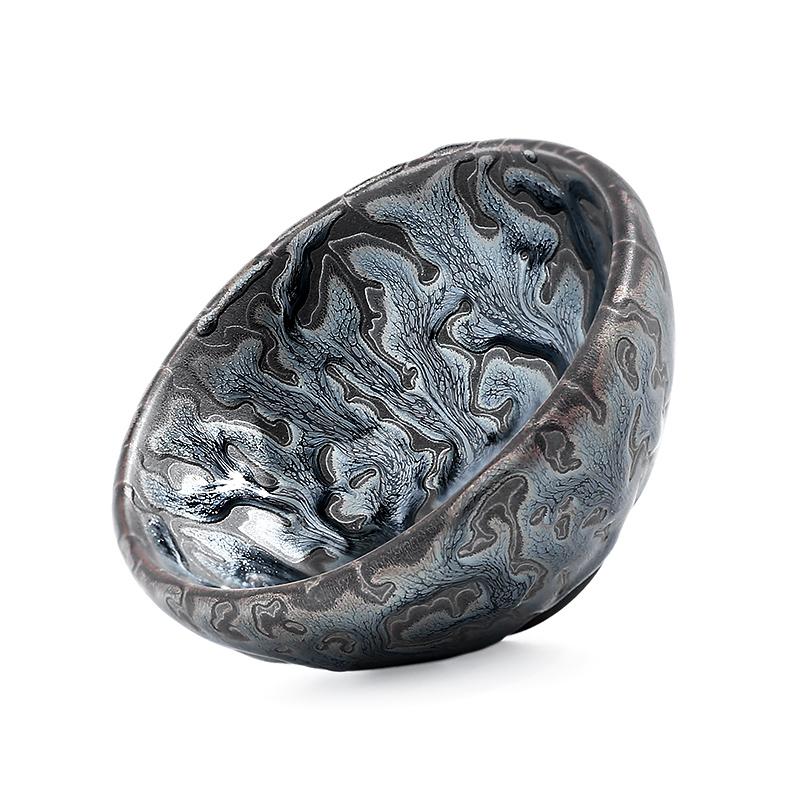
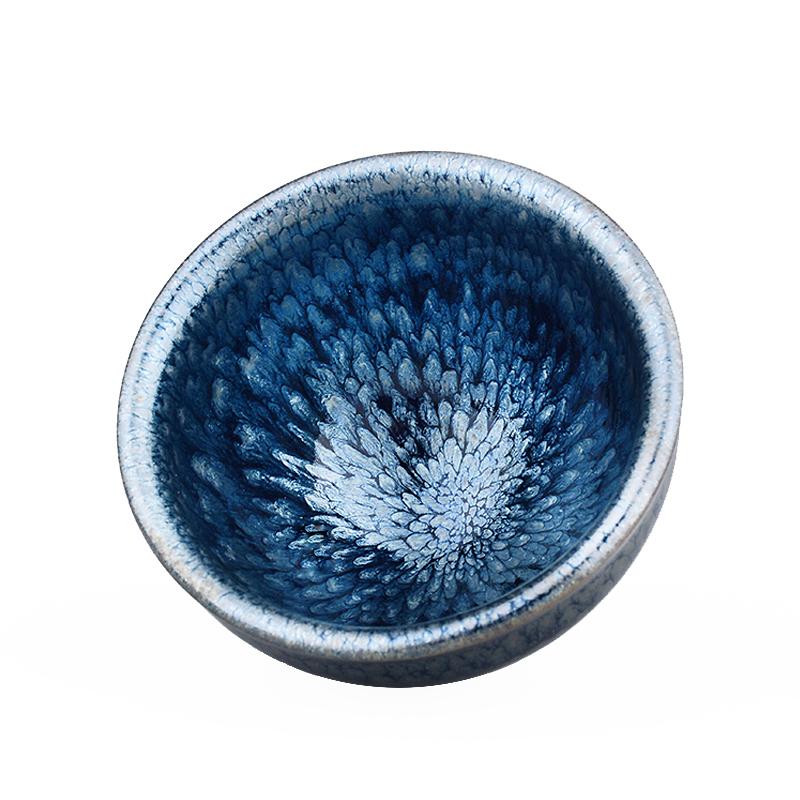
That is why authentic Jianzhan is not simply “decorated.” It is transformed by fire. Patterns such as oil spot, hare’s fur, and partridge feather are not painted onto the bowl. They emerge from chemistry and process.
Imagine baking artisan sourdough compared with stamping a bread pattern on a supermarket loaf. Both may look rustic from a distance, but only one reflects real fermentation, timing, and craft. Jianzhan works the same way: the beauty is in the process.
Look for these process markers:
- Glaze pooling: Slightly thicker glaze near the lower interior or above the foot.
- Rim thinning: Many cups show a thinner, brownish rim where glaze has moved downward.
- Crystalline depth: Metallic effects should appear embedded within the glaze.
- Natural imperfection: Tiny kiln marks may exist, but they should not compromise safe use.
Not every flaw is acceptable. Cracks through the body, sharp glaze edges, peeling glaze, or chemical odors are serious red flags. Authentic does not mean poorly made.
Does Jianyang Origin Matter for Authentic Jianzhan?
Jianyang matters because it is the historical home of Jian ware. During the Song Dynasty, Jian kilns produced some of the most admired black-glazed tea bowls in the world. The region’s iron-rich clay and long ceramic tradition are central to the identity of authentic Jianzhan.
For a modern buyer in the United States, this does not mean every good piece must be an antique or must come with complicated paperwork. But origin still matters. A seller should be able to explain where the cup was made, what type of glaze it uses, and whether it was hand-thrown or molded.
Some Japanese Tenmoku bowls are also highly respected in their own tradition. The Japanese tea ceremony developed its own aesthetics around Tenmoku-style bowls. However, if a listing specifically claims “Jianzhan,” “Jianyang,” or “Song Dynasty glaze,” it should match the material and process standards of that tradition.
Be careful with listings that use every prestige term at once: “ancient Song Dynasty Japanese Jianyang Tenmoku master antique” with no proof. Real sellers use precise language. Fake sellers often stack keywords to create excitement.
What Materials and Process Markers Separate Handmade Tenmoku Tea Cups From Fakes?
A true handmade Tenmoku tea cup carries small signs of human work. The shape may be wheel-thrown or carefully hand-finished. The foot ring is often trimmed, leaving a raw clay surface that reveals the body material.
Check the foot first. This is one of the most useful areas because fakes often focus on the glossy top and neglect the bottom. A real Jianzhan foot usually shows dark, dense clay. It may feel slightly sandy or stone-like, not chalky white.
Next, look at the rim. In many authentic cups, the rim is thinner and the glaze may appear brown, black, or rust-toned where it has thinned. That transition is hard to fake convincingly because it comes from how glaze melts and flows.
Finally, consider the feel in hand. Jianzhan often has a grounded weight, which many tea drinkers love for gongfu tea. It should feel stable when placed on a tea tray, comfortable near the lips, and visually calm even when the glaze is dramatic.

What Common Fakes Should Tea Lovers Avoid?
Common fake Tenmoku bowls usually fall into a few categories. Some are harmless decorative cups with misleading descriptions. Others are low-quality items sold at premium prices. The problem is not always that the cup is unusable; it is that the buyer is misled.
Watch for these common fakes:
- Printed oil spot cups: These have repeated dot patterns that look too perfect.
- Painted metallic cups: The shine sits on top and may scratch off.
- White clay copies: The dark exterior hides a pale ceramic body unrelated to Jianzhan.
- Resin-coated novelty cups: These can look glossy but are not proper high-fired tea ceramics.
- Fake antiques: Modern cups artificially aged and sold as Song Dynasty pieces.
For most tea lovers, a contemporary authentic Jianzhan is the smarter purchase than a supposed antique. True Song Dynasty pieces belong in serious collections and require expert authentication. If you simply want a beautiful cup for tea ceremony practice or daily gongfu tea, choose a well-made modern piece from a transparent seller.
How Should US Buyers Choose the Best Jianzhan Tea Cup?
The best Jianzhan tea cup is not always the most expensive. It is the one that fits your tea habit, aesthetic taste, and trust level with the seller.
For gongfu tea, many US buyers prefer smaller cups that hold roughly 50–120 ml. This size helps you enjoy aromatic teas in short infusions. For a Japanese-inspired tea ceremony display or matcha-style presentation, a larger tenmoku tea bowl may feel more appropriate.
Use this buyer checklist:
- Purpose: Daily tea, display, gift, or collection?
- Size: Small cup for gongfu tea or larger bowl for ceremony use?
- Glaze style: Oil spot, hare’s fur, partridge feather, or deep black?
- Authenticity: Does the seller show foot ring, interior, exterior, and rim?
- Care: Is the cup food-safe and suitable for hot tea?
- Gift value: Does it include packaging, story, or artist details?
If you are shopping for a gift for tea lovers, choose a versatile glaze with clear visual appeal, such as oil spot or hare’s fur. If the recipient already collects ceramics, a more subtle partridge feather or kiln-transformed piece may feel more refined.
Ready to compare real pieces? Shop authentic Tenmoku tea bowls selected for tea drinkers who care about craft, not just appearance.
FAQ: Real vs Fake Tenmoku Tea Bowl Questions
How to identify real Jianzhan at home?
To identify real Jianzhan at home, inspect the unglazed foot ring, glaze depth, and pattern variation. The clay should look dark and iron-rich, not pale white. The glaze should show natural movement and depth rather than a printed surface. Compare the inside, rim, and exterior under bright angled light.
Jianzhan oil spot vs fake: what is the easiest difference to see?
The easiest difference is pattern naturalness. Real oil spots vary in size, density, brightness, and placement because they form in the kiln. Fake oil spots often look evenly stamped, printed, or painted. If every dot looks identical, be cautious.
Real vs fake Tenmoku: can a low price still be authentic?
Yes, a modestly priced modern cup can be authentic, especially if it is simple or from an emerging maker. However, rare glaze effects, large bowls, and high-success firing results usually cost more. A very low price combined with vague origin claims is a red flag.
What makes authentic Jianzhan different from regular black ceramic?
Authentic Jianzhan uses iron-rich clay and mineral Tenmoku glaze fired at high temperature. Regular black ceramic may simply use a black glaze on ordinary clay. Jianzhan is valued for kiln-born effects such as oil spot, hare’s fur, and partridge feather.
Is a Japanese Tenmoku tea bowl the same as Jianzhan?
They are related but not always the same. Jianzhan refers to the Chinese Jian ware tradition from Jianyang. Japanese Tenmoku developed after these bowls were admired in Japan and incorporated into Japanese tea culture. A Japanese Tenmoku bowl can be excellent, but it should not be mislabeled as Jianyang Jianzhan unless it truly matches that origin and process.
Can I use an authentic Tenmoku tea bowl for gongfu tea?
Yes. Many tea drinkers use a Tenmoku tea bowl or smaller Jianzhan cup for gongfu tea. The dark glaze beautifully frames amber, gold, and reddish tea liquor, while the cup’s weight gives the tea session a calm, grounded feel.
Final Thoughts: Buy the Bowl, Not the Hype
A real tenmoku tea bowl is more than a shiny black cup. It is the result of iron-rich clay, mineral glaze, skilled forming, and high-temperature firing. Once you know what to look for, the difference between authentic Jianzhan and a surface-level fake becomes much easier to see.
Focus on the foot ring, glaze depth, natural pattern variation, and seller honesty. Whether you want an oil spot Tenmoku cup for daily gongfu tea, a Japanese-inspired tea ceremony piece, or a memorable gift for tea lovers, choose craftsmanship over exaggerated claims.
If you are ready to bring this tradition to your tea table, explore a handmade piece with clear photos, real materials, and a glaze that rewards slow looking.
Explore Our Collection
Ready to experience the world of tenmoku tea bowl? Browse our curated collection:
Disclaimer: This article is for informational purposes. Products and pricing subject to change.


Partager:
Tenmoku Tea Bowl: A Small Luxury That Makes Daily Tea Feel Restorative
Tenmoku Tea Bowl: A Handmade Story of Heritage, Craft, and a More Meaningful Tea Ritual