

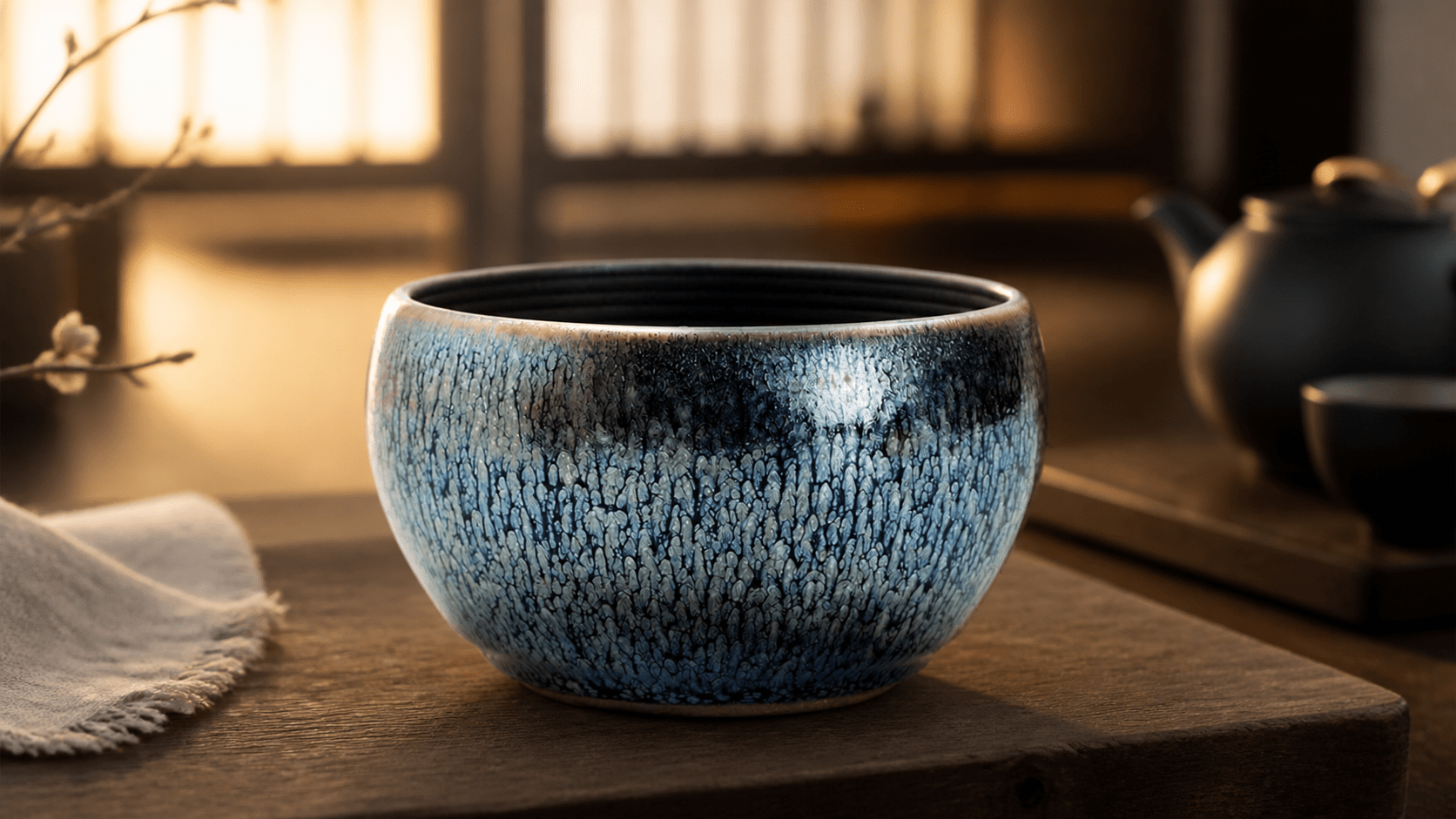

Why Is a Tenmoku Tea Bowl So Expensive? The Real Value Behind a Handmade Jianzhan Masterpiece
I'm Tenmokus Editorial Team, and I've spent over a decade immersed in the world of Chinese and Japanese tea ware. When I first held a genuine tenmoku tea bowl, I knew why collectors speak about them with reverence. A single cup can easily cost $200, $500, even $2,000. The reason? Each piece is a one-of-a-kind handmade ceramic born from a merciless kiln process that dates back to the Song Dynasty. Used daily in a focused gongfu tea session with a rich pu-erh, these bowls aren't just drinkware—they're a gift for tea lovers that carry 800 years of artistry in their iron-glazed walls. Let me demystify what makes the price so high, and why that cost often represents incredible value.

Key Takeaways
- A tenmoku tea bowl's price reflects extreme craftsmanship: each piece undergoes a high-risk, single-firing kiln change where 60–70% fail.
- Rare glaze effects like hare's fur, oil spot, and partridge feather are impossible to replicate industrially—every bowl is a unique work of accidental art.
- When you buy an authentic jian zhan, you're investing in a functional heirloom that improves your tea experience and holds its value over time.
- The best value jian zhan sits in the $150–$500 artisan range, where you get true handcrafted character without the museum-grade premium.
What Exactly Is a Tenmoku Tea Bowl? A Quick Primer for the Curious Beginner
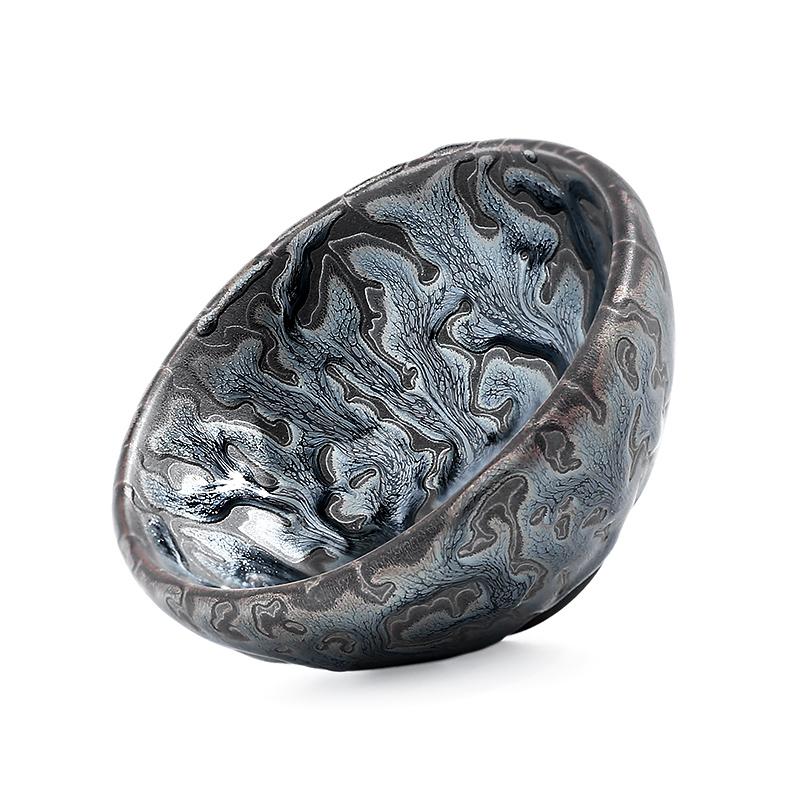
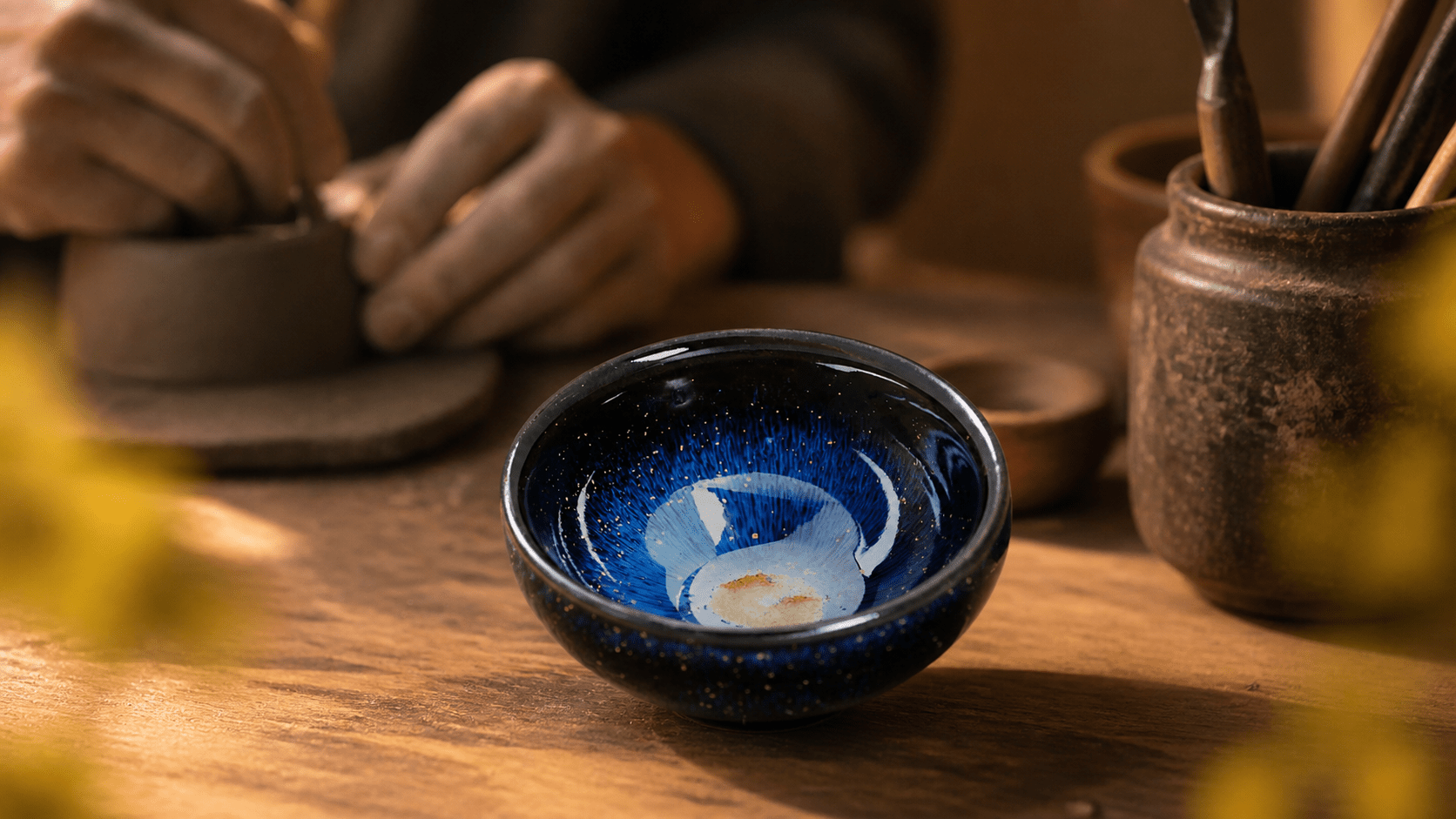
Think of a tenmoku tea bowl as the hand-sewn couture gown of the tea world. The term "tenmoku" originated in Japan, where Zen monks brought back dark-glazed tea bowls from China's Fujian province during the Song Dynasty. The Chinese name is jian zhan (建盏), literally "Jian tea bowl." These are not your typical glossy ceramic mugs. They're stoneware bowls coated in a thick, iron-saturated glaze that melts and separates in the kiln, creating iridescent patterns that look like an oil slick on water, or the fur of a wild hare.
In Japan, tenmoku bowls became national treasures, closely associated with the tea ceremony and the wabi-sabi aesthetic. Today, whether you call it a Japanese tea bowl or a Chinese jian zhan, the core concept is identical: a heavy, dark, hand-thrown bowl that transforms hot tea into a sensory ritual. And because of that rich heritage, a genuine tenmoku tea bowl instantly elevates any tea session from casual sipping to a mindful moment.
Why Is a Tenmoku Tea Bowl So Expensive? The Four Pillars of the Price
If you've ever browsed a store and gasped at a tenmoku tea bowl price, you're not alone. The sticker shock is real. But the answer to "why tenmoku is expensive" isn't marketing hype—it's physics, failure, and art. I break it down into four non-negotiable factors:
1. The Brutal Mathematics of Kiln Change
The entire magic of a tenmoku tea bowl hinges on kiln change (窑变). The iron-rich glaze, made from local stone and wood ash, is completely unpredictable when fired at 1,300°C for over 20 hours. As the kiln temperature fluctuates, the molten glaze moves, bubbles, and crystallizes. A master potter can guide the process, but never control it. Out of every ten bowls that enter the kiln, six or seven will emerge with muddied patterns, unpleasant bubbling, or structural cracks. That means a potter might produce only two or three sellable pieces from an entire week's work. When you pay $400 for a bowl, you're covering the labor and materials for the failures too—just like a Michelin-starred chef factors in the cost of dishes that don't leave the pass.
2. The Rarity of Glaze Patterns
Unlike a mass-produced mug with a decal, the surface of a jian zhan is a one-shot masterpiece. The most sought-after effects include:
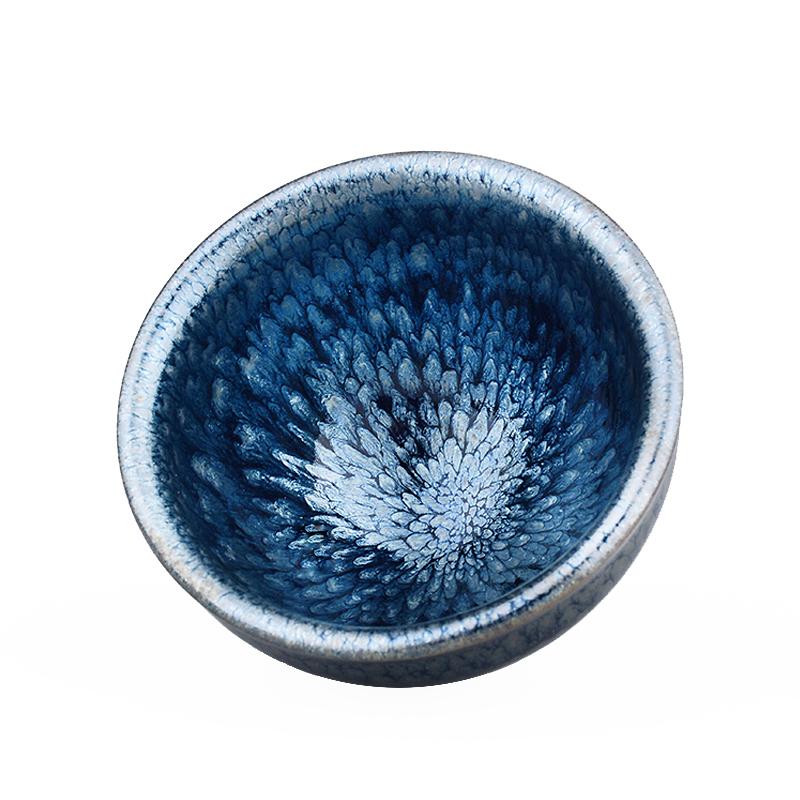
- Hare's Fur (兔毫): Fine, parallel crystal streaks that shimmer bronze or silver against the black glaze. A crisp, well-defined hare's fur pattern can double the price.
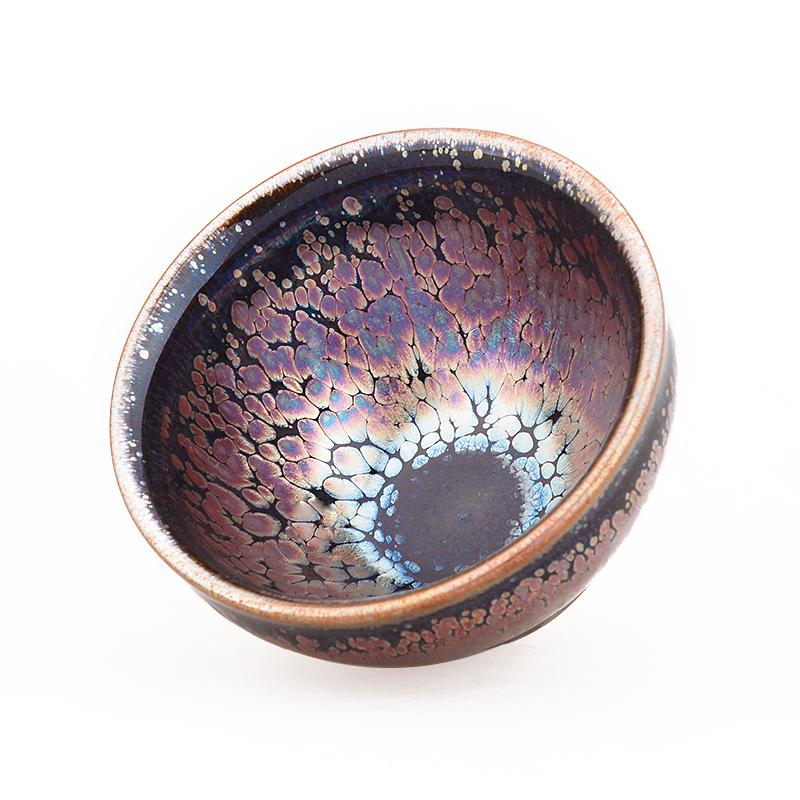
- Oil Spot (油滴): Circlets of metallic silver or gold that look like drops of oil floating on water. True oil spot glazes are exceptionally rare; many "oil spot" cups on the market are painted imitations.
- Partridge Feather (鹧鸪斑): Larger, feather-like patches that require an even more delicate kiln atmosphere.
- Yuteki (Jade Dew): A Japanese term for a constellation of ultra-fine, brilliant silver spots—so difficult to achieve that antique yuteki tenmoku bowls are designated National Treasures in Japan.
A bowl with a dynamic, well-distributed oil spot pattern can easily sell for $1,500 or more, while the same potter's hare's fur bowl might be $250. You're paying for serendipity.
3. The Labor of a Living Tradition
Every authentic tenmoku tea bowl is handmade ceramic from start to finish. There's no mold, no slip-casting machine. The potter throws the bowl on a kick wheel, trims the foot, applies the glaze by dipping or pouring, and then fires it in a carefully stoked dragon kiln. The training to make even a competent bowl takes years. Masters like Chen Guowen or the late Li Da spent decades refining their glaze recipes. When you buy a piece from a recognized artisan, you're supporting a living cultural lineage, much like purchasing a watch from a Swiss independent watchmaker rather than a factory-made quartz piece.
4. The Analogous Luxury: From Hermès to High-End Audio
In US consumer culture, we understand why a hand-stitched Birkin bag costs $15,000. It's the same logic: rare materials, hundreds of hours of skilled human labor, and a heritage that can't be digitized. A tenmoku tea bowl is the Hermès scarf of the tea world—functional yet collectible, and each one is subtly different. I've also compared it to a bespoke tailored suit: off-the-rack is fine, but a custom suit fits differently, feels different, and makes you stand different. The moment you pour a steaming pu-erh tea into a handmade jian zhan and see the liquor disappear into its dark depths, you experience a tactile luxury no mass-produced mug can replicate.
What Determines the Price of a Tenmoku Tea Bowl? A Breakdown of Jianzhan Cost
Now that you know why a tenmoku tea bowl costs what it does, let's get precise about the jian zhan cost tiers you'll encounter when shopping for a japanese tenmoku for sale or a direct-from-studio piece. I always tell new collectors to avoid the $15 "tenmoku" offered on bargain sites—those are chemically glazed, slip-cast counterfeits with none of the soul or safety (real iron glazes are food-safe and leach-free). Here's the real market landscape:
| Price Tier | What You Get | Glaze Quality | Who It's For |
|---|---|---|---|
| $40–$90 | Entry-level artisan or apprentice; may use commercial glazes but hand-thrown. Minimal kiln change effect, simple black or brown surface. Good for daily gongfu practice. | Low–Medium | Curious beginners, daily drinkers who want authentic but not precious. |
| $150–$350 | Best value jian zhan. Solid mid-tier artisan bowl with clear hare's fur or subtle oil spot. Hand-dipped glaze, wood-fired or electric kiln with good control. A genuine piece of art. | Medium–High | Tea enthusiasts who appreciate both aesthetics and function. Ideal for a meaningful gift for tea lovers. |
| $500–$1,200 | High-end work from recognized master potter. Pronounced, well-distributed oil spot or partridge feather effects. Lively kiln change with iridescent overtones. | High | Collectors, connoisseurs who seek exhibition-grade pieces. Likely to hold or increase in value. |
| $1,500+ | Museum-quality bowl. Extremely rare kiln change, flawless form, impeccable provenance. Often made by a National-Level Intangible Cultural Heritage bearer. Comparable to fine jewelry. | Exceptional | Serious collectors, investment buyers, luxury tea ceremony practitioners. |
When someone asks me "what should I spend on my first tenmoku tea bowl?", I point to that $150–$350 sweet spot. There you'll find Shop authentic Tenmoku tea bowls that deliver the real magic—the way light dances on the crystalline glaze, the way the bowl warms your hands—without the stress of handling a $1,000 masterpiece. And if you're specifically drawn to the linear, energetic streaks, I always invite you to Browse our hare's fur Jianzhan series. Those bowls offer some of the most dynamic visual drama for the money.
How Does the Kiln Change Process Make Every Jianzhan a One-of-a-Kind?
Let's talk about the heart of the matter: kiln change, or yao bian. This isn't a paint job. It's a chaotic chemical event that happens inside a roaring, 1,300-degree furnace. The traditional Jian kiln uses long, sloping chambers and wood fuel. The potter must manage the fire, the draft, and the atmosphere—reducing oxygen at precise moments to turn the iron in the glaze from rusty red to deep black and then to silver crystals. Even with modern electric kilns that offer more thermal consistency, the exact pattern that emerges is never repeatable.
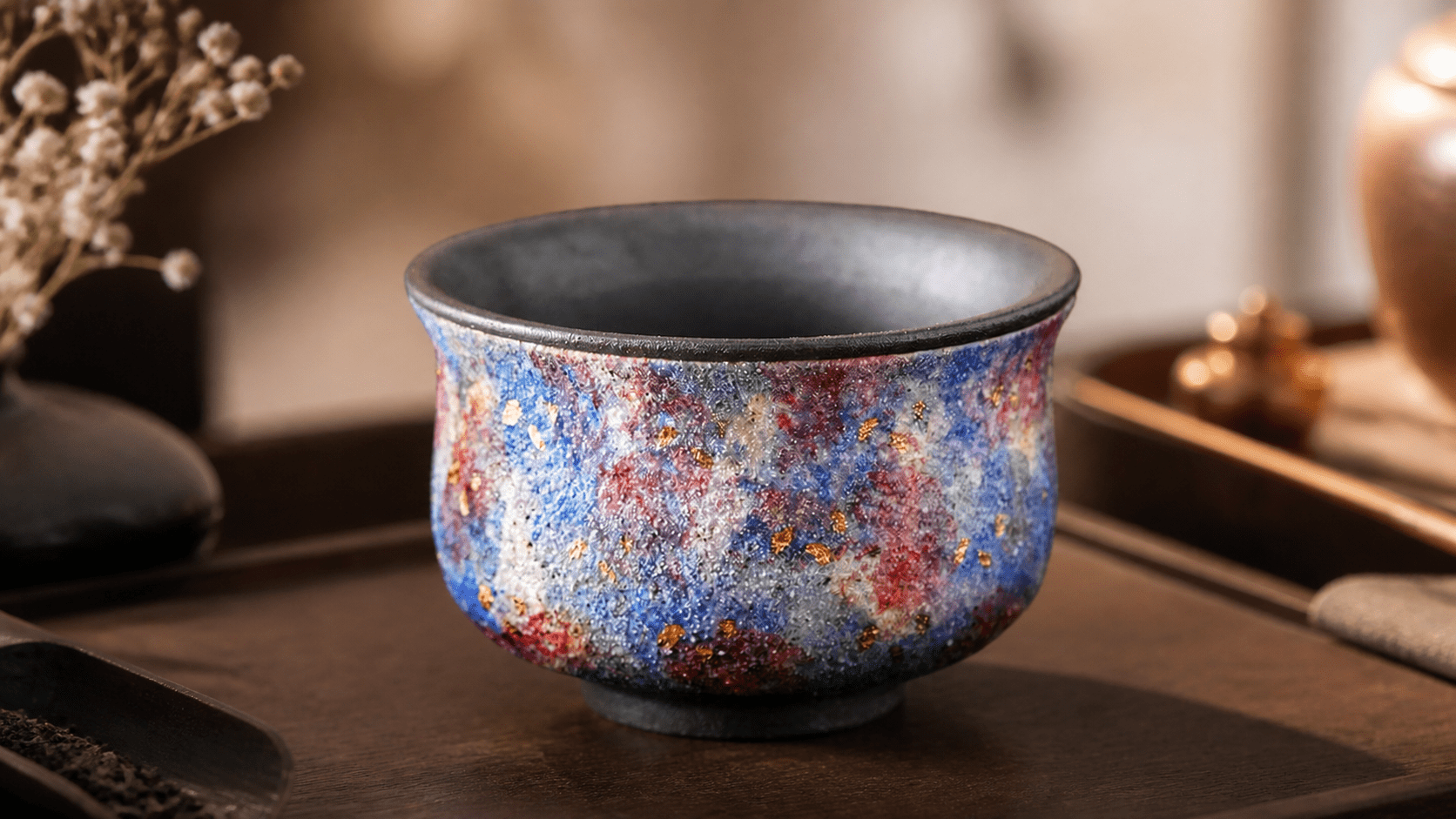
I often compare a kiln-changed jian zhan to an original oil painting. You can commission the same painter to create a landscape on two identical canvases, but the brushstrokes, the light, and the mood will differ. Similarly, two jian zhan from the same batch will show distinct fingerprints of the flame. One might develop a brilliant rim of iridescent "tea dust" while another tilts toward a constellation of silver spots. This inherent individuality is why the best jian zhan tea cup never feels like a commodity. It feels like it was made just for you—because, in a way, it was.
Where Can You Find the Best Value Jianzhan and Avoid Fakes?
The growing global interest in Japanese pottery and Chinese tea culture has flooded the market with lookalikes. I've seen chemically treated "cups" that flake toxic blue dye into the tea. True tenmoku bowls are food-safe because the iron crystals are sealed within the glassy matrix of the glaze. So how do you shop smart?
- Buy from the artist or a trusted curator. Direct studios and specialized tea ware shops can tell you exactly who made the bowl and how it was fired. This traceability is crucial.
- Look for a visible foot ring and natural kiln marks. Authentic jian zhan bear rough, unglazed clay on the foot where they rested on kiln shelving. Fakes often have a smooth, fully glazed base.
- Ask about the glaze type. A seller should confidently discuss whether it's hare's fur, oil spot, or a blend. Vague answers are a red flag.
- Price as a filter. As I noted in the price table, if you see an "oil spot jian zhan" for $29.99, it's either an ink-jet print on porcelain or a low-fire chemical glaze. The real deal will never be that cheap.
To find handmade jian zhan tea cups that offer genuine character, I recommend exploring collections where every piece is photographed individually, so you see the exact bowl you'll receive. That transparency is a hallmark of an honest seller. A japanese tenmoku for sale from a reputable Kyoto gallery can also be an excellent choice, though you'll often pay a premium for the import and the Japanese aesthetic curation.
Why a Handmade Jianzhan Tea Cup Makes an Unforgettable Gift for Tea Lovers
I've watched the face of a tea lover unwrap a jian zhan for the first time. First comes curiosity, then wonder as they tilt the bowl and catch the hidden galaxy in the glaze. A tenmoku tea bowl as a gift works on multiple levels:
- It's deeply personal. No two are alike. You're giving a unique artifact, not a barcode-scanned product.
- It elevates the daily ritual. With a jian zhan, a 10-minute gongfu tea break becomes a meditative escape. The bowl's weight, the way it keeps tea hot, the visual play of the liquor against the dark glaze—it all slows you down.
- It's a conversation piece. Every bowl has a story: the Song Dynasty heritage, the Japanese tea bowl tradition, the kiln's unpredictable artistry. Your gift includes a piece of culture.
- It lasts generations. Unlike fragile porcelain, a thick, well-fired jian zhan is durable. I've seen bowls from the 1980s look better today than when they were made, with a patina of use that only enhances the glow.
If you're shopping for a pu-erh tea drinker, a bowl with an oil spot or hare's fur glaze will visually complement the deep amber of aged sheng pu-erh. For a matcha enthusiast, the traditional Japanese tenmoku shape with a slightly wider mouth is ideal. In either case, you're giving a luxury experience that far outlives a fancy bottle of wine or a generic gift card.
Who Should Buy a Tenmoku Tea Bowl? (And Who Should Wait)
After helping countless people choose their first jian zhan, I've identified a few archetypes who stand to gain the most from this purchase:
Buy it now if:
- You're already deep into gongfu tea or Japanese tea ceremony and want to complete the sensory circle. A jian zhan is the final piece of the puzzle.
- You appreciate handmade craftsmanship and are looking for a functional art object, not just a cup.
- You want a centerpiece for your tea tray that sparks joy and conversation every time you use it.
- You're searching for a memorable, one-of-a-kind gift for tea lovers who seem to have everything.
Maybe wait if:
- You're in a rush and just need a teacup that can be replaced for $5. This isn't that.
- You prefer uniformity. If matching sets are your thing, the individualistic nature of kiln change might frustrate you.
- You're not ready to hand-wash your tea ware. Jian zhan should never go in a dishwasher; the harsh detergents can dull the crystalline surface over time.
For everyone else, the leap into jian zhan ownership is rarely regretted. Most people find that once they learn to see the bowl, they can't unsee the mass-produced sameness of ordinary cups.
Frequently Asked Questions About Tenmoku Tea Bowls
1. Why are tenmoku tea bowls so expensive?
The high cost comes from the handmade process, the brutal failure rate of kiln change (often 60-70% loss per firing), the rarity of special glaze effects like oil spot, and the years of training required. Each authentic bowl is a unique work of art that combines function with 800-year-old cultural heritage.
2. What is a kiln change in jian zhan?
Kiln change (yao bian) is the spontaneous, unrepeatable transformation of the iron-rich glaze during high-temperature firing. As the kiln atmosphere fluctuates, the glaze crystallizes into patterns like hare's fur or oil spot. No two kiln-changed bowls are identical, which makes each piece collectible.
3. How much does an authentic tenmoku tea bowl cost?
Entry-level handmade jian zhan start around $40–$90. The best value jian zhan—with clear hare's fur or subtle oil spot—typically falls between $150 and $350. High-end collector pieces range from $500 to $2,000+, and museum-quality bowls can fetch five figures.
4. Can I use a tenmoku tea bowl for gongfu tea?
Absolutely. The thick, heat-retentive walls of a jian zhan are perfect for the small, repeated infusions of gongfu tea with oolong or pu-erh. The dark glaze also showcases the tea's color beautifully, and the bowl's shape fits comfortably in the hand during longer sessions.
5. How do I care for my handmade jian zhan tea cup?
Never put your jian zhan in the dishwasher. Rinse it with warm water and a soft cloth immediately after use. Avoid soap if possible, as the porous clay foot can absorb smells. To restore patina, occasionally wipe the bowl with a damp tea cloth after brewing strong tea, letting the natural tannins build a gentle sheen.
6. What is the difference between Japanese tenmoku and Chinese jian zhan?
Originally, tenmoku referred to Chinese Jian ware imported to Japan during the Song Dynasty. Today, 'Japanese tenmoku' often denotes bowls made in Japan using similar techniques, sometimes with different clay bodies and glaze aesthetics. Chinese jian zhan directly continues the original Fujian province tradition. Both share the iron-glaze, kiln-change soul, but the nuance of clay, culture, and potter lineage differs.
Conclusion: The Cup That Teaches You to See
When you hold an authentic tenmoku tea bowl, you're not just holding clay and glaze. You're holding the fire of a kiln that burned all night, the patience of a craftsman who trained for decades, and the whispers of Song Dynasty monks. Yes, the tenmoku tea bowl price can be daunting, but I've never met a collector who regretted buying quality. Instead, they speak of the day they finally understood that a cup could change the taste of tea—or at least, change how deeply they taste it.
If you're ready to find your own companion for those quiet morning gongfu sessions, I invite you to explore the collections we've curated from some of the most dedicated kilns in Fujian and beyond. Whether you're after your first authentic Tenmoku tea bowl or a standout hare's fur Jianzhan, start with a piece that speaks to you. Trust me, the journey from that first pour to a lifelong appreciation is one of the most rewarding paths a tea lover can walk.
Explore Our Collection
Ready to experience the world of tenmoku tea bowl? Browse our curated collection:
Disclaimer: This article is for informational purposes. Products and pricing subject to change.


Partager:
Tenmoku Tea Bowl: A Handmade Gift Story for Tea Lovers
Tenmoku Tea Bowl: A Quiet Luxury Upgrade for Daily Tea Rituals