

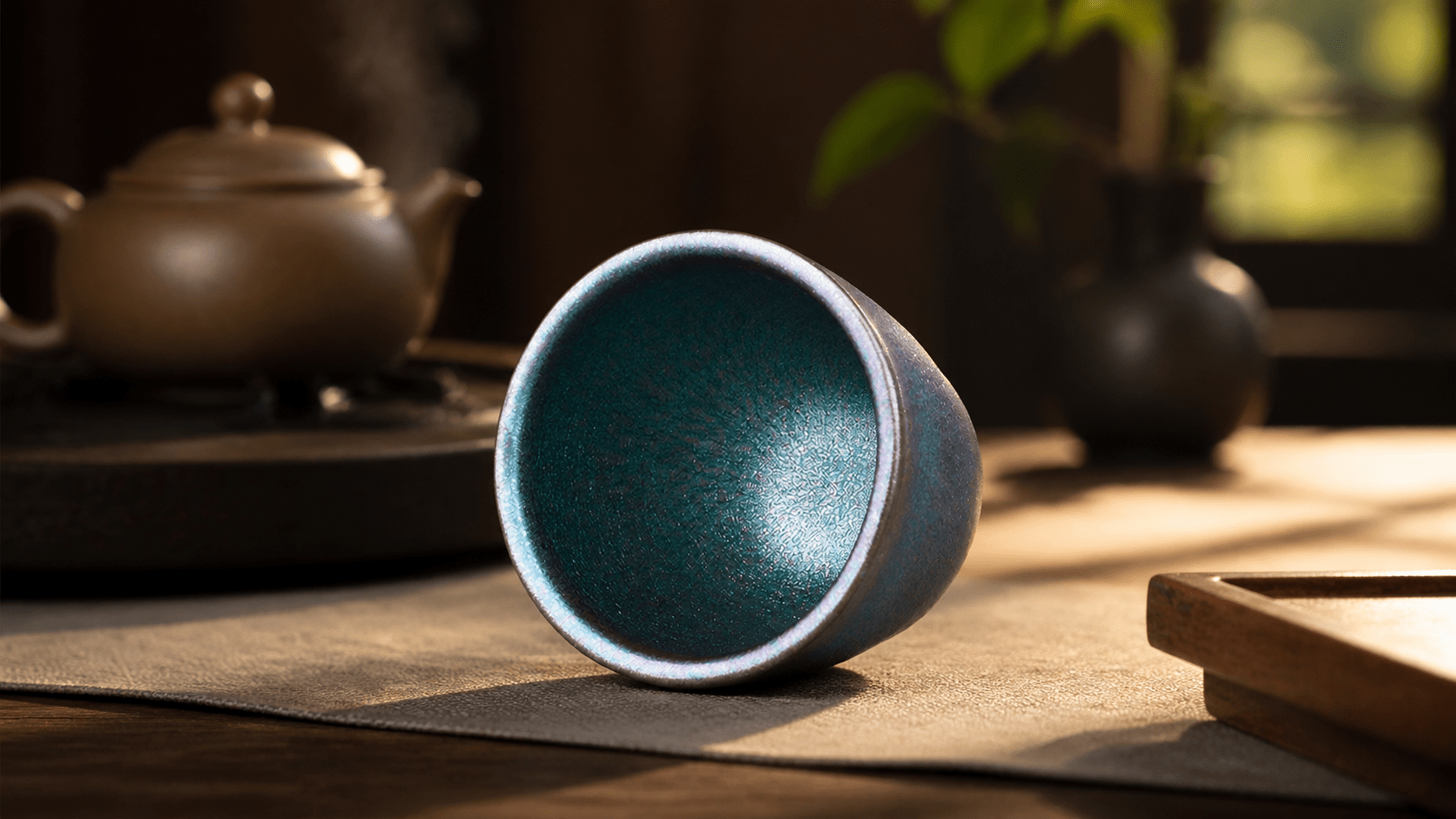

I still remember the first time I pulled a glowing tenmoku tea bowl from the kiln at 2 a.m., the oil spots shimmering like a galaxy trapped in Jianzhan Tenmoku ceramic. That moment hooked me for life. A handmade tenmoku tea bowl isn’t just a cup — it’s a piece of Song Dynasty history reborn in fire, and a daily companion for your gongfu tea ceremony. Whether you’re hunting for a tenmoku tea bowl for sale or simply want to understand why these pieces captivate collectors, let me take you into the world behind every curve and glaze.
Key Takeaways
- A tenmoku tea bowl (jianzhan) carries 1,000 years of cultural heritage from China’s Song Dynasty and Japan’s tea ceremony.
- The high cost reflects artisan skill, extreme kiln failure rates, and irreproducible kiln transformations.
- An oil spot tenmoku cup can be the best value jian zhan — combining everyday durability with stunning, one-of-a-kind glaze patterns.
- You don’t need to be a tea master to appreciate it; a tenmoku bowl elevates any quiet moment.
- When you buy from a transparent studio, you’re supporting living artisans, not factories.
I’m Tenmokus Editorial Team, and for over a decade I’ve been shaping clay, mixing glazes from iron-rich stone, and firing kilns in pursuit of that elusive Song Dynasty glaze. This is my story, and the story of every tenmoku tea bowl I’ve ever touched.
What Is a Tenmoku Tea Bowl? A Journey Through Song Dynasty History
Let’s strip away the mystery. A tenmoku tea bowl — known in China as jianzhan — is a type of Jianzhan Tenmoku ceramic tea cup that originated in Jianyang, Fujian province, during the Song Dynasty (960–1279). The bowls were prized by the imperial court and Buddhist monks for the way their dark glazes made the froth of whisked tea appear luminous. When Japanese monks brought these bowls back from China, they called them “tenmoku” after the Chinese mountain temple Tianmu Shan where they studied, and the name stuck.
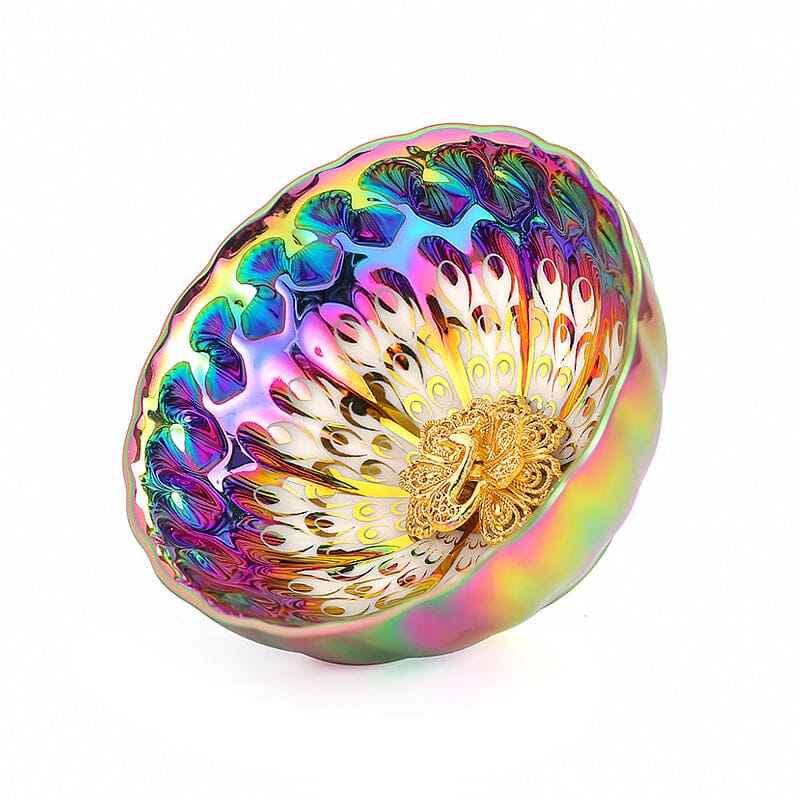
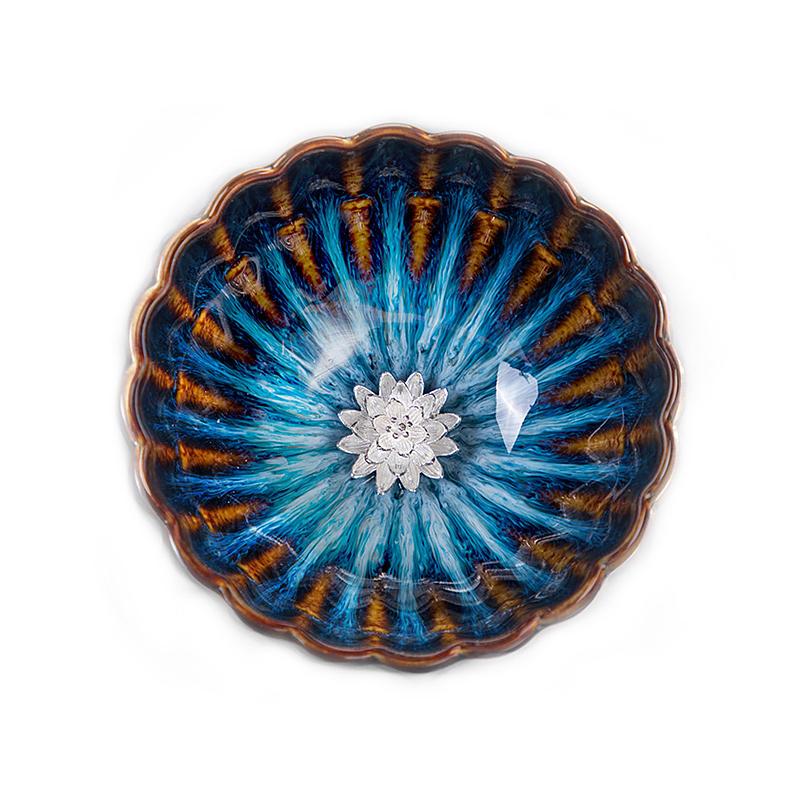
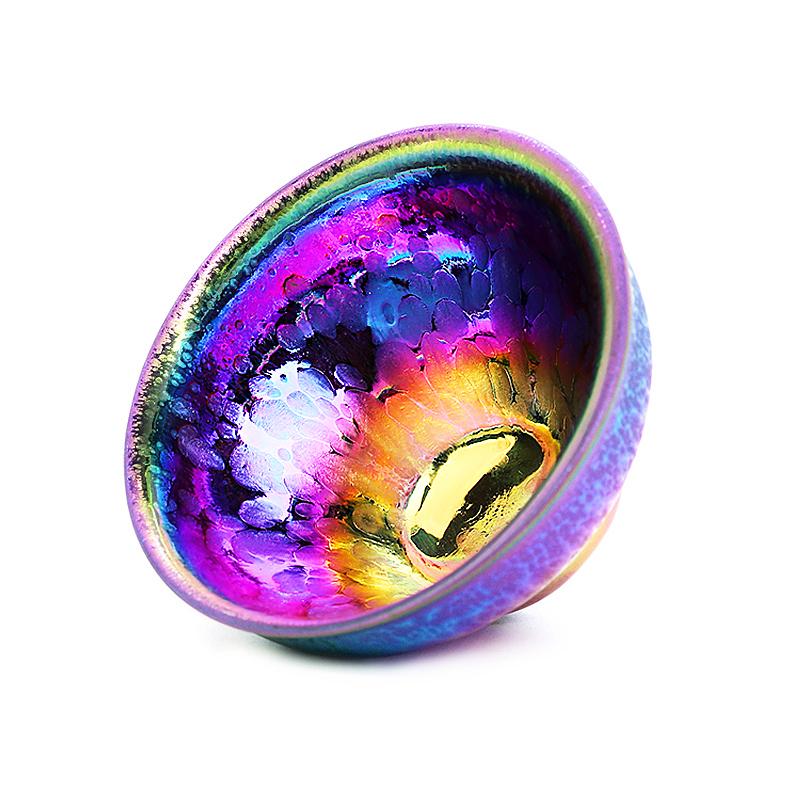
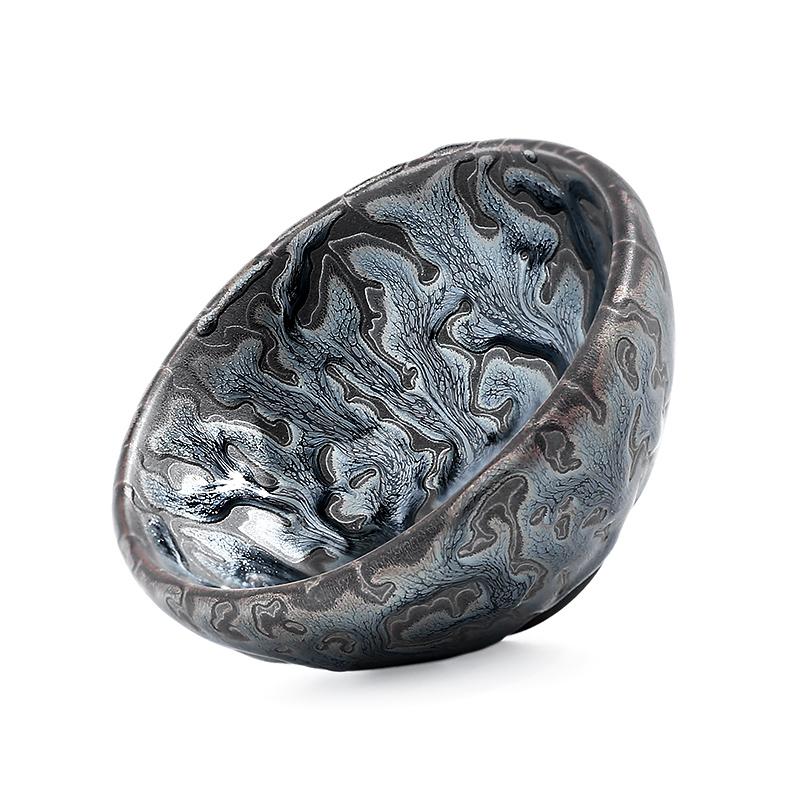
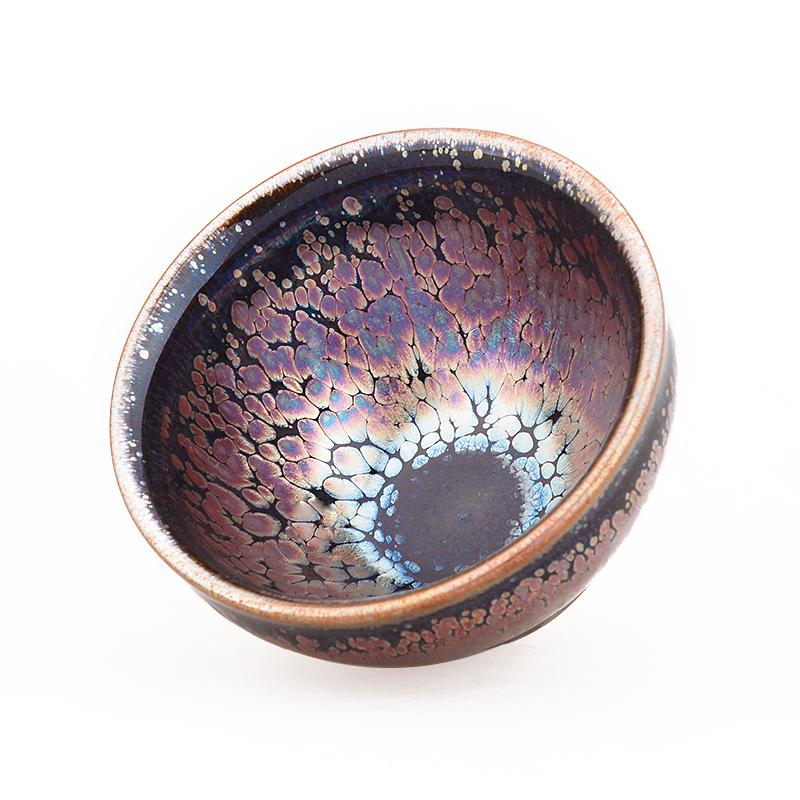
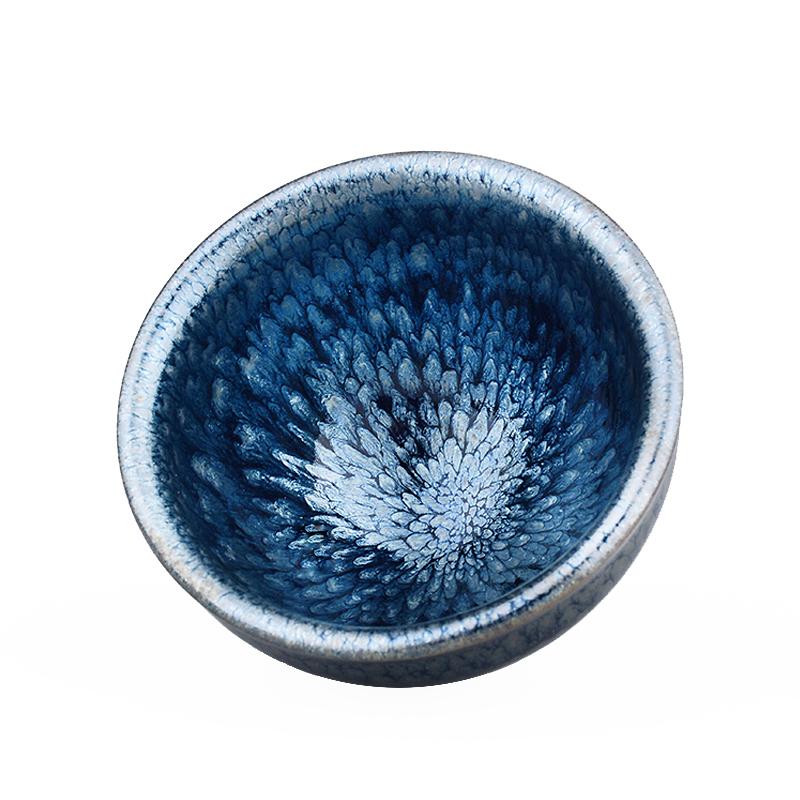
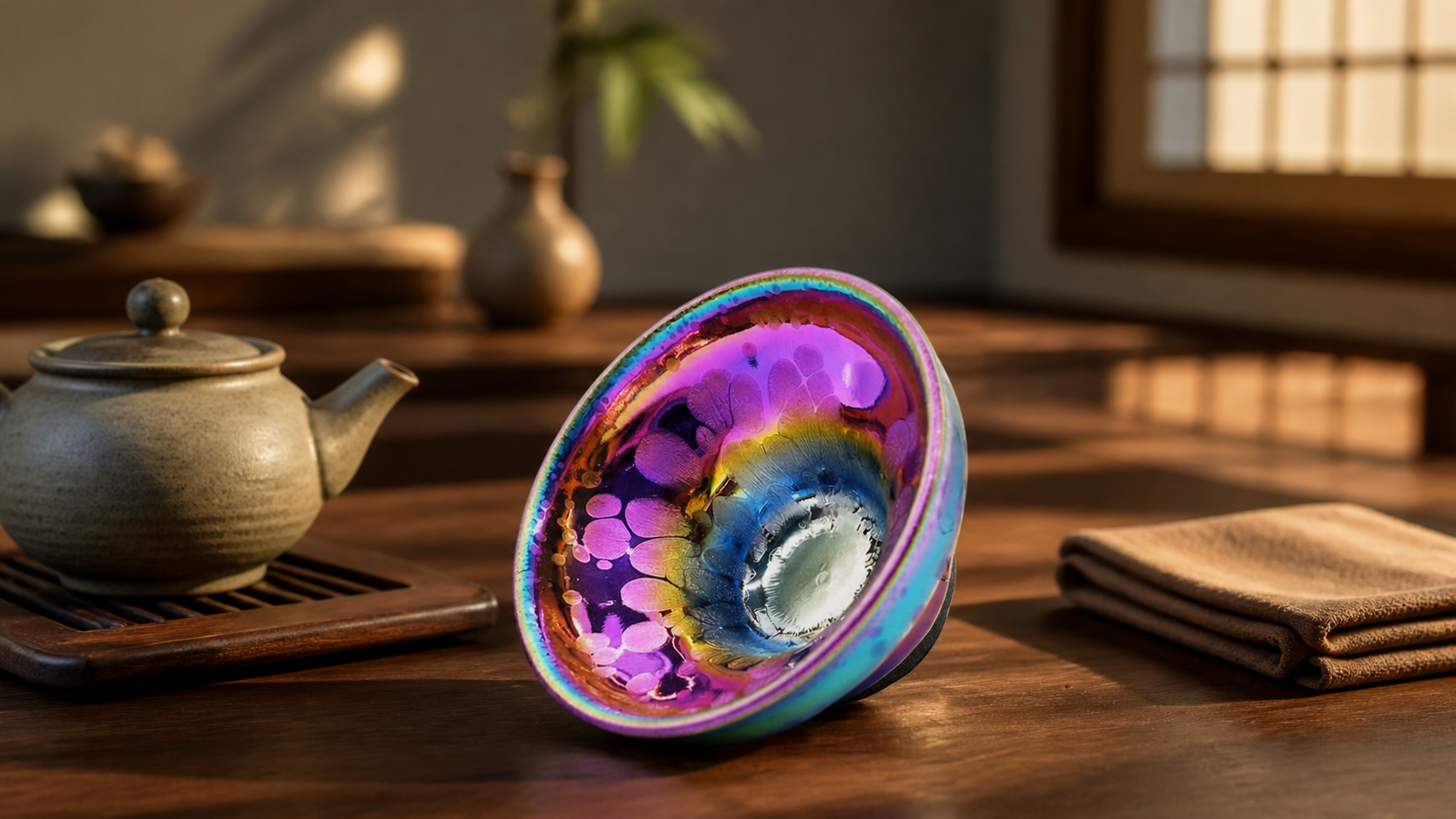
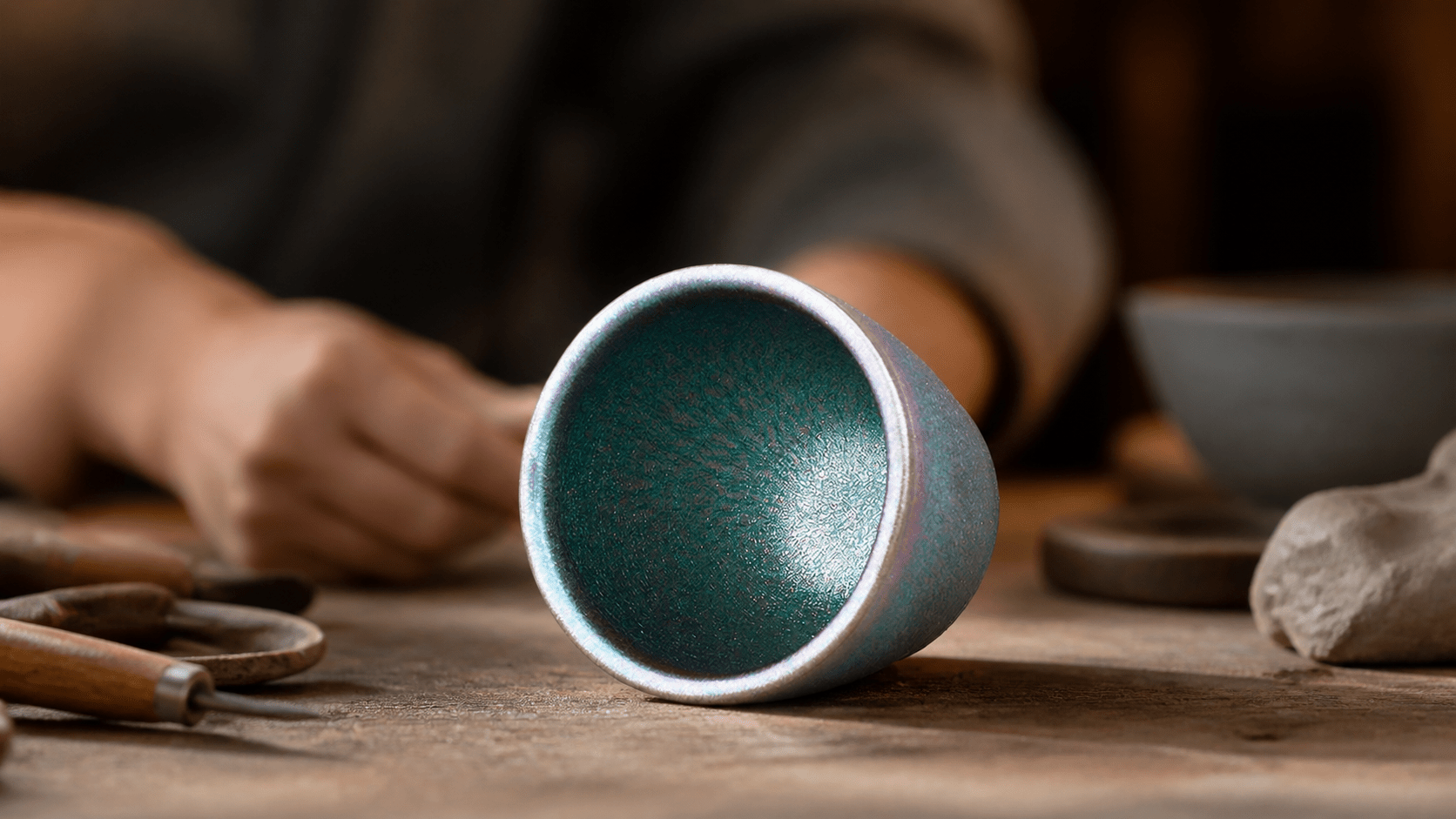
What sets a jianzhan apart from any modern teacup is its glaze. It’s not painted; it’s alchemy. A thick layer of iron-rich slip, melted at over 1300°C, spontaneously forms patterns as it cools — constellations of oil spots, hare’s fur streaking, tea dust, or even a rare Yohen iridescence. Every tenmoku tea bowl is a unique conversation between the artisan, the fire, and the clay. For a tea lover, holding one is like holding a tiny piece of the Song Dynasty in your palm.
Why Is a Tenmoku Tea Bowl So Expensive? The Real Jianzhan Cost
I get asked this all the time: “Why is tenmoku so expensive?” The answer lies in the kiln gods. When I fire a batch of 100 raw bowls, I’m lucky if 20 come out perfect. The rest? Most go straight to the hammer — cracked, collapsed, or with glaze defects that ruin the aesthetic. That means the true jian zhan cost includes all that lost labor, clay, and fuel. You’re not paying for the one bowl you hold; you’re paying for the 80 that didn’t make it.
Let’s break down what shapes the tenmoku tea bowl price:
- Kiln failure rate: Wood-fired kilns can fail 80–90% of pieces; even modern electric kilns see 50% loss for complex glazes.
- Artisan hours: From kneading clay for months to achieve plasticity, to hand-throwing each bowl, to 48-hour firing vigils — a single bowl can represent 30+ hours of skilled labor.
- Glaze unpredictability: Iron oxide glazes are notoriously temperamental. Subtle changes in humidity or kiln atmosphere turn an oil spot tenmoku cup into either a masterpiece or a muddy mess.
- Cultural lineage: Many of us study under masters who guard Song Dynasty glaze recipes like family heirlooms. That knowledge isn’t cheap to acquire.
So when you see a tenmoku tea bowl for sale at $100, $300, or $1,000+, what you’re looking at is the tip of an iceberg of effort, failure, and ancestral wisdom.
How Is an Oil Spot Tenmoku Cup Made? The Firing Process Step by Step
I want you to feel the fire with me. Making an oil spot tenmoku cup is a ritual that starts weeks before the kiln door ever opens.
- Clay preparation: I use local iron-heavy clay similar to Song Dynasty originals. It’s aged for months, then wedged by hand to remove air — skipping this step means an explosion in the kiln.
- Throwing and trimming: On the wheel, I shape the bowl with a distinctive “jiankou” rim and a sturdy foot that stays cool enough to hold. After drying, each is trimmed to balance perfect weight and insulation.
- Bisque firing: The raw bowl is fired at low temperature just to harden it, making it strong enough to accept glaze.
- Glazing: Here’s where the magic begins. I dip the bowl in a thick slurry of iron oxide, feldspar, and ash — a recipe I’ve refined through hundreds of tests. The glaze layer must be just thick enough: too thin yields no pattern; too thick, it runs off and fuses the bowl to the kiln shelf.
- Reduction firing: I load the kiln and start a fire that will burn for 24–48 hours. Around 1250°C, I introduce a reduced-oxygen atmosphere by controlling airflow. This starves the iron of oxygen, causing it to boil up to the surface and form microscopic crystals. As the kiln cools slowly over days, oil spots bloom like flowers in the black glaze.
Every firing I remember the old kiln culture in Japan, where a japanese tea bowl was considered a living entity, carrying the memory of the flames. That’s not poetic exaggeration — I’ve literally seen a bowl’s surface change with the seasons of a wood-fired kiln’s breath. When you look closely at an oil spot tenmoku, you’re reading a record of that exact unique firing.
Where to Find the Best Value Jianzhan for Your Tea Ceremony
If you’re new to this world, the phrase “best value jian zhan” can feel elusive. Let me share what I tell my own studio visitors. True value isn’t about the lowest $20 machine-made imitation; it’s about an authentic handmade piece that will grow with you. A well-chosen tenmoku tea bowl can become your daily tea ceremony companion for decades — imagine a wine glass that actually improves the taste and feel of your morning ritual.
Here’s my quick comparison of what’s out there:
| Type | Approx. Price | Pros | Cons |
|---|---|---|---|
| Mass-produced chemical glaze cup | $10 – $30 | Cheap, uniform look | No authentic Song Dynasty pattern, no craftsmanship, may contain heavy metals |
| Studio handmade electric kiln jian zhan | $60 – $200 | Affordable authenticity, consistent oil spot/hare’s fur, good daily use | Less dramatic than wood-fired pieces; patterns can be reproduced |
| Wood-fired artisan tenmoku | $200 – $2,000+ | Unique kiln transformations, deep cultural character, collectible | Higher cost, potential for subtle imperfections (ash pits), limited availability |
| Antique or Song/Yuan shard | $500 – $10,000+ | Historical artifact, museum-worthy | Often damaged, not for daily use, high risk of forgery |
For most tea lovers, the sweet spot is a handmade electric kiln piece with a well-developed oil spot pattern. That’s where you’ll find the best value jian zhan — all the charm of a Song Dynasty glaze without giving up a month’s salary. Explore our handmade Jianzhan tea cups to see pieces I’ve personally fired using formulas perfected across hundreds of firings.
Is a Japanese Tenmoku Tea Bowl Different from a Jianzhan? Cultural Travels
You might see “japanese tenmoku for sale” and wonder if it’s the same thing. Historically, yes — the Japanese tenmoku tea bowl lineage directly descends from Song jianzhan. But centuries of divergent tea aesthetics have created subtle differences. Today, Japanese tenmoku often features a perfectly symmetrical shape and restrained glaze patterns that match the wabi-sabi elegance of the Japanese tea ceremony. Chinese jianzhan, especially in the revival movement I’m part of, tends to embrace bolder, wilder kiln transformations that celebrate the dramatic “fire art.”
Both are magnificent. When you hold a Japanese tenmoku, you’re touching the living tradition of tea masters like Sen no Rikyū who treasured these bowls as spiritual tools. When you hold a modern jianzhan from Jianyang, you’re touching the mother kiln where it all began. I like to think of them as siblings separated at birth — the same Song Dynasty soul, expressed in two beautiful accents.
Who Should Buy a Handmade Tenmoku Tea Bowl?
I’ve watched all kinds of people light up when they first wrap their hands around a warm tenmoku bowl. This isn’t a niche collector’s item — it’s for anyone who wants to slow down. Specifically:
- Gongfu tea practitioners: The bowl’s heat retention and textured interior soften water and enhance the mouthfeel of oolong and pu-erh.
- The mindful lifestyle seeker: A daily tea ceremony with a handcrafted bowl is a tiny anchor of calm in a busy American life.
- The design-conscious gift giver: Looking for a unique gift for tea lovers that isn’t just another mug? A tenmoku tea bowl is a conversation piece that will never be regifted.
- The budding collector: Starting with an affordable oil spot cup and working your way up to a wood-fired masterpiece is one of the most rewarding collecting journeys I know.
You don’t need a silk robe or a tatami room. I use my personal oil spot tenmoku cup at my cluttered studio desk, with a cheap electric kettle. The bowl brings the ceremony, not the setting.
FAQ About Tenmoku Tea Bowls
What makes a tenmoku tea bowl different from a regular black tea cup?
A tenmoku tea bowl uses iron-rich glaze that forms natural crystal patterns — like oil spots or hare’s fur streaks — during firing. Regular black cups use chemical colorants and lack the depth, heat retention, and unique water-softening texture of true jianzhan.
Why is tenmoku so expensive compared to other ceramic tea cups?
The high cost comes from extremely low firing success rates (often 10–20%), dozens of hours of artisan labor per bowl, and the irreproducible nature of kiln transformations. Each saleable tenmoku tea bowl represents many failed siblings and years of glaze research.
How much does a real jianzhan cost?
Authentic handmade jianzhan from a studio starts around $60 for a basic electric kiln piece, $150–$400 for a high-quality oil spot tenmoku cup, and $500–$2,000+ for wood-fired or award-winning works. Mass-produced imitations under $30 are not true jianzhan.
Can I use a tenmoku tea bowl every day?
Absolutely. Tenmoku bowls are vitrified stoneware that’s extremely durable and food-safe. In fact, daily use is encouraged: the tea oils slowly condition the glaze, making the bowl more lustrous over time — a process called ‘nurturing’ in tea culture.
Where can I buy a genuine Japanese tenmoku tea bowl?
While genuine Japanese tenmoku for sale can be found through specialty galleries and direct from Japanese kilns, many collectors also choose Chinese jianzhan from Song Dynasty lineages because they share the same authentic technique and offer better value. Whichever origin you choose, always verify that the artisan uses high-iron clay and true iron-oxide glaze.
What’s the best value jian zhan for a beginner?
An electric kiln oil spot tenmoku cup in the $80–$150 range offers the ideal starting point. You’ll get a genuine iron-saturated glaze with distinct oil spots, a well-insulated shape, and a bowl that will accompany you through years of tea ceremonies without the high risk or cost of a wood-fired piece.
Carrying the Flame Forward
When I teach workshops, I always tell people: a tenmoku tea bowl is the only object I know that requires you to cooperate with chaos. No matter how precisely you plan, the fire always has the final word. That’s why, after all these years, I still get giddy every time I open the kiln. The Song Dynasty artisans knew this feeling; the Japanese tea masters who cradled these bowls in their palms knew it too. Today, I’m just another link in a 1,000-year chain of fire worshippers.
If you’re ready to bring a piece of that story into your home, I invite you to browse our hare’s fur Jianzhan series or explore our handmade Jianzhan tea cups. Each one is fired with the same reverence I felt at 2 a.m. on that first magical night, and each one is waiting to start its journey with you.
Explore Our Collection
Ready to experience the world of tenmoku tea bowl? Browse our curated collection:
Disclaimer: This article is for informational purposes. Products and pricing subject to change.


Deel:
The Soul of Clay: A Tenmoku Tea Bowl’s Journey from Ancient Kiln to Modern Cup
Why Is a Tenmoku Tea Bowl Expensive? The Artistry Behind the Price