

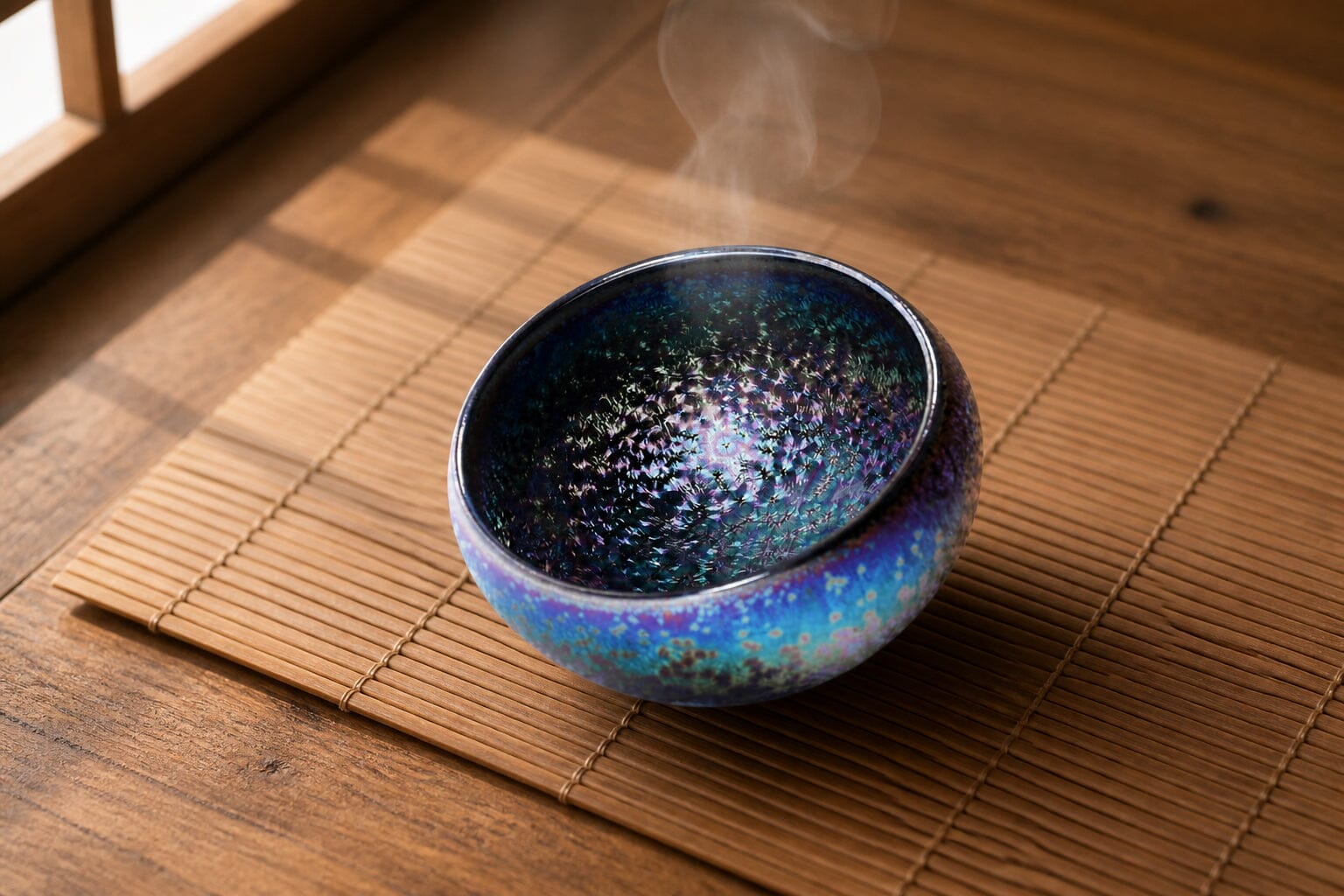


If you’ve ever shopped for a tenmoku tea bowl online, you know how easy it is to fall for a fake masquerading as an authentic jian zhan. I’m Tenmokus Editorial Team, and after years of collecting, breaking, and even making these pieces, I’ve learned that the difference between a real Song Dynasty–inspired treasure and a factory decal is often hiding in plain sight. This guide will help you tell the two apart before you pour your first gongfu tea session—so you never waste money on a counterfeit again.
- A true tenmoku tea bowl is always handmade ceramic with a unique, never-identical oil spot glaze—if two bowls look exactly the same, they’re likely fake.
- Real jian zhan feels heavier than it looks, has a gritty unglazed foot, and emits a clear “ting” when tapped—cheap imitations are lightweight and sound dull.
- Price is a clue: an authentic jian zhan tea cup rarely costs under $50; mass-produced fakes flood the “tenmoku tea bowl for sale” market at $10–$20.
- Always examine firing marks, iron-rich clay, and natural kiln change effects—these are the process markers that no factory can convincingly replicate.
What Is a Real Tenmoku Tea Bowl vs a Fake?
The term “tenmoku” comes from the Japanese reading of Tianmu—the mountain where Japanese monks first encountered these dark-glazed tea bowls in China. When I say tenmoku tea bowl today, I’m referring to a piece that faithfully follows the Song Dynasty tradition: a hand-thrown stoneware body, coated with a thick, iron-saturated tenmoku glaze, and fired in a reduction kiln at over 1300°C. A fake, on the other hand, is usually made from kaolin-based porcelain, sprayed with a commercial reactive glaze, and sometimes even decals are applied to mimic oil spots.
Think of it like comparing a hand-stitched leather satchel to a plastic bag with a designer print. Both are “bags,” but only one carries the soul of the maker. The same analogy helps here: a real jianzhan (the Chinese term for the original ware from Jian kilns) holds heat differently, changes the texture of tea, and develops a patina over time—a fake never will.
Jianzhan Oil Spot vs Fake: What Are the Telltale Differences?
The oil spot tenmoku cup is the most coveted—and most counterfeited—style. I’ve held fakes that looked mesmerizing in a photo but fell apart under a loupe. Here’s how a jian zhan oil spot vs fake comparison breaks down:
| Feature | Real Oil Spot Jianzhan | Fake / Commercial Copy |
|---|---|---|
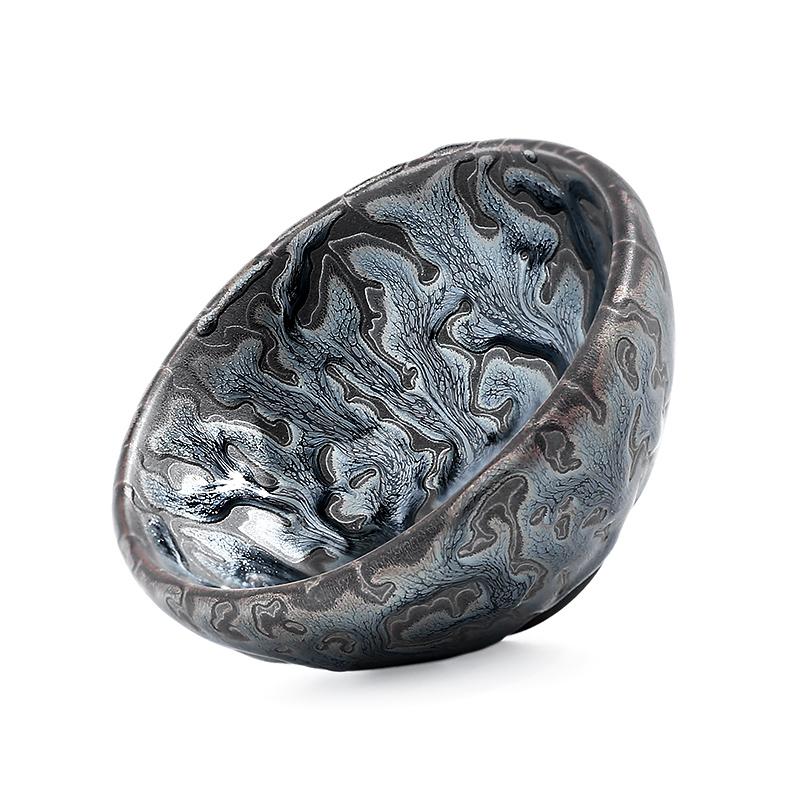
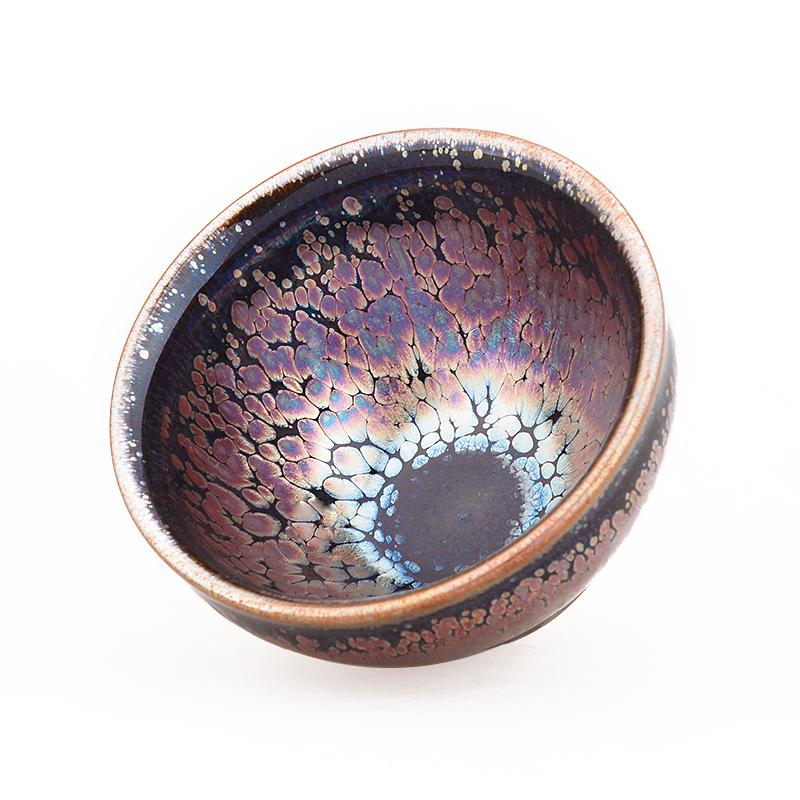
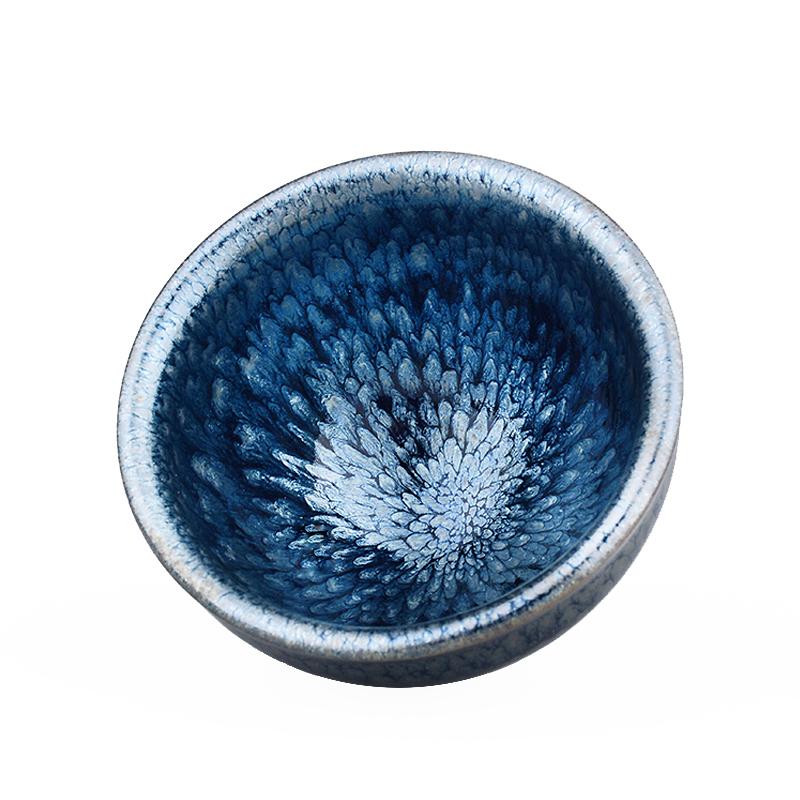
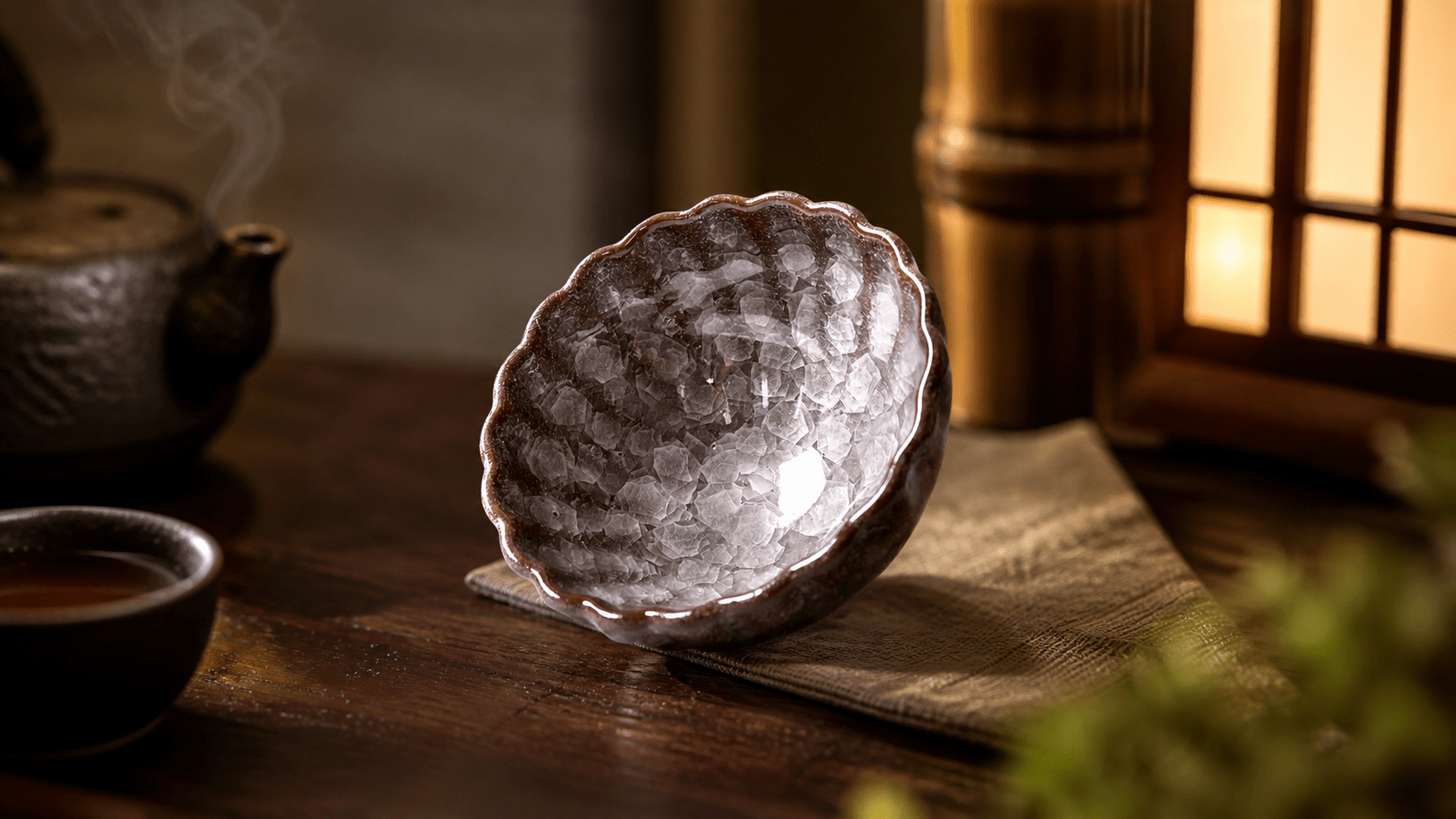
| Oil Spots | Microscopic iron crystals that rise and separate naturally; no two spots are identical. Under magnification you’ll see dendritic or flower-like formations. | Perfectly round dots, often printed or airbrushed. Uniform spacing, sometimes even a grid-like pattern. |
| Surface Depth | Thick glaze with a glassy but softly undulating surface; oil spots seem to float at different depths. Light interacts like layers of water. | Flat, plastic-like surface. Spots sit on top or just below a thin clear overglaze. |
| Kiln Change Effects | Natural hare’s fur streaks, subtle blue or silver halos around spots, random flashes of iridescence (“yōhen”). | Chemical stenciling or heat-transfer decals. The iridescent effect often looks like a uniform oil slick—too perfect. |
I tell my students: a real oil spot jian zhan will never look the same from two different angles. Tilt a fake, and the pattern moves stiffly with the light.
How to Identify Real Jianzhan: Key Materials and Process Markers
If you only remember one thing, let it be this—how to identify real jian zhan starts with the clay. Authentic pieces use iron-rich stoneware clay from the Jianyang region in Fujian, China. This clay fires to a dark brownish-black body that feels slightly rough where unglazed. A fake, especially those mass-produced in other provinces or countries, will reveal a white, smooth porcelain body at the foot. Explore our handmade Jianzhan tea cups and you’ll immediately see the dark, almost chocolate-colored exposed clay—a signature you can trust.
Beyond clay, the three process markers I always check are:
- The foot cut: A genuine jian zhan has a shallow, roughly cut foot ring—often with chatter marks from the trimming tool. Factory bowls have a machined, overly perfect foot.
- Weight and density: Real stoneware feels dense and heavy for its size, while porcelain fakes are unnervingly light. This is a quick “heft test” I use at markets.
- Firing scars: Since real jian zhan are fired at extreme temperatures, you’ll find tiny kiln grit speckles on the unglazed base, sometimes even a wad mark where the bowl was separated from the kiln shelf. No two pieces have identical firing scars.
Sound is another dead giveaway. Tap a genuine tenmoku bowl gently with your fingernail and it rings like a bronze bell—a clear, sustained tone. Fakes produce a dull “clack” because their body is low-fired or porcelain.
Where to Find Authentic Jianzhan Tea Cups for Sale?
The “tenmoku tea bowl for sale” listings that flood big marketplaces are a minefield. I’ve seen drop-shipped fakes passing for $80, while true authentic jian zhan tea cup offerings sit ignored because they don’t have 500 sponsored reviews. My personal rule: buy only from specialists who can name the kiln artist and the firing method. Shop authentic Tenmoku tea bowls from our curated collection, where every piece comes with documentation of its Jianyang origin and wood- or electric-kiln firing details.
A few red flags I’ve learned:
- $15 with free shipping: At this price, you’re not even covering the clay, glaze, and energy cost of a high-temperature firing. These are always decal fakes.
- “Handmade” but 500 available: A single artisan cannot produce identical handmade ceramic bowls by the hundreds. Real studios sell in small batches with natural variations.
- No mention of kiln type: Authentic sellers proudly state “wood-fired,” “electric reduction,” or “dragon kiln.” Fake listings avoid specifics.
I always encourage newcomers to look for a maker’s stamp or signature incised into the base. Even unsigned studio works still show the tool marks of a human hand.
Common Fakes in the Tenmoku Tea Bowl Market
Over the last decade, I’ve catalogued at least five families of fakes. The most dangerous are the “high-quality” imitations that come from certain Japanese pottery tourist hubs—yes, Japanese—because not all japanese pottery labeled tenmoku is authentic. Japan has its own respected tradition (think Raku and Seto), but many cheap matcha bowl souvenirs mimic oil spot glazes using low-fire techniques that peel after a few washes.
Another notorious fake is the “mandarin duck” pair set: two bowls with mirror-image patterns. Real kiln change can never produce mirror images. If you see a set of two tenmoku tea bowls that look like twins, run. They’re mold-cast and decal-applied.
Finally, beware of the “gold repaired” scam. Some sellers intentionally break a fake bowl, then add gold-filled kintsugi lines to make it look like an antique treasure. A real broken jian zhan would have archaeological value; these are new fractures on a worthless body.
Who Should Buy an Authentic Tenmoku Tea Bowl?
Not everyone needs a genuine jian zhan. If you just want a pretty bowl for occasional gongfu tea and don’t care about thermal properties or tea-softening effects, a high-quality modern alternative might be enough. But if you’re a tea lover, a collector, or shopping for a gift for tea lovers who already owns a gaiwan and a clay teapot, then an authentic jian zhan is the next logical step. I’ve watched friends’ eyes light up when they see the oil spots shift under hot tea—it’s an experience no fake can deliver.
Think about the person who compares brewing temperatures, who already enjoys a good Yi Xing pot. For them, a true tenmoku tea cup becomes a daily driver that actually improves the taste of oolong and pu’er. It’s also a piece of history they can hold—a quiet conversation starter that carries the legacy of Song Dynasty glaze techniques.
Final Words and How to Start Your Search
I hope this guide gives you the confidence to navigate the noisy “tenmoku tea bowl for sale” landscape. When in doubt, trust the heft, the sound, and the unique chaos of a real oil spot. Don’t settle for perfect dots when nature never works in perfect symmetry.
If you’re ready to add a real piece to your collection, take a look at the curated selection we’ve put together—each one personally vetted by me, Tenmokus Editorial Team. Shop authentic Tenmoku tea bowls and find the one that speaks to your tea practice. And if you ever spot something suspicious in the wild, send me a photo. I’m always happy to help a fellow tea traveler separate the real from the make-believe.
Frequently Asked Questions
How can I tell if my tenmoku tea bowl is real or a fake?
Start with the unglazed foot. Real jian zhan reveals dark, iron-rich stoneware, often with tool marks and kiln grit. If the foot is pure white and smooth like porcelain, it’s a fake. The weight test—real bowls feel noticeably heavier—and the ring test (tap for a clear, sustained tone) are also quick checks.
What is the difference between an oil spot jian zhan and a fake one?
In a genuine oil spot jian zhan, the spots are iron crystals that formed randomly in the kiln—they vary in size, shape, and depth. Fake spots are usually printed, decal-applied, or sprayed, so they look identical and lack the three-dimensional layered effect. Under magnification, real oil spots show dendritic patterns; fakes are just dots.
What materials are used in an authentic jian zhan tea cup?
Authentic jian zhan cups are made from iron-rich stoneware clay native to the Jianyang area. The glaze is a mixture of natural feldspar, limestone, and iron oxide—some recipes include plant ash. No synthetic pigments or commercial colorants are used, which is why real tenmoku glazes shift from black to brown to blue under different light.
Do real tenmoku tea bowls come from Japan or China?
The original tenmoku tradition began in China’s Jian kilns during the Song Dynasty and was later revered in Japan, where the term “tenmoku” became widespread. Today, authentic jian zhan are still made in China’s Fujian province, while Japan produces its own studio tenmoku pieces. Both can be genuine as long as they follow high-temperature reduction firing and use natural iron glazes—but always check the kiln origin.
Where can I buy authentic tenmoku tea bowls online?
Specialist ceramic galleries, studio direct sales, and curated e-commerce sites that document each piece’s maker and kiln type are the safest bets. Avoid general marketplaces unless a seller provides a clear provenance. Our collection—available through the links in this article—offers vetted, authentic jian zhan tea cups with full maker transparency.
Explore Our Collection
Ready to experience the world of tenmoku tea bowl? Browse our curated collection:
Disclaimer: This article is for informational purposes. Products and pricing subject to change.
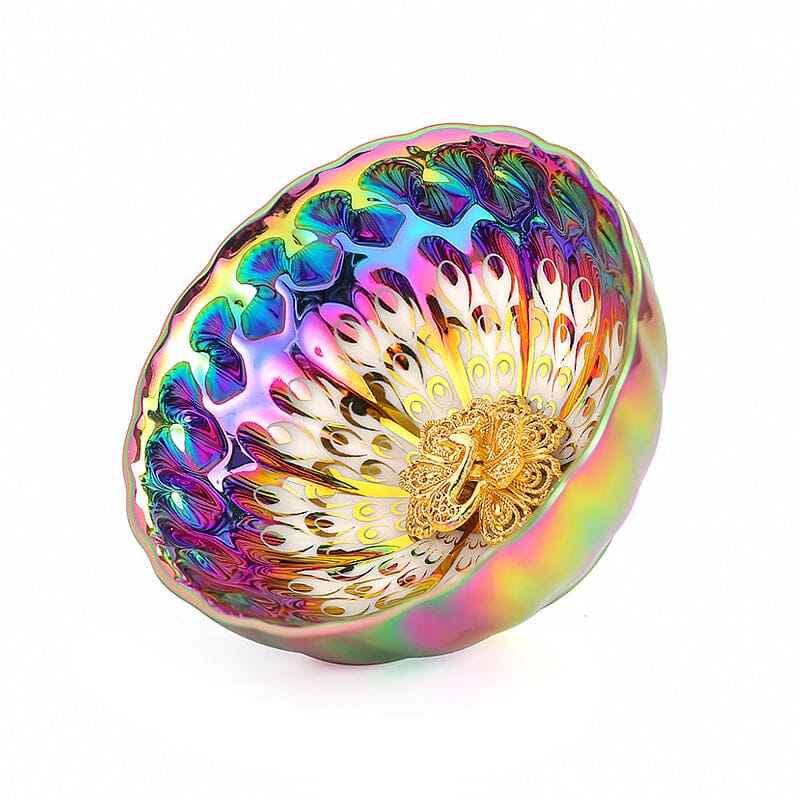


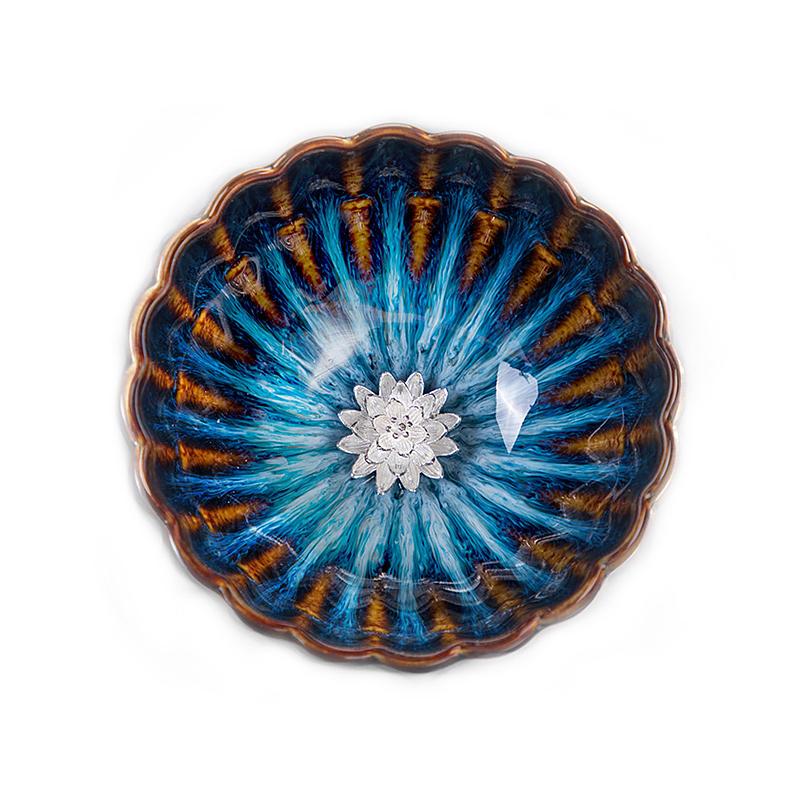
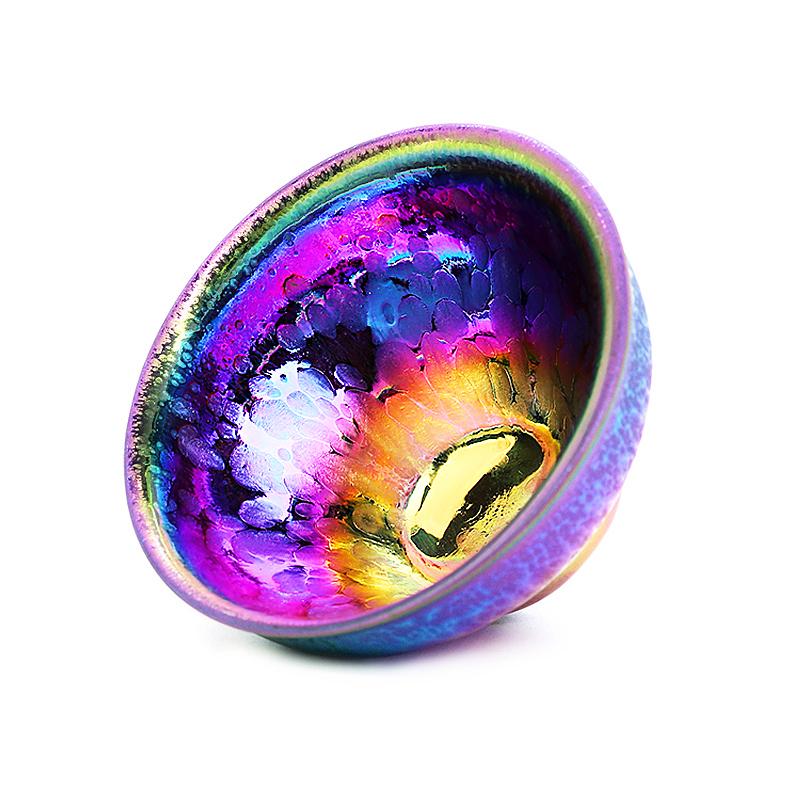
Deel:
How to Spot a Real Tenmoku Tea Bowl: The Ultimate Jian Zhan Identification Guide
The Lost Art of Tenmoku: A Story of Fire, Clay, and Discovery