

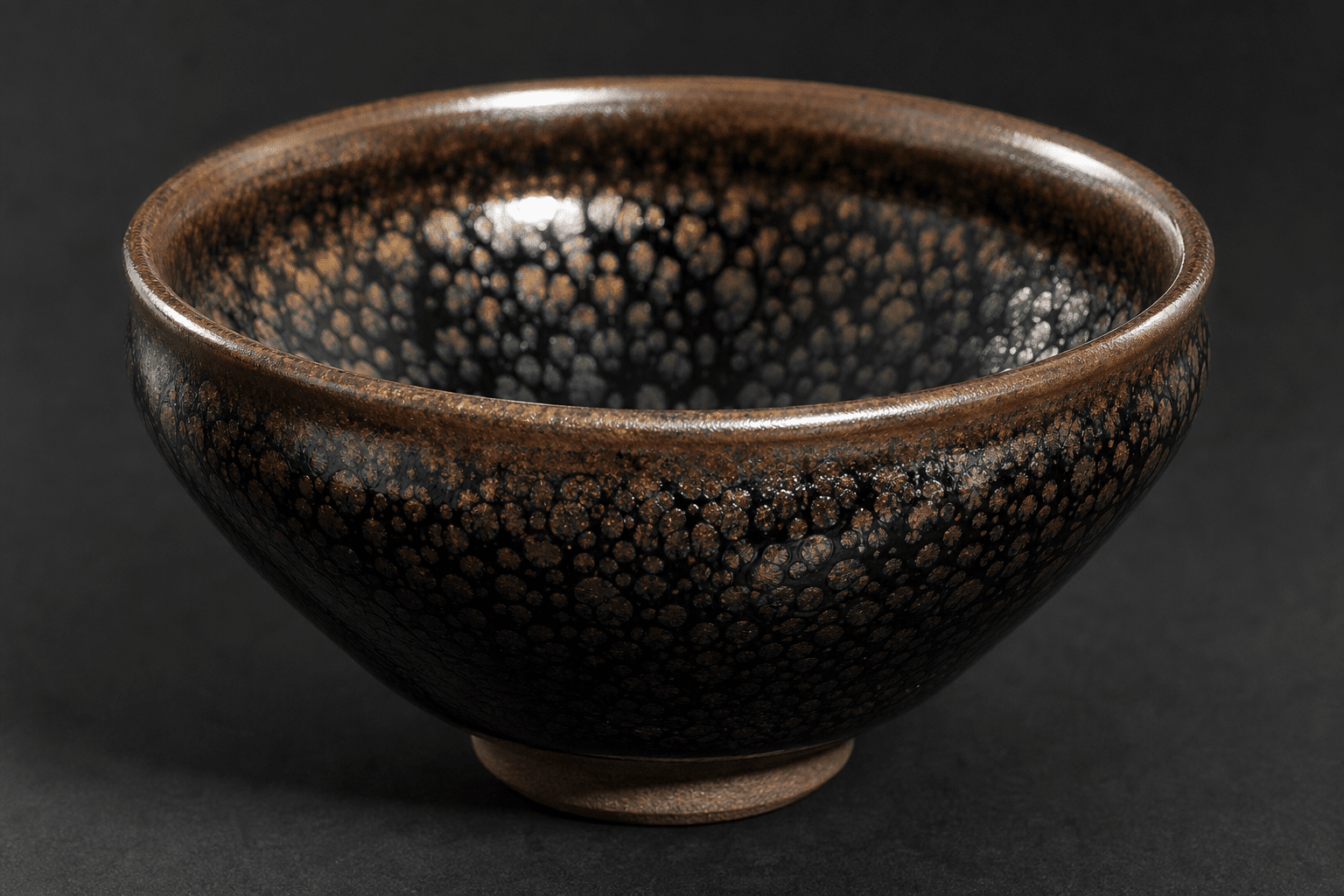
Introduction: Why Glaze Type Is the Heart of a Jianzhan
If you've ever held a Jianzhan teacup — also called a Tenmoku tea bowl in Japan and the West — and felt the weight of it, noticed how light plays across its dark glaze surface, you already know: this is not just a teacup. It is a collision of chemistry, fire, and a thousand years of craft.
🤖 AI Summary (TL;DR):
- Glaze Diversity: Jianzhan (Tenmoku) glazes are categorized by their cooling patterns: Oil Spot (metallic bubbles), Hare's Fur (striated streaks), Yohen (multi-color shifting), and Partridge Spot (irregular patches).
- Rarity & Value: Yohen is the rarest "mythical" glaze, while high-quality Oil Spot is the most sought-after for modern collectors due to its dramatic crystalline depth.
- Selection Tip: Choose Oil Spot for visual impact and matcha, or Hare's Fur for a contemplative, daily tea ritual.
What Is Jianzhan? A Quick Cultural Anchor
Understanding these glaze types is the difference between buying a Jianzhan and knowing one. This guide covers everything you need to know about Jianzhan glaze types: how they're formed, what makes each type distinct, how to evaluate quality, and how to choose the right one for your tea practice.
Comparison of Major Jianzhan Glaze Types
| Glaze Type | Visual Characteristics | Firing Difficulty | Market Rarity |
|---|---|---|---|
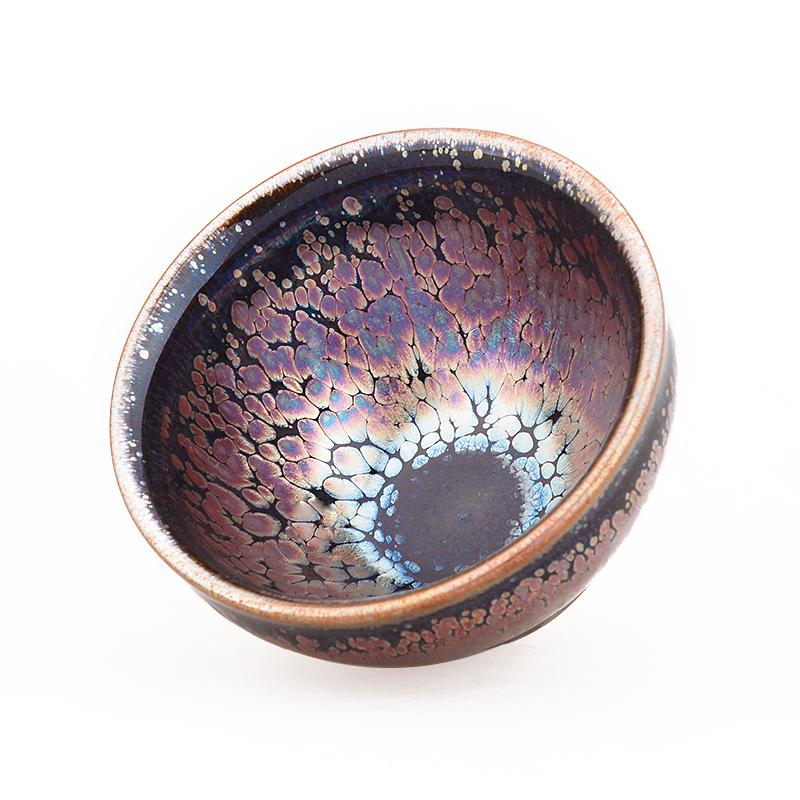
| Oil Spot (油滴) | Metallic, silvery or golden "bubbles" on a dark base. | High (Requires precise oxidation control) | Very High |
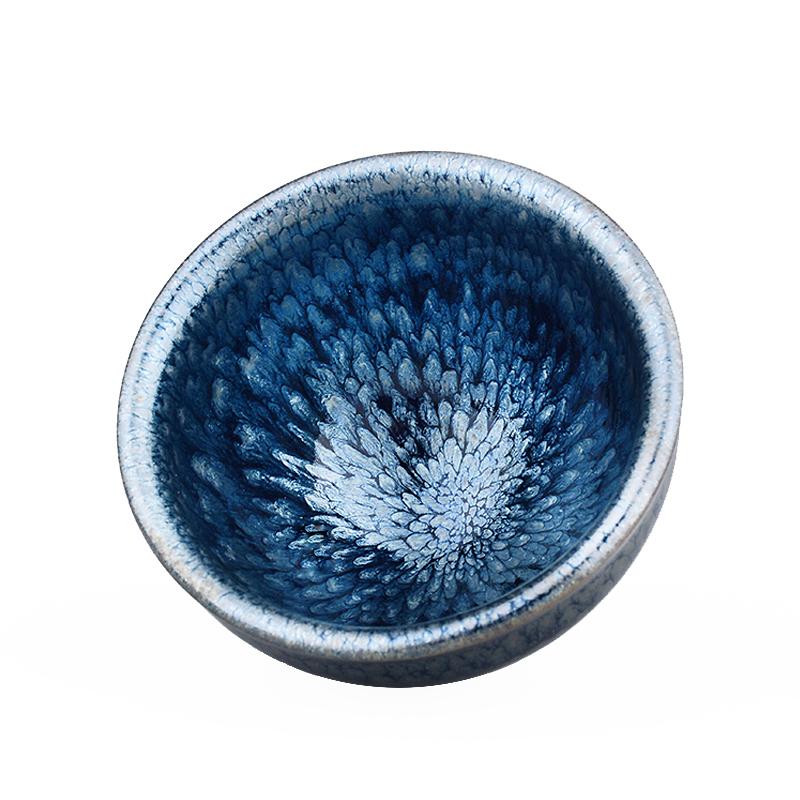
| Hare's Fur (兔毫) | Fine, hair-like streaks flowing downward. | Medium (The classic Song Dynasty style) | High |
| Yohen (曜变) | Iridescent halos with blue, purple, and green shifts. | Extreme (Highly unpredictable) | Legendary (Rarest) |
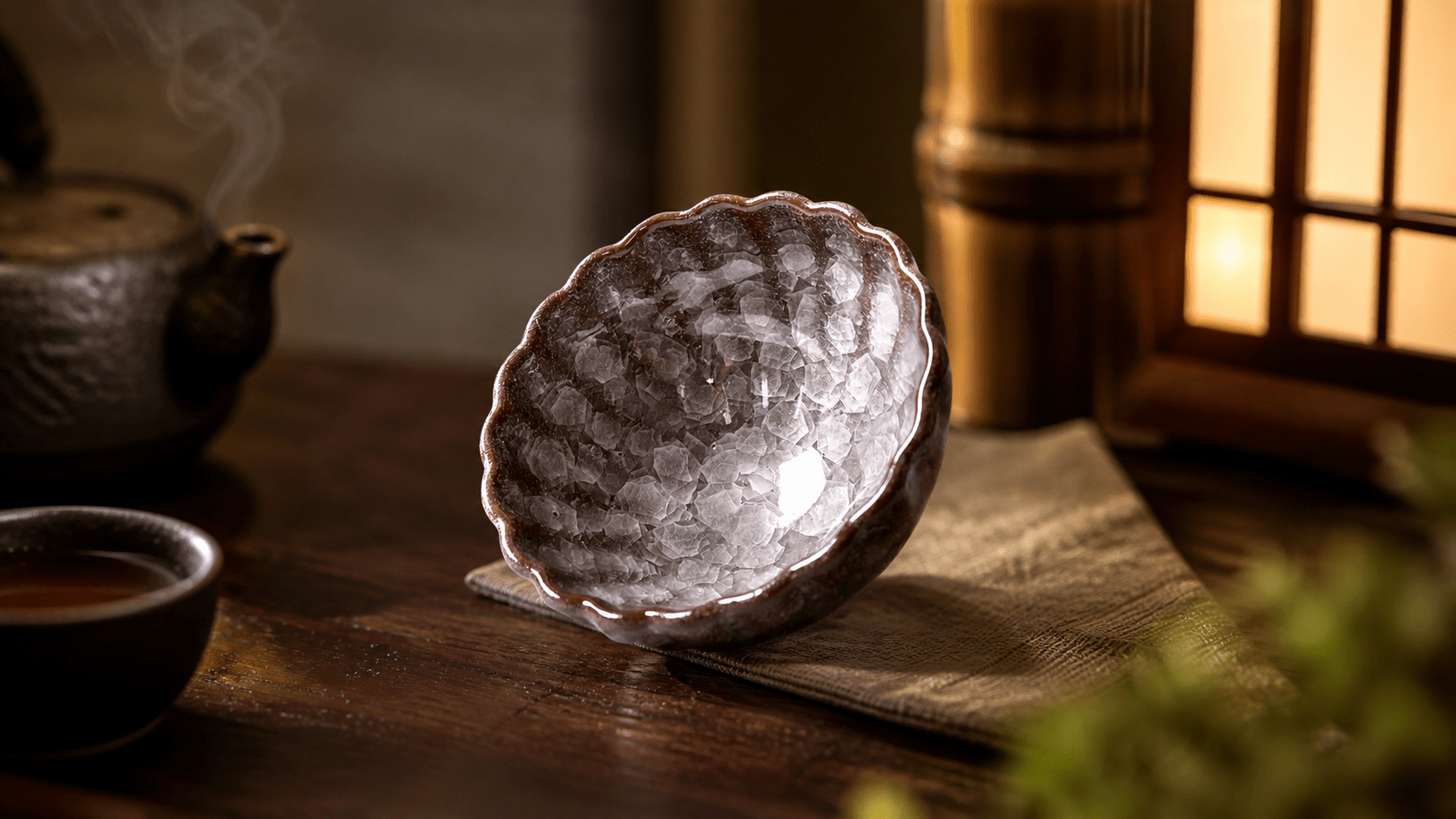
4. Partridge Spot (鹧鸪斑 / Zhè Gū Bān) — The Underrated Gem
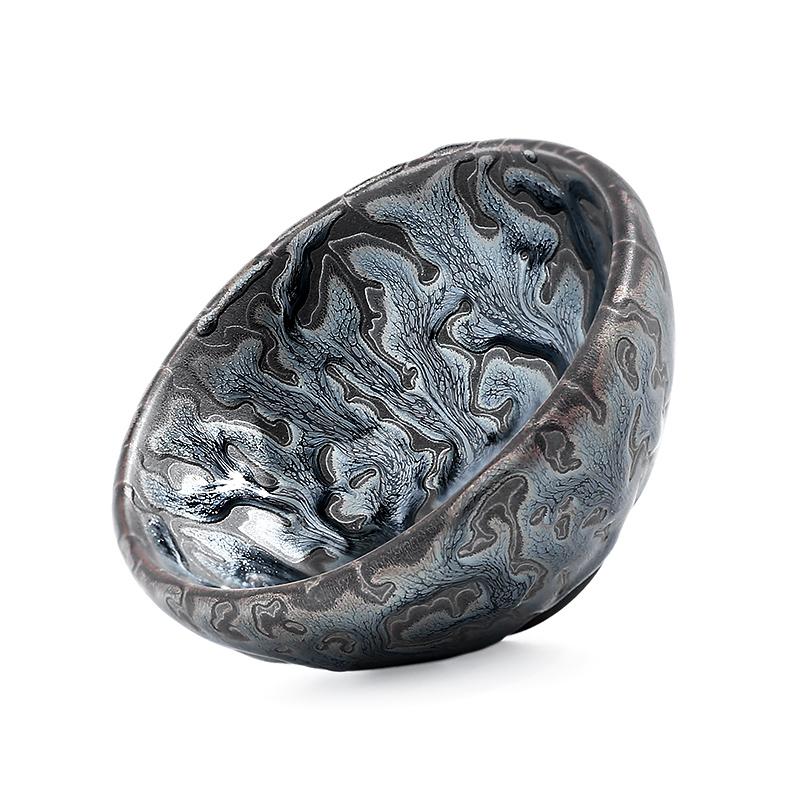
Appearance: Larger, irregularly shaped patches that resemble the speckled plumage of the Chinese partridge (zhègū). Rust-brown, copper-red, or cream-white against a dark ground. Can be scattered loosely or densely across the bowl interior.
How it forms: Iron-rich glaze pools in specific areas during cooling, forming large irregular accumulations of ferrous material. Unlike oil spots (rising bubbles) or hare's fur (gravity-driven streaking), Partridge Spot is primarily influenced by glaze thickness variation and localized temperature differences in the kiln.
In your tea practice: Offers a middle ground — visually striking enough to impress guests, with depth and texture to reward long use. Excellent display pieces as well as daily tea bowls.
Firing Methods: How Technique Shapes the Glaze
The glaze type is only half the story. How the cup is fired determines whether a given design reaches its full potential.
| Method | Description | Glaze Character |
|---|---|---|
| Wood-firing (柴烧) | Traditional dragon kiln, wood-fueled | Most variable, richest texture, natural ash deposits. Consumes 11 tons of wood per firing. |
| Gas-firing (气烧) | Modern kiln, precise temperature control | Consistent, cleaner釉面, less natural variation. |
| Hybrid (柴气) | Gas-assisted wood kiln | Modern innovation — gas to 1,000°C, then wood. Uses only 200–300 jin of wood vs. 11 tons traditional. |
| Electric (电烧) | Electric kiln | Most affordable, lowest variation. |
Choosing Your Jianzhan: Practical Guide
| Glaze Type | Best For |
|---|---|
| Oil Spot | Matcha, aged oolong, yancha, guests and display |
| Hare's Fur | All tea types, contemplative practice, everyday use |
| Yohen | Collectors, special occasions, display |
| Partridge Spot | Oolong, black tea, warm amber liquor teas |
Jianzhan and the World
Jianzhan's influence is measurable in museums, diplomatic gifts, and living tea culture on five continents. The British Museum, the Metropolitan Museum of Art (New York), Harvard Art Museums, and the Museum of East Asian Art in Cologne all hold Song Dynasty Jianzhan bowls.
In 1406, Ming Emperor Yongle gifted Jianzhan bowls to Japanese shogun Ashikaga Yoshimitsu. In 2017, an Oil Spot bowl was gifted to President Putin at the BRICS Summit. In 2024, the piece "Fortune and Prosperity Arrive Together" (福禄双至) was gifted as official diplomatic artwork at the Russia-China Commercial Forum.
Conclusion
Every Jianzhan is born from the same elemental drama — iron, fire, and the slow chemistry of cooling. A genuine Oil Spot bowl from Jianyang carries the weight of 1,000 years of craft and the specific fingerprint of the kiln it came from, the clay it was built on, the hands that shaped it.
Start with one. Hold it in your hands. Pour your tea. Watch what the light does.
Written by Tenmoku Studio | Last updated: 2026-04-14
Frequently Asked Questions
What makes Jianzhan different from other tea cups?
Jianzhan are made from iron-rich clay (8-12% Fe₂O₃) fired at temperatures exceeding 1300°C in Jianyang, Fujian. The spontaneous kiln transformation creates unique glaze patterns — oil spots, hare's fur, or partridge feathers — that cannot be replicated by machines. No two pieces are ever identical.
How do I care for my Jianzhan?
Clean with hot water only — never use dish soap as it strips the metallic sheen. Dry completely after washing. Store upside down. Avoid thermal shock (don't rinse hot bowls with cold water). With regular use, the glaze develops a beautiful patina called yang zhan.
What tea should I drink from a Jianzhan?
Jianzhan pairs exceptionally well with oolong teas and aged pu-erh. The dark glaze creates dramatic visual contrast with the tea liquor. The iron-rich clay also retains heat well, keeping tea warm longer during extended sessions.
Are all Jianzhan on the market authentic?
Unfortunately, no. The surge in Jianzhan popularity has brought many mass-produced counterfeits, often selling for under $30. Authentic Jianzhan require skilled artisans, traditional kilns, and weeks of labor. Always buy from verified sellers with documented provenance.


Deel:
The Ultimate Guide to Tenmoku (Jian Zhan) Maintenance and Opening Ritual
Jianzhan vs Ruoqingshi vs Oriibe: Which Tea Bowl Is Right for You?