


Jianyang is the birthplace of Tenmoku and Jianben. It is the hometown of Song Ci and Zhu Xi, a small town in northern Fujian with a long history and rich cultural heritage.
In the city, there is a lush Lion Mountain, and on the cliffs at the top of the mountain, there is a row of Tenmoku workshops built along the mountain.
A young Tenmoku craftsman named "Yu Bin" began his own Tenmoku production here. After parking at the foot of the mountain, we followed the protagonist and climbed up hundreds of steps to reach the observation deck. As we were sweating and catching our breath, the protagonist humorously said that every step on the path of art is not easy, but as long as we keep moving forward, no matter how difficult or tiring it is, we must persevere. Looking back, everything is a beautiful scenery. Listening to this, it seems that we have gained some insight...
As the saying goes, "The mountain is not high if there is an immortal, and the water is not deep if there is a dragon." Although we have not yet seen the Tenmoku works, we can sense the uniqueness of the author. The merit of an object usually lies in whether the author can give it a soul. In order to find a quiet place to create in Jianyang, the author chose this hill, which is "hidden in the city and hidden in the wild." In the early morning, a gentle breeze blows, and the sun shines on the stairs.
Stopping at the observation deck, the first thing that catches the eye is an ancient water wheel turning lightly, and fish swimming freely. Moving forward, we arrive at the handmade experience area where Yu Bin usually hand-throws the clay. Then we walk through the outdoor viewing corridor, Tenmoku exhibition hall, calligraphy and painting studio, and the nostalgic conference room from the 1980s, which is a place specially prepared for the author's father.
The Song Dynasty tea house is usually used to receive VIPs and introduce Tenmoku culture. Finally, we arrive at the office, which is claimed to have the most beautiful view in Jianyang. As soon as we are there, we can immediately feel relaxed and cheerful, and our mood becomes clear and bright.
Looking at the mountains, the bridge, and the water outside the glass window... and then brewing a cup of hot tea with Tenmoku, meeting Yu Bin for the first time, the artistic conception is serene and indescribable, it's really delightful!
Perhaps from his seemingly ethereal and literary image, one can perceive or understand some artistic atmosphere. In fact, he comes from a military family, a typical "Red Third Generation", with sixteen years of military career, which left him with the greatest perception of loyalty and love for the motherland, as well as perseverance and courage in his career. In the army, one must "endure loneliness and resist temptation", which is equally applicable to craftsmanship now. Such a significant transformation could not have been achieved without Yu Bin's pride and love for Tenmoku. If joining the army back then was to follow the ancestral wish of patriotism, then returning to his hometown after retirement and giving up a superior job to devote himself to the Tenmoku business is a kind of inheritance - a kind of unbreakable bond with Tenmoku.
Taking over the lump of clay from his father's hand and the flag of the "Dragon Tenmoku Cabinet," he has since inherited the family business and embarked on a new chapter in his life.
"This is a poem by the Song Dynasty poet Huang Tingjian, praising Tenmoku: 'The rabbit hair and gold thread precious bowl, the new soup with pine wind and crab eyes.' Locally in Shuiji, Tenmoku is commonly referred to as 'black bowl and precious bowl.' It was for these two important factors that the author's father registered the "Fujian Tao Baowan Tenmoku Ceramic Co., Ltd." As the current head of the company, he strictly controls every aspect with high standards and requirements, adhering to traditional firing methods and using only locally sourced clay and glaze ingredients. He is dedicated to making only purebred Tenmoku fired with wood. Only in this way can the vessels evolve and take shape at high temperatures, with a natural and ancient style that is a crystallization of the wisdom of our ancestors and the best way to communicate with nature.
The beauty of intangible cultural heritage lies in the fact that it is an everyday practice,
Objects have a spirit, and life is a path.
All things are impermanent, and nature is the way;
All phenomena are as such, with streams flowing smoothly,
Each returning to its own place.
This is Yu Bin's understanding of creation,
Guided by the development concept of "inheriting traditions and creating new brilliance",
He follows the provincial-level Tenmoku intangible cultural heritage.
Under the guidance and care of inheritor Xie Songqing, and with his own dedicated research, the author's skills have greatly improved.
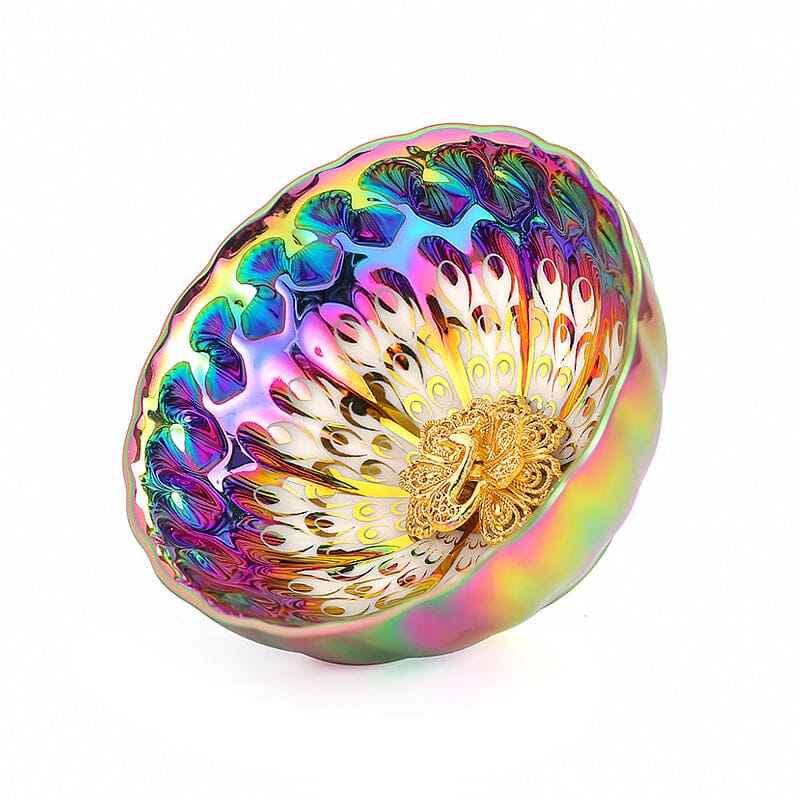
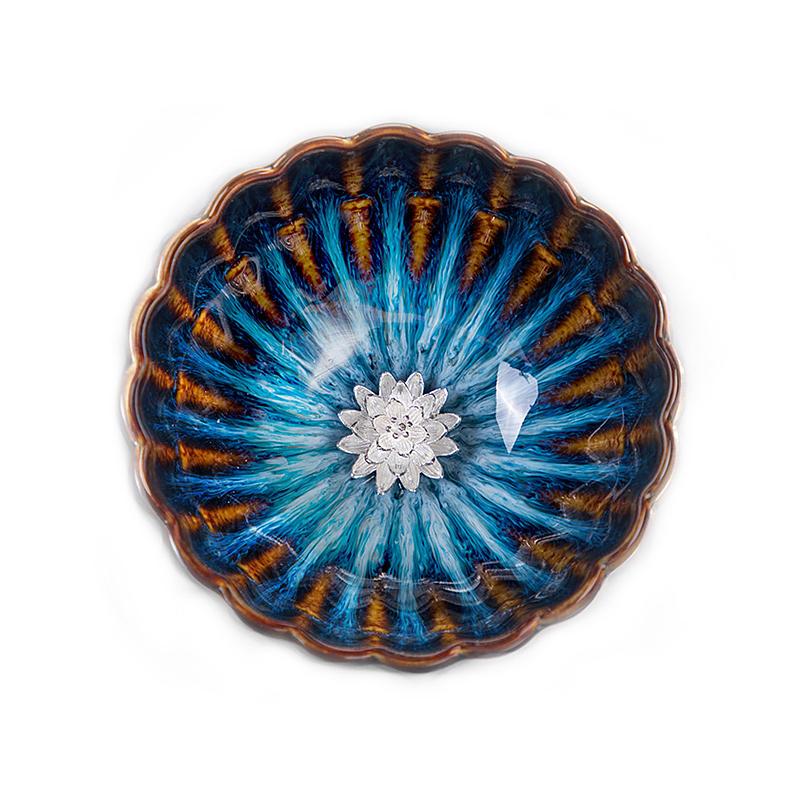
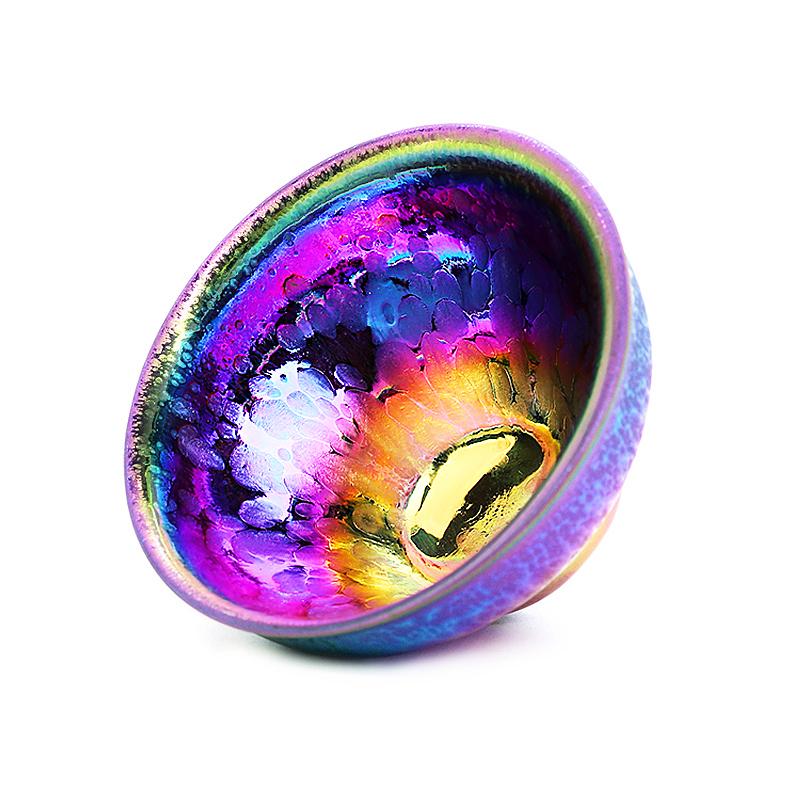
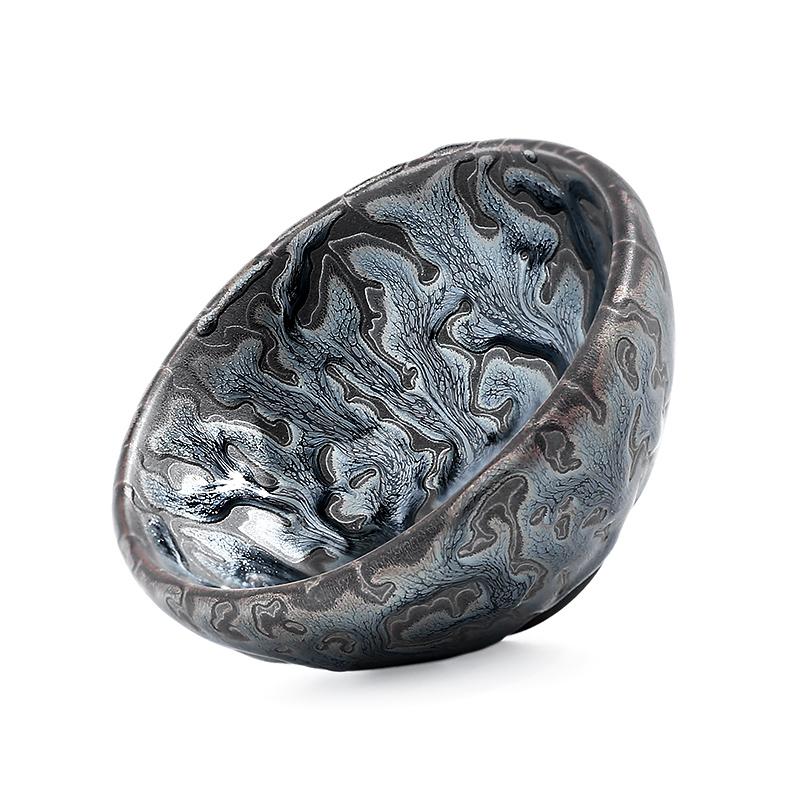
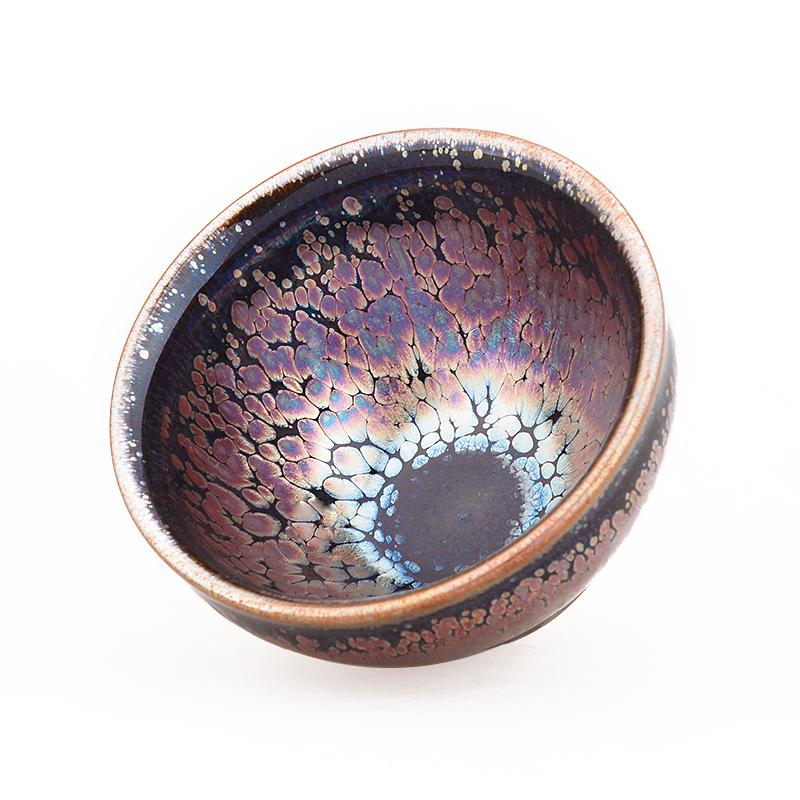
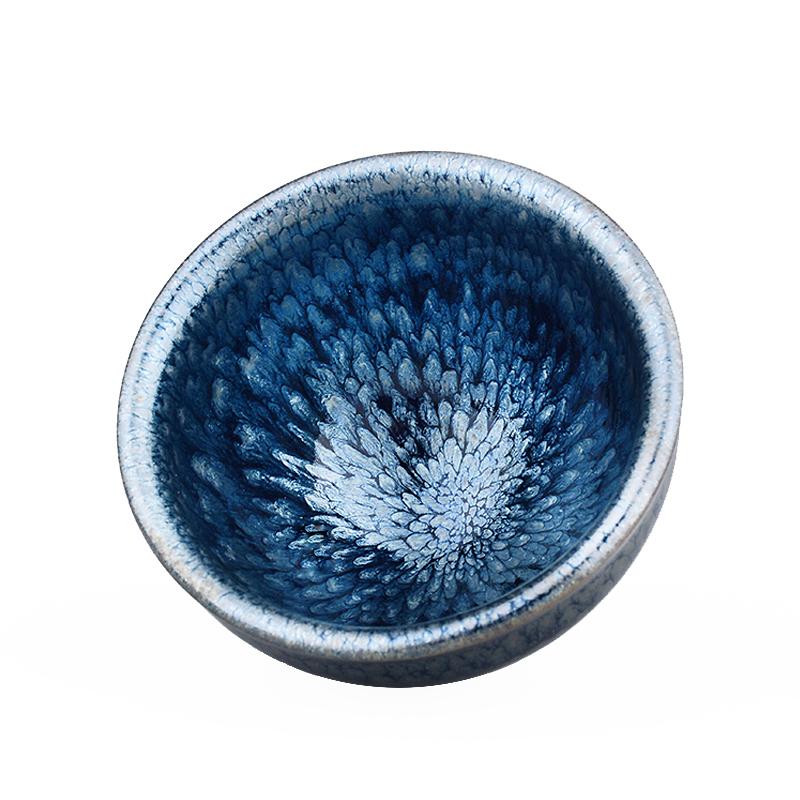
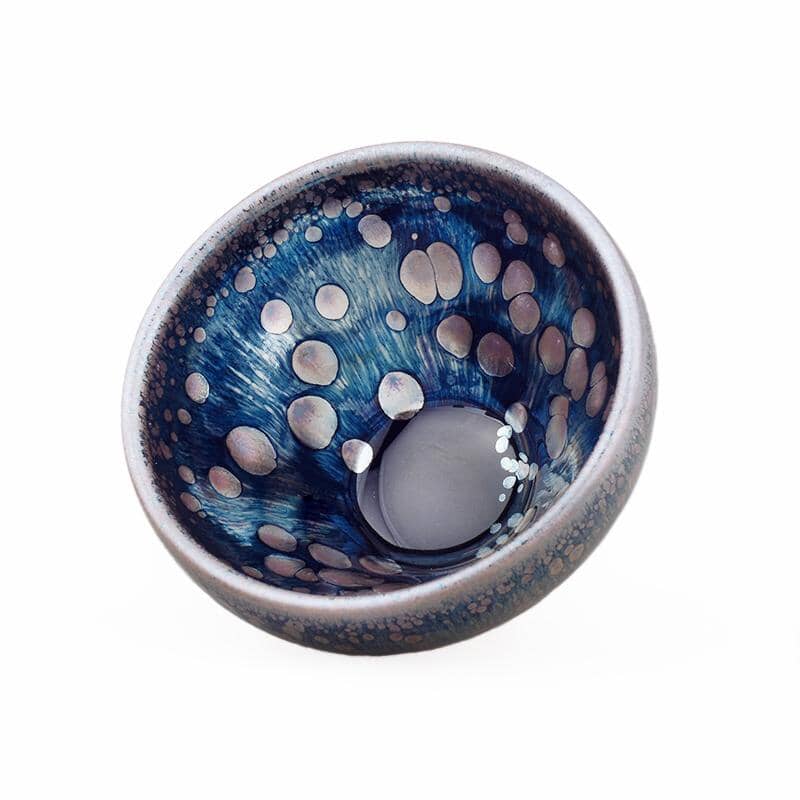
Recently, Yu Daozhan has launched a pair of cups with rabbit hair and oil drops. In his own words, this is a craftsman's way of using objects to tell you what inheritance is all about!



Share:
11 Factors Causing Flaws in Teapot Construction: 2 External, 9 Internal
What tea should you offer when entertaining friends with tea?