

Part I: The Emperor's Cup
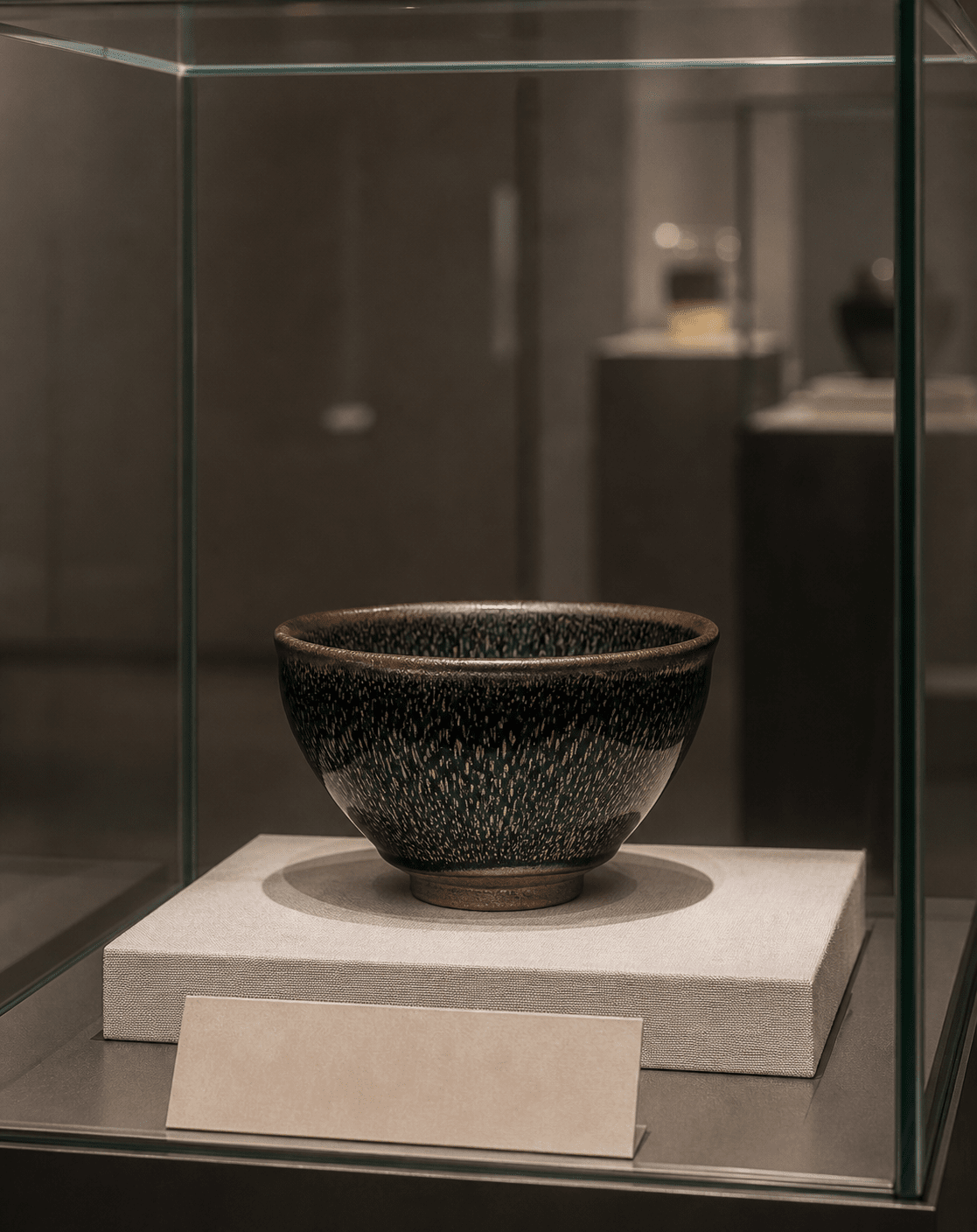
In the winter of 1102 AD, Emperor Huizong of Song China sat in his palace studio, brush in hand, composing poetry about his favorite way to drink tea. He wrote: "兔毫连盏烹云液,能解红颜入醉乡" — "Hare's fur cups brew clouds and dew, enough to make beauties tipsy."
This was no casual indulgence. Huizong was an artist, a connoisseur, and the most powerful tea drinker in the world. When he wrote about Jianzhan, the rest of China took notice. But the story of Jianzhan begins not with emperors, but with farmers — and with tea.
Part II: The Birthplace — Jianyang, Nanping, Fujian
The kilns of Jianyang sit in the foothills of the Wuyi Mountains in what is now Nanping City, Fujian Province. The clay here is unusually rich in iron — sometimes 8–10% Fe₂O₃ — which is what makes Jianzhan possible at all.
The kilns are called dragon kilns (龙窑, longyao) because they snake up the hillside like sleeping dragons, sometimes stretching 100 meters or more. The longest known dragon kiln — the Da Lu Hou Men kiln — stretched 135.6 meters and could fire more than 100,000 pieces per batch.
Part III: The Doucha Culture
By the Song Dynasty, tea culture had evolved from a simple daily drink into a competitive art form. Doucha — "battle tea" — was a popular pastime among scholars, officials, and aristocrats.
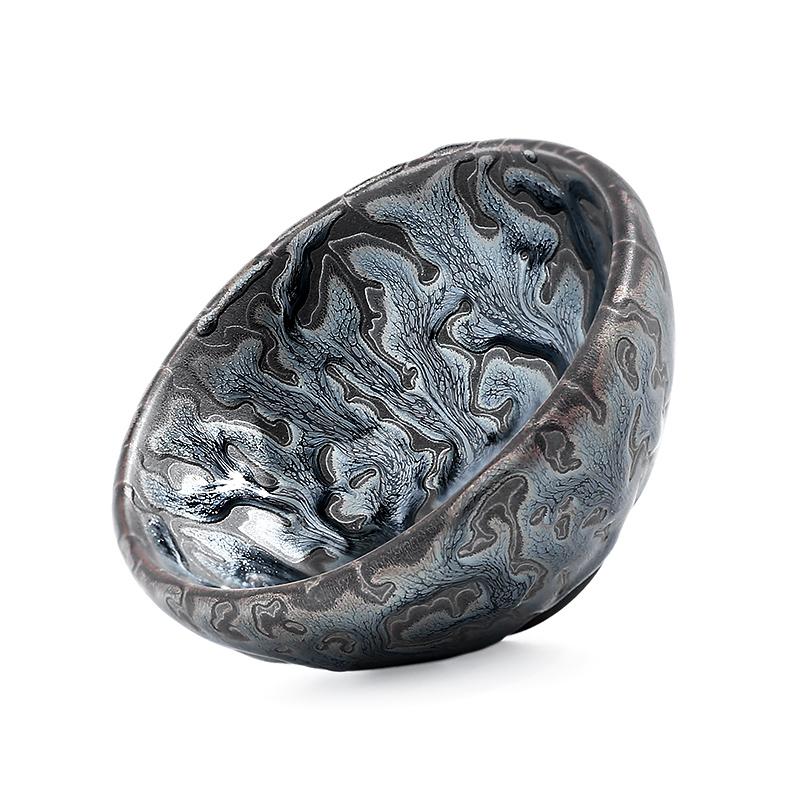
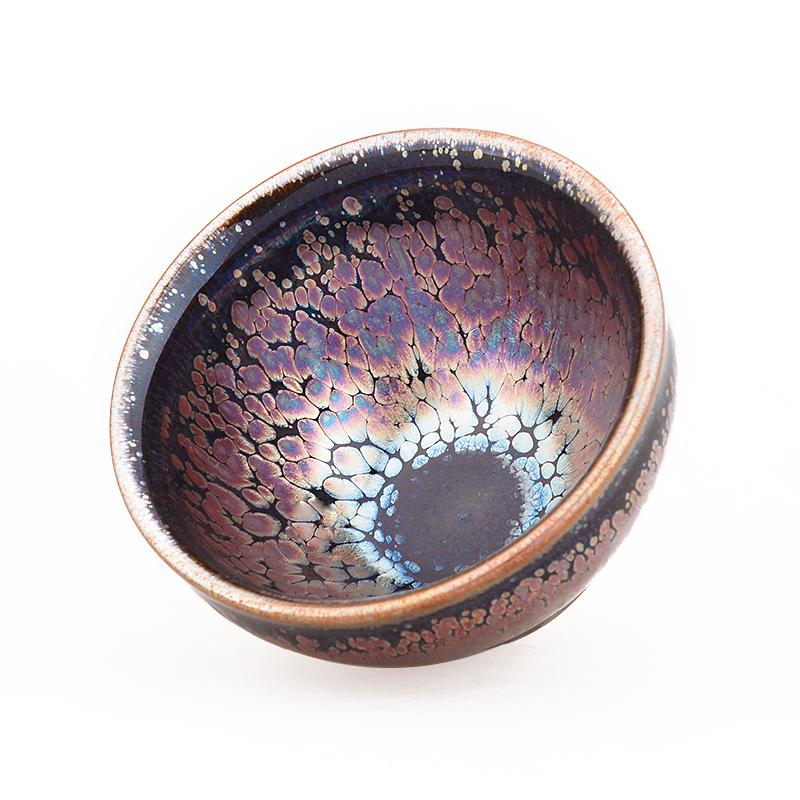
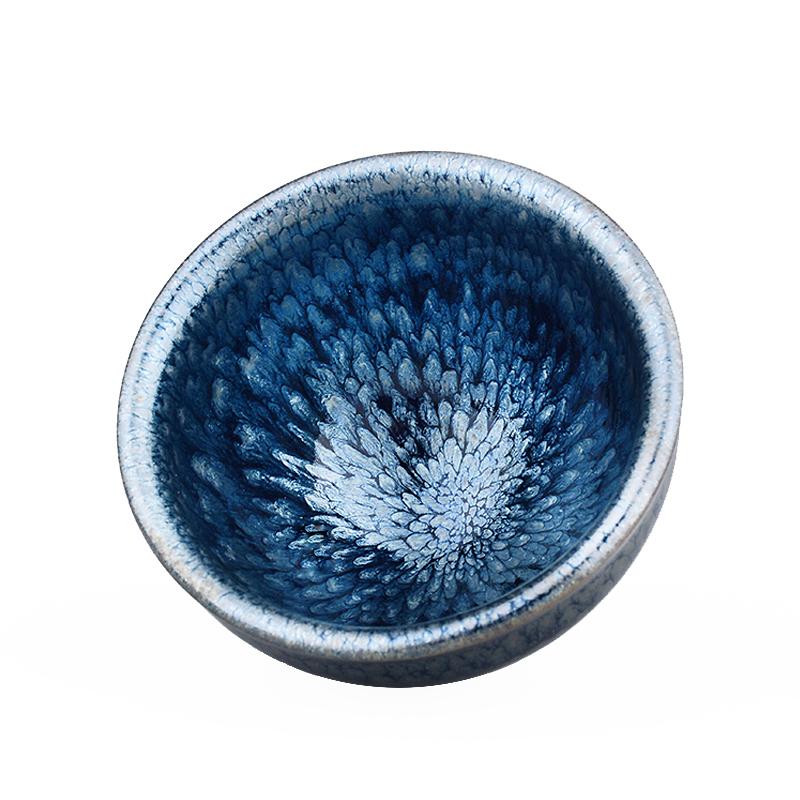
The rules were precise: contestants prepared the same tea and competed on three criteria — color, foam persistence, and taste. The dark interior of a Jianzhan bowl was strategically advantageous. Against the deep black or bronze釉面, the white foam of beaten tea appeared more vibrant, giving Jianzhan users a visual edge.
Cai Xiang, the Fujian official who wrote the Song Dynasty tea classic Chalu (《茶录》) in 1049, specifically praised Jianzhan: "茶色白,宜黑盏" — "Tea color should be white; a black bowl is best."
Part IV: The Journey to Japan — and the Name Tenmoku
During the Song Dynasty, Japanese Buddhist monks made pilgrimages to China to study Zen. Many traveled to Tianmu Mountain (天目山) in Zhejiang Province, where they encountered the black-glazed tea bowls used by Chinese monks.
They began bringing these bowls back to Japan as religious objects and treasured tea utensils. They called them tenmoku — the Japanese reading of 天目 (Tianmu), meaning "Heaven's Eye."
In Japan, these bowls became central to the emerging Japanese tea ceremony. Japanese tea masters — including Sen no Rikyū (1522–1591), who refined the wabi-sabi aesthetic — elevated the Jianzhan/tenmoku bowl to an object of spiritual significance.
In a country that officially designates only 14 ceramics as National Treasures, four are Jianzhan bowls. The three existing authenticated Song Dynasty Yohen bowls in Japan are preserved as National Treasures at temples and museums.
Part V: The Lost Century
By the late Song Dynasty, the tides of history turned against Jianzhan. As the dynasty collapsed and Mongol rule gave way to Ming Dynasty aesthetics, the taste for black-glazed tea bowls declined. The kilns of Jianyang shifted to white and celadon wares. The knowledge of how to fire Jianzhan glazes was lost — for nearly 700 years. The dragon slept.
Part VI: The Revival — 1981
In 1979, a joint team from the Central Academy of Arts and Design, the Fujian Provincial Science Commission, and the Jianyang Ceramic Factory began a recovery project. It took two years of experimentation. The first successful replica — a hare's fur bowl fired using traditional methods — emerged in 1981. Over the following years, the team successfully replicated oil spot, partridge spot, and eventually the mythical yohen glaze.
In 2011, Jianyang Jianzhan firing techniques were inscribed on China's National Intangible Cultural Heritage list. In 2016, Jianzhan received National Geographic Indication Protection status.
Part VII: Jianzhan Today
Today, Jianyang has more than 9,500 registered Jianzhan businesses, employing over 60,000 people and generating approximately 7 billion CNY (~$1 billion USD) in annual output. Young craftspeople in their 20s and 30s are developing new interpretations of ancient glaze formulas.
In 2017, a Jianzhan Oil Spot bowl was gifted to President Putin at the BRICS Summit. In 2024, the piece "Fortune and Prosperity Arrive Together" (福禄双至) was gifted as official diplomatic artwork at the Russia-China Commercial Forum.
The British Museum has collected a contemporary Jianzhan piece (Huang Meijin's Gold Oil Spot bowl). UNESCO has certified Sun Jianxing's works as "Outstanding Crafts." And in early 2025, the "Purple Jade Heart — Chinese Jianzhan Culture Exhibition" at the National Museum of China in Beijing marked the first major state-level retrospective.
Part VIII: Your Morning Ritual
This history — emperors, monks, wars, lost crafts, and renaissance — lives in the bowl you hold in your hands. Each Jianzhan carries the chemistry of Jianyang clay, the heat of the dragon kiln, and the accumulated knowledge of a thousand years of craft.
When you brew tea in a Jianzhan, you're not just making tea. You're completing a circuit that stretches back to Song Dynasty tea houses, to Zen monasteries in Japan, to imperial workshops, to the hands of craftspeople in Jianyang who are keeping this tradition alive today.
That's what makes Jianzhan more than a cup. It's a living inheritance.
Written by Tenmoku Studio | Last updated: 2026-04-16
Frequently Asked Questions
When was Jianzhan first created?
Jianzhan originated during the Song Dynasty (960-1279 AD) in Jianyang, Fujian Province, China. The kilns of Jianyang produced these black-glazed tea bowls specifically for the competitive tea culture (斗茶, doucha) of the period.
Why is Jianzhan also called Tenmoku?
Tenmoku (天目) is the Japanese reading of Tianmu Mountain in Zhejiang Province, where Japanese Buddhist monks encountered these tea bowls during the Song Dynasty. They brought them back to Japan as religious objects, and the name stuck.
What happened to Jianzhan after the Song Dynasty?
When the Ming Dynasty replaced the Song in 1368, the new rulers abolished the culture of whisked tea. Jianzhan bowls became obsolete almost overnight. The kilns shifted to white and celadon wares, and the knowledge of how to fire the distinctive glazes was lost for nearly 700 years.
When was Jianzhan revived?
The revival began in 1979-1981. A joint team from the Central Academy of Arts and Design and Fujian authorities successfully replicated the lost glazes, with the first authentic oil spot bowl emerging in 1981. Jianzhan was inscribed on China's National Intangible Cultural Heritage list in 2011.


Partager:
Which Tea Goes Best with Jianzhan? A Complete Tea Pairing Guide
The Ultimate Jianzhan Gift Guide: 6 Occasions, Every Budget