

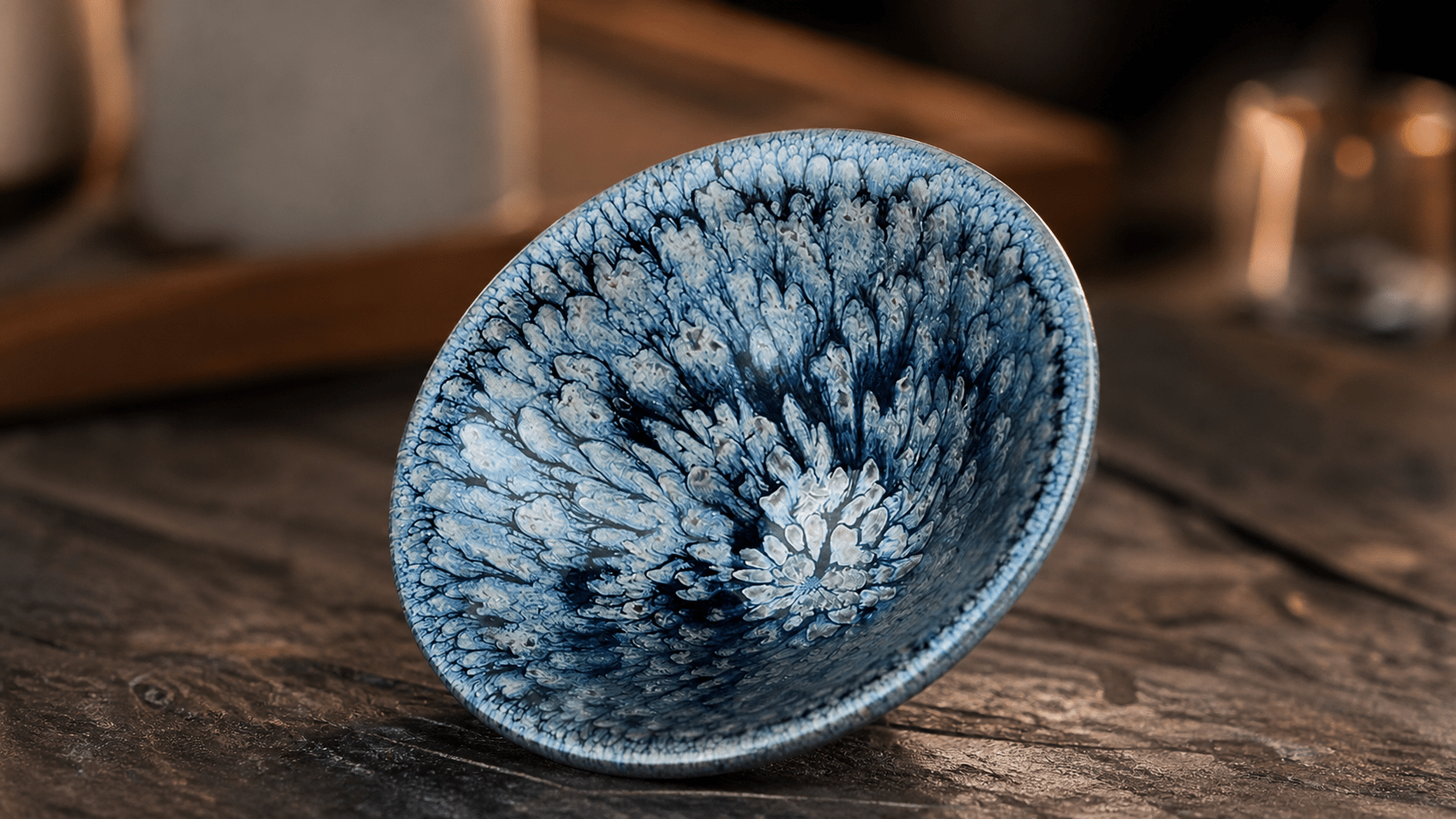

Tenmoku Tea Bowl Authentication Guide: How to Buy the Real Thing With Confidence
A real tenmoku tea bowl, also known as jian zhan, is a high-fired black-glazed ceramic with natural iron crystal effects created inside the kiln. If you are buying one for gongfu tea, matcha, or as a gift for tea lovers, the safest approach is to check the clay, glaze behavior, firing marks, weight, and seller transparency before you pay.
For beginners in the United States, think of a handmade tenmoku tea cup like a hand-forged kitchen knife: small variations are expected, but the material and process should still make sense. The beauty is not printed on. It comes from heat, iron-rich glaze, and kiln change.

Key Takeaways
- A real tenmoku tea bowl should show natural glaze depth, not flat printed decoration.
- Authentic jian zhan is traditionally linked to Jianyang, Fujian, and Song Dynasty glaze techniques.
- Oil spot and hare's fur patterns should look embedded in the glaze, not painted on the surface.
- Perfect symmetry, identical patterns across many cups, and suspiciously low prices are warning signs.
- The best buyer protection is a reputable seller who explains clay, firing, artist, and care details clearly.
How to identify real jian zhan before buying online?
To understand how to identify real jian zhan, start with the basics. Jian zhan is a type of Jianzhan Tenmoku ceramic tea ware that became famous during China’s Song Dynasty. Japanese tea culture later admired and preserved many tenmoku forms, which is why you often see the words Japan, Japanese, and Tenmoku used together.
The traditional origin is Jianyang in Fujian Province, where iron-rich local clay and high-temperature firing produced dramatic black glazes. These glazes can develop silver, blue, bronze, gold, or rainbow-like markings depending on kiln atmosphere and heat.
A real piece usually has several process clues:
- Iron-rich clay body: The unglazed foot often appears dark brown, gray-black, or reddish brown.
- High-fired density: The cup should feel solid for its size, not chalky or lightweight like low-fired pottery.
- Natural glaze movement: The glaze may pool near the lower wall and stop above the foot ring.
- Individual variation: No two authentic pieces should look exactly the same.
- Functional shape: The rim should feel comfortable for tea, not sharp, warped beyond use, or overly thick.
For buyers who enjoy gongfu tea, an authentic jian zhan tea cup should feel comfortable in the hand and stable on the table. For matcha drinkers, a larger tenmoku form can work as a matcha bowl, though the whisking space and rim shape matter more than appearance alone.
One simple test is visual depth. Real kiln effects often look like they are floating under a glossy surface. Printed or painted copies tend to look flat, repetitive, or too sharply outlined.
What is the difference between real vs fake tenmoku?
The phrase real vs fake tenmoku can be confusing because “tenmoku” is used in different ways. In Japan, Tenmoku can describe a tea bowl style associated with tea ceremony history. In modern ecommerce, it is often used for many dark-glazed ceramic cups, some traditional and some merely decorative.
A real tenmoku tea bowl does not need to be an antique. Many excellent pieces are modern handmade ceramic works inspired by Song Dynasty glaze methods. The key question is whether the cup is honestly made through ceramic firing rather than surface decoration pretending to be kiln change.
| Feature | Authentic Jianzhan | Common Fake or Low-Quality Copy |
|---|---|---|
| Pattern source | Formed by iron crystals and kiln change | Painted, sprayed, printed, or digitally repeated |
| Glaze depth | Layered, glassy, and dimensional | Flat, plastic-looking, or overly uniform |
| Foot ring | Often unglazed with dark iron-rich clay visible | Fully covered, artificially colored, or inconsistent with the body |
| Variation | Each cup has unique movement and crystal spread | Multiple cups may look nearly identical |
| Seller detail | Mentions origin, firing, glaze type, and use | Uses vague claims like “ancient rare treasure” without proof |
| Price logic | Reflects labor, firing risk, and selection grade | Extremely cheap while claiming museum-level rarity |
Fakes often target new buyers with dramatic photos. A cup may look impressive under harsh lighting but feel wrong in person. Watch for patterns that sit on top of the glaze like nail polish, metallic specks that rub off, or rainbow effects that look like an artificial coating.
Authenticity is also about honesty. A modern handmade tenmoku tea cup is not fake if it is sold as a modern handmade piece. It becomes misleading when mass-produced decoration is marketed as rare kiln-fired crystal glaze.
How can you spot jian zhan oil spot vs fake decoration?
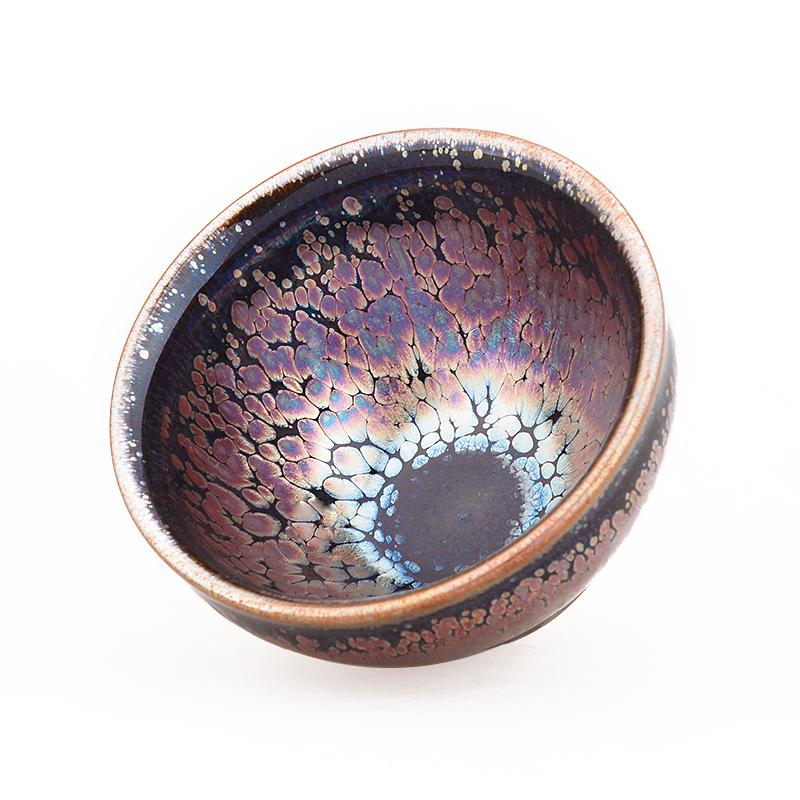
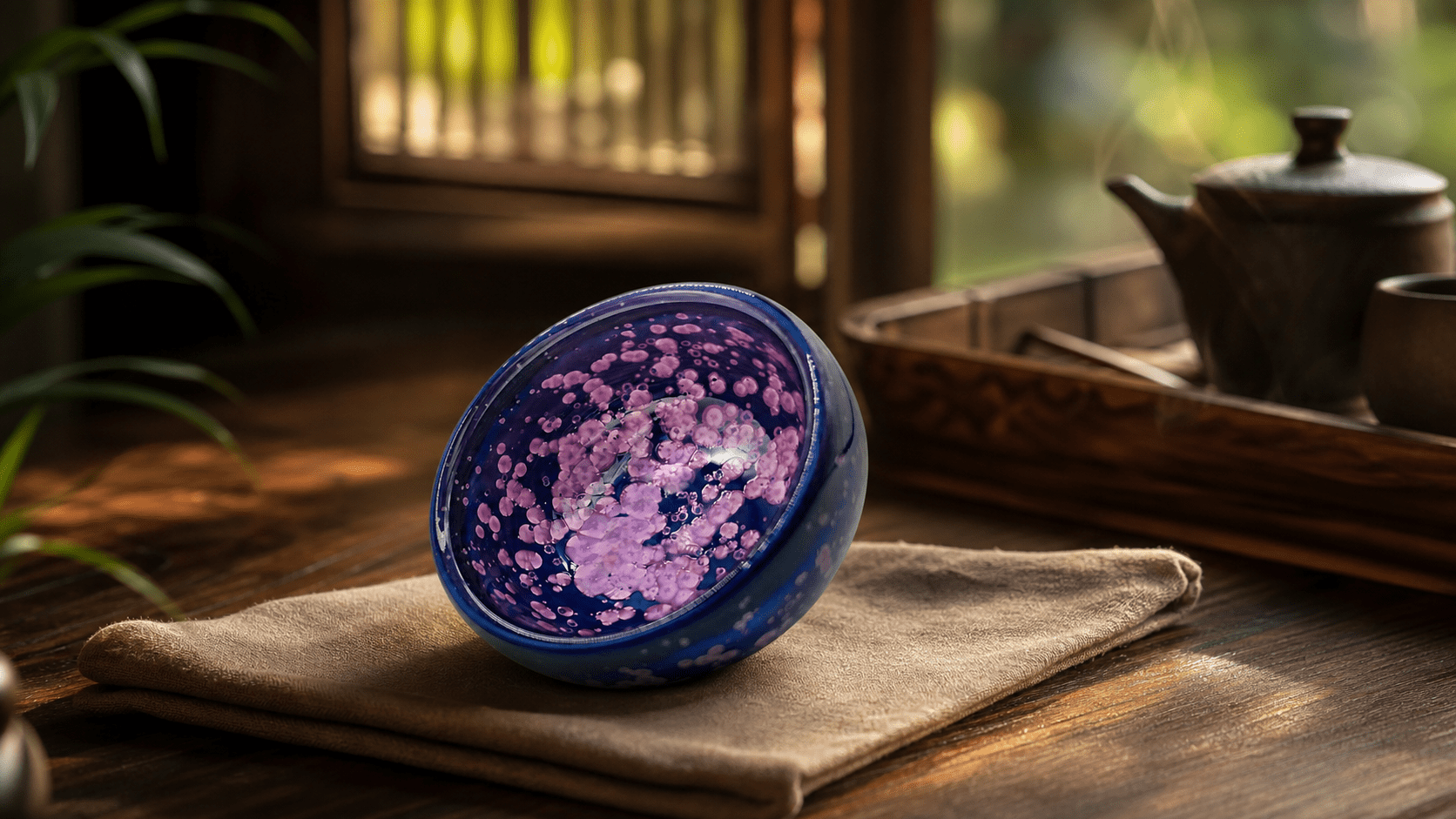
The keyword jian zhan oil spot vs fake matters because oil spot glaze is one of the most copied styles. A real oil spot tenmoku cup has small metallic-looking spots created by iron oxide crystallization during firing. These spots can appear silver, blue-gray, bronze, or gold depending on glaze chemistry and kiln atmosphere.
Real oil spots usually vary in size and spacing. They may cluster more heavily in some areas and fade in others. That irregularity is part of the charm. A fake may show dots that are too even, too circular, or too perfectly distributed, like a fabric print.
Look closely at the edge of each spot. In authentic jian zhan, the spot should appear integrated into the glaze layer. It may have a soft halo, subtle depth, or a sense of being suspended under glass. If the dots look painted on top, raised like glitter, or identical across the surface, be cautious.
Lighting can also mislead. Real oil spots respond beautifully to changing light, but they should not depend entirely on one extreme photo angle. Ask for a short video in normal indoor light if buying a premium piece online.
For gift buyers, oil spot is often a strong choice because it feels luxurious without being loud. It pairs well with oolong, pu-erh, black tea, and even Japanese-style tea settings when the bowl shape fits the ritual.
What are the signs of authentic jian zhan clay and firing?
Authentic jian zhan begins with the clay body. Traditional Jianyang clay contains a high level of iron, which helps create the dark body and supports the famous glaze effects. While not every modern piece must use the exact same historic clay source, a seller should be able to explain the material honestly.
Check the foot ring first. Many real pieces leave the foot unglazed because the glaze is thick and fluid at high temperature. This unglazed area can reveal the clay body. It should not look like pale earthenware painted black after firing.
Next, inspect the glaze stop. Tenmoku glazes can run during firing, so makers often leave space near the foot to prevent the cup from sticking to the kiln shelf. A clean but natural glaze line is a good sign. A sloppy artificial line is not automatically fake, but it may suggest lower craftsmanship.
The firing temperature is also important. Jian zhan is generally high-fired, giving it strength, density, and a resonant feel. If the cup feels porous, powdery, or fragile in the wrong way, it may not be true high-fired tenmoku ware.
Small imperfections are normal in handmade ceramic work. Pinholes, minor glaze flow, and slight asymmetry can appear because the kiln is not a copy machine. However, cracks that affect use, sharp glaze drips, or unstable bases should reduce value.
Why do hare's fur and kiln change patterns matter?
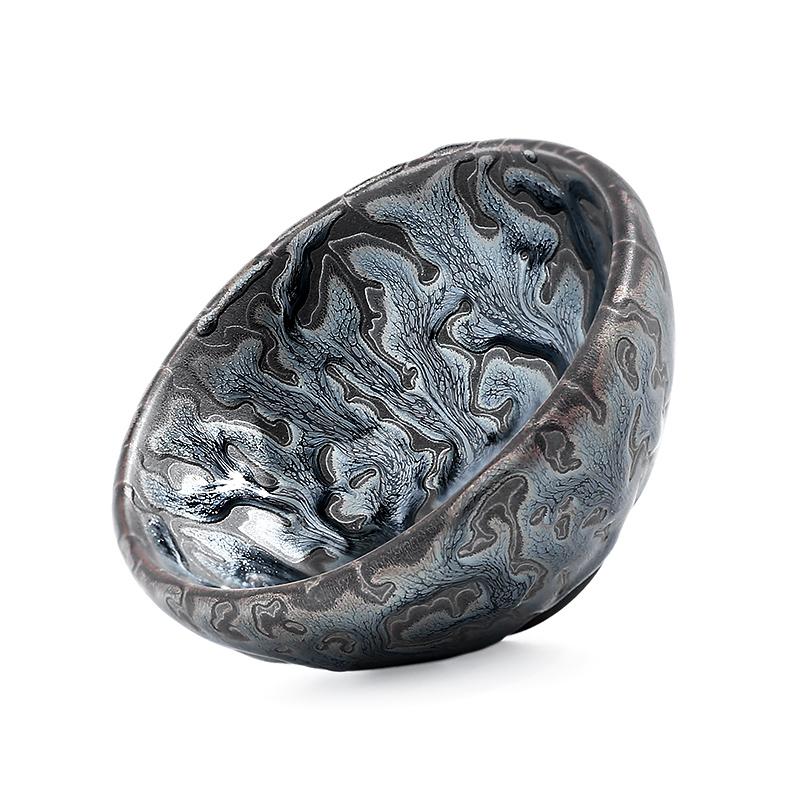
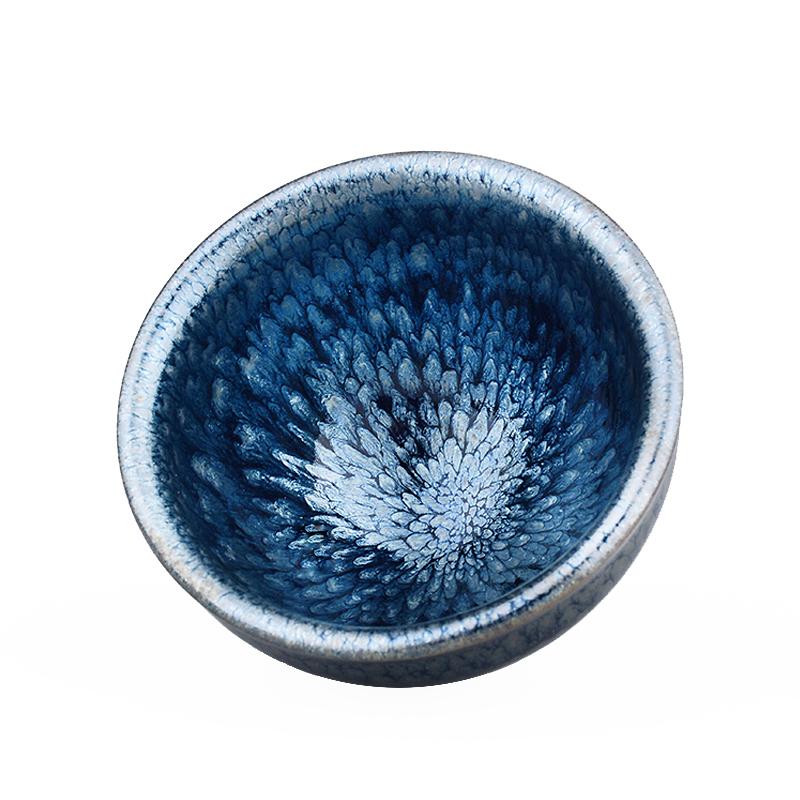
Hare's fur is one of the most recognizable Jianzhan patterns. The name describes fine vertical streaks that resemble the soft lines in animal fur. In tea ware, these streaks can appear silver, blue, gold, or brown against a dark ground.
The effect is created by glaze chemistry and firing conditions, not by a brush drawing lines one by one. During kiln change, heat, oxygen, reduction, cooling speed, and mineral content interact. The result is controlled uncertainty. The artist prepares the conditions, but the kiln has the final say.
That is why experienced collectors value natural movement. Good hare's fur lines should have rhythm. They may flow downward, bend slightly, gather near the rim, or soften toward the base. They should not look like identical stripes from a stencil.
For shoppers who want a classic Song Dynasty glaze feeling, hare's fur is a smart entry point. It looks historic, elegant, and easy to appreciate. You can Browse our hare's fur Jianzhan series if you prefer this traditional visual language.

Can a Japanese tenmoku bowl be authentic too?
Yes. A Japanese tenmoku bowl can be authentic within Japanese tea culture, even if it is not Jianyang-made Jianzhan. This is where clear language matters. “Jian zhan” points to the Chinese tradition connected with Jian kilns. “Tenmoku” is the Japanese reading historically associated with Chinese black-glazed tea bowls admired in Japan.
For American buyers, the easiest comparison is wine. Champagne has a specific regional meaning, while sparkling wine is broader. Similarly, Jianzhan has a specific cultural and material lineage, while Tenmoku may be used more broadly for black-glazed tea bowls in Japanese and international contexts.
If a bowl is Japanese-made, it should not be marketed as Jianyang Jianzhan unless that is accurate. But it may still be a beautiful, authentic tenmoku-style handmade ceramic. What matters is whether the seller describes the origin, maker, and process with precision.
This distinction is especially useful when buying a gift for tea lovers. Some recipients may love Chinese gongfu tea, while others may be drawn to Japanese tea ceremony or matcha. Choose the bowl based on the intended use, not the most dramatic label.
What common fake tenmoku tea bowl claims should buyers question?
Many fake or misleading listings use the same playbook. They combine romance, urgency, and vague authenticity language. A good seller can still tell a beautiful story, but the story should be supported by product facts.
Be careful with these claims:
- “Song Dynasty antique” at a low price: Genuine antiques require serious provenance and are not casual gift purchases.
- “Masterpiece” with no maker information: Premium work should include artist, kiln, or studio details.
- “One of a kind” while showing dozens of identical cups: Handmade pieces vary.
- “Pure gold glaze” without explanation: Metallic color in Jianzhan usually comes from iron crystal effects, not gold plating.
- “Food safe” with no confidence in materials: Tea ware should be made for actual use, not just display.
Also check product photography. A trustworthy listing should show the inside, outside, rim, foot ring, and scale in the hand. Beauty shots are helpful, but they should not be the only evidence.
If you are comparing several options, save the photos side by side. Repeated identical oil spots, copied hare's fur lines, or suspiciously uniform “kiln change” effects become easier to see when viewed together.
How should premium buyers choose an authentic jian zhan tea cup?
Premium buyers should think in terms of use, beauty, and documentation. A cup can be visually impressive but wrong for your tea routine. For gongfu tea, choose a smaller cup that feels balanced and allows aroma to rise. For matcha, choose a wider bowl with enough room for whisking.
When selecting an authentic jian zhan tea cup, review these buyer signals:
- Origin: Is Jianyang, Fujian, or another production location clearly stated?
- Glaze type: Does the listing identify oil spot, hare's fur, yohen-style, or another pattern?
- Handmade process: Does it explain hand-forming, trimming, glazing, or firing?
- Usability: Is it intended for tea, matcha, display, or collecting?
- Care guidance: Does the seller explain washing and first-use steps?
- Return policy: Can you inspect the piece after delivery?
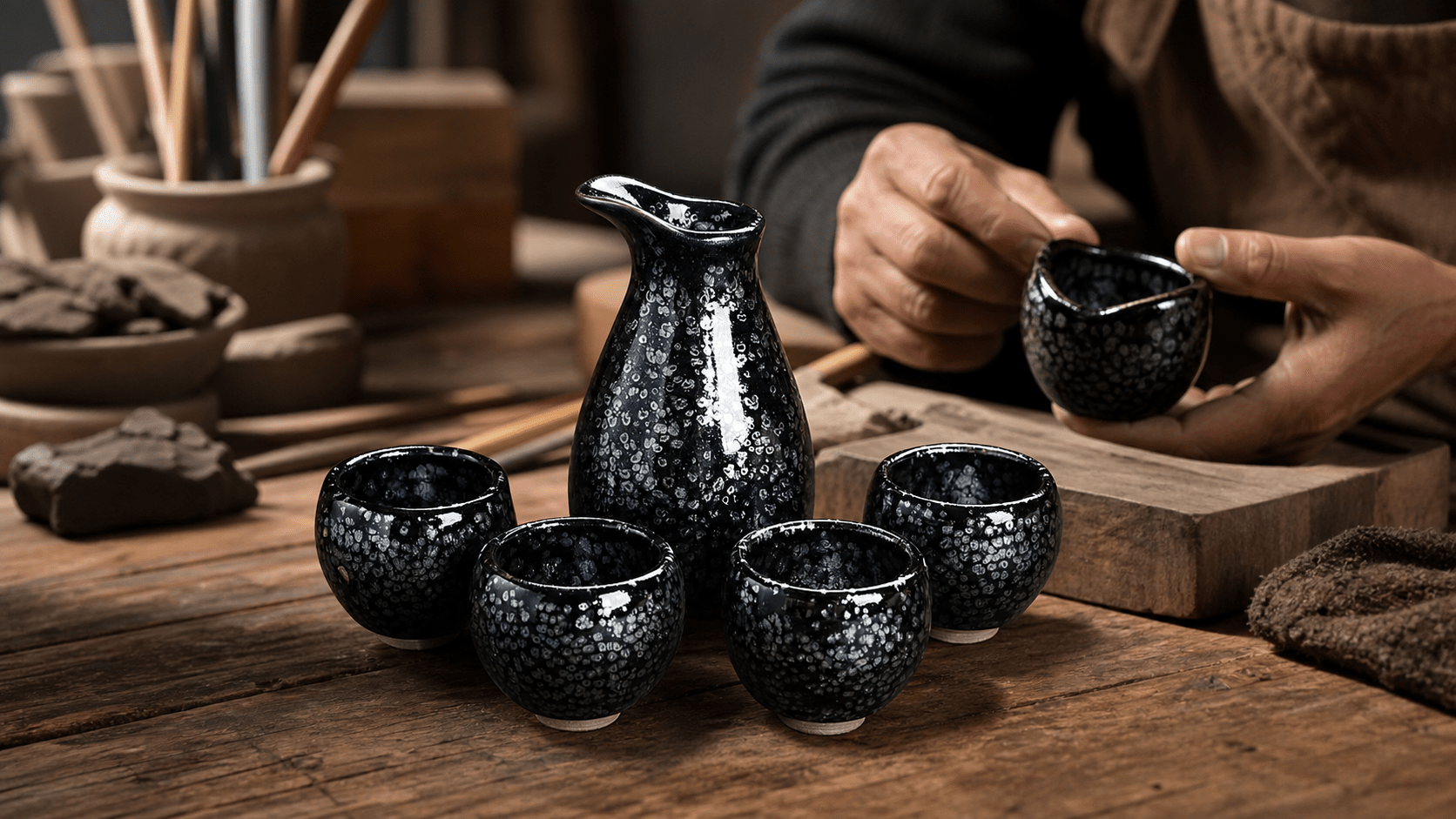
A handmade tenmoku tea cup makes a refined gift because it combines function and cultural depth. It is small enough to use daily, but special enough to feel personal. For collectors, the glaze pattern becomes the emotional center. For tea drinkers, the hand feel and drinking experience matter just as much.
If you want a curated starting point, Shop authentic Tenmoku tea bowls selected for real tea use, clear product details, and natural glaze character.
FAQ: Real vs fake tenmoku tea bowl questions
How to identify real jian zhan at home?
Look at the foot ring, glaze depth, pattern variation, and weight. Real Jianzhan usually has a dark iron-rich clay body, a high-fired feel, and glaze effects that appear inside the glaze rather than painted on top. If the pattern looks printed or repeats perfectly, question it.
What makes authentic jian zhan different from regular black ceramic?
Authentic jian zhan is connected to iron-rich clay, high-temperature firing, and natural kiln change glaze effects. Regular black ceramic may simply be dark pottery or porcelain with a plain glaze. Both can be useful, but only one belongs to the Jianzhan tradition.
How do I compare jian zhan oil spot vs fake oil spot?
Real oil spot patterns vary in size, spacing, color, and depth. Fake oil spots often look too even, too flat, or like metallic paint. Under normal light, real spots should have a subtle embedded quality, not a glittery surface coating.
What are the clearest real vs fake tenmoku warning signs?
The clearest warnings are identical patterns across multiple bowls, vague seller claims, very low prices paired with rare-antique language, painted-looking decoration, and no photos of the foot ring. Lack of basic product detail is often as concerning as the object itself.
Can a tenmoku tea bowl be used as a matcha bowl?
Yes, if the size and shape work for whisking. A matcha bowl needs enough width and depth for a bamboo whisk. Smaller Jianzhan cups are better for gongfu tea, while larger tenmoku bowls can suit Japanese-style matcha preparation.
Is every handmade tenmoku tea cup from Jianyang?
No. Jianyang is the historic center of Jianzhan, but modern tenmoku-style ceramics are also made elsewhere, including Japan. The important point is honest labeling. A cup can be authentic handmade ceramic without being Jianyang Jianzhan.
Are small flaws normal in an authentic jian zhan tea cup?
Yes, minor variations are normal because each cup is shaped, glazed, and fired individually. Slight asymmetry, subtle glaze movement, and small pinholes can be acceptable. Structural cracks, sharp drips, unstable bases, or unsafe surfaces are different and should affect value.
Conclusion: Buy the story, but verify the bowl
A tenmoku tea bowl is more than a dark cup with a shiny glaze. At its best, it carries the spirit of Song Dynasty glaze, the unpredictability of kiln change, and the quiet pleasure of daily tea. That is why authenticity matters.
Before buying, slow down and check the evidence: clay, glaze, pattern, foot ring, seller detail, and intended use. Whether you choose hare's fur, an oil spot tenmoku cup, or a larger bowl for matcha, the right piece should feel honest in both its beauty and its description.
For a meaningful gift or a personal tea upgrade, choose a handmade ceramic piece from a seller who treats authenticity as part of the craft, not just a marketing word.
Explore Our Collection
Ready to experience the world of tenmoku tea bowl? Browse our curated collection:
Disclaimer: This article is for informational purposes. Products and pricing subject to change.


Partager:
Tenmoku Tea Bowl: A Quiet Luxury Upgrade for Daily Tea Rituals
Tenmoku Tea Bowl: A Handmade Story for Gongfu Tea, Heritage, and Meaningful Gifting