Handmade vs. Machine-Made: How to Tell If Your Jian Zhan Cup Is Authentic
di Tenmokus Editorial Team
Handmade vs. Machine-Made: How to Tell If Your Jianzhan Cup Is Authentic
The global popularity of Jianzhan (Tenmoku) tea cups has created a market flooded with mass-produced imitations. These machine-made cups look superficially similar but lack the depth, quality, and cultural value of a genuine handmade piece. Here is the definitive guide to spotting the real thing.
5 Ways to Spot a Genuine Handmade Jianzhan
1. The Foot Ring Test
Turn the cup upside down and examine the unglazed base. On a genuine handmade cup: slight shape irregularities, a rough gritty texture from iron-rich Jianyang clay, and a dark almost-black color. Machine-made bases are perfectly uniform, often lighter, and feel smooth.
2. The Glaze Drip at the Bottom
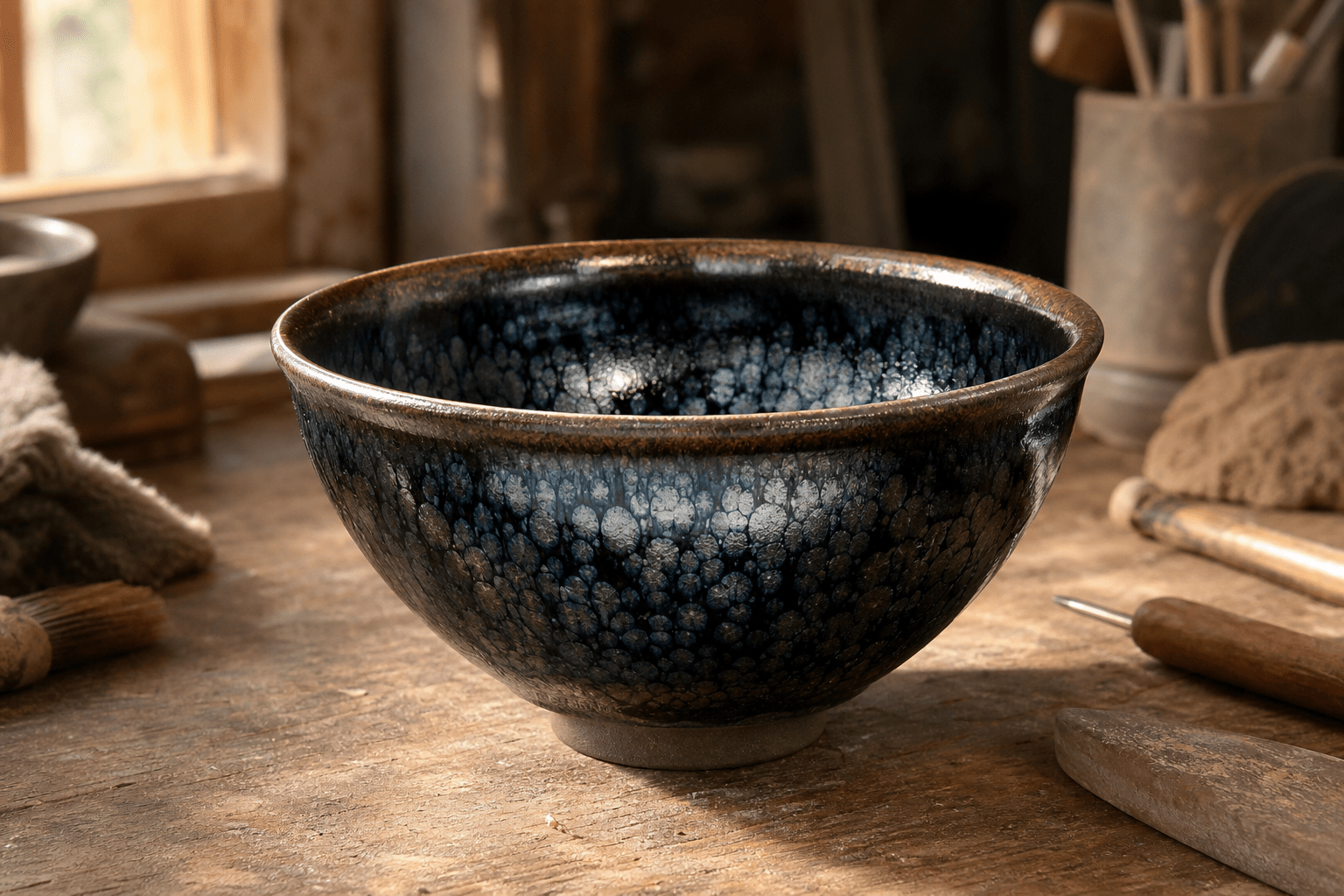
On authentic pieces, the glaze thickens near the bottom and shows natural "drip marks" where molten glaze ran downward during firing. This natural effect cannot be perfectly replicated by machine — on fakes the glaze ends too cleanly.
3. Hold It Up to the Light
A genuine Jianzhan cup reveals slight translucency in the thinner walls under strong light. The iron crystals catch and scatter light in complex ways — you see depth and movement. Machine-made versions often look flat and opaque.
4. The Weight Test
Authentic Jianzhan cups feel surprisingly heavy for their size. The dense, iron-rich Jianyang clay is noticeably heavier than kaolin or standard porcelain. If a cup feels too light, it's a red flag.
5. The Master's Seal
Reputable Jianzhan masters stamp or carve their personal seal on the base. Mass-produced cups typically have a generic logo or no mark at all.
Comparison at a Glance
Feature
Authentic Handmade
Machine-Made
Base/Foot Ring
Slightly irregular, dark, rough
Perfectly smooth, light-colored
Glaze Edge
Natural drips visible
Clean, uniform cut-off
Pattern Depth
3D crystalline, changes in light
Flat, static appearance
Weight
Noticeably heavy
Light for its size
Base Mark
Master's personal seal
Generic logo or blank
Price
$50–$300+ for quality pieces
Often under $20
At Tenmokus, every cup is sourced directly from verified master potters in Jianyang, Fujian Province.
Use this guide to connect the article topic with practical buying decisions: what Jianzhan Tenmoku teaware is, who it suits, how to choose a piece, and how to care for it after purchase.
How to use this guide before buying
Read the article first for the main explanation, then compare the product photos, glaze variation, form, seller clarity, return policy, and whether the piece fits daily tea, display, collecting, or gifting.
Common buying mistakes to avoid
Avoid choosing only by dramatic claims, copied photos, unusually low prices, or vague master language. A better decision uses visible product details, clear use case, realistic care needs, and trustworthy shop policies.
Recommended next step
After reading, compare a few real products side by side by size, glaze family, rim shape, capacity, price, and gift suitability instead of relying on one photo or one keyword.
What is Jianzhan Tenmoku teaware?
Jianzhan Tenmoku teaware is ceramic tea ware known for dark mineral-glaze effects and natural kiln variation. Common forms include tea cups, bowls, teapots, tea sets, and matcha bowls.
Who is it best for?
It is best for tea drinkers, ceramic collectors, and gift shoppers who value functional objects with visible handmade character. It is not ideal if you need every piece to look exactly identical.
How do I care for it?
Hand wash with warm water, avoid abrasive cleaners, and dry fully before storage. Gentle daily use helps preserve the surface and keeps the glaze easy to inspect over time.
How do I choose the right Tenmoku piece?
Choose by the main use first: daily tea, matcha, Gongfu brewing, display, or gifting. Then compare capacity, rim shape, glaze family, photos, and whether natural variation is acceptable for your needs.
Is Jianzhan Tenmoku teaware good as a gift?
Yes. It works well for tea lovers, ceramic collectors, birthdays, holidays, and housewarming gifts because it is both usable and visually distinctive. For gifts, choose an easy-to-use form and a glaze style with clear photos.
Related products and categories
Compare the guide above with real Tenmokus categories and representative pieces. Start with the use case, then compare glaze style, form, price, and whether the piece is mainly for daily tea, display, collecting, or gifting.
Compare handmade Jianzhan Tenmoku tea cups by glaze style, cup size, hand feel, and gift intent. Check each product page for current photos, capacity, availability, care details, shipping, and return information.
If you’ve ever wanted to own a tenmoku tea bowl that feels uniquely yours, you’re not alone. These iron-rich glazed wonders from the Song Dynasty have captivated tea lovers for a thousand years—and today, a real jian zhan oil spot...
If you’ve ever swirled a fine wine in a hand-blown glass and felt the moment deepen, you already understand the power of a vessel. I’m Sophie Thompson, and as a lifelong tea lover and design curator, I want to introduce...
Tenmoku Tea Bowl Value: Why Handmade Cups Are Worth It A tenmoku tea bowl can cost more than an everyday cup because it is not simply a vessel: it is a handmade ceramic object shaped by clay, fire, and a...




Condividere:
Oil Spot vs. Hare's Fur vs. Partridge Feather: Which Tenmoku Glaze is Right for You?
Jianzhan Care Guide: How to Season, Clean and Preserve Your Tenmoku