

---
You found a beautiful Jianzhan tea cup online — the price seems right, the photos look stunning. But how do you know it's the real thing? The Jianzhan market has exploded in popularity, and with that comes a flood of mass-produced imitations that look convincing at first glance but lack the soul of authentic craftsmanship.
As a tea enthusiast who has handled hundreds of Jianzhan cups over the years, I can tell you: once you know what to look for, the difference between authentic and fake becomes clear. In this guide, I'll walk you through the five most reliable ways to identify genuine Jianzhan so you can shop with confidence.
---
Jianzhan (建盏) is a type of earthenware tea bowl from the Jianyang district of Fujian Province, China. These cups were the preferred vessels of Song Dynasty tea masters — not just for their beauty, but for the way their thick walls retained heat and enhanced the frothy texture of beaten tea.
The clay used contains a high percentage of iron oxide (typically 7-10%), which creates those signature dark colors and distinctive patterns when fired at temperatures exceeding 1300°C in a reducing atmosphere kiln.
This is also why authentic Jianzhan is inherently — the iron-rich clay is dense and substantial in a way that lightweight porcelain or stoneware simply isn't.
---
Authentic Jianzhan cups are noticeably . This is one of the most reliable indicators. The iron-rich clay gives each cup a substantial, grounded feel.
When shopping online, look for the weight listed in the product details. A genuine Jianzhan cup typically weighs 150-250g depending on size. Imitations using common stoneware or porcelain will feel noticeably lighter.
If you already own a suspected Jianzhan, fill it with water. An authentic piece should feel weighted and stable in your hand.
---
The foot rim of a Jianzhan is formed where the glaze pools and hardens during firing. On authentic pieces, you'll see:
- An — the iron-rich clay shows through where it wasn't coated
- Slight from the natural firing process
- A slightly — this isn't a defect, it's a hallmark of handmade production
Mass-produced fakes typically have a with machine-molded consistency.
---
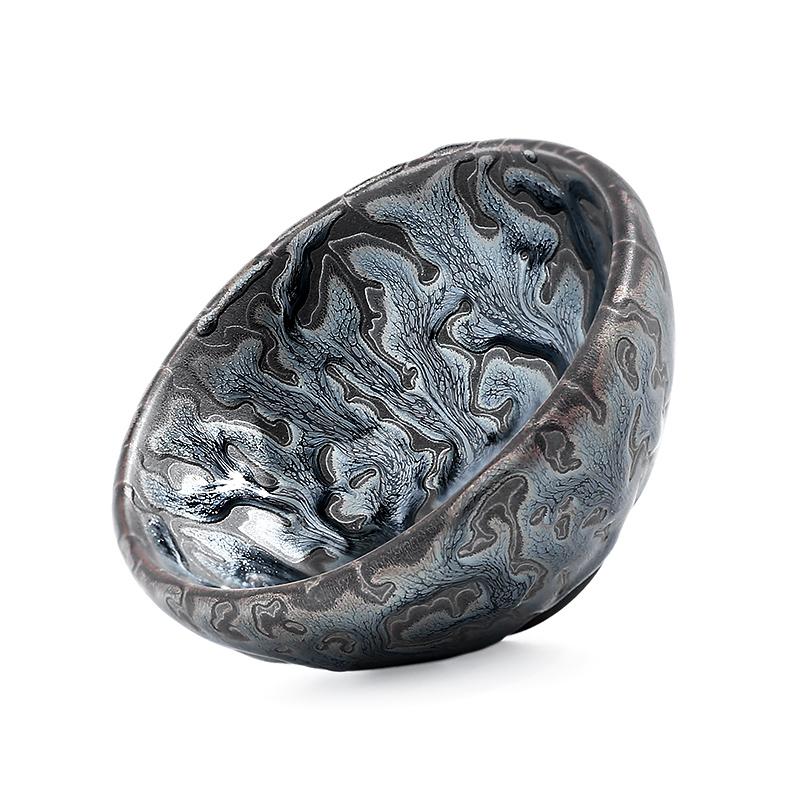
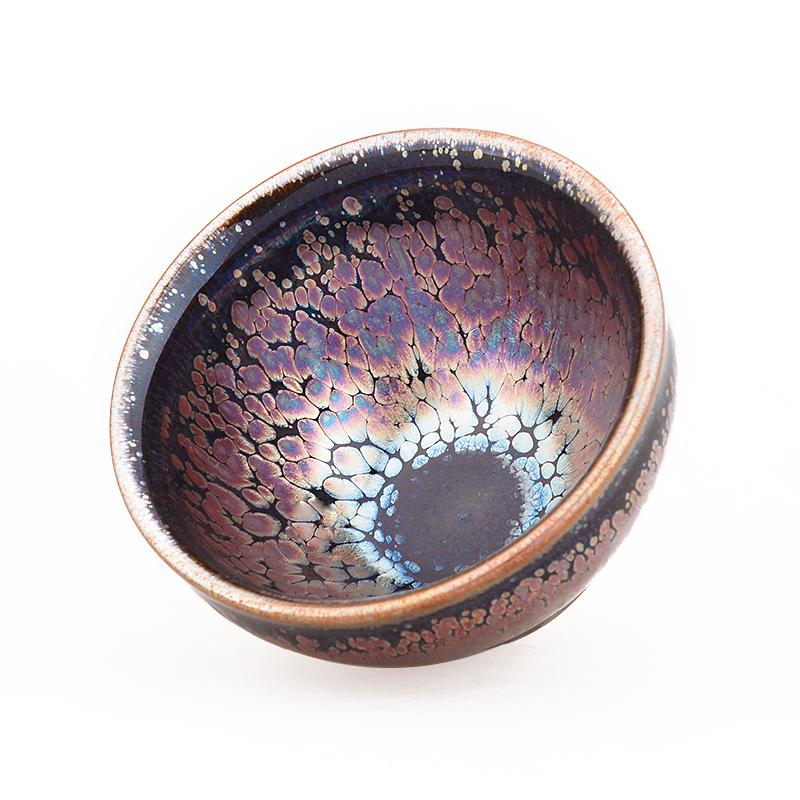
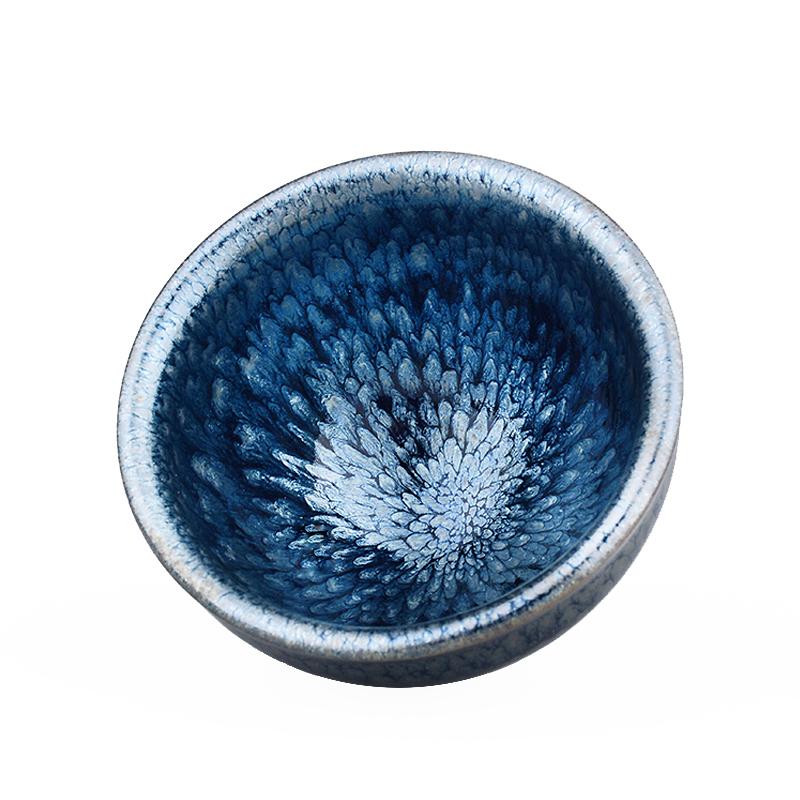
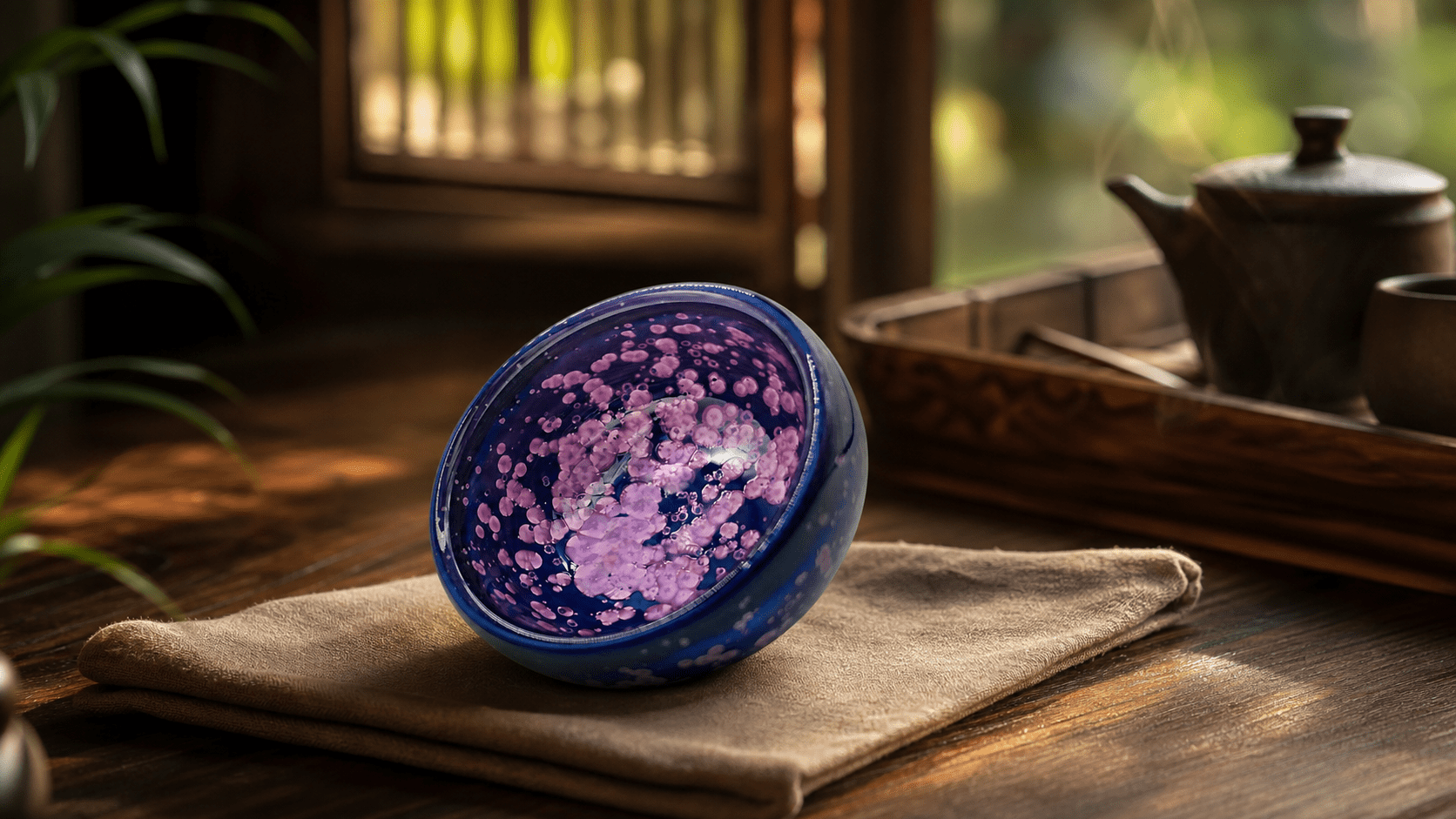
The magic of Jianzhan lies in its — no two cups are identical. When you hold an authentic Jianzhan up to light, you should see:
- with metallic flecks that shimmer slightly
- that flow naturally down the bowl
- Subtle variations in color depth across the surface
If the pattern looks too uniform, too perfectly centered, or appears to be printed or applied rather than developed organically during the kiln firing, it's likely not authentic.
---
Turn the cup upside down and look at the inner rim — this area is typically left unglazed or has a very thin glaze layer. On authentic Jianzhan:
- You should see the with a distinctive dark, almost metallic appearance
- The transition between glazed and unglazed areas is
- There may be small from the firing process
Fakes often have a fully glazed interior or a clearly applied (painted) unglazed effect.
---
This is the ultimate proof. When you use a genuine Jianzhan cup regularly with tea (especially oolong or pu erh), the interior slowly develops a — a deep, lustrous sheen that enhances both the cup's beauty and the flavor of your tea.
Imitation cups:
- Won't develop a true patina, or the effect will be dull and patchy
- May show staining inconsistent with the cup's original glaze
- Often have a surface that feels slick or glassy from the start
Authentic Jianzhan patina develops over months of consistent use. If a seller claims their new cup already has a "patina," be skeptical.
---
| Feature | Authentic Jianzhan | Mass-Produced Fake |
|---|---|---|
| Weight | Heavy, grounded | Light |
| Foot rim | Partially glazed, slightly wobbly | Fully glazed, perfectly smooth |
| Glaze pattern | Organic, unique, varies with light | Uniform, printed appearance |
| Interior lip | Raw iron-clay visible | Fully glazed or painted effect |
| Patina | Builds naturally over time | Doesn't develop true patina |
---
The safest way to ensure you're getting authentic Jianzhan is to buy from:
- in Jianyang, Fujian
- Sellers who can provide
- Shops that explicitly state the and
Avoid any listing that uses vague terms like "Jianzhan-style" or "类似建盏" without confirming the actual origin and materials.
---
Authentic Jianzhan is a living artifact — heavy with iron, alive with glaze patterns that shift in light, and capable of developing a patina that makes each cup uniquely yours over time. Imitations may look similar in photos, but once you hold the real thing, the difference is unmistakable.
Use these five checks: weight, foot rim, glaze patterns, the unglazed interior lip, and the patina test. Armed with these, you'll be able to shop for Jianzhan with confidence and find a cup that will serve your tea practice for years to come.
Browse our collection of hand-selected Jianzhan cups [here](https://tenmokus.myshopify.com/collections/jianzhan).
---
Written by Tenmoku Studio | Last updated: 2026-04-22


Condividere:
The Art of Building Patina on Your Ceramic Tea Cup: A Complete Guide
How to Identify Authentic Jianzhan: 7 Definitive Tests (2026)