

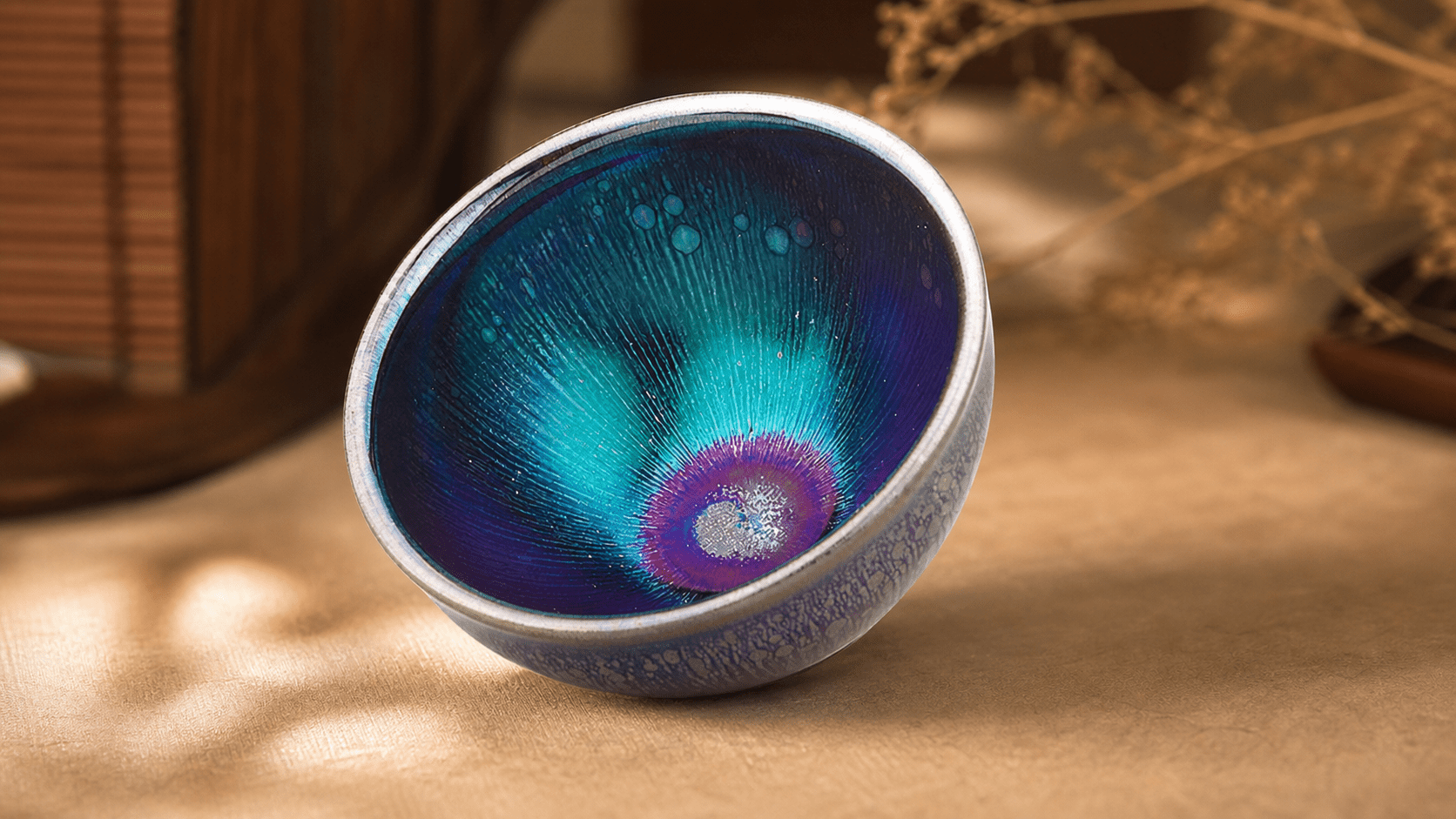

How to Identify a Real Tenmoku Tea Bowl: 5 Signs of Authenticity
I still remember the first time I held an authentic tenmoku tea bowl during a gongfu tea ceremony in Fujian. The bowl felt dense and warm, its dark glaze shimmering with tiny, naturally formed oil spots — nothing like the too-perfect, lightweight replicas I’d seen at tourist markets. A real jian zhan tea cup transforms your tea experience, but telling it apart from a fake takes more than just a quick glance. In this guide, I’ll walk you through exactly how to identify a genuine piece, so you never get duped again.
Key takeaways:
- Authentic tenmoku tea bowls are heavy, with a distinct iron-rich clay body.
- Real jian zhan glazes show irregular crystallization — no two oil spots or hare’s fur patterns are identical.
- Genuine pieces often react weakly to a magnet and have small firing imperfections like pinholes or sagging.
- Cheap fakes use lightweight porcelain, decals, and chemically applied patterns.
- A true handmade tenmoku tea cup is always a unique work of kiln alchemy, not a mass-produced item.
Real vs Fake Tenmoku: Why Authenticity Matters
If you’re buying a tenmoku tea bowl for daily matcha or gongfu cha, the authenticity isn’t just about bragging rights — it changes the entire tea ceremony. Real jianzhan tea cups were born in the Song Dynasty kilns of Jianyang, China, and their thick, iron‑saturated clay and natural wood‑ash glazes soften water and mellow tea astringency. Japanese tea masters later adopted them as tenmoku chawan for powdered tea. A fake made from industrial porcelain offers none of that taste benefit — it’s just a hollow look-alike.
When I evaluate a piece, I think of it like a wine glass: a cheap glass doesn’t ruin the wine, but a fine Riedel crystal amplifies aroma and flavor. An authentic jian zhan tea cup does the same for tea. That’s why knowing the difference between real and counterfeit is the first step to building a meaningful collection.
How to Identify Real Jianzhan: The 5 Telltale Signs
I’ve handled hundreds of bowls over the years, and these five physical clues are the quickest way to separate genuine pieces from clever reproductions.
- Weight and clay body. A real tenmoku tea bowl feels conspicuously heavy for its size. True jianzhan clay is high in iron, giving the unglazed foot a rough, dark purplish‑brown or blackish texture. If the bowl feels light like porcelain and has a white or smooth foot ring, it’s almost certainly a fake.
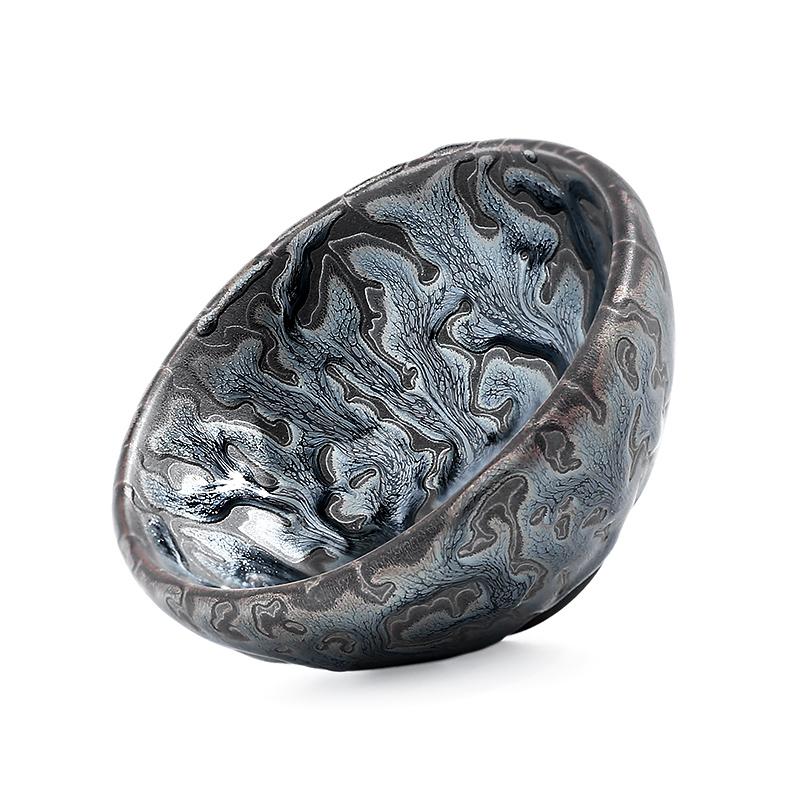
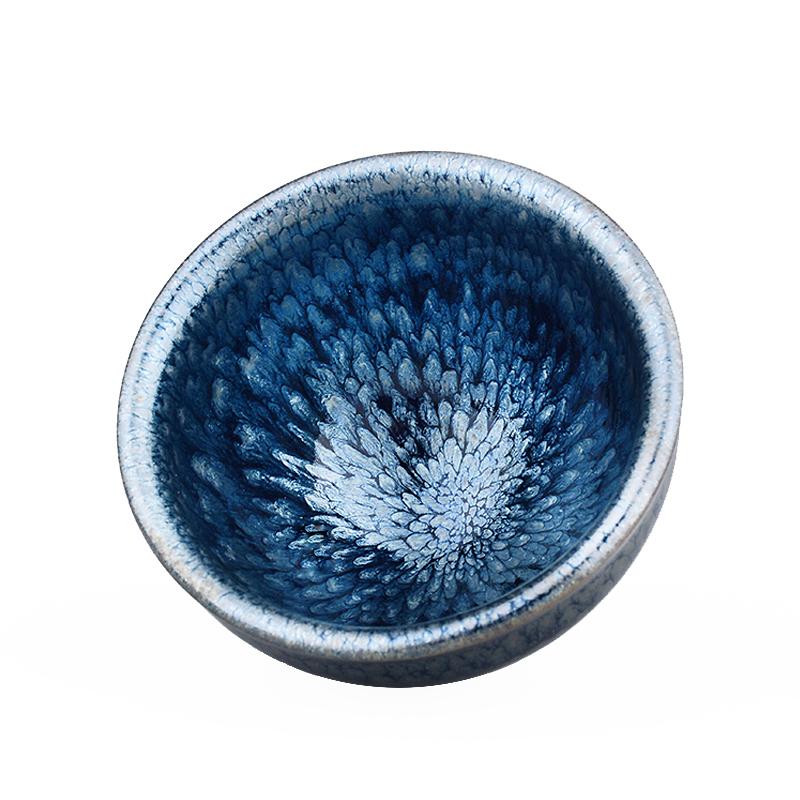
- Glaze depth and crystallization. Authentic jian zhan glazes are thick and glassy but never uniform. Natural kiln transformations create oil spot, hare’s fur, or partridge feather patterns that look organic — each spot or streak is unique, with subtle shading and a three‑dimensional quality. Fakes rely on stencils or decals, producing perfectly round, identical “oil spots” that look printed on.
- Magnetic reaction. Thanks to the high iron content, many authentic jianzhan bowls will weakly attract a magnet, especially on the unglazed foot. This isn’t a 100% guarantee, but combined with other signs it’s a useful quick test. Fake porcelain bowls will have zero magnetic pull.
- Firing imperfections. Real wood‑fired or high‑temperature reduction kilns leave tiny pinholes, slight glaze drips, or a slightly uneven rim. These aren’t flaws — they’re birthmarks of a genuine piece. Mass‑produced fakes are sterile and perfect, lacking any character.
- Sound. Gently tap the rim with a fingernail. An authentic jian zhan emits a clear, resonant “ting” like a bell, while a counterfeit often produces a duller, shorter sound due to lower‑density clay.
Jianzhan Oil Spot vs Fake: Spotting the Glaze Patterns
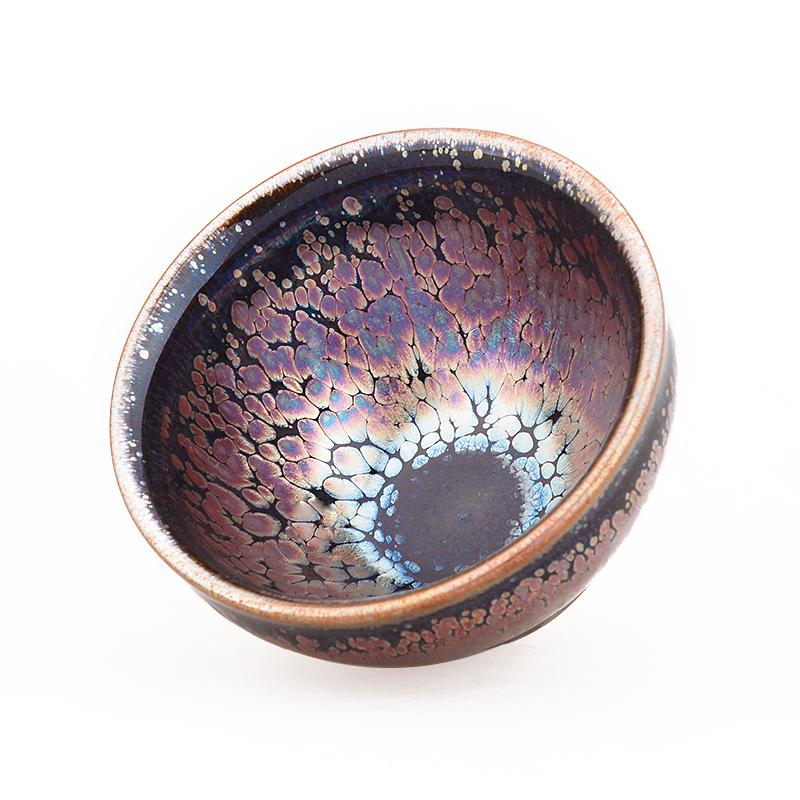
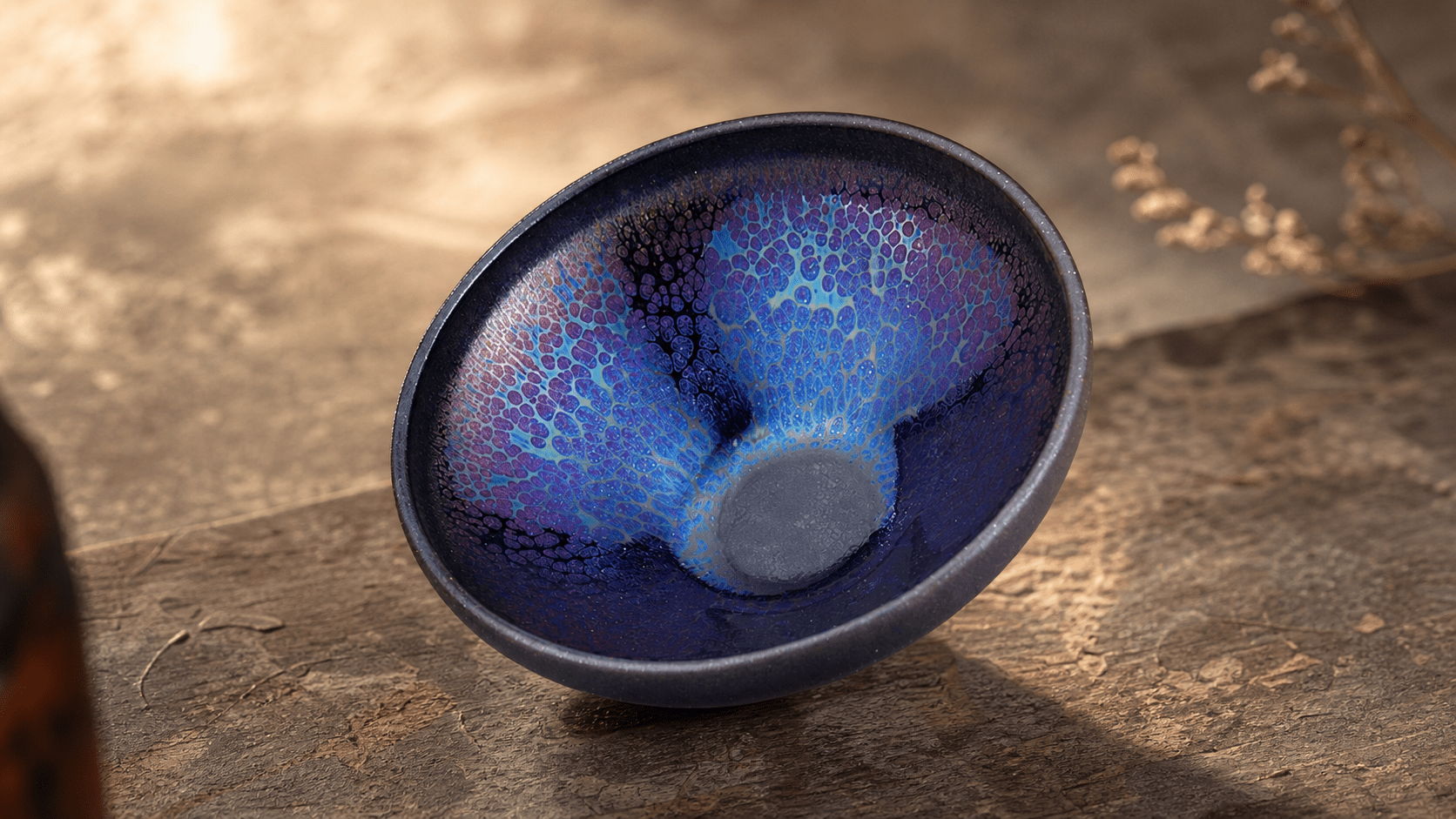
Oil spot tenmoku is one of the most coveted — and most faked — glaze effects. When I teach students about real vs fake tenmoku, I start with the oil spots themselves. In an authentic piece, oil spots are tiny craters where iron oxide bloomed and burst through the glaze. Under magnification, you’ll see each spot is an irregular silver ring with a dark center, and the surrounding glaze shimmers with a subtle rainbow or blue halo. No two bowls share the same oil spot arrangement.
Fake oil spots, on the other hand, look like a polka‑dot film. They are often applied by acid etching or screen‑printing a metallic pattern onto the glaze, then firing at low temperature. The spots are too evenly spaced, lack depth, and feel smooth rather than slightly sunken. If the bowl’s pattern looks like it would match perfectly if you unrolled it, you’re looking at a decal. Discover our collection of oil spot tenmoku cups to see how true kiln‑transformed glazes vary from cup to cup.
Common Fake Jianzhan Materials and Production Tricks
Once you know what goes into a handmade tenmoku tea cup, the fakes become obvious. Here are the most common materials and methods counterfeits use — and how to recognize them.
| Feature | Authentic Tenmoku | Fake/Counterfeit |
|---|---|---|
| Clay body | Heavy, dark iron‑rich stoneware; unglazed foot is rough and purplish | Light porcelain or white earthenware; smooth white foot |
| Glaze | Thick, natural wood‑ash; random crystallization; pinholes common | Thin, uniform chemical glaze; decal‑applied patterns; overly glossy |
| Oil spots | Sunken micro‑craters, irregular sizes, metallic sheen | Flat printed dots, perfectly round, no depth |
| Hare’s fur/partridge feather | Flowing, torch‑like streaks; organic variation | Straight, parallel lines; obviously stenciled |
| Weight | Noticeably heavy | Light and insubstantial |
| Sound | Clear, bell‑like ring | Dull thud |
| Magnetism | Weak attraction possible | No attraction |
Remember, a genuine piece is always a one‑off. If you see a seller with ten identical “oil spot” bowls all priced at $15, walk away. The intense labor and high failure rate of wood‑fired kilns make true jian zhan relatively expensive — and worth it.
Where to Buy an Authentic Jianzhan Tea Cup Gift
Once you’ve learned to spot a fake, the next question is naturally where to find the real thing. I recommend buying directly from ateliers in Jianyang, or from specialized galleries that work with recognized kiln masters. Online, look for sellers who show high‑resolution photos of each individual bowl, not generic stock images. A trustworthy shop will also disclose the kiln site, the master’s name, and the firing technique (wood‑fired, dragon kiln, etc.).
If you’re searching for a jianzhan tea cup gift — for a tea lover, a collector, or yourself — choose a piece that resonates with the recipient’s taste. Hare’s fur glazes feel energetic and fluid, while oil spot patterns have a quiet, starry‑night elegance. And never underestimate the joy of holding a heavy, genuine bowl that connects you to centuries of tea culture. Explore our handmade Jianzhan tea cups to find a genuine piece with its own story.
Final thoughts from Tenmokus Editorial Team
Every time I hold a real tenmoku tea bowl, I’m reminded that these aren’t just drinking vessels — they’re frozen moments from a fire that burned 1300°C for days. The imperfections, the weight, the way the glaze shifts under light — none of that can be faked with a machine. If you’re ready to experience the deep, textured world of jianzhan, start with one authentic piece. Trust your hands, not just the price tag. Once you’ve felt the difference, you’ll never look at a cheap copy the same way again.
Who should buy an authentic jian zhan tea cup? Anyone who loves tea, whether you’re exploring matcha for the first time or you’ve been pouring gongfu style for decades. It’s also an unforgettable gift for tea lovers — a handmade oil spot or hare’s fur cup carries stories that factory cups simply can’t. Choose a piece that speaks to you, and it will pay you back in every steep.
Explore Our Collection
Ready to experience the world of tenmoku tea bowl? Browse our curated collection:
Disclaimer: This article is for informational purposes. Products and pricing subject to change.


Condividere:
How a Handmade Tenmoku Tea Cup Transforms Your Daily Tea into a Zen Ritual
The Soul of Clay: A Tenmoku Tea Bowl’s Journey from Ancient Kiln to Modern Cup