

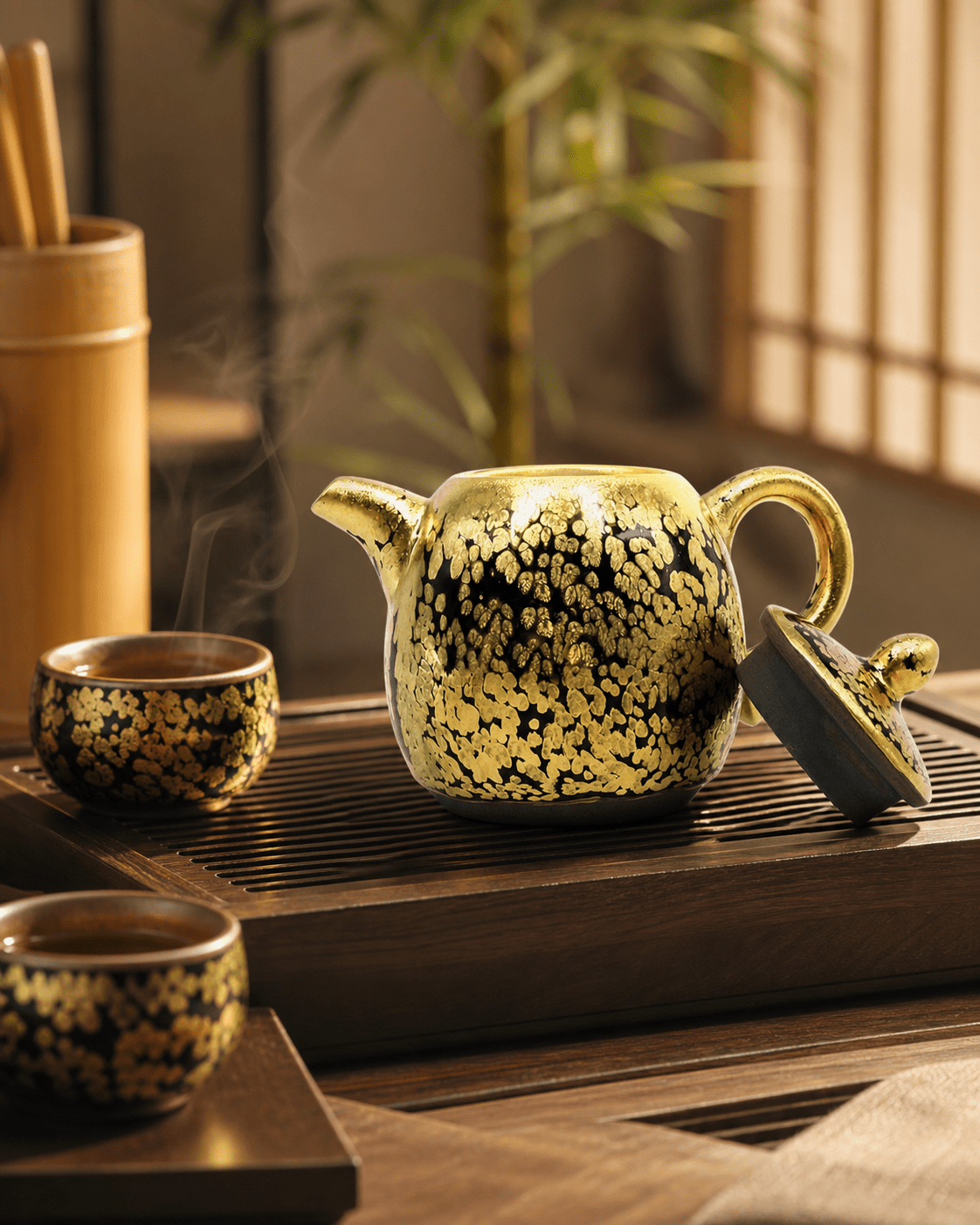

Tenmoku Tea Bowl Authenticity Guide: How to Buy a Real Jianzhan With Confidence
A real tenmoku tea bowl, also called Jianzhan, is an iron-rich Jianzhan Tenmoku ceramic cup fired at high heat until the glaze develops natural patterns such as oil spot or hare's fur. If you want one for gongfu tea, a Japanese tea bowl display, or a meaningful gift for tea lovers, the biggest question is simple: is it genuinely kiln-fired, or just a painted imitation?
This guide explains the practical signs of real vs fake tenmoku in plain English. You do not need to be a ceramics historian. Think of it like buying a fine leather bag or mechanical watch: materials, process, finishing, and seller transparency all matter.
Key Takeaways
- An authentic jian zhan is made from iron-rich clay and glaze, then fired hot enough to create natural crystal patterns.
- Real oil spot, hare's fur, and kiln change effects should have depth, variation, and movement under light.
- Common fakes often use decals, metallic paint, sprayed color, resin-like coatings, or ordinary ceramic bodies.
- Weight, foot ring, glaze flow, interior texture, and seller documentation help confirm quality.
- The best jian zhan tea cup for daily use should be food-safe, comfortable, well-balanced, and clearly described.
What Is a Tenmoku Tea Bowl, and Why Is Jianzhan So Often Copied?
A tenmoku tea bowl is a black-glazed ceramic form with roots in China's Song Dynasty tea culture. The original Jianzhan came from Jian kilns in Fujian, China, where potters used local iron-rich clay and mineral glaze. During the Song Dynasty, powdered tea was whisked in dark bowls because the pale foam looked beautiful against the deep glaze.
The Japanese word tenmoku became widely used after Japanese monks and tea practitioners brought these bowls from China to Japan. Over time, Japan and Japanese tea culture gave tenmoku bowls an elevated status, especially in tea ceremony settings. That is why you will often see the term used alongside japanese pottery and japanese tea bowl, even though Jianzhan itself began in China.
The reason real Jianzhan is copied is easy to understand: the surface looks almost impossible. A good oil spot bowl can look like stars on a black sky. A hare's fur glaze can look like rain lines, feathers, or molten metal. A strong kiln change glaze may shift from black to blue, bronze, silver, or rainbow tones depending on the angle.
Those effects are not supposed to be printed on. They come from heat, iron, oxygen, reduction atmosphere, glaze thickness, and chance. That combination makes each handmade ceramic cup unique, but it also creates room for cheap copies that mimic the look without the process.
How Can You Tell Real vs Fake Tenmoku at First Glance?
The fastest way to approach real vs fake tenmoku is to look for natural variation. A real kiln-fired glaze rarely looks mechanically perfect. The pattern should breathe. Spots may differ in size. Lines may stretch unevenly. Color may deepen near the rim or pool slightly near the lower wall.
A fake often looks too regular, too flat, or too shiny in the wrong way. If every dot is the same size, evenly spaced, and sitting on top of the surface like glitter paint, be careful. Real glaze effects are born inside the glaze layer, not simply placed on top.
Use this simple first-pass checklist:
- Pattern depth: Real crystals appear embedded in the glaze, not printed like wallpaper.
- Light response: A real oil spot or hare's fur surface changes as you tilt it under light.
- Variation: Handmade cups show small differences in pattern, rim, foot, and glaze flow.
- Clay body: Authentic Jianzhan usually has a dense, dark, iron-bearing body, especially visible at the unglazed foot.
- Seller clarity: A trustworthy seller states material, firing method, origin, size, capacity, and care notes.
If the cup looks like a mass-produced souvenir with vague claims and no close-up photos, it may still be decorative, but it should not be priced or marketed as an authentic jian zhan.
How to Identify Real Jianzhan by Material, Clay, and Foot Ring?
If you are wondering how to identify real jian zhan, start at the bottom. The foot ring tells you more than a dramatic product photo ever will.
Traditional Jianzhan uses clay with high iron content. At the unglazed foot, the ceramic body often appears dark gray, brownish black, or iron-toned. It should feel dense and fired, not chalky or lightweight like low-fired craft pottery. This does not mean every real piece must be heavy, but it should have a grounded, substantial feel for its size.
The foot ring on a handmade ceramic cup is usually trimmed, not molded into perfect factory uniformity. You may see tool marks, slight asymmetry, or a natural unglazed texture. These are not flaws by themselves. They are signs of handwork, as long as the bowl sits stable and the foot is finished cleanly.
Be cautious if the entire cup is coated, including the foot, in a way that hides the clay body. Some legitimate pieces may have design choices, but a hidden foot can also make it harder to judge material. For authenticity-focused buying, clear foot photos are helpful.
Also look at the rim. A real tenmoku tea bowl often has a thin, darker rim where the glaze pulls downward during firing. The glaze may be slightly thinner near the lip and thicker lower on the wall. This gravity-driven flow is hard to fake convincingly because it depends on real melting behavior in the kiln.
What Are the Telltale Signs in Jianzhan Oil Spot vs Fake Glaze?
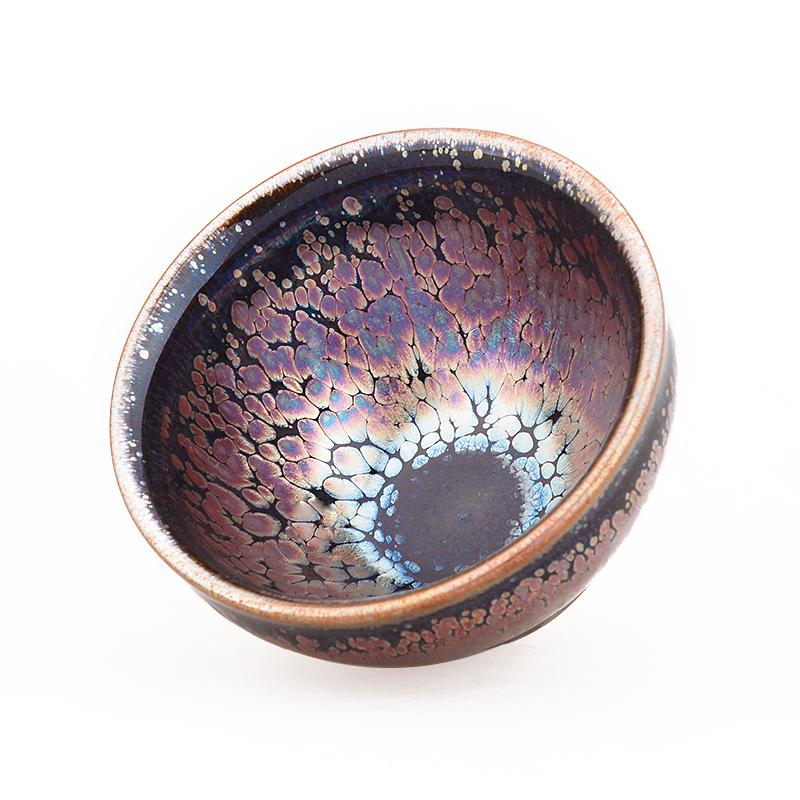
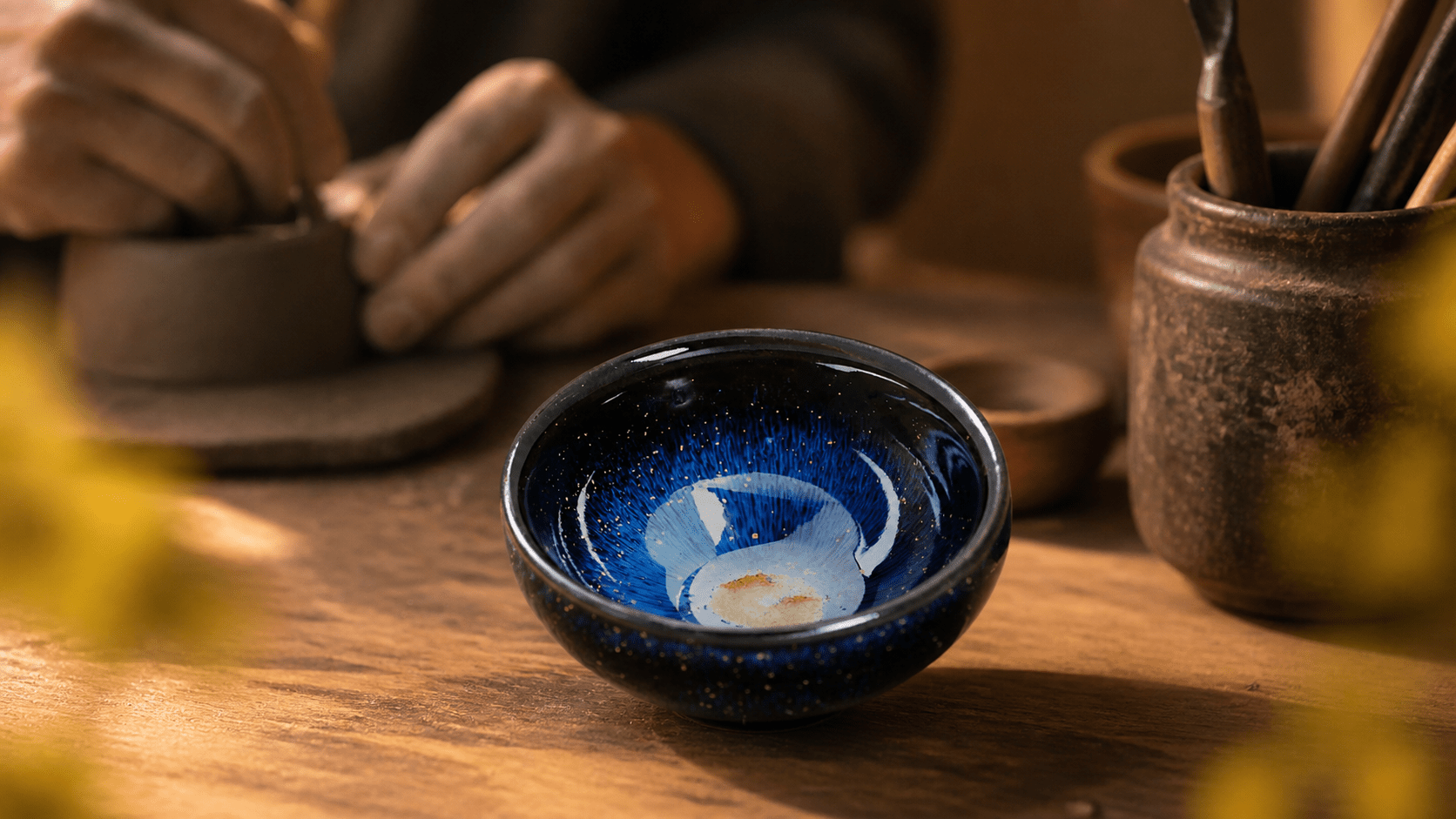
The phrase jian zhan oil spot vs fake usually refers to one of the most copied styles: the oil spot tenmoku cup. In a real oil spot glaze, iron crystals emerge during firing and create round or oval metallic spots. They may look silver, bronze, blue, gold, or multicolored depending on glaze chemistry and light.
Real oil spots are not random dots of paint. They have a relationship to the glaze surface. Some look like tiny floating islands. Some have rings, centers, or subtle halos. When you tilt the cup, the spots may flash from bright to dark.
Fake oil spot finishes often show one or more of these signs:
- Dots are identical in size and spacing.
- Metallic areas sit on top like nail polish or glitter.
- The pattern continues unnaturally across the foot or unglazed areas.
- The surface has a plastic-like shine instead of a fired-glaze depth.
- Product photos hide close-ups or avoid showing the interior.
There are also honest modern interpretations of tenmoku-style ceramics made outside Jianyang, including work from Japan, the United States, and other ceramic studios. Those can be beautiful. The issue is not whether modern artists can make tenmoku-inspired work. The issue is whether a piece is being sold as authentic Jianzhan when it lacks the material and firing process.
How Do Hare's Fur and Kiln Change Patterns Help Prove Authenticity?
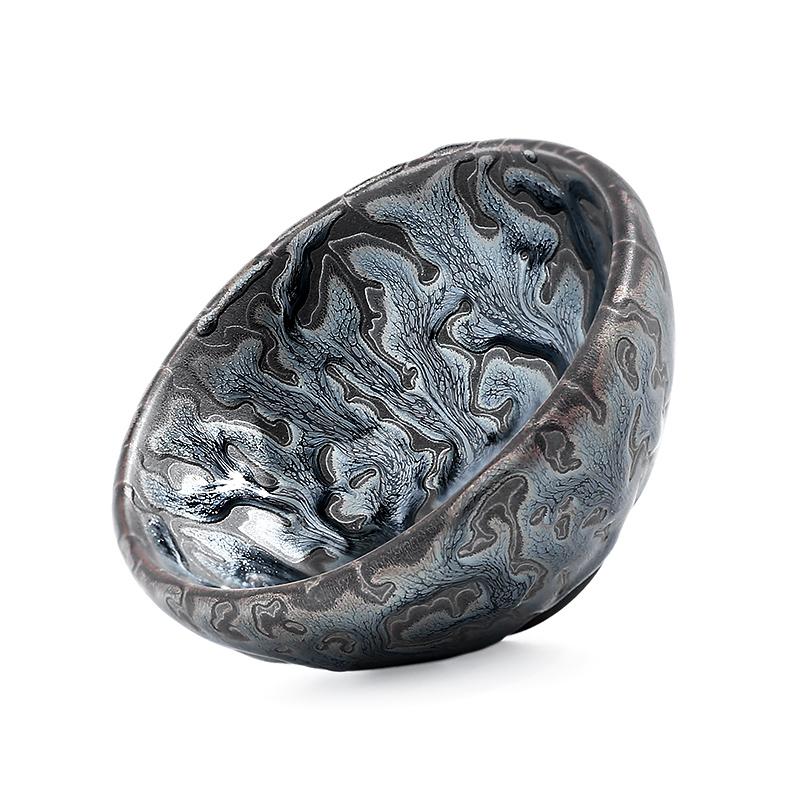
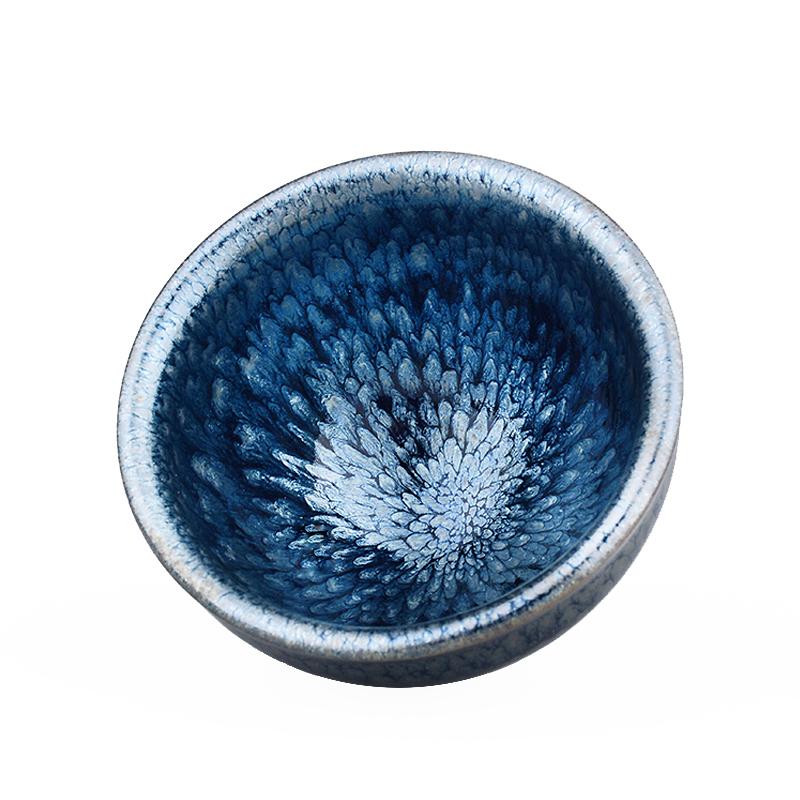
Hare's fur is another famous Jianzhan glaze pattern. It usually appears as fine vertical streaks running down the inner or outer wall, like soft fur, rain, or mineral trails. These lines form as iron-rich glaze moves and crystallizes in high heat.
In a real hare's fur bowl, the streaks are usually directional. They follow gravity and glaze flow. They may be denser in some zones and lighter in others. The lines should feel integrated into the glaze rather than drawn on top.
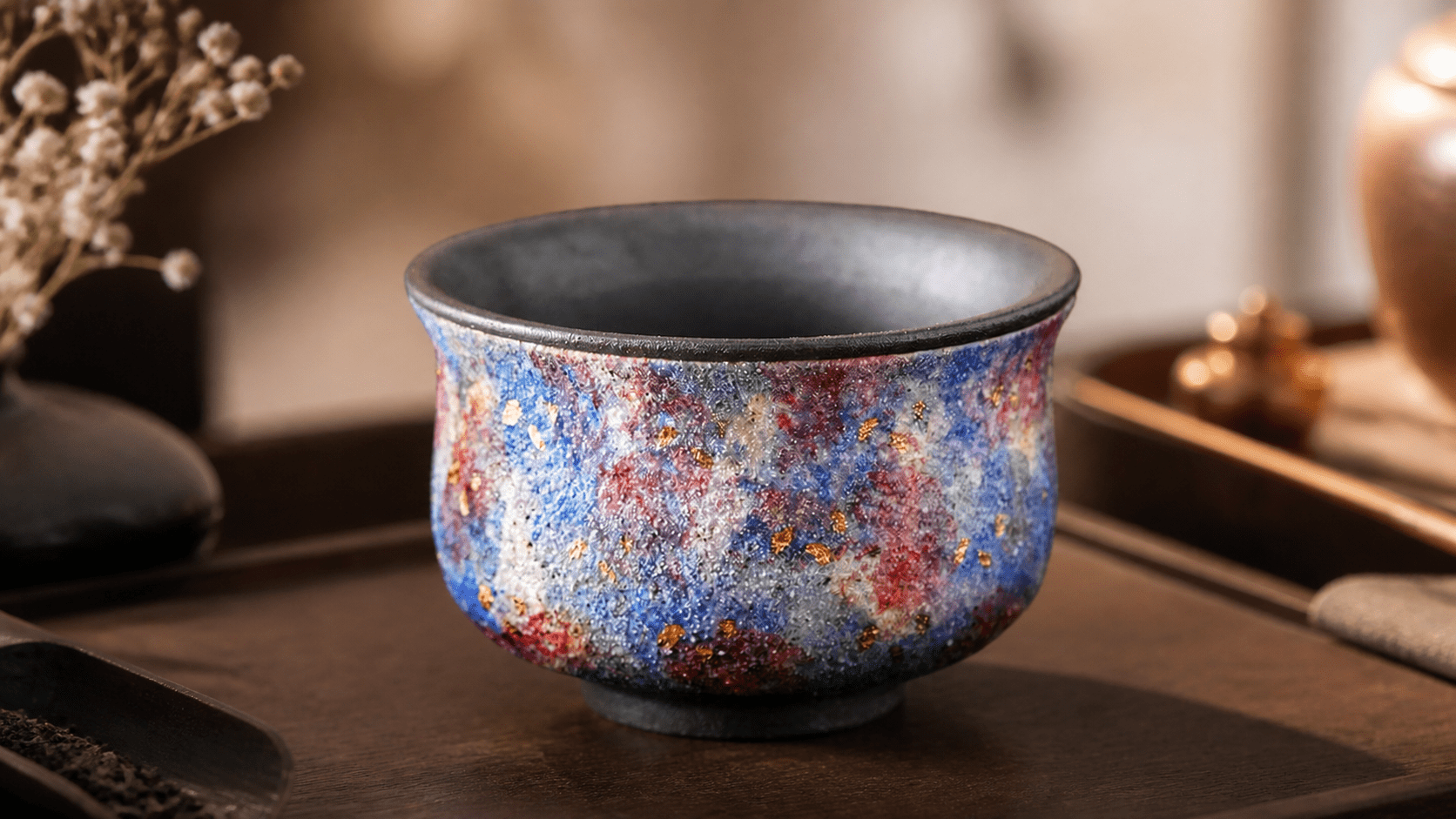
Kiln change is a broader term for unpredictable color and surface effects created by the firing environment. In Jianzhan, kiln change may produce blue, purple, bronze, silver, gold, or rainbow-like shifts. Buyers love these effects because they make every cup feel personal.
However, kiln change is also a favorite phrase for low-quality listings because it sounds mysterious. A real kiln change surface should still obey ceramic logic: melted glaze, natural flow, depth, and firing marks. If the color looks airbrushed, sprayed, or perfectly blended like a graphic design background, treat it as a warning sign.
For a premium lifestyle buyer, the best approach is to choose beauty plus evidence. A dramatic glaze is wonderful, but it should come with credible photos, clear specifications, and a seller willing to explain the firing process.
What Is the Difference Between an Authentic Jianzhan and a Japanese Tea Bowl?
Many beginners search for a tenmoku tea bowl and see Chinese Jianzhan, Japanese tenmoku, and modern studio pottery side by side. The terms overlap, but they are not identical.
Jianzhan refers specifically to the Chinese Jianzhan Tenmoku ceramic tradition associated with Jian kilns and Song Dynasty glaze culture. Tenmoku is the Japanese name historically connected to these Chinese bowls and later to Japanese pottery inspired by them. A Japanese tea bowl may be made for matcha, tea ceremony, or display, and it may use tenmoku-style glaze without being Jianzhan.
Here is a simple comparison:
| Type | Origin | Typical Use | Authenticity Focus |
|---|---|---|---|
| Jianzhan | China, Jian kiln tradition | Gongfu tea, collection, display | Iron-rich clay, high firing, natural glaze crystals |
| Tenmoku bowl | Japanese term rooted in imported Chinese bowls | Tea ceremony, matcha, collection | May be antique, Japanese-made, or tenmoku-style |
| Modern tenmoku-style ceramic | Various countries | Daily tea, decor, gifting | Depends on artist transparency and materials |
| Fake Jianzhan | Mass-produced imitation | Decorative only | Often printed, painted, sprayed, or mislabeled |
If you are buying for gongfu tea, a smaller Jianzhan cup is often more practical than a large matcha bowl. If you are buying for Japanese tea ceremony, shape and capacity matter differently. The right choice depends on the ritual, not only the glaze name.
How Should Beginners Choose the Best Jianzhan Tea Cup for Gongfu Tea or Gifting?
The best jian zhan tea cup is not always the most dramatic or expensive one. For daily gongfu tea, comfort matters. The cup should feel balanced between your fingers, have a smooth rim, hold a practical amount of tea, and be easy to rinse.
For a jianzhan tea cup gift, choose a cup with a clear story. A tea lover will appreciate knowing whether the glaze is oil spot, hare's fur, or kiln change. A premium buyer will also notice packaging, provenance, and whether the piece looks refined rather than flashy.
Before buying, ask these questions:
- Is the cup described as handmade or wheel-thrown?
- Are there photos of the interior, exterior, rim, and foot ring?
- Does the seller explain the glaze type and firing process?
- Is the cup food-safe and intended for tea?
- Does the pattern look naturally formed under high heat?
If you want a curated starting point, Explore our handmade Jianzhan tea cups for everyday gongfu tea, collectors, and thoughtful gifting. If you specifically love starry metallic patterns, Discover our collection of oil spot tenmoku cups.
What Product Photos and Alt Text Should an Authentic Listing Include?
Strong product photography is part of authenticity. A serious listing should show the bowl from multiple angles: top view, side view, foot ring, rim close-up, and glaze detail in natural light. For premium ecommerce, image descriptions also help shoppers and search engines understand the object.
Useful featured image alt text examples include: Jianzhan Tenmoku ceramic tenmoku bowl for tea ceremony and authentic jian zhan tenmoku tea bowl oil spot glaze. These phrases are descriptive, accessible, and aligned with what buyers are trying to evaluate.
Look for photos that reveal reality, not just mood. Dark, dramatic images can make any glaze look luxurious, but they may hide paint, decals, rough rims, or poor finishing. Close-up images in clear light are more trustworthy.
Common Fakes: What Should You Avoid When Buying Online?
Most fake tenmoku listings are not difficult to spot once you know the patterns. The problem is that beginners often buy based on shine alone. A cup can look exciting in a photo and still be a low-quality imitation.
Common fakes include decal patterns, metallic paint, sprayed glazes, resin-coated surfaces, and ordinary ceramic cups labeled as Song Dynasty glaze. Some sellers also use vague phrases such as “ancient style,” “master grade,” or “museum quality” without providing any concrete details.
Be especially careful with impossible claims. A modern cup should not be described as an actual Song Dynasty antique unless it comes with serious documentation from a reputable source. Most buyers are looking for Song Dynasty glaze tradition, not a thousand-year-old artifact.
Price can also be a clue, but it is not proof. A very cheap cup is unlikely to be a labor-intensive, high-fired handmade ceramic. At the same time, a high price does not automatically make a cup authentic. Evidence matters more than drama.
FAQ: Real vs Fake Tenmoku Tea Bowl Questions
What is the easiest way to understand real vs fake tenmoku?
The easiest way is to check whether the glaze pattern looks naturally formed inside the fired surface. Real tenmoku has depth, variation, and light movement. Fake versions often look printed, painted, sprayed, or mechanically repeated.
How to identify real jian zhan before buying online?
Ask for clear photos of the foot ring, rim, interior, and glaze close-up. Look for an iron-rich clay body, natural glaze flow, handmade finishing, and a seller who explains the firing process. Avoid listings with only one dark beauty shot.
What does authentic jian zhan feel like in the hand?
An authentic jian zhan usually feels dense, balanced, and ceramic rather than light or plastic-like. The rim should be comfortable, the foot should sit firmly, and the glaze should feel fired into the surface, not coated on afterward.
How can I compare jian zhan oil spot vs fake oil spot glaze?
Real oil spots vary in size, brightness, and depth. They often shift under light and appear embedded in the glaze. Fake oil spots may look like identical metallic dots, glitter paint, or a flat printed pattern.
Is a Japanese tea bowl the same as a tenmoku tea bowl?
Not always. Tenmoku is a Japanese term connected to Chinese black-glazed bowls, and Japanese pottery includes many tenmoku-inspired works. Jianzhan specifically refers to the Chinese tradition of iron-rich Jianzhan Tenmoku ceramic associated with Jian kilns.
Can I use a tenmoku tea bowl for gongfu tea?
Yes. Smaller Jianzhan cups work beautifully for gongfu tea because they highlight tea color and feel substantial in the hand. Choose a size that matches your brewing style rather than a large matcha-style bowl.
Is an oil spot tenmoku cup a good gift for tea lovers?
Yes, an oil spot tenmoku cup makes a refined gift when it is authentic, food-safe, and well presented. It works especially well for tea lovers who enjoy handmade objects, ceramic history, and visually distinctive teaware.
Conclusion: Buy the Bowl, but Verify the Story
A tenmoku tea bowl is more than a black cup with a shiny surface. At its best, it carries Song Dynasty glaze heritage, Japanese tea culture influence, and the unpredictable beauty of fire. The difference between real and fake comes down to material, process, and honest presentation.
When shopping, look for natural glaze depth, iron-rich clay, a visible foot ring, clear photography, and straightforward product details. A real Jianzhan does not need exaggerated claims. Its surface already tells a quiet, powerful story.
For daily tea or a memorable gift, choose a cup that feels good in the hand and credible in its making. Start with pieces that show their details clearly, then let your eye choose the glaze that keeps pulling you back.
Explore Our Collection
Ready to experience the world of tenmoku tea bowl? Browse our curated collection:
Disclaimer: This article is for informational purposes. Products and pricing subject to change.


Condividere:
The Tenmoku Tea Bowl: My Favorite Daily Ritual for Mindful Mornings
Tenmoku Tea Bowl: A Handmade Gift Story for Tea Lovers