


Why Are Japanese Tenmoku Tea Bowls So Expensive? The Art, Risk, and Rarity Explained
You can buy a mass-produced mug for $5, yet a single Tenmoku tea bowl might set you back $5,000 — or even $50,000. The price comes down to a brutal reality: these bowls are born from a 90% failure rate, weeks of labor, and a 1,000-year-old craft that turns iron and fire into one-of-a-kind cosmic patterns.
Key Takeaways
- Tenmoku (Jianzhan) bowls are hand-thrown from iron-rich local clay and fired at 1,300°C in wood-burning kilns.
- Only 1 in 10 survives the firing; true “yohen” iridescent pieces may appear once in an artist’s lifetime.
- The crystalline patterns — oil spot, hare’s fur — form naturally during a dangerous oxygen-starved cooling process.
- Think of a Tenmoku bowl as the Rolex Daytona of tea culture: functional art that appreciates in both meaning and value.
- An authentic bowl transforms the drinker’s experience, enhancing flavor, heat retention, and mindful ritual.
What Is a Tenmoku Tea Bowl? (And Why You’ve Heard It Called Jianzhan)
In the 12th century, Chinese Zen monks at Mount Tianmu (Tianmu Shan) offered dark-glazed tea bowls to visiting Japanese monks. The Japanese called them “Tenmoku,” after the mountain, and brought them home where they became the ultimate utensil for matcha and the tea ceremony. The Chinese name is Jianzhan — a bowl (zhan) from the Jian kilns. Today, “Tenmoku” is used both for the historic Japanese appreciation and for contemporary bowls made in that style, whether in Japan or other studios that follow the ancient methods.
Why Are Tenmoku Bowls So Expensive? The Deadly Art of the Kiln
The price of a Tenmoku bowl isn’t an inflated gallery number — it’s a direct reflection of risk, time, and irreplaceable skill. Every step is a high-stakes gamble. Here’s what you’re paying for:
- Proprietary clay: Authentic bowls use iron-heavy stoneware that can contain up to 15% iron oxide. This specific clay is dug from ancient riverbeds in Fujian, China, or similar geological deposits in Japan.
- A 1,300°C wood-firing marathon: Kilns are stoked by hand for 30-70 hours, guzzling up to 15 tons of pinewood. The fire must be fed constantly to maintain the peak temperature.
- Reduction cooling roulette: Once the peak is reached, the kiln is sealed to starve it of oxygen. This critical phase causes iron to crystallize into patterns. A single draft, a moment of inattention, or a fly-ash landing in the wrong place, and the bowl emerges gray and dead — or shatters.
- Months for one bowl: From wedging the clay to the final sanding of the foot ring, a master may spend 3–6 weeks on a single piece if you account for drying, bisque firing, glaze mixing, and the multi-day firing.
In the American luxury market, this is akin to a handmade Hermès bag: impossible to mass-produce, reliant on a single artisan’s hands, and always carrying the memory of the fire that made it.
The 90% Failure Rate Explained: When Fire Decides the Masterpiece
Step into any Tenmoku studio and you’ll hear a sigh: for every 10 bowls that enter the kiln, 8 or 9 exit as failures. Some crack from thermal shock. Others emerge with brown, muddy surfaces where the promised oil spots never bloomed. The master may then set aside thousands of dollars worth of clay and weeks of work. Even among the survivors, only a fraction achieve the “yohen” fire-change effect — metallic blues, purples, and silver halos that look like a nebula captured in glaze. A potter might fire for a decade and produce only two or three perfect yohen bowls. That’s why a yohen Tenmoku can command prices north of $20,000, comparable to a vintage Patek Philippe minute repeater.
The Rarity of Colors: Oil Spots, Hare’s Fur, and the Unicorn Yohen
Every collector learns this fast: the pattern isn’t painted — it’s performed by physics.
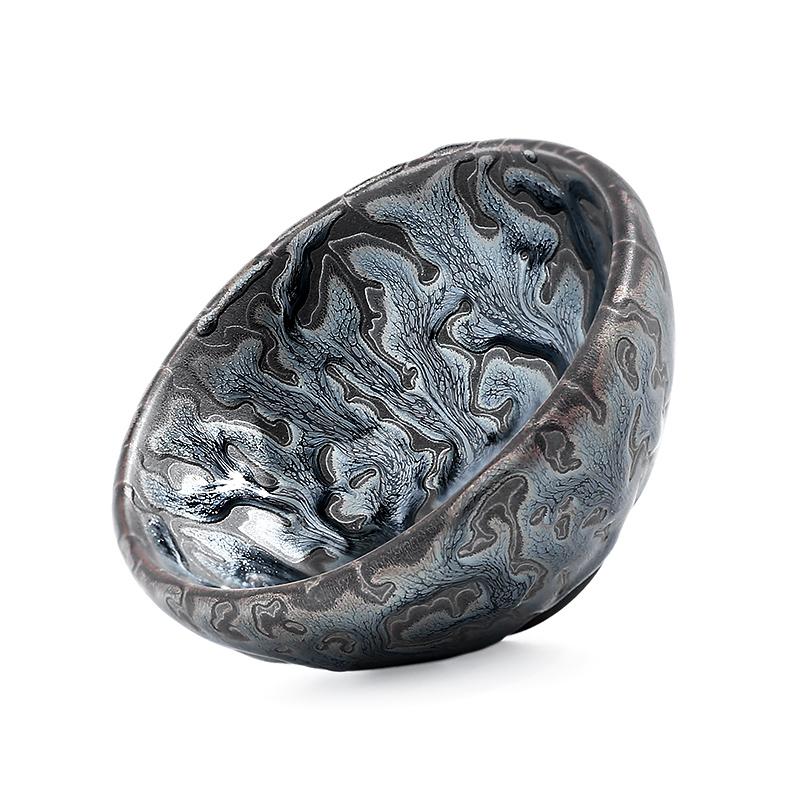
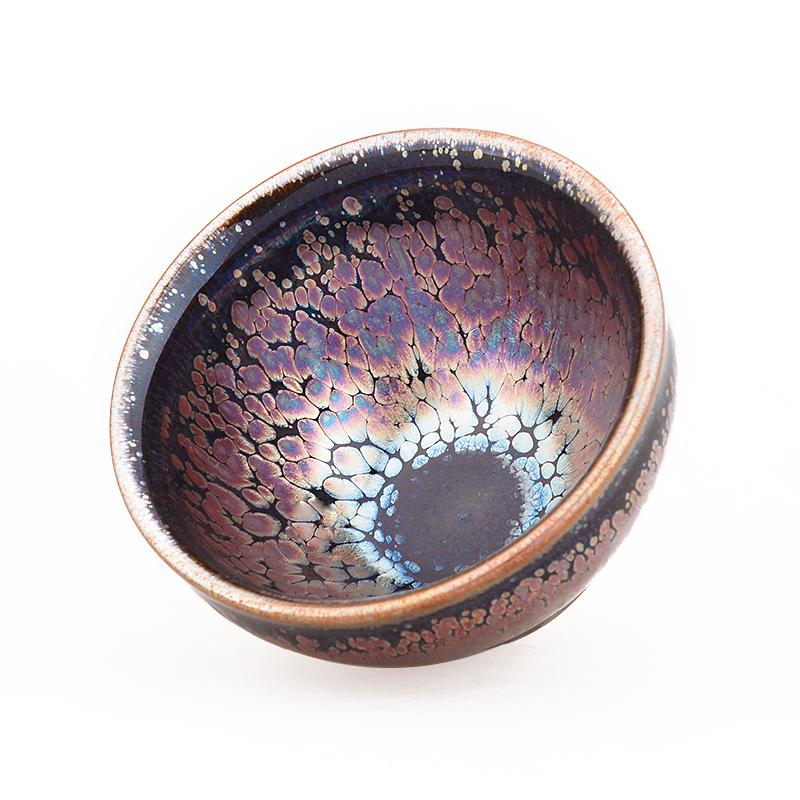
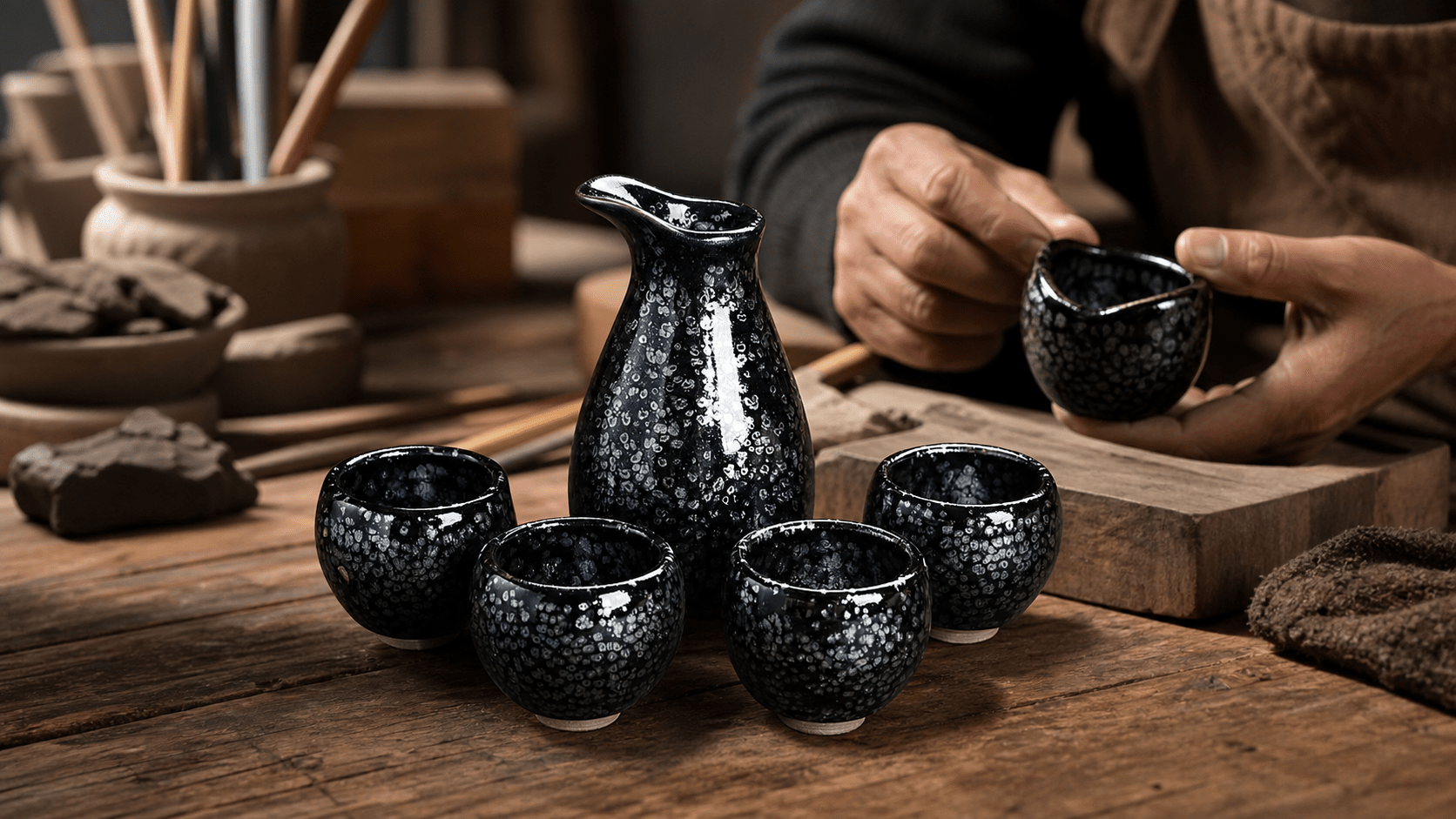
- Oil spot (yuteki): Tiny droplets of iron oxide float to the surface during cooling and burst into silver-rimmed circles against a black mirror. Think of it as a night sky frozen in obsidian.
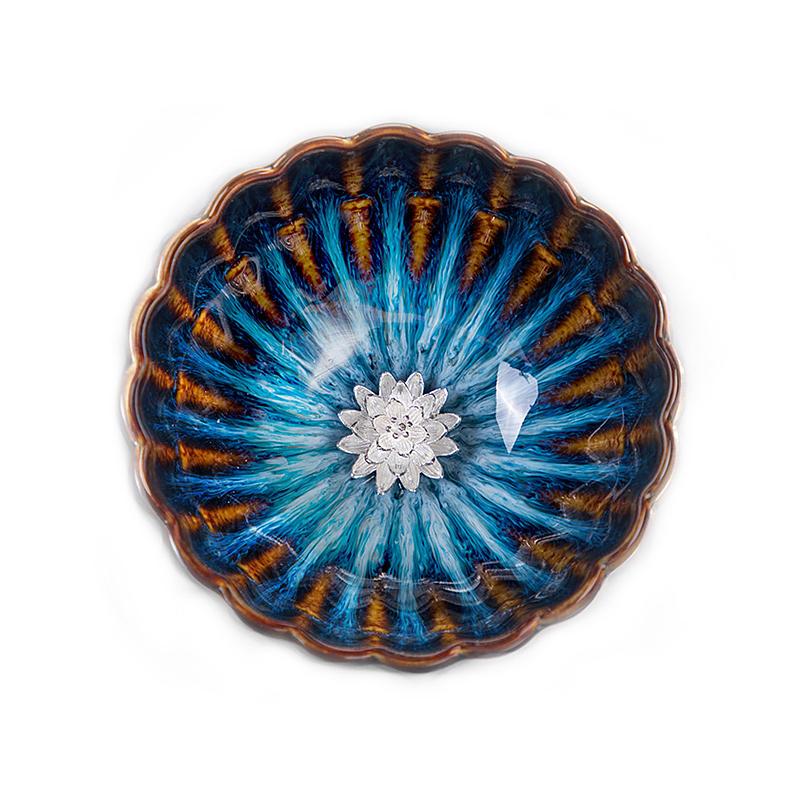
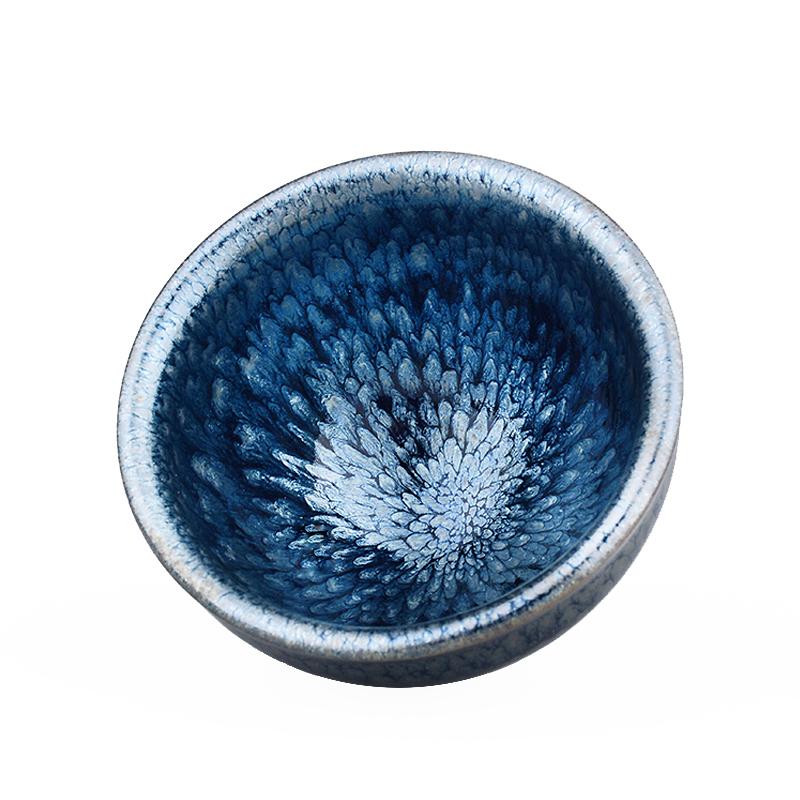
- Hare’s fur (nogime): Fine golden or brown striations streak downward, like furrows in a field after rain. These require an even tighter temperature window.
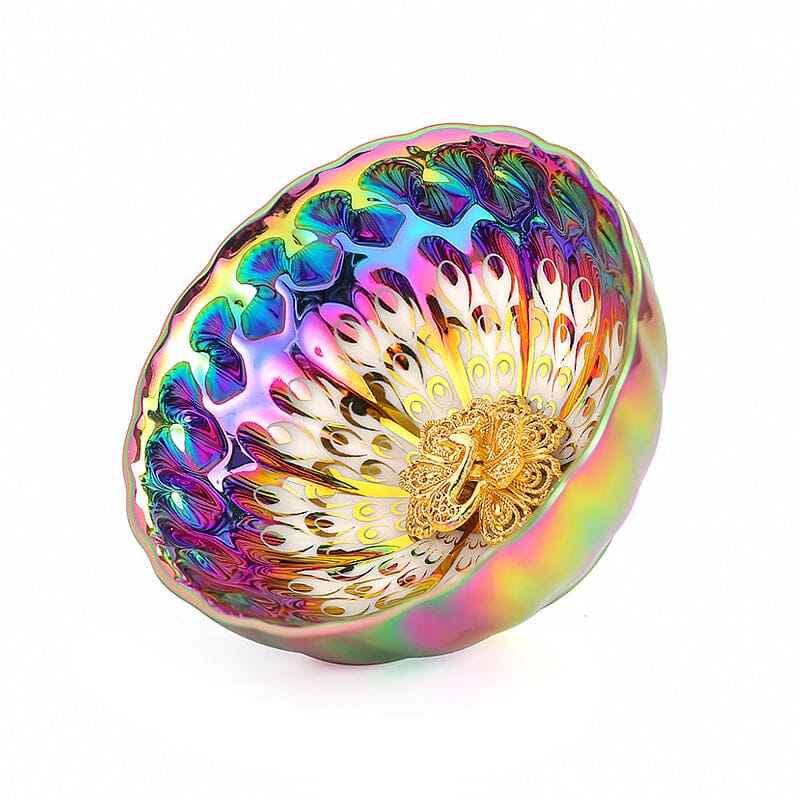
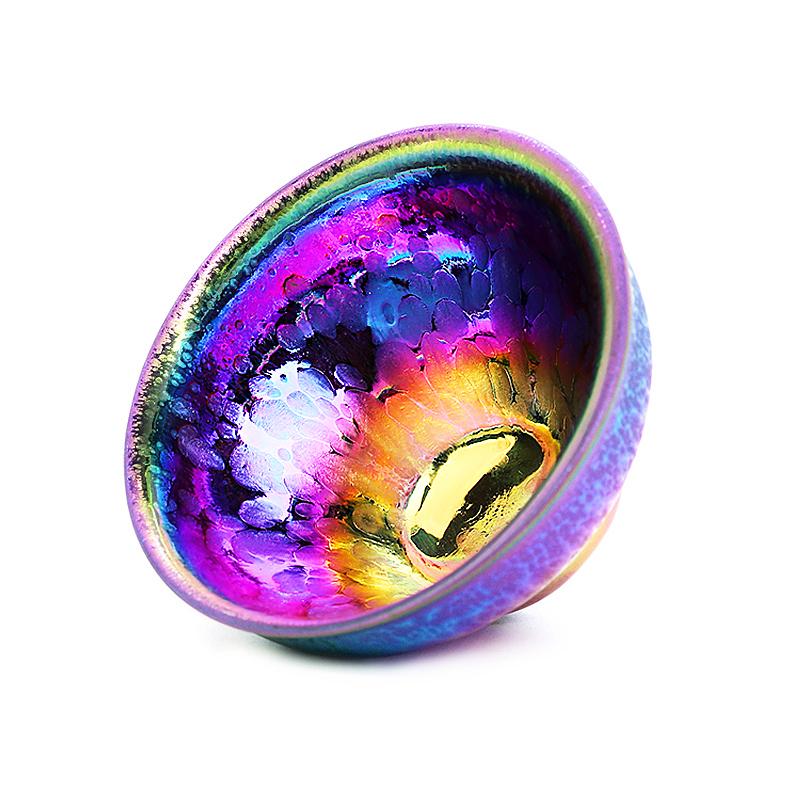
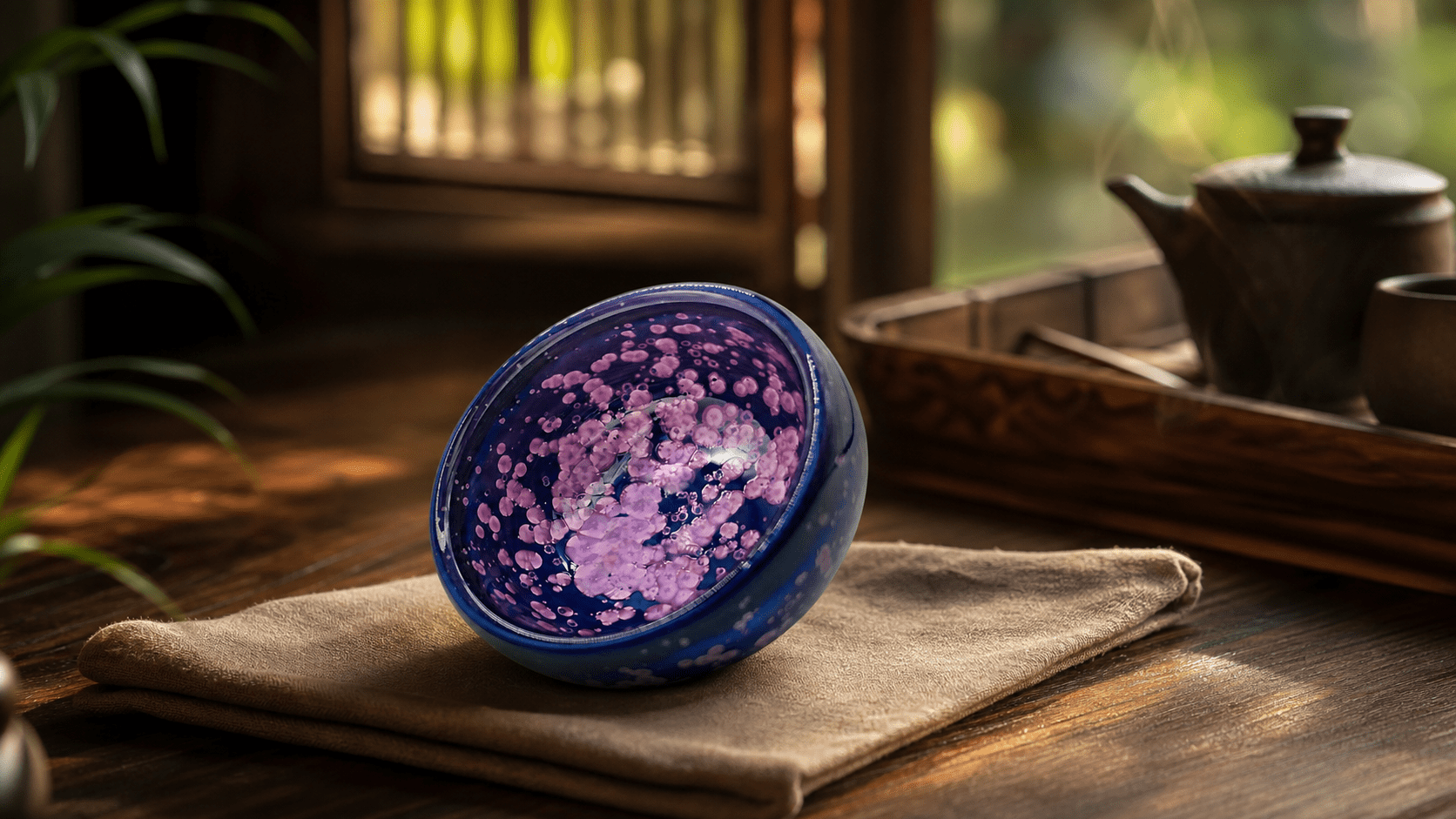
- Yohen (kiln-transformed): The holy grail. Iridescent halos of blue, purple, and green ripple across the surface. Each yohen bowl is a one-of-one cosmic event that can’t be repeated.
If a standard oil-spot Tenmoku is a Grand Seiko Spring Drive, then a yohen is the handcrafted Credor minute repeater — rarity defined by near-impossible creation.
Why It Matters: More Than a Bowl, a Sensory Ritual
You don’t just buy a Tenmoku; you buy a new way to experience tea. The thick, porous clay walls cradle heat and mute bitterness, while the iron in the glaze subtly softens water and coaxes out umami. The flared rim lets aromas bloom before the liquid touches your lips — much like a sommelier’s Riedel glass shapes a wine’s bouquet. Holding a Tenmoku is holding a meditation tool: heavy in the palm, dark as a moonless night, and alive with patterns that seem to shift under light.
For the premium lifestyle buyer, it’s also a conversation piece. Place it on a minimalist shelf or use it daily for a morning pour-over, and you’re honoring a millennium of ceramic art that few will ever hold.
Who Should Buy a Tenmoku Bowl?
- The Matcha Devotee: No other vessel does matcha justice like a Tenmoku. The wide mouth makes whisking effortless, and the dark interior makes the bright green froth pop.
- The Collector of Japanese Craft: Alongside a hand-forged chef’s knife and a urushi lacquer tray, the Tenmoku completes a curated wabi-sabi collection.
- The Luxury Gift Buyer: Looking for a wedding or retirement gift that isn’t another watch? A Tenmoku bowl is a piece of Zen history — understated, profound, and priced accordingly.
- The Everyday Aesthete: You don’t need a tea ceremony room. Many collectors use their bowls for drip coffee, a single-origin espresso, or even a neat pour of Japanese whiskey.
Tenmoku vs. Mass-Produced Tea Bowls: See the Difference
| Feature | Artisan Tenmoku | Factory Tea Bowl |
|---|---|---|
| Clay | Iron-rich local clay (≥12% Fe₂O₃) | Generic stoneware or porcelain |
| Glaze/Pattern | Natural iron crystallization; unique every time | Sprayed, painted, or decal; repeatable |
| Firing | Wood-fired, 1,250–1,300°C, reduction cooling | Electric or gas kiln; uniform, no risk |
| Weight & Feel | Heavy, substantial; grips the table | Light, often machine-consistent |
| Heat Retention | Excellent; stays warm through a long session | Average; cools quickly |
| Price | $500–$50,000+ | $5–$40 |
| Uniqueness | Every piece a fingerprint of the fire | Identical pieces by the thousand |
Buying Guide: How to Choose an Authentic Tenmoku Bowl
- Examine the unglazed foot ring: It should be rough, dark iron-brown clay, not white or beige. A sticker over the base is often a red flag.
- Look for natural crystal patterns: Under a loupe or magnifying glass, oil spots should look like cells, not printed dots. If the pattern is perfectly identical on five bowls, they’re decals.
- Artist seal or certificate: Reputable artists stamp their foot ring with a kiln name/chop. Some include a signed paulownia box (tomobako).
- Sound test: Tap it gently with a fingernail. A true high-fired Tenmoku gives a subtle, bell-like ring. A dull thud suggests a crack or low-firing.
- Price reality check: A genuine, hand-fired Tenmoku under $200 is extremely unlikely. Apprentice pieces start around $300–500; established masters begin at $2,000.
How to Care for Your Tenmoku Bowl (It’s Almost Indestructible)
These bowls survived 1,300°C; your kitchen won’t kill them. But a few habits preserve their patina:
- Hand wash only. A soft sponge and warm water. Avoid dishwasher detergents — harsh alkalines can dull the luster over years.
- No soap, if possible. If you must, use a fragrance-free, neutral pH cleaner and rinse thoroughly. The unglazed foot absorbs soap and may later release it into tea.
- Dry immediately. Let the bowl air-dry upside down, then buff the interior with a soft cloth to prevent water spots.
- Embrace the patina. Over time, tea oils will deepen the gloss. That’s not damage — that’s a living finish, much like a well-seasoned cast-iron skillet.
Real-Life Scenarios: Beyond the Tea Ceremony
Imagine a tech CEO who starts each morning by pouring a single-origin Kenyan pour-over into a hare’s-fur Tenmoku. The dark bowl holds the heat exactly right during a 10-minute review of the day’s metrics. Or a couple celebrating their anniversary who gift each other a yuteki bowl, knowing every oil spot is as unique as their years together. For the minimalist design lover, a Tenmoku bowl displayed on a backlit shelf looks like a captured galaxy — a sculpture that also serves matcha when friends visit.
FAQ
Why are tenmoku tea bowls so expensive?
Tenmoku bowls are expensive due to the rare local clay, the 1,300°C wood-firing process with a 90% failure rate, and the weeks of labor per bowl. Unique oil-spot and hare's fur patterns are created by iron crystallization and cannot be mass-produced. Prices range from $500 for apprentice work to over $50,000 for masterpieces.
What is the difference between Tenmoku and Jianzhan?
Jianzhan is the original Chinese term for these iron-glazed bowls from the Song Dynasty. 'Tenmoku' is the Japanese term, derived from Mount Tianmu where Japanese monks first encountered them. Today, both terms refer to the same style, but Tenmoku often implies Japanese artisanship or aesthetics.
Are tenmoku bowls safe to drink from?
Yes, authentic tenmoku bowls are fired at over 1,300°C, fusing the iron-rich glaze into a glass-like, food-safe surface. Always buy from reputable artisans to ensure no harmful additives were used in the glaze.
Can I use a tenmoku bowl for coffee?
Absolutely. The thick clay body retains heat perfectly, and the wide mouth enhances aroma, much like a sommelier's wine glass. Many collectors use them daily for matcha, coffee, or even whiskey.
How do I identify a real tenmoku bowl?
Look for three things: 1) An iron-rich dark body with distinctive 'oil spot' or 'hare's fur' crystal patterns, not painted on. 2) A rough, unglazed foot ring. 3) A certificate or seal from the artist. Fake bowls often have perfect, uniform patterns or a sticker over the base.
What makes tenmoku patterns so special?
The patterns—like oil spots, hare’s fur, and iridescent 'yohen'—are created by iron oxide crystallizing during a high-temperature, oxygen-starved cooling phase. Every pattern is a one-of-a-kind cosmic fingerprint that cannot be replicated, making each bowl a natural masterpiece.
Conclusion: Is a Tenmoku Bowl Worth the Investment?
In a world of disposable cups and perfect-screen-printed giftware, a Tenmoku bowl is anti-algorithm. It wears the scars of fire proudly, and patterns bloom not from a designer’s vector file but from a potter’s prayer. For the person who understands that beauty lives in imperfection, a Tenmoku isn’t an expense — it’s a legacy. Explore our curated collection of contemporary Japanese Tenmoku artists and bring home a vessel that has already survived the impossible.


Condividere:
Jian Zhan Tea Bowls: Transform Your Daily Tea into a Mindful Luxury Ritual
Why Are Tenmoku Tea Bowls So Expensive? The Craft & Luxury Behind Japanese Tea Bowls