

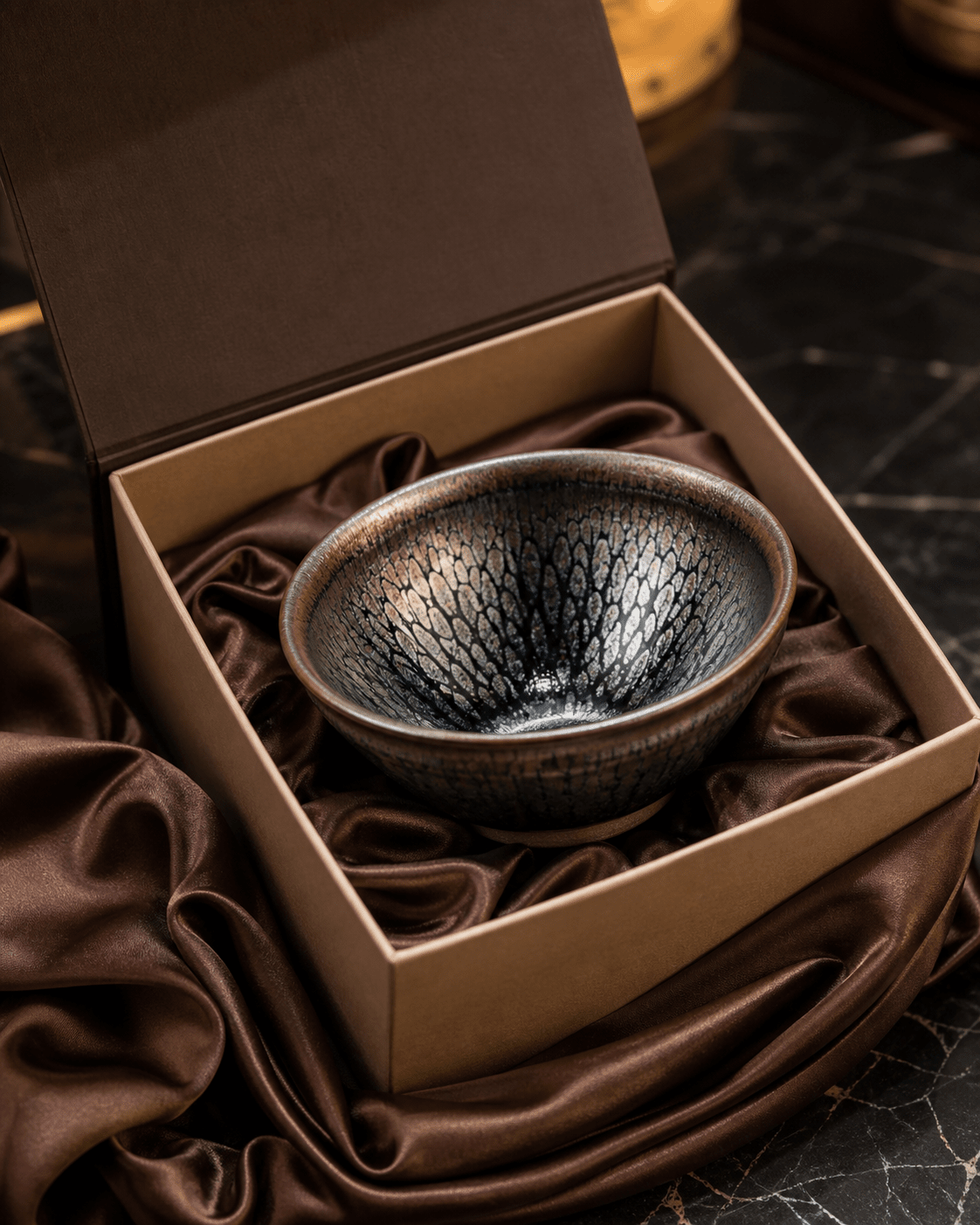


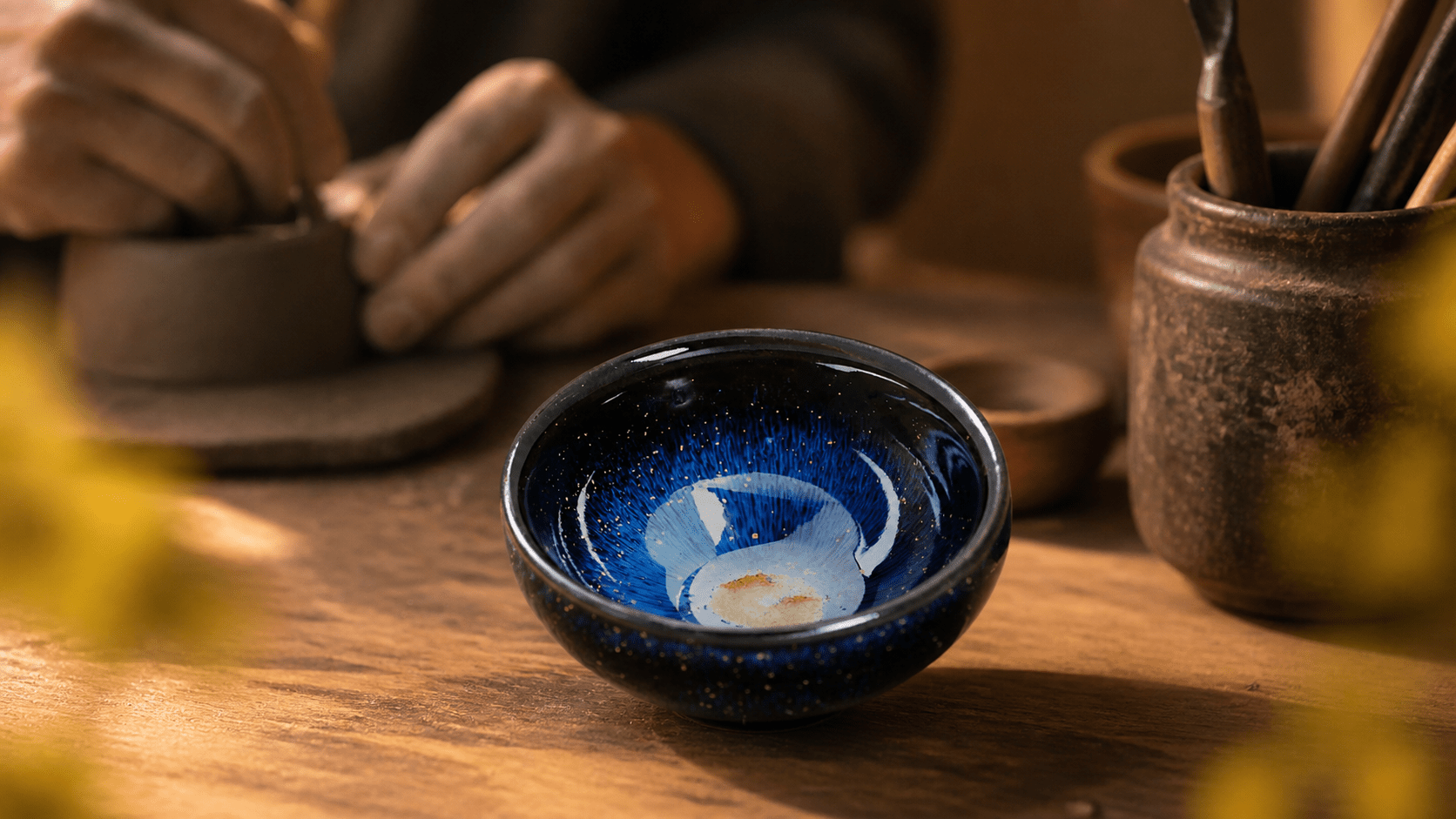
A tenmoku tea bowl is never just a cup—it's a universe frozen in glaze. I'm Sophie Thompson, and after years of sourcing handmade ceramics, I believe the most profound tea moments come from vessels with a soul. Today I want to share the story of Li Wei, a Fujian artisan whose iron-rich clay bowls capture the same cosmic magic that mesmerized Song Dynasty scholars and Japanese tea masters. Each piece he creates isn't simply a drinking tool; it's a unique tea cup gift, a handmade ceramic heirloom that transforms a simple tea session into a meditation on fire and earth.
Key Takeaways
- Tenmoku tea bowls originated in Fujian's Jian Kilns during China’s Song Dynasty, then profoundly shaped Japanese pottery and tea culture.
- Every handmade bowl is a unique record of kiln change—unpredictable reactions between iron-rich glaze, clay, and extreme heat.
- Patterns like oil spot and partridge feather cannot be mass-produced, making each finished cup a one-of-a-kind tea ceremony gift.
- A jianzhan tea cup gift carries centuries of cultural heritage and feels deeply personal to the recipient.
- Li Wei’s work bridges Chinese craft roots and Japanese tea discipline, resulting in a cup equally suited to gongfu cha and matcha.
Where Did the Tenmoku Tea Bowl Really Begin? (Hint: It’s Not Japan)
Many Americans first encounter these dark, shimmering bowls in Japanese tea ceremony contexts—and yes, the term “tenmoku” itself comes from the Japanese reading of Tianmu Shan, the mountain in Zhejiang where visiting Japanese monks first saw the bowls. But the original kilns that sparked this obsession lie south, in Fujian. During the Song Dynasty, Jian Kilns produced black-glazed tea bowls prized for how their deep tones set off the white foam of whisked tea. The clay was local and iron-rich; the glaze, a secret brew of wood ash and ground stone. When Japanese monks and traders brought these bowls home, they ignited a reverence that transformed Japanese pottery forever. Today, Li Wei’s studio sits a few miles from the ancient Jian Kiln sites. He digs his own clay from the same mineral-rich hills, connecting each handmade jian zhan tea cup directly to that thousand-year-old lineage.
What’s crucial to understand is that the Japanese tradition never saw these bowls as mere copies. They were elevated into national treasures, and the accidental kiln effects—drips, hare’s fur streaks, and metallic spots—were celebrated as supreme expressions of natural beauty. That’s why, when I talk about a tenmoku tea bowl, I’m really talking about a cultural bridge. It’s the original Chinese form meeting Japanese aesthetic philosophy, then returning to the modern world as a unique tea cup gift that feels equally at home in a Kyoto tatami room or a Los Angeles tea bar.
What Makes a Fujian Artisan’s Studio Different from a Factory?
Walking into Li Wei’s workshop, the first thing you notice is the silence of the wheel. There are no automated jiggering machines, no decal printers. Everything here begins with a lump of Fujian mountain clay and a handmade ceramic rhythm that Li learned from his master—who himself studied restoration of Song-era shards. Li throws each form on a foot-powered wheel, then sets the bowls aside to cure just enough to trim. Trimming isn’t about speed; it’s about achieving the exact foot ring balance that makes the bowl feel weightless in the hand. If you ever thought a handmade tea cup gift set was all about appearance, this step changes your mind: a properly trimmed foot makes the tea drinking experience tactile and grounding.
Then comes the glaze. Li mixes his own iron-rich glaze using local limestone, feldspar, and red iron oxide. He applies it in layers, varying thickness intentionally thin near the rim so the bare clay can show through—a nod to the classic “golden rim” prized since the Song Dynasty. Each piece is laid into a wood-fired dragon kiln, where temperatures climb past 1300°C. Pine wood ash flies through the kiln, randomly interacting with the molten glaze surface. This is kiln change in its rawest form: a genuine lottery of fire. No two bowls ever repeat the same pattern. Li can hope for oil spots, but nature decides. That’s why every single bowl becomes a tea cup gift for tea lovers—you’re not buying a design; you’re buying a moment in time preserved in glass.
- Clay body: Locally sourced, high-iron stoneware, identical mineral profile to ancient Jian Kiln clay.
- Glaze preparation: Hand-mixed from limestone, feldspar, iron oxide; no synthetic colorants.
- Firing: 48-hour wood firing in a dragon kiln, reduction atmosphere creates metallic effects.
- Post-firing: Each bowl is inspected for resonance. Faulty ones are smashed—Li refuses to sell seconds.
Oil Spot vs. Partridge Feather: How Do Kiln Changes Create a Tea Cup Gift for Tea Lovers?
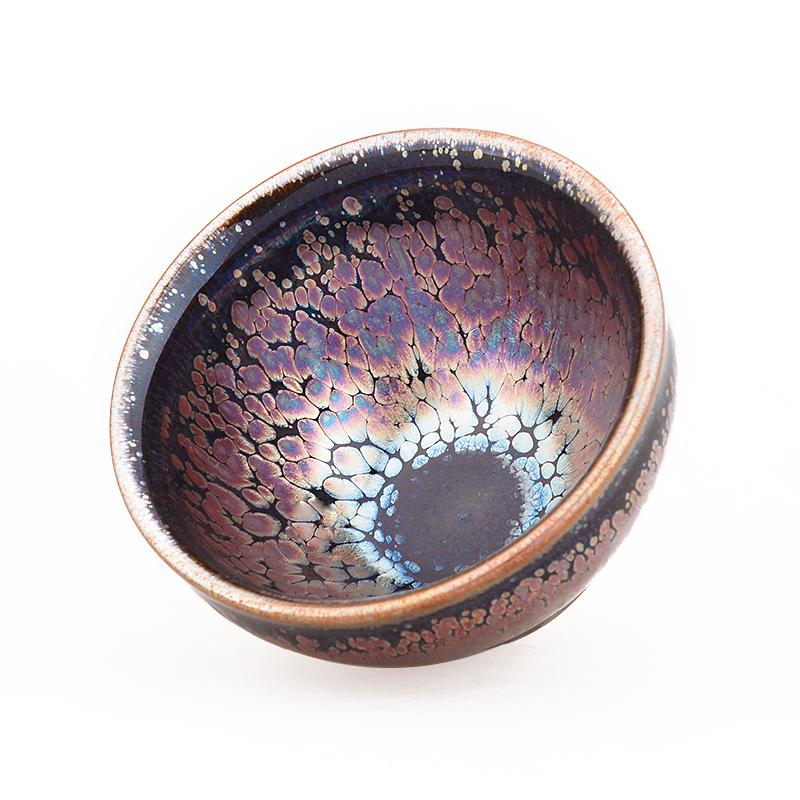
When you browse Discover our collection of oil spot tenmoku cups, you’re looking at more than decoration—you’re seeing physics. An oil spot tenmoku cup forms when iron oxide in the glaze decomposes during firing, releasing tiny oxygen bubbles. As the kiln cools, these bubbles burst, leaving perfectly round craters surrounded by supersaturated iron-rich liquid that crystallizes into metallic silver or golden rings. The effect resembles a pool of oil floating on water, hence “oil spot.” Getting the cooling rate exactly right is brutally difficult; a few seconds too fast and the spots won’t form, too slow and they run into each other. That’s why truly defined oil spots are so rare.
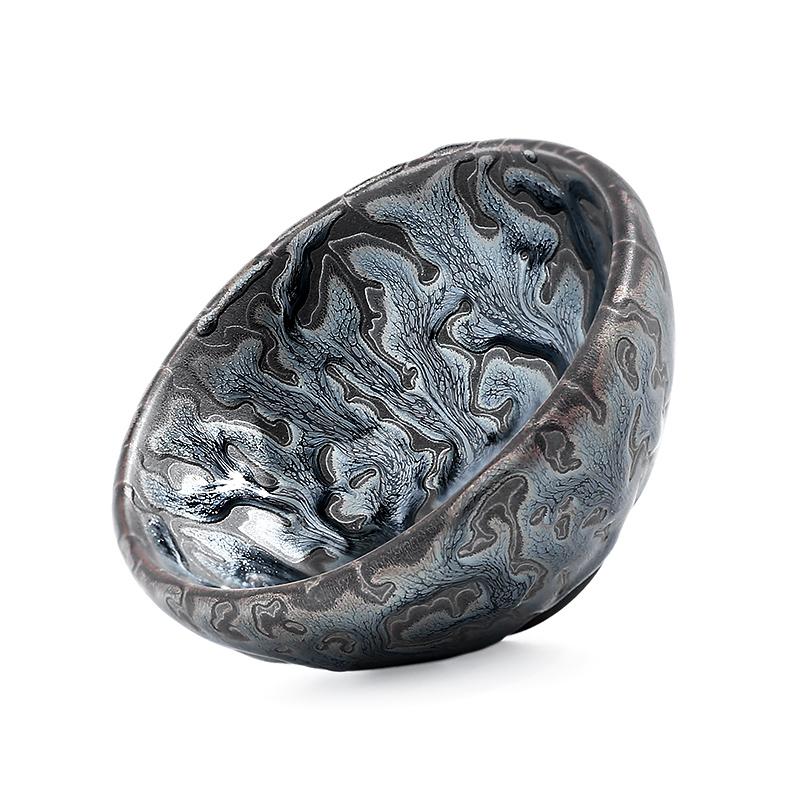
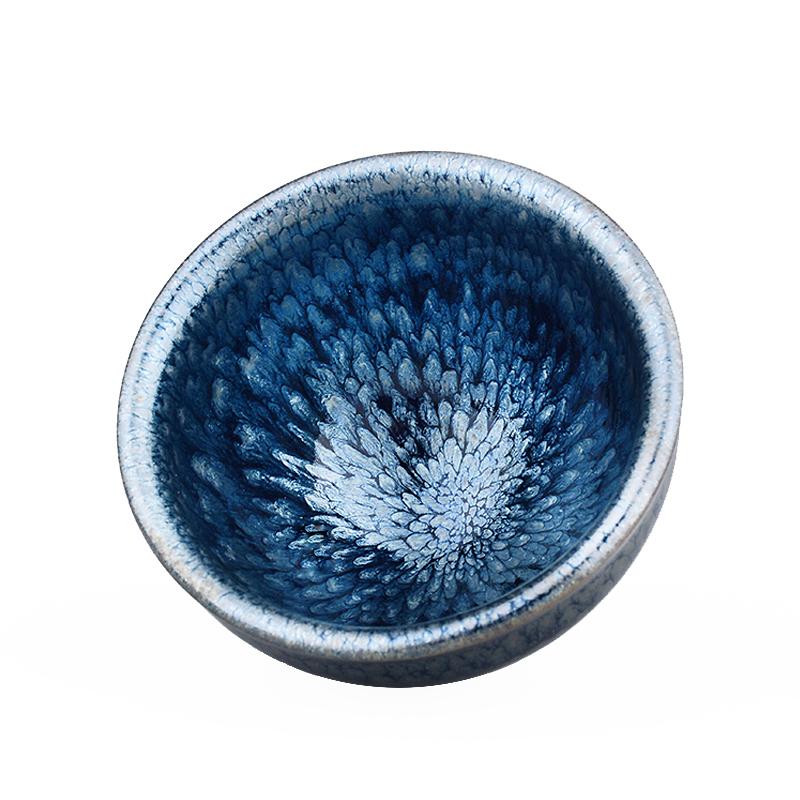
Partridge feather patterns, by contrast, require a different viscosity in the glaze and a more turbulent kiln atmosphere. The molten glaze ripples, and iron crystals align themselves into fine, parallel streaks reminiscent of a bird’s plumage. In natural light, these streaks can shift from deep chocolate into silver-blue. Whatever the outcome, each bowl’s surface is a fingerprint of that specific firing. This unpredictability makes a jianzhan tea cup gift extraordinarily personal. When I gift one, I like to include a card that describes the firing date, weather conditions that day (humidity affects the kiln!), and the pattern that emerged. No Hallmark card can beat that kind of backstory.
Why Is a Handmade Jianzhan Tea Cup the Ultimate Tea Ceremony Gift?
A tea ceremony gift should invite ritual, not just consumption. In gongfu tea, we pour, smell, and taste in a sequence that encourages mindfulness. The heavy yet balanced weight of a tenmoku tea bowl slows your hands. The black glaze makes the color of the tea liquor vivid—pale green for Tieguanyin, deep amber for Yancha. As you sip, the rim’s tactile contrast between glazed and slightly bare clay reminds you that this was shaped by a human being, not a mold. I’ve watched die-hard tea skeptics turn silent the moment they cradle one of Li’s bowls. It transforms tea time into an event.
For the person who has everything, a Explore our handmade Jianzhan tea cups lands like a treasure. Over weeks of use, the bowl will develop a patina from tea oils—a process we call “nurturing the cup.” The iron-rich glaze micro-etches slightly, and the interplay of tea and clay deepens the iridescence. By gifting a handmade tea cup gift set, you’re offering not just a beautiful object but an evolving relationship. Pair a bowl with a small bag of high-quality oolong, and you’ve curated a complete unique tea cup gift that shows genuine thought.
“When I hold a Jianzhan bowl, I feel the fire that forged it. It’s a reminder that beauty is not designed but discovered in the kiln.” – Li Wei
Chinese Jianzhan vs. Japanese Tenmoku: What’s the Difference?
| Feature | Chinese Jianzhan (Fujian) | Japanese Tenmoku (various kilns) |
|---|---|---|
| Primary clay | High-iron stoneware from Fujian mountains; produces dark brown-black body | Often mixed clays, sometimes lighter stoneware; may require a dark slip beneath the glaze |
| Firing method | Wood-fired dragon kiln, heavy reduction atmosphere, extreme temperature variation | Can be wood- or gas-fired; more controlled reduction, smoother surfaces |
| Glaze effects | Oil spot, partridge feather, hare’s fur, all driven by raw iron-oxide interactions | Yuteki (oil spot), yohen (kiln-change) but often more restrained; influence of Raku and other wabi-sabi aesthetics |
| Shape philosophy | Wide mouth, subtle taper, designed for whipping tea or gongfu pouring; robust, earthy feel | Slightly higher foot, more formal silhouette adapted for matcha whisking; often lighter in hand |
| Cultural context | Song Dynasty tea competitions, now enjoyed in Chinese tea arts and personal collections | Chanoyu tea ceremony, museum-grade national treasures, deep integration with Zen philosophy |
Who Should Buy This Handmade Tenmoku Tea Bowl?
I recommend Li Wei’s bowls for anyone who values story over status. If you have a friend who loves tea with an almost nerdy passion—someone who owns a temperature-controlled kettle and a Yixing teapot—this will elevate their setup. It’s also the perfect tea cup gift for tea lovers who practice mindfulness or meditation. The bowl’s weight, the slow spin of tea leaves in the bottom, the changing light on an oil spot tenmoku cup: all of it feeds a present-moment awareness that’s rare in daily life. Newlyweds who want to build a shared tea ritual? Corporate clients who deserve more than a branded pen? This is how you leave a lasting impression.
And don’t think these are too precious to use. Li fires them to stoneware strength. They’re perfectly safe for boiling water and daily use, though I advise hand washing to protect the bloom of the patina. The more you use it, the more your interactions with the bowl become part of its story. That’s the magic of handmade ceramic work: unlike a factory cup, a Jianzhan bowl gets better with age.
FAQ: Your Questions About Tenmoku Tea Bowls, Answered
- What is a tenmoku tea bowl?
- A tenmoku tea bowl is a dark-glazed, high-iron ceramic vessel originally produced in the Jian Kilns of Fujian, China. The name comes from Japanese monks who encountered them on Tianmu Mountain. Their beauty lies in unpredictable kiln-change effects like oil spots and partridge feathers.
- How is an oil spot tenmoku cup made?
- Iron-rich glaze is fired past 1300°C in a reduction atmosphere. Bubbles of oxygen surface and burst; during controlled cooling, iron crystallizes around these holes into reflective, oil-like spots. Precision in cooling makes this technique incredibly difficult.
- Are handmade Jianzhan tea cups safe for drinking?
- Yes. Properly fired stoneware is vitrified and food-safe. The mineral glazes—limestone, feldspar, iron oxide—are natural and stable. Always buy from reputable artisans to ensure full vitrification and no harmful metals.
- What makes a tenmoku bowl a unique tea cup gift?
- Every one is singular. No mold, no print, no two kiln firings identical. Add the historical narrative and the fact that the cup develops a personal patina over time, and you gift an experience, not just an object.
- Can you use a tenmoku tea bowl for gongfu tea as well as matcha?
- Absolutely. The wide mouth suits gongfu’s multiple infusions and aroma appreciation. The heavy base and deep walls make whisking matcha easy. One bowl, two worlds.
- Why is Fujian clay so important for Jianzhan?
- The local high-iron clay darkens the body and amplifies the glaze’s metallic effects. Using authentic Fujian clay preserves the thermal character and connection to Song Dynasty originals.
A Bowl That Carries Fire and Time
When you hold a true tenmoku tea bowl, you hold what a wood fire dreamed. Li Wei’s journey—from studying shattered Song shards in Fujian to apprenticing in a Japanese kiln and back again—proves that this craft isn’t a relic. It’s alive, unpredictable, and deeply human. Each handmade ceramic bowl he ships out is a fragment of that day’s fire, impossible to replicate, ready to be filled with your quietest moments.
If you’ve been searching for a tea cup gift for tea lovers that tells a real story, this is it. I invite you to Discover our collection of oil spot tenmoku cups. Whether you’re building a personal altar to gongfu cha or surprising someone with a handmade tea cup gift set that will change their morning tea forever, the right bowl is waiting. And if you want to see the full range of Li Wei’s work right now, Explore our handmade Jianzhan tea cups. Sometimes, a cup isn’t just a cup. It’s a piece of earth that learned to hold starlight.
Explore Our Collection
Ready to experience the world of tenmoku tea bowl? Browse our curated collection:
Disclaimer: This article is for informational purposes. Products and pricing subject to change.


Deel:
Why Are Handmade Tenmoku Tea Bowls So Expensive? A Deep Dive into Jian Zhan Cost & Craft
Why Is a Tenmoku Tea Bowl So Expensive? The Art, Labor, and Luxury of Japan’s Treasured Tea Cup