Hoe moeten jian theekops die momenteel niet in gebruik zijn, worden opgeslagen ?
door Tenmokus Editorial Team
Een theekopjesliefhebber liet vandaag een bericht achter waarin hij zei dat zijn Jian-theekopjes al een tijdje ongebruikt in een kast stonden. Toen hij ze eruit haalde, zag hij dat er "roest" op zat. Wat moest hij doen? We hebben dit probleem al eerder besproken, en vandaag gaan we het wat systematischer bespreken.
Sommige theekopliefhebbers hebben misschien opgemerkt dat sommige Jian-theekopjes "roesten" en andere niet. Wat is de reden voor dit verschil? Eigenlijk wil ik zeggen dat of een theekopje "roest" over het algemeen wordt vastgesteld wanneer het uit de oven komt.
Waarom "roesten" sommige Jian-theekopjes?
Eigenlijk moet deze kwestie apart besproken worden. De zogenaamde "roest" is niet echt "roest" in de ware zin van het woord; het is slechts een illusie. Daar zijn twee redenen voor:
Bij het bakken op hoge temperatuur zijn de patronen op de theekop al gedroogd en kunnen ze kristallisatie of vitrificatie missen, wat resulteert in een roestachtige kleur die eigenlijk geen roest is. De bruine patronen die tijdens het bakken ontstaan, kunnen echter de indruk van roest wekken.
Theekopjes met olievlekken vertonen patronen die voornamelijk bestaan uit ijzeroxide. Theekopjes die onvoldoende of helemaal niet gevitrificeerd zijn, kunnen, als ze lange tijd in thee worden geweekt zonder grondige reiniging, een reactie aangaan met zuurstof en waterdamp in de lucht, waardoor tweewaardig ijzer wordt omgezet in driewaardig ijzer. De resulterende roodbruine kleur kan de indruk van roest wekken (dit vereist nader onderzoek). Het is natuurlijk ook mogelijk dat theevlekken zich in de loop der tijd hebben opgehoopt door verwaarlozing van de reiniging. De sleutel ligt in de kristallisatie op en onder het glazuur.
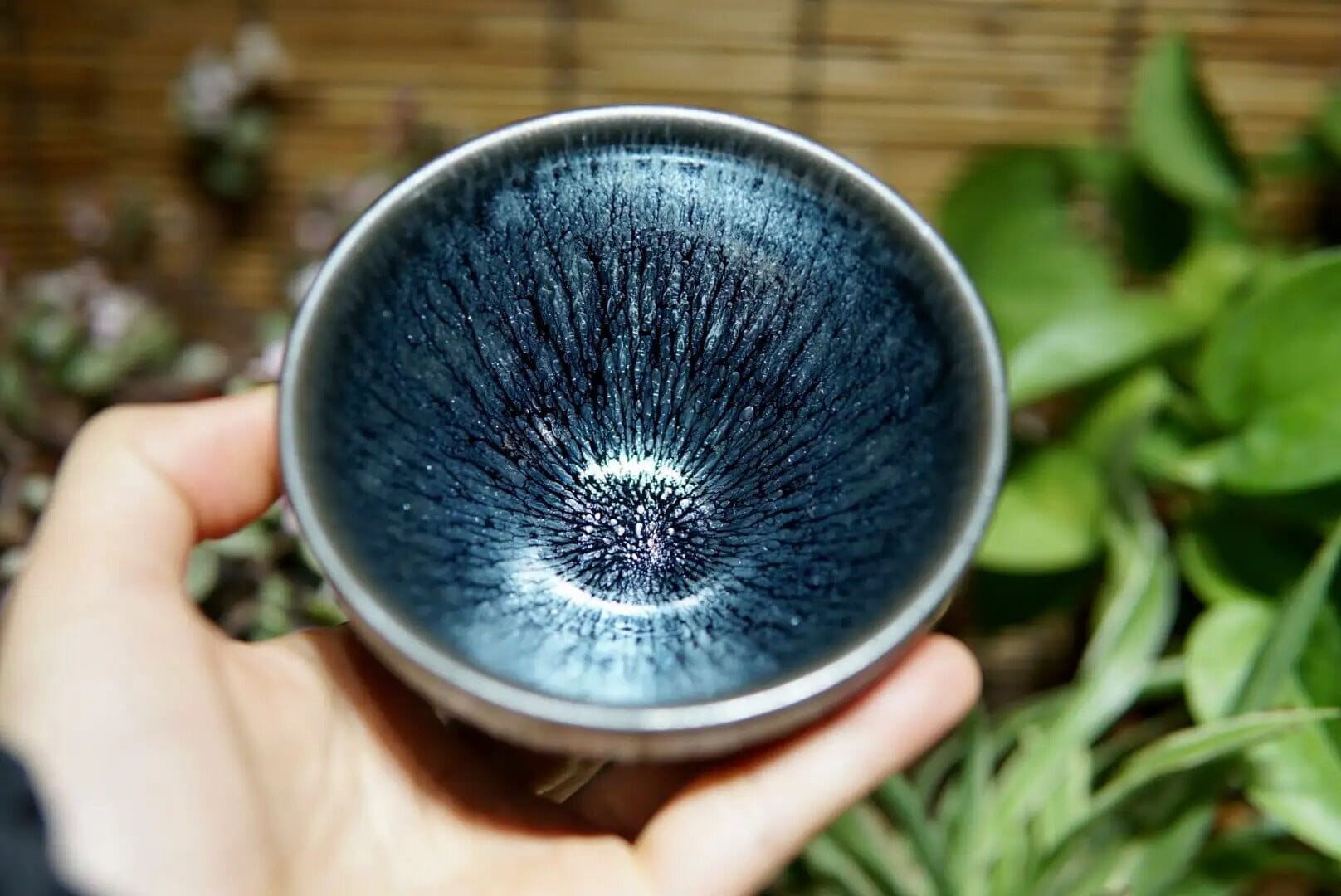
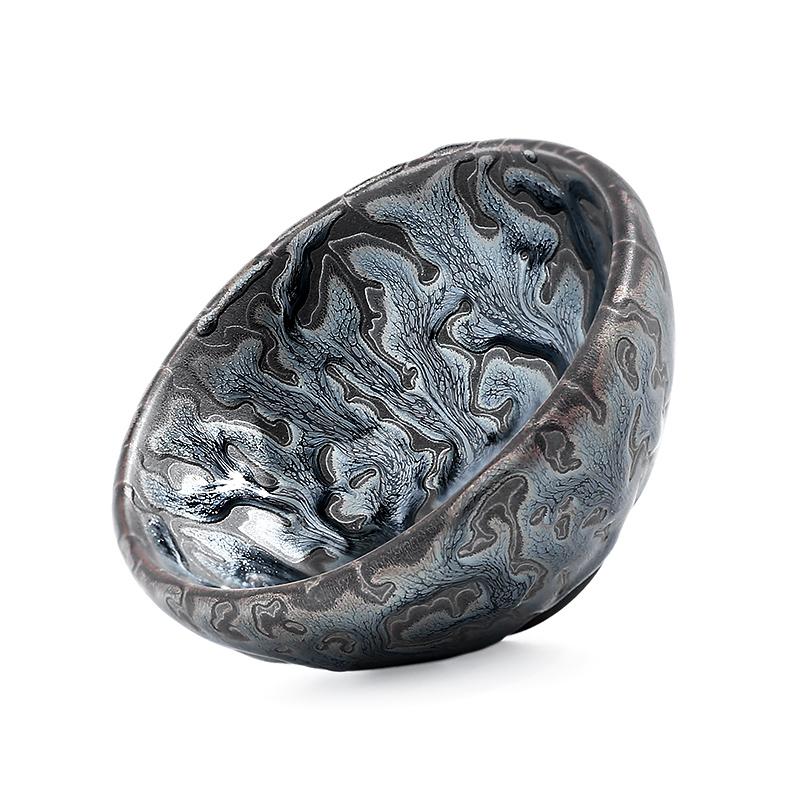
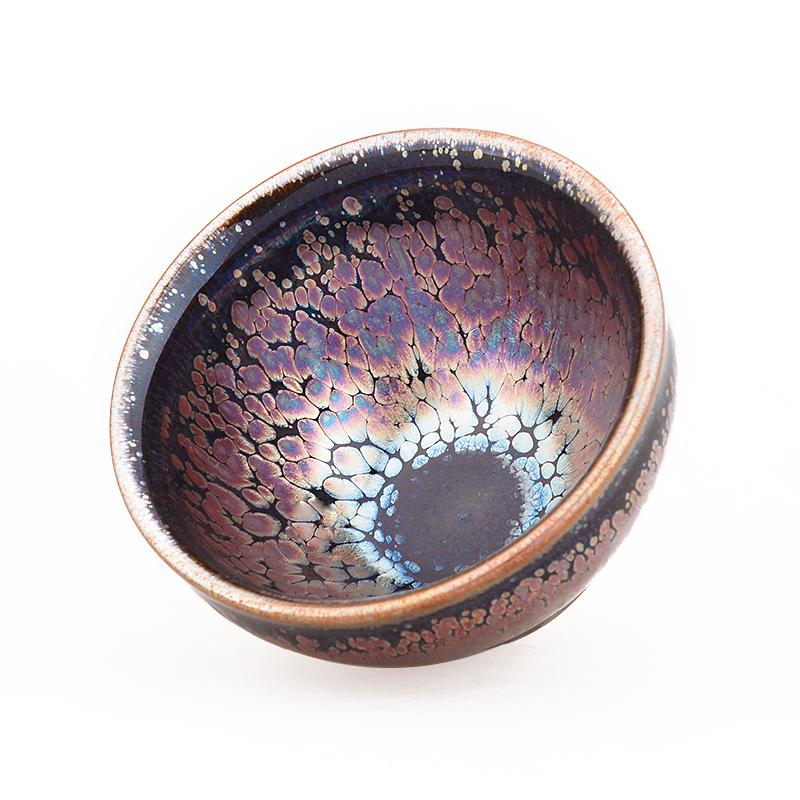
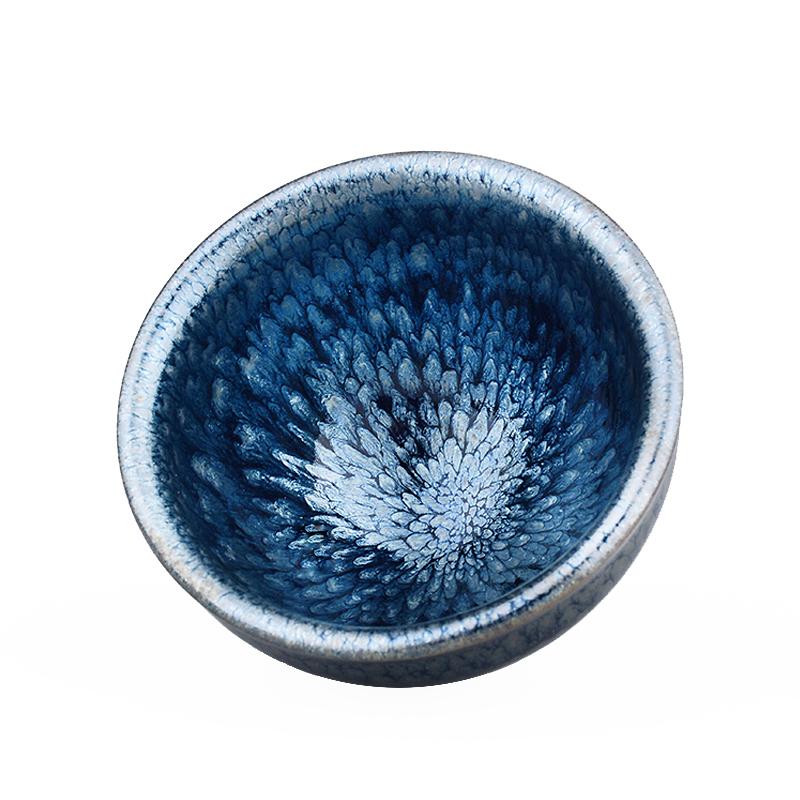
Bij gebakken Jian-theekopjes geldt: als de verglaasde laag de kristallisatie volledig bedekt, waardoor het oppervlak van de theekop glad aanvoelt als glas, dan is er sprake van onderglazuurkristallisatie. Als de kristallisatie zich daarentegen boven de verglaasde laag bevindt (of geen goede verglaasde laag heeft gevormd) en het kristalpatroon uitsteekt boven het glazuuroppervlak, dan is er sprake van overglazuurkristallisatie. Het proces van kristallisatie en verglazing is complex en onzeker, en het is ook mogelijk om een overgangstoestand tussen beide te creëren (met een extreem dunne verglaasde laag, waarbij de kristallisatie bijna op het glazuur verschijnt).
Bij theekopjes met onderglazuurkristallisatie bevindt zich over het patroon een soort beschermlaag van glas, die het kopje beschermt tegen direct contact met thee en lucht. Zo wordt voorkomen dat er roest ontstaat door oxidatie of vuil.
Hoe bewaar ik ongebruikte theekopjes?
Spoel de theekop eerst af met kokend water om eventuele theevlekken op het glazuur te verwijderen. Spoel de kop vervolgens af met schoon water en laat hem aan de lucht drogen in een goed geventileerde ruimte. Je kunt hem ook afnemen met een speciale theedoek.
Berg de theekop zorgvuldig op nadat het glazuur volledig is opgedroogd. Vermijd ook vochtige plaatsen. Als de theekop onderglazuurkristallisatie vertoont, is er geen reden tot veel moeite; bewaar hem gewoon op een plek waar hij niet snel omvalt.
Sommige mensen gebruiken "roest" als bewijs om Jian-theekopjes te bekritiseren, wat echt belachelijk is. Hoe dan ook, of we een theekopje waarderen of niet, is onze eigen zaak, en we weten diep van binnen of het goed is of niet, ongeacht wat anderen zeggen!
Quick answers for Tenmoku teaware shoppers
Use this guide to connect the article topic with practical buying decisions: what Jianzhan Tenmoku teaware is, who it suits, how to choose a piece, and how to care for it after purchase.
How to use this guide before buying
Read the article first for the main explanation, then compare the product photos, glaze variation, form, seller clarity, return policy, and whether the piece fits daily tea, display, collecting, or gifting.
Common buying mistakes to avoid
Avoid choosing only by dramatic claims, copied photos, unusually low prices, or vague master language. A better decision uses visible product details, clear use case, realistic care needs, and trustworthy shop policies.
Recommended next step
After reading, compare a few real products side by side by size, glaze family, rim shape, capacity, price, and gift suitability instead of relying on one photo or one keyword.
What is Jianzhan Tenmoku teaware?
Jianzhan Tenmoku teaware is ceramic tea ware known for dark mineral-glaze effects and natural kiln variation. Common forms include tea cups, bowls, teapots, tea sets, and matcha bowls.
Who is it best for?
It is best for tea drinkers, ceramic collectors, and gift shoppers who value functional objects with visible handmade character. It is not ideal if you need every piece to look exactly identical.
How do I care for it?
Hand wash with warm water, avoid abrasive cleaners, and dry fully before storage. Gentle daily use helps preserve the surface and keeps the glaze easy to inspect over time.
How do I choose the right Tenmoku piece?
Choose by the main use first: daily tea, matcha, Gongfu brewing, display, or gifting. Then compare capacity, rim shape, glaze family, photos, and whether natural variation is acceptable for your needs.
Is Jianzhan Tenmoku teaware good as a gift?
Yes. It works well for tea lovers, ceramic collectors, birthdays, holidays, and housewarming gifts because it is both usable and visually distinctive. For gifts, choose an easy-to-use form and a glaze style with clear photos.
Related products and categories
Compare the guide above with real Tenmokus categories and representative pieces. Start with the use case, then compare glaze style, form, price, and whether the piece is mainly for daily tea, display, collecting, or gifting.
Compare handmade Jianzhan Tenmoku tea cups by glaze style, cup size, hand feel, and gift intent. Check each product page for current photos, capacity, availability, care details, shipping, and return information.
Tenmoku Tea Bowl: Bring a Calmer, More Intentional Tea Ritual Home A tenmoku tea bowl is more than a vessel for tea: it is a small, handmade object that can make an ordinary pause feel considered. Whether you are brewing...
Why a Tenmoku Tea Bowl Is Worth the Price for Tea Lovers A tenmoku tea bowl can cost more than an everyday cup because it is a fired work of handmade ceramic art, not a factory-made drinking vessel. For someone...
A tenmoku tea bowl brings color, texture, and a slower rhythm to a gongfu tea session.The Tenmoku Tea Bowl Story: A More Meaningful Gongfu Tea Ritual A tenmoku tea bowl is a dark-glazed tea vessel whose character comes from clay,...




Deel:
Alleen door dit te doen, kunnen we "Jianzhan -experts" worden.
Houd van thee zonder geobsedeerd te zijn, drink thee zonder dronken te worden.