

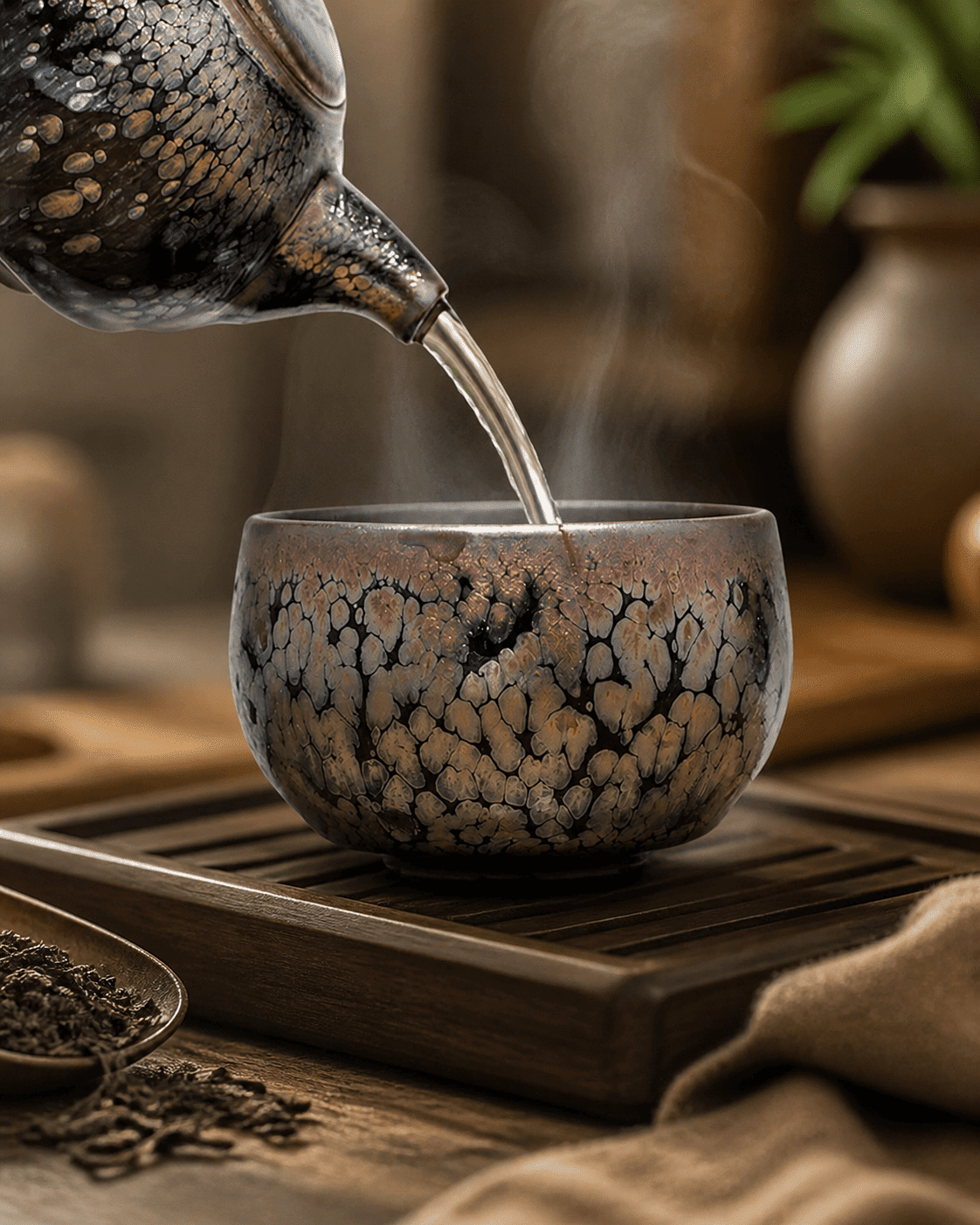

Tenmoku Tea Bowl Authenticity Guide: How to Buy the Real Thing with Confidence
A real tenmoku tea bowl is a high-fired black-glazed ceramic cup or bowl, traditionally connected to Jian kiln ware from Jianyang, Fujian, and later admired in Japan as a Japanese tea bowl for matcha and tea ceremony. If you are buying one for gongfu tea, daily sipping, collecting, or as a refined gift for tea lovers, authenticity comes down to clay, glaze behavior, firing marks, craftsmanship, and seller transparency.
Think of it like buying a mechanical watch: beauty matters, but the movement, materials, and maker’s integrity matter even more. This guide explains real vs fake tenmoku in plain English so you can recognize genuine kiln character, avoid decorative knockoffs, and choose an authentic jian zhan with confidence.


Key Takeaways: What Makes a Tenmoku Tea Bowl Authentic?
- Authentic Jianzhan usually uses iron-rich local clay and mineral glaze associated with Jianyang in Fujian, China.
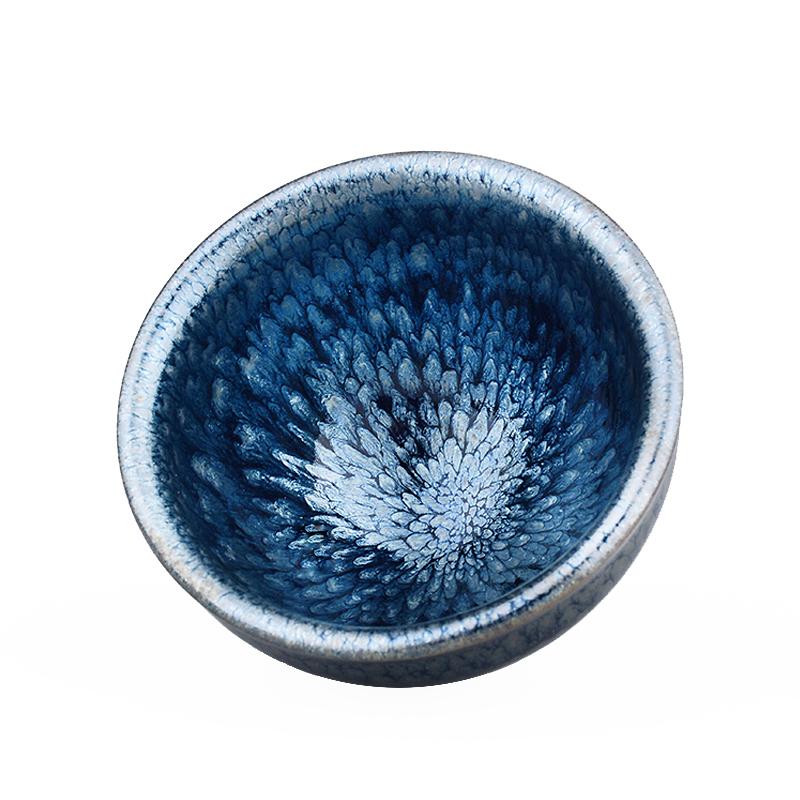
- Real kiln effects such as oil spot, hare’s fur, and yohen-style color shifts come from firing chemistry, not paint or decals.
- Weight, sound, foot ring, and glaze depth reveal a lot about whether a cup is handmade or mass-produced.
- Common fakes include painted metallic dots, resin coatings, printed patterns, low-fired stoneware, and “antique” cups made to look old.
- Reliable sellers should provide maker details, firing type, clear photos, and reasonable claims rather than exaggerated miracle stories.
What Is a Tenmoku Tea Bowl, and Why Is It So Often Faked?
A tenmoku tea bowl is a dark-glazed ceramic tea vessel inspired by Chinese Jian ware, known in Chinese as jian zhan. The most respected tradition comes from Jianyang, a historic kiln region in Fujian province. During the Song Dynasty, these bowls were prized for powdered tea whisking because the dark glaze made pale tea foam stand out beautifully.
The name “tenmoku” became famous through Japan. Japanese monks and tea masters brought Jian-style bowls from China, and over time they became treasured as Japanese tea bowl objects used in tea culture. Today, the word “tenmoku” is used broadly for black or dark iron-glazed bowls, including modern Chinese Jianzhan and Japanese interpretations.
They are often faked because genuine firing effects are difficult to control. A true oil spot or hare’s fur pattern depends on iron crystallization, glaze thickness, oxygen levels, kiln temperature, cooling speed, and what potters call kiln change. That unpredictability creates rarity and value. When demand rises, shortcuts follow.
For US buyers, the challenge is that online photos can be flattering. A cup may look dramatic under studio lighting but feel flat, painted, or plastic-like in person. The goal is not to become a museum curator overnight. It is to learn enough visual and tactile cues to avoid obvious misrepresentation.
Real vs Fake Tenmoku: What Are the Fastest Telltale Signs?
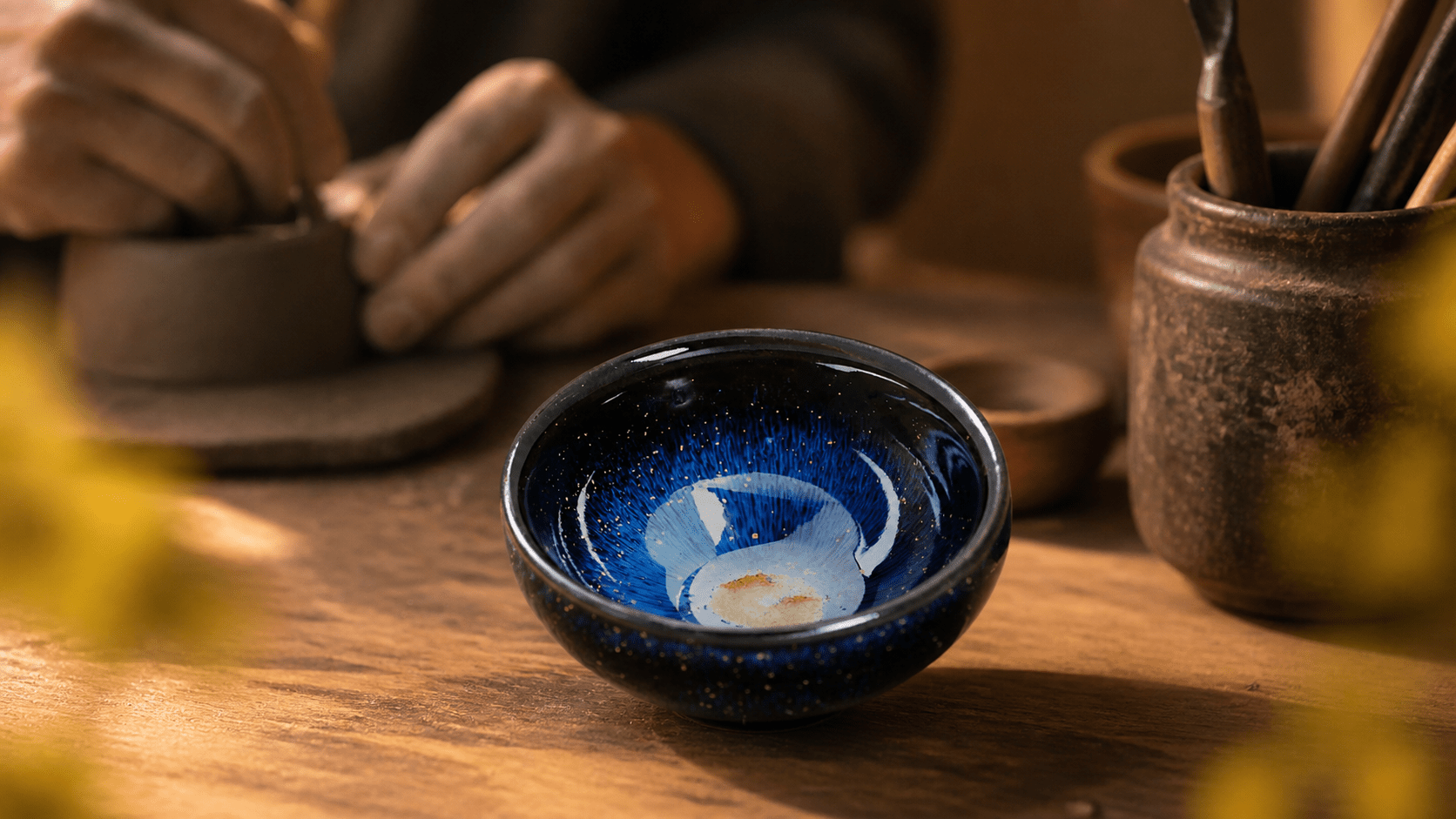
When comparing real vs fake tenmoku, start with the surface. Genuine tenmoku glaze has depth. The pattern appears inside the glaze layer, almost like stars suspended beneath glass. Fake versions often look like decoration sitting on top of the surface.
Here are quick signs to check:
- Pattern depth: Real oil spots and hare’s fur streaks should appear embedded in the glaze, not stamped or painted on top.
- Natural variation: Authentic kiln patterns are irregular. If every dot is the same size or evenly spaced, be cautious.
- Glaze pooling: Many real pieces show thicker glaze near the lower wall, where gravity pulled molten glaze during firing.
- Foot ring: The unglazed foot often shows dense, dark, iron-rich clay rather than pale ceramic covered with stain.
- Hand feel: Handmade bowls usually have subtle asymmetry, a balanced weight, and a refined rim.
- Claims: Sellers promising ancient antiques, health miracles, or “rare national treasure” pieces at low prices deserve skepticism.
A real tenmoku tea bowl does not have to be antique. In fact, most practical buyers should choose modern handmade jian zhan tea cups from transparent contemporary makers. They offer authentic materials and firing methods without the risk of fake archaeological claims.
If you want to browse modern pieces made for real tea use, Discover our collection of oil spot tenmoku cups.
Jianzhan Oil Spot vs Fake: How Do Real Oil Spots Look?
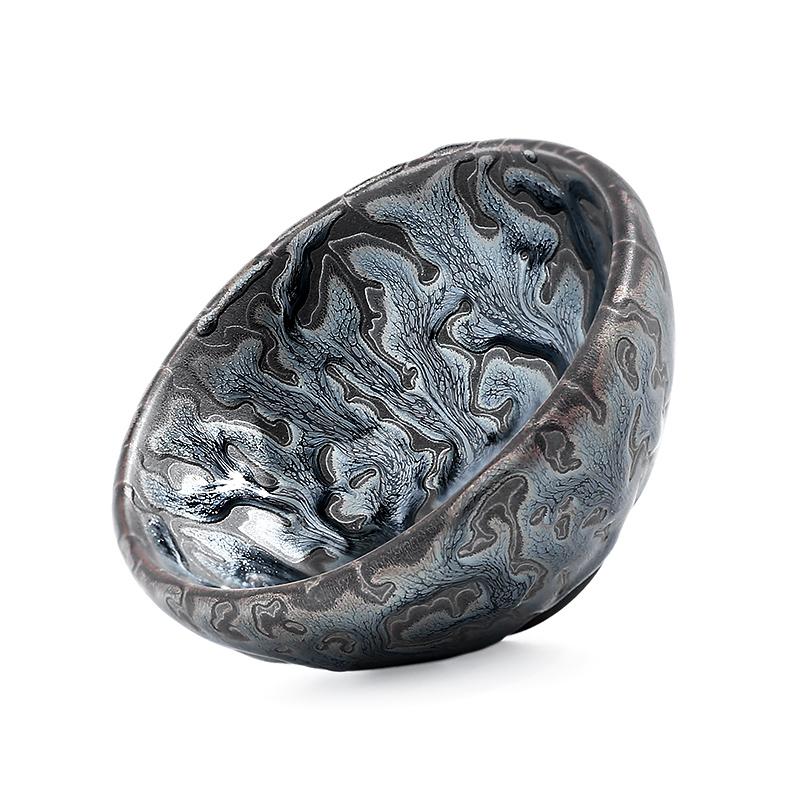
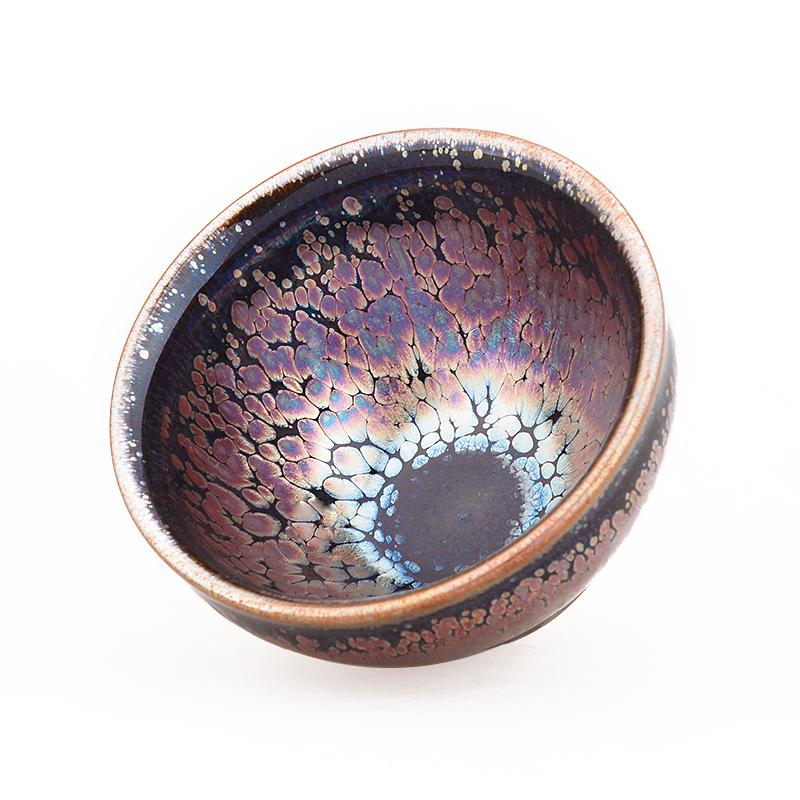
The question of jian zhan oil spot vs fake is one of the most common authenticity concerns. Oil spot glaze, known for metallic-looking spots on a dark ground, is created when iron compounds in the glaze crystallize and separate during a high-temperature firing. Real oil spots may flash silver, blue, gold, bronze, or rainbow tones depending on angle and light.
True oil spots are rarely perfectly uniform. Some may be round, some oval, some clustered, and some faint. Under close light, you may see that the spot has a layered or crystalline quality. It can resemble oil droplets floating on dark water, but not like glitter sprinkled onto paint.
Fake oil spots often show these problems:
- Painted dots: The spots look flat and sit above the glaze.
- Printed patterns: Dots repeat in a mechanical rhythm, like wallpaper.
- Metallic spray: The shine is too even and lacks depth.
- Low-fired imitation: The surface feels soft, dull, or overly glossy like a decorative souvenir.
- Artificial aging: Scratches, stains, or dirt are added to suggest age.
A useful analogy: real oil spots look like they grew during firing; fake oil spots look like they were applied after firing. That difference is subtle in photos but much easier to see in macro images or video.
Ask the seller for close-up images in natural light. A trustworthy seller should be comfortable showing the rim, inside wall, outside wall, foot ring, and base stamp if present. If only one dramatic photo is available, you are not seeing enough.
How to Identify Real Jianzhan by Clay, Glaze, and Firing Marks?
If you are wondering how to identify real jian zhan, look beyond the pattern. The body, glaze, and firing traces tell a more complete story. Authentic jian zhan is not just a black cup with shiny marks; it is a ceramic tradition rooted in Jianyang clay and high-temperature reduction firing.
1. Clay body
Traditional Jianzhan clay is iron-rich and usually dark brown, gray-black, or purplish after firing. The unglazed foot ring should not look like bright white porcelain. Some modern pieces may use blended clay, but premium examples usually emphasize mineral-rich Fujian materials.
2. Glaze thickness and movement
Tenmoku glaze is fluid in the kiln. On many authentic bowls, the glaze thins near the rim and thickens toward the base. You may see a “tear” or run where glaze moved downward. This is normal and often desirable when controlled.
3. Rim character
The rim may show a warm brown or iron tone where the glaze is thinner. It should feel smooth enough for drinking. Poor fakes may have rough edges, sloppy overglaze, or a rim that feels more like factory tableware than a handmade tea vessel.
4. Foot ring and trimming
Hand-trimmed foot rings often have small tool marks. They should look intentional, not crude. A completely identical molded base across many listings can indicate mass production.
5. Kiln change effects
Kiln change refers to the natural transformation of glaze under heat, flame, atmosphere, and cooling. In genuine pieces, color shifts are integrated with the glaze. In fakes, the color effect may look like a surface coating.
For tea drinkers, these details matter because a well-made cup feels better in use. In gongfu tea, where you handle the cup repeatedly and pour small servings, balance and texture are part of the experience.
What Materials and Process Markers Separate Authentic Jianzhan from Imitations?
An authentic jian zhan is typically made from mineral-rich clay, coated with an iron-based glaze, and fired at high temperature. The firing environment encourages iron crystals to form visible patterns. This is why two bowls from the same kiln can look different.
Common authentic process markers include:
- High-fired ceramic body: Dense, durable, and resonant when gently tapped.
- Iron-rich glaze: Dark base with natural crystal development.
- Subtle handmade variation: Slight differences in curve, thickness, and trimming.
- Controlled imperfections: Tiny pinholes, glaze flow, and variation can occur, but should not compromise use.
- Maker or studio information: A reliable modern piece often comes with details about the artist, kiln, or region.
Imitations may use ordinary stoneware, sprayed metallic pigment, decals, or chemical coatings to mimic the look. Some are not unsafe, but they should not be sold as traditional Jianzhan or Song Dynasty-style kiln-change work.
One important note for beginners: “handmade” does not mean every tiny mark is perfect, and “perfectly symmetrical” does not always mean better. The best jian zhan tea cup for daily use should combine authenticity, comfort, and a glaze that genuinely moves you.
Comparison Table: Real vs Fake Tenmoku Tea Bowl
| Feature | Authentic Tenmoku / Jianzhan | Common Fake or Imitation |
|---|---|---|
| Glaze pattern | Organic, embedded, varies naturally | Printed, painted, sprayed, or too uniform |
| Oil spot effect | Crystalline depth with angle-dependent shine | Flat metallic dots or glitter-like surface |
| Clay body | Dense, dark, iron-rich clay often linked to Fujian | Pale clay hidden by stain or dark coating |
| Foot ring | Hand-trimmed, unglazed, shows body material | Molded base, painted foot, or overly smooth factory finish |
| Firing story | High-temperature firing with kiln change | Decorative finish with vague production details |
| Seller transparency | Clear photos, maker info, realistic description | Exaggerated claims, limited photos, suspiciously low price |
| Best use | Gongfu tea, matcha, collecting, gifting | Display only or casual decorative use |
What Are the Most Common Fake Tenmoku Tea Bowl Types?
Not every imitation is malicious. Some cups are simply tenmoku-inspired ceramics. The problem begins when a decorative cup is marketed as handmade, authentic, rare, or antique. Here are the common types US buyers should recognize.
Painted oil spot cups
These use metallic paint to imitate oil spots. Under strong light, the dots may look shiny, but the effect lacks depth. With use, painted surfaces may wear or look inconsistent at the rim and interior.
Decal or transfer patterns
Some patterns are printed and transferred onto ceramic. They may look too clean, repeated, or pixel-like under magnification. A real kiln pattern should feel more like weather, less like graphic design.
Low-fired tourist ware
These pieces may be light, overly glossy, and inexpensive. They can be attractive, but they should not be confused with high-fired Jianzhan from Jianyang.
Artificial antique Jian ware
Fake antiques are a separate risk. Sellers may add dirt, chips, tea stains, or worn bases to make a cup appear centuries old. Unless you are buying from a serious specialist with documentation, avoid “Song Dynasty antique” claims online.
Generic black bowls labeled tenmoku
Some modern black-glazed cups are honestly made but not Jianzhan. They may be Japanese, American, or studio pottery inspired by tenmoku glaze. That is fine if labeled clearly. It is not fine if sold as authentic Jianyang Jianzhan without basis.
How Should US Buyers Evaluate a Tenmoku Tea Bowl for Sale?
When looking for a tenmoku tea bowl for sale, slow down and evaluate the full listing. A premium tea cup is small, but the buying decision deserves the same care you would give to a chef’s knife, fountain pen, or handmade leather wallet.
Use this checklist before buying:
- Check the description: Does it mention Jianzhan, Jianyang, Fujian, firing method, glaze type, or maker?
- Review all photos: You need interior, exterior, rim, foot, and close-up glaze shots.
- Look for natural variation: The glaze should not look copied and pasted.
- Assess usability: Confirm size, capacity, rim comfort, and whether it suits gongfu tea or matcha.
- Read the seller’s claims: Avoid miracle language and unsupported antique claims.
- Compare price realistically: Genuine handmade work costs more than mass-market décor, but not every authentic cup must be museum-priced.
If you are shopping for a gift, choose a piece with a clear story. Tea lovers appreciate knowing where the cup comes from, what glaze style it has, and how it was fired. That story turns a beautiful object into a meaningful daily ritual.
For curated options made for modern tea drinkers, Explore our handmade Jianzhan tea cups.
Is a Japanese Tenmoku Tea Bowl the Same as Jianzhan?
They are related, but not identical. Jianzhan refers specifically to the Chinese Jian ware tradition, especially connected to Jianyang in Fujian. Tenmoku is the Japanese reading associated with tea bowls brought from China and later interpreted through Japanese tea culture.
In Japan, famous tenmoku bowls became highly valued in tea ceremony. Japanese potters also developed their own tenmoku-style glazes. So a Japanese tenmoku bowl may be authentic Japanese studio pottery without being Jianzhan. Likewise, a modern Jianzhan cup may be called tenmoku in English because buyers recognize the term.
The key is precise labeling. A seller should not blur the terms to inflate value. A modern Japanese tea bowl, a Chinese Jianzhan cup, and a tenmoku-inspired American studio bowl can all be beautiful. Authenticity means the object is represented honestly.
Care and Use: Does Authenticity Matter for Gongfu Tea?
Yes, but not because the cup has magical powers. Authenticity matters because materials and craftsmanship affect how a vessel feels, ages, and supports your tea practice. In gongfu tea, small cups are used frequently, often with oolong, black tea, puerh, or aged white tea. A dense, well-fired tenmoku cup retains warmth, feels stable in the hand, and gives visual contrast to the tea liquor.
Before first use, rinse the cup with warm water. Avoid harsh detergents, abrasive pads, and sudden temperature shock. Let the cup dry fully before storage. Over time, tea minerals may subtly soften the surface appearance, but you do not need complicated maintenance rituals.
If you are new to premium tea ware, start with a cup that is authentic, comfortable, and within your budget. Collecting can come later. Your first goal is to enjoy tea more attentively.
FAQ: Real vs Fake Tenmoku Tea Bowl
How can I tell real vs fake tenmoku from online photos?
Look for close-up photos showing depth in the glaze, irregular natural patterns, a visible foot ring, and multiple angles. Real kiln effects usually look embedded under the glossy surface. Fake pieces often show flat dots, repeated patterns, or suspiciously perfect decoration. Ask for natural-light photos if the listing looks overly edited.
Jian zhan oil spot vs fake: what is the easiest difference to see?
The easiest difference is whether the oil spots look grown inside the glaze or applied on top. Real oil spots have crystalline depth and change with the viewing angle. Fake oil spots often look like metallic paint, glitter, or printed dots with little variation.
How to identify real jian zhan if I am a beginner?
Start with five checks: dark iron-rich clay at the unglazed foot, natural glaze movement, irregular kiln-change pattern, comfortable hand-trimmed form, and transparent seller information. Beginners should avoid “ancient antique” claims and focus on reputable modern handmade pieces.
Is authentic jian zhan always made in Jianyang, Fujian?
Historically, Jianzhan is strongly tied to Jianyang in Fujian, China. Many collectors prefer pieces made there because of the local clay and kiln tradition. However, tenmoku-style bowls are also made in Japan and by studio potters elsewhere. The important point is honest labeling: Jianyang Jianzhan, Japanese tenmoku, and tenmoku-inspired pottery are related but not the same.
Are handmade jian zhan tea cups better than factory-made cups?
For collectors and premium tea drinkers, handmade jian zhan tea cups usually offer more character, better trimming, and more authentic glaze variation. Factory-made cups can be usable, but they may lack the depth and individuality that make Jianzhan special.
What is the best jian zhan tea cup for gongfu tea?
The best jian zhan tea cup for gongfu tea is one that feels balanced, has a smooth rim, fits your preferred serving size, and features a genuine high-fired glaze. Oil spot and hare’s fur styles are both excellent choices. Choose comfort first, then collectability.
Can a low price mean a tenmoku tea bowl is fake?
Not always, but price should match the claims. A simple modern cup can be affordable. A handmade, well-fired, artist-signed Jianzhan will cost more. A supposed antique Song Dynasty glaze bowl at a bargain price is a major red flag.
Conclusion: Buy the Story, the Craft, and the Evidence
A real tenmoku tea bowl is more than a dark cup with shine. It carries a ceramic language shaped by iron-rich clay, intense heat, kiln change, and centuries of tea culture across China and Japan. Once you know what to look for, the difference between authentic glaze activity and surface decoration becomes much easier to see.
For beginners, the safest path is to buy modern, well-documented, handmade work from a seller who shows clear photos and explains the piece honestly. Whether you are choosing a daily gongfu tea cup, a Japanese-inspired tea bowl, or a memorable gift for tea lovers, authenticity should feel visible, tactile, and transparent.
When you are ready, explore pieces with real glaze depth, handmade character, and a clear connection to the Jianzhan tradition.
Explore Our Collection
Ready to experience the world of tenmoku tea bowl? Browse our curated collection:
Disclaimer: This article is for informational purposes. Products and pricing subject to change.


Deel:
Tenmoku Tea Bowl: Bring a Calming Luxury Tea Ritual Home
Tenmoku Tea Bowl: A Small Luxury That Makes Daily Tea Feel Restorative