

Related guide: If you want to understand the terminology before buying, read Tenmoku vs Jianzhan: what is the difference?.

Tenmoku Tea Bowl Guide: How to Spot a Real Jianzhan Before You Buy
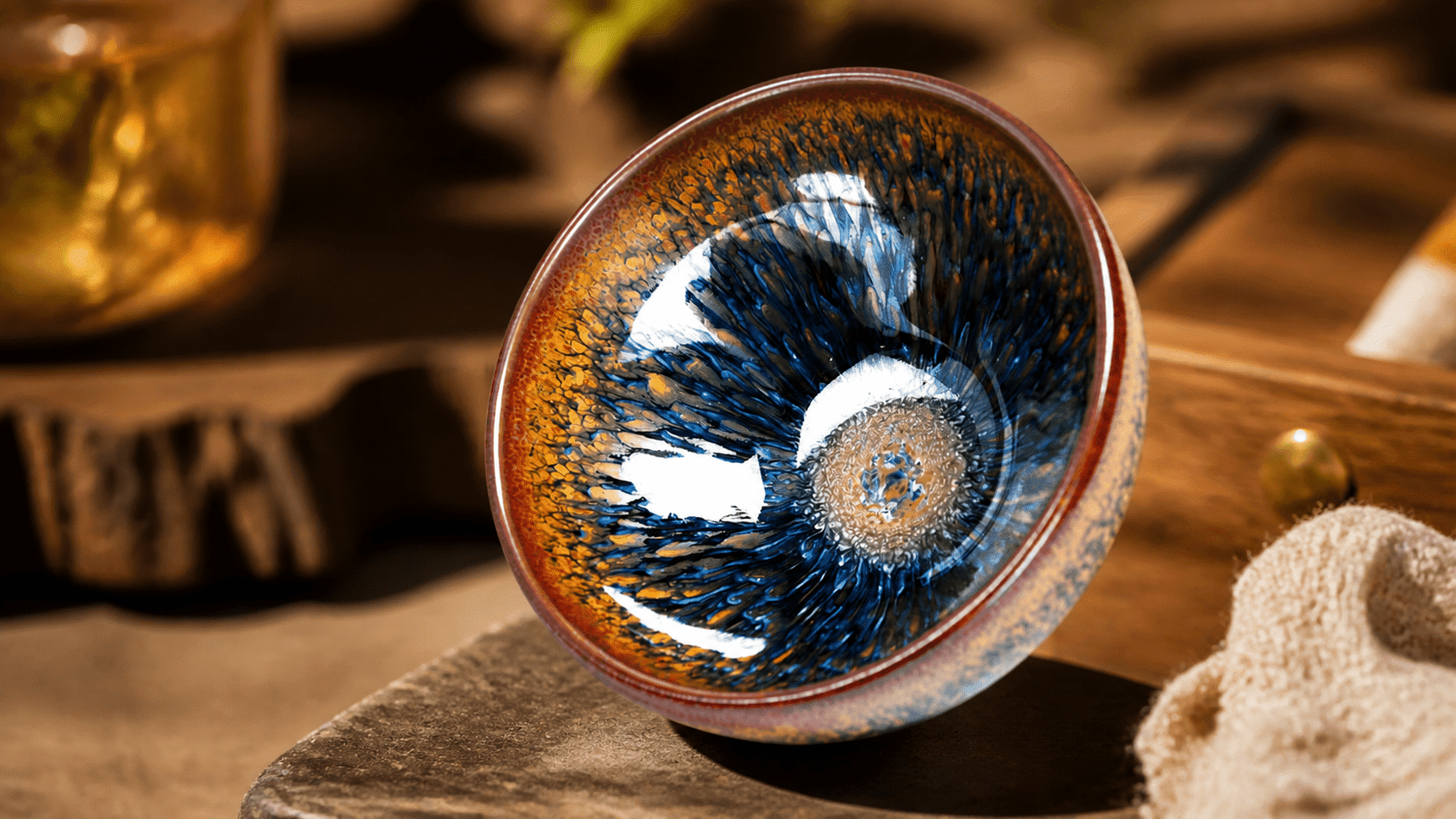
A real tenmoku tea bowl, also called Jianzhan, is a handmade ceramic cup known for its iron-rich glaze, natural kiln effects, and deep connection to Song Dynasty tea culture. If you use gongfu tea at home or want a meaningful gift for tea lovers, knowing how to tell real from fake helps you avoid cheap printed patterns and choose a cup with lasting beauty.
For beginners in the United States, Tenmoku can feel confusing because the same words are used for Chinese Jianzhan, Japanese tea bowl traditions, and modern decorative ceramics. This guide explains the difference in plain English, focusing on material, glaze, firing process, pattern quality, and buyer warning signs.
Key Takeaways
- A genuine Jianzhan is typically made from iron-rich clay and fired at high temperature, not painted with a surface pattern.
- Real tenmoku glaze patterns usually have depth, variation, and natural movement; fake patterns often look flat, printed, or too perfectly repeated.
- Oil spot, hare's fur, and partridge feather effects should appear formed inside the glaze, not sitting like paint on top.
- Authenticity depends on clay body, firing process, glaze behavior, craftsmanship, and seller transparency.
- If you are buying a tenmoku tea bowl for sale online, ask for clear photos, origin details, and information about whether it is handmade ceramic from Jianyang or simply Tenmoku-style decor.
What Is a Tenmoku Tea Bowl, and Why Does Authenticity Matter?
A tenmoku tea bowl is a dark-glazed ceramic tea vessel inspired by historic Jian ware from China. The original tradition comes from Jianyang in Fujian province, where kilns produced iron-rich black-glazed bowls prized during the Song Dynasty. In Japan, these bowls became highly respected in tea culture and influenced the Japanese tea bowl tradition.
The word "Tenmoku" is often used broadly in the West. Some sellers use it for any dark glazed cup. Others use it for genuine Jianzhan, which is the Chinese term for Jian ware tea cups and bowls. That is why authenticity matters. A buyer may think they are purchasing an authentic Jianzhan tea cup, but receive a mass-produced ceramic cup with a printed metallic pattern.
For daily tea drinkers, authenticity affects feel, glaze character, and emotional value. For gift buyers, it affects whether the item feels like a meaningful jianzhan tea cup gift or just a decorative object. For collectors, it affects long-term value and credibility.
Think of it like buying handmade leather instead of synthetic leather with a leather-print texture. From far away, both may look similar. Up close, the real material has depth, irregularity, and signs of the process that made it.
Real vs Fake Tenmoku: What Are the Most Reliable Signs?
The easiest way to understand real vs fake tenmoku is to compare process-based beauty with surface-level imitation. Real Jianzhan is not about a perfect graphic pattern. It is about minerals, clay, heat, oxygen, reduction, and timing working together in the kiln.
| Feature | Authentic Jianzhan | Common Fake or Low-Quality Imitation |
|---|---|---|
| Pattern formation | Created by natural crystallization and movement in the tenmoku glaze | Printed, painted, sprayed, or mechanically repeated |
| Visual depth | Pattern appears inside the glaze with layered shine | Pattern looks flat, like a sticker or metallic paint |
| Clay body | Often iron-rich, dense, and slightly weighty | Generic ceramic body with no clear material explanation |
| Shape | Handmade or hand-finished with slight human variation | Overly uniform, thin, or mold-like without craftsmanship signs |
| Origin claim | Seller can explain Jianyang, kiln process, or maker background | Vague phrases like "ancient style" with no substance |
| Price logic | Price reflects handwork, firing loss, and glaze difficulty | Unusually cheap while claiming rare or master-level quality |
A real piece does not need to be flawless. In fact, small variations are part of handmade ceramic work. But flaws and natural variation are different from careless production. A good seller should be able to explain what is intentional, what is natural, and what would count as a defect.
If you are comparing options, Explore our handmade Jianzhan tea cups to see how different shapes, glazes, and cup sizes can fit gongfu tea, casual sipping, or gifting.
How to Identify Real Jianzhan by Clay, Weight, and Foot Ring?
If you are wondering how to identify real Jianzhan, start with the body of the cup before judging the pattern. Authentic Jianzhan is traditionally connected to iron-rich clay from the Jianyang region. This material helps support the deep black base and mineral-rich glaze effects associated with Song Dynasty glaze traditions.
The cup should usually feel substantial for its size. It should not feel like thin porcelain or lightweight souvenir ceramic. Many Jianzhan cups have a grounded, dense feeling in the hand, which works well for gongfu tea because the cup feels stable and intentional.
Look at the foot ring, the unglazed or partially exposed base. On many authentic pieces, the foot can reveal a darker clay body. It may look brown, dark gray, or iron-toned rather than bright white. A bright white clay body does not automatically prove a fake, because modern ceramics vary, but it is a warning sign if the seller is claiming traditional Jianzhan while the body looks unrelated to iron-rich clay.
Also check the transition from glaze to foot. A handmade cup often shows natural glaze flow and stopping points. If the cup looks too perfectly coated, with no visible relationship between glaze, clay, and firing, it may be more decorative than authentic.
For US buyers, a practical analogy is cast iron cookware. You can see and feel that cast iron is not just a color applied to the surface. Jianzhan has a similar material truth: the clay, glaze, and heat all matter.
Jianzhan Oil Spot vs Fake: What Should the Pattern Look Like?
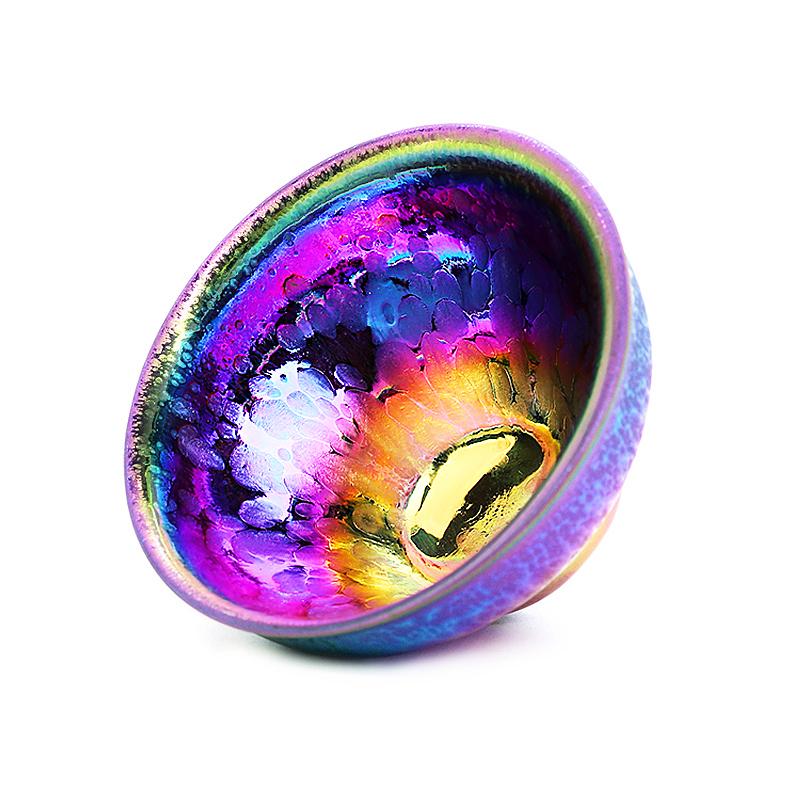
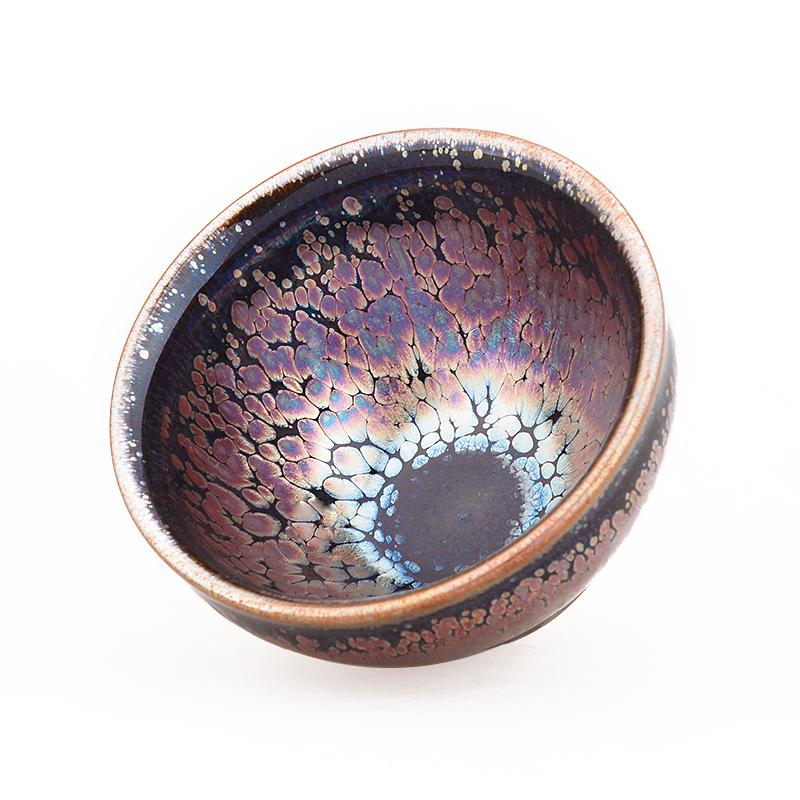
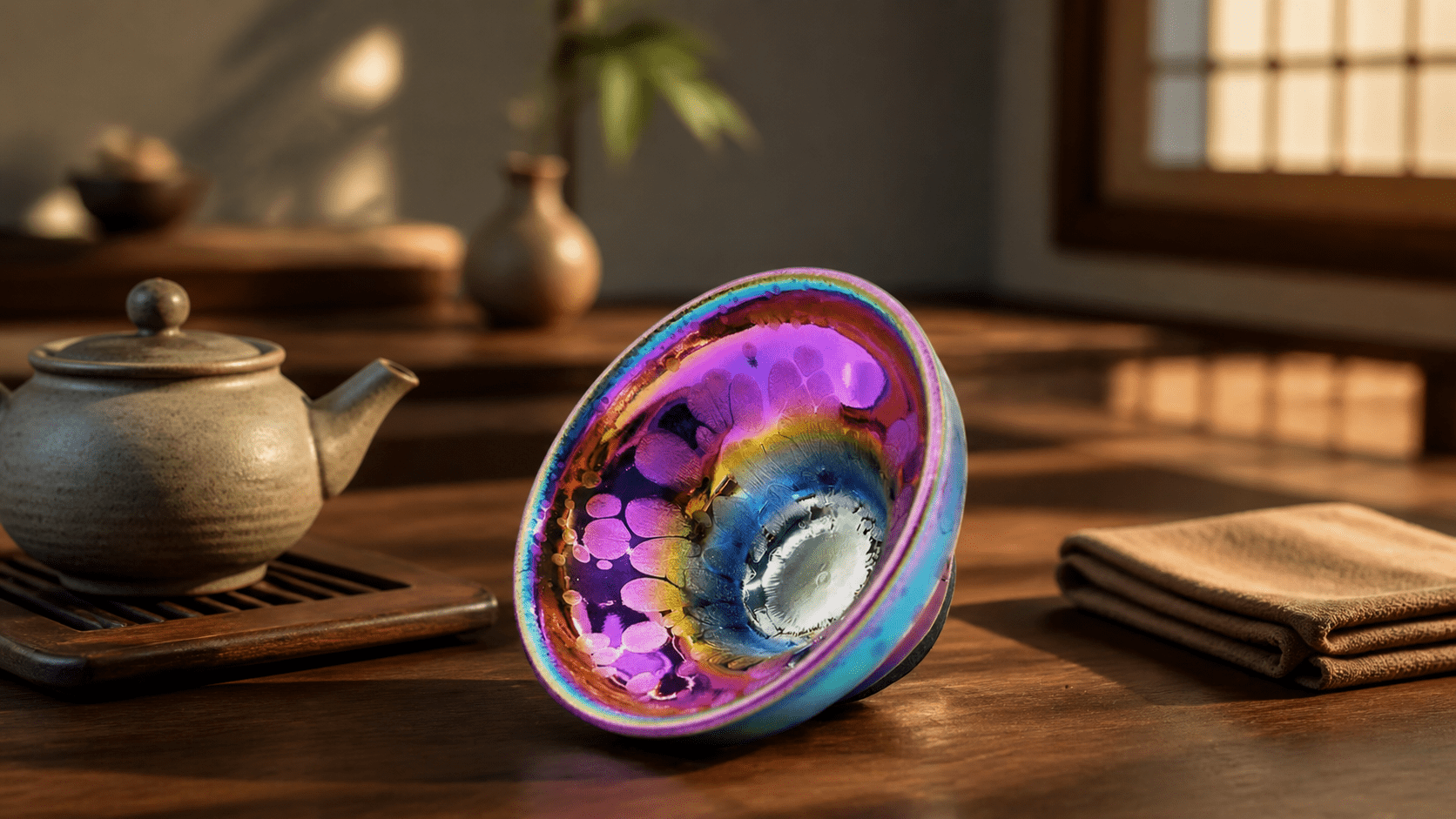
The phrase jian zhan oil spot vs fake is one of the most important checks because oil spot Tenmoku is widely copied. A real oil spot effect should look like mineral crystals or metallic spots emerging from within the glaze. The spots may vary in size, spacing, color, and brightness.
Fake oil spot patterns often look too uniform. If every spot has the same size, same spacing, same brightness, and same outline, it may be printed or sprayed. Real kiln effects are controlled but not fully predictable. The maker guides the result, but the kiln still has a voice.
Look for depth. When light hits a real oil spot glaze, the spots should shift slightly. Some may look silver, bronze, blue, or gold depending on the angle. The effect should not look like glitter glued on top. It should feel embedded in the glassy glaze layer.
Common warning signs include:
- Perfectly repeated dots that look like a digital pattern.
- Metallic paint sitting above the glaze surface.
- Oil spots only on the outside, with no natural relationship to the interior glaze.
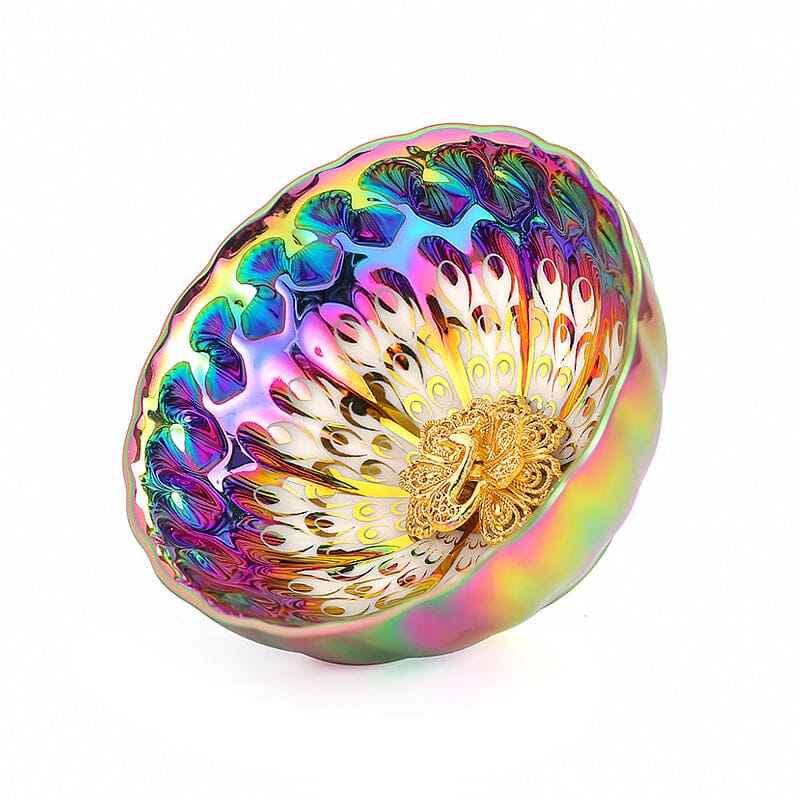
- Very bright rainbow colors used to distract from poor ceramic quality.
- Product pages that use dramatic claims but show only one low-resolution photo.
If you are specifically drawn to this style, Discover our collection of oil spot tenmoku cups and compare how natural pattern variation appears across different handmade pieces.
How Can You Tell if Partridge Feather and Hare's Fur Patterns Are Real?
Partridge feather and hare's fur are two classic Jianzhan glaze effects. Hare's fur usually refers to fine streaks running down the bowl, like thin lines of fur. Partridge feather often refers to spotted or feather-like markings with organic rhythm. Both are linked to the behavior of iron in the tenmoku glaze during firing.
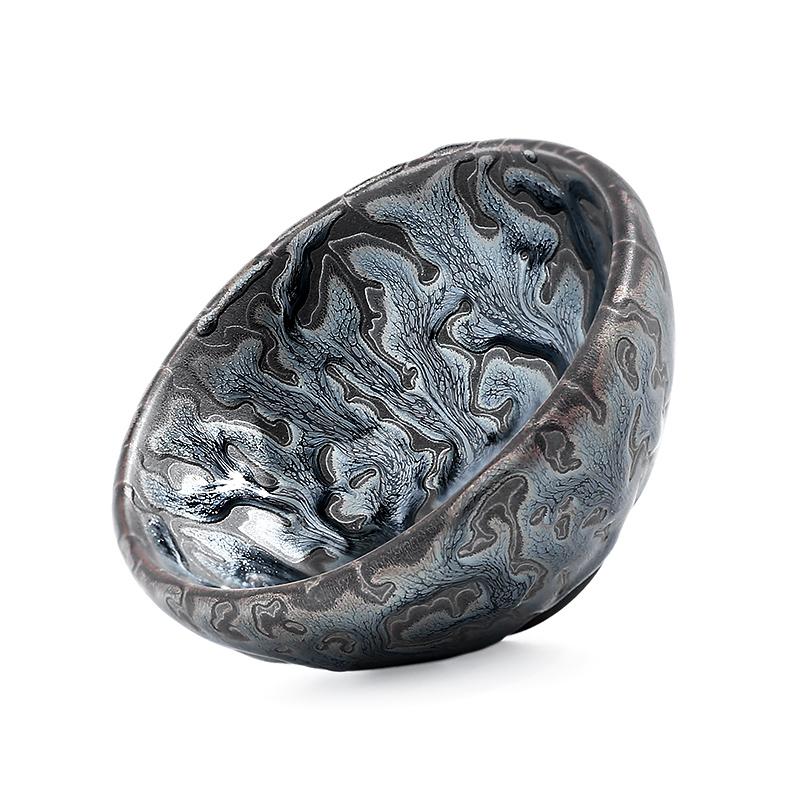
A real hare's fur pattern should flow with gravity and the curve of the bowl. It should not look like straight printed stripes. The lines may be dense in some areas and lighter in others. They often have a sense of movement, like rain on a dark window.
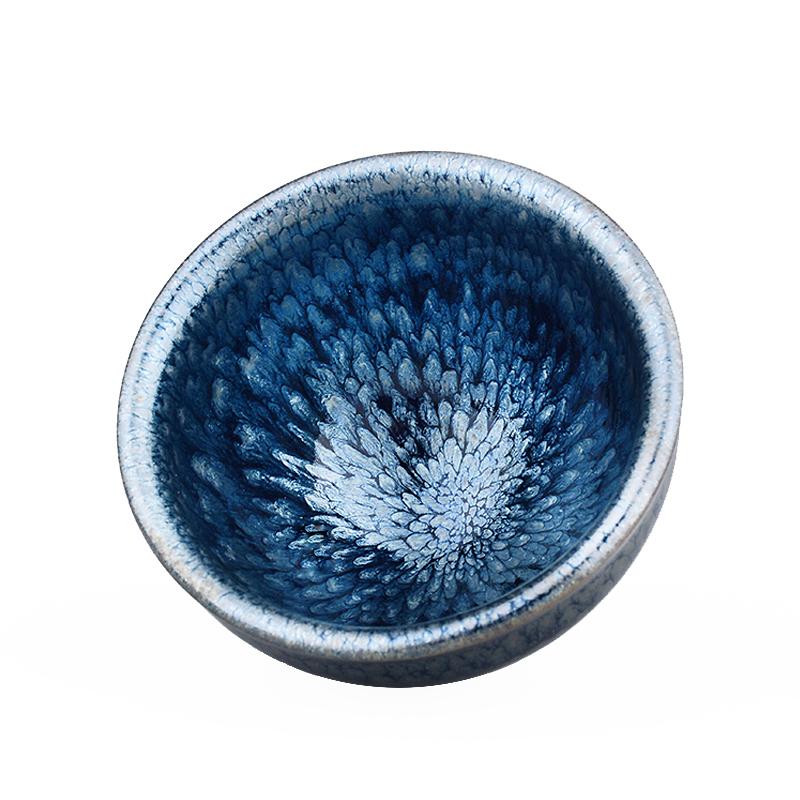
A real partridge feather effect should have natural irregularity. It may show warm brown, silver, blue, or golden tones depending on glaze chemistry and firing atmosphere. If the pattern looks stamped, repeated, or too symmetrical, be cautious.
The Japanese appreciation of Tenmoku bowls often focuses on this quiet irregularity. In Japan, a tea bowl is not only a vessel; it is something you hold, turn, observe, and return to over time. That mindset helps explain why fake printed patterns feel disappointing once you know what to look for.
What Common Fakes Should Buyers Watch Out For?
Not every non-traditional cup is dishonest. Some modern Tenmoku-style cups are beautiful in their own right. The problem begins when a seller markets a decorative ceramic as authentic Jianzhan without evidence.
Common fakes or misleading products include:
- Printed pattern cups: These use a graphic design to imitate oil spots or hare's fur.
- Metallic painted cups: The shine comes from surface paint, not mineral crystallization.
- Generic black-glaze ceramics: These may be nice cups but not true Jianzhan.
- Overclaimed antiques: Some sellers suggest Song Dynasty origin without documentation. Treat this as a major red flag.
- Fake master pieces: Names, certificates, and stamps can be copied. The object itself still needs to make sense.
Be especially cautious with extremely low prices paired with high claims. A handmade ceramic cup requires clay preparation, shaping, glazing, firing, sorting, and losses from failed kiln results. A seller offering a supposedly rare authentic Jianzhan at a very low price may be cutting corners or misrepresenting the item.
Also beware of vague cultural language. Phrases like "ancient royal kiln," "museum grade," or "master secret glaze" do not prove anything. Good product descriptions should explain the actual cup: shape, glaze type, origin, use case, and care notes.
Is a Japanese Tea Bowl the Same as a Jianzhan Tenmoku Tea Bowl?
A Japanese tea bowl and a Jianzhan Tenmoku tea bowl are related, but they are not always the same thing. Jianzhan refers to Chinese Jian ware, especially black-glazed tea bowls associated with Jianyang and the Song Dynasty. Tenmoku is the Japanese reading connected to bowls brought from China and admired in Japanese tea culture.
Today, many Japanese potters make Tenmoku-inspired bowls. These can be authentic handmade ceramic works, but they may not be Jianzhan in the strict Chinese material and origin sense. A Japanese Tenmoku bowl can be valuable and beautiful, while still being different from an authentic Jianzhan tea cup.
For buyers, the key is honest labeling. If a cup is Japanese Tenmoku-inspired, it should be described that way. If it is Jianzhan, the seller should be clear about its relationship to Jianyang-style clay, glaze, and firing methods.
This distinction matters when buying a gift. A tea lover who studies Chinese tea may appreciate an authentic Jianzhan tea cup for gongfu tea. Someone who practices Japanese tea ceremony may prefer a larger Japanese tea bowl form. Both can be meaningful, but they serve different traditions and hand positions.
How Should You Evaluate a Tenmoku Tea Bowl for Sale Online?
When viewing a tenmoku tea bowl for sale, slow down and inspect the evidence. A good product page should help you understand what you are buying, not just impress you with dramatic photos.
Use this checklist before purchasing:
- Photos: Look for interior, exterior, foot ring, side profile, and close-up glaze shots.
- Scale: Check capacity, diameter, and height. Gongfu tea cups are usually smaller than matcha bowls.
- Material: Look for handmade ceramic, iron-rich clay, or Jianzhan-specific details.
- Glaze type: Identify whether it is oil spot, hare's fur, partridge feather, or another Tenmoku glaze style.
- Origin: See whether the seller explains Jianyang, maker background, or production method.
- Use case: Confirm whether the cup fits gongfu tea, matcha, display, or gifting.
- Return policy: A trustworthy seller should not make the buying process feel risky or unclear.
For commercial buyers, gift shoppers, and premium lifestyle customers, the best choice is usually not the loudest pattern. It is the cup with the strongest combination of material honesty, glaze depth, hand feel, and quiet beauty.
If you are choosing a jianzhan tea cup gift, consider the recipient's tea habits. For gongfu tea, choose a smaller cup that feels comfortable between the fingers. For a desk or display piece, a more dramatic oil spot or partridge feather glaze may be more memorable. For someone new to tea, include a short note explaining that the pattern is born in the kiln rather than painted on afterward.
What Should You Ask a Seller Before Buying an Authentic Jianzhan Tea Cup?
Before buying an authentic Jianzhan tea cup, ask direct questions. Serious sellers should welcome them.
- Is this cup handmade or mold-made?
- What type of tenmoku glaze is it?
- Is the pattern naturally formed in the kiln?
- Where was the cup made?
- Is it suitable for daily gongfu tea use?
- Are the photos of the actual item or a sample?
- Does the cup have any cracks, chips, or glaze defects?
Do not expect every cup to have a museum-level certificate. Daily-use Jianzhan does not need that. But the seller should still provide transparent information. Authenticity is not only about paperwork; it is about whether the object, process, and description agree with each other.
A good rule for beginners: if the description sounds more like a magic story than a product explanation, pause. If it clearly explains material, glaze, form, and use, you are probably dealing with a more reliable seller.
FAQ: Real vs Fake Tenmoku and Jianzhan Authenticity
What is the fastest way to check real vs fake Tenmoku?
The fastest check is to inspect the glaze depth and pattern irregularity. Real Tenmoku glaze effects usually appear formed within the glaze, while fake versions often look printed, painted, or mechanically repeated. Also check the clay body, foot ring, seller details, and whether the piece is described as authentic Jianzhan or only Tenmoku-style.
How to identify real Jianzhan if I am a beginner?
Start with four things: clay, glaze, pattern, and seller transparency. Real Jianzhan often has a darker iron-rich body, natural glaze movement, non-repeating pattern variation, and a seller who can explain the cup's origin and firing process. Avoid listings with only one photo, vague claims, or overly perfect patterns.
Jianzhan oil spot vs fake: what is the main difference?
Real oil spot Jianzhan shows mineral spots that seem to emerge from inside the glaze. Fake oil spots often look like surface dots, metallic paint, or a printed pattern. Real spots vary in size, brightness, and distribution because they are shaped by kiln conditions.
Is every Tenmoku tea bowl an authentic Jianzhan?
No. Tenmoku is used broadly today. Some Tenmoku bowls are Japanese tea bowl works, some are modern studio ceramics, and some are authentic Jianzhan from the Chinese tradition. A cup should only be called authentic Jianzhan when its material, process, and description support that claim.
Can a handmade ceramic Tenmoku cup still be fake?
Yes. A cup can be handmade ceramic and still not be authentic Jianzhan. It may be a handmade Tenmoku-inspired piece from another region or tradition. That is not necessarily bad, but it should be labeled honestly so buyers know what they are purchasing.
Is an authentic Jianzhan tea cup a good gift for tea lovers?
Yes, especially for someone who enjoys gongfu tea, Chinese tea culture, or meaningful handmade objects. A jianzhan tea cup gift feels personal because each glaze result is slightly different. Choose a comfortable size, include care instructions, and avoid exaggerated claims about rarity unless verified.
Are old Song Dynasty Jianzhan bowls available for normal buyers?
True Song Dynasty pieces are rare, expensive, and require serious provenance. Most buyers should focus on modern handmade Jianzhan inspired by Song Dynasty glaze traditions. If a low-priced listing claims to be an ancient original, treat it with extreme caution.
Conclusion: Buy the Process, Not Just the Pattern
A real tenmoku tea bowl is more than a dark cup with a shiny pattern. It is the result of iron-rich clay, Tenmoku glaze, high-temperature firing, and a ceramic tradition that connects Jianyang, Song Dynasty tea culture, Japan, and modern tea lovers around the world.
If you remember one thing, remember this: authenticity shows up in depth, variation, material honesty, and seller clarity. Fake Tenmoku often tries to impress quickly. Real Jianzhan rewards slow looking.
When you are ready to choose a cup, look for one that fits your tea habit first. For gongfu tea, prioritize comfort and proportion. For a gift, choose a glaze with visual character and a story that can be explained simply. For collecting, study the process before chasing rare names or dramatic claims.
Explore authentic-looking forms, compare glaze styles, and choose a piece you will actually use. The best Jianzhan is not only beautiful on a shelf; it becomes part of your tea ritual, one cup at a time.
Explore Our Collection
Ready to experience the world of tenmoku tea bowl? Browse our curated collection:
Disclaimer: This article is for informational purposes. Products and pricing subject to change.


Deel:
Tenmoku Tea Bowl: A Daily Luxury Ritual for Tea Lovers at Home
Tenmoku Tea Bowl: How an Artisan-Made Cup Turns Tea Into a Meaningful Ritual