Wat is de "Gan Kou" ? van de Jianzhan Cup, het is de moeite waard om ? te verzamelen de moeite waard
door Tenmokus Editorial Team
Wat is "gan kou"?
Voor degenen die nieuw zijn met Jianzhan-kopjes: sommigen verwarren de "gan kou" (droge rand) misschien met een foutje in het glazuur. Jianzhan-kopjes verschillen echter wel degelijk van andere soorten porselein. Naast "gan kou" raken veel beginnende verzamelaars mogelijk ook in de war met andere termen, zoals "lu tai" (blootliggende klei), "ju yu" (vergaarglazuur) en "yudizhu" (druppels glazuur), die ik hieronder zal toelichten.
"Gan kou":
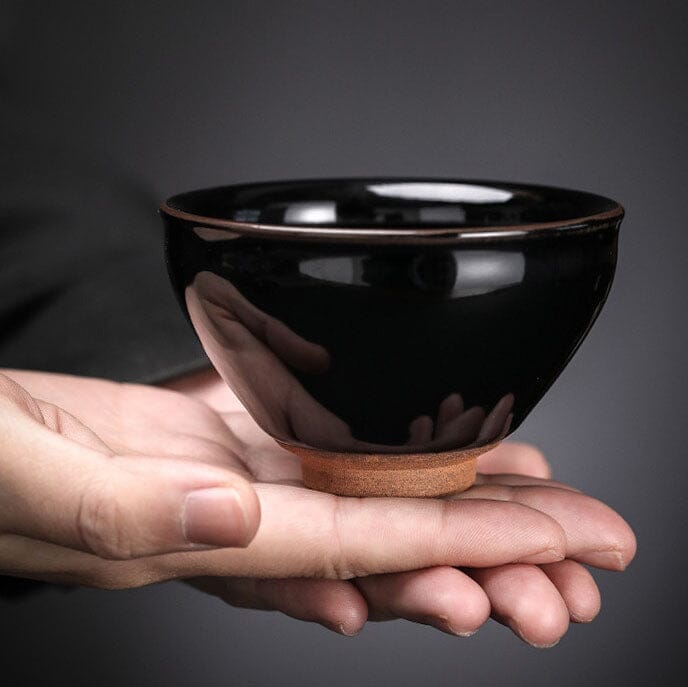
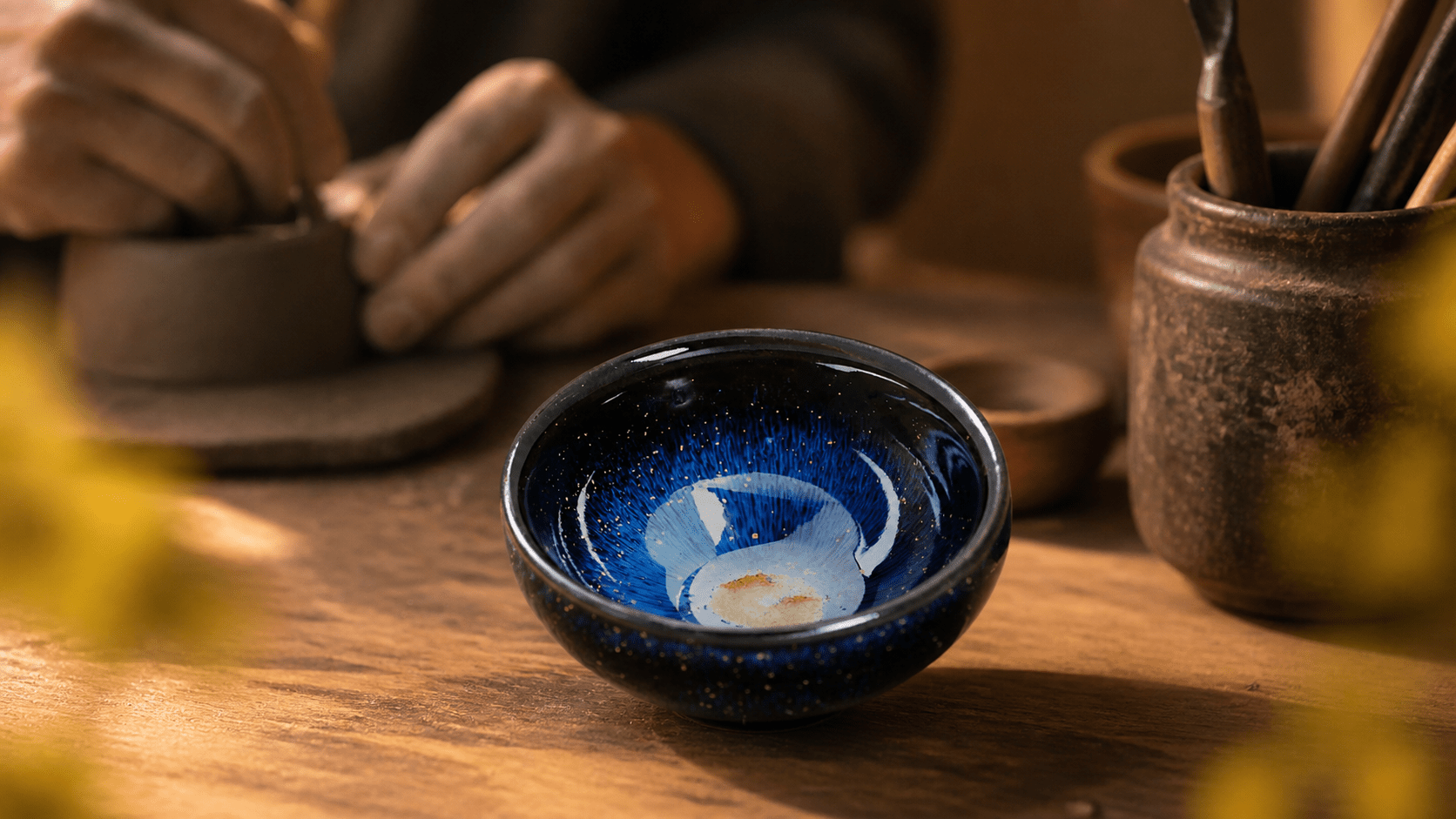
Zoals de naam al doet vermoeden, verwijst "gan kou" naar de droge glazuurlaag op de rand van de beker. Jianzhan-bekers worden gemaakt met behulp van een dikke glazuurlaag die ondersteboven wordt gebakken, zodat de glazuurlaag reageert op de zwaartekracht en naar beneden stroomt. Hierdoor stroomt de glazuurlaag op de rand van de beker naar beneden en wordt dunner, waardoor deze sneller uitdroogt en verbrandt tijdens het bakken.
blootgestelde band
Door de gebruikte baktechniek is de bodem van de beker, als deze volledig geglazuurd is, gevoelig voor vastplakken, wat "aan de bodem vastplakken" wordt genoemd. De beker is dus slechts gedeeltelijk geglazuurd, zonder glazuur aan de onderkant, wat "aan de band blootleggen" wordt genoemd.
glazuurdruppels
Wanneer glazuur naar beneden stroomt, vormt het soms kleine glazuurdruppels langs de rand, die "glazuurdruppels" of "glazuurdruppels" worden genoemd. Ze worden ook wel "tranen" genoemd vanwege hun vorm. Dit is een verslag van het bakproces van de Jianzhan, dat dynamische herinneringen achterlaat aan tranen die de test van 1300 graden Celsius hebben ondergaan. Het geeft de beker een unieke charme.
De vorming van glazuurdruppels en blootliggende banden wordt door de meeste mensen algemeen geaccepteerd, maar een droge mond is niet gemakkelijk te begrijpen en te beoordelen. Veel mensen denken ten onrechte dat een droge mond een defect is.
Voor Jianzhan is een droge mond heel gebruikelijk en onvermijdelijk. Het is daarom niet nodig om een droge mond helemaal te vermijden. Bovendien varieert de mate van droogheid ook. Bij de aankoop kunt u kiezen voor cups met een lichtere droogheidsgraad.
Sommige droge monden zijn ernstig en kunnen leiden tot onvolledige vitrificatie van grote delen van het glas, wat de algehele kwaliteit van het glazuuroppervlak aantast en de kwaliteit van het glas aanzienlijk vermindert. Als de droogheid echter mild is, heeft dit geen enkele invloed op het gebruik van het glas.
De beoordeling van een Jianzhan moet niet alleen gebaseerd zijn op de droogheid van de mond, maar ook op uitgebreidere factoren zoals het glazuurpatroon, de mate van vitrificatie, de grootte en vorm van de cup, en of deze vervormd is. Houd bij het kiezen van een Jianzhan rekening met bovenstaande factoren en uw eigen behoeften om te bepalen of u een specifieke cup wilt kopen.
Quick answers for Tenmoku teaware shoppers
Use this guide to connect the article topic with practical buying decisions: what Jianzhan Tenmoku teaware is, who it suits, how to choose a piece, and how to care for it after purchase.
How to use this guide before buying
Read the article first for the main explanation, then compare the product photos, glaze variation, form, seller clarity, return policy, and whether the piece fits daily tea, display, collecting, or gifting.
Common buying mistakes to avoid
Avoid choosing only by dramatic claims, copied photos, unusually low prices, or vague master language. A better decision uses visible product details, clear use case, realistic care needs, and trustworthy shop policies.
Recommended next step
After reading, compare a few real products side by side by size, glaze family, rim shape, capacity, price, and gift suitability instead of relying on one photo or one keyword.
What is Jianzhan Tenmoku teaware?
Jianzhan Tenmoku teaware is ceramic tea ware known for dark mineral-glaze effects and natural kiln variation. Common forms include tea cups, bowls, teapots, tea sets, and matcha bowls.
Who is it best for?
It is best for tea drinkers, ceramic collectors, and gift shoppers who value functional objects with visible handmade character. It is not ideal if you need every piece to look exactly identical.
How do I care for it?
Hand wash with warm water, avoid abrasive cleaners, and dry fully before storage. Gentle daily use helps preserve the surface and keeps the glaze easy to inspect over time.
How do I choose the right Tenmoku piece?
Choose by the main use first: daily tea, matcha, Gongfu brewing, display, or gifting. Then compare capacity, rim shape, glaze family, photos, and whether natural variation is acceptable for your needs.
Is Jianzhan Tenmoku teaware good as a gift?
Yes. It works well for tea lovers, ceramic collectors, birthdays, holidays, and housewarming gifts because it is both usable and visually distinctive. For gifts, choose an easy-to-use form and a glaze style with clear photos.
Related products and categories
Compare the guide above with real Tenmokus categories and representative pieces. Start with the use case, then compare glaze style, form, price, and whether the piece is mainly for daily tea, display, collecting, or gifting.
Compare handmade Jianzhan Tenmoku tea cups by glaze style, cup size, hand feel, and gift intent. Check each product page for current photos, capacity, availability, care details, shipping, and return information.
Why a Tenmoku Tea Bowl Is Worth the Price for Tea Lovers A tenmoku tea bowl can cost more than an everyday cup because it is a fired work of handmade ceramic art, not a factory-made drinking vessel. For someone...
A tenmoku tea bowl brings color, texture, and a slower rhythm to a gongfu tea session.The Tenmoku Tea Bowl Story: A More Meaningful Gongfu Tea Ritual A tenmoku tea bowl is a dark-glazed tea vessel whose character comes from clay,...
Tenmoku Tea Bowl Authenticity: How to Buy with Confidence A real tenmoku tea bowl is best recognized through its material, glaze behavior, firing marks, and clear origin story—not one flashy rainbow pattern. If you want a handmade ceramic cup for...




Deel:
Kan deze theekop echt worden aangetrokken door een magneet ?
Inleiding tot de vormen en maten van Jianzhan ?