

Da Hong Pao, as the iconic variety of Wuyi Rock Tea, has become a classic representative of oolong tea with its unique "rock rhyme", mellow taste, and profound cultural heritage. Mastering the brewing techniques of Da Hong Pao can not only fully release its flavor charm but also deeply appreciate the unique artistic conception of "rock bones and flower fragrance" of rock tea. This article will systematically explain the variety characteristics, brewing steps, tasting points, and cultural connotations of Da Hong Pao, helping you comprehensively master the brewing art of this legendary oolong tea from basic operation to in-depth tasting.
1. Variety Characteristics of Da Hong Pao: Unique Genes of the King of Rock Tea
Morphological characteristics: Dry tea is in the form of strips, with dark brown or brownish-green color, tight and plump strips, forming a sharp contrast with oolong teas such as Tieguanyin which are hemispherical (Tieguanyin is kneaded into balls, while Da Hong Pao retains the strip shape, which is more conducive to stretching in the gaiwan);
Fermentation degree: It is a semi-fermented tea (fermentation degree is about 20%-30%), combining the fragrance of green tea and the mellowness of black tea, forming the typical leaf bottom characteristic of "green leaves with red edges";
Core flavor: With "rock rhyme" as the soul, that is, the compound flavor of rock mineral feeling and flower and fruit fragrance contained in the tea soup, which is closely related to its growth in the rock crevices of the Danxia landform in Wuyi Mountain.
(2) Core Differences from Other Oolong Teas
2. Brewing Steps of Da Hong Pao: Double Devotion of Technique and Intention
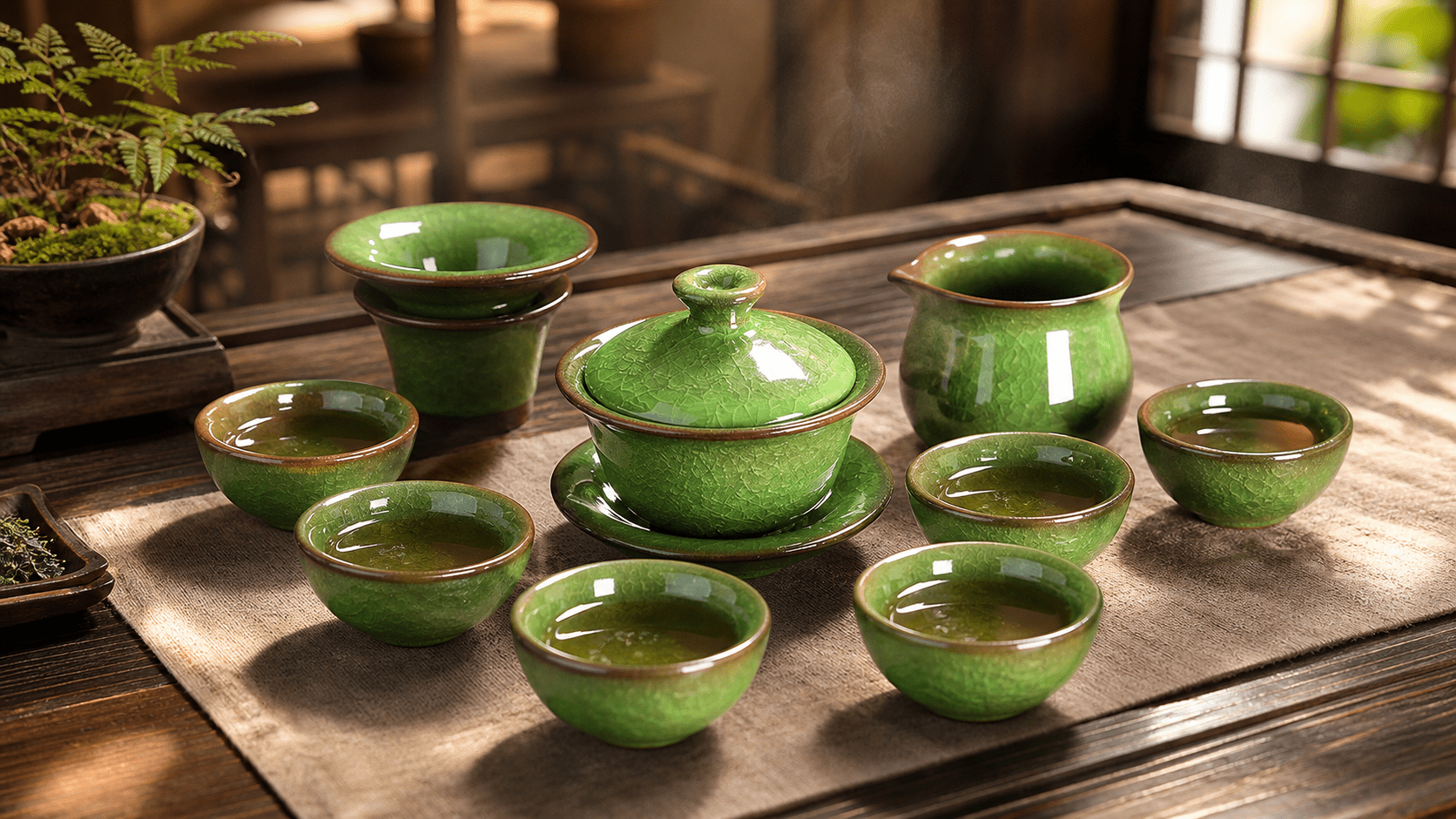
Utensil selection: Gaiwan (100-120ml is appropriate) is preferred because of its large opening, which is convenient for the strip-shaped Da Hong Pao to fully stretch; the glass or porcelain material of the gaiwan conducts heat evenly and can accurately control the temperature;
Operation purpose: Rinse the inner and outer walls of the gaiwan and the tasting cup evenly with boiling water. On the one hand, increase the temperature of the utensils to avoid the subsequent hot water from cooling due to heat absorption by cold utensils, which affects the stretching of tea leaves and flavor release; on the other hand, clean the utensils through high temperature to remove peculiar smell and impurities;
Subsequent utilization: The hot water after warming the cup can be directly used to scald the tasting cup, realizing the efficient use of water resources and maintaining the temperature consistency of the whole set of utensils.
Water injection amount: Put 5-7 grams of dry tea into the gaiwan (about 1/5 of the gaiwan's capacity), and inject boiling water until it just covers the surface of the tea leaves. The amount of water should not be too much;
Time control: Shake the gaiwan quickly to let the tea leaves absorb water evenly, and pour out the soup immediately within 5-10 seconds (this soup is not for drinking), so as to avoid excessive soak leading to the early precipitation of bitter substances;
Mechanism of action: Dry tea absorbs water and expands through short-term infiltration, and the buds and leaves initially stretch, just like "awakening the sleeping tea leaves", laying the foundation for the flavor release of the subsequent formal brewing;
Temperature maintenance: The awakened tea water after pouring out can rinse the outer wall of the gaiwan again to maintain the temperature of the utensils and form a "heat preservation cycle".
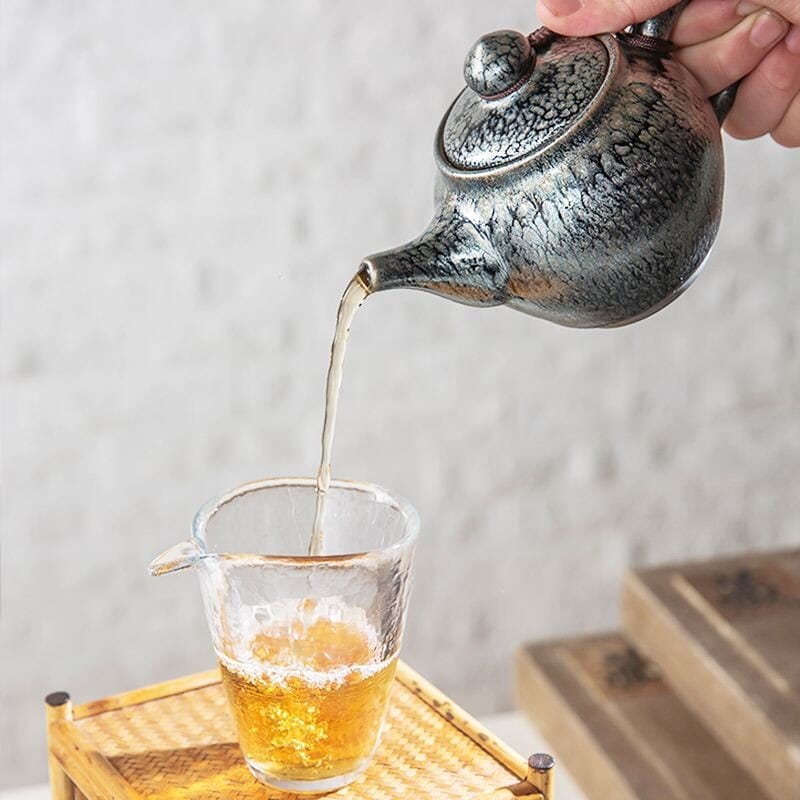
Water injection skill: Lift the kettle and slowly pour water around the inner wall of the gaiwan, avoiding direct flushing of the tea leaves with water flow (to prevent tea leaves from rolling and causing crumbs to precipitate, affecting the clarity of the tea soup). The water should be poured to 4/5 of the gaiwan's capacity;
Temperature control: Use hot water that has just boiled and stood for 10 seconds (about 95-100℃). High temperature can fully stimulate the rock rhyme and flower fragrance of Da Hong Pao, but it is necessary to inject after the boiling water is "calm" (with fewer bubbles) to avoid excessive agitation of the water flow bringing in too much air;
Utensil use: When holding the gaiwan, gently pinch the edge of the gaiwan with the thumb and middle finger (this part dissipates heat quickly to avoid scalding), and gently place the index finger on the lid knob with a steady and powerful action;
Soup serving time: The first infusion takes about 15-20 seconds to serve, the second infusion is extended to 20-25 seconds, and each subsequent infusion is increased by 5-10 seconds. The concentration of the tea soup is balanced through time control.
Observing soup color: After pouring the tea soup into the fairness cup, observe its color. High-quality Da Hong Pao has a orange-yellow or amber color, oily and transparent, and the cup wall will form a unique aperture effect, clear and without turbidity;
Smelling aroma: Pick up the fairness cup and sniff gently to feel the compound aroma of "rock rhyme" — based on the fresh fragrance of rock valleys, integrated with orchid fragrance, honey fragrance or fruit fragrance, with rich and lasting layers;
Tasting method: Savor in three sips — the first sip is gently held in the mouth to feel the smoothness when entering; the second sip makes the tea soup roll in the mouth through slight inhalation, allowing the taste to fully contact the tip of the tongue (sweet), the tongue surface (mellow), and the bottom of the tongue (aftertaste); the third sip is slowly swallowed to experience the lingering rhyme of rock rhyme in the throat;
Taste characteristics: High-quality Da Hong Pao has a mellow and full entrance, with a clear sense of rock minerals emerging in the middle section, turning to flower and fruit fragrance in the tail section. After drinking, the throat is sweet and produces saliva, with a long rock rhyme.

3. Cultural Connotation of Da Hong Pao: Precipitation of Legends and History
Status of mother trees: There are only 6 mother trees of Da Hong Pao, growing on the rock wall of Jiulongke in Tianxin Rock, Wuyi Mountain. Due to their scarcity and cultural value, they have been completely banned from picking since 2006 and have become protected "living cultural relics";
Market products: Currently, all Da Hong Pao sold in the market are artificially cultivated varieties with the mother tree as the provenance, propagated through cutting, grafting and other technologies. Although they are not native mother tree teas, they also inherit the excellent quality of Wuyi Rock Tea;
Tasting mentality: We should rationally view the difference between commercial Da Hong Pao and mother trees, and appreciate the stable flavor of artificially cultivated varieties in standardized production instead of blindly pursuing the "mother tree concept".
(3) Confirmation of Three Stages of Tea Development
Medicinal origin: The legend of the scholar being cured by tea confirms the record of "Shennong tasted a hundred herbs and got tea to cure them" ("tea" refers to "tea" in ancient times), indicating that tea was first discovered by humans because of its medicinal value (detoxification, heatstroke relief, etc.);
Edible transition: In early times, humans used tea as food for cooking, such as "tea porridge";
Beverage finalization: With the development of technology, tea has gradually evolved into a beverage mainly for brewing. The complex production process of Da Hong Pao (withering, green making, fixing, rolling, baking, etc.) is the advanced form of tea as a beverage.

4. Knowledge Summary: Key Points of Da Hong Pao Brewing
Brewing Da Hong Pao is a double practice of "technology and culture". From the selection of gaiwan to the control of water temperature, from the awakening of moistening infusion to the perception of rock rhyme during tasting, every link needs to be experienced with care. When you watch the orange-yellow and transparent tea soup flowing in the cup, smell the compound aroma of rock valley flower fragrance, and feel the mellow entrance and sweet throat rhyme, you will understand why Da Hong Pao can become the king of Wuyi Rock Tea. It is not only a cup of tea but also a gift from the Danxia landform of Wuyi Mountain and the precipitation of thousands of years of tea culture. Through brewing and tasting again and again, you will gradually understand the true meaning of "rock bones and flower fragrance", allowing tea and soul to complete a deep dialogue in high temperature.


分享:
Biluochun and Huangshan Maofeng (Part 2): Comparison of Advanced Techniques and Methods
Brewing Oolong Tea – Tieguanyin (Part I): A Basic Guide from Awakening Tea Properties to Tasting Etiquette