


The Soul of Clay: A Tenmoku Tea Bowl’s Journey from Ancient Kiln to Modern Cup
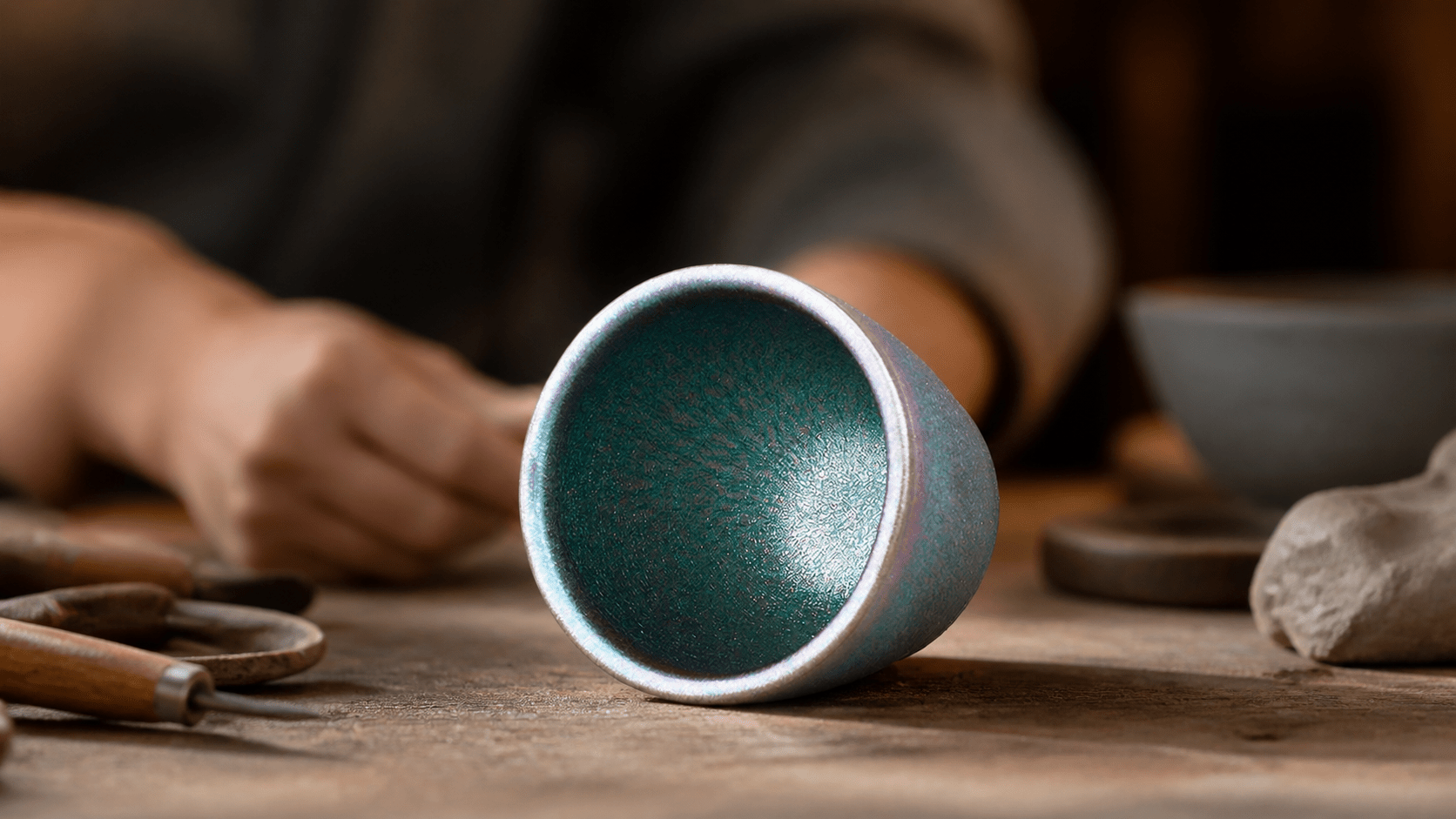
When I first visited the Jianyang district in Fujian, I was searching for more than just a ceramic vessel. I wanted to hold a piece of Song dynasty tea culture—a handmade tenmoku tea cup with an iron-rich glaze that could transform an ordinary tea session into a meditation. As a ceramic historian, I knew the Jianzhan Tenmoku ceramic of Jian zhan history was legendary, but nothing prepared me for the moment Master Lin placed a freshly fired oil spot tenmoku cup into my hands. Its surface was a galaxy of silver crystals against a deep obsidian body. That moment ignited my decade-long journey to document and share the Fujian tea bowl tradition, an art form nearly lost to time.

What Is the Jianzhan History Behind the Tenmoku Tea Bowl?
To truly appreciate a tenmoku tea bowl, you have to step back a thousand years into the tea-drinking culture of China’s Song Dynasty (960–1279). During this golden age of tea, connoisseurs didn’t steep leaves the way we do today—they whisked powdered tea into a frothy, jade-colored foam. This was the original matcha. The froth’s beauty was judged by how white and long-lasting it appeared, and the best canvas for that competition was a deep black bowl. Thus, the Jianzhan Tenmoku ceramic of Jian kilns in Fujian province became the imperial gold standard.
This is where jian zhan history and the Fujian tea bowl tradition intertwine. Artisans used locally mined clay rich in iron and coated it with a similarly iron-heavy glaze. When fired in dragon kilns at temperatures exceeding 1300°C, the molten glaze would undergo “kiln transformation” (yao bian), spontaneously crystallizing into patterns that reminded poets of hare’s fur, oil spots, and partridge feathers. The bowls became so revered that Japanese monks studying in China brought them back home, naming them “tenmoku” after Mount Tianmu, where they trained. This is the seed of Song dynasty tea culture surviving into modern times.
Who Is the Tenmoku Artisan Keeping This Handmade Ceramic Tradition Alive?
Walking into Master Lin Zhihao’s workshop, you first notice the smell of damp clay and charcoal. He’s one of the few remaining tenmoku artisans who still digs his own clay from the hills that fed the original Jian kilns. For Lin, each handmade ceramic piece isn’t just a product—it’s a dialogue with his ancestors. “My grandfather used to find shards in the fields,” he told me, holding up an ancient oil spot fragment. “He said the glaze was a frozen sky.”
The path to becoming a tenmoku artisan is brutal. It can take five years just to understand the kiln’s mood. The clay body, a gritty, iron-laden stoneware, warps easily. The iron-rich glaze must be applied thick enough to flow during firing but not so thick that it runs off the bowl, fusing it to the kiln shelf. Out of every ten bowls Master Lin fires, maybe one emerges with the perfect galaxy of oil spots. The rest are “flawed,” though in my eyes, even the imperfect ones carry the fingerprint of fire. This is the reality of handmade tenmoku tea cup production—a dance between control and surrender.
How Does the Iron-Rich Glaze Create Stunning Patterns Like Oil Spot and Hare’s Fur?
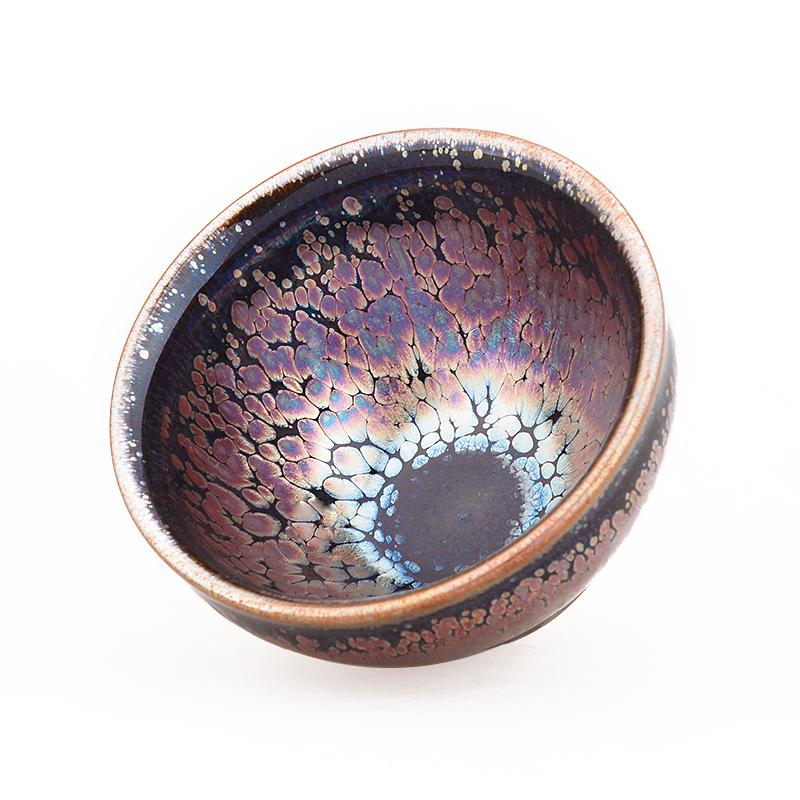
The magic lies in the chemistry of iron. The iron-rich glaze on a Jianzhan Tenmoku ceramic Jianzhan bowl contains 5–10% iron oxide. As the kiln heats up, the glaze melts and the iron dissolves. During cooling, the iron can “supersaturate” and crystallize, much like sugar crystals forming in cooling syrup. If the kiln atmosphere is carefully oxidized and then reduced, the iron crystallizes as magnetite (Fe₃O₄). In the case of the coveted oil spot tenmoku cup, bubbles rise to the surface and burst, leaving tiny rings where iron crystals gather. The visual effect is a scatter of silvery droplets on a deep black ground, as if the night sky has been fired into porcelain.
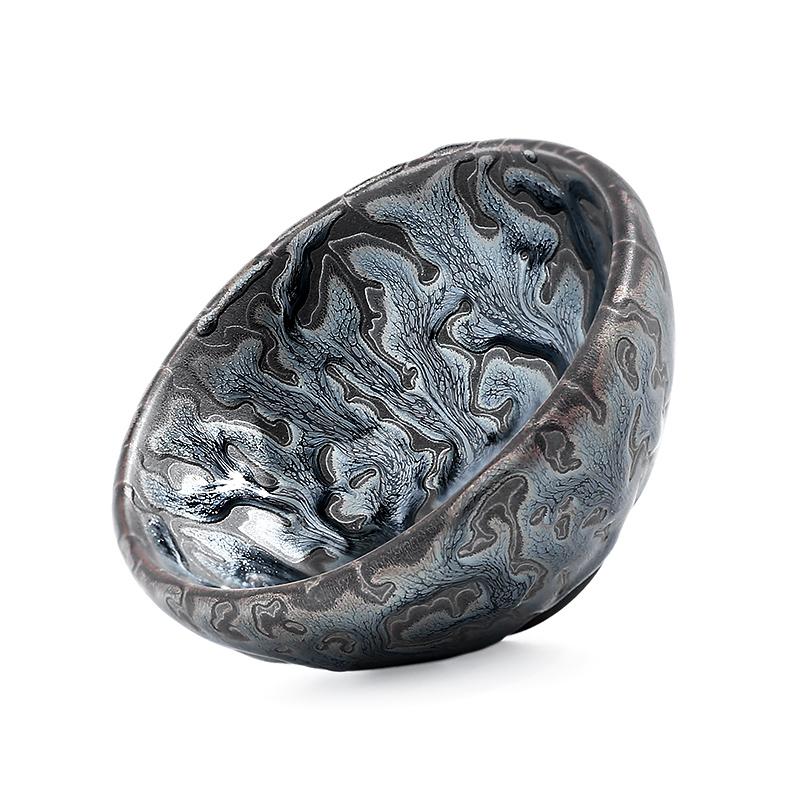
For hare’s fur patterns, the glaze runs downward in fine streaks, resembling the soft fur of a hare. These effects are so variable that no two bowls are identical. Below is a quick comparison of the most sought-after glaze types you’ll find when you Browse our hare's fur Jianzhan series or Discover our collection of oil spot tenmoku cups.
| Glaze Type | Appearance | Symbolism | Difficulty |
|---|---|---|---|
| Oil Spot (Yuteki) | Silver or rainbow dots on black | Stars, cosmos, perfection | Extremely High |
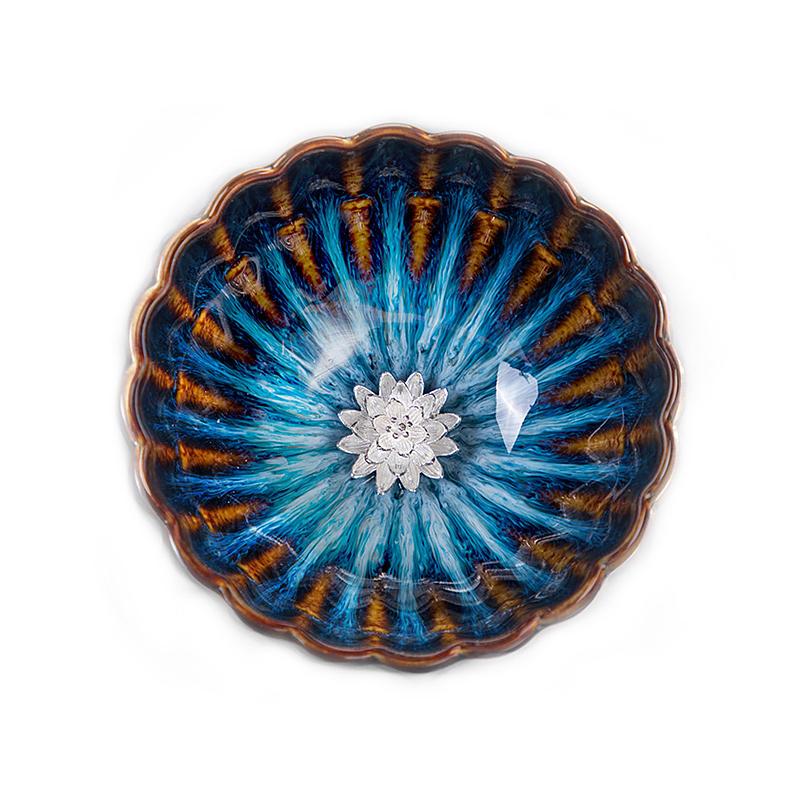
| Hare’s Fur (Nogime) | Velvety brown or gold streaks | Warmth, swiftness, earth | High |
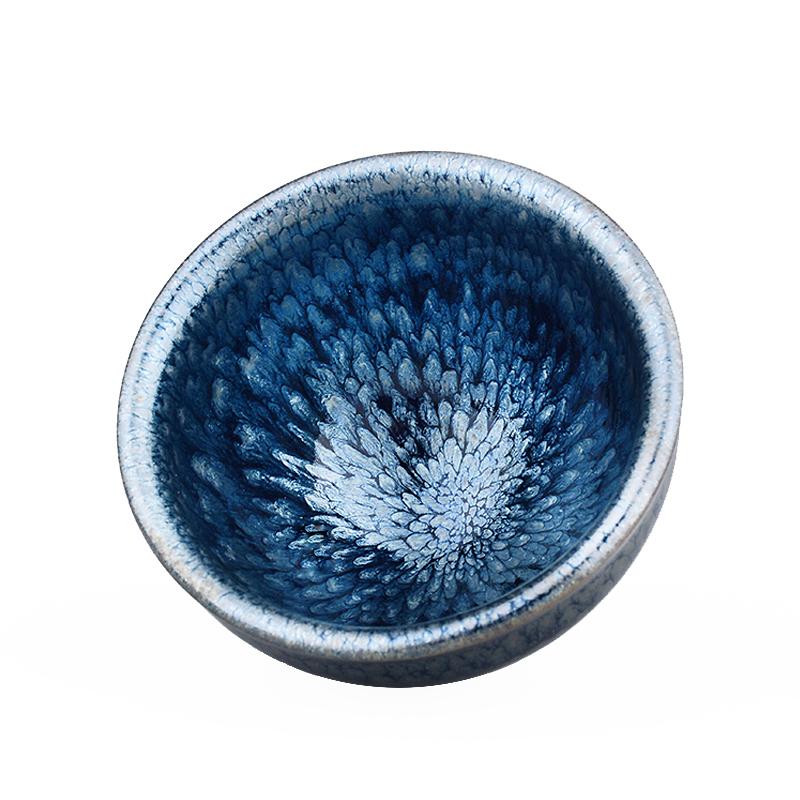
| Partridge Feather | Mottled spots like bird plumage | Abundance, nature | High |
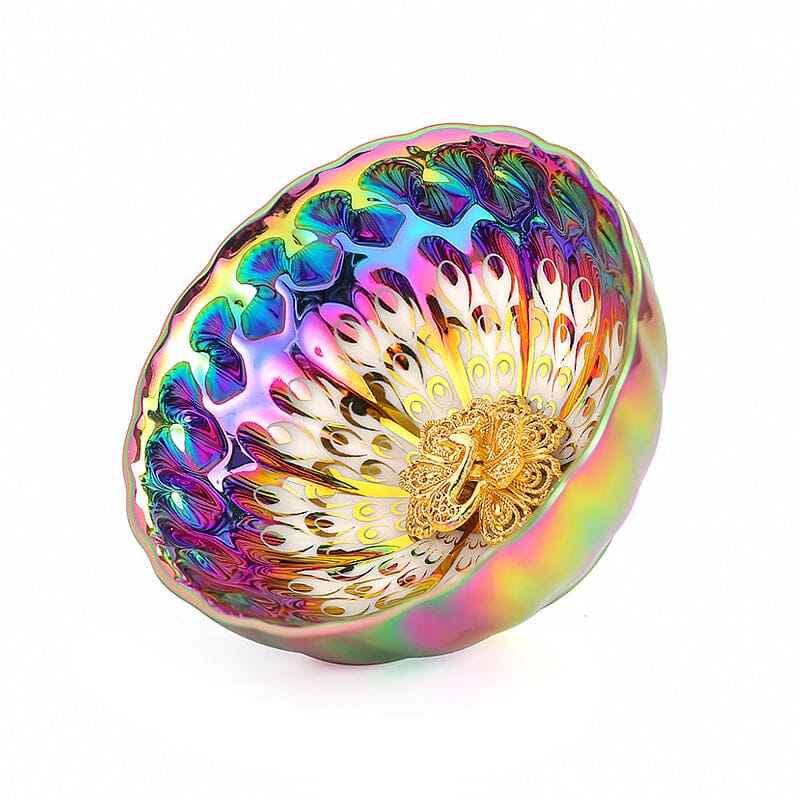
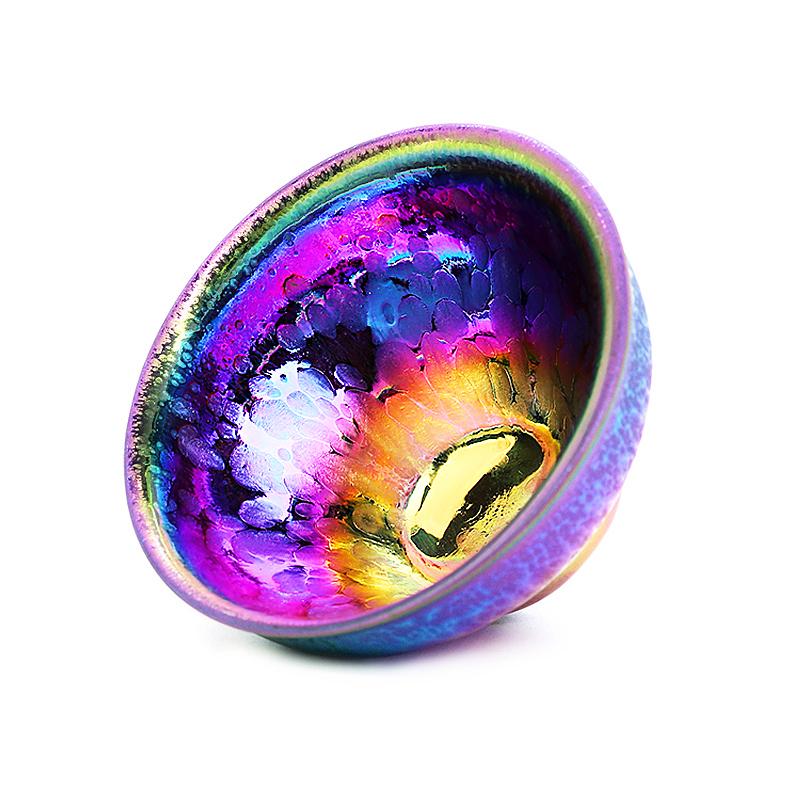
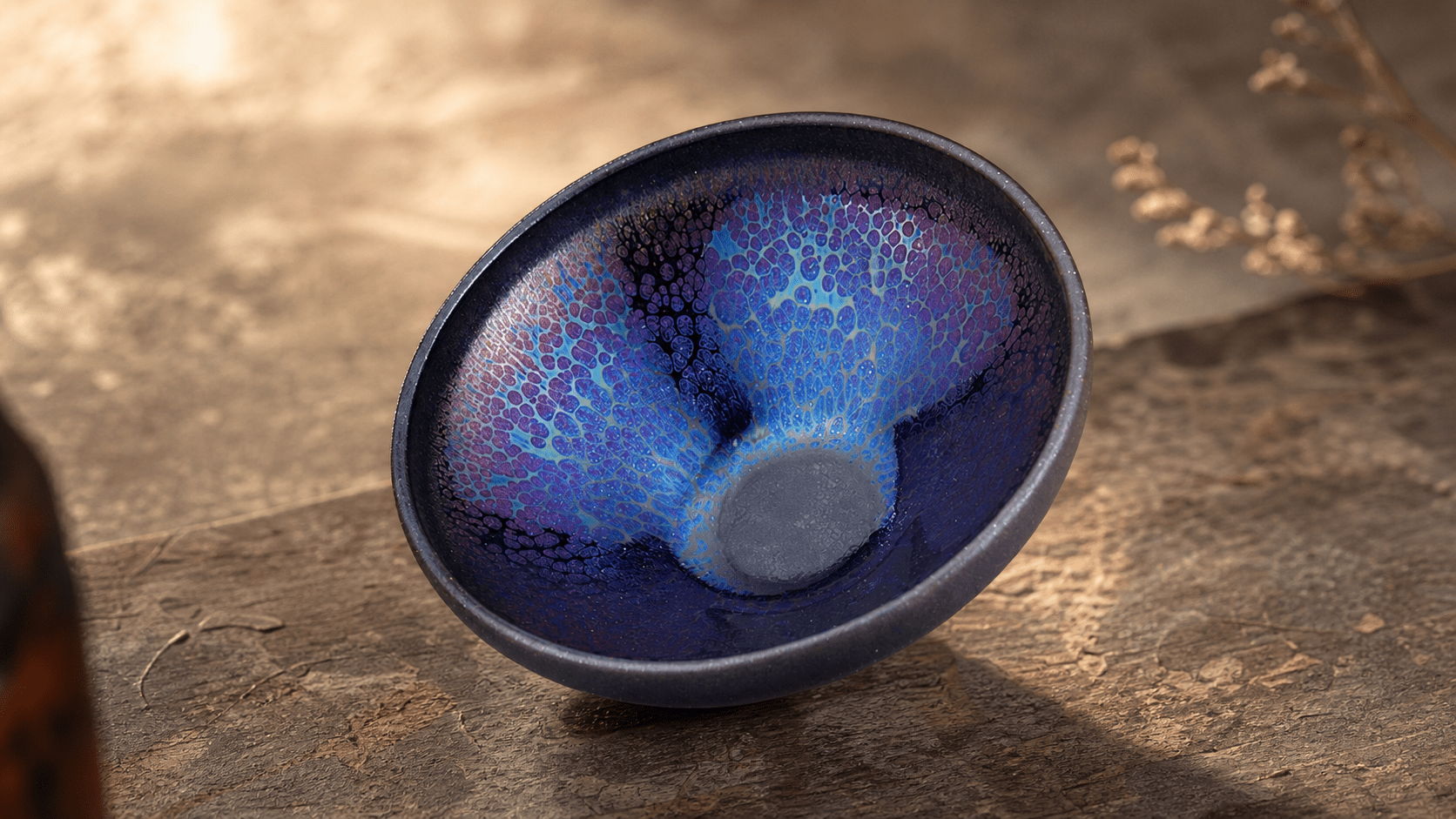
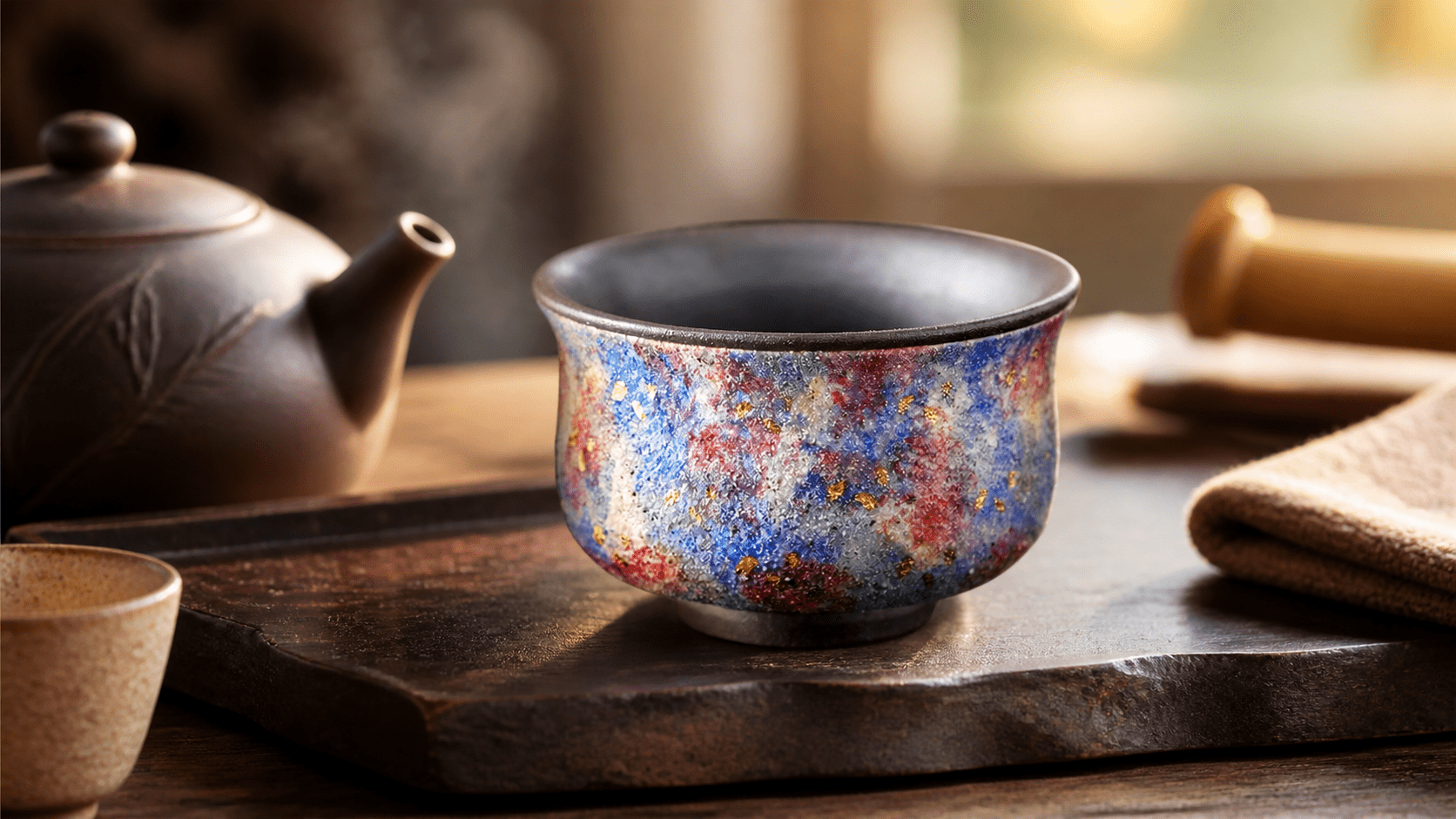
| Yohen (Luster) | Iridescent blue, purple washes | Mystery, treasure | Rarest |
Why Did Japan Adopt the Tenmoku Tea Bowl and How Did It Become a Matcha Bowl?
When you hear “tenmoku,” you might think of Japanese tenmoku for sale in antique shops or the bowl’s central role in chanoyu, the Japanese tea ceremony. This is because Japan became the guardian of the tenmoku tradition after its popularity waned in post-Song China. Monks like Eisai brought not only powdered tea but also the black bowls to Japan, where they became national treasures. The matcha bowl used in formal ceremonies today is a direct descendant of the tenmoku tea bowl, often elevated on a lacquered stand called a dai.
In Japan, the appreciation of tenmoku shifted from a competition tool to a spiritual object. The bowl’s irregularities—kiln marks, uneven glaze, even the occasional crack—became expressions of wabi-sabi, the beauty of impermanence. Today, it’s common to see japanese tenmoku for sale ranging from affordable studio works to museum-grade pieces. Yet the soul of the bowl remains Chinese, born from the iron-rich mountains of Fujian. When you hold a handmade tenmoku tea cup, you’re holding a thousand years of cross-cultural conversation.
Is a Handmade Tenmoku Tea Cup a Good Investment or Gift for Tea Lovers?
Every time I give a handmade tenmoku tea cup as a gift, the reaction is the same: the person turns the bowl in their hands, mesmerized by the shifting light on the glaze. These bowls are more than functional drinkware; they’re an heirloom. For the serious tea drinker, a genuine oil spot tenmoku cup enhances the flavor of tea, softens water, and keeps the brew hot longer because of its thick iron body. But beyond the physical, it adds ritual—there’s no casual slurping, only reverence.
Buying an authentic piece means looking for the signs of an artisan’s hand: slight asymmetry, a dimple where a bubble burst, a glaze that feels like glass but shows the depth of water. Mass-produced replicas can’t replicate the live kiln transformation. When I was in Fujian, I watched Master Lin knock a “perfect” bowl off his shelf. It had been made to look exactly like an antique oil spot, but it lacked the soul. “This is dead,” he said. That’s the difference. For those wanting the real thing, I always recommend exploring works from verified tenmoku artisans, not factory outputs.
Frequently Asked Questions About Tenmoku Tea Bowls
What exactly is a tenmoku tea bowl and how is it different from a regular ceramic cup?
A tenmoku tea bowl is a specific type of black-glazed stoneware originally from the Jian kilns of Fujian, China. It is characterized by its high iron content, which creates unique crystalline patterns during firing. Unlike regular ceramic cups, tenmoku bowls are thicker, heavier, and designed to highlight the color of whisked tea.
How old is the jian zhan history and where does the name come from?
Jianzhan (Jian ware) history dates back to the Song Dynasty, around the 10th century. The name “tenmoku” was given by Japanese monks who encountered these bowls at Mount Tianmu (Tianmu Shan) in China. They brought the style back to Japan, where the term became synonymous with black-glazed tea bowls used in the tea ceremony.
Can I use a tenmoku tea bowl for matcha as well as gongfu tea?
Absolutely. In fact, the tenmoku shape was originally designed for whisking powdered tea (matcha). Its wide opening and slightly flared lip make it perfect for gongfu tea brewing as well, as it cools the tea quickly and allows the aroma to bloom. One bowl, two traditions.
What makes oil spot tenmoku cups so highly prized?
Oil spot patterns require precise control of kiln temperature and atmosphere. The spots are formed when iron-rich bubbles rise and burst on the glaze surface, leaving silver or iridescent rings. Because the process is so difficult to replicate, a true oil spot cup is considered a minor miracle of ceramic art.
How do I know if a handmade tenmoku tea cup is authentic?
Look for organic imperfections: the foot of the bowl should show the raw, gritty clay, and the glaze should not be perfectly uniform. Genuine handmade tenmoku tea cups are individually fired and often have a maker’s stamp or chop. The sound when you tap it should be a clear, bell-like ring, indicating a hard, well-fired body.
Where can I buy a genuine oil spot tenmoku cup or hare’s fur bowl?
You can find both antique and contemporary pieces from reputable dealers or directly from Fujian-based artisan collectives. We offer a curated selection of oil spot and hare’s fur cups—each one is hand-selected and comes with its own story. Explore our full collection.
Who Should Buy a Handmade Tenmoku Tea Cup?
This is not a cup for quick coffee breaks. It’s for the person who understands that objects carry energy. Here’s who will cherish one:
- Gongfu tea practitioners — The thick walls retain heat, making it ideal for multiple short infusions.
- Matcha lovers — Whisking matcha in a traditional tenmoku bowl connects you to the tea’s Zen roots.
- Collectors of Asian art — Each bowl is a unique snapshot of fire and chemistry, never to be repeated.
- Gift givers for tea lovers — No tea enthusiast will be unimpressed by a gift that carries centuries of culture.
- Mindfulness seekers — The bowl’s weight and tactile presence ground you in the moment.
Conclusion: The Flame Continues
When I left Master Lin’s workshop, the sun was setting over the Fujian hills, casting a light not unlike the luster of a yohen tenmoku bowl. I carried three cups wrapped in cloth, each one a testament to a lineage that refused to die. The tenmoku tea bowl is not just a relic; it is a living craft, still shaped by hands that believe in beauty born from fire. Whether you’re a seasoned collector or a curious beginner, I invite you to hold that story in your own hands. Discover a bowl that speaks to you—and let every sip become a conversation with history.
Explore Our Collection
Ready to experience the world of tenmoku tea bowl? Browse our curated collection:
Disclaimer: This article is for informational purposes. Products and pricing subject to change.


分享:
How to Identify a Real Tenmoku Tea Bowl: 5 Signs of Authenticity
From Earth and Fire: The Artisan’s Journey Behind Every Handmade Tenmoku Tea Bowl – A Gift for Tea Lovers