

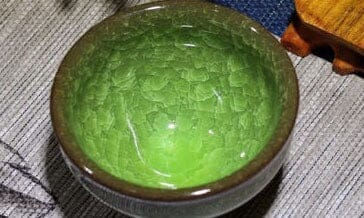
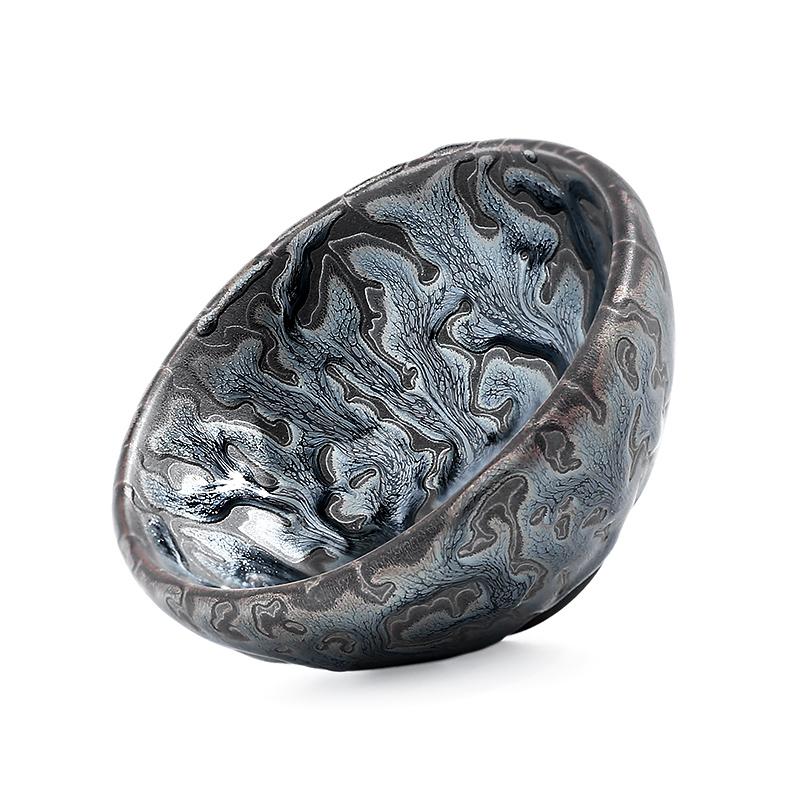
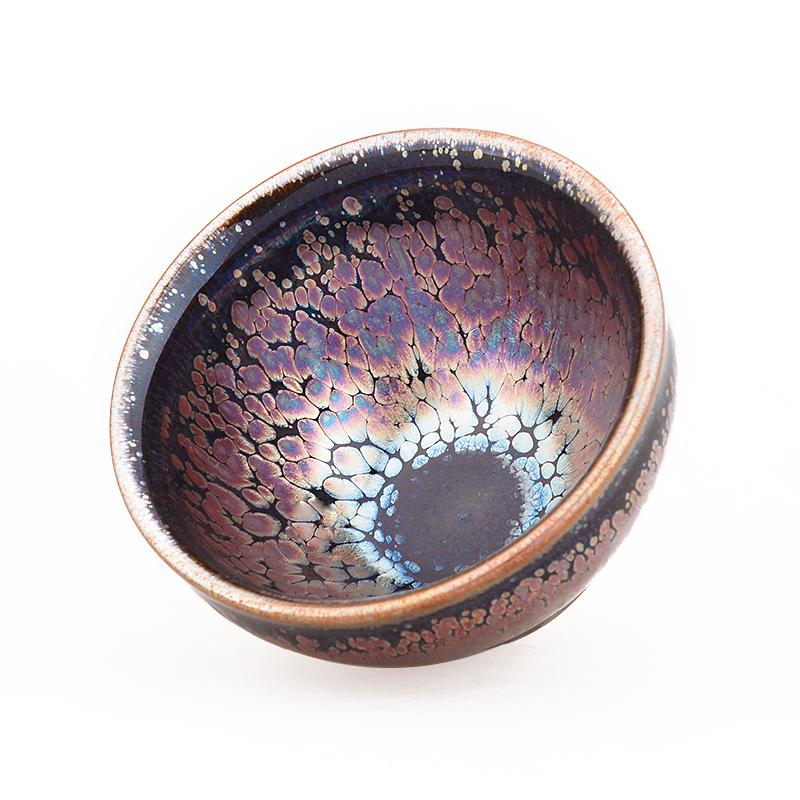
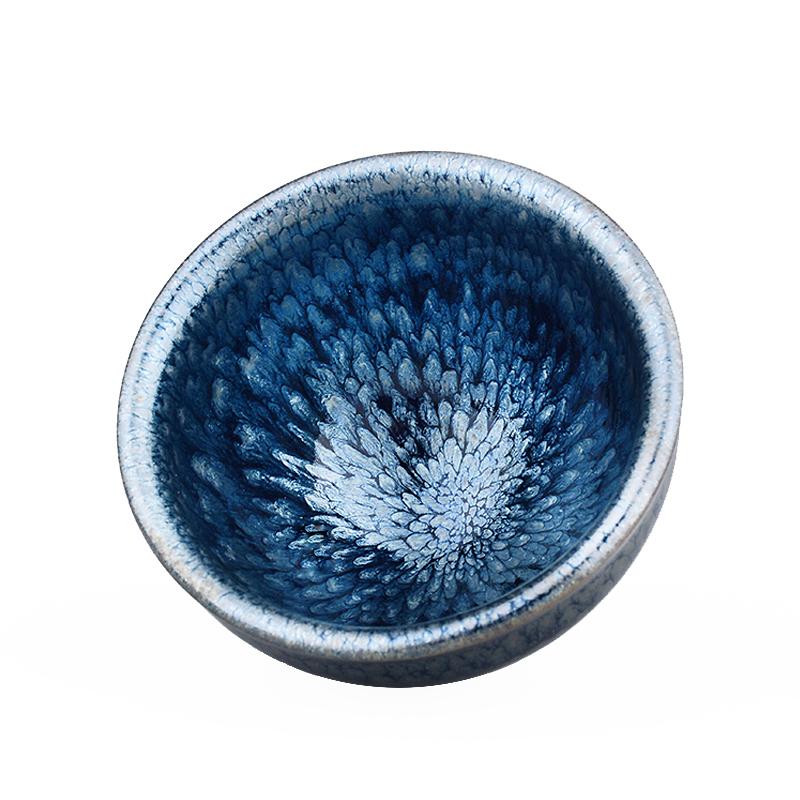
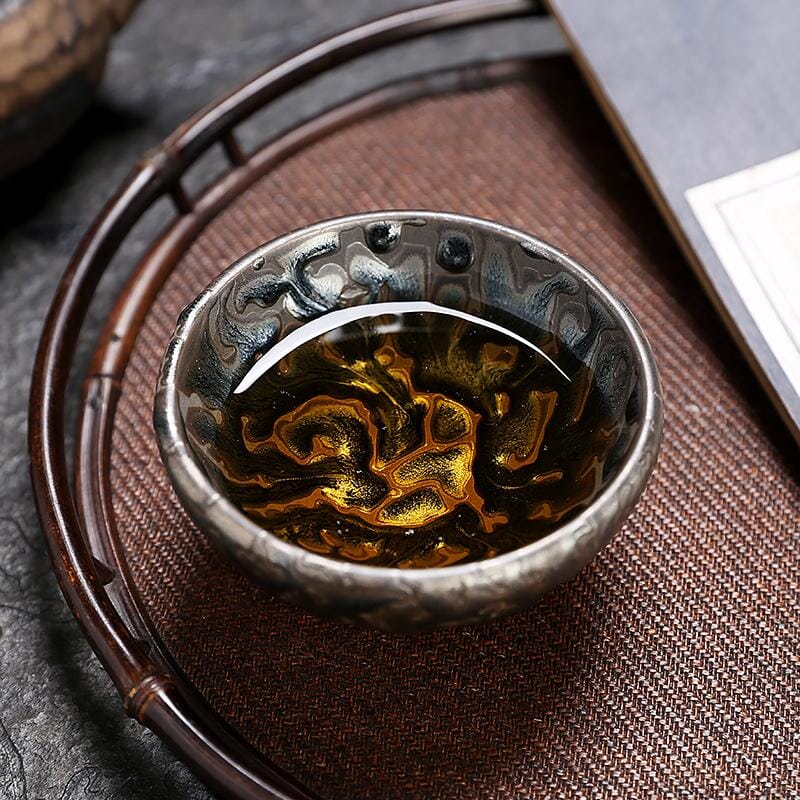
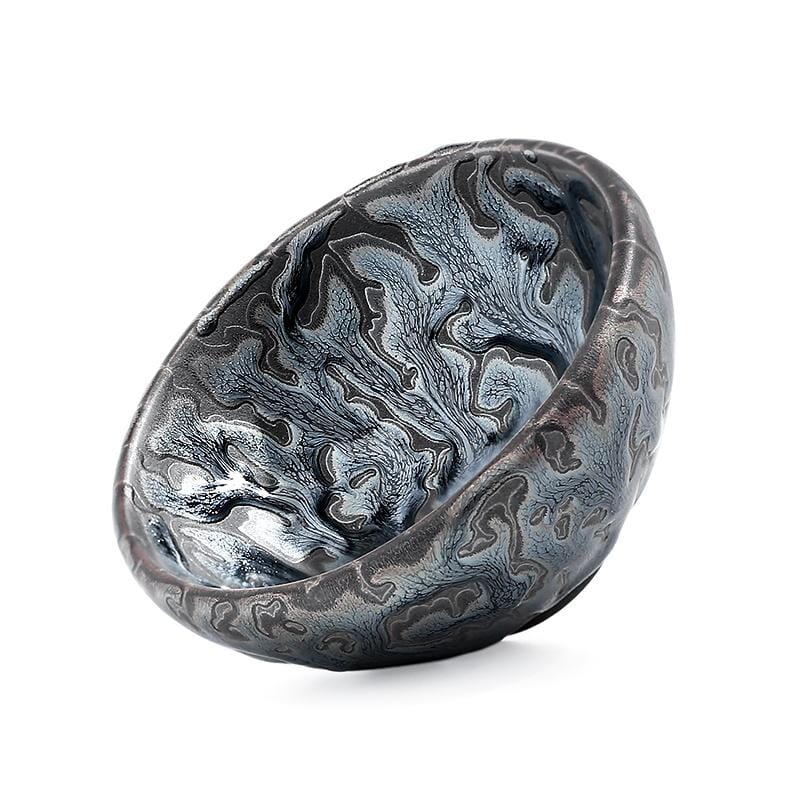
Tenmoku is produced in Jian Kiln, located in Jianyang District, Nanping City, Fujian Province, and is a Chinese national geographical indication product. Jian Kiln is a famous porcelain kiln in China's Song Dynasty known for firing black-glazed ceramics. Jian Kiln was established and fired in the late Tang and Five Dynasties periods, primarily firing celadon ceramics, with a small amount of black-glazed ceramics. The Song Dynasty was the heyday of Jian Kiln, with a large number of black-glazed tea bowls fired, along with some celadon and blue-white glazed ceramics. After thousands of years of precipitation and development, Tenmoku has been listed as a national intangible cultural heritage. It is a product of the wisdom and artistic spirit of Chinese civilization and is a true continuation of national culture and history. Recently, Tenmoku artist Chen Naiwen shared his views on Tenmoku art.

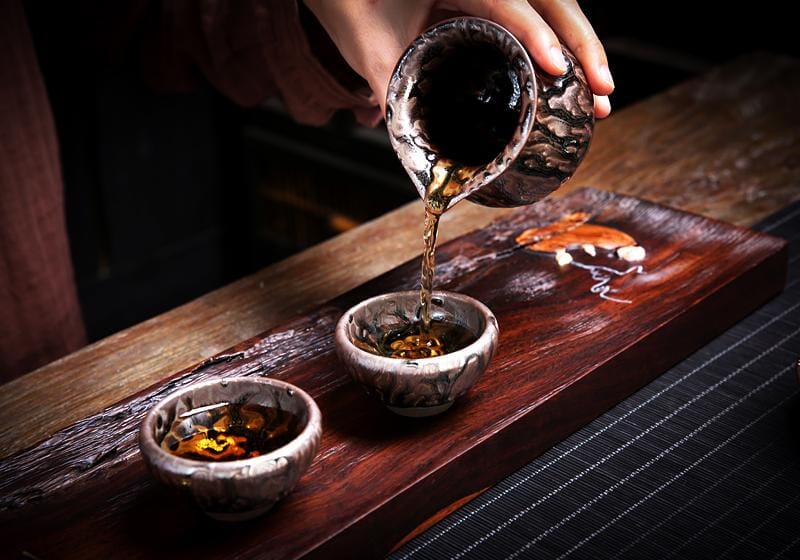
Chen Naiwen said that Tenmoku has a close connection with people's daily life, satisfying both their practical needs and aesthetic desires. In a sense, Tenmoku first serves its practical purpose and then its beauty. The aesthetic value of Tenmoku is mainly reflected and displayed through its practical use. For example, during the Song Dynasty, the way of drinking tea changed from "brewing" to "whipping", and the custom of tea competitions, known as "dou cha", emerged from the folk in northern Fujian and spread throughout the country. Dou cha, also known as "ming zhan" or "dian shi", is a competitive activity to determine the quality of tea. It is not only about determining the quality of tea, but also an artistic tea ceremony that pursues spiritual pleasure. It reflects the most positive and dynamic aspect of Chinese tea culture, that drinking tea is not only for leisure, but also for harmony and progress. In the process of advancing the art of dou cha to a higher level, the quality of tea utensils must also be constantly improved to meet the demand.
Chen Naiwen said that the art of Tenmoku is infused with the cultural spirit and aesthetic consciousness of the Chinese nation, with a distinctive aesthetic personality mainly reflected in its harmony, symbolism, flexibility, craftsmanship, and natural charm. Tenmoku always respects the practicality of people's lives and the material restrictions in its design and material selection, fully utilizing or revealing the inherent nature of the materials, making Tenmoku creations have a natural and elegant interest and sentiment. Song Dynasty literati praised Jian Kiln's "Zhe Gu Ban" and "Tu Hao" tea bowls in their poetry. For example, Cai Xiang wrote in "Tasting Tea": "The new purple bowl with rabbit hair, boiling clean spring water in crab eyes. Made from snow and frozen into clay, not yet dripping with dew from the clouds." Chen Jian Shu wrote in "Farewell to New Tea from Fujian": "The cloud-entwined characters on the Zhe Gu bowl, the snow-made Hongtu cup with rabbit hair inside." The design of tea utensils cannot be separated from the cultural needs of specific periods. The rise of Tenmoku in the Song Dynasty is closely related to the social and cultural context of that time. A book from that era records, "White tea color is suitable for black bowls. Those made by Jian Kiln are blue-black with patterns like rabbit hair. The clay is slightly thick and becomes hot and hard to cool for a long time, making it the most essential. Those made elsewhere may be thin or purple in color, but they are not as good."
Traditional culture does not necessarily mean conservatism. In the thousands of years of Chinese civilization, the realm of culture covers a wide range. It is through the immersion of culture that every aspect of language, technology, and daily life of the Chinese people has evolved. Chen Naiwen said that the things in traditional culture should not be lost, and he loves the career he is engaged in. He constantly improves his own value in creation. To achieve exquisite and perfect works, every aspect of the work must be done finely and appropriately. However, the attitude we should have towards our work and life does not need to be envious of so-called noble causes. As long as we start with small, mundane, and ordinary things and adhere to the spirit of craftsmanship, anyone can achieve the achievements of a craftsman. The so-called craftsman is essentially a continuation of the spirit of craftsmanship! This is what I have always insisted on, and in the future, I will continue to create better works and let more people recognize and value our traditional cultural works.
Chen Naiwen:
Intermediate Ceramic Artisan, Director of Fujian Ceramic Industry Association,
Executive Director of Nanping Arts and Crafts Association, Member of Tenmoku Association in Jianyang City, Technical Director of Qingfeng Tenmoku Kiln Ceramic Co., Ltd. in Jianyang District, Nanping City.
Achievements:
- "Persimmon Red Dripping Oil Tenmoku" won the Gold Award of the "National Art Cup" at the 6th China International Consumer Goods Expo, and "Lantern Tenmoku" won the Silver Award.
- "Yellow Dripping Butter Tenmoku" won the Gold Award of the "China Art Cup" at the 14th China Arts and Crafts and Classical Furniture, Collectibles Expo.
- "Oil Drip Incense Burner Tenmoku" won the Gold Award at the 10th Hefei International Cultural Expo and 2016 China Arts and Crafts Boutique Expo.
- "Yellow Dripping Tenmoku with Everted Lip" won the Silver Award, and "Oil Drip Large Lantern Tenmoku" won the Silver Award and was collected by the Nanping Museum at the Nanping First Arts and Crafts Master Outstanding Works Exhibition and Arts and Crafts Boutique Exhibition.
On May 1st, 2017, the "Zhe Gu Ban Yellow Dripping Tenmoku" won the Silver Award at the 9th Fujian Arts and Crafts Industry Boutique "Competition Cup" Competition.
On May 19th, 2017, the artwork "Silver Dripping Tenmoku" was collected by the Tokugawa Museum in Japan.


Share:
How to Clean Old Tenmoku or Jianzhan Safely
Three things you may be missing before becoming an expert in tea brewing