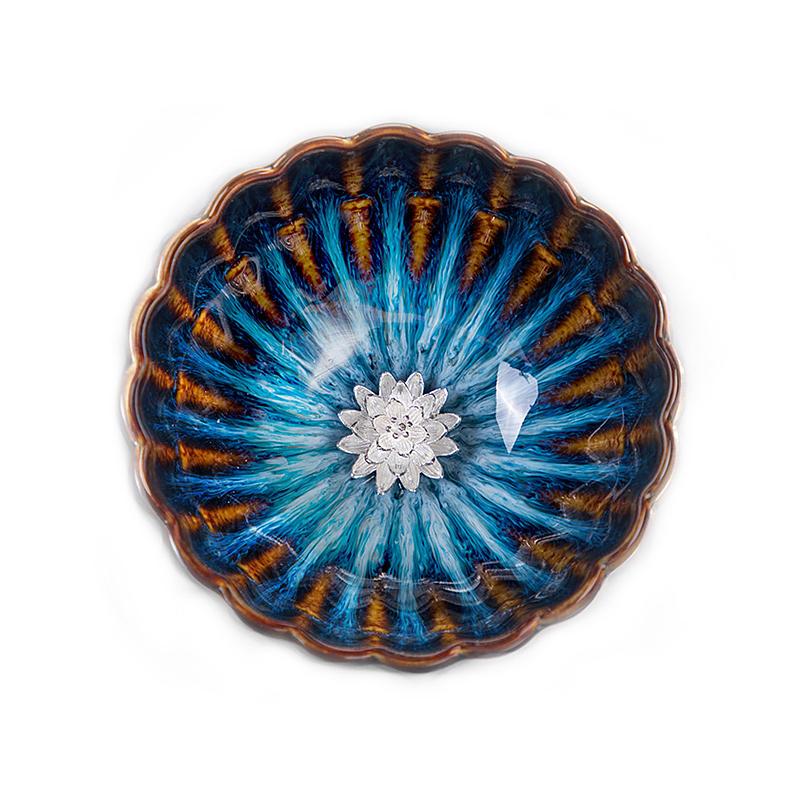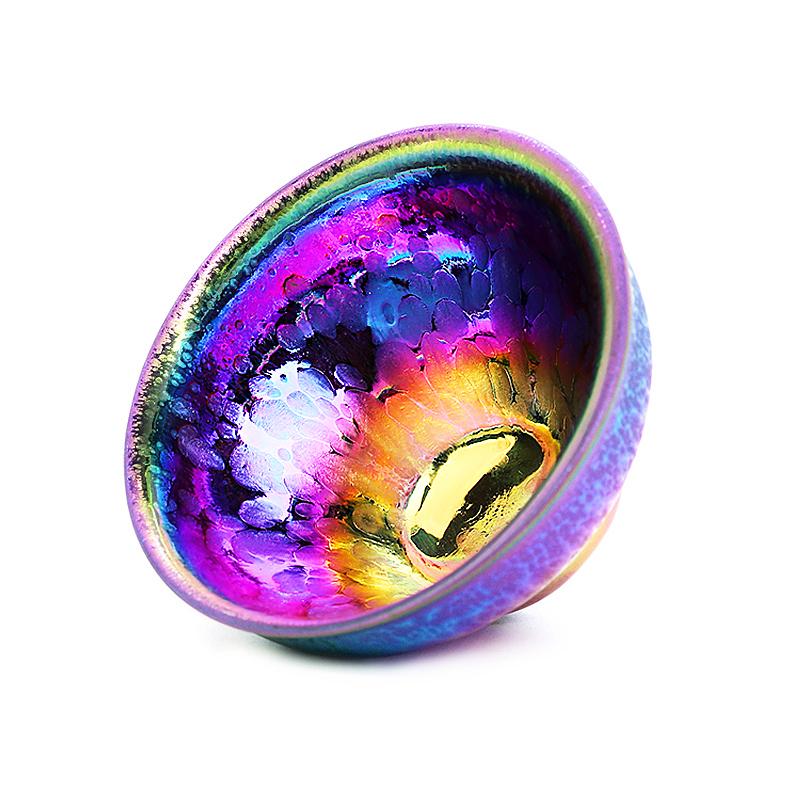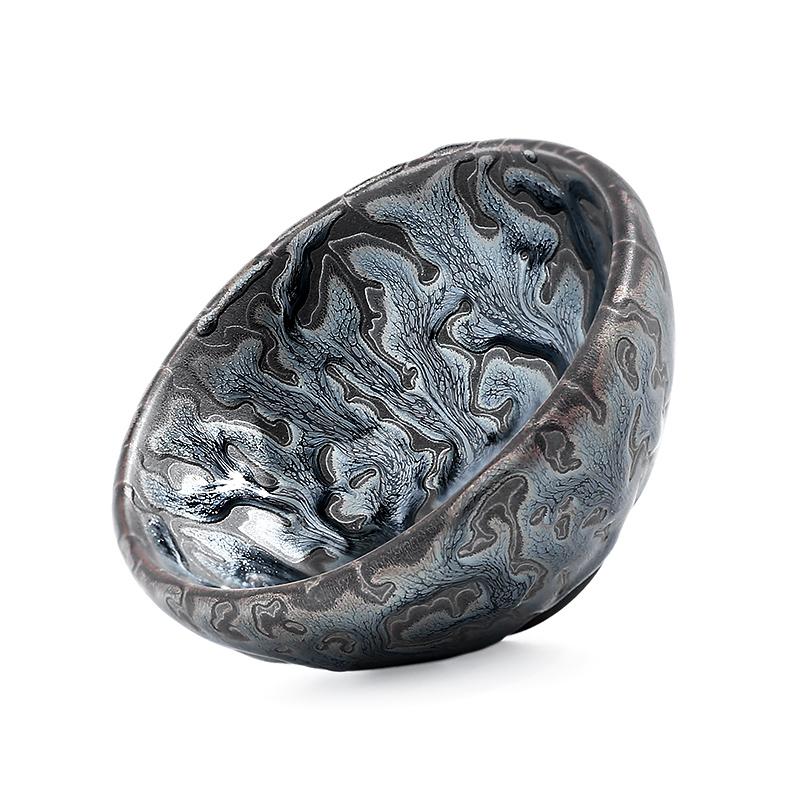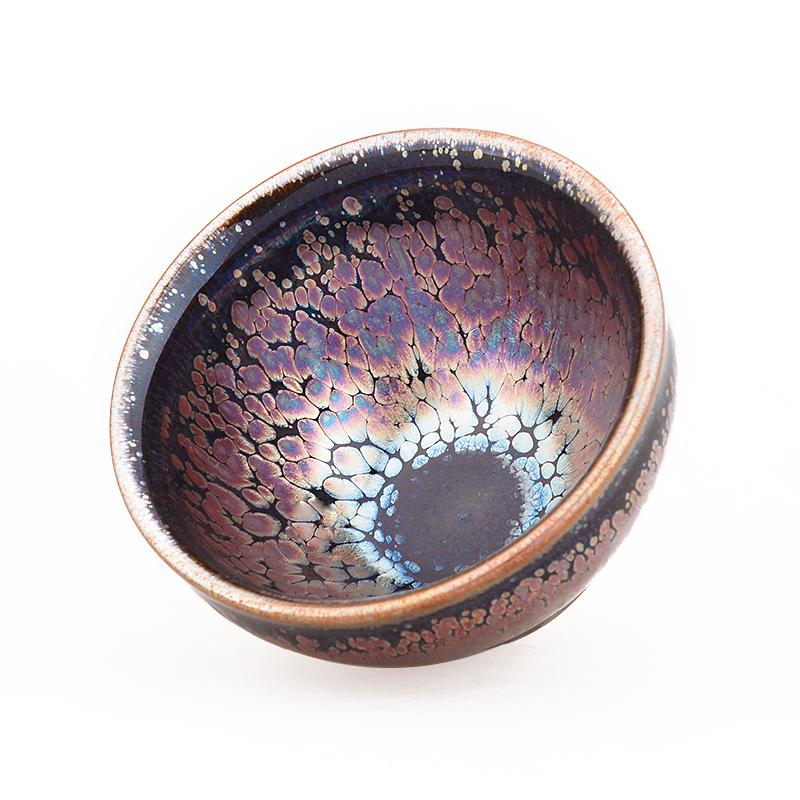
We use UPS & Fedex for fast and reliable shipping.

The original text of Yao Bian is mentioned in Japan's "Kintaikan Sayucho" as follows:

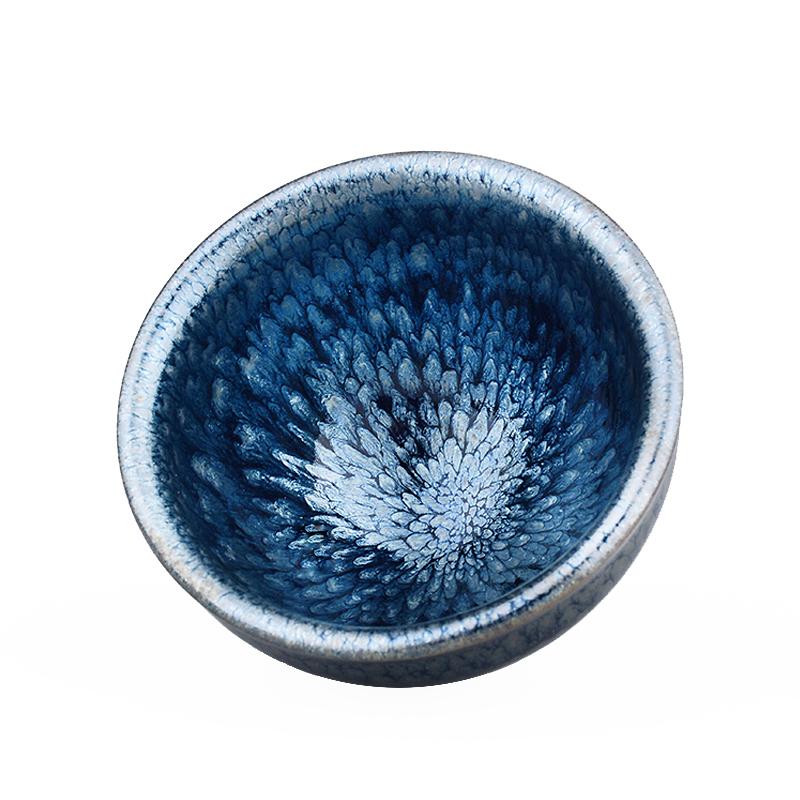
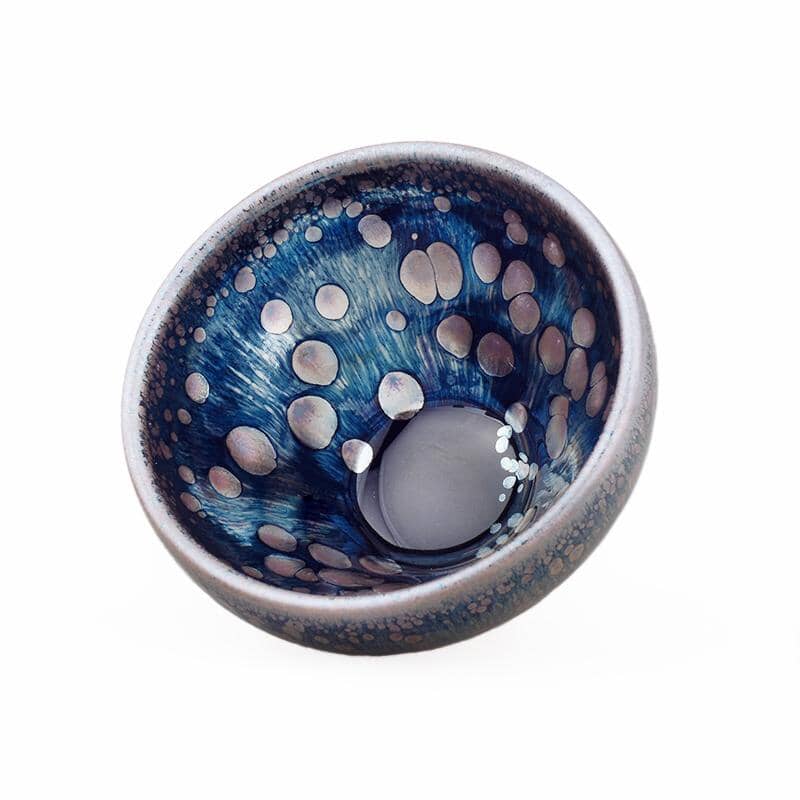
Oil droplet glaze: the second precious type. Its glaze is also black, with faint purple-white starry spots appearing both inside and outside. Compared with Yao Bian, more of them exist, with a total of 5000 pieces. This is mentioned in Japan's "Kintaikan Sayucho."

Tenmoku (here referring to the Rabbit's Hair teacup): not inferior to the oil droplet glaze. Its glaze is also black, with silver-colored splendor on top, and some also have starry spots like oil droplets. There are 3000 pieces in total. This is mentioned in Japan's "Kintaikan Sayucho."

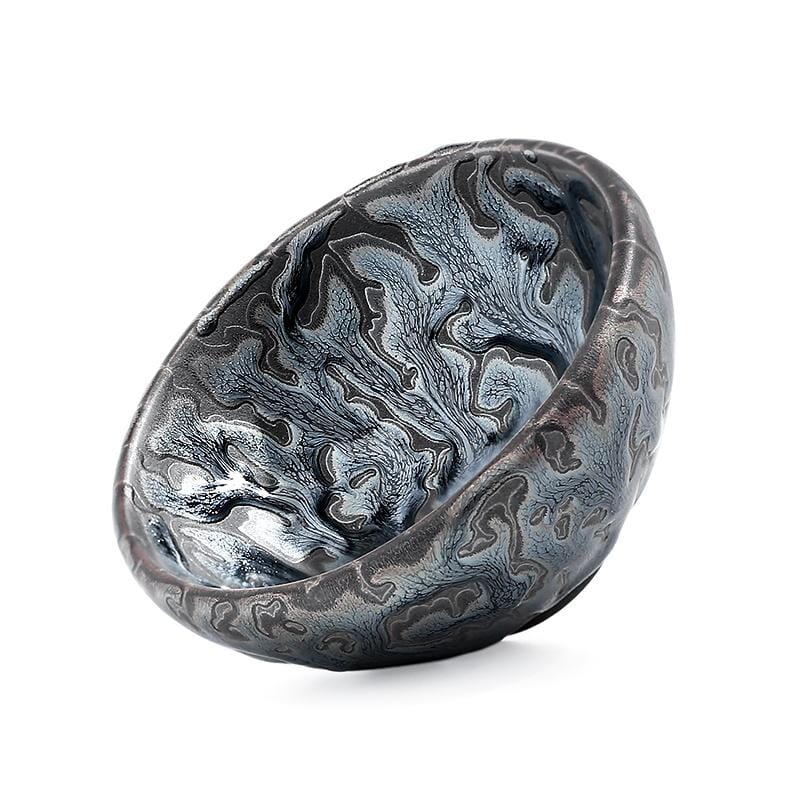
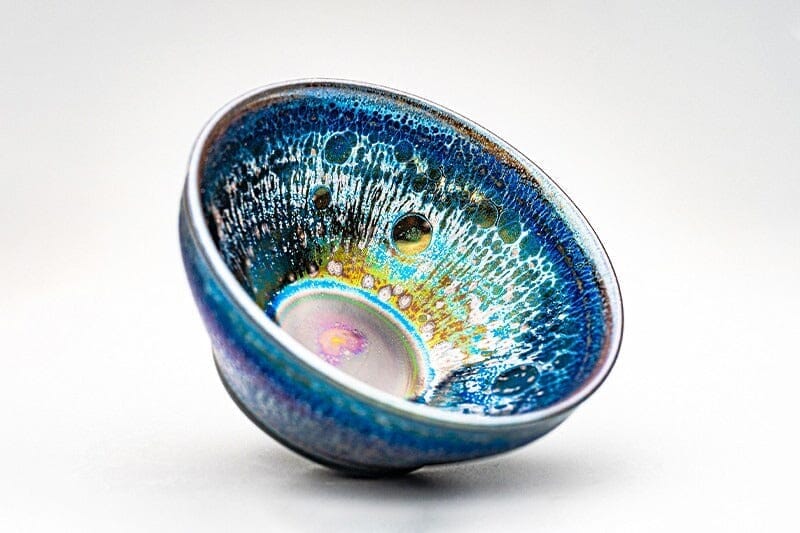
The supreme treasure of Tenmoku is a rare item in the world. Its glaze is black, covered with varying shades of glass-like starry spots, mixed with yellow, white, and extremely light glass colors, like a brocade glaze. It is a rare item of ten thousand pieces.

Yao Bian Tenmoku teacup from the Jingjia Tang collection.

The meaning of the above text is as follows:

The three types of Tenmoku's value ranking are: Rabbit's Hair valued at 3000 pieces, Oil Droplet valued at 5000 pieces, and Yao Bian the most expensive, valued at over 10000 pieces! It is more than twice the value of Oil Droplet. During the Song Dynasty in China, the price of one piece of silk was at most 4 guanqian, and 5 guanqian was equivalent to one tael of gold. The concept of 10000 pieces of silk is almost equivalent to 10000 taels of gold, which is of inestimable value and enough to exchange for an ancient Japanese castle from the Warring States period!

The only three and a half Yao Bian Tenmoku remaining in the world.

In 1924, one of the three remaining Yao Bian Tenmoku teacups (kept in Japan) was sold by its second owner, Tetsuro Ono, to the president of Mitsubishi, the Iwasaki family, for 167,000 Japanese yen. At that time, 167000 yen was equivalent to 125.25 kilograms of gold, and even having assets of only 100 yen was considered wealthy, as 120 yen could buy a small villa in Tokyo. Therefore, the value of the Yao Bian teacup at the time, which was worth 167000 yen, was equivalent to over 1000 small villas!

Undoubtedly, Yao Bian is the rarest and most precious Tenmoku, without a doubt. The firing process for Yao Bian teacups is extremely difficult, with a low success rate that is unimaginable. We have to search through millions of teacups, and that's just for a start. Its rarity is such that it is only by chance to find one in even millions of pieces, and it cannot be replicated nor mass-produced. As we all know, there are only three intact Yao Bian teacups remaining in the world, all in Japan, and only half of one piece has been unearthed in Hangzhou, China.

Since Yao Bian teacups are so valuable and rare, why did they end up being passed down to Japan?

There are two reasons:

  1. Humans are always fearful of the unknown, and since Yao Bian teacups are so rare, it is extremely rare to see them even by chance. Therefore, they are bound to be seen as something remarkable. Furthermore, Yao Bian teacups are enchanting and splendid, full of mystery, and it is unknown whether it is a blessing or a curse to be able to create such objects. The kiln workers were afraid that it might be a punishment or curse from heaven, and perhaps it was an ominous object. What to do? The answer: destroy or give away to others to avoid any involvement.
  2. If such a rare object were discovered by the imperial court, it would be seen as a treasure and there would be a demand for more. What if they couldn't produce more? To be on the safe side and ensure a peaceful and secure life, the same answer applies: destroy or give away to others to avoid any involvement and to permanently eliminate any potential trouble.

In summary, Yao Bian teacups disappeared from the view of the Chinese people during the Song Dynasty. The legend says that the three Yao Bian teacups collected in Japan were obtained by a Japanese monk who was studying in China, and he brought them back to Japan where they have been passed down to this day.

Although it is regrettable that the lost Yao Bian teacups cannot be found, fortunately, the existing ones are still well-preserved and intact. Since Yao Bian teacups are so rare, if a complete one were to be discovered, it would undoubtedly become a national treasure of the country.
Quick answers for Tenmoku teaware shoppers

Use this guide to connect the article topic with practical buying decisions: what Jianzhan Tenmoku teaware is, who it suits, how to choose a piece, and how to care for it after purchase.

How to use this guide before buying

Read the article first for the main explanation, then compare the product photos, glaze variation, form, seller clarity, return policy, and whether the piece fits daily tea, display, collecting, or gifting.

Common buying mistakes to avoid

Avoid choosing only by dramatic claims, copied photos, unusually low prices, or vague master language. A better decision uses visible product details, clear use case, realistic care needs, and trustworthy shop policies.

Recommended next step

After reading, compare a few real products side by side by size, glaze family, rim shape, capacity, price, and gift suitability instead of relying on one photo or one keyword.

What is Jianzhan Tenmoku teaware?

Jianzhan Tenmoku teaware is ceramic tea ware known for dark mineral-glaze effects and natural kiln variation. Common forms include tea cups, bowls, teapots, tea sets, and matcha bowls.

Who is it best for?

It is best for tea drinkers, ceramic collectors, and gift shoppers who value functional objects with visible handmade character. It is not ideal if you need every piece to look exactly identical.

How do I care for it?

Hand wash with warm water, avoid abrasive cleaners, and dry fully before storage. Gentle daily use helps preserve the surface and keeps the glaze easy to inspect over time.

How do I choose the right Tenmoku piece?

Choose by the main use first: daily tea, matcha, Gongfu brewing, display, or gifting. Then compare capacity, rim shape, glaze family, photos, and whether natural variation is acceptable for your needs.

Is Jianzhan Tenmoku teaware good as a gift?

Yes. It works well for tea lovers, ceramic collectors, birthdays, holidays, and housewarming gifts because it is both usable and visually distinctive. For gifts, choose an easy-to-use form and a glaze style with clear photos.

Related products and categories

Compare the guide above with real Tenmokus categories and representative pieces. Start with the use case, then compare glaze style, form, price, and whether the piece is mainly for daily tea, display, collecting, or gifting.

Handmade Tenmoku tea cups

Best for daily tea drinking, first Jianzhan purchases, ceramic gifts, and comparing glaze patterns across cup shapes.

Tenmoku tea sets

Best when you want a coordinated tea table, a hosting setup, or a complete gift instead of one individual cup.

Real vs fake Tenmoku guide

Use this guide to compare seller claims, glaze appearance, photos, and practical buying signals before choosing a piece.

Vivid Peacock

A representative Tenmoku tea cup to compare by glaze depth, cup shape, price, and gift fit.

Golden Peacock

Compare this piece when you want a clear visual reference for a gold-toned Tenmoku glaze style.

Fairy II

Use this product as another comparison point for handmade form, glaze variation, and gift suitability.

shop handmade Tenmoku tea cups compare Jianzhan teapots browse Tenmoku tea sets choose Tenmoku matcha bowls view Tenmoku tea cups read the real vs fake Tenmoku tea bowl guide browse Jianzhan buying guides learn about Tenmokus

From Tenmoku guide to teaware choice

Tenmokus is focused on handmade Jianzhan Tenmoku teaware for tea rituals, display, and gifting. If you are choosing after reading this guide, start with Tenmoku tea cups for daily tea tasting, Tenmoku teapots for loose leaf brewing, Tenmoku coffee cups for daily coffee, Tenmoku tea sets for coordinated gifts, Tenmoku matcha bowls for matcha preparation, Tenmoku beer cups for home bar drinkware, or Tenmoku sake sets for serving and display.

Related Tenmoku guides

Keep exploring Tenmoku care, gift ideas, teaware selection, and the difference between Tenmoku and Jianzhan.

View all

Tenmoku Tea Bowl Price: Why Handmade Cups Are Worth It

Tenmoku Tea Bowl Price: Why Handmade Cups Are Worth It

Tenmoku Tea Bowl Price: Why a Handmade Cup Can Elevate Your Gongfu Tea Ritual A tenmoku tea bowl can cost more than an ordinary ceramic cup because it is not simply molded, glazed, and repeated by machine. A handmade Jian...

Read more

Tenmoku Tea Bowl: Bring Craft and Calm to Every Tea Ritual

Tenmoku Tea Bowl: Bring Craft and Calm to Every Tea Ritual

Tenmoku Tea Bowl: Bring Craft and Calm to Every Tea Ritual A tenmoku tea bowl is more than a dark-glazed vessel: it is a handmade tea cup that makes a daily gongfu tea session feel more deliberate and personal. Whether...

Read more

Tenmoku Tea Bowl Authenticity Guide: Buy Jian Zhan with Confidence

Tenmoku Tea Bowl Authenticity Guide: Buy Jian Zhan with Confidence

Tenmoku Tea Bowl Authenticity Guide: Choose a Better Cup for Gongfu Tea A real tenmoku tea bowl is more than a dark cup with shiny speckles: it is a high-fired ceramic piece whose clay, iron-rich glaze, and kiln atmosphere work...

Read more