


With fake Jianzhan flooding the market, telling a genuine Japanese tenmoku tea bowl from a mass-produced replica has never been more important. This guide gives you the 7 definitive tests used by collectors and tea masters worldwide.
TL;DR — Quick Answer
An authentic Jianzhan is identified by: (1) iron-rich mineral glaze naturally formed during high-temperature firing, (2) irregular oil-spot patterns that cannot be perfectly replicated, (3) a heavy, thick-walled construction, (4) authentic dark brown/black iron tonality, and (5) a felt-like foot ring without glaze. Replicas feel light, have uniform patterns, and show no iron oxidation marks.
Table of Contents
- What Makes Jianzhan Unique
- 7 Ways to Identify Authentic Jianzhan
- Common Fake Jianzhan Types
- Where to Buy Real Jianzhan
- Frequently Asked Questions
What Makes Jianzhan Unique?
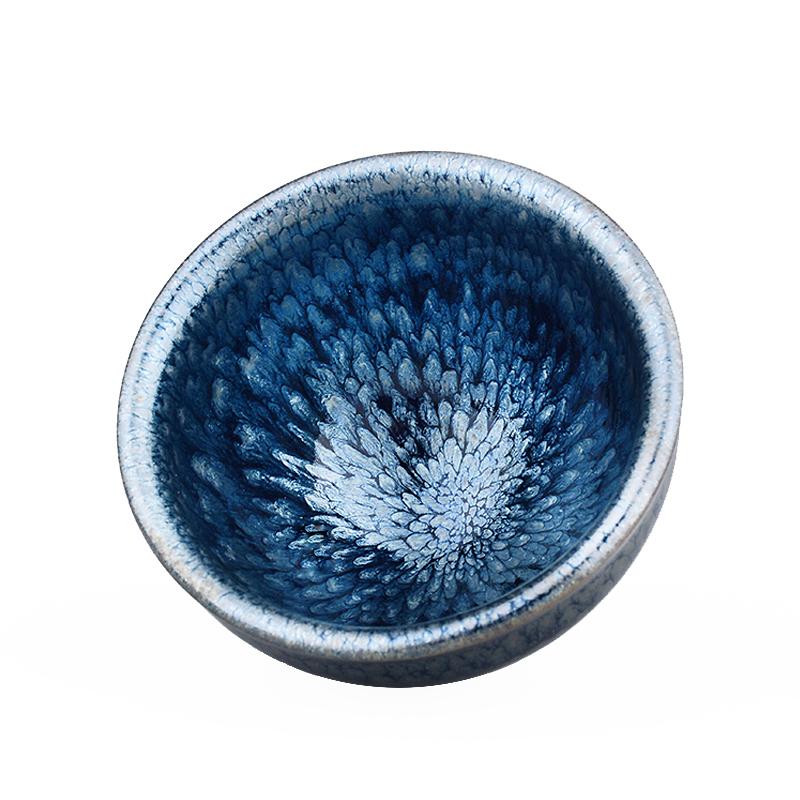
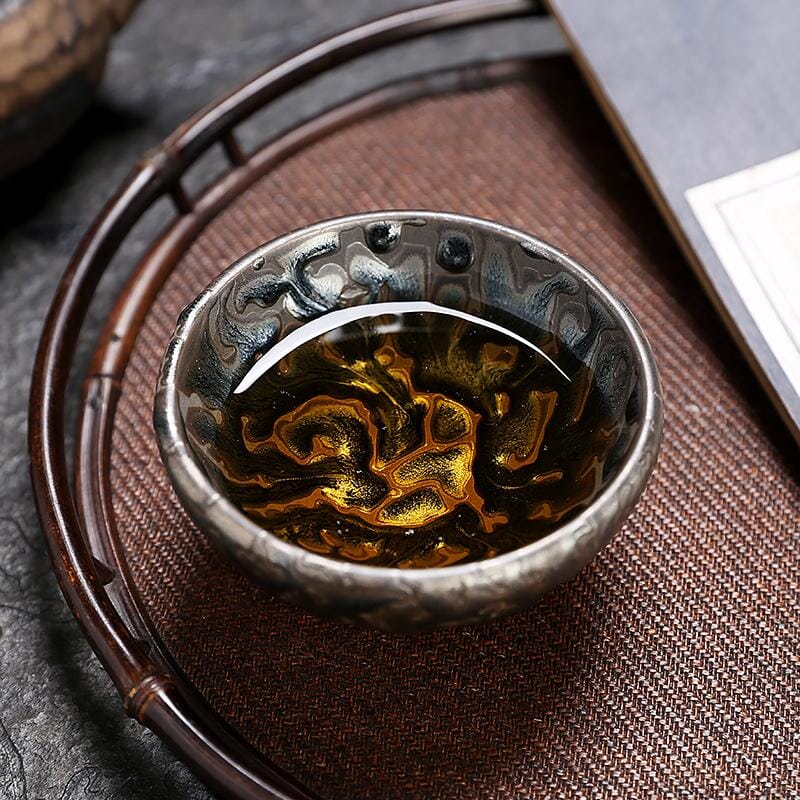
Jianzhan (建盏), also called Temmoku in the West, is a type of artisanal stoneware produced in Jianyang, Fujian Province, China — the same region where the Song Dynasty Imperial Tea Academy operated. Its defining feature is the iron oxide-rich glaze that transforms at temperatures exceeding 1300C, creating unpredictable, mesmerizing patterns: oil spots, hare's fur, and partridge feather.
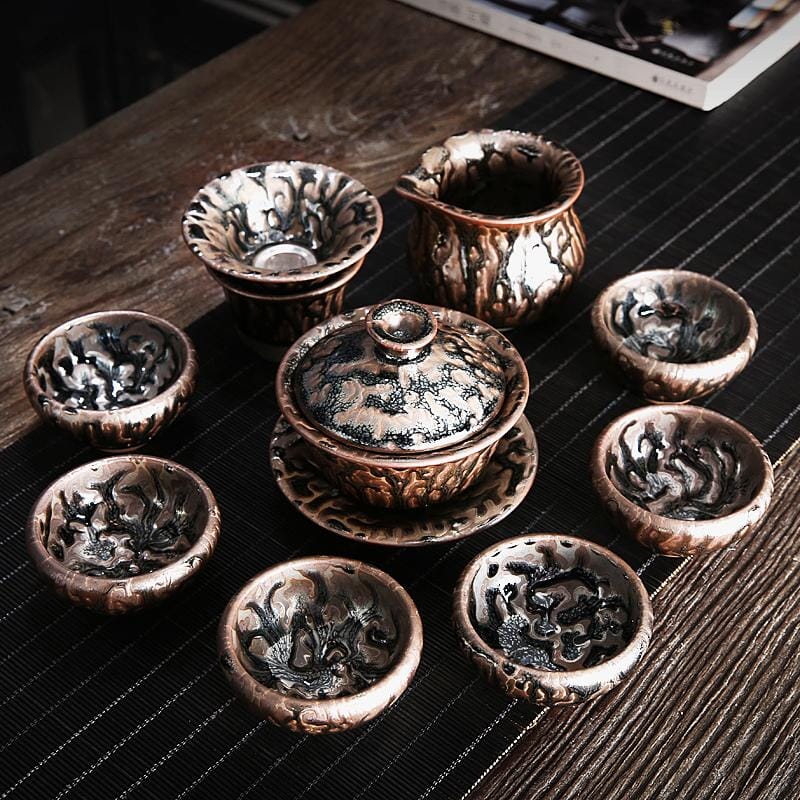
Each Jianzhan is a one-of-a-kind artifact. No two bowls emerge from the kiln with the same pattern — the glaze flows and crystals form based on kiln temperature, atmosphere, and position inside the kiln. This natural unpredictability is exactly what makes collecting Jianzhan so compelling.
"A real Jianzhan tells the story of fire, iron, and a thousand-year tradition in every sip."
7 Ways to Identify Authentic Jianzhan
1. Weight and Wall Thickness
Authentic Jianzhan has thick walls (4-8mm) and a satisfying heft. The iron-rich clay body is dense. Fake Jianzhan is often thin-walled and lightweight.
2. The Iron Foot Ring
The unglazed foot ring of a real Jianzhan reveals the pure iron-rich clay body. It should feel slightly rough, like fine sandpaper. Fakes often have a smooth, glazed foot ring or a mold seam.
3. Oil Spot Patterns Are Never Perfect
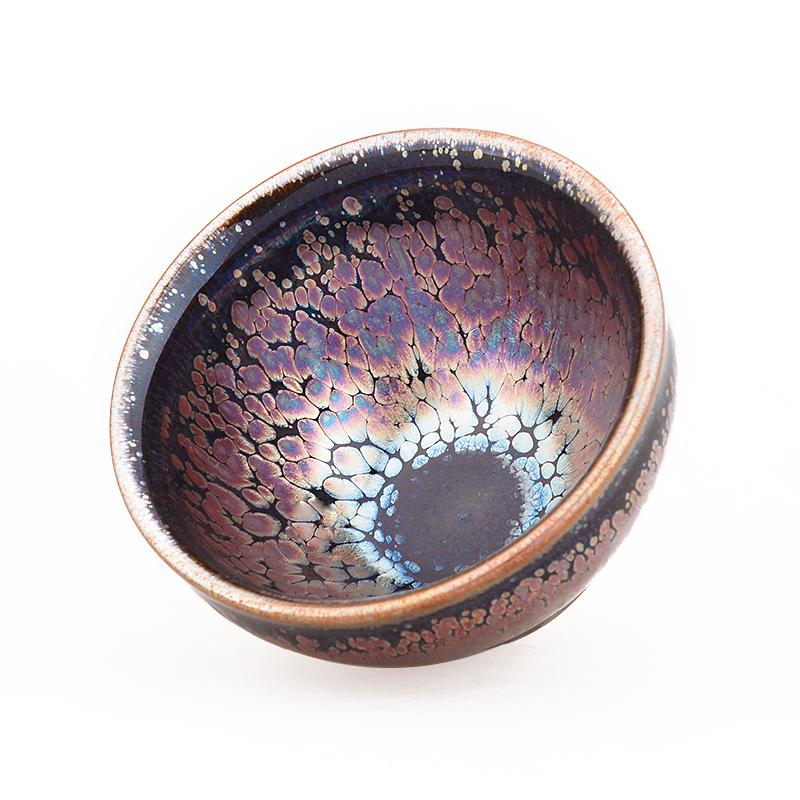
Authentic oil-spot Jianzhan has irregular, organically distributed spots. Counterfeits typically show uniform, machine-like spot distribution with perfectly circular spots at precise intervals.
4. Glaze Color and Iron Oxidation
Real Jianzhan displays deep iron tones: dark brown, purple-brown, or blue-black. The glaze surface shows micro-crystals under light. Fakes often have uniform black glaze with no depth.
5. Glaze Evolution from Center to Rim
In an authentic Jianzhan bowl, the glaze typically thins toward the rim while pooling thicker at the base. Machine-made replicas show uniform glaze thickness throughout.
6. Absorption and Patina Development
When you pour hot tea in a real Jianzhan, the iron-rich walls absorb the tea oils and develop a beautiful patina over months of use. Fake glazed bowls resist absorption and will not develop genuine patina.
7. The Sound Test
Tap the rim of a Jianzhan gently with your fingernail. A real Jianzhan produces a clear, resonant ring. Thin or fake bowls produce a dull, flat sound.
Common Fake Jianzhan Types to Avoid
Machine-Molded Replicas
Mass-produced using plaster molds. Look for: perfectly symmetrical patterns, uniform wall thickness, and a smooth foot ring. A genuine hand-formed Jianzhan rarely costs under $30.
Artificial Oil Spot Spraying
Some factories spray iron oxide solution to simulate oil spots. These spots have a painted-on, uniform metallic luster and lack the crystal depth of real oil spots.
Where to Buy Real Jianzhan in 2026
The safest way to buy authentic Jianzhan is from verified specialist retailers with direct sourcing from Jianyang artisans and authenticity guarantees.
At Tenmokus, every Jianzhan is hand-selected from traditional studios in Jianyang. Each piece ships with a certificate of authenticity and care guide.
Frequently Asked Questions
Q: Can Jianzhan be used daily for tea?
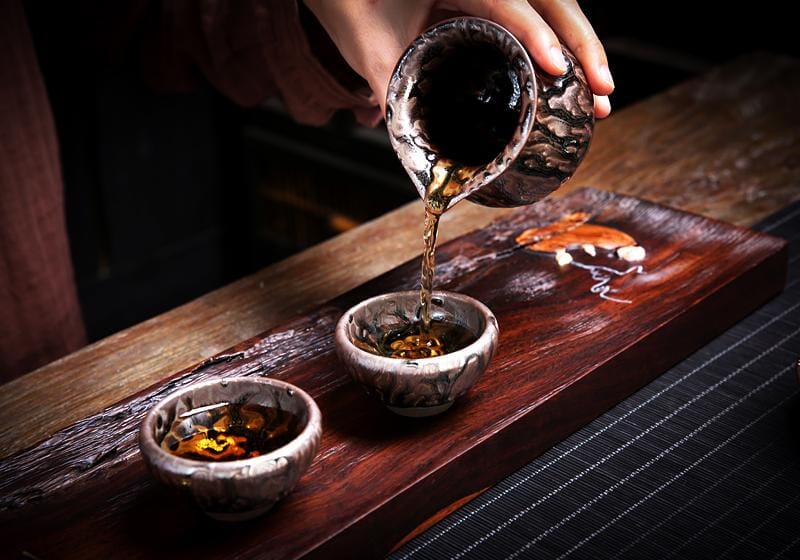
A: Absolutely. Jianzhan is designed for daily tea use. In fact, regular use accelerates the patina development, enhancing both the bowl's beauty and the flavor of your tea.
Q: What is the price range for a real Jianzhan?
A: Entry-level authentic Jianzhan starts around $25-$50. Collector's grade oil-spot or hare's fur bowls from named studios range from $80-$300+. Extremely rare patterns can exceed $500.
Q: Does Jianzhan work with all types of tea?
A: Jianzhan is traditionally paired with full-bodied teas: Oolong (especially Tieguanyin), aged Pu-erh, and Lapsang Souchong. The iron-rich walls enhance the tea's aroma and bring out its natural sweetness.
Q: How do I clean a Jianzhan?
A: Use only hot water to rinse after each use. Never use soap — it will strip the developing patina. For stubborn tea stains, soak briefly in hot water only. Air dry completely before storage.
Q: Is Japanese Tenmoku the same as Chinese Jianzhan?
A: Related, but not identical. Tenmoku is the Japanese term derived from Tianmu Mountain. Japanese Tenmoku bowls were originally imported from China during the Song Dynasty. Modern Japanese tenmoku follows similar techniques but uses local clay and glaze recipes.
Ready to find your authentic Jianzhan? Explore our handpicked collection of genuine Jianyang Jianzhan tea bowls — each one a unique work of functional art.


Share:
How to Identify Authentic Jianzhan: 5 Key Features to Look For
How to Properly Clean Your Jianzhan (建盏) Tea Bowl for Longevity