Venta de Pascua: Compre 3 ¡Obtenga el 4to gratis!

Traducción:¿Jianzhan es venenoso?

Definitivamente no es así, pero no sé si el Jianzhan barato es tóxico. Primero, necesitamos comprender las materias primas que se utilizan para fabricarlo.

Las materias primas para la elaboración del esmalte Jianzhan son muy sencillas y se componen básicamente de dos tipos: minerales de esmalte y cenizas vegetales. Otros materiales incluyen cuarzo, feldespato, piedra caliza, etc.

El esmalte cerámico se compone de tres partes: base de esmalte, agente colorante y fundente.

  1. El cuarzo se utiliza como base para el esmalte, los minerales del esmalte se utilizan como agentes colorantes y la ceniza vegetal se utiliza como fundente.

Cuarzo base esmaltado: En realidad es un componente con una textura vítrea, probablemente algo así como el cuarzo, que es dióxido de silicio.

Colorante mineral para esmaltado: Los componentes químicos del colorante determinan el color de la porcelana. Por ejemplo, el óxido de cobalto se utiliza para producir el color azul, el óxido de cobre para el verde y el óxido de hierro, que produce un color marrón rojizo, es el principal colorante utilizado en Jianzhan.

Los minerales utilizados en el esmaltado provienen de las montañas Nanshan en Jianyang. Este tipo de mineral es el colorante clave más importante del esmaltado Jianzhan y el factor crucial para determinar si Jianzhan puede formar patrones.

El esmalte de cal con un alto contenido de hierro es el esmalte negro del horno Jian, que es un tipo de esmalte de cristal de hierro.

Entonces, ¿qué es un esmalte de cristal?

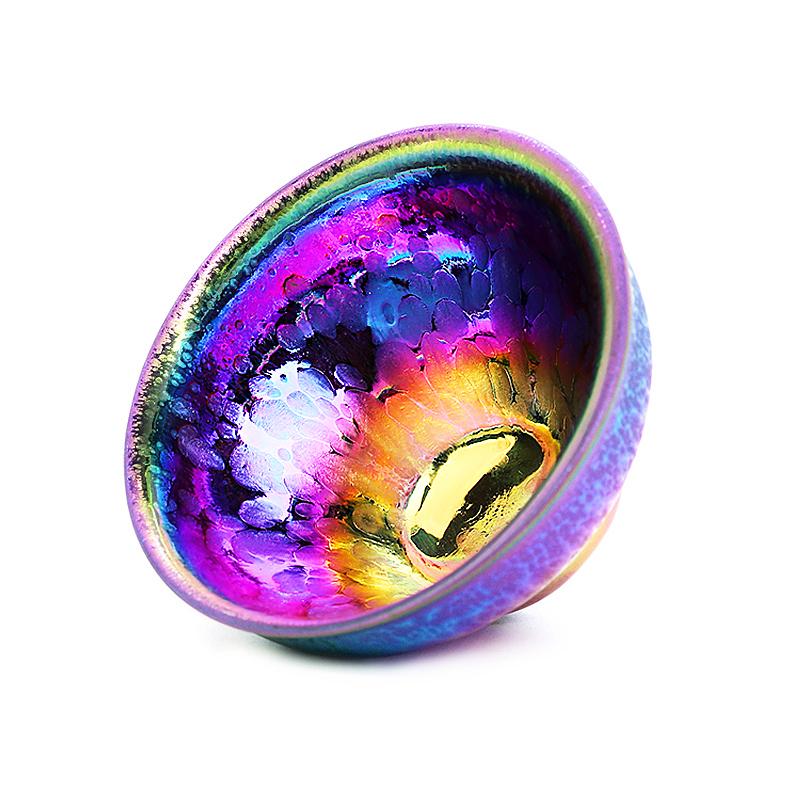
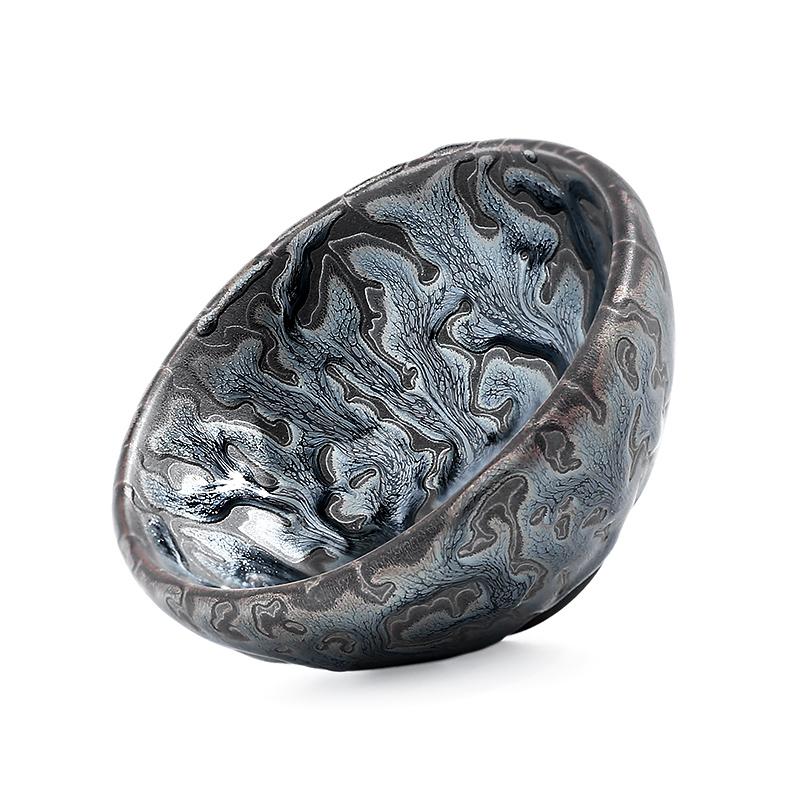
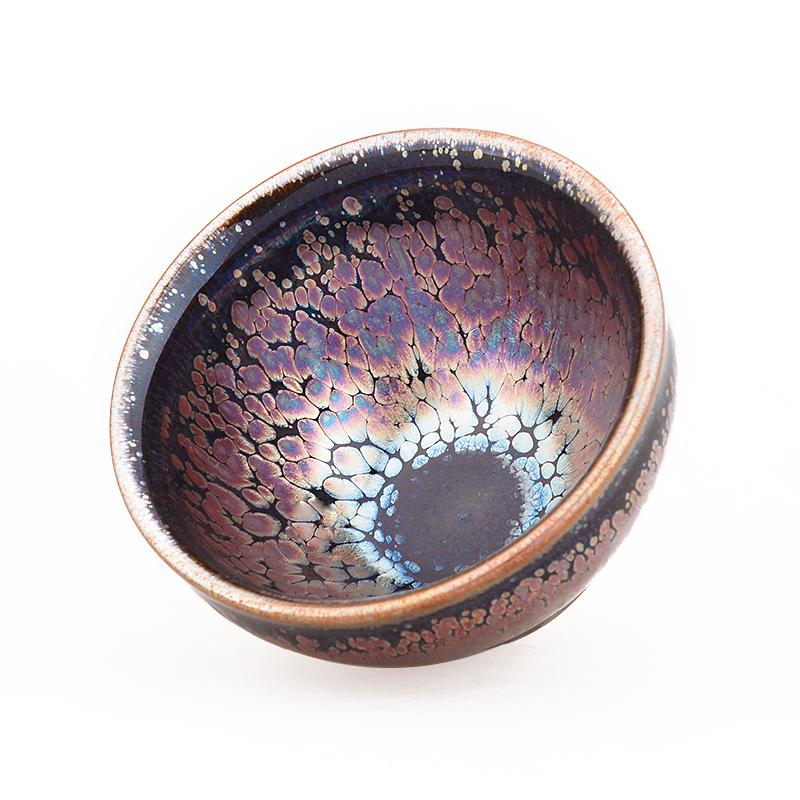
Cuando la temperatura alcanza un cierto nivel, el esmalte cristalizará, formando hermosas flores de cristal visibles en la superficie o en el interior del esmalte.

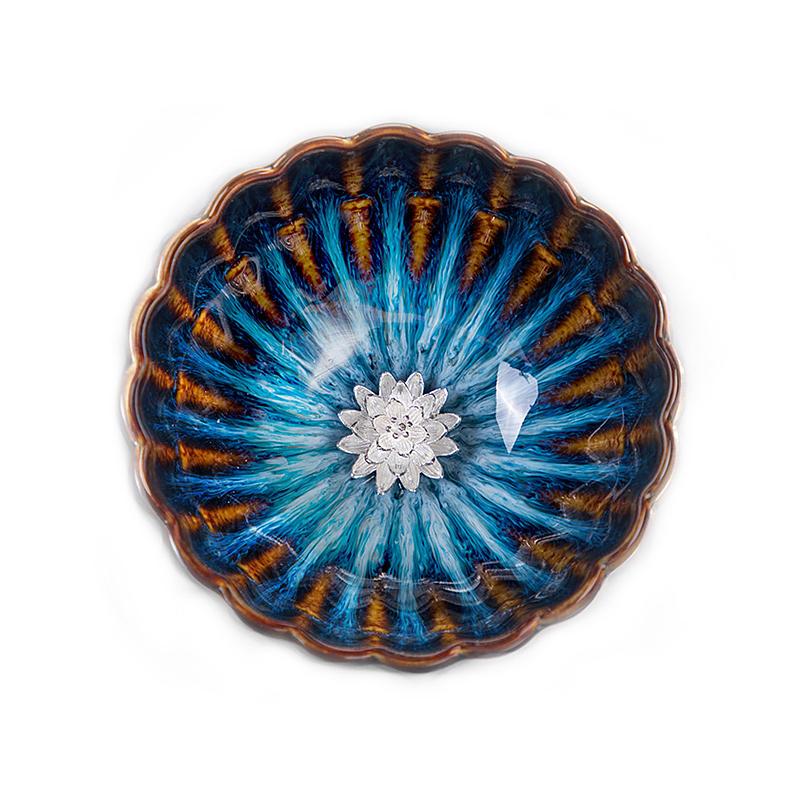
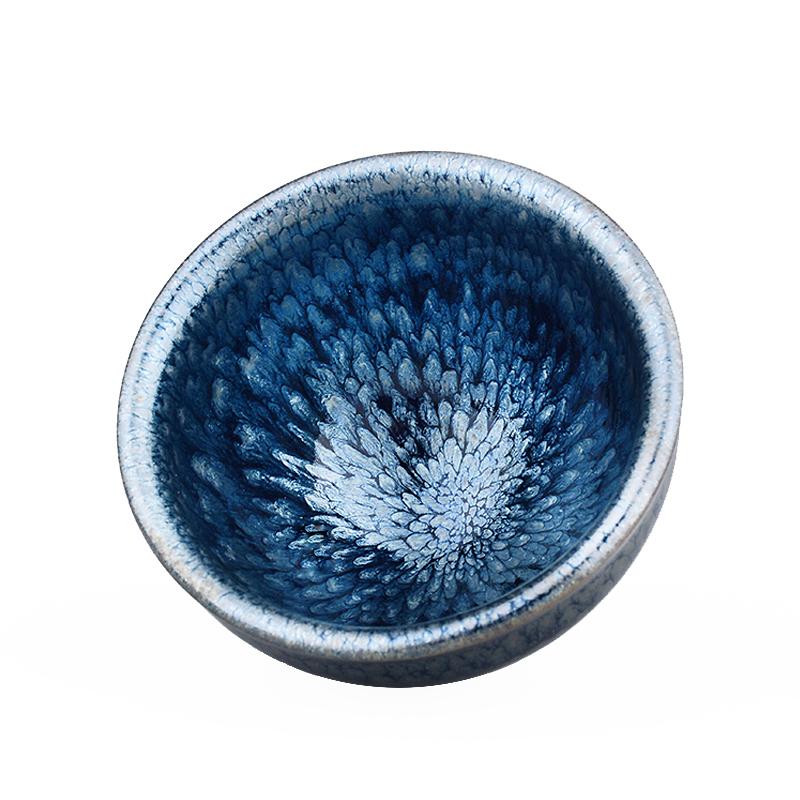
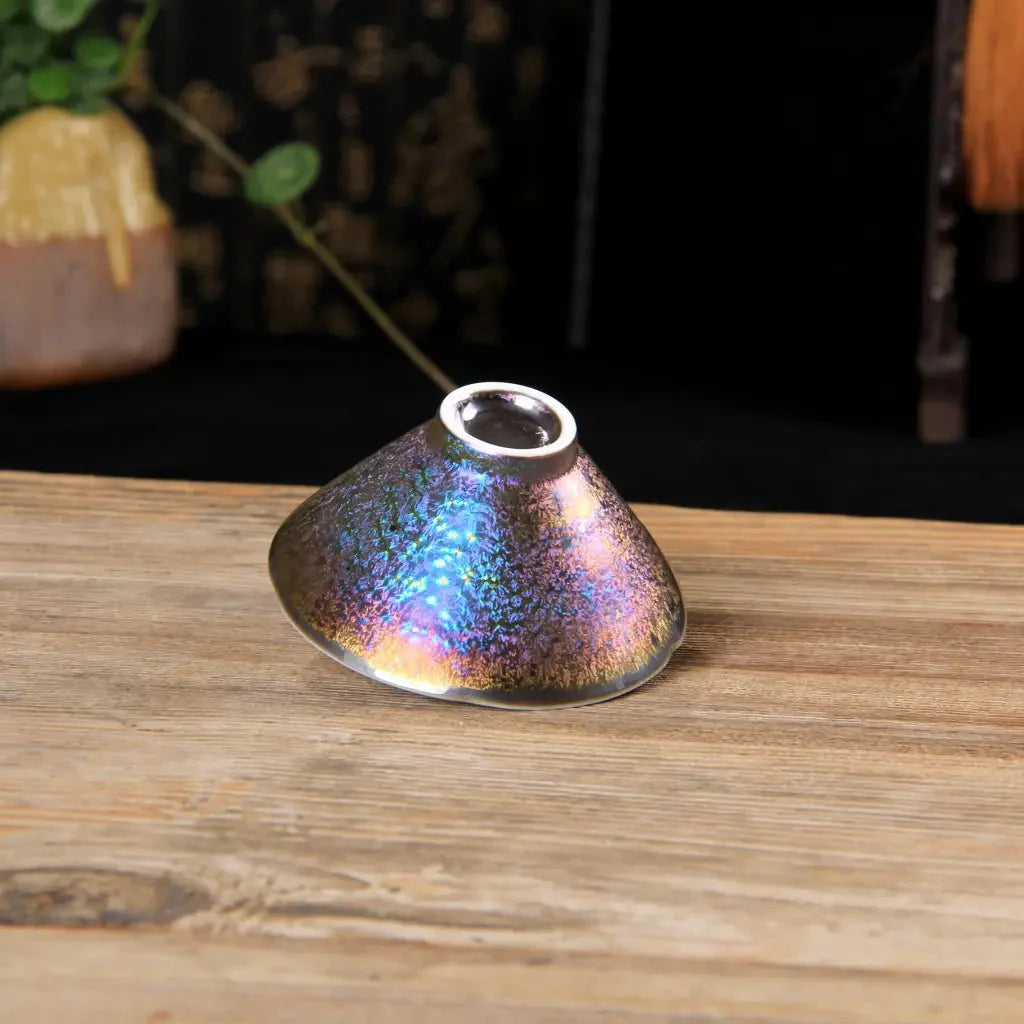
Existen varios tipos de cristales que pueden precipitarse del esmalte a altas temperaturas. Por ejemplo, el patrón de pelaje de liebre marrón, el patrón de gotas plateadas y el patrón de manchas de perdiz que aparecen en Jianzhan son ejemplos de ello.

Las flores cristalinas de color marrón rojizo están compuestas de hematita, una sustancia cristalina de Fe₂O₃. La magnetita, que es Fe₃O₃, es la sustancia cristalina que forma las manchas plateadas.

Fundente: Puede reducir el punto de fusión del cuarzo, ahorrando mucho combustible y tiempo. Se utilizan materiales fundentes como feldespato, cenizas vegetales o bario.

El esmalte negro de Jianzhan es un esmalte de cal que utiliza óxido de calcio como fundente.

En cuanto a la toxicidad de Jianzhan, desde el punto de vista de la precipitación de metales pesados, se requiere una temperatura de 1300 °C para que el fundente precipite. La temperatura máxima del agua hirviendo es de 100 °C, por lo que no hay que preocuparse por la disolución de metales pesados ​​como el plomo al beber agua o té. Úselo con total libertad.
Quick answers for Tenmoku teaware shoppers

Use this guide to connect the article topic with practical buying decisions: what Jianzhan Tenmoku teaware is, who it suits, how to choose a piece, and how to care for it after purchase.

What is Jianzhan Tenmoku teaware?

Jianzhan Tenmoku teaware is ceramic tea ware known for dark mineral-glaze effects and natural kiln variation. Common forms include tea cups, bowls, teapots, tea sets, and matcha bowls.

Who is it best for?

It is best for tea drinkers, ceramic collectors, and gift shoppers who value functional objects with visible handmade character. It is not ideal if you need every piece to look exactly identical.

How do I care for it?

Hand wash with warm water, avoid abrasive cleaners, and dry fully before storage. Gentle daily use helps preserve the surface and keeps the glaze easy to inspect over time.

How do I choose the right Tenmoku piece?

Choose by the main use first: daily tea, matcha, Gongfu brewing, display, or gifting. Then compare capacity, rim shape, glaze family, photos, and whether natural variation is acceptable for your needs.

Is Jianzhan Tenmoku teaware good as a gift?

Yes. It works well for tea lovers, ceramic collectors, birthdays, holidays, and housewarming gifts because it is both usable and visually distinctive. For gifts, choose an easy-to-use form and a glaze style with clear photos.

shop handmade Tenmoku tea cups compare Jianzhan teapots browse Tenmoku tea sets choose Tenmoku matcha bowls view Tenmoku tea cups read the real vs fake Tenmoku tea bowl guide browse Jianzhan buying guides learn about Tenmokus

From Tenmoku guide to teaware choice

Tenmokus is focused on handmade Jianzhan Tenmoku teaware for tea rituals, display, and gifting. If you are choosing after reading this guide, start with Tenmoku tea cups for daily tea tasting, Tenmoku teapots for loose leaf brewing, Tenmoku tea sets for coordinated gifts, or Tenmoku matcha bowls for matcha preparation.

Últimas historias

Keep exploring Tenmoku care, gift ideas, teaware selection, and the difference between Tenmoku and Jianzhan.

Ver todo

Tenmoku Tea Bowl: A Handmade Cup With History, Beauty, and Meaning

Tenmoku Tea Bowl: A Handmade Cup With History, Beauty, and Meaning

Tenmoku Tea Bowl: A Handmade Cup With History, Beauty, and Meaning A tenmoku tea bowl is a dark-glazed tea cup, often called Jianzhan, known for dramatic patterns created by fire, minerals, and chance. For gongfu tea, it gives a quiet,...

Leer más

How to Identify Real vs Fake Tenmoku Tea Bowl: A Jian Zhan Buyer’s Guide for US Tea Lovers

How to Identify Real vs Fake Tenmoku Tea Bowl: A Jian Zhan Buyer’s Guide for US Tea Lovers

If you’ve ever brewed a fine oolong tea and wanted an authentic tenmoku tea bowl to match its depth, you’ve likely stumbled into a minefield of fakes. I’m Aiden Wei, and after years of studying Jian Zhan (the Chinese name...

Leer más

Handmade Tenmoku Tea Bowl: Luxury Home Ritual for Relaxation

Handmade Tenmoku Tea Bowl: Luxury Home Ritual for Relaxation My nightly unwind used to be a chaotic mix of scrolling and half-hearted herbal tea. Then I held a handmade tenmoku tea bowl — its iron-rich glaze glimmering with an oil...

Leer más