

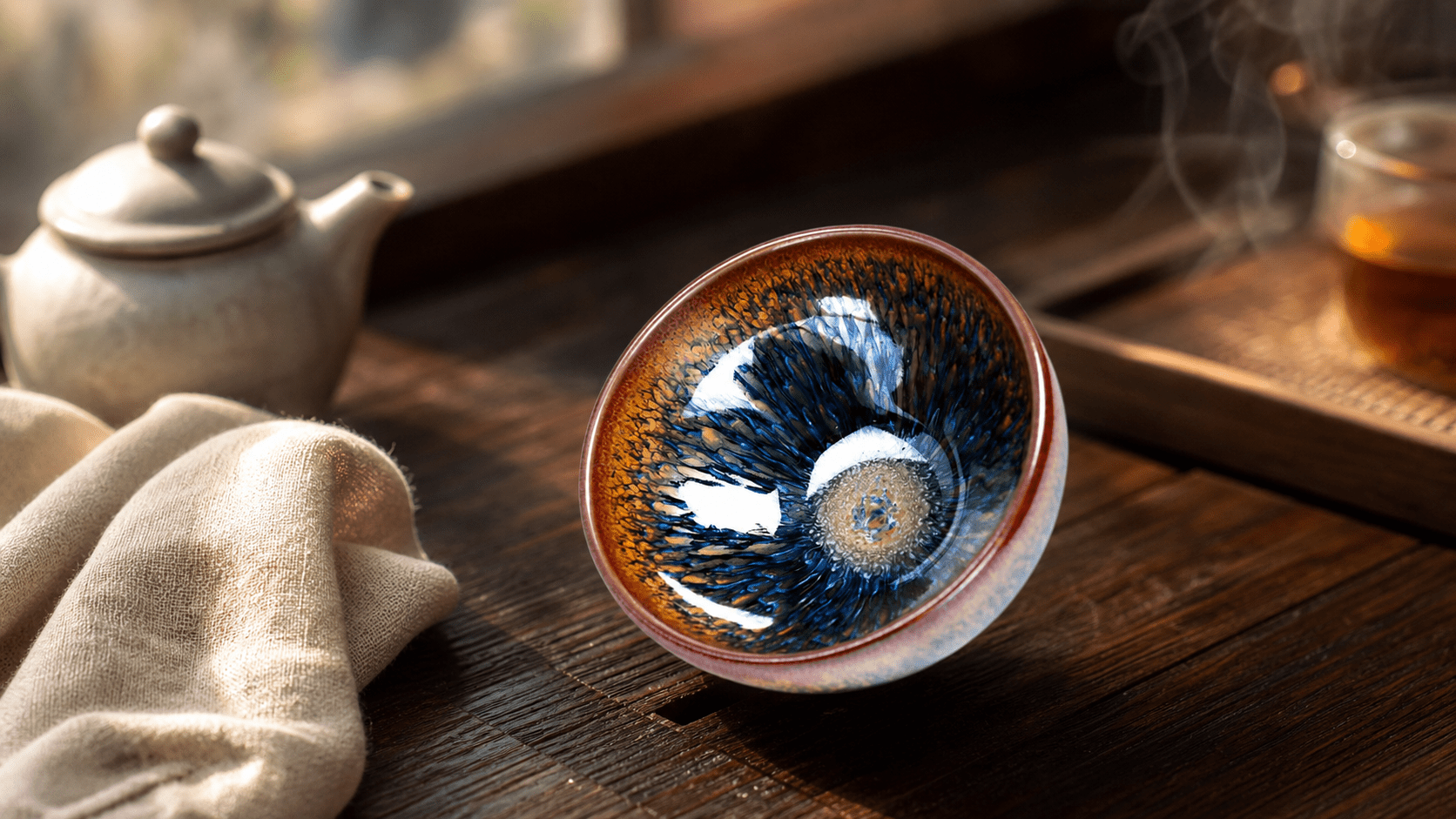

If you’ve ever held a real tenmoku tea bowl in your hands during a gongfu tea session, you know there’s nothing quite like it—the way the iron-rich glaze catches the light, the warmth it holds, the silent story of a Song Dynasty tradition baked in a wood-fired kiln. But here’s the problem: with the growing popularity of jian zhan outside of Japan and China, fakes have flooded the market. As Tenmokus Editorial Team, I’ve spent years handling thousands of these bowls, and I want to save you from wasting money on a cheap knockoff. In this guide, I’ll walk you through the telltale signs of an authentic tenmoku tea bowl, why they cost what they do, and where to find the best value jian zhan that’s worth every penny.
Key Takeaways
- Authentic tenmoku tea bowls are handmade, with unique glaze patterns that can’t be mass-produced identically.
- Price is a strong authenticity filter—if a tenmoku tea bowl price is under $30, it’s almost certainly a decal or chemical fake.
- Look for an unglazed, slightly coarse foot ring and subtle iron spotting as markers of traditional firing.
- Real hare’s fur and oil spot effects come from kiln transformation, not painted decoration.
- Reputable sellers will share kiln origin, firing temperature, and artist details.
What Is a Tenmoku Tea Bowl and Why Does Authenticity Matter?
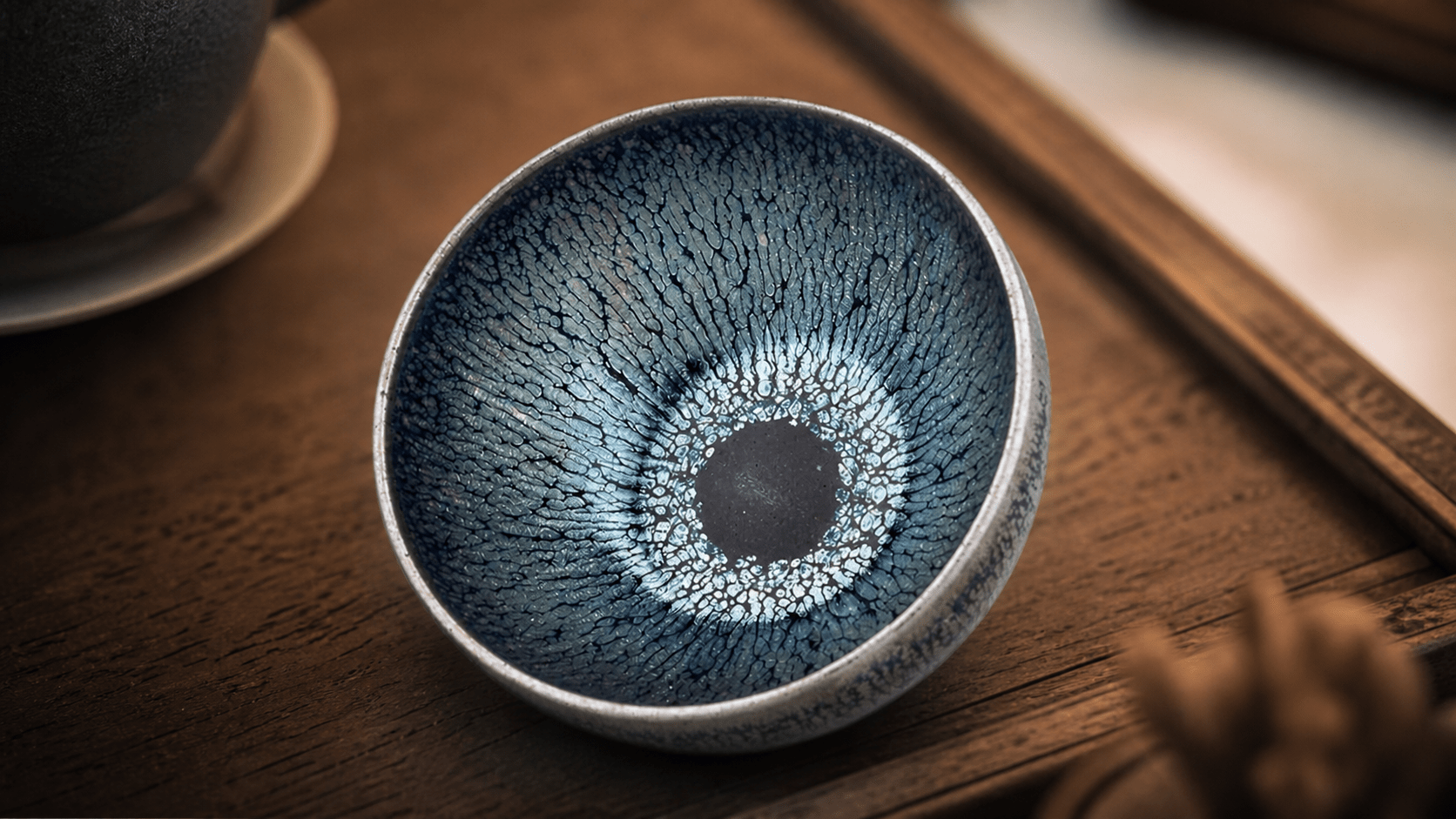
You might know it as a jian zhan, a Chinese black-glazed stoneware from the Jianyang kilns of Fujian, or as a Japanese tea bowl because the style was later adopted and revered for the Japanese tea ceremony. Both terms point to the same striking objects. Authenticity matters because the magic of a tenmoku tea bowl comes from a brutal, high-temperature firing process that causes molten iron in the glaze to form crystalline patterns—hare’s fur, oil spots, partridge feathers. Fakes skip all that, using spray-on glazes, decals, or cheap clay that can even leach heavy metals into your tea. When you buy a real handmade tenmoku tea cup, you’re not just getting a cup; you’re getting a piece of material science that happens to be stunning.
Why Is Tenmoku So Expensive? Understanding the Real Jianzhan Cost
Many newcomers ask, “Why is tenmoku so expensive?” The jian zhan cost is a direct reflection of failure. A master potter can load a kiln with 200 bowls and open it to find just 5 that achieved the desired hare’s fur pattern. The rest might be blistered, pinhole-ridden, or simply dull. Wood-fired kilns demand 24 to 48 hours of constant stoking to reach 1300°C, a process that consumes a mountain of pinewood and intense human labor. Then there’s the clay—iron-rich stoneware that has to be sourced from specific areas, often hand-ground and aged. All this means that a genuine tenmoku tea bowl price typically starts around $50–$80 for a simple, modern piece and climbs to $300–$800 for a vivid oil spot or hare’s fur pattern from a known artist. Museum-grade Song Dynasty pieces? They’re priceless. If you see a “tenmoku” for $15, it’s chemically glazed porcelain pretending to be the real thing.
How to Tell If a Tenmoku Tea Bowl Is Authentic: 7 Telltale Signs
I’ve boiled down my authenticity checklist to seven practical points. Grab your bowl and follow along.
1. The Glaze Pattern Is Never Uniform
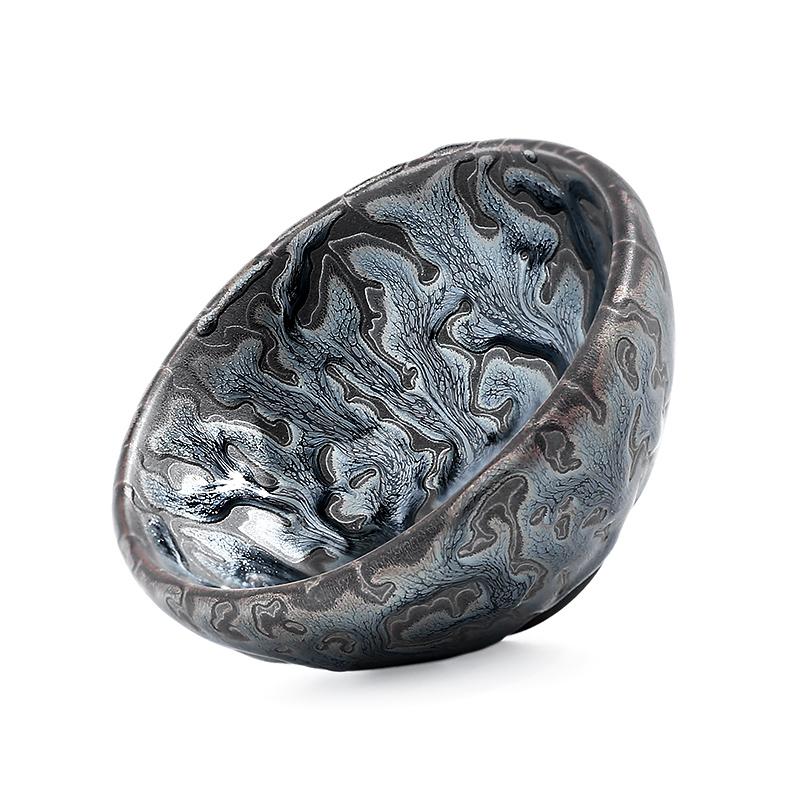
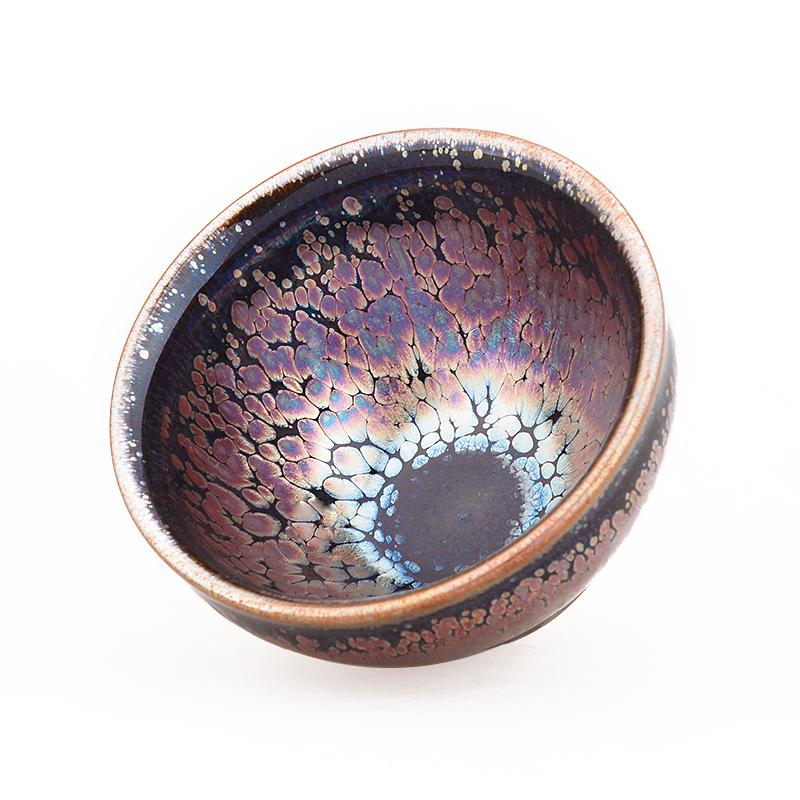
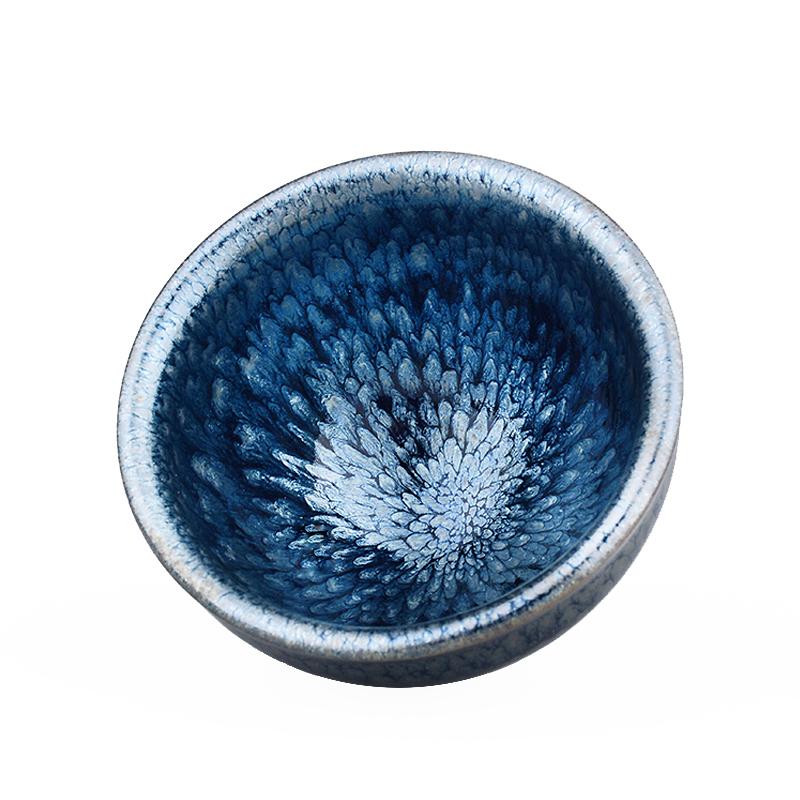
Real hare’s fur and oil spot glazes are chaotic by nature. Under a magnifying glass, you’ll see random crystallization—rusty streaks or teardrop-shaped bursts—not a printed repeat. Fakes often have a suspiciously neat “chocolate brown” surface with painted-on streaks. The real deal shifts from deep black to shades of blue, silver, or russet as you rotate it in light.
2. The Foot Ring Tells a Story
Flip the bowl over. A genuine jian zhan foot ring is unglazed and reveals the dark, slightly grainy body clay. It often shows scorch marks, tiny iron specks, or even traces of grit from the kiln shelf. Machine-made fakes have perfectly smooth, uniformly colored bases, sometimes with a shiny seal printed on.
3. Weight and Balance Feel Substantial
Jian zhan clays are dense with iron, so even a small cup feels satisfyingly weighty. A fake made of ordinary porcelain or stoneware will feel lighter, cooler on the lip, and more scooped out—lacking that grounded balance.
4. The Cup Reacts to Temperature
Pour boiling water into a real tenmoku tea bowl, and the glaze will subtly change—oil spots may brighten, hare’s fur crystals may seem to shimmer. This is due to the microcrystalline structure expanding. Fakes stay inert, because the surface is just a vitreous seal.
5. Iron Response and Magnetism
While not a definitive test, many authentic bowls have enough iron in the clay body that a strong magnet will feel a faint pull. This is especially true for older pieces. However, some modern potters adjust iron levels, so use this as a supporting clue, not a verdict.
6. Price Signals Red Flags Fast
We already covered tenmoku tea bowl price, but it bears repeating: if it’s under $30 and claims to be handmade, walk away. Even a small studio bowl requires hours of work. The best value jian zhan pieces that are authentic typically fall between $60 and $120, giving you a real kiln-transformed glaze without the collector’s markup.
7. Provenance and Paperwork
Respected kilns and artists in Jianyang and Japan often include a stamped certificate or an artist’s box (tomobako). If a seller can’t tell you anything about who made the bowl or which kiln it came from, you’re gambling.
Real vs Fake Tenmoku Tea Bowl: Quick Comparison
| Feature | Authentic Handmade Tenmoku Tea Bowl | Fake / Mass-Produced Imitation |
|---|---|---|
| Glaze pattern | Unique, random hare’s fur or oil spot; changes with light | Uniform, often a printed decal or streaked glaze overlay |
| Foot ring | Unglazed, slightly coarse, dark iron clay visible | Glazed-over or perfectly smooth, white or light clay |
| Weight | Hefty, dense | Light, porcelain-like |
| Price range | $50–$800+ | $5–$30 |
| Reaction to hot water | Glaze deepens, crystals “awaken” | No visible change |
| Origins | Jianyang kilns (China) or select Japanese pottery studios | Unknown factory; sometimes listed as “Japanese tea bowl” with no studio info |
Best Value Jianzhan: Where to Find Affordable, Authentic Pieces
If you’re just starting, I don’t recommend chasing the most expensive oil spot tenmoku cups right away. Instead, look for what I call “daily warrior” bowls—authentic, wood-fired or electric-fired jian zhan with subtle hare’s fur or monotone oil spot patterns. These still carry the iron-rich character and the sensation of a Japanese tea bowl in your hands. For a real handmade tenmoku tea cup at a fair price, prioritize small family kilns in Jianyang that fire in smaller batches but don’t yet have the big-name markup. Discover our collection of oil spot tenmoku cups—each one I curate has to survive the boiling water test and show that living glaze reaction. Alternatively, browse our hare’s fur Jianzhan series for a more linear, streak-driven aesthetic that’s a conversation starter during any tea ceremony.
Can You Find Japanese Tenmoku for Sale Online Without Getting Scammed?
The search for “Japanese tenmoku for sale” turns up a minefield of listings. True Japanese pottery tenmoku bowls often come from studios in Seto or Kyoto, where potters adhere to traditions brought from China centuries ago. The same rules apply: genuine pieces have coarse foot rings, visible iron speckling, and kiln marks. A common trick is to label any black-glazed bowl as “Japanese tea bowl” to ride the cultural cachet. I always recommend buying from sellers who photograph the bowl in natural daylight, show multiple angles of the foot ring, and are willing to discuss the firing process. A seller who knows the difference between an oxidation and reduction atmosphere is usually a safe bet.
Who Should Buy a Handmade Tenmoku Tea Cup?
A handmade tenmoku tea cup isn’t for everyone. It’s perfect for the gongfu tea brewer who treats water temperature like a science, for the design lover who sees ceramics as functional art, and for anyone searching for a gift for tea lovers that won’t end up in the back of a cabinet. I’ve gifted oil spot tenmoku bowls to friends who barely drink tea, and they still use them daily because the bowl literally changes with each use. The porous, semi-matte surface subtly absorbs tea oils, developing a patina over months. If you love objects that evolve, that have a story, and that anchor a moment of stillness, you’re the right buyer.
Common Questions About Tenmoku Tea Bowl Authenticity
How can I tell if my tenmoku tea bowl is real or fake?
The quickest filter is the foot ring. If the bottom is clean, white, and glazed, it’s fake. Real bowls breathe through their iron clay base. Next, examine the surface with a loupe—real hare’s fur looks like millions of tiny rust-colored needles, not flat brown paint.
What is the average tenmoku tea bowl price?
For a genuine piece, budget at least $60. Studio bowls from skilled artisans usually fall between $120 and $300. Master-apprentice signed works can reach $600–$1,200. Pricing reflects material, firing effort, and the brutal culling rate.
Why do some tenmoku bowls cost over $300 while others are cheaper?
It comes down to the drama of the kiln. An electric kiln can produce a nice, consistent cup, but a wood-fired dragon kiln yielding a stunning silver oil spot with rainbow hues is a lottery ticket. That rarity inflates the jian zhan cost. The artist’s lineage also matters—tenmoku masters who have revived lost Song Dynasty techniques command higher prices.
Are there high-quality modern reproductions of tenmoku tea bowls?
Yes, modern jian zhan artists are not making “reproductions”; they are continuing a living tradition. As long as the bowl uses local iron clay and high-temperature firing, it is authentic. Look for artists who disclose their kiln location and method.
Can I use a tenmoku tea bowl for everyday tea drinking?
Absolutely. Use it daily, and don’t be afraid of the patina—it’s proof of your journey with the bowl. Just avoid scrubbing it with detergent, which can strip the developing sheen.
What’s the difference between oil spot and hare’s fur glaze?
Oil spot relies on burst bubbles of iron, creating circles; hare’s fur comes from directional movement of those crystals. Both are stunning. I often suggest new collectors start with hare’s fur because its streaks are easier to authenticate at a distance.
Authenticity in a tenmoku tea bowl is everything. It’s what divides a cheap drinking vessel from a companion that will spend decades enriching your tea ritual. I built my collection slowly, bowl by bowl, verifying every foot ring and every glaze reaction under boiling water. If you want to start with a piece I’ve personally vetted, take a look at our curated selection of handmade tenmoku tea cups—each one a genuine, iron-rich testament to a craft that’s survived a thousand years.
Explore Our Collection
Ready to experience the world of tenmoku tea bowl? Browse our curated collection:
Disclaimer: This article is for informational purposes. Products and pricing subject to change.


Condividere:
Jian Zhan vs Japanese Tenmoku Tea Bowl: Which Offers the Best Value for Gongfu Tea?
Why a Tenmoku Tea Bowl Is the Ultimate Luxury Ritual for Daily Wellness