

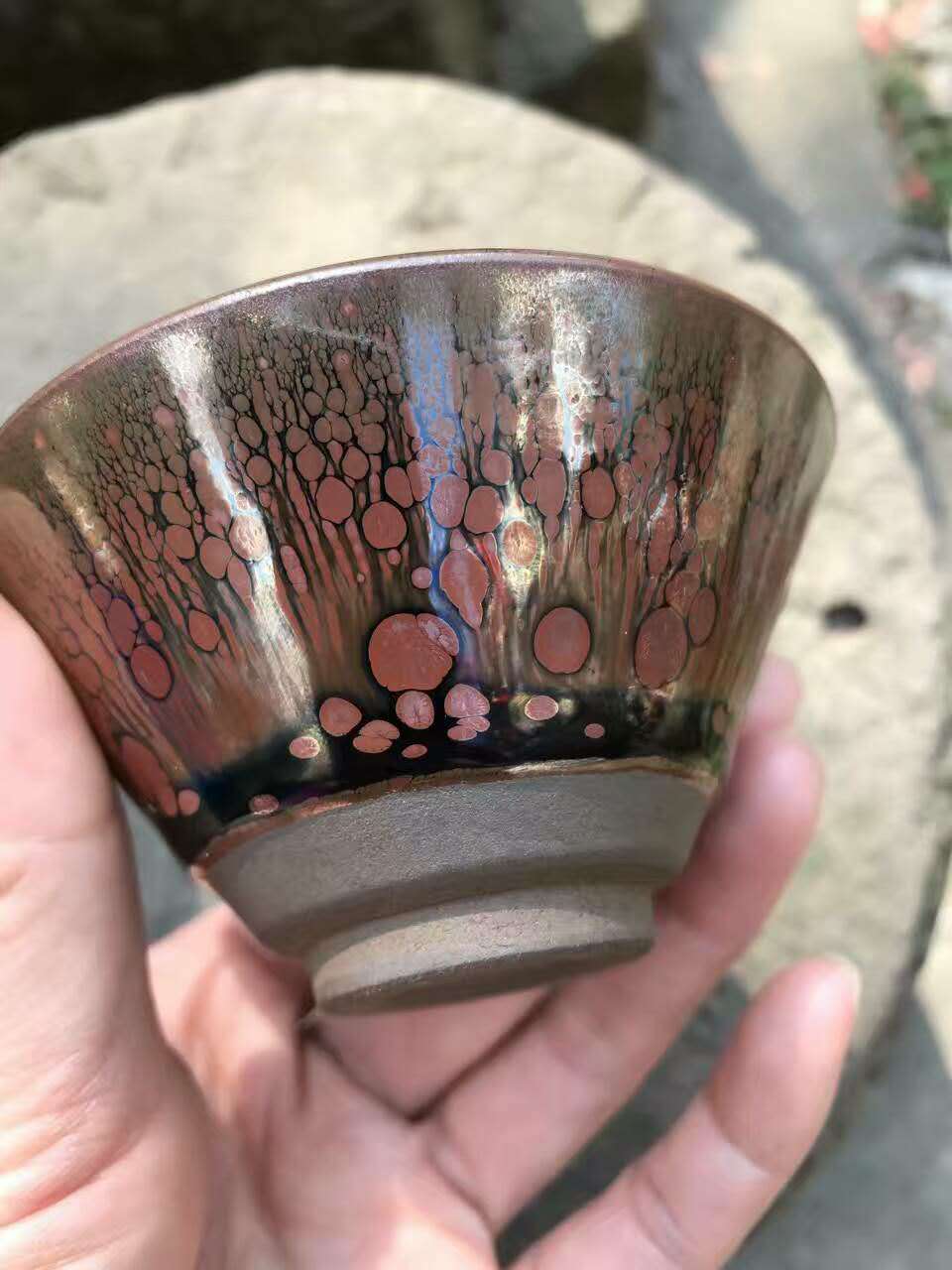
In realtà, molti appassionati di Jianzhan non hanno ancora le idee chiare su una cosa: qual è la fascia di prezzo generale di Jianzhan?
In effetti, il prezzo di uno Jianzhan varia normalmente da poche decine a decine di migliaia di yuan. Questa fascia è simile a quella della maggior parte dei beni del patrimonio culturale immateriale, e dietro il prezzo di ogni Jianzhan si cela una storia.
Innanzitutto, va notato che, a prescindere dal prezzo, le Jianzhan vengono tutte cotte con un tasso di rendimento molto basso. Nessun artigiano può controllare completamente la qualità dei prodotti, e almeno in parte ciò è dovuto alla naturale casualità.
- Il rapporto tra il prezzo di Jianzhan e il titolo professionale dell'artigiano.
In molti settori legati al patrimonio culturale immateriale, il titolo professionale di un artigiano è un fattore importante che determina il prezzo dei suoi prodotti, ma non è del tutto così per Jianzhan.
In primo luogo, poiché il processo di cottura dello Jianzhan è relativamente breve, il tasso di resa è molto basso e il prezzo è elevato. Di conseguenza, è circolato solo tra una certa classe sociale e non ha ricevuto un ampio riconoscimento dal pubblico. Per molto tempo, non ha ricevuto molta attenzione. Agli albori, la maggior parte degli artigiani lavorava in condizioni molto dure, lottando per guadagnarsi da vivere. Solo negli ultimi anni lo Jianzhan ha iniziato a prosperare e il lavoro di valutazione dei titoli professionali è iniziato lentamente.
In secondo luogo, il prezzo di Jianzhan dipende dalla qualità di ogni singolo prodotto, e il titolo professionale dell'artigiano non può rispecchiare appieno la qualità di ogni singolo prodotto. La reputazione del maestro incide solo in minima parte sul prezzo di ogni prodotto.
2. Il sistema dei prezzi base di Jianzhan.
Secondo le attuali regole di determinazione dei prezzi degli artigiani di Jianzhan, esistono fondamentalmente tre categorie:
La prima categoria riguarda Jianzhan dello stesso calibro e della stessa categoria (come Huangtu Hao e Yintu Hao), il cui prezzo è generalmente uniforme. Maggiore è il calibro, maggiore è il prezzo, e questa è attualmente la regola di prezzo più comune.
Questo perché ogni artigiano ha la sua tecnica di smaltatura e cottura unica, quindi anche le opere dello stesso artigiano non sono esattamente uguali. La diversa reputazione dell'artista può anche portare a significative fluttuazioni di prezzo, che vanno da poche centinaia a diverse migliaia di yuan, o persino decine o centinaia di migliaia di yuan.
La seconda categoria riguarda i Jianzhan dello stesso calibro e della stessa categoria: il prezzo varia in base alla qualità del prodotto.
La terza categoria è quella dei rari Jianzhan dalla fattura complessa.
Dobbiamo valutare la rarità di questo particolare Jianzhan e, tra gli altri fattori, se presenta o meno difetti.
Questo è molto importante. Anche le Jianzhan realizzate dallo stesso artista possono essere classificate in gradi diversi e i prezzi possono variare notevolmente.
In parole povere, i prezzi di Jianzhan dello stesso calibro realizzati dallo stesso artista possono variare notevolmente tra prodotti di alta qualità e prodotti ordinari.
- Il rapporto tra qualità e prezzo.
Dato che il prezzo si basa sulla qualità, cosa rende una Jianzhan di alta qualità più costosa? Per Jianzhan dello stesso calibro e altezza,
Dipende principalmente dai seguenti aspetti della qualità:
- Il prodotto non presenta difetti evidenti (sebbene nessuna Jianzhan sia completamente impeccabile), nessuna deformazione evidente, nessun foro evidente, nessun accumulo evidente di smalto, nessuna rottura di smalto, nessun restringimento di smalto, ecc.
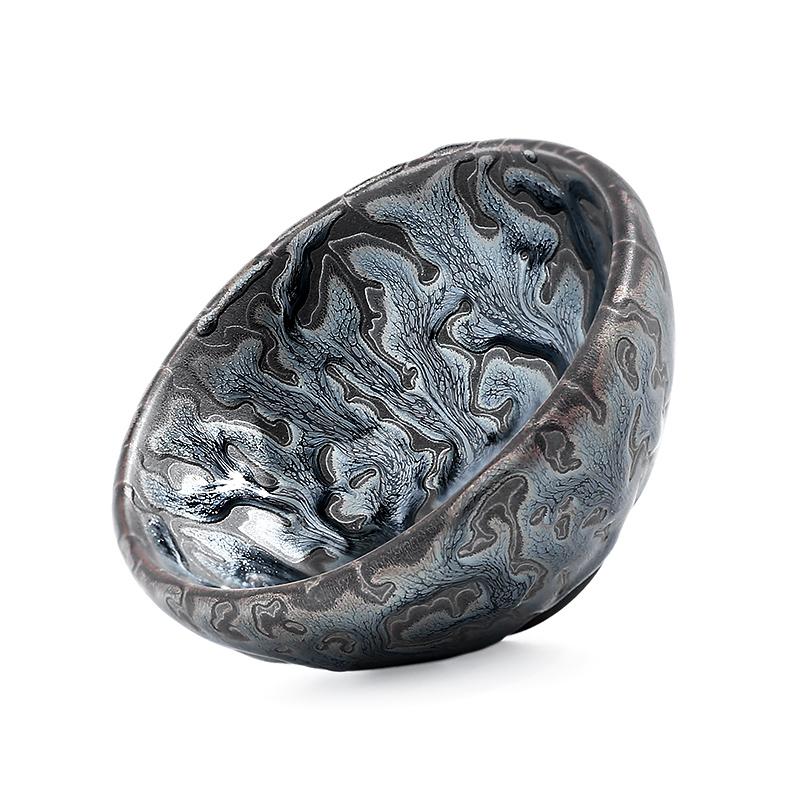
- L'effetto dei motivi sulla smaltatura, che è il fattore più decisivo.
Quali tipi di modelli sono considerati buoni? Dobbiamo considerare quattro aspetti:
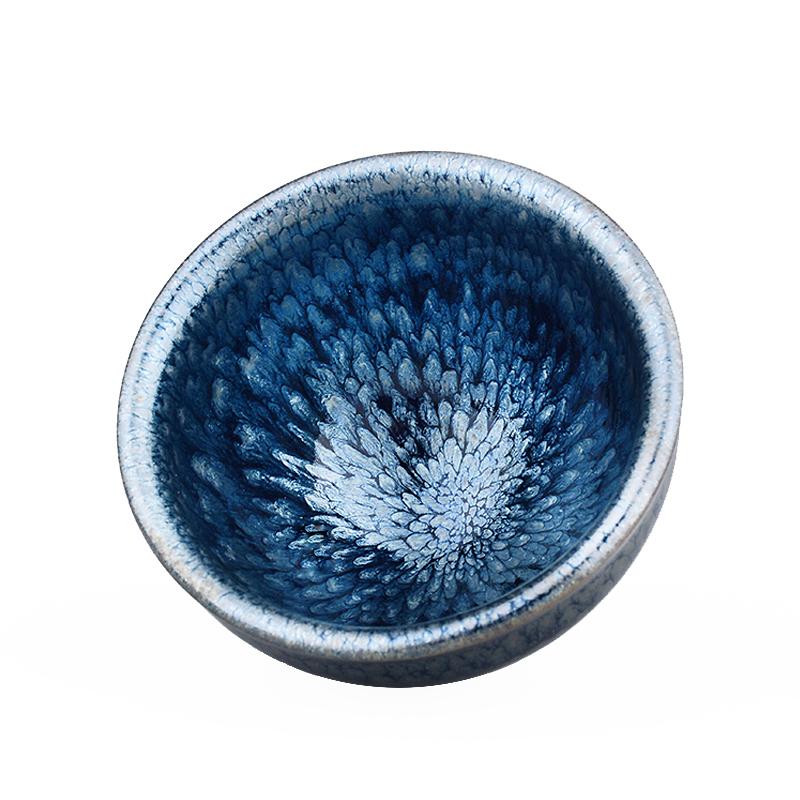
- La forma complessiva dei motivi, che ne riflette la bellezza.
- La distribuzione dei motivi, che non devono essere né troppo densi né troppo radi, deve essere uniformemente distribuita sulla superficie dello Jianzhan.
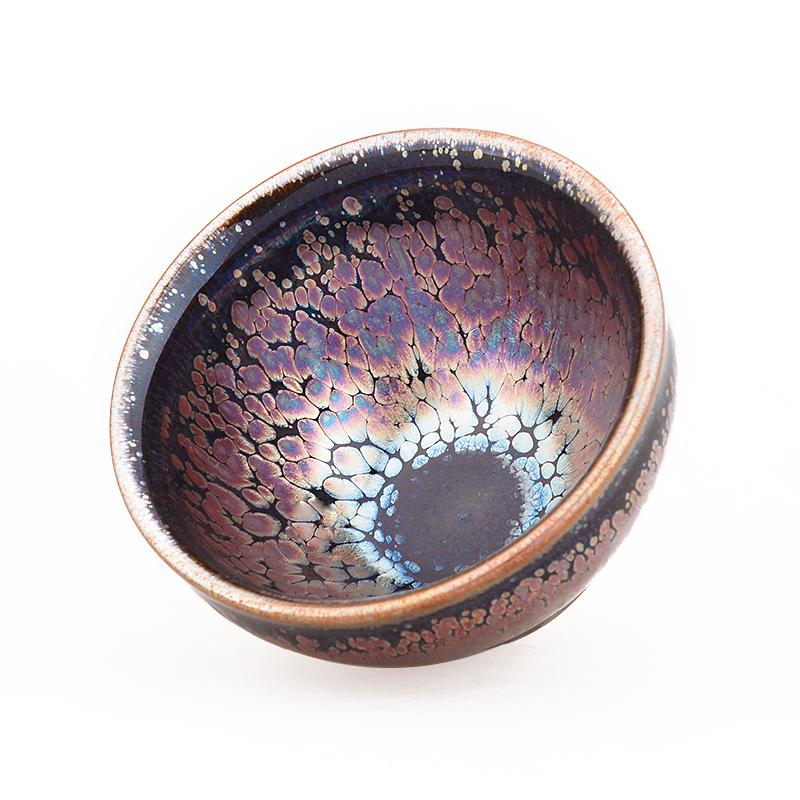
- La consistenza dei motivi, che dovrebbe avere un aspetto metallico. Il meccanismo di formazione dei motivi sulla glassa a macchie d'olio Jianzhan prevede la riduzione del ferro trivalente in ferro bivalente nella fase successiva della cottura in un ambiente carente di ossigeno. In breve tempo, il ferro bivalente cristallizzato si aggrega per formare i motivi. Pertanto, la consistenza dei motivi dovrebbe avere un aspetto metallico, soprattutto se osservata ad alto ingrandimento.
- L'effetto iridescente dei motivi.

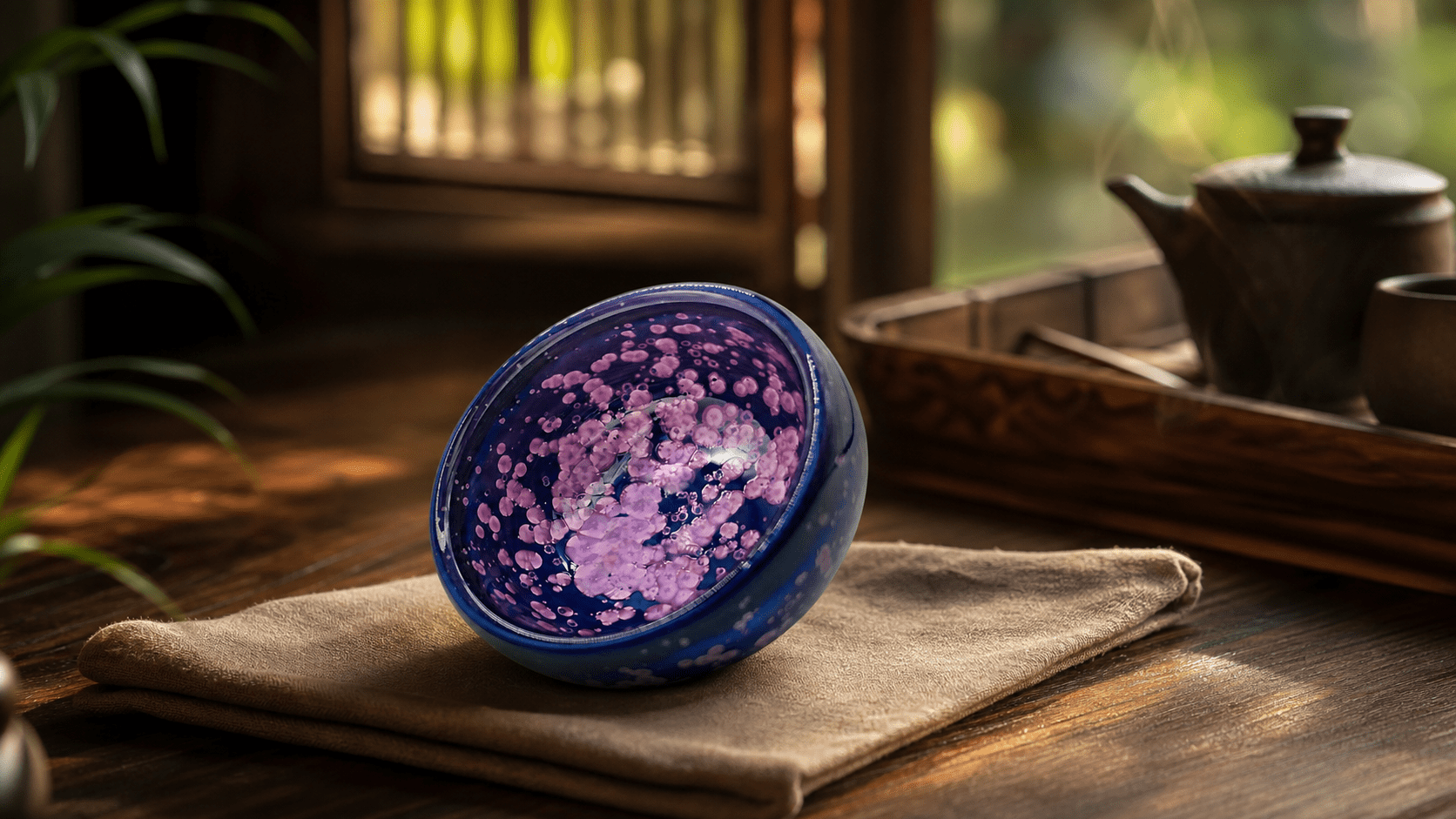
I motivi sulla smaltatura a macchie d'olio Jianzhan rifletteranno vari colori, come l'arcobaleno, l'oro, l'argento, il blu, ecc., in diverse condizioni di illuminazione, come la luce solare, la luce normale, la torcia, ecc., grazie ai diversi indici di rifrazione della smaltatura. Questo crea un magico effetto iridescente.
Sulla base dei quattro punti sopra menzionati, possiamo determinare in linea generale il prezzo di uno Jianzhan.
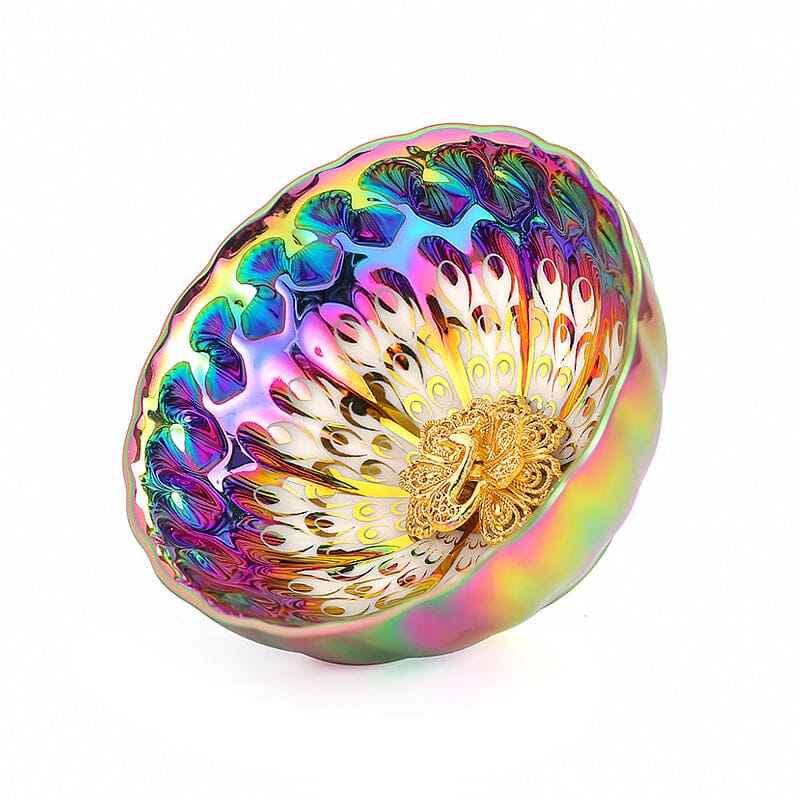


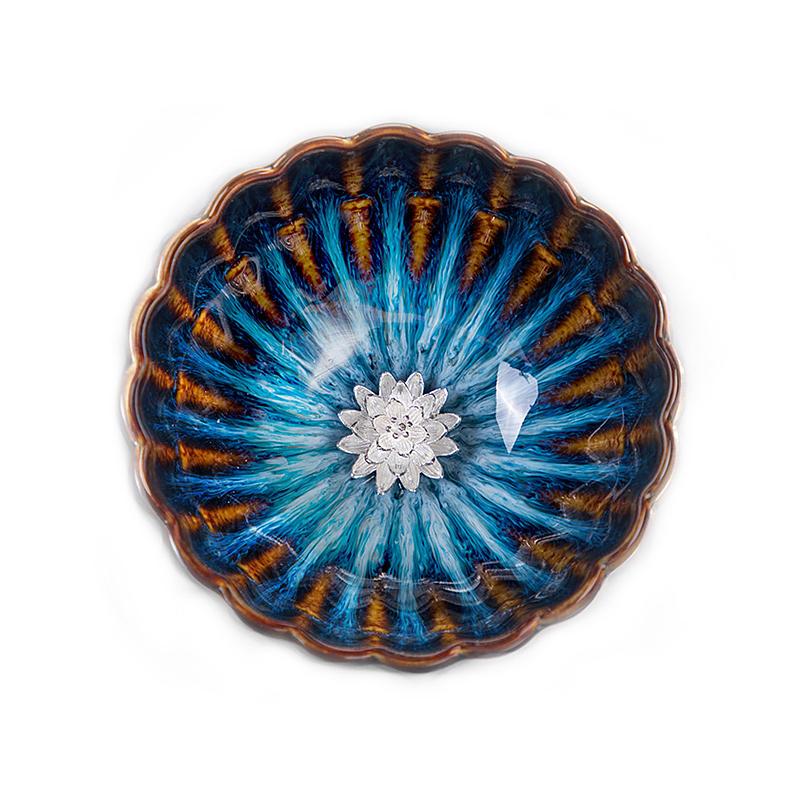
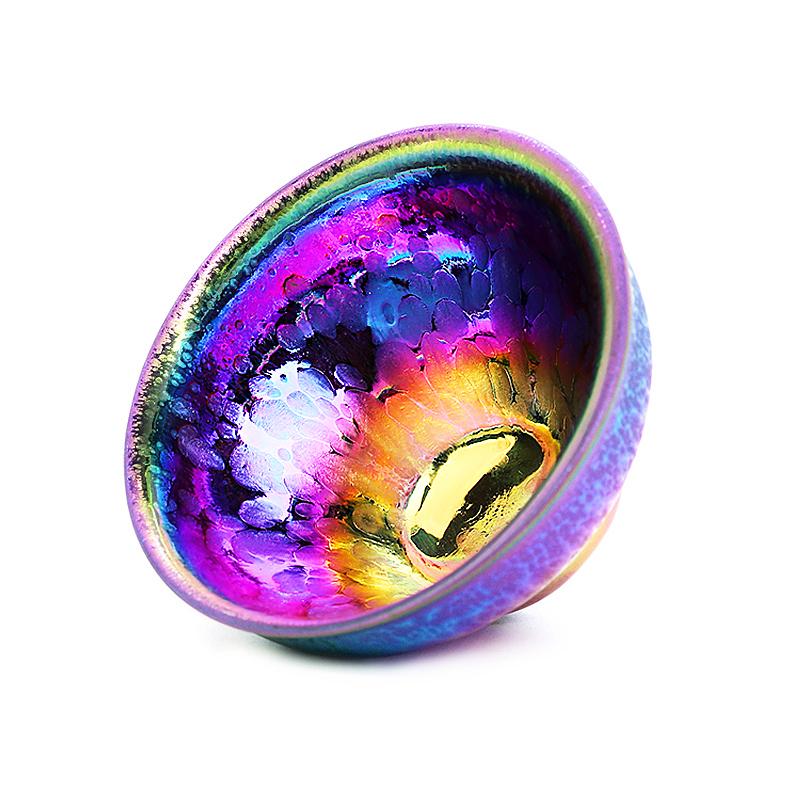
Condividere:
Spiegazione illustrata dei 5 colori di glassa di Jianzhan nella trasformazione del forno.
Due punti degno di nota nel prendersi cura delle tazze da tè Jianzhan.