



Tenmoku Tea Bowl Authenticity Guide: How to Buy the Real Thing With Confidence
A real tenmoku tea bowl, also called jianzhan, is a high-fired Jianzhan Tenmoku ceramic tea vessel known for its iron-rich glaze and unpredictable kiln change effects. If you are buying a handmade tenmoku tea cup for gongfu tea, matcha, or as a refined gift for tea lovers, authenticity matters because the beauty comes from minerals, fire, and craft—not printed decoration.
This guide explains real vs fake tenmoku in plain American English. You will learn the telltale signs, materials, process markers, and common shortcuts used in imitations, so you can shop a tenmoku tea bowl for sale with better confidence.
Key Takeaways
- An authentic tenmoku tea bowl is usually made from iron-rich clay and fired at high temperature, creating Jianzhan Tenmoku ceramic with natural glaze effects.
- Real oil spot and hare’s fur patterns come from kiln chemistry, not paint, decals, or sprayed metallic finishes.
- Small irregularities are normal in a handmade ceramic piece; perfect repetition can be a warning sign.
- Weight, foot ring, glaze depth, rim treatment, and maker transparency all help answer how to identify real jian zhan.
- If a rare-looking piece is extremely cheap, mass-produced, and sold with vague claims, treat it carefully.
What Is a Tenmoku Tea Bowl, and Why Is It Often Confused With Jianzhan?
The word “Tenmoku” is widely used in Japan and the West for dark-glazed tea bowls inspired by Chinese Jian ware from the Song Dynasty. In Chinese, these cups are commonly called Jianzhan or jianzhan. Historically, Japanese monks and tea practitioners admired these black glazed bowls and brought them to Japan, where the name Tenmoku became part of Japanese tea culture.
For beginners in the United States, the terms can feel confusing. Think of “jianzhan” as the original Chinese category and “Tenmoku” as a Japanese and international name used for similar black-glazed tea ware. Many sellers use both terms, especially when listing japanese tenmoku for sale or a tenmoku tea bowl for sale online.
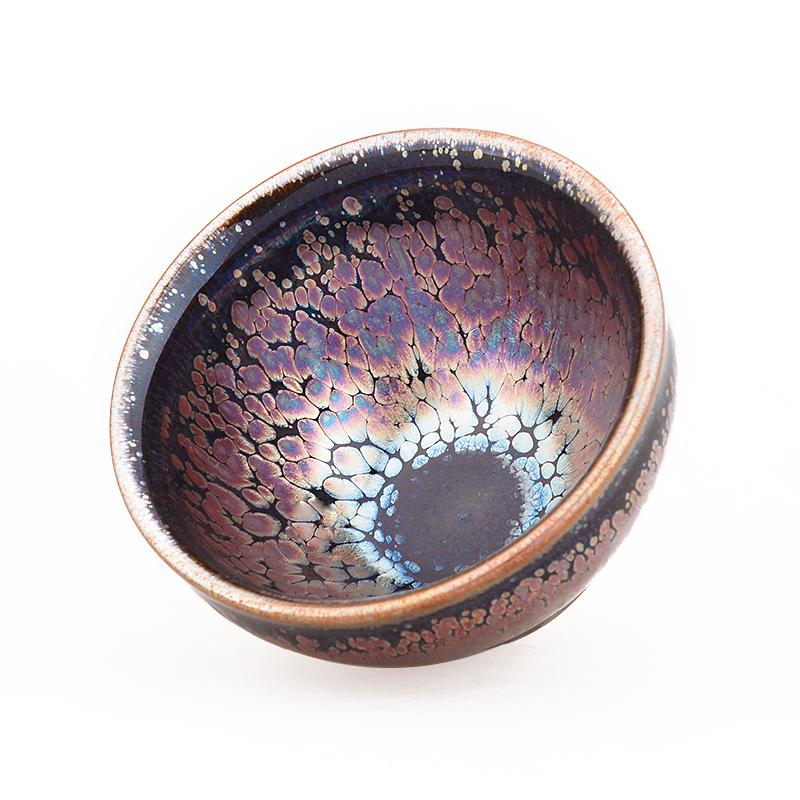
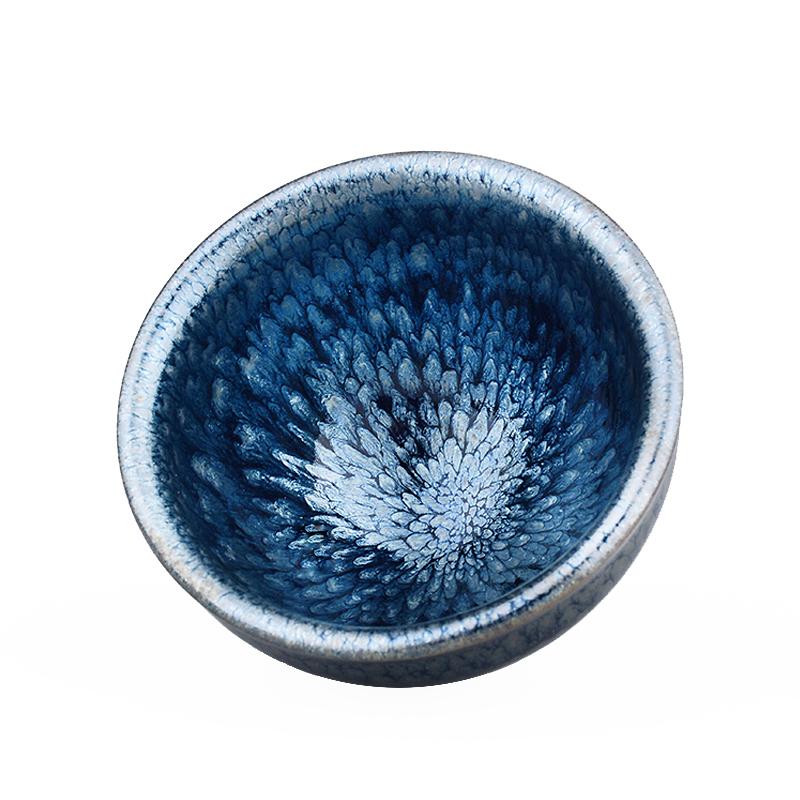
The classic appeal is the glaze. A real piece is not just a black cup. It may show oil spot speckles, hare’s fur streaks, partridge feather markings, or deep metallic flashes. These effects come from an iron-rich glaze reacting in the kiln. The result is a surface that can look like a night sky, a meteor shower, or wet stone after rain.
Real vs Fake Tenmoku: What Are the Fastest Signs to Check?
When comparing real vs fake tenmoku, start with the surface. Real tenmoku patterns should feel integrated into the glaze, not sitting on top like craft paint. Under light, the depth should shift slightly as you move the bowl. A fake often looks flat, overly shiny, or mechanically repeated.
Here are quick checks before you buy:
- Pattern depth: Real kiln change patterns appear inside or beneath the glaze surface. Painted patterns sit on top.
- Variation: Authentic jian zhan pieces rarely look identical. The kiln creates natural differences.
- Rim and foot: The rim should be clean and comfortable. The foot ring often reveals the clay body and hand finishing.
- Weight: Many real pieces feel dense and grounded, not light like thin souvenir ceramics.
- Seller details: Trustworthy sellers explain clay, firing, origin, and pattern type instead of using only vague luxury language.
A helpful analogy: a real tenmoku glaze is like wood grain or marble. It can have recognizable patterns, but it should not look copy-pasted. A fake can resemble a printed phone case—attractive from a distance, less convincing up close.
How to Identify Real Jianzhan by Material and Clay Body?
If you are asking how to identify real jian zhan, look beyond the shiny surface. Authentic pieces are traditionally made with mineral-rich clay from the Jian kiln region, especially around Jianyang in Fujian, China. The clay contains iron and other minerals that support the deep Jianzhan Tenmoku ceramic look after high-temperature firing.
The clay body matters because jianzhan is not simply a style of decoration. It is a material-and-fire tradition. The cup is shaped, glazed, and fired so the minerals migrate, crystallize, and transform. That is why a true handmade ceramic bowl has a sense of depth that mass-produced imitations struggle to copy.
Check the unglazed foot ring if photos are available. It may show a dark brown, gray-black, or iron-toned clay body. The foot should look trimmed, not molded into a plastic-like identical shape. Some pieces may show minor tool marks or subtle asymmetry, which can be a good sign when the overall craftsmanship is controlled.
Do not assume every heavy black cup is real, though. Some fakes use dark clay or black slip to mimic the look. The key is the combination: iron-rich body, natural glaze movement, high firing, and honest maker information.
Jianzhan Oil Spot vs Fake: How Can You Tell the Difference?
The question of jian zhan oil spot vs fake is one of the most common authenticity concerns. Oil spot tenmoku is loved because the surface looks like silver, gold, or blue-black droplets floating on a dark field. In a real oil spot glaze, these spots form during firing when iron in the glaze separates and crystallizes.
Real oil spot patterns usually have organic variation. Some spots are larger, some smaller. Their edges may be soft, haloed, or slightly raised under the glaze. When you tilt the bowl, the spots may catch light differently depending on their mineral structure.
Fake oil spot effects often show one or more of these problems:
- Printed dots: The spots repeat in a uniform grid or identical size.
- Painted metallic finish: The color sits on top and may look like glitter or nail polish.
- Overly perfect distribution: Natural kiln change rarely produces evenly spaced decoration.
- No glaze depth: The surface looks like a flat black cup with silver specks added afterward.
- Poor durability claims: If the seller warns that the decoration may rub off easily, it is not a true fired oil spot glaze.
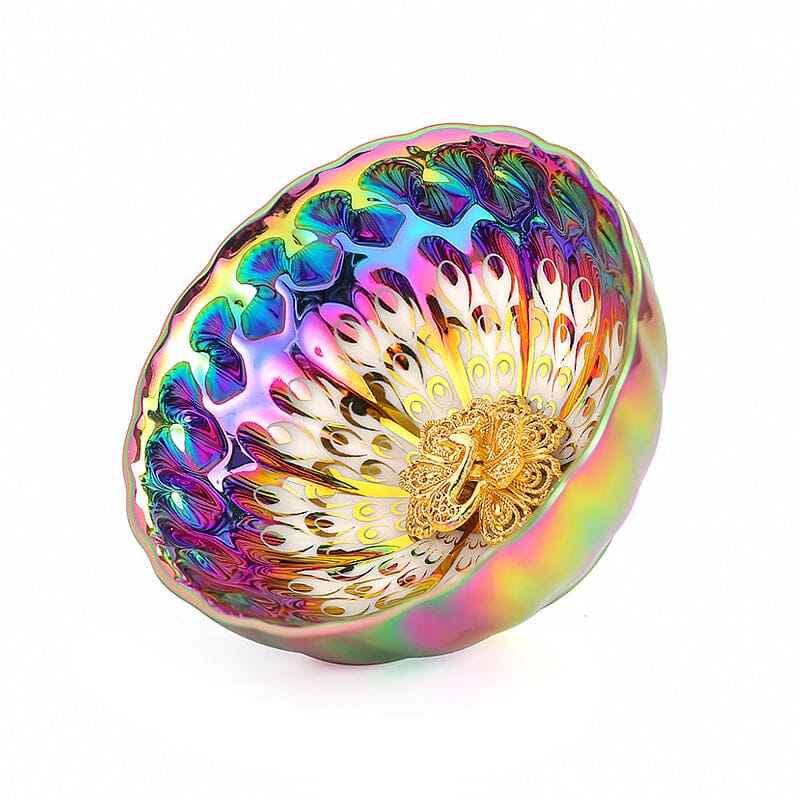
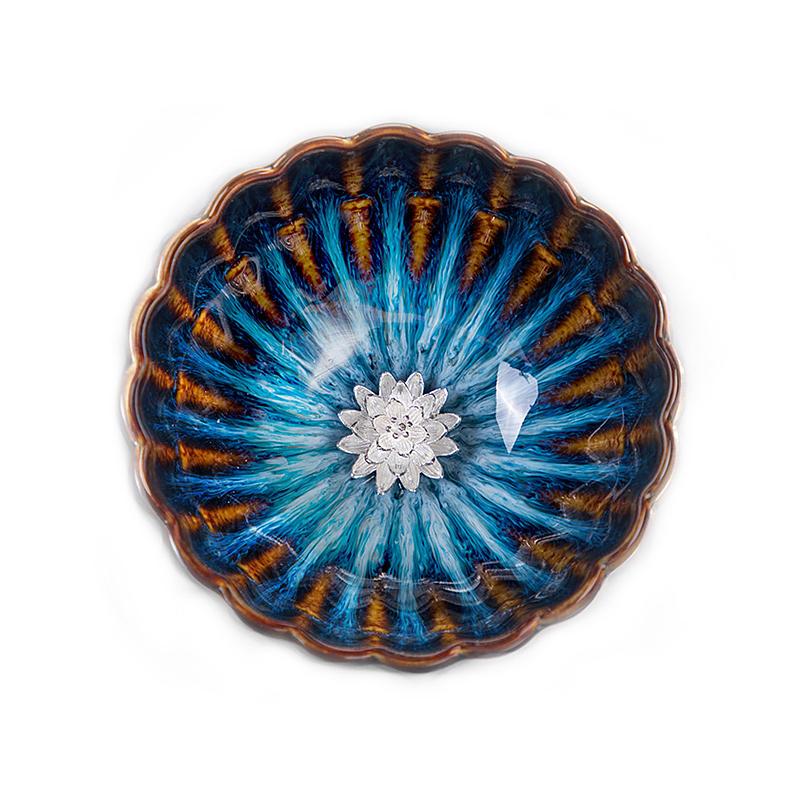
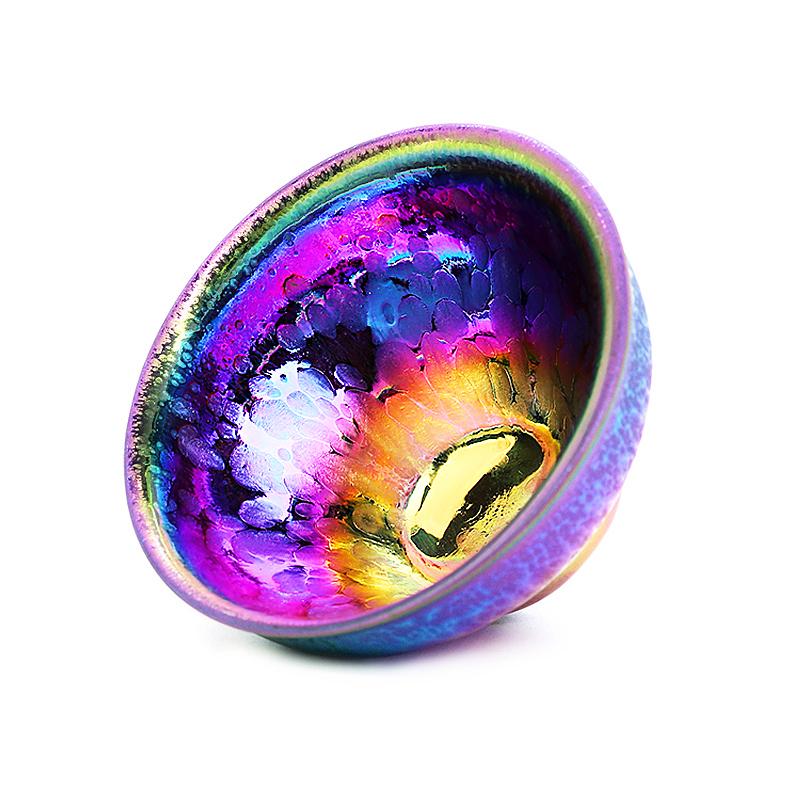
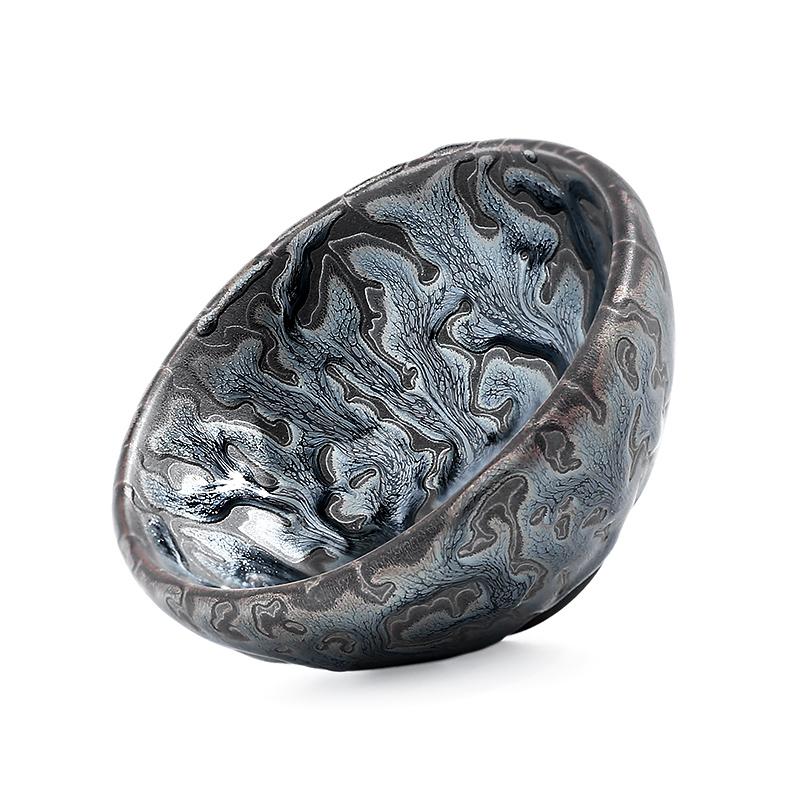
To see authentic examples, Discover our collection of oil spot tenmoku cups. Compare how the spots shift in size, density, and shine from piece to piece. That variation is part of the charm.
What Process Markers Reveal an Authentic Jianzhan?
An authentic jian zhan carries evidence of process. It is shaped from clay, dried, bisque-fired or prepared, glazed, and then high-fired. During firing, the glaze flows, reacts, and sometimes stops just above the foot. This is why many real pieces show a thicker glaze line near the lower body.
Look for these process markers:
- Natural glaze pooling: The glaze may deepen toward the lower wall, showing gravity and heat movement.
- Controlled stopping point: Traditional pieces often have glaze that stops before the foot ring, leaving part of the clay exposed.
- Kiln change activity: Patterns should feel born from heat—streaking, crystallization, feathering, or spotting.
- Interior and exterior relationship: The inside and outside may differ, but they should feel like related firing results, not separate decorations.
- Handmade character: Slight variations in curve, wall thickness, and trimming can indicate a handmade ceramic process.
In Japanese tea culture, prized Tenmoku bowls were admired for the way light moved across the glaze during tea preparation. That same idea applies to a small handmade tenmoku tea cup used for gongfu tea. Even when the cup is modern, the best pieces invite you to turn them in your hand.
Comparison Table: Real vs Fake Tenmoku Tea Bowl
| Feature | Authentic Tenmoku / Jianzhan | Common Fake or Imitation |
|---|---|---|
| Glaze effect | Created by iron-rich glaze and kiln change during high firing | Painted, printed, sprayed, or artificially coated |
| Pattern | Organic, varied, and naturally uneven | Repeated, overly uniform, or graphic-looking |
| Surface depth | Looks layered; light shifts across oil spot or hare’s fur | Flat shine, glittery topcoat, or decal-like effect |
| Foot ring | Often exposes dark iron-rich clay and trimming marks | Overly smooth mold marks, cheap clay, or fully hidden base |
| Weight and feel | Dense, balanced, comfortable in hand | Too light, awkward, or generic factory feel |
| Seller information | Mentions origin, firing, clay, glaze type, and care | Uses vague claims like “ancient miracle glaze” with no details |
| Price logic | Reflects craft, firing loss, and maker skill | Rare pattern claims at suspiciously low prices |
What Are the Most Common Fake Tenmoku Tea Bowl Types?
Not every non-traditional bowl is dishonest. Some modern Tenmoku-inspired ceramics are openly sold as decorative or studio interpretations. The problem starts when a seller labels a shortcut product as authentic jian zhan or Song Dynasty-style kiln change when it is not.
Common fakes include:
- Decal tenmoku: A printed pattern is applied to the ceramic surface. It may look crisp but lacks mineral depth.
- Spray-glazed imitation: Metallic speckles are sprayed to resemble oil spot. These can appear too even.
- Low-fired decorative cups: These may be attractive but lack the density and glaze behavior of high-fired Jianzhan Tenmoku ceramic.
- Resin-coated pieces: A glossy coating can imitate depth in photos but does not behave like fired glaze.
- Misleading antique claims: Some sellers imply Song Dynasty age without proof. True antiques require serious provenance, not just an old-looking surface.
For most tea lovers in the US, the safest path is not chasing “museum-level antique” claims. Instead, choose a well-made modern piece from a transparent seller. You get the tactile pleasure, visual beauty, and daily usability without the risks of questionable antique marketing.
How Should Beginners Evaluate a Tenmoku Tea Bowl for Sale Online?
Buying online can be safe if the listing gives enough evidence. When browsing a tenmoku tea bowl for sale, ask yourself whether the seller is helping you understand the object or simply pushing mystery.
Look for listings with:
- Clear photos of the inside, outside, rim, and foot ring.
- Natural lighting photos, not only heavily edited studio shots.
- Pattern name, such as oil spot, hare’s fur, partridge feather, or曜变-inspired glaze.
- Dimensions and capacity in ounces or milliliters.
- Information about whether it is handmade, wheel-thrown, or molded.
- Care instructions for tea use.
If you are looking at japanese tenmoku for sale, remember that Japanese Tenmoku can refer to bowls made in Japan, Japanese tea ceremony style bowls, or Japanese-market naming for Jian-style cups. None of those is automatically wrong. The important point is clarity. A good seller should explain what the piece is, where it was made, and whether it is an authentic jian zhan or a Japanese Tenmoku-style ceramic.
For a curated starting point, Shop authentic Tenmoku tea bowls and compare the descriptions, shapes, and glaze patterns before deciding what suits your tea ritual.
Can Price Help You Spot Real vs Fake Tenmoku?
Price is not proof, but it is a useful signal. A genuine handmade tenmoku tea cup requires skilled labor and firing risk. Not every cup survives the kiln perfectly. Some pieces warp, crack, blister, or fail to develop desirable patterns. That loss is built into the cost of authentic work.
Very cheap cups with dramatic claims deserve caution. If a listing promises rare Song Dynasty glaze, museum-quality oil spot, handmade craftsmanship, and a price lower than a basic coffee mug, the story does not add up.
On the other hand, expensive does not always mean real. Some sellers overprice decorative ceramics with romantic language. Judge the piece by evidence: material, process, photos, maker reputation, and return policy.
What Should a Real Tenmoku Tea Bowl Feel Like in Use?
Authenticity is not only visual. A good tenmoku tea bowl should feel satisfying in the hand. For gongfu tea, many buyers prefer a smaller cup with a rounded body, smooth rim, and stable foot. The black glaze makes tea color easier to appreciate in a different way; instead of seeing pale liquor through white porcelain, you notice reflections, aroma, and contrast.
The rim should not scratch your lip. The foot should sit flat. The interior should be easy to rinse. A real bowl may have natural glaze texture, but it should still be functional for tea unless sold as an art display piece.
Premium lifestyle buyers often choose tenmoku because it brings a quiet focal point to the tea table. It is like choosing a hand-forged chef’s knife or a mechanical watch: the appeal is not only utility, but the visible relationship between material, craft, and time.
FAQ: Real vs Fake Tenmoku Tea Bowl
Real vs fake tenmoku: what is the easiest beginner test?
The easiest test is to study the glaze under angled light. Real tenmoku patterns usually have depth and natural variation created during firing. Fake patterns often look printed, painted, overly uniform, or stuck on top of the surface.
How to identify real jian zhan from photos?
Ask for clear photos of the rim, interior, exterior, and foot ring. Look for iron-rich clay at the base, natural glaze pooling, organic pattern variation, and a seller description that explains clay, firing, origin, and glaze type.
Jian zhan oil spot vs fake: are perfect dots a bad sign?
Usually, yes. Real oil spot effects form through kiln chemistry, so the dots should vary in size, density, and shine. Perfectly repeated dots may indicate printing, spraying, or a decorative coating rather than a fired iron-rich glaze.
Is every Jianzhan Tenmoku ceramic cup an authentic jian zhan?
No. Black porcelain describes a dark ceramic body or glaze appearance, but authentic jian zhan refers to a specific tradition involving iron-rich clay, high firing, and natural kiln change glaze effects. A black cup can be beautiful without being real jianzhan.
Can a handmade tenmoku tea cup have flaws and still be real?
Yes. Small variations, tool marks, and subtle asymmetry are normal in handmade ceramic work. However, cracks through the body, sharp glaze defects at the rim, unstable footing, or flaking surface decoration are quality problems.
Is Japanese Tenmoku the same as Chinese Jianzhan?
They are related but not always identical. Jianzhan is the Chinese black-glazed ware tradition from the Jian kilns. Tenmoku is the Japanese name that became popular through Japanese tea culture and is now used internationally for similar dark-glazed tea bowls.
Should I buy an antique Song Dynasty tenmoku tea bowl online?
Only with expert verification and strong provenance. For most buyers, a modern authentic jian zhan from a reputable maker is a safer and more practical choice for tea use and gifting.
Conclusion: Buy the Bowl, Not the Hype
A real tenmoku tea bowl is special because it records a meeting of earth, iron, glaze, and fire. The best way to avoid fakes is to slow down and look for evidence: natural kiln change, iron-rich materials, honest photos, a well-finished foot, and seller transparency.
If you are choosing a gift for tea lovers, upgrading your gongfu tea setup, or exploring Japanese and Chinese tea aesthetics for the first time, authenticity will make the piece more meaningful. Start with clear information, compare real examples, and choose the bowl that feels alive in the hand.
When you are ready, explore our curated selection and choose a handmade piece with confidence.
Explore Our Collection
Ready to experience the world of tenmoku tea bowl? Browse our curated collection:
Disclaimer: This article is for informational purposes. Products and pricing subject to change.


分享:
How a Handmade Tenmoku Tea Bowl Can Transform Your Morning Tea Into a Luxury Wellness Ritual
Tenmoku Tea Bowl: An Artisan's Journey Through Fire & Time