

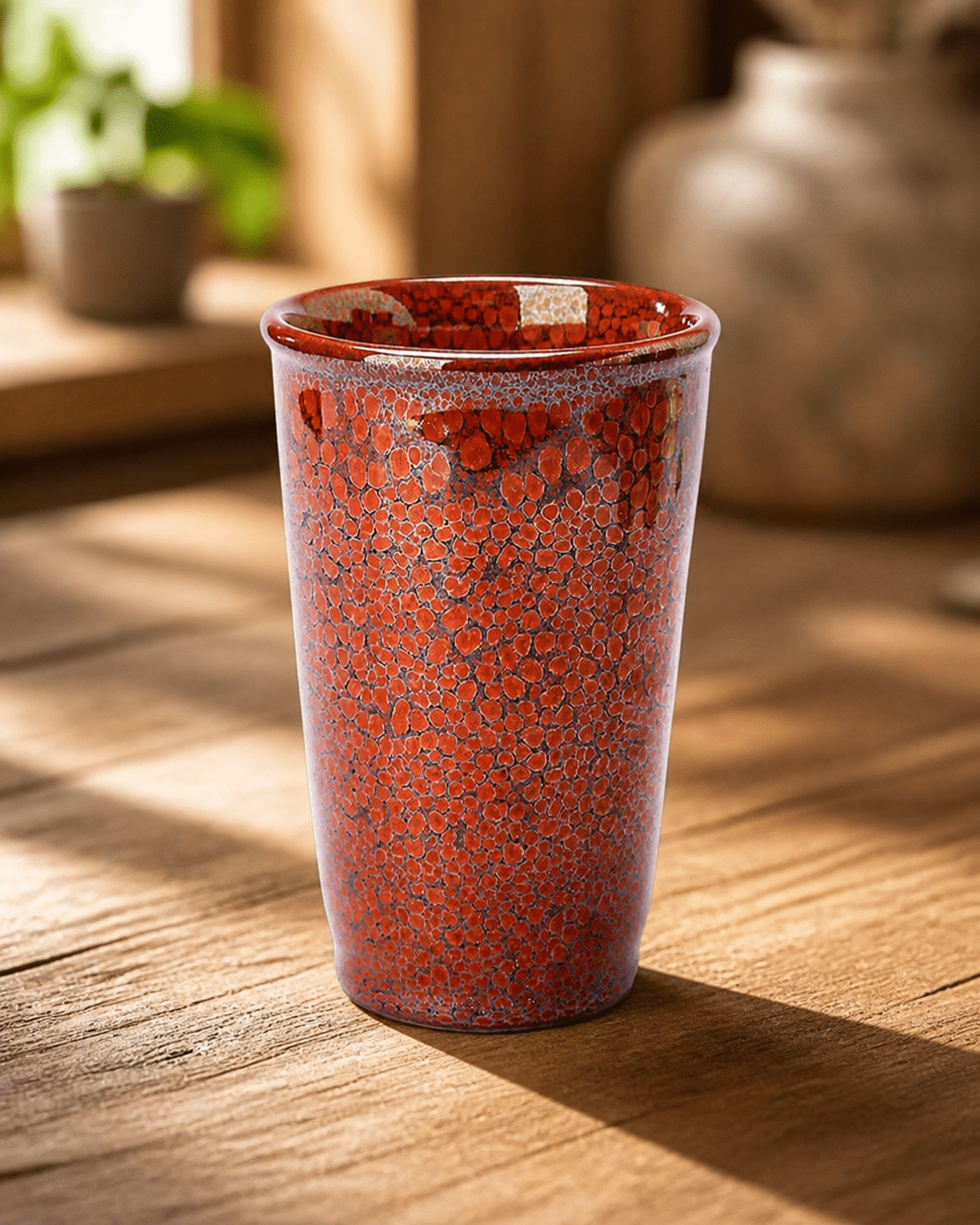

Tenmoku Tea Bowl: The Artisan Story Behind a More Meaningful Tea Ritual
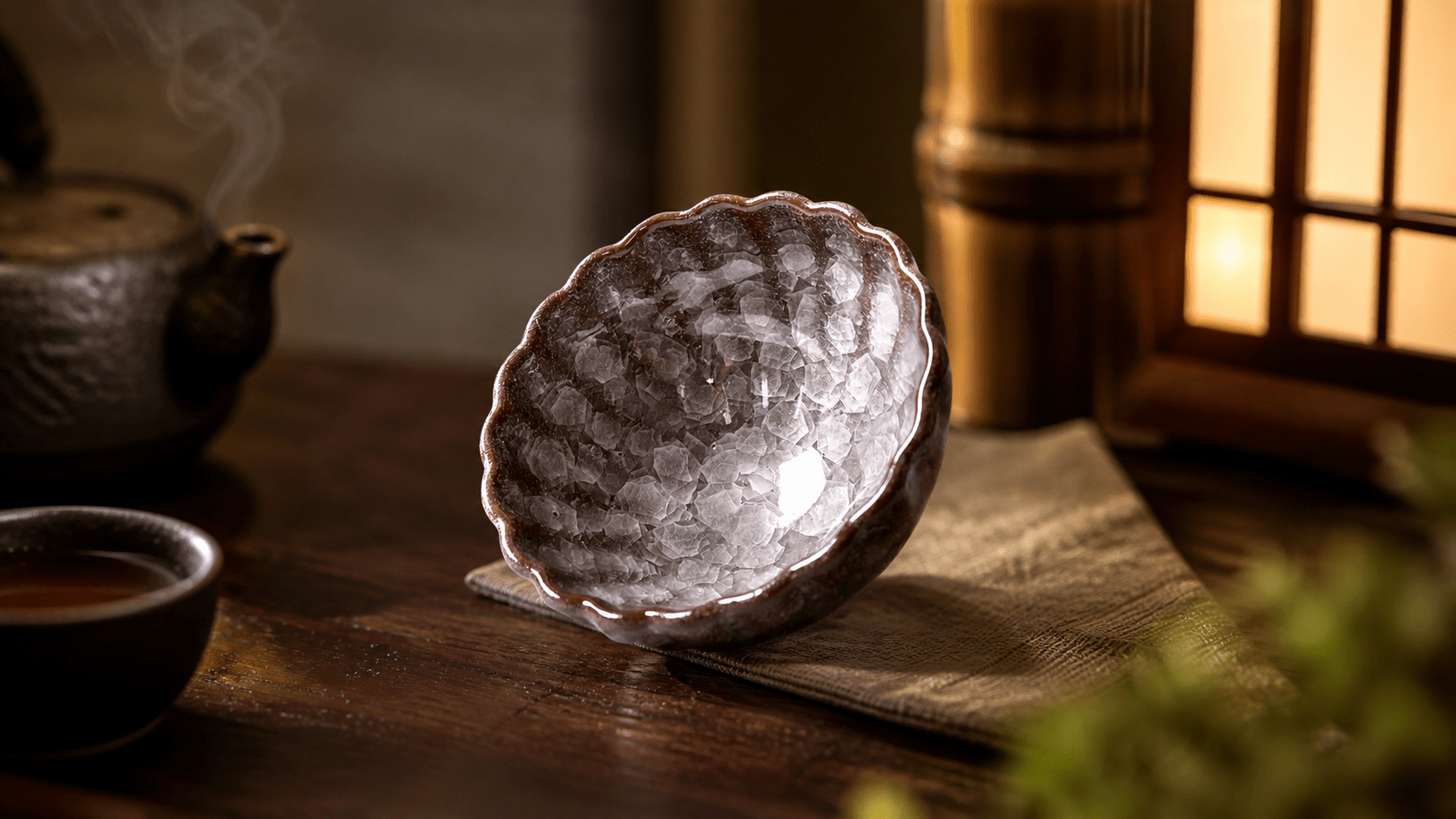
A tenmoku tea bowl is more than a beautiful cup; it is a handmade piece of Jianzhan Tenmoku ceramic shaped for quiet tea moments, especially gongfu tea with oolong tea, aged puerh, or roasted teas. Known also as jianzhan, this bowl carries the glow of Song Dynasty glaze traditions into a modern American tea table.
For curious beginners, it can feel like discovering cast iron cookware for the first time: simple, durable, deeply traditional, and more expressive the longer you live with it. For premium lifestyle buyers, it is a gift with story, craft, and presence.

Key Takeaways
- A tenmoku tea bowl, or jianzhan, comes from a historic Jianzhan Tenmoku ceramic tradition associated with Fujian, China.
- The famous tenmoku glaze is fired at high heat, where iron-rich minerals form natural patterns such as hare's fur and oil spots.
- Song dynasty tea culture helped make these bowls prized objects for tea, meditation, and refined daily life.
- Japanese monks and tea masters carried admiration for these bowls to Japan, shaping what many collectors now call a Japanese tea bowl or Tenmoku style.
- Handmade jian zhan tea cups make meaningful gifts for tea lovers because every firing creates a slightly different surface.
What makes a tenmoku tea bowl meaningful for gongfu tea and gifts for tea lovers?
The meaning begins in the hand. A good tenmoku tea bowl has weight without feeling heavy, a rounded lip that meets the mouth gently, and a dark interior that makes tea liquor look warmer and more luminous. When you pour amber oolong tea into Jianzhan Tenmoku ceramic, the color seems to glow from within.
That visual effect is one reason tea lovers notice these cups quickly. In a clear glass, tea looks analytical. In a white cup, it looks clean and bright. In a tenmoku cup, tea looks intimate, almost like candlelight in a dark room.
For gongfu tea, where small servings are brewed repeatedly, the cup becomes part of the rhythm. You warm it, pour, sip, notice aroma, and return. The ritual is not complicated. It simply asks you to slow down for a few minutes.
As a gift, a tenmoku tea bowl works because it is both useful and symbolic. It says: here is an object made for attention. It suits someone who enjoys loose-leaf tea, design, ceramics, Japan-inspired interiors, quiet mornings, or handcrafted objects with provenance.
At our studio, we choose pieces not only for dramatic patterns but for how they feel in daily use. A cup should not live only on a shelf. It should be invited into breakfast, afternoon resets, late-night reading, and weekend tea sessions with friends.
If you are ready to explore, you can Shop authentic Tenmoku tea bowls selected for shape, glaze depth, and tea-friendly proportions.
How does a tenmoku artisan carry Song Dynasty glaze into a modern brand story?
Every tenmoku artisan begins with a paradox: the technique is ancient, but the result can never be fully controlled. Clay, iron, ash, oxygen, heat, cooling speed, and kiln position all participate. The maker guides the process, but the kiln has the final word.
That uncertainty is not a flaw. It is the soul of the work. In an age of identical products, a tenmoku glaze reminds us that beauty can come from pressure, heat, timing, and patience.
Our brand story started with a simple question: could a cup from an old kiln tradition feel natural in a modern American home? Not as museum décor, but as a daily companion for tea drinkers who appreciate craft.
The answer came from watching artisans work. Clay is refined, wedged, thrown, trimmed, dried, bisque fired, glazed, and fired again at temperatures that can climb above 2,300°F. The glaze looks plain before firing, often dark and quiet. Then the kiln transforms it.
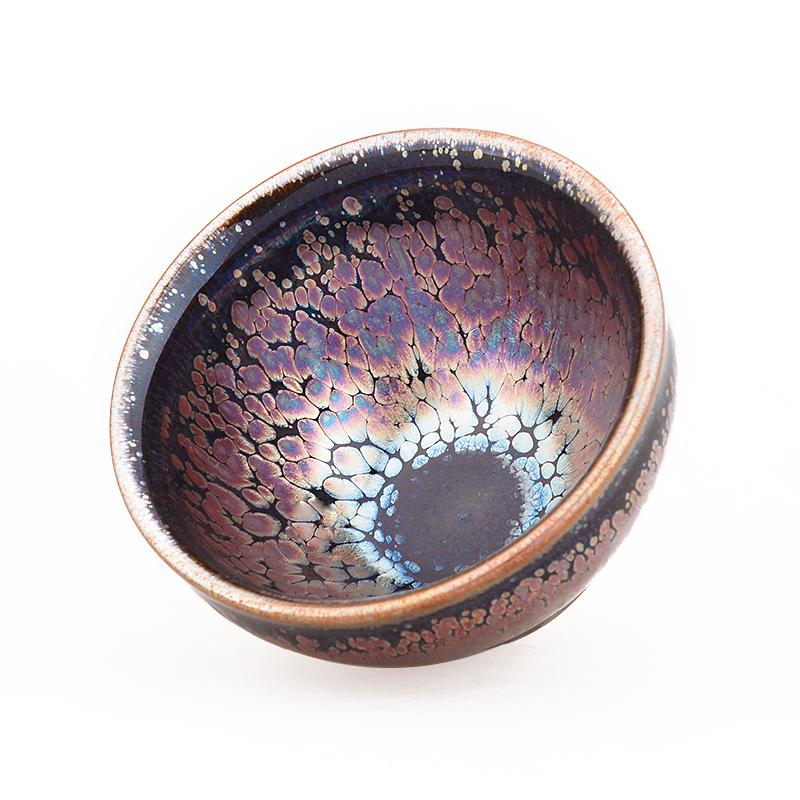
Iron crystals may streak downward like silver rain. They may gather into metallic constellations. They may form the famous oil spot pattern, where shimmering circles appear across the surface like stars reflected on a black lake.
For a tenmoku artisan, success is not about forcing perfection. It is about preparing the conditions for a rare surface to emerge. That approach shapes our curation. We look for bowls that show balance: expressive glaze, clean form, comfortable handling, and authenticity of process.
When a piece arrives, we often turn it under different light before approving it. Morning light reveals one personality. Warm evening light reveals another. That changing surface is why collectors return to jianzhan again and again.
Why does song dynasty tea culture still influence the tenmoku tea bowl today?
Song dynasty tea culture, which flourished in China from the 10th to 13th centuries, valued refinement, study, poetry, ceramics, and the art of preparing tea with focus. Tea was not only a drink. It was a social art, a scholarly practice, and a way to display taste.
During this period, powdered tea was whisked in bowls. The pale foam of prepared tea stood out beautifully against dark Jianzhan Tenmoku ceramic. That contrast made Jian ware, the ancestor of today's jianzhan, highly desirable.
If you are new to this history, imagine the way a matte black plate makes a chef's dessert look more dramatic. Song tea drinkers understood that presentation changes perception. A dark bowl intensified the pale tea foam and turned preparation into performance.
The tenmoku tea bowl became associated with quiet luxury: not loud ornament, but deep surface, honest material, and technical difficulty. Its beauty was not painted on. It was born in the kiln.
That heritage still matters today because modern tea drinkers are seeking objects with depth. A mass-produced mug can hold tea. A handmade tenmoku bowl can hold memory, geography, and a thousand-degree transformation.
In a US home, this does not require formal knowledge of Chinese or Japanese tea ceremony. You can use the bowl simply. Brew a small pot of roasted oolong tea, pour into the cup, and notice how the tea's color changes against the dark glaze. That one moment is enough to understand why the tradition endured.
What is jian zhan history and how did the Japanese Tenmoku name emerge?
Jian zhan history begins in the Jian kilns of Fujian province, especially around the historic kiln areas near present-day Jianyang. The phrase Jianzhan can be understood simply as Jian ware tea bowl. These were iron-rich Jianzhan Tenmoku ceramic bowls made for tea during the Song era.
The word Tenmoku has a cross-cultural journey. Japanese monks traveled to China, studied at temples, encountered these bowls, and brought them back to Japan. Many were associated with Mount Tianmu, pronounced Tenmoku in Japanese. Over time, the Japanese term became widely used in global ceramics circles.
That is why shoppers may see several related names: tenmoku tea bowl, jianzhan, Jianzhan cup, Japanese tea bowl, or Japanese Tenmoku. The names are connected, though not always identical in cultural context.
For American buyers, the key is to look beyond the label. Ask where the clay tradition comes from, whether the piece is handmade, what type of glaze it carries, and whether the seller explains the firing process clearly.
Collectors in Japan have long treasured Tenmoku bowls, especially rare historic examples. Modern makers in China, Japan, and beyond continue to interpret the style. Some emphasize heritage accuracy. Others create contemporary forms for daily tea.
Our collection focuses on living craft: pieces that respect fujian tea bowl tradition while fitting today's gongfu tea tables, personal rituals, and thoughtful gifting.
How does the fujian tea bowl tradition shape handmade jian zhan tea cups?
The fujian tea bowl tradition is rooted in local materials. The clay used for traditional jianzhan is often rich in iron, which contributes to the dark body and the glaze reactions. This is one reason authentic pieces feel visually deep rather than flat black.
Handmade jian zhan tea cups are typically thrown or shaped in small batches. Slight variations in curve, foot ring, thickness, and glaze flow are expected. These differences are part of the appeal, much like the grain in a wooden table or the natural texture in hand-loomed linen.
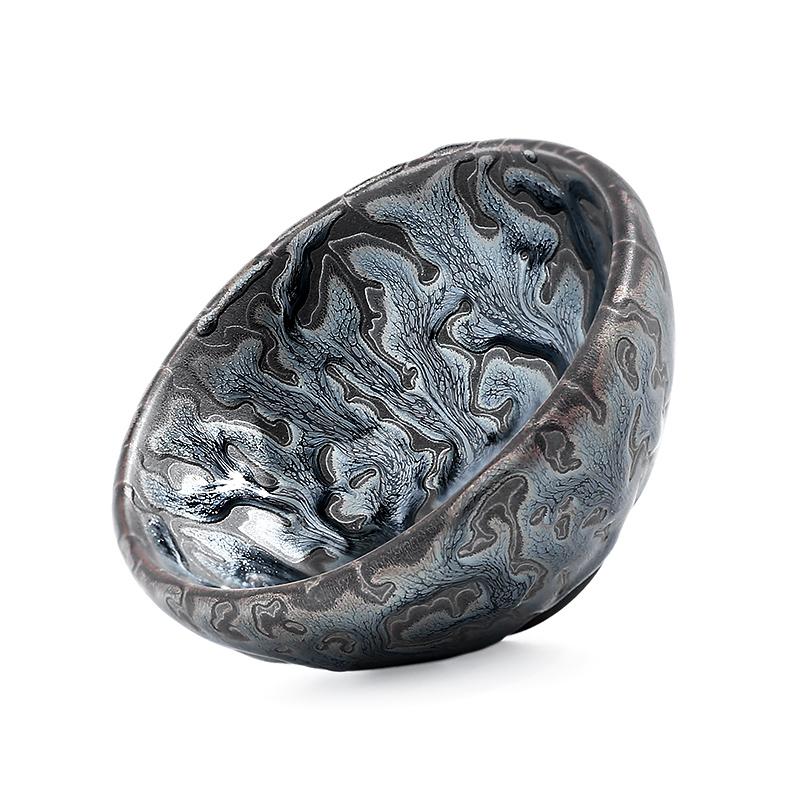
The most beloved glaze families include hare's fur, oil spot,曜变-inspired effects, and dark mirror-like surfaces. A hare's fur cup shows fine vertical streaks that resemble the soft lines of animal fur. An oil spot tenmoku cup displays round metallic spots formed by iron crystals during firing.
Neither pattern is painted by hand. The artisan applies the glaze, but heat creates the final design. This makes each cup a record of a specific firing, a specific place in the kiln, and a specific moment of cooling.
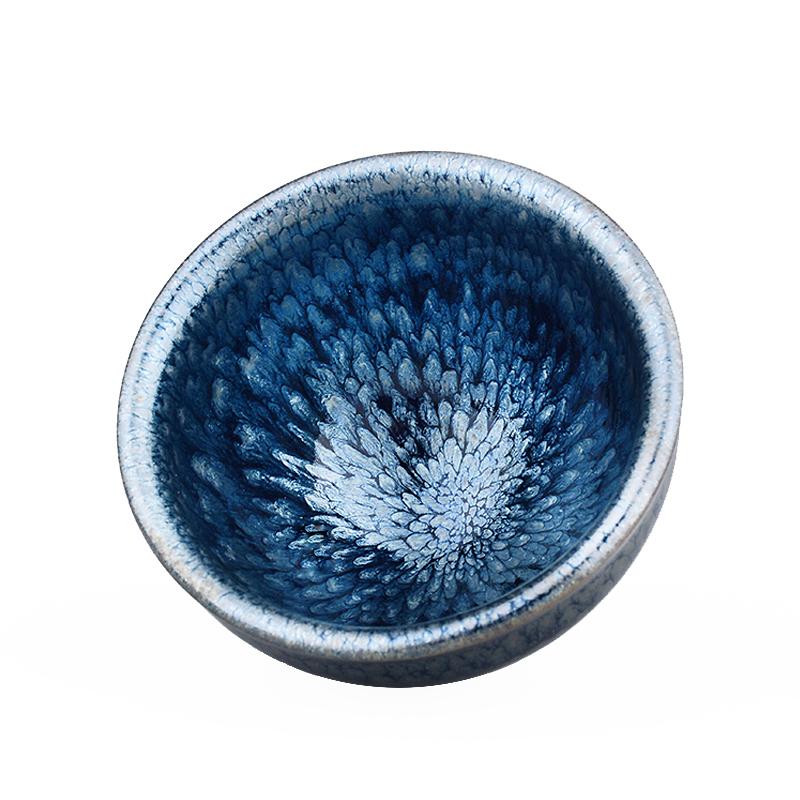
That is why two cups from the same kiln may look like siblings, not twins. One may flash blue under sunlight. Another may lean bronze, silver, or deep brown. A third may look quiet until tea warms it and light catches the curve.
For buyers who appreciate craft, this unpredictability is the point. You are not choosing a factory-perfect object. You are choosing a bowl with a living surface.

Which tenmoku glaze style fits your tea ritual best?
Choosing a tenmoku glaze is partly aesthetic and partly practical. Some people want drama. Others want restraint. Some want a gift that photographs beautifully, while others want a quiet daily cup for morning tea.
The table below compares common styles in simple terms.
| Style | Visual Character | Best For | Gift Personality |
|---|---|---|---|
| Hare's Fur | Fine vertical streaks, often silver, brown, or blue-toned | Oolong tea, roasted tea, classic gongfu tea sessions | Elegant, historic, refined |
| Oil Spot Tenmoku Cup | Round metallic spots like stars or raindrops | Collectors, visual impact, display and daily use | Dramatic, premium, memorable |
| Dark Mirror Glaze | Deep Jianzhan Tenmoku ceramic with subtle shine | Minimalist tea tables and Japanese-inspired interiors | Quiet, modern, sophisticated |
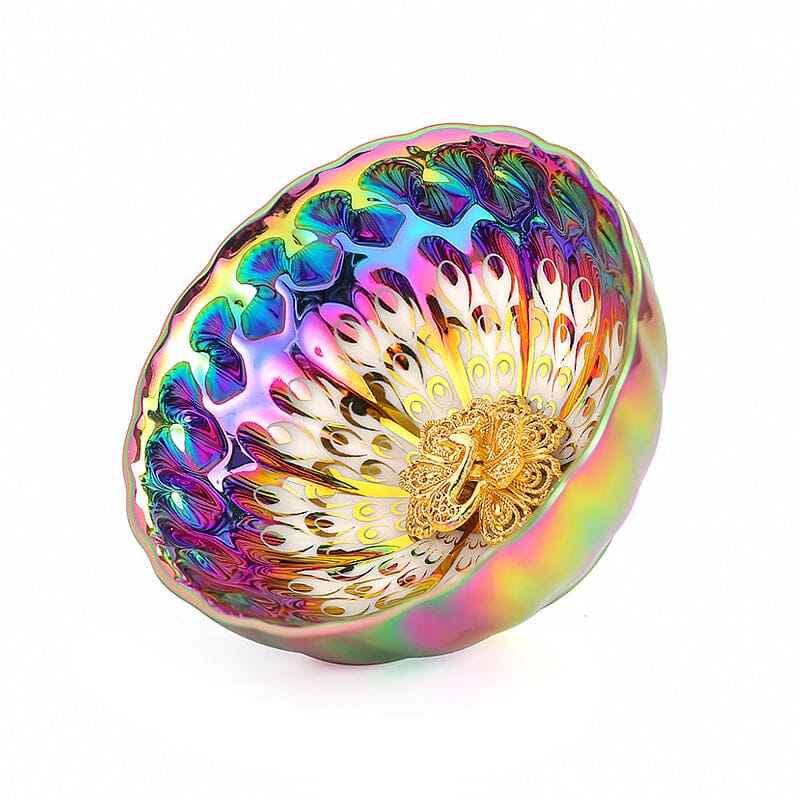
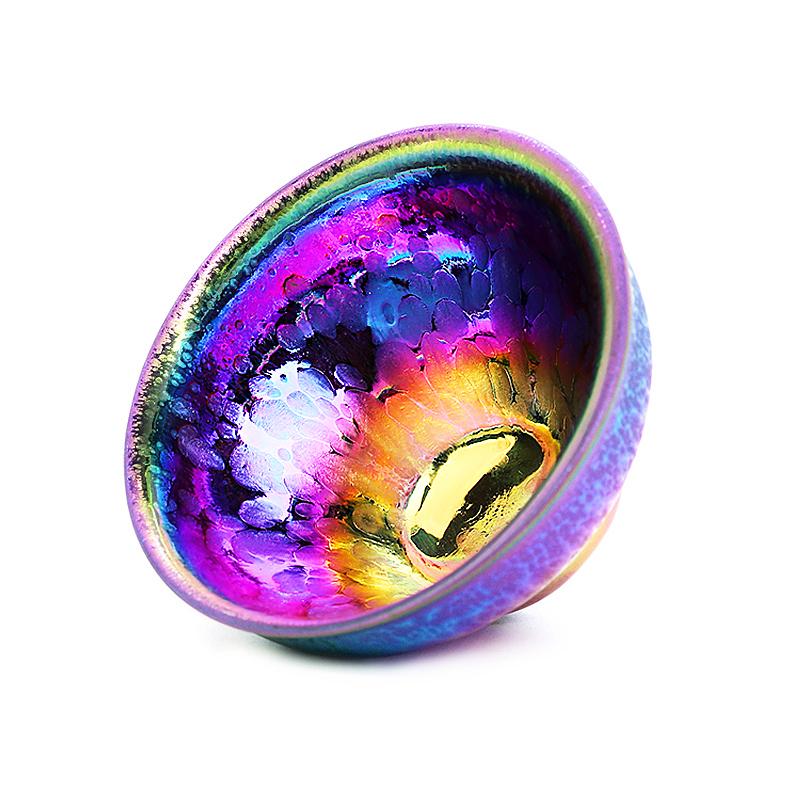
| Blue or Iridescent Tenmoku | Dark base with flashes of blue, purple, or rainbow light | Statement pieces, photography, special tea rituals | Artistic, expressive, unexpected |
If you are buying your first tenmoku tea bowl, hare's fur is a wonderful entry point because it connects strongly to historical Jian ware. If you want something with instant visual impact, an oil spot tenmoku cup is hard to forget.
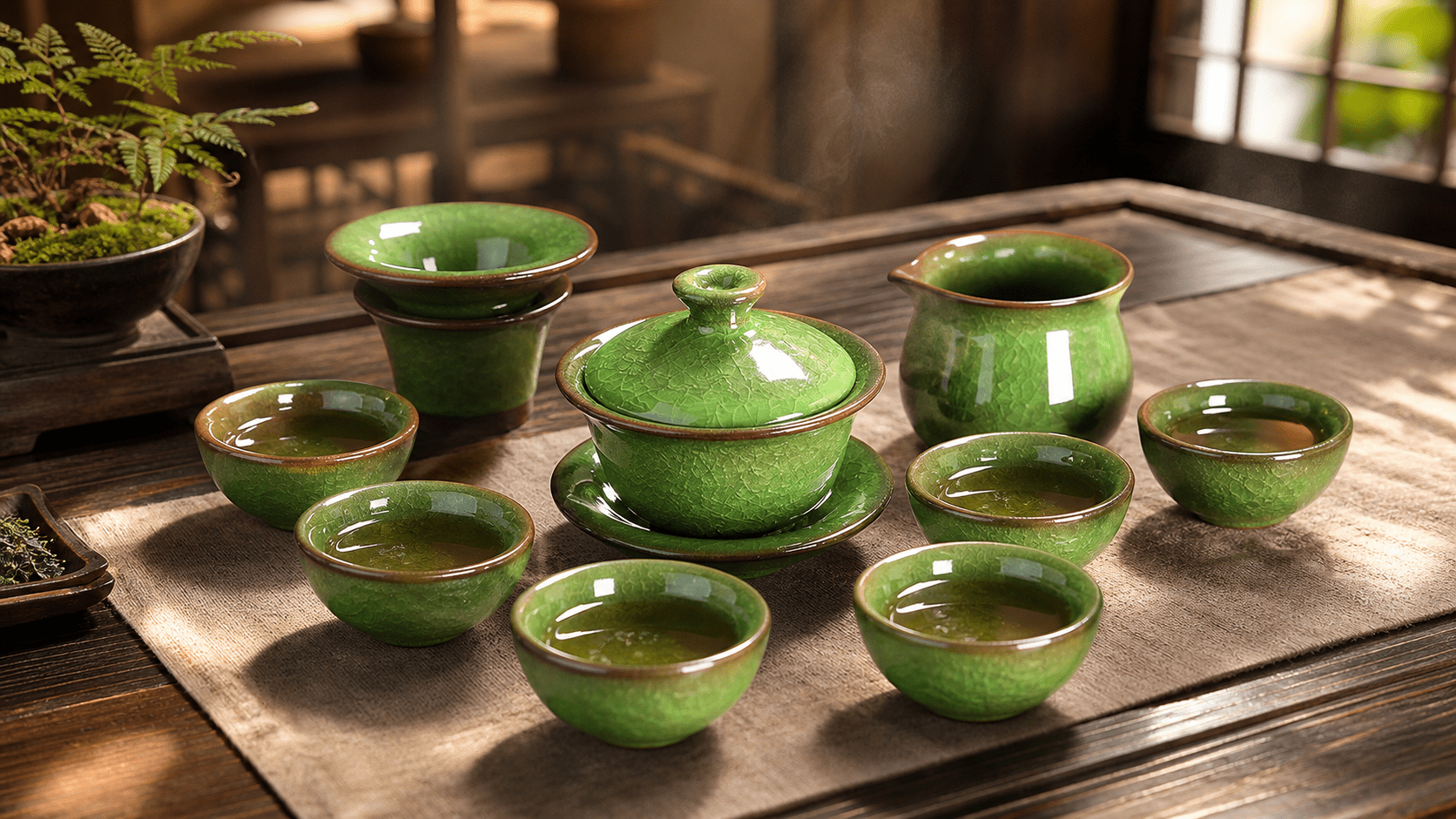
For a coordinated tea setup, many customers choose one showpiece bowl and several smaller cups for guests. This creates a table that feels curated without being overly formal.
Fans of linear glaze patterns can Browse our hare's fur Jianzhan series for pieces that echo one of the most recognizable historical styles.
How should you evaluate Japanese Tenmoku for sale without being an expert?
When you search for Japanese Tenmoku for sale, you will find a wide range of pieces: vintage Japanese bowls, modern studio ceramics, Chinese jianzhan, and Tenmoku-inspired cups made in many countries. The variety is exciting, but it can also be confusing.
Start with clarity. A trustworthy product page should explain whether the piece is made in the Jianzhan tradition, created by a Japanese ceramic artist, or simply inspired by tenmoku glaze. These can all be beautiful, but they are not the same story.
Next, look at the form. For gongfu tea, a cup should be comfortable to hold and sized for small pours. For matcha or Japanese-style whisked tea, a larger Japanese tea bowl shape may be more appropriate.
Then study the glaze. Natural tenmoku glaze has depth and variation. Avoid pieces that look like a flat printed pattern. Authentic handmade surfaces usually show subtle movement around the rim, inner wall, and foot.
Finally, consider the seller's respect for cultural heritage. The best shops do not treat these bowls as generic exotic décor. They explain jian zhan history, song dynasty tea culture, and the craft choices behind each piece.
At our brand, we position each bowl as a bridge: Fujian roots, Japanese appreciation, and modern American use. That bridge is what makes the object relevant today.
Why is a handmade tenmoku tea bowl a premium lifestyle object, not just a cup?
A premium lifestyle object earns its place by improving daily experience. A tenmoku tea bowl does this quietly. It changes how tea looks, how the hand pauses, and how a small break feels.
In many US homes, luxury is being redefined. It is less about logos and more about material honesty, craft origin, and sensory calm. A handmade tea cup fits that shift. It is small enough for daily use, beautiful enough for display, and personal enough to become part of a routine.
For a tea lover, the bowl can mark a moment: the first serious oolong tea session, a new apartment, a birthday, a holiday gift, a retirement ritual, or a self-gift after a demanding season.
Because each cup is different, the recipient does not feel like they received something random from a shelf. They receive a chosen object, one with a surface that cannot be exactly repeated.
That is the heart of our brand story. We do not see Tenmoku as a trend. We see it as a way to bring old fire into modern life: a bowl shaped by earth, refined by hand, transformed by heat, and completed by tea.
FAQ: Tenmoku Tea Bowl, Jianzhan, and Artisan Buying Questions
What is a tenmoku tea bowl used for in gongfu tea?
A tenmoku tea bowl is used for drinking small servings of tea, especially in gongfu tea sessions where tea is brewed in concentrated infusions. Its dark glaze highlights the color of oolong tea, black tea, and puerh, while the small size encourages slow, attentive tasting.
How does a tenmoku artisan create Song Dynasty glaze effects?
A tenmoku artisan uses iron-rich clay and mineral glaze, then fires the cup at very high temperatures. During firing and cooling, iron crystals separate and form natural patterns such as hare's fur or oil spots. The artisan guides the conditions, but the kiln creates the final surface.
Why is song dynasty tea culture important to jian zhan history?
Song dynasty tea culture valued powdered tea, refined presentation, and elegant ceramics. Dark Jian ware bowls made pale tea foam stand out clearly, which made them highly prized. This historical preference helped establish the importance of jianzhan in Chinese and later Japanese tea culture.
What is the fujian tea bowl tradition behind handmade jian zhan tea cups?
The fujian tea bowl tradition comes from historic kiln areas in Fujian, China, where iron-rich Jianzhan Tenmoku ceramic bowls were made for tea. Handmade jian zhan tea cups continue this heritage through local-style clay bodies, high-temperature firing, and natural tenmoku glaze patterns.
Is a Japanese tea bowl the same as a tenmoku tea bowl?
Not always. A Japanese tea bowl can refer to many types of chawan used in Japanese tea practice. Tenmoku refers to a specific dark glazed style admired in Japan and connected to Chinese Jian ware. Some Japanese bowls use Tenmoku glaze, while traditional jianzhan comes from the Jian ware lineage.
What should I look for when shopping for Japanese Tenmoku for sale?
Look for clear information about origin, glaze type, size, and whether the piece is handmade. Check photos for depth and variation in the glaze. If you want a daily tea cup, choose a comfortable size; if you want a display piece, consider a dramatic oil spot tenmoku cup or hare's fur pattern.
Conclusion: A small bowl with a long memory
A tenmoku tea bowl carries more than tea. It carries jian zhan history, fujian tea bowl tradition, Japanese admiration, and the patient work of the tenmoku artisan. Its Song Dynasty glaze heritage is not locked in the past; it becomes alive each time hot tea meets the dark interior.
For beginners, it is an accessible way to make tea feel more intentional. For collectors and premium lifestyle buyers, it is a compact work of ceramic art with cultural depth. For gift givers, it offers beauty without needing a long explanation.
If you are choosing your first piece, begin with the one that makes you pause. The right bowl usually announces itself quietly: a streak of silver, a field of oil spots, a deep black surface, or a shape that feels ready for your hand.
Explore our curated collection and find a handmade cup that turns an ordinary pour into a ritual worth keeping.
Explore Our Collection
Ready to experience the world of tenmoku tea bowl? Browse our curated collection:
Disclaimer: This article is for informational purposes. Products and pricing subject to change.


分享:
Tenmoku Tea Bowl Authenticity Guide: Buy the Real Beauty, Avoid the Fake
Tenmoku Tea Bowl Price Guide: Why It Costs More and How to Buy with Confidence