

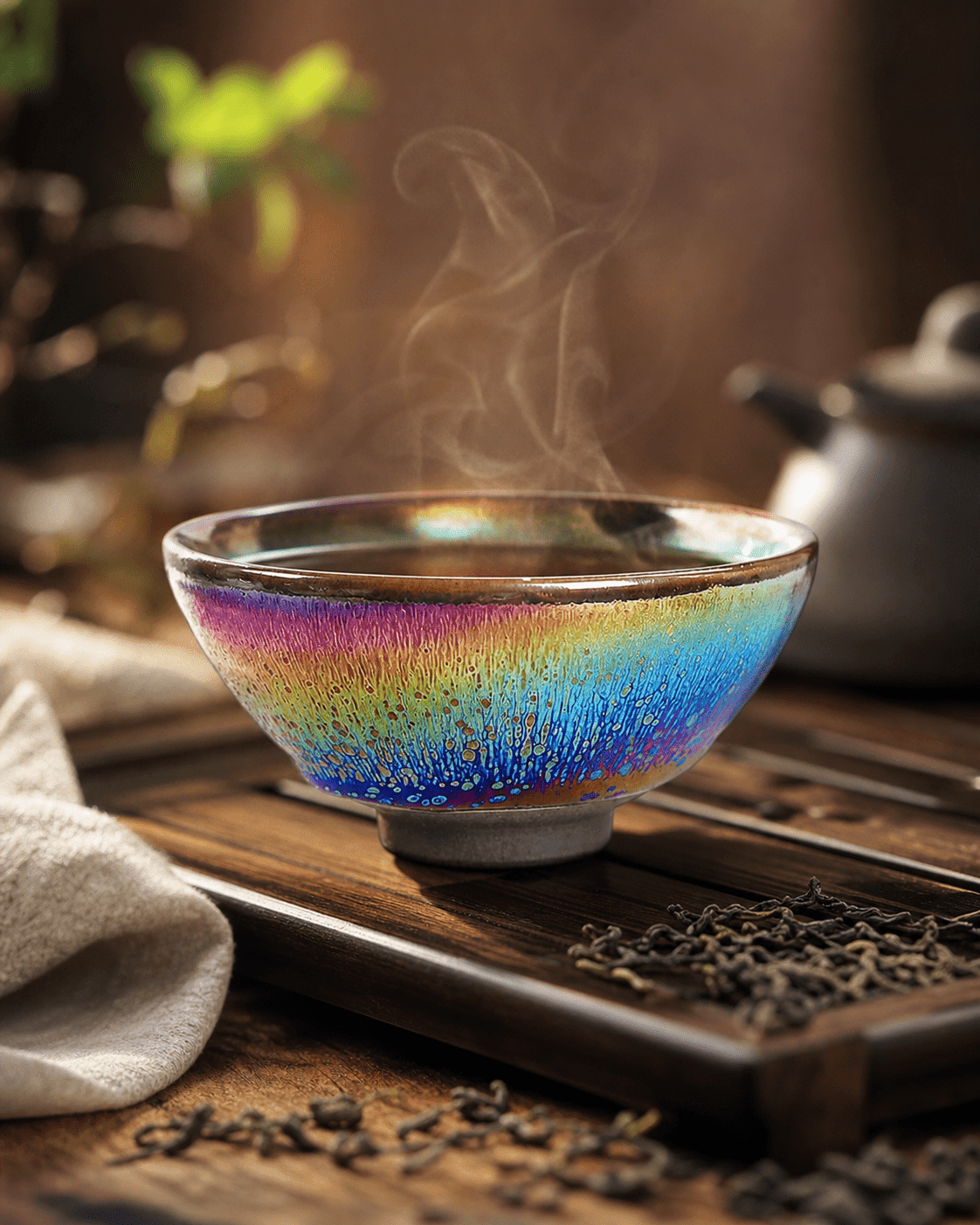

Tenmoku Tea Bowl Price Guide: Why It Costs More and How to Buy with Confidence
A tenmoku tea bowl is expensive because it combines difficult firing, rare glaze effects, skilled handwork, and a long ceramic tradition connected to Song Dynasty Jianzhan Tenmoku ceramic. For a tea lover using a Tenmoku cup, also called a Jianzhan tea cup, during gongfu tea with pu-erh tea, the value is not just the vessel—it is the unpredictable beauty created by fire, iron, and craftsmanship.
Think of it like buying a handmade Japanese chef’s knife, a small-batch bourbon, or a luxury leather bag. The price reflects materials, expertise, risk, and the maker’s eye, not just the object’s size.

Key Takeaways
- A tenmoku tea bowl is usually priced higher because the glaze is hard to control and many pieces fail during firing.
- Authentic Jianzhan comes from the Jianyang area of Fujian, China, where iron-rich clay and glaze traditions shaped the original Song Dynasty style.
- Patterns such as hare's fur, oil spot, and iridescent Jianzhan Tenmoku ceramic can raise the price when they are clear, balanced, and naturally formed.
- The best value jian zhan is not always the cheapest; it is the cup with honest craftsmanship, good form, safe usability, and a fair price.
- A jianzhan tea cup gift makes sense for tea lovers who appreciate ritual, texture, and objects with story.
Why is tenmoku expensive compared with ordinary tea cups?
The short answer: a tenmoku tea bowl is not priced like a mass-produced mug because it is not made like one. A regular ceramic cup can be molded, glazed, fired predictably, and repeated thousands of times. Tenmoku and Jianzhan pieces depend on variables that are difficult to control: clay chemistry, glaze thickness, kiln temperature, oxygen levels, cooling speed, and the maker’s timing.
In the United States, a useful comparison is the difference between a factory-made wine glass and a hand-blown crystal glass. Both hold liquid, but one is made for function at scale, while the other carries the marks of technique, tradition, and risk. That risk is built into the jian zhan cost.
Traditional Jianzhan is a form of Jianzhan Tenmoku ceramic that became famous during China’s Song Dynasty. Tea culture was highly refined then, and dark-glazed bowls were valued because they highlighted the pale foam of whisked tea. These bowls later influenced Japan and Japanese tea culture, where Tenmoku-style bowls became treasured in tea ceremony settings.
Today, collectors and tea drinkers buy Tenmoku for several reasons:
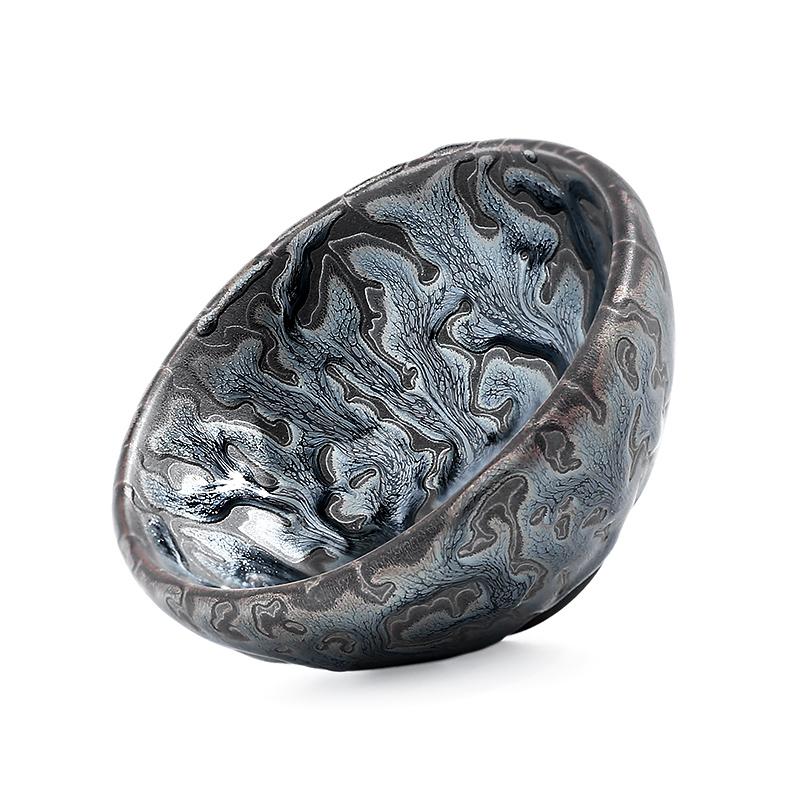
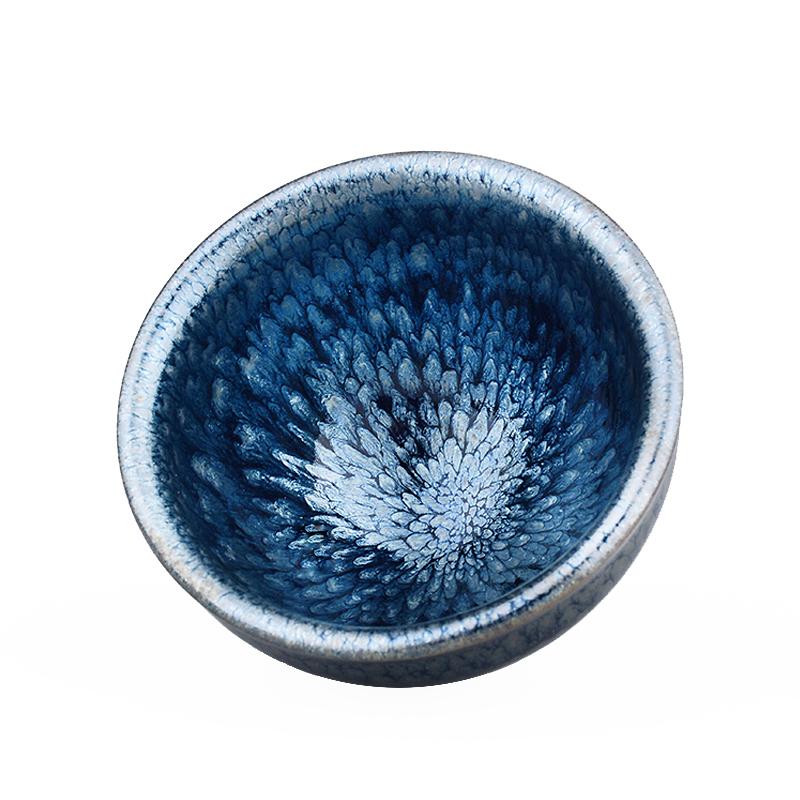
- Visual depth: The glaze can look like oil on water, starlight, feathers, or molten metal.
- Tactile presence: The cup often has satisfying weight and warmth in the hand.
- Tea experience: Many people enjoy using it for pu-erh tea, oolong, roasted teas, and contemplative tea sessions.
- Rarity: No two handmade pieces are exactly alike.
- Cultural value: It connects Chinese Song Dynasty craft, Fujian kiln heritage, and Japanese appreciation of Tenmoku bowls.
If you are browsing a tenmoku tea bowl for sale, you are not simply comparing cup volume. You are comparing clay body, glaze outcome, firing method, maker reputation, and whether the piece has the quiet presence that makes you want to use it often.
What factors affect jian zhan cost?
Jian zhan cost can range from accessible everyday prices to serious collector levels. The difference usually comes from five core factors: origin, handwork, glaze quality, firing difficulty, and artist reputation.
1. Origin and material
Authentic Jianzhan is associated with Jianyang in Fujian province. The region is known for iron-rich clay and glaze materials. That iron matters. When fired at high temperatures, the iron-rich glaze can separate, crystallize, flow, and form natural patterns such as hare's fur or oil spot.
This is not the same as painting a design onto a cup. The beauty comes from chemical transformation inside the kiln. In luxury terms, it is closer to natural veining in marble or patina on bronze than printed decoration.
2. Handmade forming and trimming
Many higher-quality pieces are hand-thrown or carefully hand-finished. A skilled maker must shape a bowl that feels stable, balanced, and comfortable. The foot ring must be trimmed cleanly. The rim must be pleasant to drink from. These details affect daily use as much as beauty.
When you see Explore our handmade Jianzhan tea cups, look beyond the glaze. Notice the curve, the lip, the foot, and the way the cup sits. A good cup feels intentional from every angle.
3. Glaze effect and difficulty
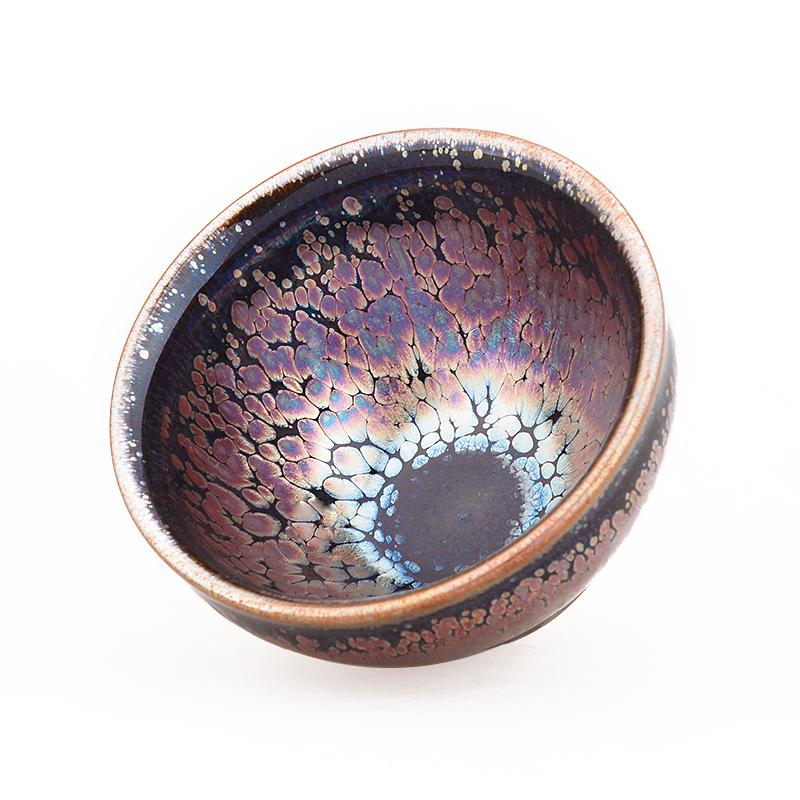
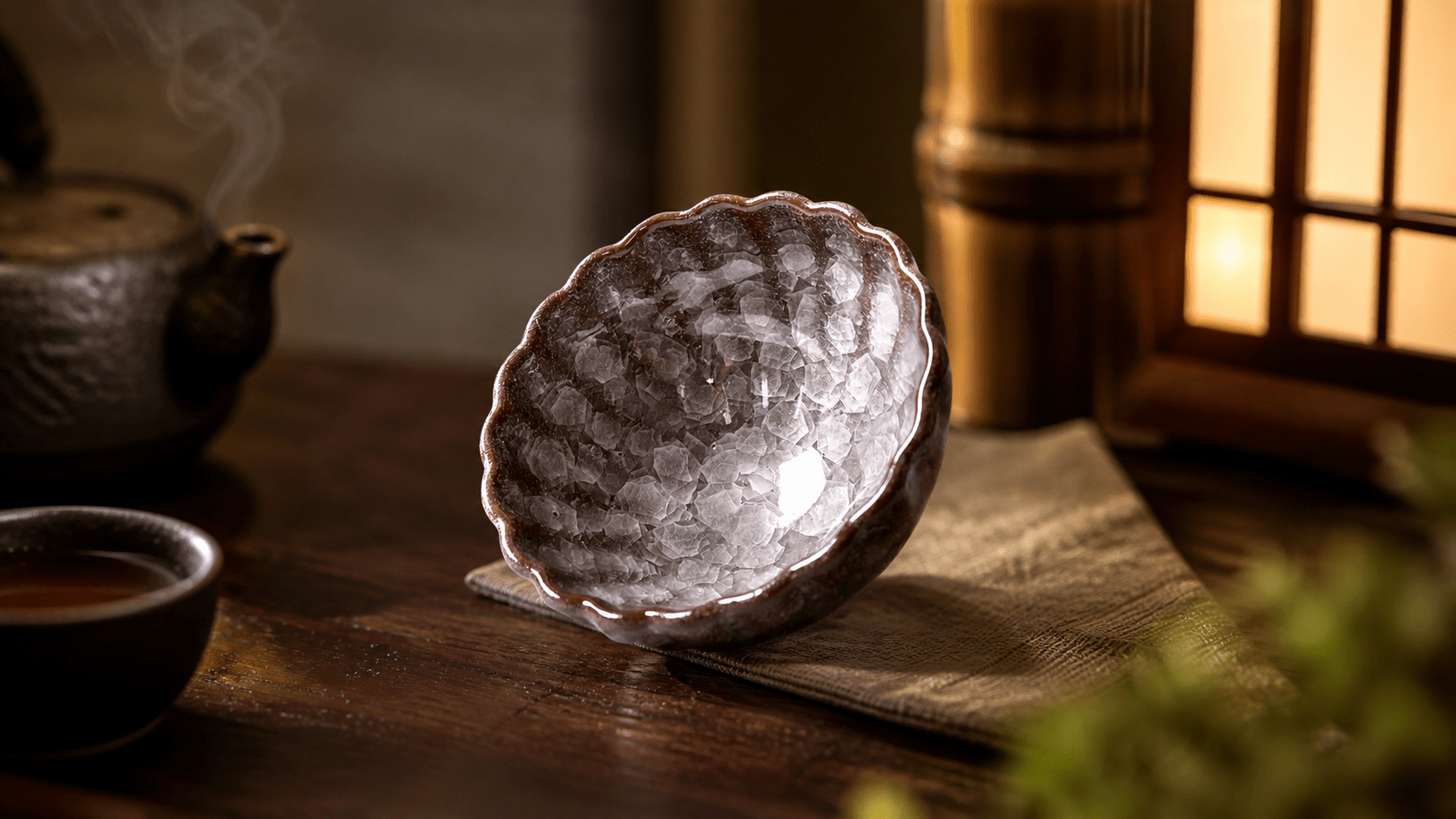
The most admired Tenmoku effects are not guaranteed. Hare's fur, for example, refers to fine streaks that resemble the soft lines of rabbit fur. Oil spot glaze forms metallic-looking spots that can appear silver, blue, gold, or rainbow-like depending on light and firing. These effects depend on glaze thickness, kiln atmosphere, and cooling.
A maker may fire many pieces and only a portion will emerge with desirable patterns. Some may warp, stick to the kiln shelf, blister, crack, or show dull glaze. The successful pieces carry the cost of the unsuccessful ones.
4. Firing method and energy
High-temperature firing requires fuel, time, equipment, and experience. Wood firing can be especially labor-intensive, while electric and gas firings still demand testing and precision. Every firing is a financial risk.
It is similar to small-batch coffee roasting: the roast master can control many inputs, but the final flavor still depends on timing, temperature, and judgment. In Tenmoku, the kiln is part tool, part collaborator.
5. Maker reputation
Pieces by recognized artists or heritage craft masters may command higher prices. Collectors pay for a maker’s proven skill, signature style, and consistency over years of work. For beginners, that does not mean you must buy the most famous name. It means reputation is one reason prices vary.
What is a fair tenmoku tea bowl price in the US?
A fair tenmoku tea bowl price depends on whether you want a daily-use cup, a refined gift, or a collectible piece. In the US market, buyers often compare Tenmoku cups the way they compare watches, knives, or handmade ceramics: entry-level, premium, and collector-grade.
| Price Range | Typical Buyer | What to Expect | Best Use |
|---|---|---|---|
| Under $40 | Curious beginner | Small cups, simpler glaze, possible studio or semi-handmade production | Trying gongfu tea without a large investment |
| $40–$120 | Daily tea drinker | Better form, more interesting glaze, handmade options, gift-worthy presentation | Pu-erh tea, oolong, personal tea ritual |
| $120–$300 | Premium lifestyle buyer | Stronger glaze effects, better finishing, more distinctive firing results | Special tea ceremony, display, meaningful gift |
| $300+ | Collector | Recognized artist, exceptional glaze, rare firing, limited or signed work | Collecting, serious gifting, heirloom tea ware |
For many US buyers, the sweet spot is often between $60 and $180. In that range, you can often find handmade jian zhan tea cups with attractive glaze, comfortable proportions, and enough individuality to feel special without stepping fully into collector pricing.
That said, price alone does not prove quality. A costly cup can still be awkward to hold. An affordable cup can still be beautiful and satisfying. The best evaluation combines price, craftsmanship, glaze, trust, and how you plan to use it.

How does Song Dynasty glaze history increase value?
The phrase Song Dynasty glaze matters because it points to a historic ceramic language, not a modern marketing trend. During the Song Dynasty, tea was often prepared by whisking powdered tea in bowls. Dark bowls helped show the color and foam of the tea, making Jianzhan highly desirable among tea connoisseurs.
These bowls traveled culturally as well as physically. In Japan, Tenmoku bowls became prized objects in Japanese tea ceremony culture. The Japanese word “Tenmoku” is connected to Tianmu Mountain, a place associated with Chinese Buddhist monasteries and tea culture. Over time, Japanese tea masters admired these dark-glazed bowls for their depth, restraint, and natural beauty.
For American buyers, think of the connection between a vintage jazz record and modern high-end audio. The object is not only functional. It carries a lineage. A Tenmoku bowl may be newly made, but it speaks in a visual language that is nearly a thousand years old.
This history increases value in three ways:
- Cultural meaning: It connects your tea table to a respected ceramic tradition.
- Design longevity: The style has remained desirable for centuries.
- Collecting interest: Buyers often appreciate objects with historical roots and regional identity.
Still, history should support quality, not replace it. A good seller should explain the cup clearly: where it comes from, how it was made, what type of glaze it has, and whether it is suitable for drinking tea.
Is the best value jian zhan always handmade?
The best value jian zhan is usually handmade or hand-finished, but value depends on your goal. If you want a beautiful daily cup, you do not need the rarest museum-level glaze. You need a cup that is honest, enjoyable, durable, and fairly priced.
Handmade matters because small differences make tea ware feel alive. The curve may fit your fingers better. The foot may sit more naturally. The glaze may pool in a way that catches morning light. These are the details that premium lifestyle buyers often care about, even if they are new to tea.
Here is a simple buying checklist:
- Look at the rim: It should appear comfortable for sipping.
- Check the foot: A clean foot ring suggests careful finishing.
- Study the glaze: Natural variation is good; obvious defects should be disclosed.
- Confirm size: Gongfu tea cups are often smaller than Western mugs.
- Ask about use: Make sure it is intended for tea, not only display.
- Buy from a clear seller: Photos, descriptions, and return policies matter.
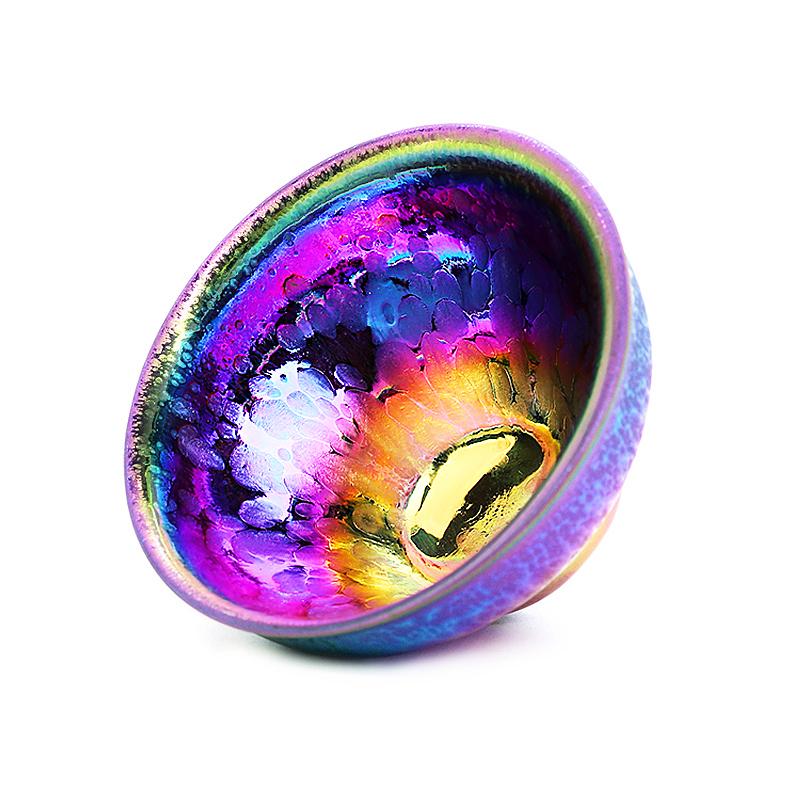
If you love dramatic metallic speckles, Discover our collection of oil spot tenmoku cups. Oil spot pieces are especially popular because the surface can look like a night sky, a luxury watch dial, or hand-hammered metal under changing light.
Why do hare's fur and oil spot patterns cost more?
Hare's fur and oil spot patterns cost more because they are difficult to achieve beautifully. Both are born from iron-rich glaze at high temperatures, but they express themselves differently.
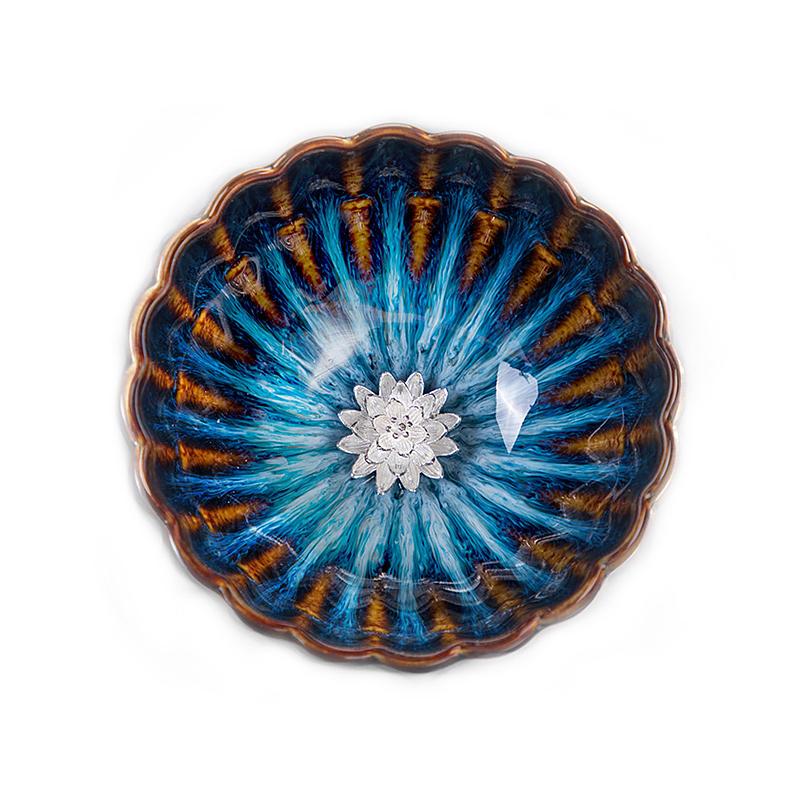
Hare's fur appears as fine vertical streaks. A well-formed hare's fur cup has movement, direction, and delicacy. It can look understated from far away, then reveal detail up close.
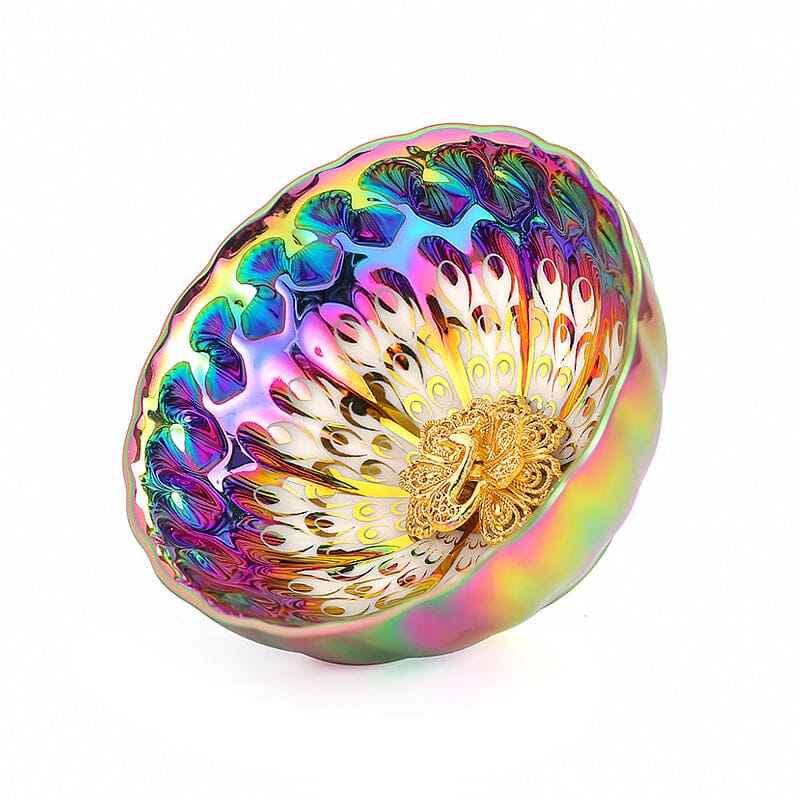
Oil spot appears as spotted metallic crystals. A strong oil spot cup may flash silver, bronze, blue, or rainbow tones depending on the light. The pattern can feel bold and luxurious, which makes it popular as a jianzhan tea cup gift.
These patterns are priced higher when they show:
- Clear definition without looking muddy
- Balanced distribution across the cup
- Attractive color shift under light
- Smooth surface suitable for drinking
- Good harmony between bowl shape and glaze flow
In US luxury terms, compare this to selecting a leather bag with exceptional grain or a gemstone with unusual fire. The material is natural, but the finest examples stand out because beauty and rarity overlap.
When is a tenmoku tea bowl for sale worth buying?
A tenmoku tea bowl for sale is worth buying when it matches your tea habits, budget, and taste. A cup that looks impressive online but feels too large, too small, or too precious to use may not be the right value for you.
If you drink pu-erh tea, roasted oolong, black tea, or aged white tea, Tenmoku can be especially satisfying. The dark interior gives the tea color a rich backdrop. The heavier body can feel grounding during a quiet tea ceremony or a simple evening session after work.
For gifting, choose based on the recipient:
- For beginners: A balanced, medium-priced cup with a clear story is best.
- For design lovers: Choose a dramatic oil spot or glossy Jianzhan Tenmoku ceramic surface.
- For traditional tea drinkers: Consider hare's fur or classic Jianzhan shapes.
- For collectors: Look for maker information, limited work, and exceptional glaze quality.
A good jianzhan tea cup gift should feel personal. It says, “I noticed your ritual.” That is why Tenmoku works well for birthdays, holidays, retirement gifts, Father’s Day, Mother’s Day, and elevated housewarming presents.
How can beginners avoid overpaying for Jianzhan?
Beginners can avoid overpaying by learning what drives value before buying. You do not need to become a ceramic historian. You only need enough knowledge to separate real craftsmanship from vague luxury language.
Start by checking whether the seller explains the cup’s glaze type, approximate size, material, and intended use. Be careful with listings that only use broad words like “ancient,” “rare,” or “masterpiece” without details.
Also, be realistic about perfection. Handmade ceramics may have tiny variations. That is normal. But cracks, sharp rims, unstable feet, unsafe glaze, or poor finishing should not be excused as “handmade character.”
Ask these questions before purchasing:
- Is it made for drinking tea?
- What is the capacity in milliliters or ounces?
- Is the glaze effect natural from firing?
- Is it handmade, hand-finished, or mass-produced?
- Does the seller provide clear photos from multiple angles?
- Is the price consistent with similar pieces?
For a first purchase, choose a piece you will actually use. A Tenmoku cup becomes more meaningful through repeated tea sessions, not by sitting untouched in a cabinet.
FAQ: Tenmoku Tea Bowl Price and Value
Why tenmoku is expensive for such a small cup?
Tenmoku is expensive because the price reflects more than size. A small cup may require high-quality iron-rich glaze, careful hand forming, high-temperature firing, and multiple failed attempts before one piece succeeds. The glaze effects are not painted on; they form naturally in the kiln, which adds risk and rarity.
What is the average jian zhan cost for beginners?
For beginners in the US, jian zhan cost often starts around $40 to $120 for a good daily-use cup. Below that, quality can vary widely. Above that, you may be paying for stronger glaze effects, better handwork, artist reputation, or collectible value.
What tenmoku tea bowl price is fair for a gift?
A fair tenmoku tea bowl price for a thoughtful gift is often $60 to $180. This range usually offers attractive handmade options without entering high collector pricing. For a major occasion or a serious tea lover, $200 and up can be reasonable if the glaze, form, and maker information support the price.
How do I find the best value jian zhan online?
To find the best value jian zhan online, compare glaze quality, shape, size, seller transparency, and photos. Look for clear descriptions of hare's fur, oil spot, Jianzhan Tenmoku ceramic, or other glaze types. Avoid listings that rely only on exaggerated claims without showing details.
Are handmade jian zhan tea cups better than factory cups?
Handmade jian zhan tea cups are often better for buyers who care about individuality, feel, and craftsmanship. Factory cups can be affordable and usable, but handmade cups usually have more character and stronger connection to the traditional craft. The best choice depends on your budget and expectations.
Is a jianzhan tea cup gift appropriate for someone new to tea?
Yes. A jianzhan tea cup gift can be excellent for someone new to tea if you choose a practical size and include a short explanation of its history. It works especially well with pu-erh tea, oolong, or a simple gongfu tea setup.
Conclusion: Is a Tenmoku Tea Bowl Worth the Price?
A tenmoku tea bowl is worth the price when you value craft, history, and daily ritual. Its cost comes from labor, rare glaze behavior, firing risk, regional tradition, and the simple fact that the best pieces cannot be perfectly repeated.
For American buyers, the closest luxury analogy is not a standard coffee mug. It is a handmade object with the soul of a studio ceramic, the heritage of a Japanese tea ceremony bowl, and the visual drama of a natural stone or fine watch dial.
If you are ready to compare styles, start with pieces you would enjoy using often. Explore handmade Jianzhan tea cups, consider oil spot Tenmoku if you love dramatic glaze, and choose the bowl that makes your next tea session feel slower, warmer, and more intentional.
Explore Our Collection
Ready to experience the world of tenmoku tea bowl? Browse our curated collection:
Disclaimer: This article is for informational purposes. Products and pricing subject to change.


分享:
Tenmoku Tea Bowl: The Artisan Story Behind a More Meaningful Tea Ritual
A Handmade Tenmoku Tea Bowl: Your Daily Luxury Wellness Ritual at Home