

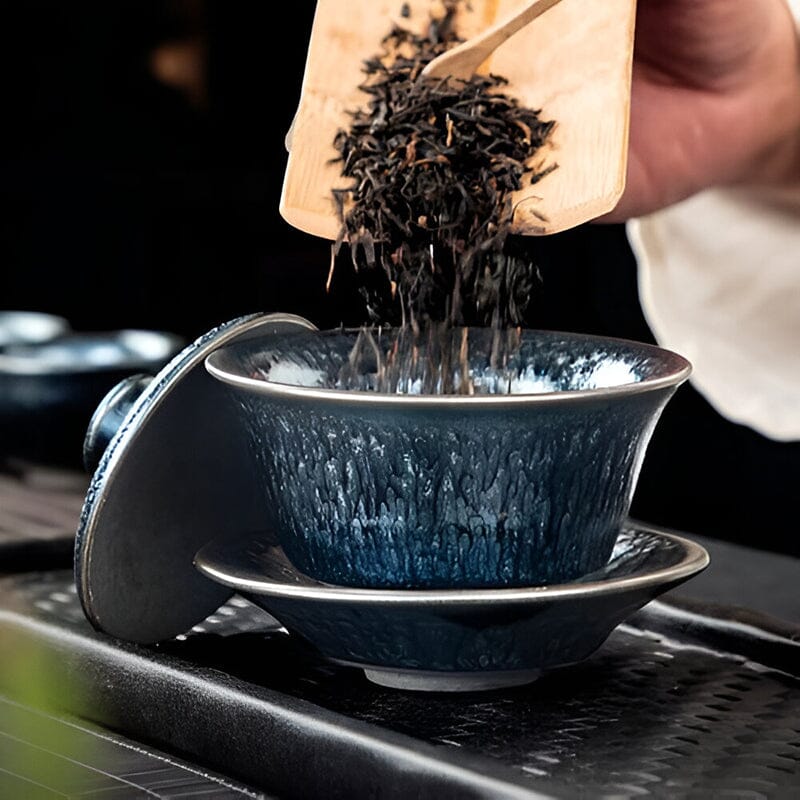
Restoring tea is a frequently misunderstood step in the tea brewing process. Many people often wonder, "Is restoring tea the same as washing it?" In reality, restoring tea and washing it are quite different. Below, we'll delve deeper into restoring tea, drawing on tea art knowledge to help you master the correct method of drinking tea.
1. Significance of Tea Moistening: A Key Step in Tea Art
(1) Core Purpose
The core purpose of tea moistening is by no means to clean the tea leaves, but to fully moisten the tea leaves with hot water and promote them to absorb water and stretch. The main function of this process is to awaken the tea fragrance and promote the precipitation of nutrients, which is an indispensable part of professional tea art operations. Through the infiltration of hot water, the aroma substances contained in the tea leaves are released, and the nutrients can be more fully integrated into the subsequent tea soup, allowing tea drinkers to more truly feel the unique charm of tea. This is a key step in improving the tea - tasting experience in scientific tea drinking.
(2) Ornamental Value
Tea moistening not only has practical functions but also has unique ornamental value, which is an important part of tea art appreciation. After tea moistening, the tea leaves will slowly stretch their posture, and people can clearly appreciate the original shape and color of the tea leaves. Different types of tea show different postures after moistening. Some are like bird tongues just unfolding, and some are like leaves stretching, adding a different kind of interest to tea art performances.
(3) Terminology Standardization
In the system of professional tea art terminology, "tea moistening" should be used instead of "tea washing", and there is an essential difference between the two, which is an important content of basic tea art knowledge. "Tea moistening" emphasizes the awakening and stimulation of tea leaves, while "tea washing" mainly aims at cleaning. The standardized use of such terminology is a direct embodiment of the professionalism of tea art culture.
(4) Applicable Conditions
Not all types of tea need to be moistened, which is a point that needs special attention in personalized healthy tea drinking and a key knowledge point of tea making skills. For example, high - quality famous and high - grade green tea picked in spring does not need tea moistening. If tea moistening is carried out on it, it may lead to the loss of nutrients in the tea leaves, thereby affecting the quality and taste of the tea soup.

2. Differences Between Tea Moistening and Tea Washing: Detailed Explanation of Tea Art Knowledge
(1) Functional Differences
Tea moistening focuses on awakening the nature of tea. Through the infiltration of hot water, the tea leaves are awakened from a dormant state, stimulating their inherent aroma and flavor substances, and making full preparations for subsequent brewing, which is the core of the correct tea moistening method. Tea washing, on the other hand, focuses on cleaning, mainly to remove possible dust, impurities, etc. on the surface of tea leaves. However, under modern tea production technology, this cleaning function is not necessary for most regular tea leaves, which is also emphasized by the modern tea art concept.
(2) Operational Standards
Tea moistening has strict standards for water temperature and time, which are the standard requirements of the professional tea art process. Different types of tea require different water temperatures for moistening. For example, Pu'er tea and dark tea need higher water temperatures for moistening, while oolong tea needs to adjust the water temperature according to the variety. The time for tea moistening also needs to be accurately controlled, generally between a few seconds and more than ten seconds, which is appropriate when the tea leaves are just stretched and the aroma initially appears. Tea washing is relatively random in operation. Usually, the tea leaves are quickly rinsed with hot water and then the water is poured out, with low requirements on water temperature and time, which forms a sharp contrast with the standard tea moistening operation.
(3) Professional Recognition
In the tea art circle, the necessity of tea moistening is generally recognized, and the industry believes that tea moistening is one of the key steps to improve the quality of tea soup and an important link in scientific tea making. However, there are many controversies in the industry regarding tea washing. Many professionals believe that hygiene standards have been effectively guaranteed in the tea production process, and over - emphasizing tea washing may damage the flavor and nutrition of tea, which is also an important view conveyed by modern tea art knowledge.

3. Types of Tea That Do Not Need Moistening: Healthy Tea Drinking Guide
(1) Typical Representatives
Famous and high - grade green tea picked in spring is a typical representative that does not need tea moistening, such as Mingqian Longjing and Biluochun, which are treasures in green tea and popular tea types in spring tea drinking recommendations.
(2) Reason Analysis
Clean Raw Materials
Spring tea has extremely high picking standards. It will be strictly screened during picking to remove impurities. Moreover, the environment of spring tea gardens is relatively clean, and the tea raw materials themselves have very few impurities, so there is no need to clean them through tea moistening, which is an embodiment of high - quality tea characteristics.
Nutrition Protection
Famous and high - grade green tea is rich in various nutrients such as tea polyphenols, amino acids, and vitamins, which will be largely precipitated in the first brew. If tea moistening is carried out on it, it will cause the loss of nutrients in the first brew, reduce the nutritional value of the tea, which is contrary to the concept of healthy tea drinking and a key point to note in green tea brewing skills.
Flavor Retention
The charm of famous and high - grade green tea lies in that its first brew can fully show the freshness and unique aroma of the tea soup. Tea moistening will make the flavor substances in the tea leaves release in advance, affecting the taste experience during subsequent tea drinking, making people unable to feel its most authentic flavor, which is a key point in tasting the essence of green tea.

In short, in tea art practice, we should correctly understand the significance of tea moistening, clarify the difference between tea moistening and tea washing, and decide whether to carry out tea moistening according to the characteristics of different tea types. Only in this way can we better appreciate the charm of tea, enjoy the wonderful experience brought by tea art life, practice the principle of scientific tea drinking, and make every tea tasting a comfortable healthy tea drinking experience.


分享:
Tea Art Teaching: Understanding Tea Intoxication and Healthy Tea Drinking
Teaching Guide for Tea Practitioners' Dressing Selection