

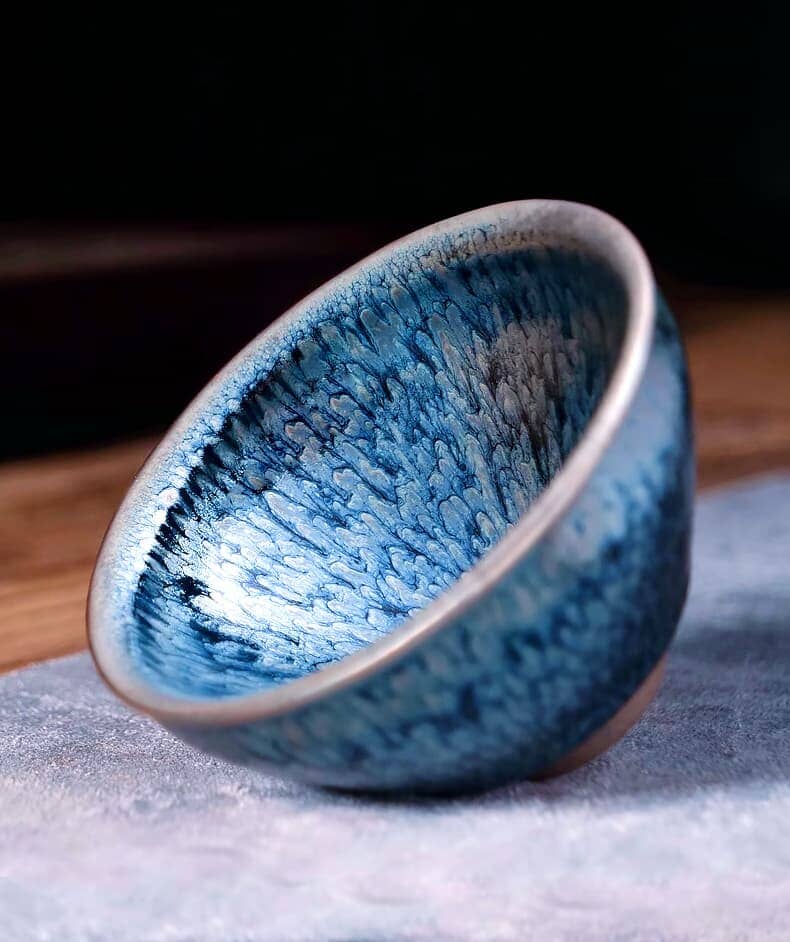
Choosing your first Jianzhan is an exciting step into the world of traditional Chinese tea culture. This guide walks you through everything beginners need to know — from size and glaze type to price range and where to buy with confidence.
TL;DR — Quick Answer
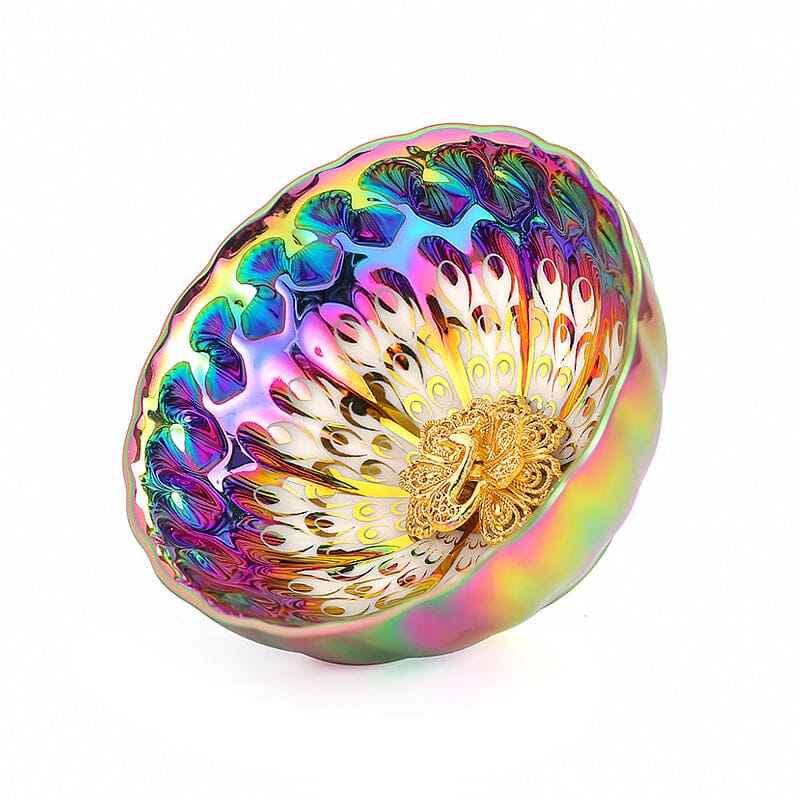
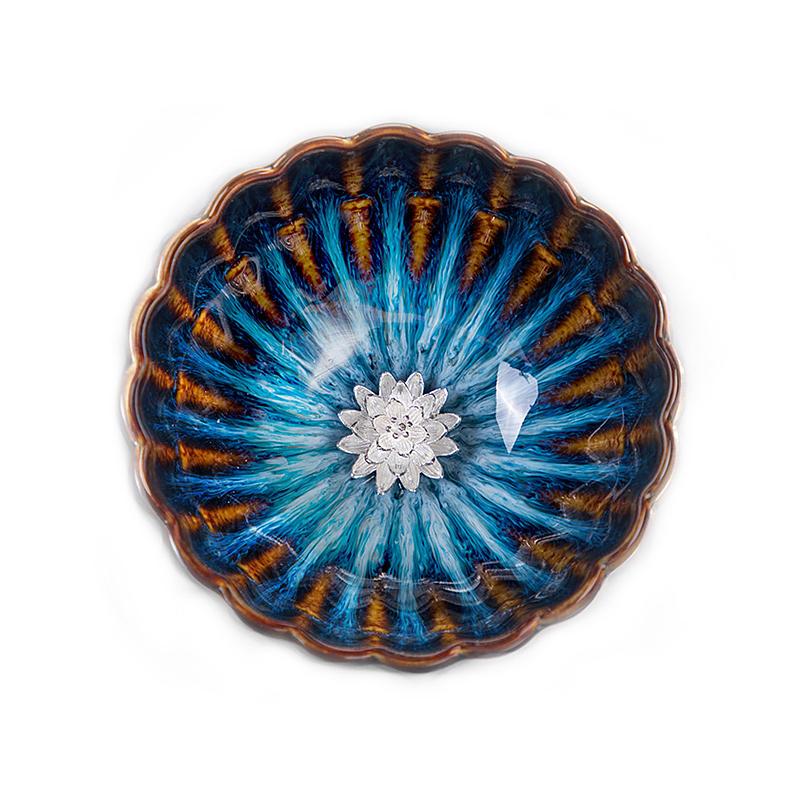
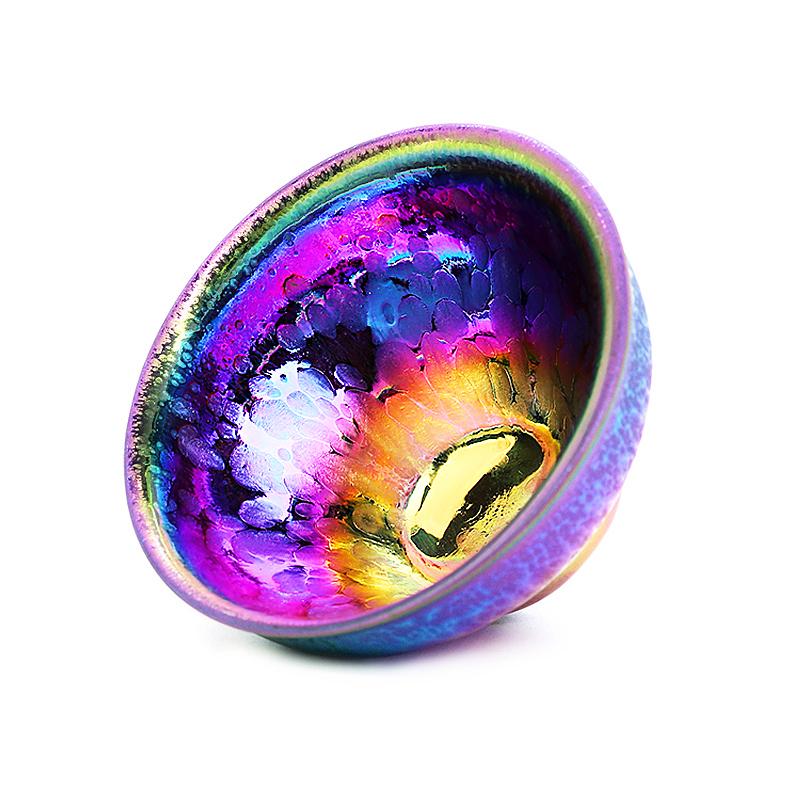
For beginners, choose a 3-4 inch (8-10cm) diameter Jianzhan in the oil-spot or hare's fur glaze. Start with an entry-level piece ($25-$60) from a reputable seller. Prioritize thick walls, authentic iron-rich glaze, and a rough foot ring. Avoid ultra-cheap replicas and过分鲜艳的 glaze colors.
Table of Contents
- Why Jianzhan for Tea?
- Size Guide: What Diameter Do You Need?
- Glaze Types Explained
- Price Guide: What to Expect
- 5 Common Beginner Mistakes
- Frequently Asked Questions
Why Jianzhan for Tea?
Jianzhan (建盏) is not just a tea bowl — it is a centuries-old artifact that enhances the tea-drinking experience in ways modern ceramics cannot match. The iron-rich mineral glaze interacts with tea tannins, gradually building a patina that deepens over years of use. A well-maintained Jianzhan develops a character — unique to its owner.
Beyond function, Jianzhan embodies wabi-sabi aesthetics: the beauty of imperfection, natural variation, and the passage of time. No two Jianzhan are identical, making every bowl a one-of-a-kind art piece.
Size Guide: What Diameter Do You Need?
| Diameter | Best For | Tea Amount |
|---|---|---|
| 2.5-3.5 inches (6-9cm) | Samples, flights, collectibles | 30-60ml |
| 3.5-4 inches (9-11cm) | Daily drinking, all-rounder | 80-120ml |
| 4-4.5 inches (11-12cm) | Gongfu brewing, multiple infusions | 120-200ml |
| 4.5+ inches (12cm+) | Hosting guests, large pours | 200ml+ |
Recommendation: Start with a 3.5-4 inch Jianzhan. This size is versatile enough for daily use, large enough to appreciate the glaze patterns, and manageable in terms of price.
Glaze Types Explained
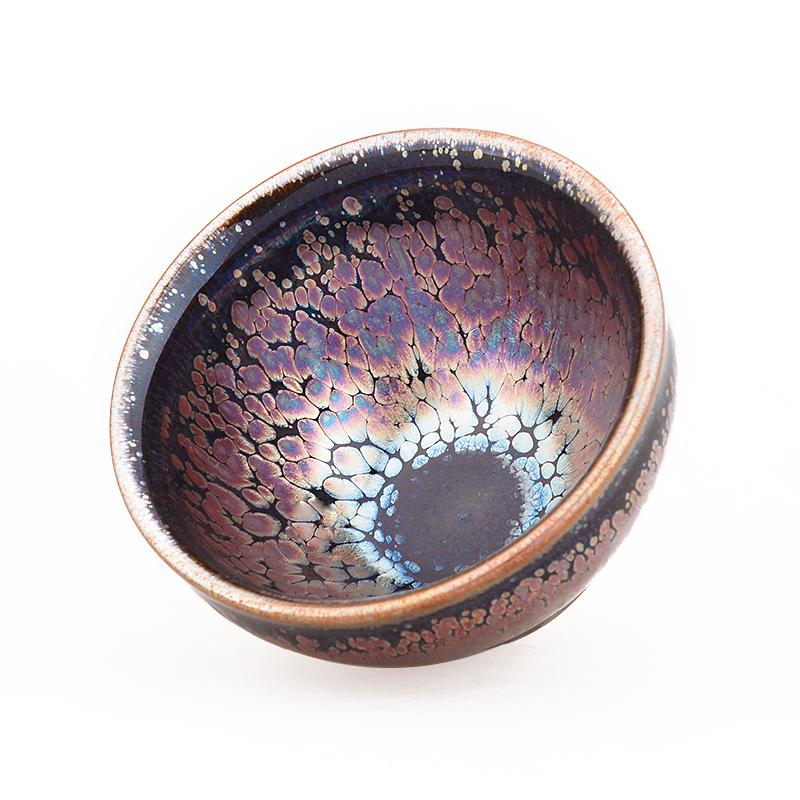
Oil Spot (油滴)
The most prized Jianzhan glaze. Iron oxide concentrates into round, silver or golden spots against a dark background. The best oil-spot bowls show spots with metallic luster under raking light. Grade depends on spot density, size uniformity, and color saturation.
Hare's Fur (兔毫)
Characterized by thin, flowing streaks resembling a rabbit's fur. Typically golden or silvery against a dark-brown or black background. Easier to find than oil-spot at reasonable prices. Excellent for beginners — beautiful patterns with authentic Jianzhan character.
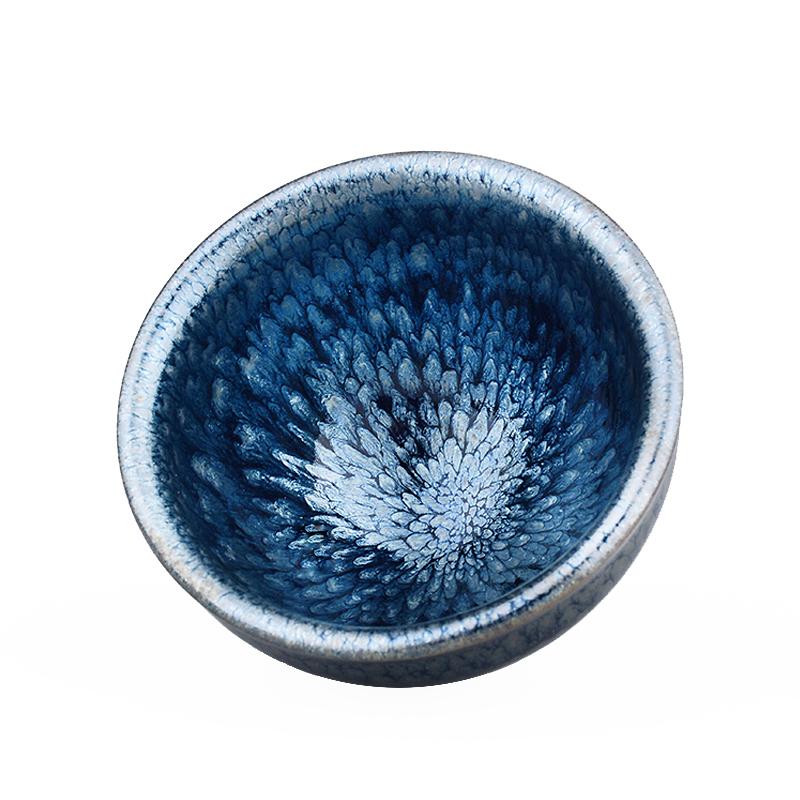
Partridge Feather (鹧鸪斑)
Round, irregular patches of lighter color against the dark glaze, resembling the plumage of a partridge bird. Rarer than oil-spot or hare's fur, typically more expensive. Stunning collector pieces but harder to source.
Solid Color (纯釉)
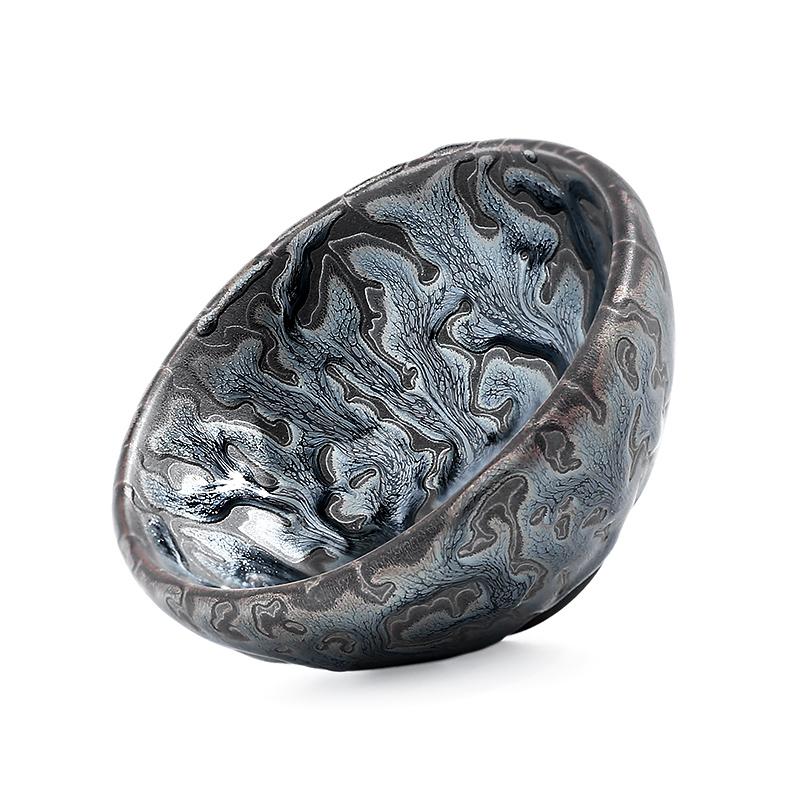
Uniform dark glaze without distinct patterns. Often the most affordable entry point. The iron-rich body still provides the same patina development and tea-enhancing properties — just without dramatic visual patterns.
Price Guide: What to Expect in 2026
| Grade | Price | What You Get |
|---|---|---|
| Entry Level | $20-$50 | Authentic Jianyang craft, minor imperfections, solid-color or light hare's fur |
| Mid-Range | $50-$120 | Clear hare's fur or light oil-spot, thicker walls, more visual interest |
| Premium | $120-$300 | Dense oil-spot, named studio, collector quality, near-flawless |
| Master Grade | $300-$600+ | Rare patterns, living master or living national treasure studio, museum quality |
Beginner sweet spot: $40-$80. This range offers genuine, beautiful Jianzhan without over-investing before you know your preferences.
5 Common Beginner Mistakes
1. Buying Based on Photos Alone
Jianzhan photographed under studio lighting looks dramatically different from in-person. Oil spots especially can appear flat in photos. Buy from sellers with liberal return policies or high-resolution macro photos showing the glaze under natural light.
2. Prioritizing Low Price Over Authenticity
If a Jianzhan listing seems too cheap (under $15), it is almost certainly a machine-made replica. These use普通的化妆土 instead of genuine iron-rich mineral glaze. They will not develop real patina.
3. Choosing Too Large a Bowl
Bigger is not better for beginners. A 5-inch+ Jianzhan holds 200ml+, which means more tea to drink or waste during exploration. Start smaller — you can always pour multiple small sessions.
4. Using Soap or Harsh Cleaners
Never use dish soap on Jianzhan — it strips the developing patina and removes years of character buildup. Use only hot water rinses. For stubborn stains, hot water soak only.
5. Neglecting the Foot Ring
The foot ring (胎足) reveals authenticity. Real Jianzhan has an unglazed, slightly rough iron-clay foot ring. Smooth or fully glazed foot rings indicate mass-produced replicas.
Frequently Asked Questions
Q: Can I use Jianzhan for daily tea drinking?
A: Yes — Jianzhan is designed for daily use. In fact, the more you use it, the better it becomes as the iron-rich walls absorb tea oils and develop a unique patina over time.
Q: What tea is best for Jianzhan?
A: Jianzhan pairs best with full-bodied teas: Tieguanyin Oolong, aged Pu-erh, and Lapsang Souchong. The iron-rich walls enhance these teas' natural sweetness and aroma. Delicate green or white teas may get lost.
Q: How long does patina take to develop?
A: Initial patina appears within 2-4 weeks of regular use. Full, rich patina that changes the bowl's color takes 6-12 months depending on tea type and frequency of use.
Q: Do I need to season or prepare a new Jianzhan?
A: Rinse with hot water before first use to remove any kiln dust. Some people "season" with weak tea overnight, but this is optional. Just start using it — the patina builds naturally.
Q: What size Jianzhan is best for one person?
A: For solo daily drinking, a 3.5-4 inch (9-11cm) diameter Jianzhan is ideal, holding approximately 80-120ml — perfect for a standard tea session without over-serving.
Ready to find your first authentic Jianzhan? Browse Tenmokus' hand-selected collection of genuine Jianyang Jianzhan tea bowls — from entry-level exploration pieces to collector-grade works of art.


Share:
How to Identify Authentic Jianzhan: 7 Definitive Tests (2026)