

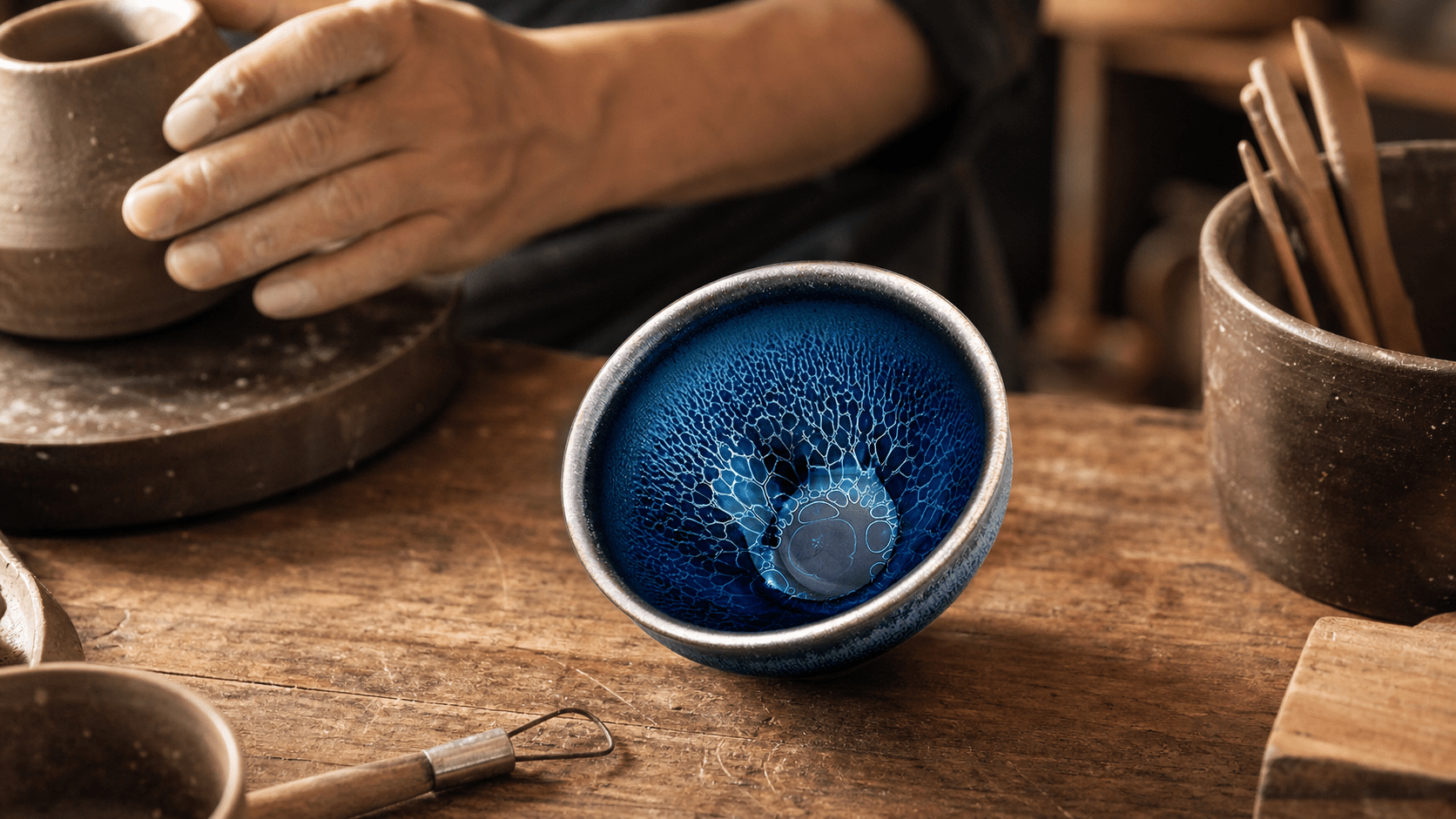

Tenmoku Tea Bowl: A Handmade Gift Story for Tea Lovers
A tenmoku tea bowl is a black-glazed ceramic cup or bowl prized for its dramatic kiln-fired surface, often showing oil spot, hare's fur, or star-like patterns. For a tea lover using gongfu tea at home, this handmade tea vessel turns a small pour of pu-erh tea or oolong into a more focused, beautiful ritual.
Think of it like a cast-iron skillet for tea culture: humble in form, shaped by fire, and more personal the more you use it. This brand story follows the craft from Jianyang in Fujian to the modern tenmoku artisan, and explains why a handmade tenmoku tea cup can feel like a meaningful gift rather than just another piece of drinkware.


Key Takeaways
- A tenmoku tea bowl is rooted in the Jianzhan ceramic tradition of Jianyang, Fujian.
- The beauty comes from kiln change, a natural reaction between iron-rich clay, glaze, heat, and oxygen.
- Song Dynasty tea culture made dark-glazed bowls famous because they highlighted whisked tea foam.
- Japanese tea culture helped preserve the name Tenmoku and the appreciation for these bowls.
- For modern buyers, a handmade tenmoku tea cup is both a usable gongfu tea vessel and a collectible craft object.
What makes a handmade tenmoku tea bowl meaningful for gongfu tea?
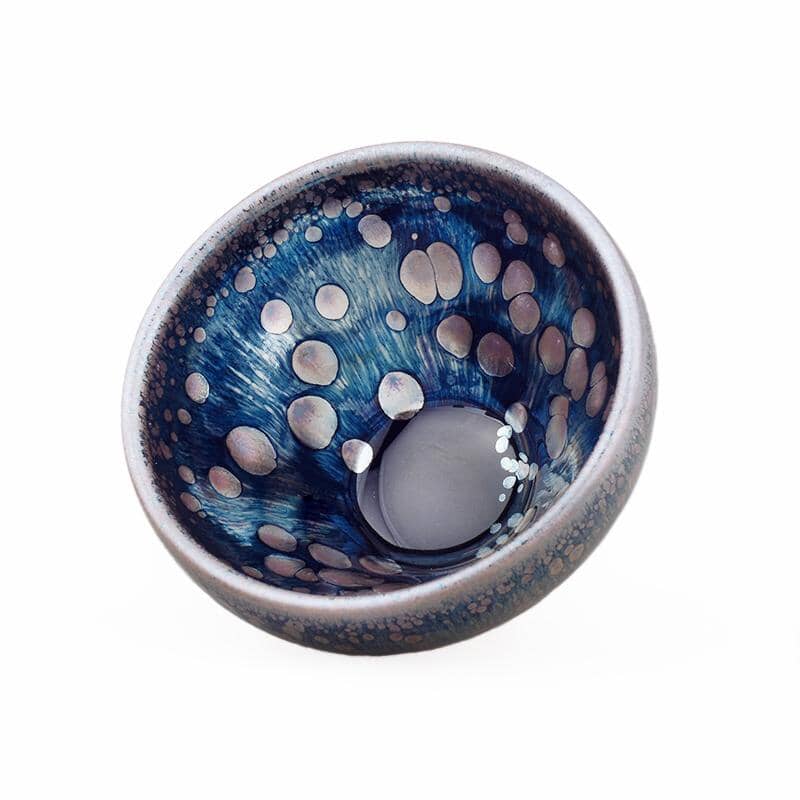
A handmade tenmoku tea bowl feels meaningful because it combines daily function with visible evidence of the maker's risk. No two firing results are exactly the same. The glaze may pool near the foot, flash with silver specks, or open into a deep blue-black field that looks almost cosmic under warm light.
In gongfu tea, the cup is small, usually designed for repeated pours. That makes touch, weight, rim comfort, and heat retention matter. A good bowl or cup should sit securely in the hand, cool enough at the rim to sip, and deep enough in color to make amber tea liquor stand out.
For pu-erh tea, especially aged sheng or ripe shu, the contrast is striking. The dark glaze gives the tea a quiet frame, much like a black plate makes a chef's dish look more intentional. The vessel does not shout, but it changes the mood of the table.
That is why many premium lifestyle buyers choose tenmoku not only for tea performance but for atmosphere. It suits a slow Sunday tasting, a focused work break, or a gift set for someone who already owns the usual mugs and wants something with cultural depth.
How does jian zhan history shape today's tenmoku tea bowl?
Jianzhan history begins in Jianyang, a historic kiln region in Fujian, China. During the Song Dynasty, roughly 960 to 1279, the area became famous for black-glazed tea bowls made from local iron-rich clay. These bowls were not decorative side objects. They were central to how tea was prepared, judged, and enjoyed.
In Song Dynasty tea culture, tea was often ground into powder and whisked with hot water. A dark bowl made pale foam easier to see, especially during tea competitions. The finest glazes showed natural patterns produced by fire: oil spot, hare's fur, partridge feather, and other effects that looked alive rather than painted on.
The name Tenmoku became widely known through Japan. Japanese monks and tea practitioners encountered Chinese dark-glazed bowls associated with Tianmu Mountain and brought the appreciation home. Over time, Japanese collectors and tea masters elevated these bowls as treasured objects for tea ceremony.
For a US buyer, the simplest way to understand the relationship is this: Jianzhan is the Chinese origin tradition, while Tenmoku is the broader name many Japanese and global collectors use for related dark-glazed tea bowls. Both words point to a shared admiration for iron glaze, restraint, and fire-born beauty.
What is the Fujian tea bowl tradition behind Song Dynasty glaze?
The Fujian tea bowl tradition is built on local materials and kiln knowledge. Jianyang clay contains a high amount of iron, which helps create the dense black body and reactive glaze effects. The famous Song Dynasty glaze was not a flat black coating. It was a chemical landscape.
During firing, minerals move. Iron crystals rise, separate, gather, or streak depending on temperature, kiln atmosphere, glaze thickness, and timing. This is called kiln change. In plain English, the kiln becomes a collaborator. The artisan can prepare carefully, but the final surface is decided in the heat.
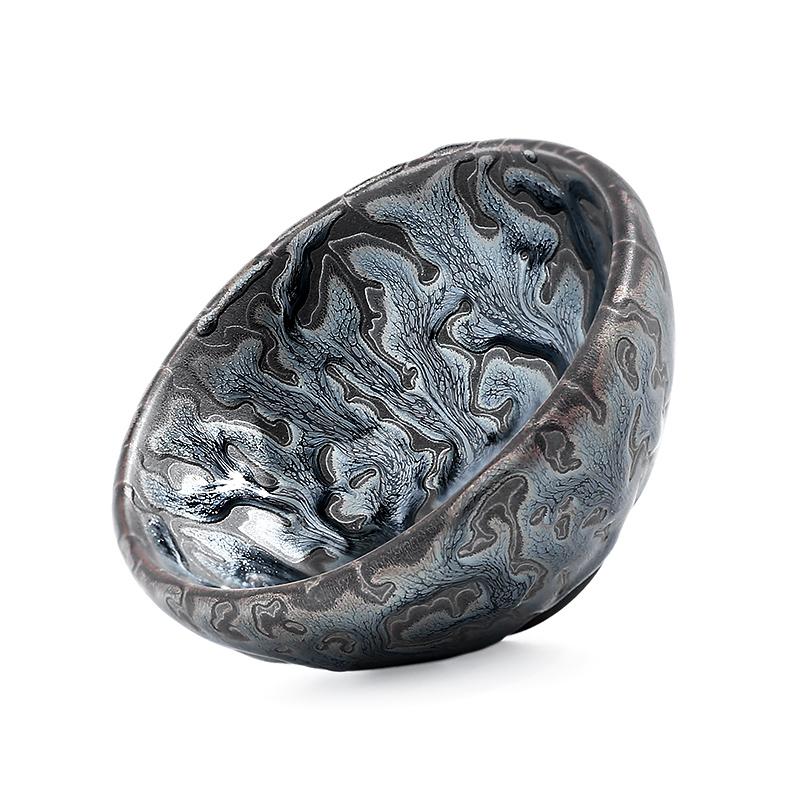
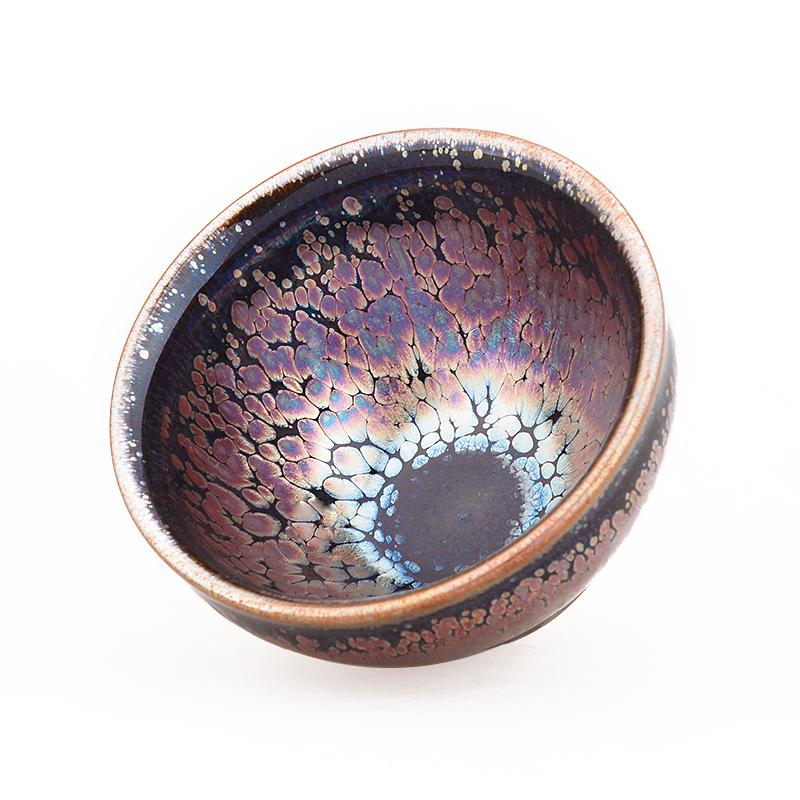
An oil spot tenmoku cup is one of the most recognizable results. Silver, bronze, or blue-toned dots appear across the glaze like tiny pools of reflected light. The effect can resemble rain on asphalt at night or stars seen through a clear winter sky.
This is also why handmade pieces vary so much. Two bowls made with the same clay and glaze may emerge with different personalities. One may be quiet and smoky. Another may burst with bright oil spot crystals. Serious collectors often value this uncertainty because it proves the piece was not mechanically printed into sameness.
How does a tenmoku artisan create an oil spot tenmoku cup?
A tenmoku artisan begins long before the kiln is lit. The process usually starts with selecting and refining clay, then throwing or shaping the cup by hand. The form must be balanced: too thin and it may warp; too heavy and it loses elegance; too wide and it may not suit gongfu tea.
After drying, trimming, and initial firing, the artisan applies an iron-rich glaze. The glaze thickness matters. A fraction too much can run. Too little can leave the surface dull. Around the foot, many makers leave a clean exposed clay line so the cup will not fuse to the kiln shelf.
The most dramatic step is the high-temperature firing. The kiln may reach temperatures around the range used for stoneware and porcelain, and the atmosphere must be managed with care. Oxygen and reduction influence how iron behaves. This is where oil spot and other effects are born.
After cooling, the artisan sorts the results. Some cups are rejected for cracks, sharp rims, glaze flaws, or unstable shapes. The best pieces are chosen not because they are perfectly identical, but because the form, glaze, and feel come together naturally.
For buyers comparing a handmade tenmoku tea cup with mass-produced ceramics, this step matters. A real handmade cup carries selection, failure, and judgment. You are not only buying the cup that survived. You are buying the maker's discipline in refusing the ones that did not.
Why is a tenmoku tea bowl a thoughtful gift for tea lovers?
A tenmoku tea bowl makes a thoughtful gift because it is useful, beautiful, and culturally layered. Many tea lovers already have leaves, infusers, and mugs. A handmade vessel gives them a new way to experience tea they already enjoy.
For beginners, it offers an accessible entry into Chinese and Japanese tea aesthetics. You do not need to understand every kiln term to enjoy the first cup. The surface invites curiosity, and that curiosity naturally opens the door to Jianzhan history, Fujian craft, and Song Dynasty tea culture.
For premium lifestyle buyers, the appeal is quieter. A tenmoku cup does not feel trendy in the disposable sense. Its beauty is ancient, tactile, and personal. It belongs on a tea tray, a home office shelf, or a dinner table where guests notice the object before asking about the story.
If you are choosing a gift, consider how the recipient drinks tea. A smaller cup is better for gongfu tea and concentrated tastings. A wider tenmoku tea bowl may appeal to someone who enjoys matcha, Japanese tea ceremony inspiration, or a more contemplative single-bowl experience.
What should you compare before buying a tenmoku tea bowl for sale?
When looking at a tenmoku tea bowl for sale, focus on more than color. A dramatic glaze may catch your eye first, but daily use depends on shape, size, rim, balance, and whether the piece fits the tea style.
| Feature | What to Look For | Best For |
|---|---|---|
| Size | Small cups around gongfu serving sizes, or wider bowls for ceremonial use | Gongfu tea, pu-erh tea, oolong, matcha-inspired settings |
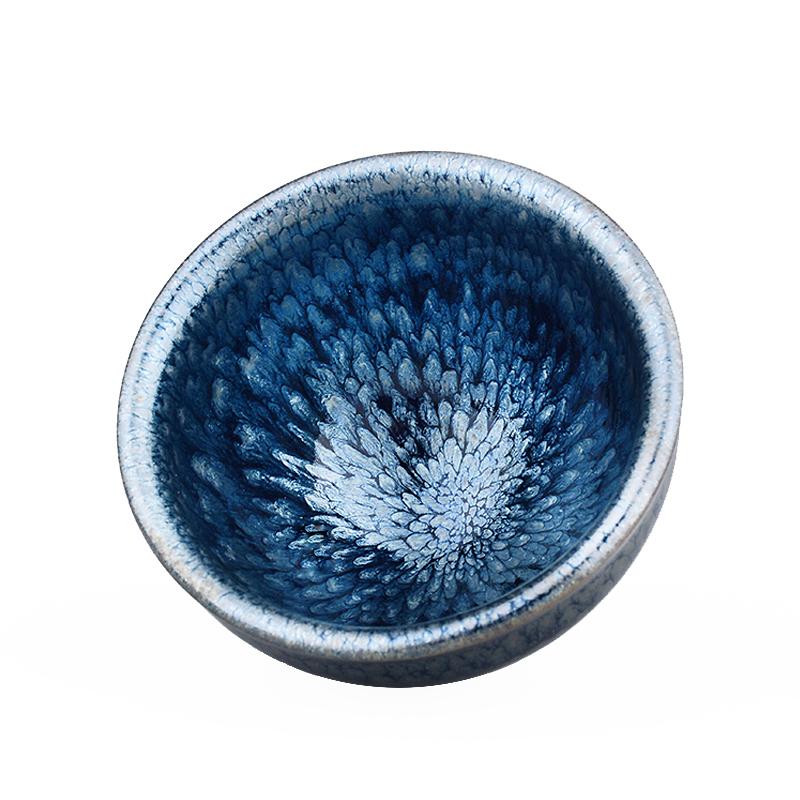
| Glaze | Oil spot, hare's fur, deep black, blue-black, or bronze crystal effects | Collectors and visual appreciation |
| Rim | Smooth, comfortable, not too thick | Daily sipping |
| Weight | Balanced in the hand, stable on the table | Premium everyday use |
| Origin story | Connection to Jianyang, Fujian, or a named tenmoku artisan | Meaningful gifting and collecting |
Photos should show the cup from multiple angles, including the inside, outside, rim, and foot. The foot is especially revealing because it shows clay body, trimming quality, and how carefully the piece was finished.
If you want a visually striking gift, an oil spot tenmoku cup is often the safest choice. It has immediate visual impact while still carrying deep craft meaning. For a more understated buyer, a darker hare's fur or glossy black piece may feel more refined.
To see variations in glaze and form, Discover our collection of oil spot tenmoku cups. For a broader view of handmade pieces rooted in Jianzhan craft, Explore our handmade Jianzhan tea cups.
How does Japanese appreciation connect to the modern tenmoku story?
Japan plays an important role in the global story of Tenmoku. Chinese dark-glazed bowls traveled to Japan centuries ago, where Japanese tea masters prized them for their quiet power and imperfect natural beauty. Some historic bowls became famous named treasures.
This Japanese appreciation helped keep the language of Tenmoku alive outside China. In the US market today, many shoppers first encounter the word through Japanese tea ceremony, matcha bowls, or museum collections. Then they discover the deeper Jianyang and Fujian roots behind the glaze.
The modern tenmoku tea bowl sits at that intersection. It is Chinese in origin, Japanese in part of its global naming and collecting history, and international in today's tea culture. A buyer in California, New York, Texas, or anywhere else in the United States can use one for pu-erh tea on a small tray, matcha at a quiet desk, or as a display piece that still belongs in the hand.
What is our brand story behind each handmade tenmoku tea cup?
Our brand story begins with respect for the maker, not with a trend forecast. We look for pieces that show the discipline of the tenmoku artisan: a balanced form, a comfortable rim, a glaze surface with life, and a connection to the Fujian tea bowl tradition.
We are drawn to cups that make beginners ask better questions. Why does the glaze look like metal? Why is the clay so dark? Why does this small bowl feel different from a regular mug? Those questions are where appreciation begins.
For premium buyers, we also care about presence. A tenmoku tea bowl should look considered without feeling fragile or precious. It should be beautiful enough for gifting and practical enough for real tea. The best pieces do both.
Every handmade cup carries the possibility of kiln change. That means the artisan sets the conditions, but the fire leaves the final signature. This is the part of the story we value most: human skill meeting natural uncertainty, then becoming something you can hold.
FAQ
What is the jian zhan history behind a tenmoku tea bowl?
Jianzhan history comes from Jianyang in Fujian, China, where black-glazed tea bowls became famous during the Song Dynasty. These bowls were valued for tea competitions, whisked tea, and natural glaze effects such as oil spot and hare's fur.
How does the Fujian tea bowl tradition differ from regular ceramic cups?
The Fujian tea bowl tradition uses iron-rich clay and reactive high-temperature glazes. Unlike regular ceramic cups with predictable decoration, each handmade tenmoku surface depends on kiln change, so the final pattern is naturally varied.
Why is Song Dynasty tea culture important to tenmoku bowls?
Song Dynasty tea culture popularized dark bowls because they made pale tea foam easier to see. The same period refined the appreciation for black glaze, mineral patterns, and the quiet elegance still associated with a tenmoku tea bowl today.
What should I ask a tenmoku artisan before buying?
Ask about the clay source, firing method, glaze type, size, and whether the piece is intended for gongfu tea, matcha-style use, or display. A knowledgeable tenmoku artisan should be able to explain the form and glaze without exaggerating mystical claims.
Is an oil spot tenmoku cup good for pu-erh tea?
Yes. An oil spot tenmoku cup works well for pu-erh tea, especially in gongfu tea sessions. The dark glaze visually frames the amber or reddish liquor, while the small size supports repeated tasting pours.
Where can I find a tenmoku tea bowl for sale as a gift?
Look for a tenmoku tea bowl for sale from sellers who show clear photos, dimensions, glaze descriptions, and origin details. For gifting, choose a comfortable handmade tenmoku tea cup with a distinct but balanced glaze pattern.
Conclusion: A small bowl with a long memory
A tenmoku tea bowl is more than a beautiful cup. It is a small, usable link between Jianyang kilns, Fujian craft, Song Dynasty tea culture, Japanese appreciation, and the modern tea table.
For a curious beginner, it makes tea feel more intentional without requiring expert knowledge. For a premium lifestyle buyer, it offers craft, heritage, and visual depth in an object that can be used every week.
If you are choosing a gift for tea lovers, start with the hand, the glaze, and the story. The right handmade tenmoku tea cup will not just hold tea. It will make the moment feel chosen.
Explore Our Collection
Ready to experience the world of tenmoku tea bowl? Browse our curated collection:
Disclaimer: This article is for informational purposes. Products and pricing subject to change.



Share:
Tenmoku Tea Bowl Authenticity Guide: How to Buy a Real Jian Zhan With Confidence
Why Is a Tenmoku Tea Bowl So Expensive? The Real Value Behind a Handmade Jian Zhan Masterpiece