


Key Takeaways
- Tenmoku tea bowls originated in Fujian, China, during the Song Dynasty for a whisked tea ritual that is the ancestor of modern matcha.
- The mesmerizing oil spot and hare’s fur patterns are not painted—they are natural crystal formations born from iron oxide and tightly controlled kiln cooling.
- These bowls are a brilliant tea ceremony gift because they marry living history, one‑of‑a‑kind artistry, and real functional benefits for teas like pu‑erh.
- When buying, look for a bowl that feels balanced in the hand, shows a vivid pattern under light, and comes from a trusted studio—an authentic oil spot tenmoku cup will never be identical to another.
I still remember the first time I cradled a real tenmoku tea bowl. The moment light hit its surface, tiny silver spots blinked awake—like a star field trapped inside a cup. I was holding more than a drinking vessel; I was holding a 900‑year‑old secret forged in fire. That’s the kind of magic that turns a simple tea session into a ceremony, and it’s exactly why the jianzhan has captured the hearts of tea lovers from Fujian to the United States.
If you’ve ever searched for a tea ceremony gift that feels truly personal, or a unique tea cup gift that tells a story before the first sip, you’re in the right place. Let’s travel back to the Song Dynasty and uncover the lost art that makes these black bowls legendary—and why, centuries later, a handmade tea cup gift set with a tenmoku piece might be the most thoughtful present you can give.
What Are Tenmoku Tea Bowls and Where Did They Originate?
To understand the tenmoku tea bowl, you have to visit the dusty dragon kilns of Fujian Province, China. Here, during the Song Dynasty (960–1279), artisans at the Jian kilns perfected a dark, iron‑rich glaze that fired to a deep black. They had no way of knowing their work would one day grace museum shelves—they were simply chasing the perfect cup for the era’s biggest spectator sport: tea battles.
The Japanese term “tenmoku” (天目) came much later. When Zen monks traveled to Mount Tianmu in China, they fell in love with these conical jianzhan bowls and brought them back to Japan. By the 14th century, the japanese tea bowl tradition had elevated tenmoku to national treasure status. In the West, we might compare it to how Bordeaux wine glasses evolved to serve a specific drink—but tenmoku bowls do something far more profound: they transform the tea itself.
The Song Dynasty Tea Battles: Why Black Glazes Became the Gold Standard
Imagine a stadium filled with scholars, nobles, and merchants, all cheering not for warriors but for foam. Song‑era tea competitions were wild events where contenders whisked powdered tea—like an early form of matcha—with a bamboo brush until a thick, milky froth rose above the rim. The goal? Create the whitest, most long‑lasting foam. And what background shows white best? Black, of course.
This is the practical genius behind the tenmoku tea bowl. The dark glaze transformed a simple beverage into a performance. Lighter celadons or porcelains faded the foam into obscurity; only the inky depths of a jianzhan could make every bubble pop like a pearl. I’ve recreated this with friends using a pu-erh tea whipped in one of my own bowls, and the visual contrast is still breathtaking. It’s a party trick that never gets old, and a reminder that great design solves a real problem.
The Science Behind the Magic: How Oil Spot and Hare’s Fur Glazes Form
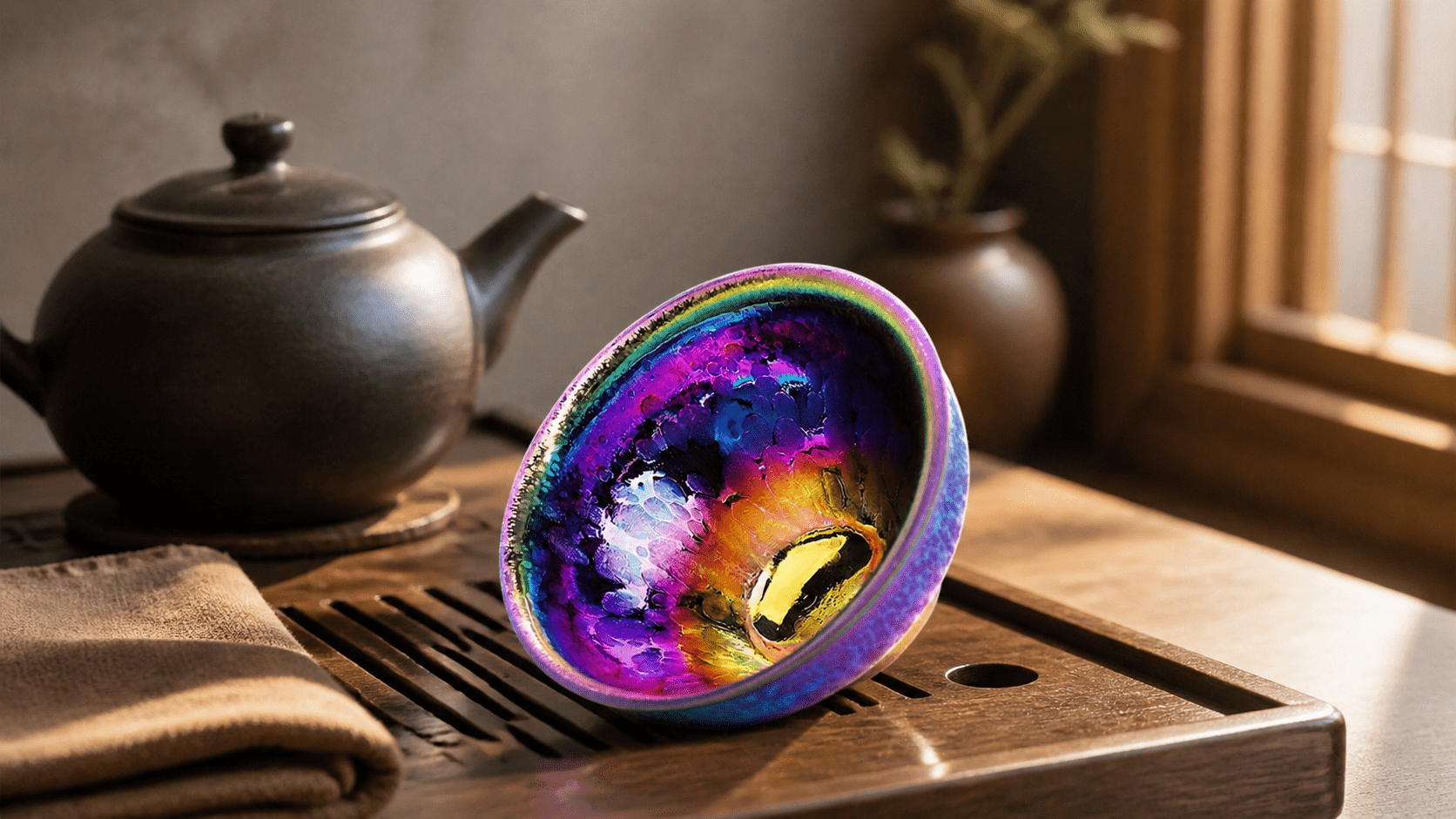
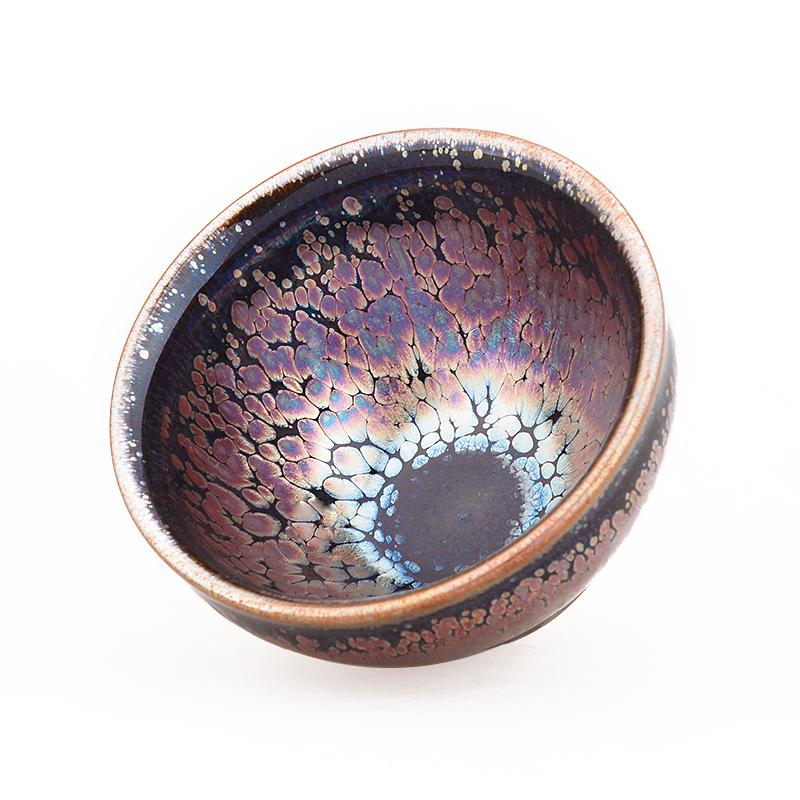
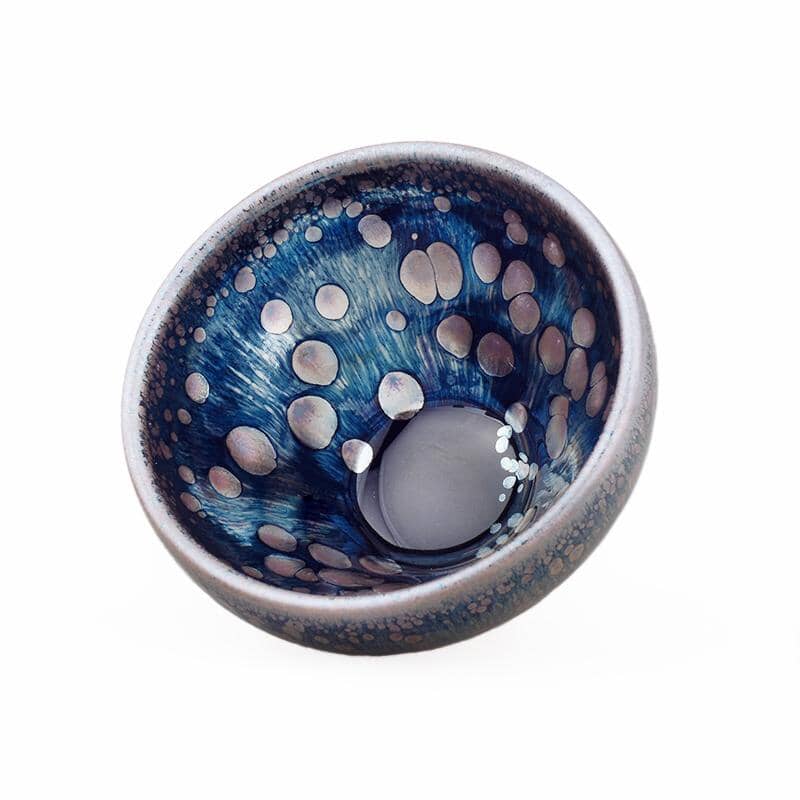
Here’s where things get truly alchemical. The oil spot pattern that makes a tenmoku cup so coveted isn’t painted on—it’s grown. The base glaze is saturated with iron oxide. In the extreme heat of a dragon kiln (over 1300°C), that iron begins to decompose, releasing oxygen and forming bubbles. As the kiln cools in a precisely controlled reduction atmosphere, those bubbles burst and leave behind microscopic pools of liquid iron. If the cooling curve is just right, the iron crystallizes into magnetite, creating the metallic, shimmering spots that seem to float beneath the surface.
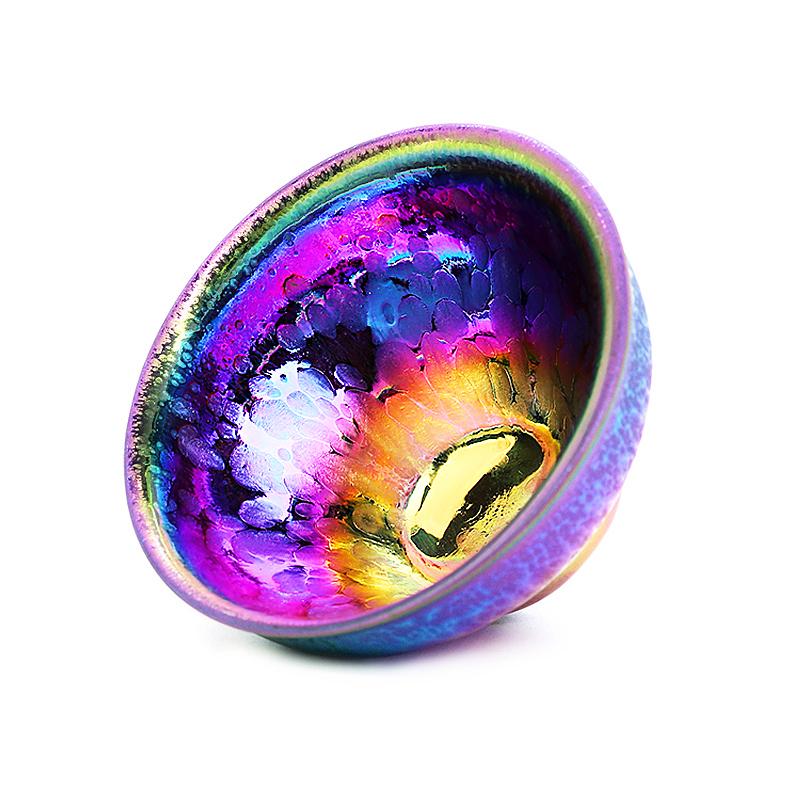
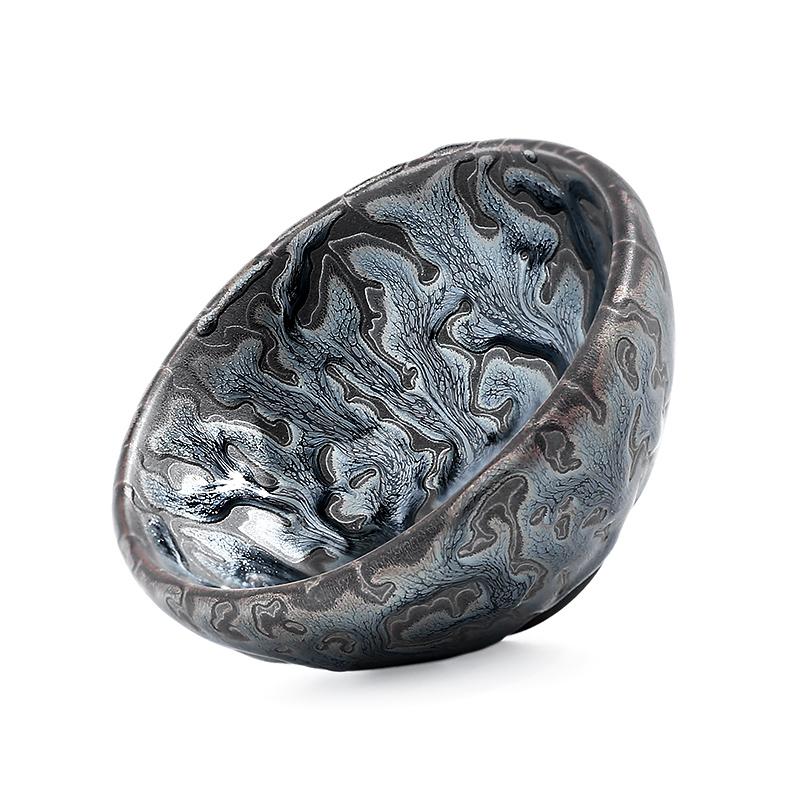
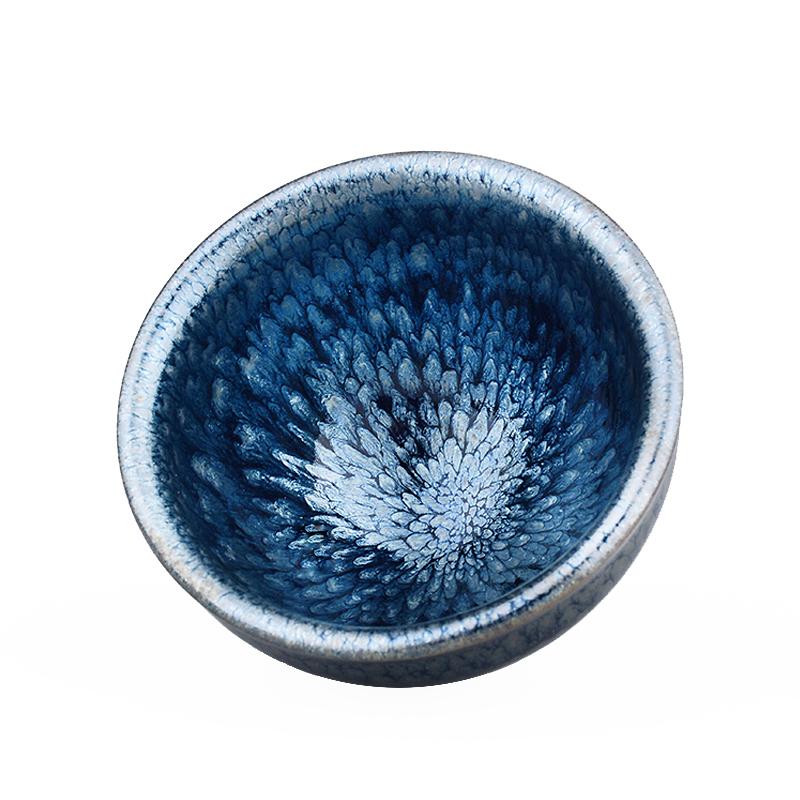
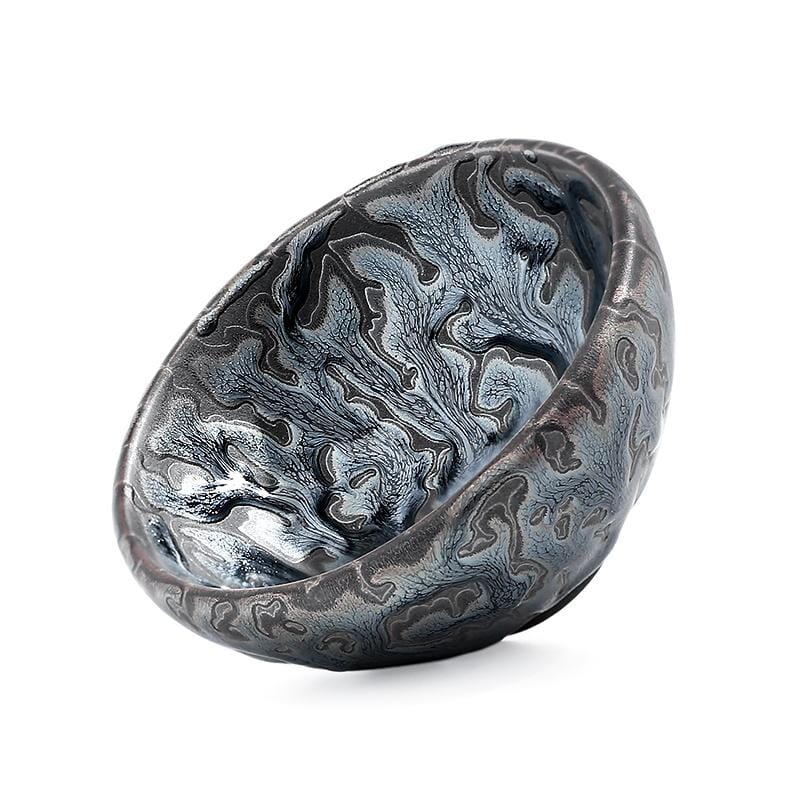
Hare’s fur, or “jou”, occurs when the molten glaze flows downward slightly, pulling those iron crystallizations into fine, silvery‑brown streaks. A true masterpiece might even achieve “yohen”—a rainbow‑like iridescence that requires such a narrow window of fire and chance that potters often say it’s a gift from the kiln gods. When you hold an oil spot tenmoku cup, you’re witnessing a phase change that happened in a single afternoon nearly a thousand years ago—or, in the case of modern masters, just last week. It’s geology sped up.
Why a Tenmoku Tea Bowl Makes the Ultimate Tea Ceremony Gift?
I’ve gifted many teacups over the years, but nothing starts a conversation like a tenmoku tea bowl. It’s a tea cup gift for tea lovers who already have a cabinet full of porcelain. The dark, tactile surface feels ancient in the hand, and because every bowl is a unique artifact, you’re not just giving a cup—you’re giving a specific moment in fire and time that can never be replicated. An engraved mug will gather dust; a unique tea cup gift like this will be reached for daily.
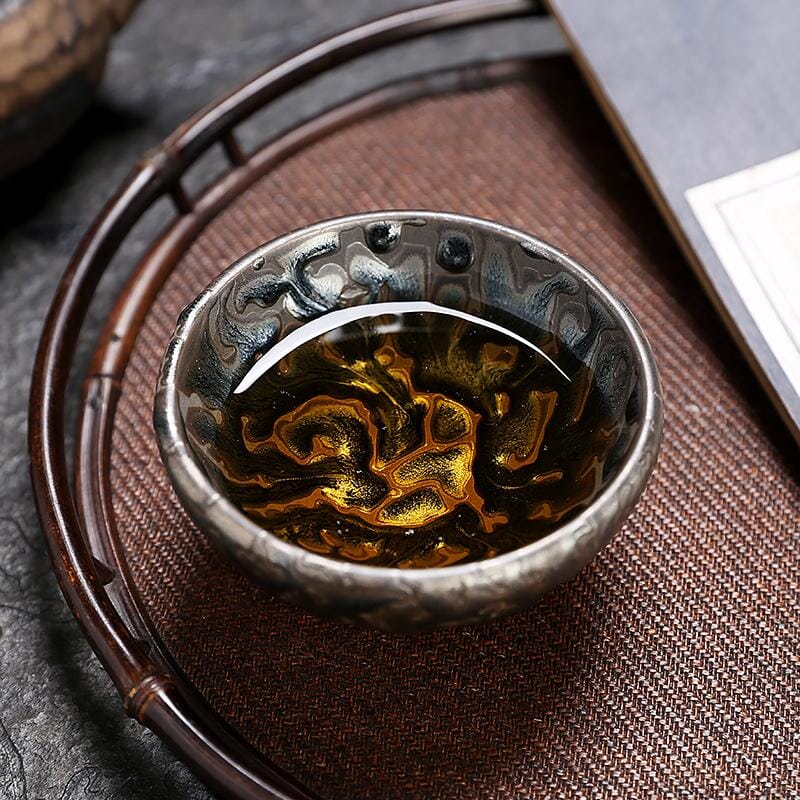
It’s also incredibly versatile. A handmade tea cup gift set pairing a tenmoku bowl with a few premium teas like pu‑erh or a roasted oolong makes an instant tea ceremony starter. The bowl’s thick walls retain heat beautifully for the multiple short infusions of gongfu cha, and its wide mouth lets the aroma leap out. For anyone who practices mindfulness or simply craves a slower morning, this is a present that genuinely changes the ritual.
| Glaze Type | Appearance | Formation | Tea Pairing |
|---|---|---|---|
| Hare’s Fur | Fine, elongated streaks like animal fur | Iron oxide flows during cooling | Green, white teas |
| Oil Spot | Individual silvery or golden dots | Bubbles burst, leaving iron crystals | Pu-erh, dark oolongs |
| Yohen | Rainbow iridescence across the surface | Extremely rare fire‑scale effects | Matcha, ceremonial teas |
How to Choose Your First Tenmoku Tea Bowl
If you’re ready to find a tenmoku tea bowl for sale, I have a few honest pieces of advice. First, ignore the idea of “perfect.” A flawless, machine-made pattern will never carry the soul of a true jianzhan. Look for vitality: tilt the bowl under a light source and watch the pattern dance. You want a sense of depth, as if you’re looking into a night sky, not a painted sticker.
Second, consider the weight and lip. A good jianzhan tea cup gift should feel substantial but not clunky, with a rim that fits comfortably against your lower lip. The foot ring should be slightly rough—that’s a sign of hand‑thrown authenticity, not a defect. I always recommend newcomers start with an oil spot tenmoku cup because the dots are so obviously alive; you’ll catch guests mesmerized by the surface even before the tea is poured. If you prefer elegant lines, Browse our hare’s fur Jianzhan series for streaky, dynamic designs. Those who crave one‑of‑a‑kind wonder should Discover our collection of oil spot tenmoku cups, where every piece is a small galaxy.
Who Should Buy This?
- The Serious Tea Drinker: Anyone who already measures water temperature and times steepings will appreciate how the bowl’s shape and glaze influence flavor.
- The Home Ceremony Enthusiast: If your mornings include meditation, journaling, or a quiet moment, a tenmoku bowl anchors that practice with physical beauty.
- The Gift‑Giver Looking to Impress: Be the person who gave a tea ceremony gift they didn’t know existed. This bowl sparks curiosity and shows deep thought.
- The Collector of Living Art: Unlike prints or decorative objects, this is functional art you can hold every day—and it only gets better with use.
Frequently Asked Questions
(The answers below are also shown in the structured data for search engines—so you get all the info you need, faster.)
What is the difference between tenmoku and jianzhan?
Jianzhan is the original Chinese term for Song Dynasty black‑glazed bowls from Fujian. Tenmoku is the Japanese name, derived from Mount Tianmu where monks acquired them. Today, “tenmoku” can refer to any dark iron‑glazed ceramic, while “jianzhan” insists on the authentic Chinese heritage.
How do I care for a tenmoku tea bowl?
Rinse with warm water and pat dry. Avoid soap and the dishwasher. With time and tea, the bowl will develop a soft, glossy patina—this is cherished as “cup‑nurturing.”
Can I use a tenmoku tea bowl for matcha?
Yes! This is exactly what they were born for. The dark color makes the green froth pop, just as it did in Song Dynasty tea battles.
What makes an oil spot glaze so special?
The spots are crystallized iron formed during kiln cooling. Every bowl contains a unique constellation, and a lively pattern can take decades of experience to achieve consistently.
Are tenmoku tea bowls safe to drink from?
Absolutely. High‑fire ceramics are inert and food‑safe. Many tea drinkers even believe the iron content subtly softens water, working wonders on pu-erh tea.
Why are tenmoku tea bowls so expensive?
Because for every bowl you see with a bright, active pattern, dozens cracked in the kiln or came out a dull, muddy black. The success rate is humbling—that’s why a true tenmoku tea bowl is a feat of science and luck.
When you’re ready to bring this Song Dynasty legacy to your own tea table, a carefully chosen tenmoku tea bowl will be your daily reminder that beauty thrives at the edge of control—and that the best gifts are the ones we keep using, one steep at a time.
Explore Our Collection
Ready to experience the world of tenmoku tea bowl? Browse our curated collection:
Disclaimer: This article is for informational purposes. Products and pricing subject to change.


Share:
Tenmoku Tea Bowl for a Calmer, More Luxurious Gongfu Tea Ritual
Handmade Tenmoku Tea Bowl: Luxury Home Ritual for Relaxation