


An authentic tenmoku tea bowl is a work of fire-born art, distinguished by its iron-rich glaze, distinctive 'hare's fur' or 'oil spot' patterns, and the unmistakable traces of high-temperature wood firing in a traditional Japanese climbing kiln. Fakes, often mass-produced with chemical glazes, lack depth, random pattern crystallization, and the subtle imperfections that mark a true piece.
Key Takeaways
- Real tenmoku bowls showcase three-dimensional, naturally irregular glaze patterns like hare's fur, oil spots, or yuteki.
- Authentic pieces have a dark, iron-rich clay body visible on the unglazed foot ring, often with a spiderweb crackle.
- Look for firing marks—subtle ash deposits, kiln scars, and slight asymmetry—hallmarks of traditional noborigama (climbing kiln) firing.
- A genuine tenmoku feels dense and heavy for its size; knock gently for a clear, ringing tone.
- Common fakes use stenciled or painted patterns, low-fire earthenware, and uniform, lifeless surfaces.
What Is a Tenmoku Tea Bowl?
The term 'tenmoku' comes from the Japanese pronunciation of Tianmu Mountain in China, where Japanese monks first encountered dark-glazed Jian ware tea bowls in the 12th century. Brought back to Japan, these bowls became treasures of the tea ceremony. Over time, Japanese potters in kilns like Seto and Mino developed their own tenmoku traditions, using local iron-rich clays and glazes to create pieces with a uniquely Japanese wabi-sabi aesthetic.
Think of a tenmoku bowl as the Riedel glass of the tea world. Just as a thin crystal rim shapes wine's aroma, the iron glaze subtly interacts with matcha, enhancing its umami and creating a tactile, visual journey. Unlike mass-produced ceramics, each bowl is born in a single firing, its pattern never replicable—a fingerprint of the fire.
Why Authenticity Matters
For the curious beginner, an authentic tenmoku bowl is your gateway to a richer matcha ritual. The real thing feels different in your hands: the weight, the texture, the way the glaze catches light. It’s a conversation starter, an heirloom in waiting.
For the premium buyer, authenticity is about integrity. A genuine Japanese tenmoku from a known kiln carries the legacy of generations of master potters. It’s not just a vessel; it’s a piece of living history. Fakes, meanwhile, can use glazes with unknown chemical compositions that might affect tea taste or safety. And from an investment perspective, real tenmoku bowls from respected kilns hold or increase their value, while imitations are worth little more than the clay they’re made of.
How to Spot a Real Tenmoku: The Telltale Signs
Glaze Pattern Depth
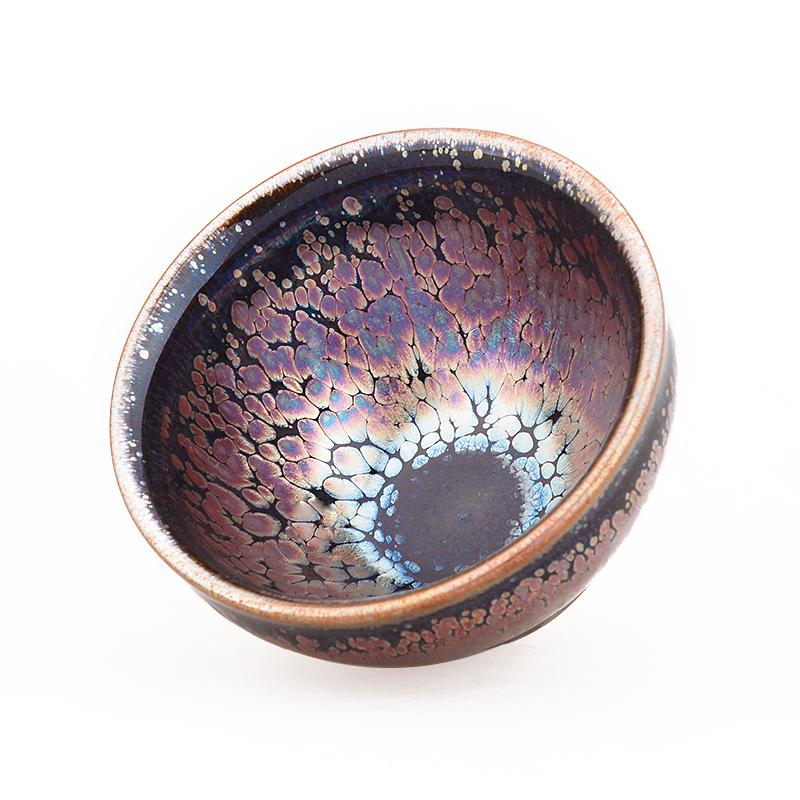
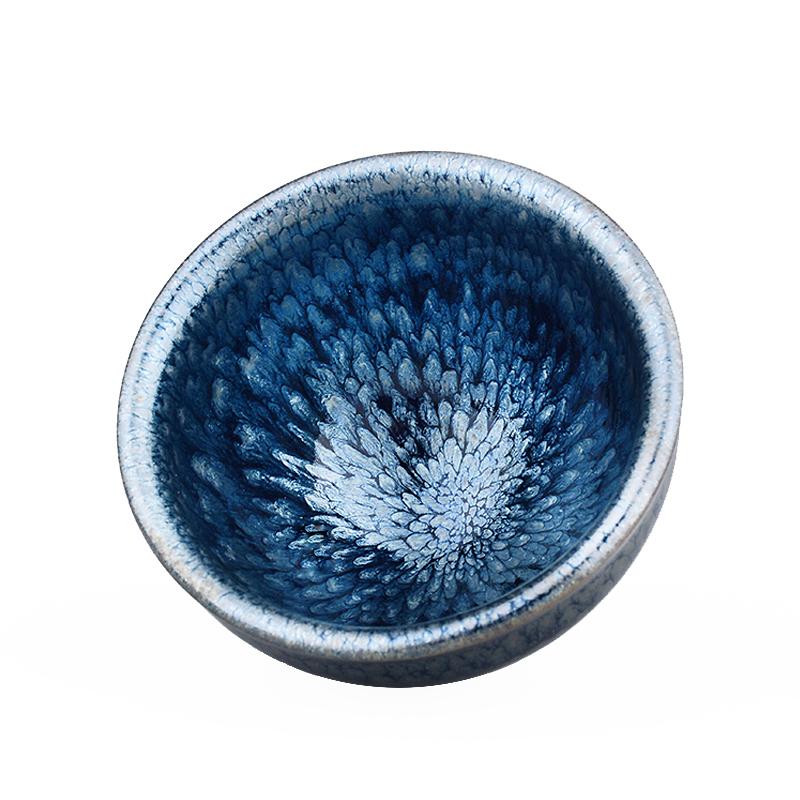
Authentic tenmoku glazes are thick, glassy, and reveal their patterns deep within the surface—not printed on top. A true 'hare's fur' (nogime) has countless tiny, silvery-black streaks that seem to move as you tilt the bowl. 'Oil spot' (yuteki) appears as a galaxy of floating, iridescent bubbles, not painted dots. Under magnification, you’ll see crystallization, not pigment.
The Foot Reveals All
Flip the bowl over. The unglazed foot ring is a dead giveaway. A real tenmoku will show a dark, slightly coarse clay body—iron-rich and often burnt to a deep brown or black. You’ll likely notice a fine network of crackles (kan-nyuu) where the glaze ends. If the foot ring is perfectly smooth, white, or painted to look dark, walk away. In traditional Japanese tenmoku, the potter’s mark or kiln stamp may be impressed here; check for clean, crisp impressions, not smudged or laser-engraved marks.
Firing Marks and Wabi-Sabi
Japanese momoyama-era aesthetics embrace imperfection. Look for noborigama clues: tiny ash flecks, a spot where the glaze dripped naturally, a slight warp from the intense heat. A machine-made fake will be too perfect—uniform shape, identical pattern on every side. A real wood-fired bowl is a chapter of its firing story. Even contemporary gas-fired Japanese tenmoku will show a dynamic, varied surface that no extruded mold can copy.
Sound and Weight
Pick it up. A true tenmoku feels substantial, heavier than it looks, because of the dense iron clay and thick glaze. Tap it gently with a fingernail—it should produce a clear, resonant ping, almost like a tiny bell. A fake often sounds dull or thuds, a sign of low-fire porous body.
Common Fake Types (and How to Catch Them)
Fake tenmoku bowls often target US buyers who lack local access to genuine pieces. Here’s what to watch for:
- The Painted Hare’s Fur: Chemically applied or stenciled striations on the glaze surface. Tip: Look at the edge of the bowl—a real pattern continues seamlessly over the rim; a painted one stops abruptly.
- The Glossy Oil Spot Decal: A transfer or screen-printed dot pattern under a clear gloss. Tip: Real yuteki dots are raised, individual crystals; fakes are flat and perfectly round under a plastic-like coating.
- The Temu Special: Extremely cheap, lightweight earthenware with a shiny black glaze and zero texture. Tip: If it’s under $20 and looks like a glossy orange peel, it’s not tenmoku. Authentic tenmoku bowls start above $80 for a modest artisan piece.
- The Impersonator Kiln Mark: A modern Chinese copy with a fake “Seto” or “Mino” stamp. Tip: Research the kiln. Reputable Japanese kilns have documented artist seals. When in doubt, ask the seller for firing details and provenance.
Real vs Fake Tenmoku: At a Glance
| Feature | Authentic Tenmoku | Fake / Mass-Produced |
|---|---|---|
| Glaze Pattern | 3D, random, continues over rim; crystalline under light | 2D, uniform, printed on surface; often flat |
| Foot Ring Clay | Dark, iron-rich, slight texture; natural crackle | White, smooth, painted dark; no crackle |
| Firing Origin | Wood-fired noborigama or high-fire gas kiln; ash marks, drips | Electric kiln, totally clean surface, no story |
| Weight & Sound | Heavy, dense; clear ringing tone | Light, thin-walled; dull thud |
| Price Indicator | $80–$500+ for artisan; museum-quality pieces higher | $10–$30, often sold in sets on large marketplaces |
| Imperfections | Subtle warping, individual kiln scars—part of the beauty | Flawlessly machined, exactly symmetrical |
Who Should Buy an Authentic Tenmoku Bowl?
- Matcha Beginners Ready to Level Up: If you’ve been whisking in a cereal bowl, a real tenmoku instantly elevates your morning ritual. Its shape and glaze make whisking easier and improve the tea’s flavor.
- Japanese Culture Enthusiasts: Owning a tenmoku is like holding a piece of Momoyama-era Japan. It connects you to the art of chanoyu without needing to board a plane.
- Collectors of Fine Ceramics: With documented kiln lineage, these bowls appreciate in sentiment and often in market value. Look for works by noted Japanese potters.
- Gift Seekers for Discerning Recipients: A genuine tenmoku bowl, paired with a tin of high-grade matcha and a chasen, makes a gift that’s both beautiful and deeply personal.
Buying Guide: Navigate the US Market with Confidence
When shopping for tenmoku online or in US galleries, ask these three questions:
- “What kiln or potter made this, and what is their background?” A reputable seller will happily share the artist’s name, kiln location (e.g., Seto, Aichi Prefecture; Mino, Gifu Prefecture), and firing method. If they can’t, it’s a red flag.
- “Can I see close-up photos of the foot and the rim?” Insist on sharp images that show the unglazed foot and the edge of the bowl. Honest sellers expect informed buyers to check these details.
- “What is the return policy?” For a significant purchase, a satisfaction guarantee is a must. Authentic bowls will stand up to scrutiny.
Stick to specialist Japanese pottery retailers, studio potter websites, or curated platforms that vet their artisans. Marketplaces flooded with generic listings tend to be minefields of fakes.
Real-Life Scenarios
Morning Matcha at Home: Sarah, a yoga teacher in Portland, upgraded from a ceramic mug to an authentic Seto tenmoku bowl. The difference was immediate—the bowl’s wide shape allowed her to whisk a perfect microfoam, and the deep black glaze made the vibrant green matcha pop. It turned a two-minute task into a mindful moment.
A Birthday Gift That Tells a Story: Mark, a tech exec in Austin, gifted his tea-loving mother a yuteki tenmoku with visible kiln marks. She loves that each tiny crystal in the glaze is like a frozen spark from the fire. He included a card explaining how the bowl was fired over three days in a Mino kiln, and now it’s the centerpiece of her tea cabinet.
Care Tips for Your Tenmoku Bowl
- Wash gently by hand with warm water and a soft cloth; never use abrasive sponges or detergents that can dull the crystalized glaze.
- Avoid thermal shock—let the bowl cool or warm gradually. Don’t pour boiling water into a cold bowl.
- After use, dry the bowl completely, especially the foot ring, to prevent water stains on the porous clay.
- Over time, the glaze may develop subtle color shifts or a tear-like patina—this is a prized feature called “nurturing” the bowl, a living record of your tea sessions.
Frequently Asked Questions
How can I tell if a tenmoku bowl is real or fake?
Look for deep, three-dimensional glaze patterns like hare's fur or oil spots that are randomly distributed, not uniform. Check the foot ring for the dark, iron-rich clay body and spiderweb crackle. Genuine bowls feel dense and heavy, with subtle firing marks.
What is a tenmoku tea bowl?
A tenmoku tea bowl is a dark-glazed ceramic bowl originating from China's Jian kilns and later perfected in Japan. Known for its iron-saturated glaze that produces dramatic crystalline patterns during wood firing, it is used primarily for whisking matcha in the Japanese tea ceremony.
Are all black glazed bowls tenmoku?
No. While tenmoku bowls are black-glazed, the term specifically refers to iron-rich glazes fired at high temperatures (around 1300°C) in a reduction atmosphere, resulting in unique crystalline effects. Many commercial black bowls lack this process and material authenticity.
Where can I buy authentic tenmoku bowls in the US?
Seek out specialized Japanese pottery galleries, reputable online platforms with artisan verification, and direct from studio potters in Japan who ship internationally. Always ask for details about the kiln, firing method, and clay source.
Do fake tenmoku bowls affect tea taste?
Yes, mass-produced fakes often use chemical glazes that can leach flavors or lack the subtle mineral interaction that enhances matcha's umami. Authentic iron-glazed bowls can slightly soften water and contribute to a smoother mouthfeel.
Brew Your Own Story
An authentic tenmoku bowl isn’t just tableware—it’s a meditation, a teacher, a piece of Japan’s living ceramic legacy that you can hold in two hands. Now that you know how to read the fire’s signature, you can step confidently past the fakes and into a world where every sip of matcha carries a whisper of the kiln. Browse our curated selection of documented, genuine Japanese tenmoku bowls, each with a provenance as rich as its glaze.
Explore Our Collection
Ready to experience the world of tenmoku tea bowl? Browse our curated collection:
Disclaimer: This article is for informational purposes. Products and pricing subject to change.
Compartir:
Why Are Tenmoku Tea Bowls So Expensive? The Craft & Luxury Behind Japanese Tea Bowls
Japanese Master Potter's Quest to Perfect Tenmoku Tea Bowls