¿Deberíamos tolerar las manchas de té para cultivar el colorido esmalte de Jianzhan ?
por Tenmokus Editorial Team
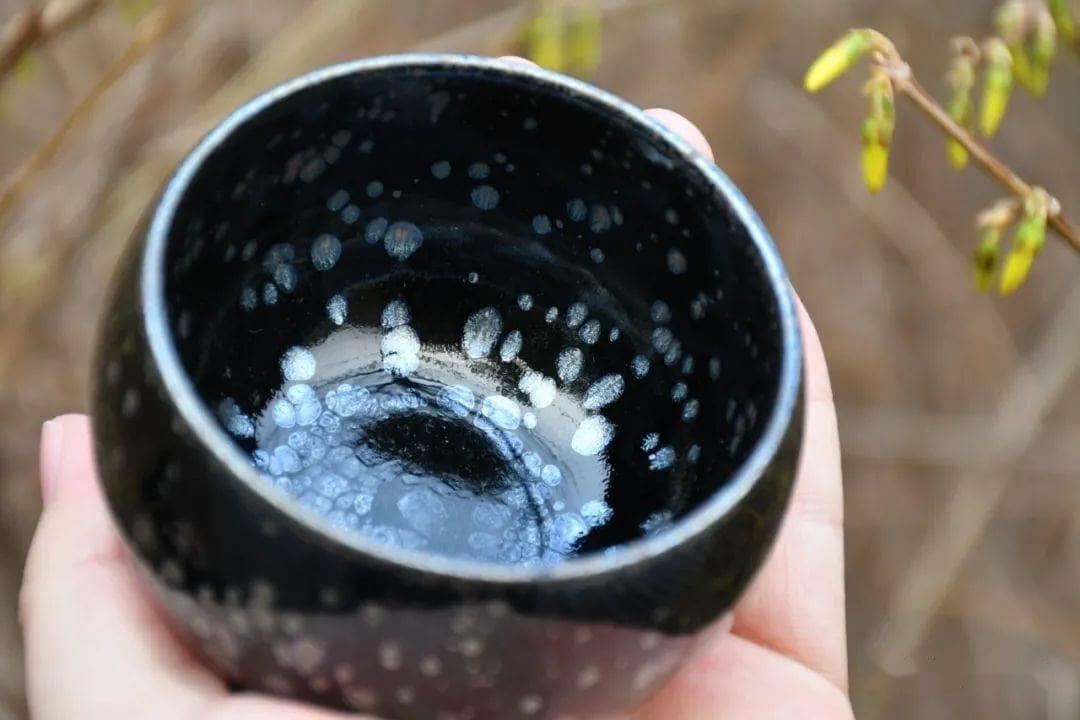
Si Jianzhan no se limpia adecuadamente con el tiempo, se formará una capa de manchas de té en su interior, pero esa no es la "luz del tesoro colorido" que se cultiva al cuidar el Jianzhan.
Si el té no está terminado y se deja en el Jianzhan durante mucho tiempo, o si el Jianzhan usado no se limpia a tiempo y se deja sin usar, los polifenoles del té en las hojas de té y los elementos metálicos en el óxido del té sufrirán una reacción de oxidación, lo que dará como resultado la formación de manchas de té que se adhieren a la pared interna del Jianzhan.
1. ¿Se deben limpiar las manchas de té??
Afecta la estética:
El té puede nutrir el Jianzhan, pero esto no significa que deba estar en contacto con la sopa de té todo el tiempo. No solo no se cultivará su brillo colorido, sino que también podría causar la formación de óxido en el Jianzhan.
El cuerpo del Jianzhan es de hierro, y su esmalte es de cristal de hierro, ¡especialmente diseñado para el Jianzhan con diseño de gotas de aceite! (Muchos Jianzhan con diseño de gotas de aceite del mercado no tienen una capa vitrificada para aislar el oxígeno y el vapor de agua, mientras que la mayoría de los Jianzhan con diseño de piel de liebre sí la tienen).
Como el hierro se oxida fácilmente en óxido de hierro marrón en el aire, si se remoja en sopa de té o no se seca después de su uso, se oxidará gradualmente por el vapor de agua en Fe3O4, que es de color marrón rojizo y parece óxido, y afectará en gran medida la estética.
Manchas de té en teteras de arcilla Yixing.
Afectando la salud:
Desde una perspectiva de seguridad y salud, no limpiar Jianzhan no favorece la salud física porque no limpiar las manchas de té durante mucho tiempo puede provocar la aparición de moho.
Afecta la eficacia del propio Jianzhan:
El cuerpo del Jianzhan contiene una gran cantidad de pequeños poros que ayudan a mantener la temperatura de la sopa de té. La calidad del agua mejora según la cobertura de los poros. Los poros del interior del cuerpo pueden adsorber partículas de calcio y magnesio, reduciendo la dureza del agua y dejándola suave y tersa. Además, el Jianzhan mantiene la sopa de té fresca y evita que se eche a perder. Si el Jianzhan no se mantiene limpio y se mancha con té, los poros se obstruirán, lo que afectará su aislamiento, la calidad del agua y su conservación.
¿Cómo limpiar Jianzhan?
Limpieza diaria: Después de la última taza de té del día, enjuague el Jianzhan con agua caliente para eliminar las pequeñas manchas de té adheridas a la superficie esmaltada. Luego, enjuáguelo de nuevo con agua normal y, por último, colóquelo en un lugar ventilado o séquelo con un paño de limpieza especial.
Limpieza profunda: Generalmente, se requiere una limpieza completa cada tres a cinco días. En ese momento, se puede usar pasta de dientes o lavavajillas y luego secar con un paño o dejar secar al aire libre. Recuerde: la limpieza diaria y la limpieza regular son igual de importantes para Jianzhan.
Mantener Jianzhan limpio e higiénico en todo momento es como mantenernos limpios y frescos. Cuidamos de Jianzhan, y Jianzhan nos cuida.
No te apresures a cultivar a Jianzhan ni fuerces su legendario brillo colorido. Déjalo en manos del tiempo y el destino.
Quick answers for Tenmoku teaware shoppers
Use this guide to connect the article topic with practical buying decisions: what Jianzhan Tenmoku teaware is, who it suits, how to choose a piece, and how to care for it after purchase.
How to use this guide before buying
Read the article first for the main explanation, then compare the product photos, glaze variation, form, seller clarity, return policy, and whether the piece fits daily tea, display, collecting, or gifting.
Common buying mistakes to avoid
Avoid choosing only by dramatic claims, copied photos, unusually low prices, or vague master language. A better decision uses visible product details, clear use case, realistic care needs, and trustworthy shop policies.
Recommended next step
After reading, compare a few real products side by side by size, glaze family, rim shape, capacity, price, and gift suitability instead of relying on one photo or one keyword.
What is Jianzhan Tenmoku teaware?
Jianzhan Tenmoku teaware is ceramic tea ware known for dark mineral-glaze effects and natural kiln variation. Common forms include tea cups, bowls, teapots, tea sets, and matcha bowls.
Who is it best for?
It is best for tea drinkers, ceramic collectors, and gift shoppers who value functional objects with visible handmade character. It is not ideal if you need every piece to look exactly identical.
How do I care for it?
Hand wash with warm water, avoid abrasive cleaners, and dry fully before storage. Gentle daily use helps preserve the surface and keeps the glaze easy to inspect over time.
How do I choose the right Tenmoku piece?
Choose by the main use first: daily tea, matcha, Gongfu brewing, display, or gifting. Then compare capacity, rim shape, glaze family, photos, and whether natural variation is acceptable for your needs.
Is Jianzhan Tenmoku teaware good as a gift?
Yes. It works well for tea lovers, ceramic collectors, birthdays, holidays, and housewarming gifts because it is both usable and visually distinctive. For gifts, choose an easy-to-use form and a glaze style with clear photos.
Related products and categories
Compare the guide above with real Tenmokus categories and representative pieces. Start with the use case, then compare glaze style, form, price, and whether the piece is mainly for daily tea, display, collecting, or gifting.
Compare handmade Jianzhan Tenmoku tea cups by glaze style, cup size, hand feel, and gift intent. Check each product page for current photos, capacity, availability, care details, shipping, and return information.
Why a Tenmoku Tea Bowl Is Worth the Price for Tea Lovers A tenmoku tea bowl can cost more than an everyday cup because it is a fired work of handmade ceramic art, not a factory-made drinking vessel. For someone...
A tenmoku tea bowl brings color, texture, and a slower rhythm to a gongfu tea session.The Tenmoku Tea Bowl Story: A More Meaningful Gongfu Tea Ritual A tenmoku tea bowl is a dark-glazed tea vessel whose character comes from clay,...
Tenmoku Tea Bowl Authenticity: How to Buy with Confidence A real tenmoku tea bowl is best recognized through its material, glaze behavior, firing marks, and clear origin story—not one flashy rainbow pattern. If you want a handmade ceramic cup for...


Compartir:
"Entre la respiración de una tetera, nutre el agua y alimenta a la persona".
Cómo limpiar y usar el viejo Jianzhan para beber té.