Oil Spot vs. Hare's Fur vs. Partridge Feather: Which Tenmoku Glaze is Right for You?
por Tenmokus Editorial Team
Oil Spot vs. Hare's Fur vs. Partridge Feather: Which Tenmoku Glaze is Right for You?
When you first step into the world of Tenmoku (Jianzhan) tea cups, you are immediately struck by the breathtaking, complex patterns that look like distant galaxies or the shimmering feathers of an exotic bird. But as you browse the collection, you’ll encounter terms like "Oil Spot," "Hare's Fur," and "Partridge Feather."
What do these names mean? How are they created? And most importantly, which one should you choose for your personal tea ritual or as a collector's piece?
In this guide, we’ll break down the three most iconic Jianzhan glaze patterns to help you find the one that resonates with your style.
What Makes Tenmoku Glazes So Unique?
The beauty of Tenmoku lies in its randomness. Unlike mass-produced porcelain, these patterns are not painted on. Instead, they are the result of a complex chemical reaction during high-temperature firing (over 1300°C). The iron-rich glaze melts, and as the kiln cools, iron crystals form on the surface, creating the unique "crystalline" effects we call glazes.
1. Oil Spot (You Di - 油滴)
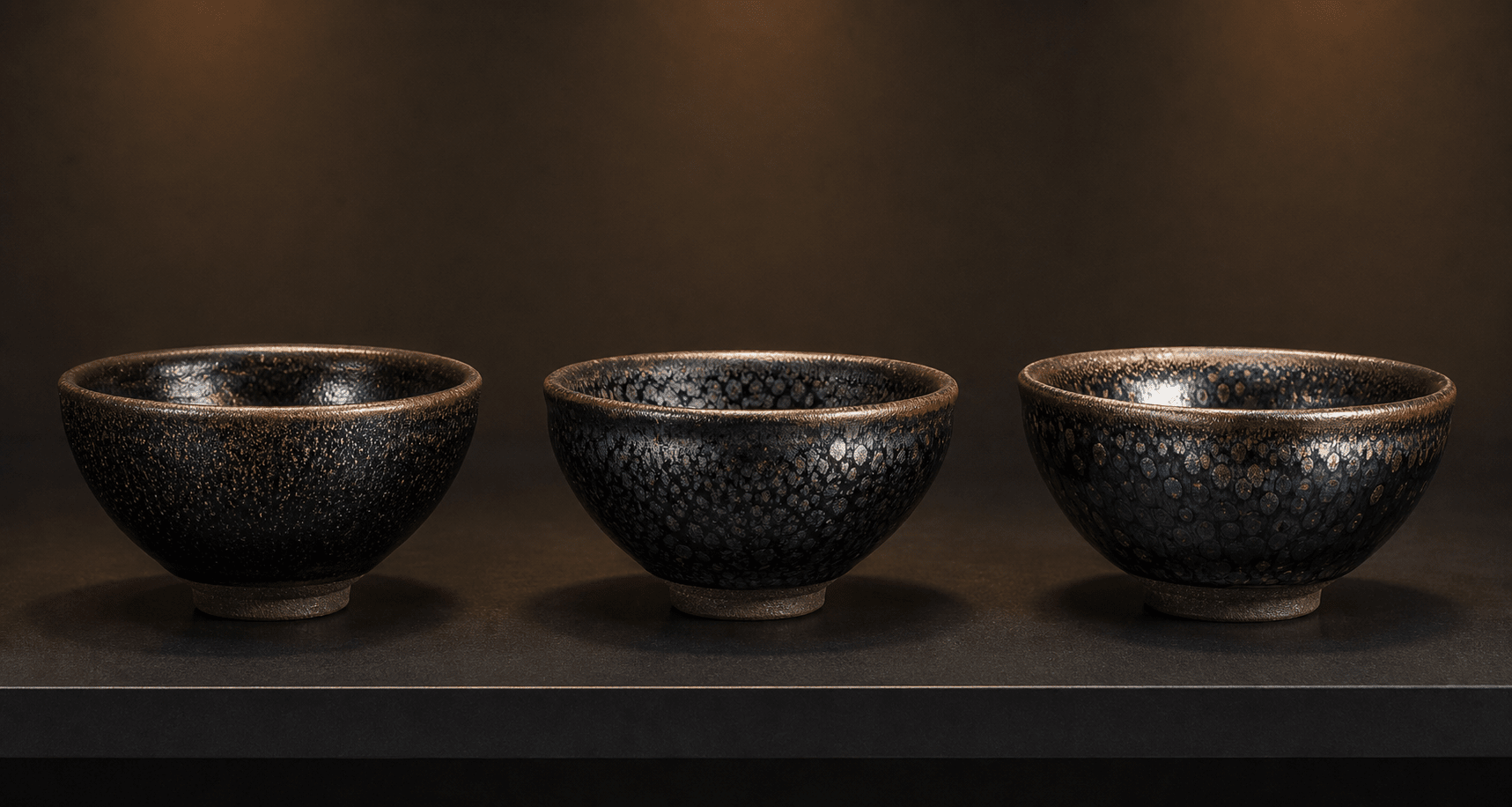
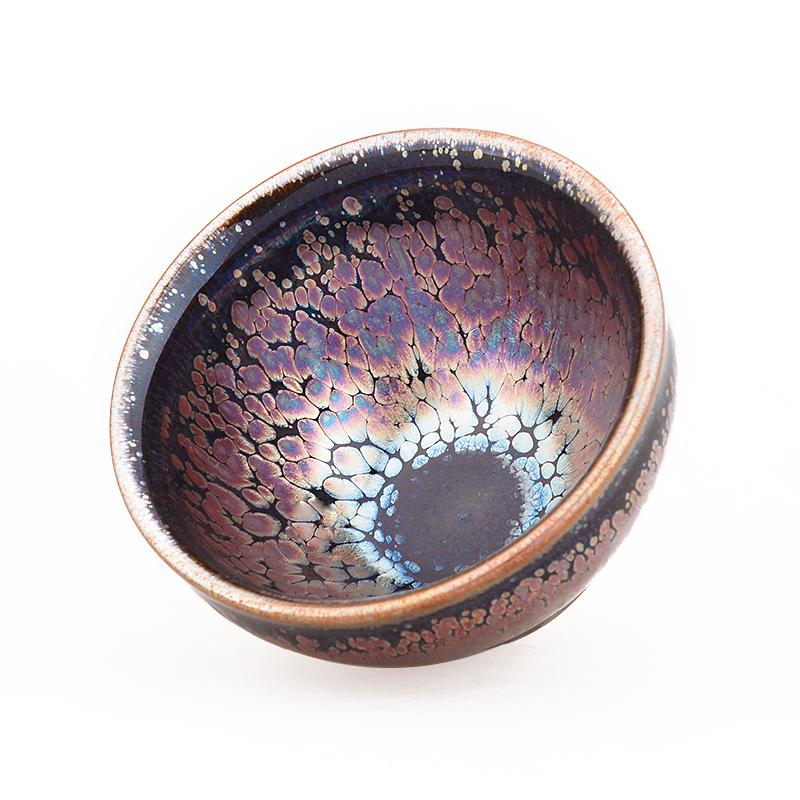
Perhaps the most famous pattern, the Oil Spot glaze looks like droplets of golden or silver oil floating on a deep black sea. These "spots" are actually iron oxide crystals that burst onto the surface during the cooling process.
The Vibe: Celestial, stable, and deeply meditative. It feels like holding a piece of the night sky in your palm.
Best for: The classic collector who appreciates tradition and the "infinite" feel of the universe.
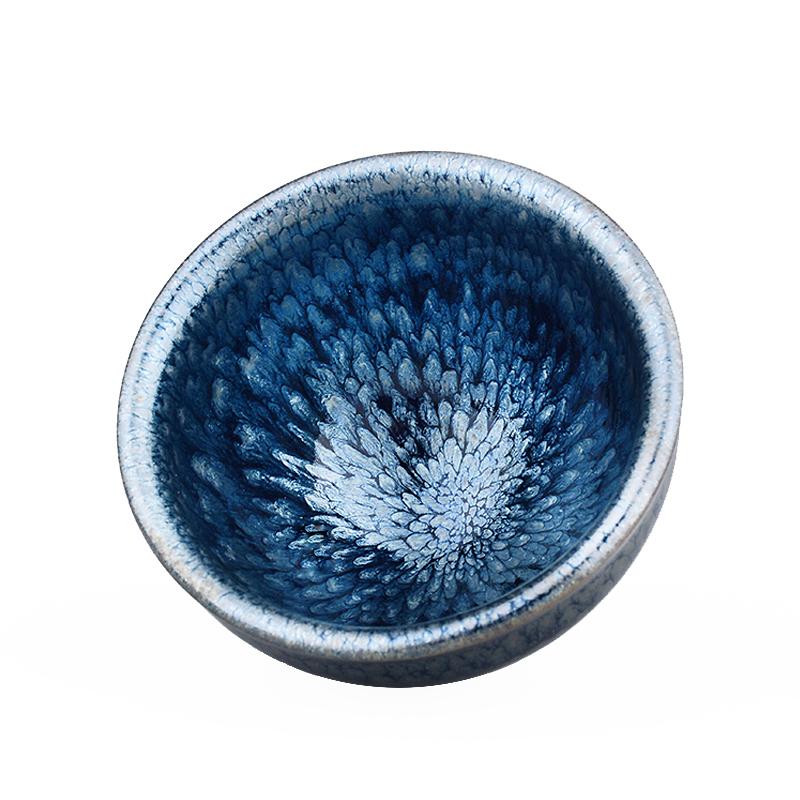
The Hare's Fur pattern is defined by fine, hair-like streaks that radiate from the center of the cup. These lines can be golden, silver, or even iridescent blue, depending on the temperature and oxygen levels in the kiln.
The Vibe: Elegant, rhythmic, and natural. The streaks look like fine rain or the soft fur of a rabbit.
Best for: The daily tea drinker who wants a sophisticated, understated elegance that highlights the color of the tea.
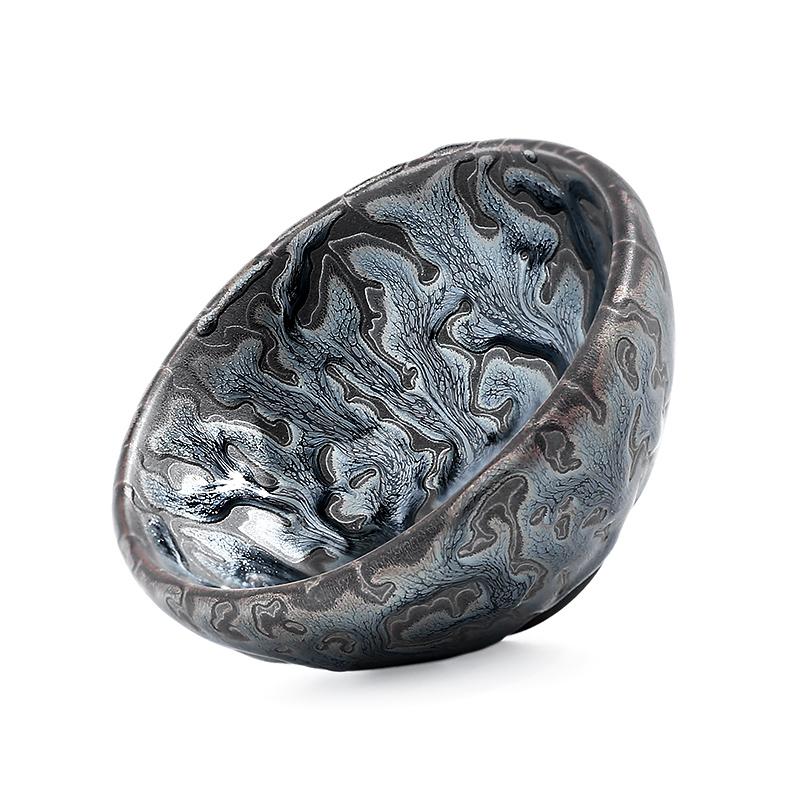
This is a more rare and intricate pattern, characterized by larger, more irregular spots that mimic the plumage of a partridge. These patterns are difficult to control and often result in a stunning, high-contrast visual effect.
The Vibe: Bold, artistic, and strikingly rare. It commands attention immediately.
Best for: The connoisseur looking for a unique, high-value conversation piece that breaks from traditional norms.
While technical details are important, the most important rule in choosing a Jianzhan cup is your emotional connection. Does the "Oil Spot" remind you of a calm, starry night? Does the "Hare's Fur" give you a sense of quiet focus during your morning matcha?
Every single cup is unique—no two patterns are ever identical. When you choose a Tenmoku cup, you are choosing a unique moment captured by fire and earth.
Use this guide to connect the article topic with practical buying decisions: what Jianzhan Tenmoku teaware is, who it suits, how to choose a piece, and how to care for it after purchase.
How to use this guide before buying
Read the article first for the main explanation, then compare the product photos, glaze variation, form, seller clarity, return policy, and whether the piece fits daily tea, display, collecting, or gifting.
Common buying mistakes to avoid
Avoid choosing only by dramatic claims, copied photos, unusually low prices, or vague master language. A better decision uses visible product details, clear use case, realistic care needs, and trustworthy shop policies.
Recommended next step
After reading, compare a few real products side by side by size, glaze family, rim shape, capacity, price, and gift suitability instead of relying on one photo or one keyword.
What is Jianzhan Tenmoku teaware?
Jianzhan Tenmoku teaware is ceramic tea ware known for dark mineral-glaze effects and natural kiln variation. Common forms include tea cups, bowls, teapots, tea sets, and matcha bowls.
Who is it best for?
It is best for tea drinkers, ceramic collectors, and gift shoppers who value functional objects with visible handmade character. It is not ideal if you need every piece to look exactly identical.
How do I care for it?
Hand wash with warm water, avoid abrasive cleaners, and dry fully before storage. Gentle daily use helps preserve the surface and keeps the glaze easy to inspect over time.
How do I choose the right Tenmoku piece?
Choose by the main use first: daily tea, matcha, Gongfu brewing, display, or gifting. Then compare capacity, rim shape, glaze family, photos, and whether natural variation is acceptable for your needs.
Is Jianzhan Tenmoku teaware good as a gift?
Yes. It works well for tea lovers, ceramic collectors, birthdays, holidays, and housewarming gifts because it is both usable and visually distinctive. For gifts, choose an easy-to-use form and a glaze style with clear photos.
Related products and categories
Compare the guide above with real Tenmokus categories and representative pieces. Start with the use case, then compare glaze style, form, price, and whether the piece is mainly for daily tea, display, collecting, or gifting.
Compare handmade Jianzhan Tenmoku tea cups by glaze style, cup size, hand feel, and gift intent. Check each product page for current photos, capacity, availability, care details, shipping, and return information.
Tenmoku Tea Bowl Authenticity Guide: Choose a Better Cup for Gongfu Tea A real tenmoku tea bowl is more than a dark cup with shiny speckles: it is a high-fired ceramic piece whose clay, iron-rich glaze, and kiln atmosphere work...
If you’ve ever wanted to own a tenmoku tea bowl that feels uniquely yours, you’re not alone. These iron-rich glazed wonders from the Song Dynasty have captivated tea lovers for a thousand years—and today, a real jian zhan oil spot...
If you’ve ever swirled a fine wine in a hand-blown glass and felt the moment deepen, you already understand the power of a vessel. I’m Sophie Thompson, and as a lifelong tea lover and design curator, I want to introduce...


Compartir:
Todo lo que necesitas saber sobre las tazas de té tenmoku
Handmade vs. Machine-Made: How to Tell If Your Jian Zhan Cup Is Authentic