¿Qué es "gan kou"?
Para quienes no conocen las tazas Jianzhan, algunos podrían confundir el "gan kou" (borde seco) con un defecto en el vidriado. Las tazas Jianzhan presentan algunas diferencias con respecto a otros tipos de porcelana. Además del "gan kou", muchos coleccionistas noveles también pueden confundirse con otros términos como "lu tai" (arcilla expuesta), "ju yu" (esmalte acumulado) y "yudizhu" (gotas de vidriado), que explicaré a continuación.
"Gan kou":
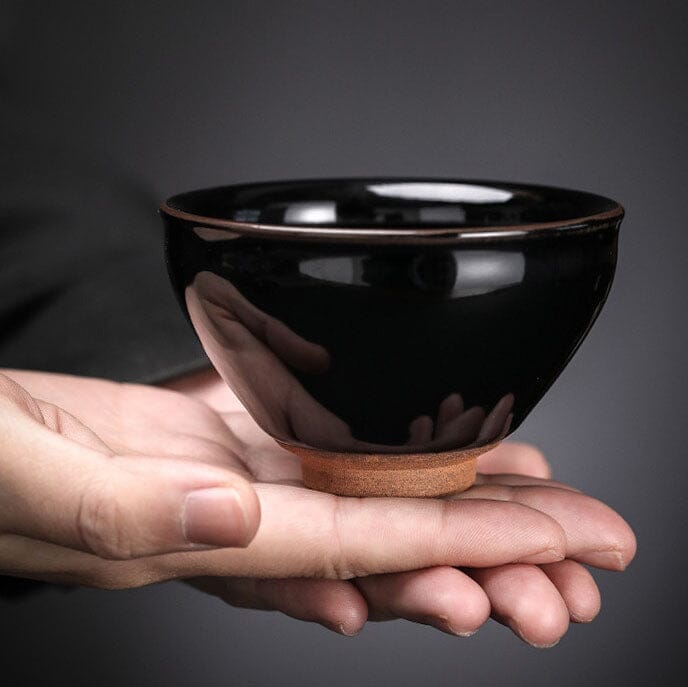
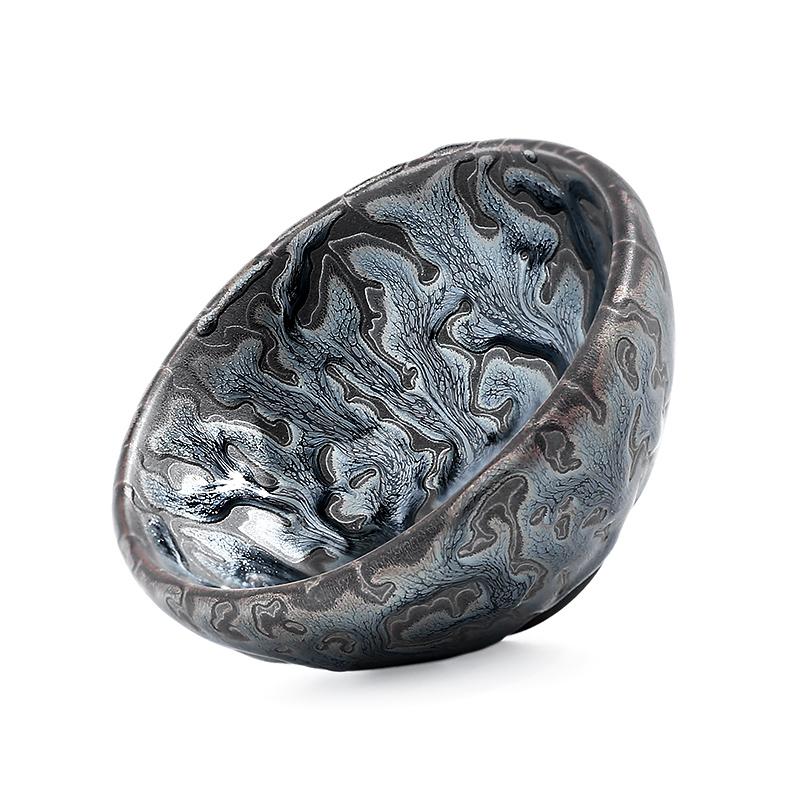
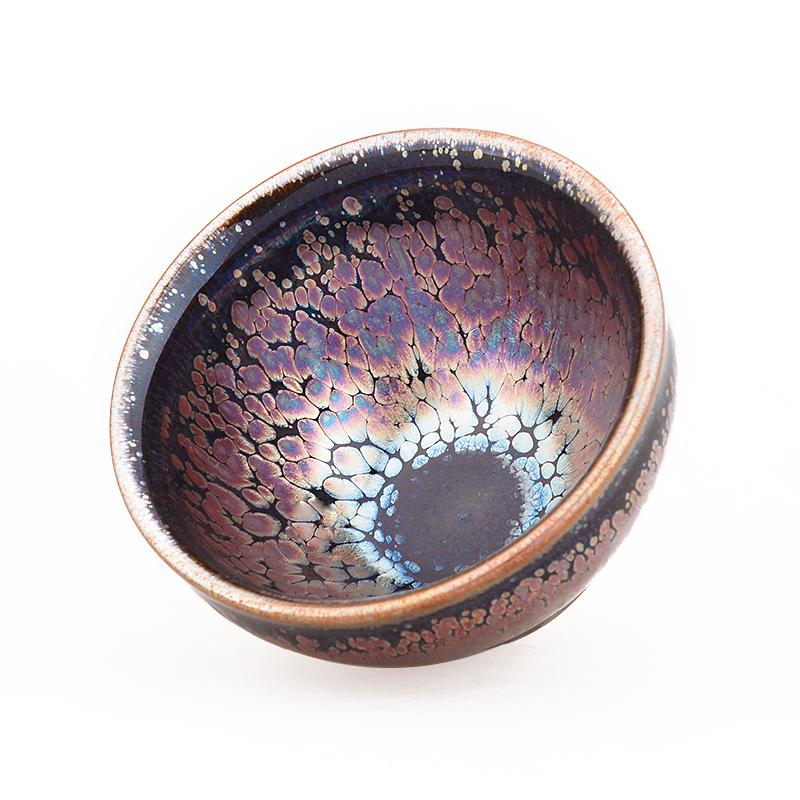
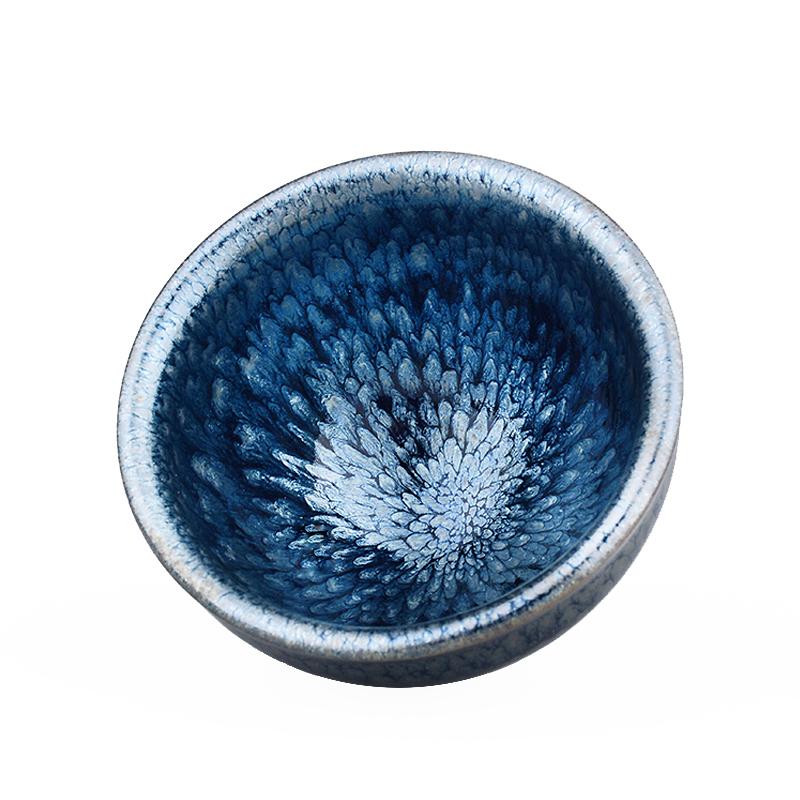
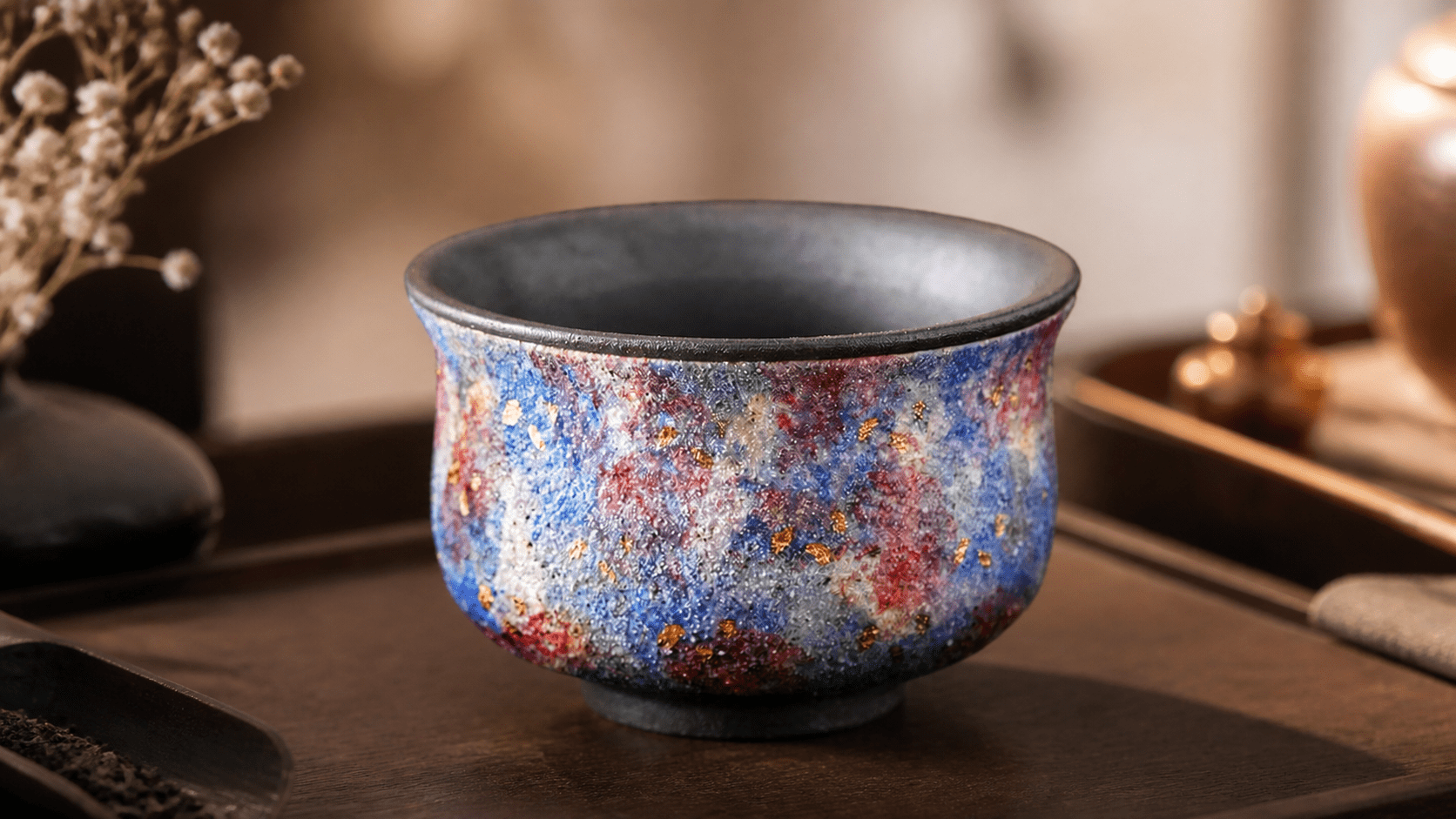
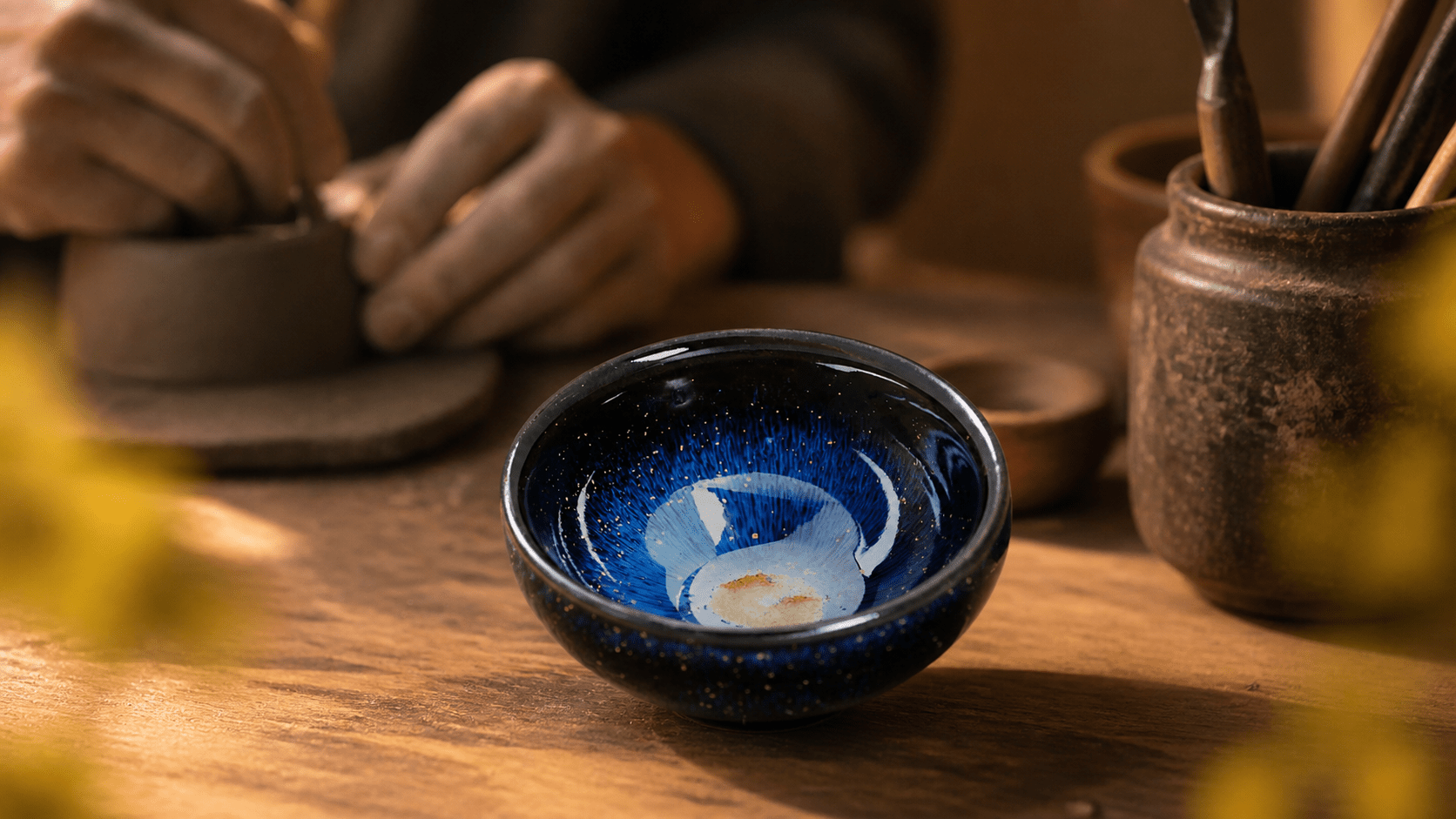
Como su nombre indica, "gan kou" se refiere al vidriado seco del borde de la taza. Las tazas Jianzhan se elaboran aplicando un vidriado grueso y cociéndolas boca abajo, para que el vidriado responda a la fuerza de la gravedad y fluya hacia abajo. Como resultado, el vidriado del borde de la taza fluye hacia abajo y se vuelve más fino, haciéndolo más propenso a secarse y quemarse durante la cocción.
neumático expuesto
Debido a la técnica de cocción empleada, si la taza está completamente esmaltada, el fondo tiende a pegarse, lo que se denomina "adherencia al fondo". Por lo tanto, la taza solo queda parcialmente esmaltada, sin esmalte en el fondo, lo que se denomina "exposición del neumático".
el glaseado gotea
Cuando el esmalte fluye, a veces forma pequeñas gotas a lo largo del borde, llamadas "gotas de esmalte". También se les conoce comúnmente como "lágrimas" debido a su forma. Este es un registro del proceso de cocción del Jianzhan, que deja un recuerdo vibrante de lágrimas sometidas a la prueba de 1300 grados de alta temperatura. Aporta un toque único de encanto a la taza.
La formación de gotas de esmalte y neumáticos expuestos es generalmente aceptada por la mayoría de las personas, pero la sequedad bucal no es fácil de comprender ni de diagnosticar. Muchas personas creen erróneamente que las tazas con sequedad bucal son defectuosas.
Para Jianzhan, la sequedad bucal es muy común e inevitable. Por lo tanto, no hay necesidad de buscar la sequedad bucal completa. Además, el grado de sequedad también varía. Al comprar, puede elegir vasos con un grado de sequedad más leve.
Algunas bocas secas son severas, lo que puede causar que grandes áreas de vitrificación queden incompletas, afectando la calidad general de la superficie del esmalte y reduciendo considerablemente la calidad de la copa. Sin embargo, si la sequedad es leve, no afectará en absoluto el uso de la copa.
La evaluación de un Jianzhan no solo debe basarse en la sequedad bucal, sino también en factores como los patrones de la superficie del esmalte, el grado de vitrificación, el tamaño y la forma de la copa, y si presenta deformaciones. Al elegir un Jianzhan, considere los factores mencionados y sus propias necesidades para decidir si comprar una copa específica.
Quick answers for Tenmoku teaware shoppers
Use this guide to connect the article topic with practical buying decisions: what Jianzhan Tenmoku teaware is, who it suits, how to choose a piece, and how to care for it after purchase.
How to use this guide before buying
Read the article first for the main explanation, then compare the product photos, glaze variation, form, seller clarity, return policy, and whether the piece fits daily tea, display, collecting, or gifting.
Common buying mistakes to avoid
Avoid choosing only by dramatic claims, copied photos, unusually low prices, or vague master language. A better decision uses visible product details, clear use case, realistic care needs, and trustworthy shop policies.
Recommended next step
After reading, compare a few real products side by side by size, glaze family, rim shape, capacity, price, and gift suitability instead of relying on one photo or one keyword.
What is Jianzhan Tenmoku teaware?
Jianzhan Tenmoku teaware is ceramic tea ware known for dark mineral-glaze effects and natural kiln variation. Common forms include tea cups, bowls, teapots, tea sets, and matcha bowls.
Who is it best for?
It is best for tea drinkers, ceramic collectors, and gift shoppers who value functional objects with visible handmade character. It is not ideal if you need every piece to look exactly identical.
How do I care for it?
Hand wash with warm water, avoid abrasive cleaners, and dry fully before storage. Gentle daily use helps preserve the surface and keeps the glaze easy to inspect over time.
How do I choose the right Tenmoku piece?
Choose by the main use first: daily tea, matcha, Gongfu brewing, display, or gifting. Then compare capacity, rim shape, glaze family, photos, and whether natural variation is acceptable for your needs.
Is Jianzhan Tenmoku teaware good as a gift?
Yes. It works well for tea lovers, ceramic collectors, birthdays, holidays, and housewarming gifts because it is both usable and visually distinctive. For gifts, choose an easy-to-use form and a glaze style with clear photos.
Related products and categories
Compare the guide above with real Tenmokus categories and representative pieces. Start with the use case, then compare glaze style, form, price, and whether the piece is mainly for daily tea, display, collecting, or gifting.
Best for daily tea drinking, first Jianzhan purchases, ceramic gifts, and comparing glaze patterns across cup shapes.
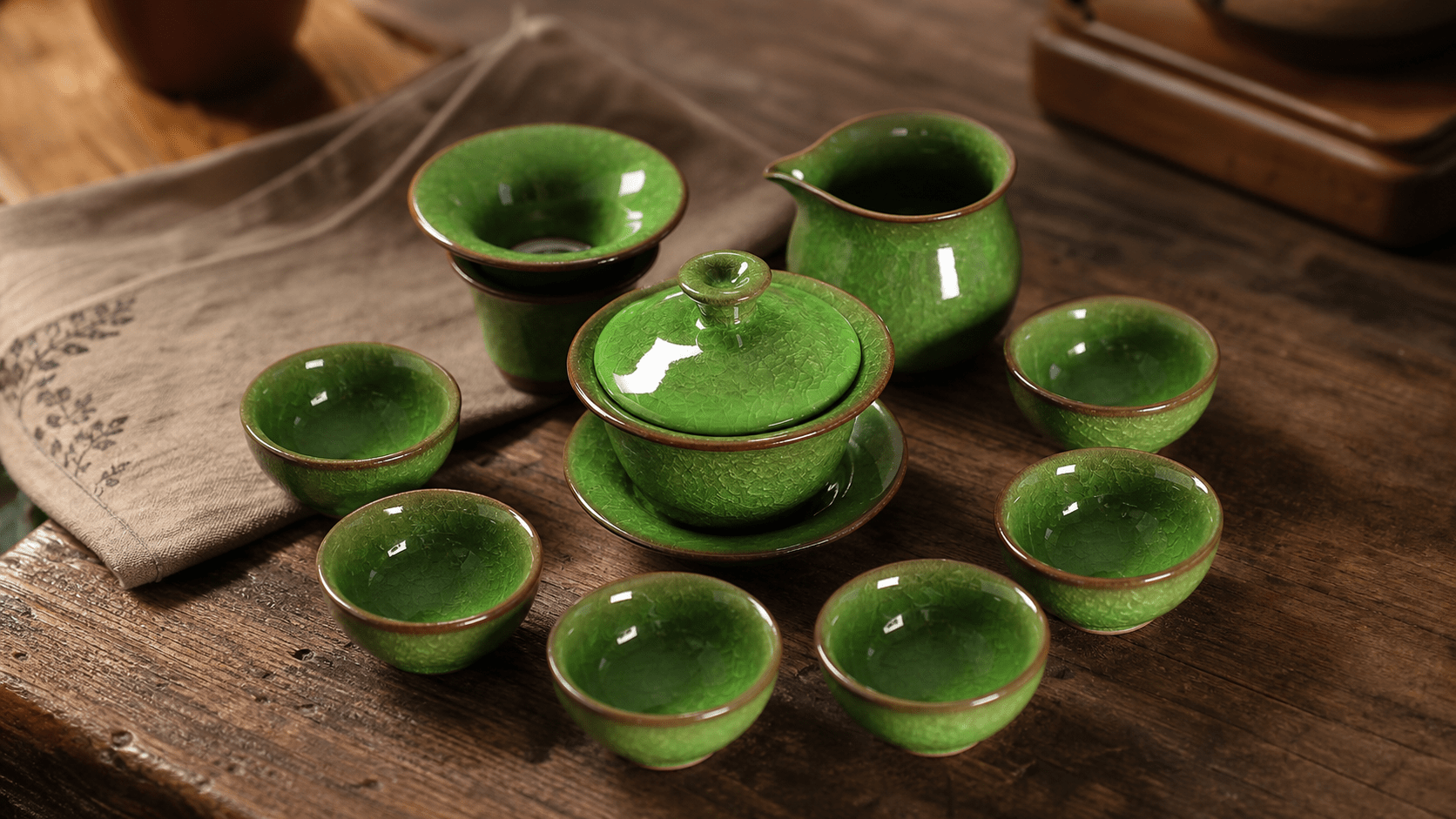
Best when you want a coordinated tea table, a hosting setup, or a complete gift instead of one individual cup.
Use this guide to compare seller claims, glaze appearance, photos, and practical buying signals before choosing a piece.
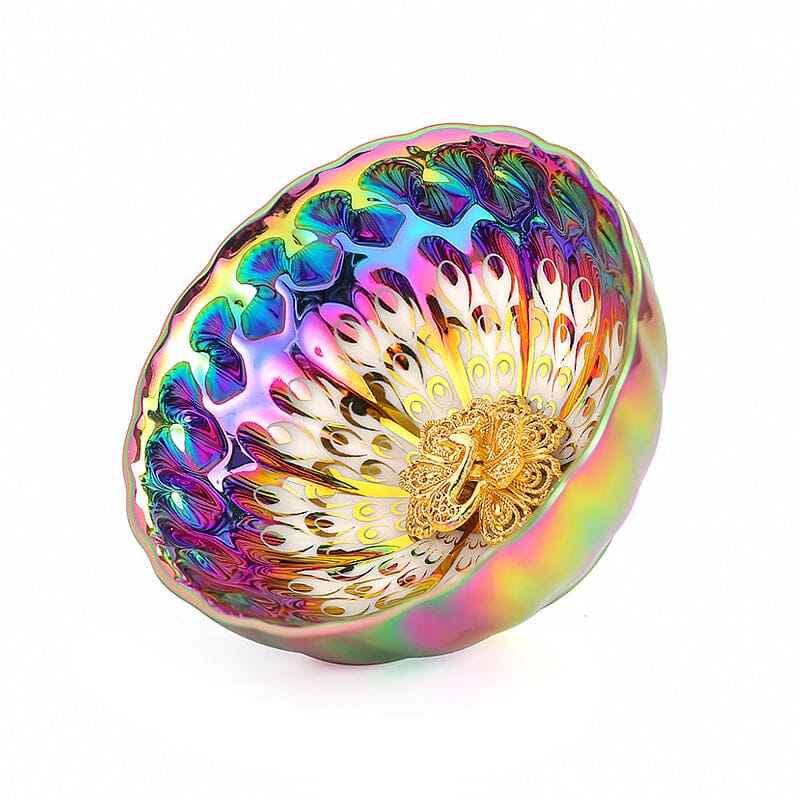
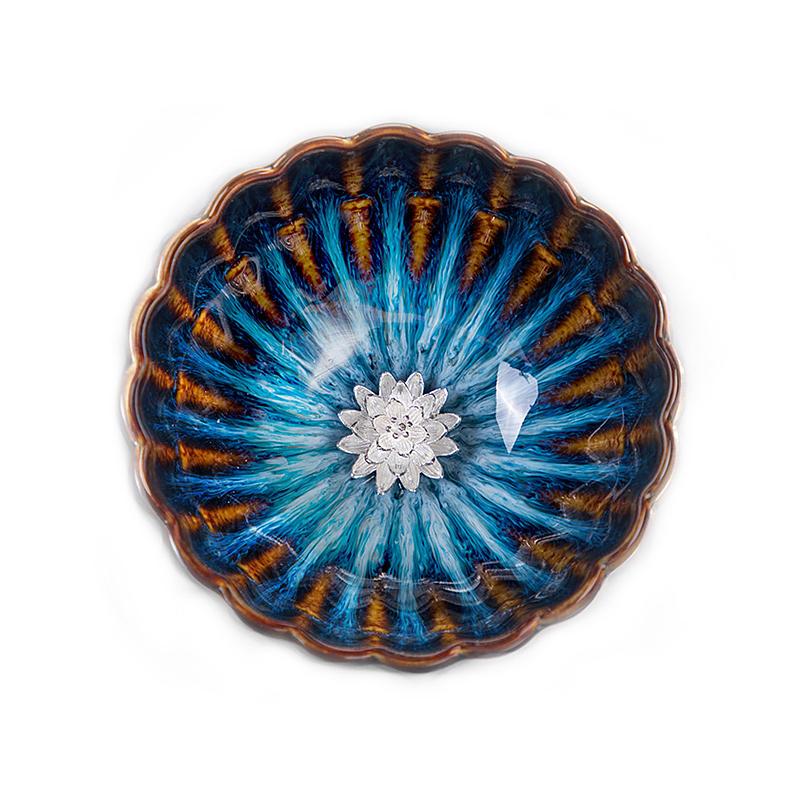
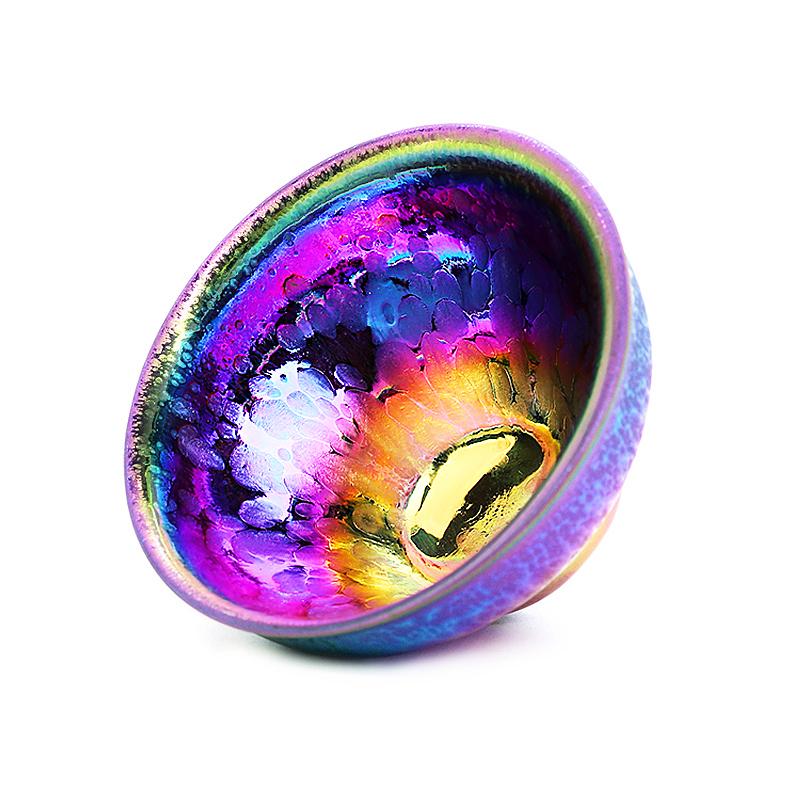
A representative Tenmoku tea cup to compare by glaze depth, cup shape, price, and gift fit.
Compare this piece when you want a clear visual reference for a gold-toned Tenmoku glaze style.
Use this product as another comparison point for handmade form, glaze variation, and gift suitability.


Compartir:
¿Puede esta taza de té realmente atraída por un imán ?
Introducción a las formas y tamaños de Jianzan ?