

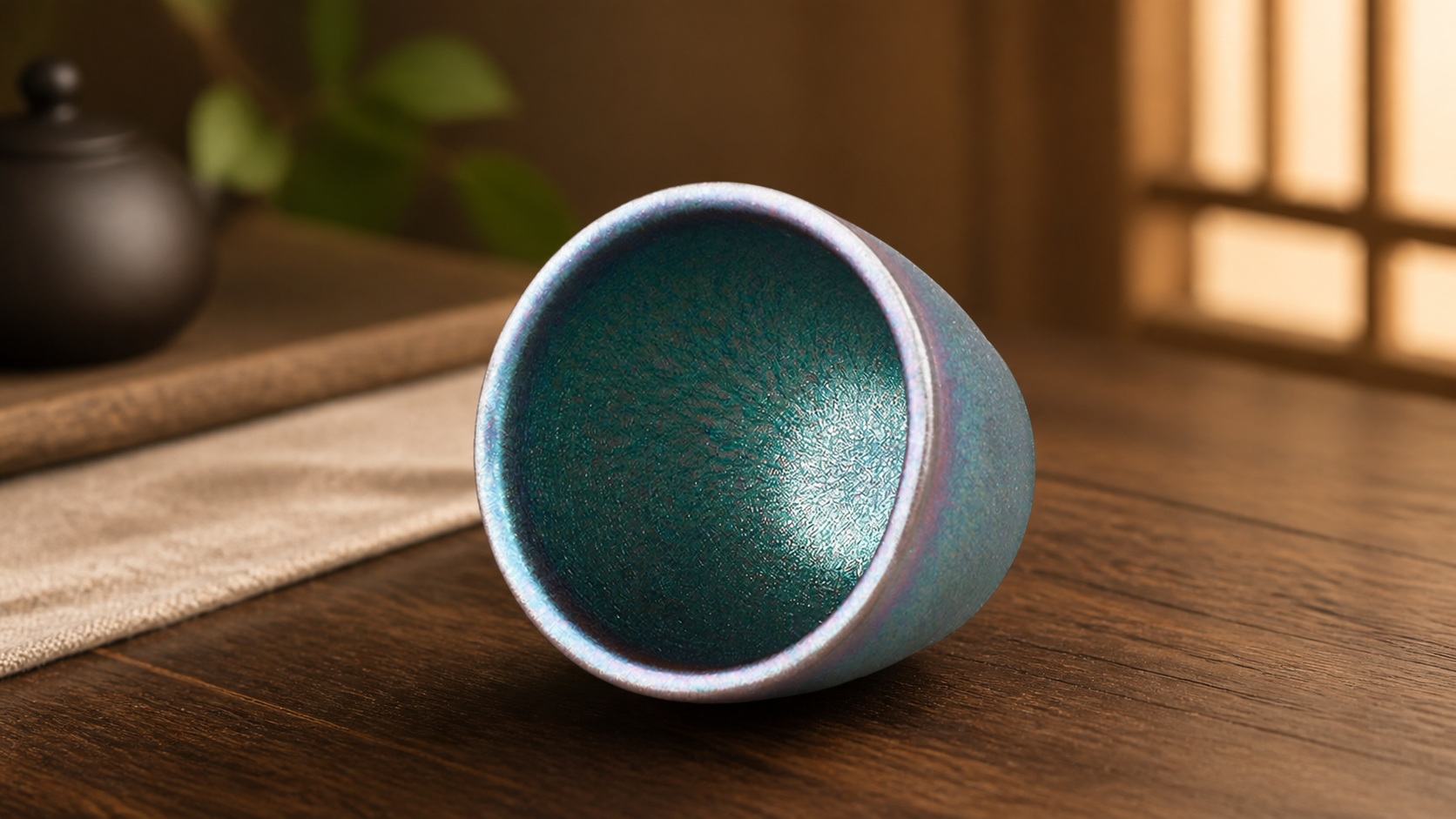

Tenmoku Tea Bowl Price: Why a Handmade Cup Can Elevate Your Gongfu Tea Ritual
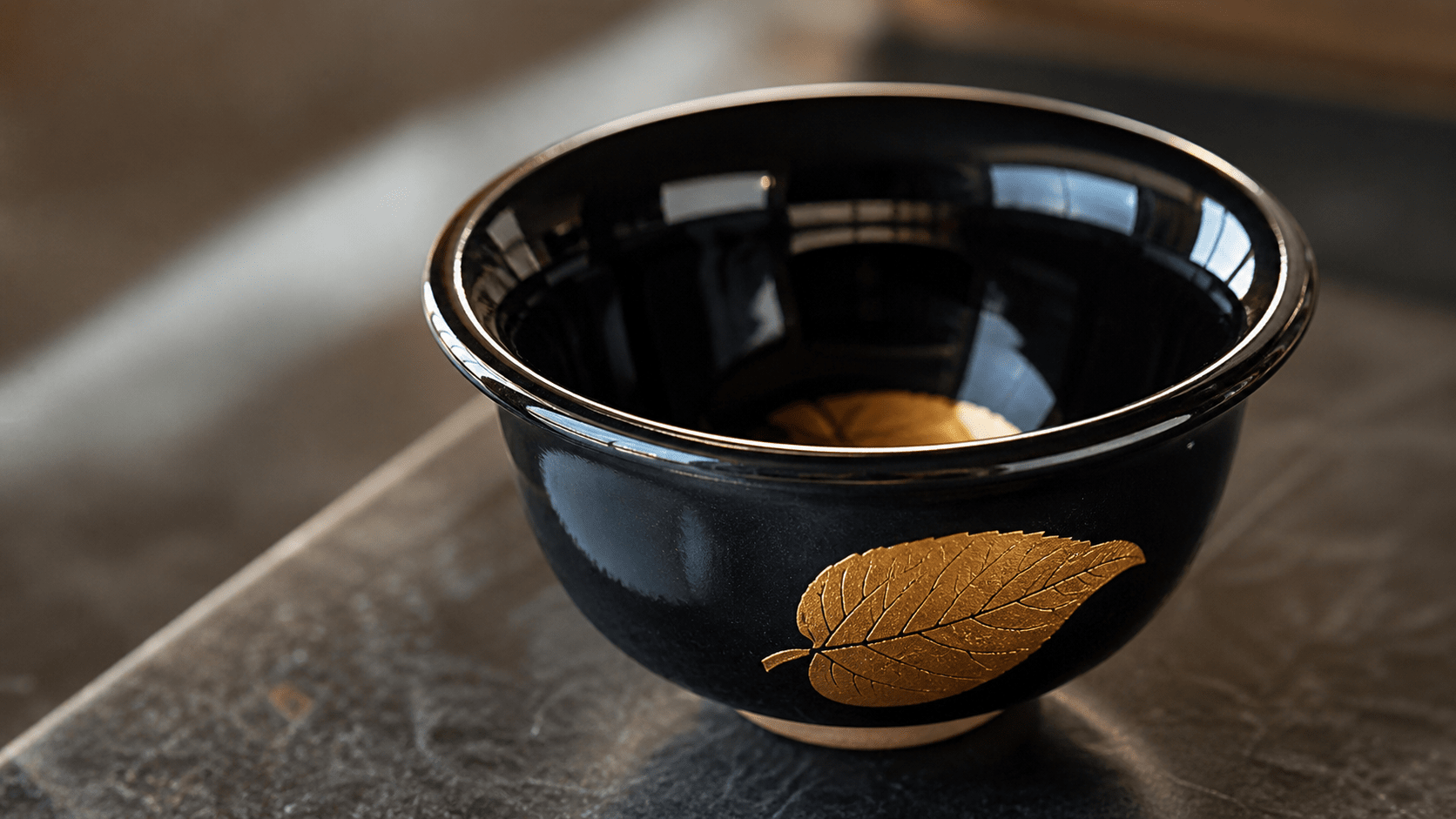
A tenmoku tea bowl can cost more than an ordinary ceramic cup because it is not simply molded, glazed, and repeated by machine. A handmade Jianzhan is shaped, fired, and judged individually; for gongfu tea, that means the cup in your hand can make a daily pour feel more deliberate, tactile, and personal.
The short answer to why tenmoku is expensive is this: the price reflects skilled labor, difficult high-temperature firing, uncertain glaze results, limited successful pieces, and the value buyers place on distinctive craft. Think of it less like buying identical dinnerware and more like choosing a small-batch leather good, a hand-finished fountain pen, or a bottle from a limited vineyard release.
Key Takeaways
- A tenmoku tea bowl is valued for handmade forming, Jianzhan Tenmoku ceramic, complex glaze chemistry, and individual firing results.
- “Kiln change” describes the natural variation created during firing; it is a major reason no two handmade cups look exactly alike.
- Hare's fur, oil spot, and partridge feather are visual glaze effects, not guarantees of quality on their own.
- The best value Jianzhan is usually the piece with clear craftsmanship, a comfortable shape, an honest description, and a price that fits how often you will use it.
- A carefully selected handmade tenmoku tea cup can be a meaningful personal ritual object or a thoughtful jianzhan tea cup gift.
Why Is a Tenmoku Tea Bowl Price Higher Than a Regular Tea Cup?
The simplest comparison is production scale. A mass-produced cup is designed for consistency: standardized clay, repeatable glaze, automated forming, and predictable output. A handmade tenmoku tea bowl is valued precisely because its process leaves room for variation.
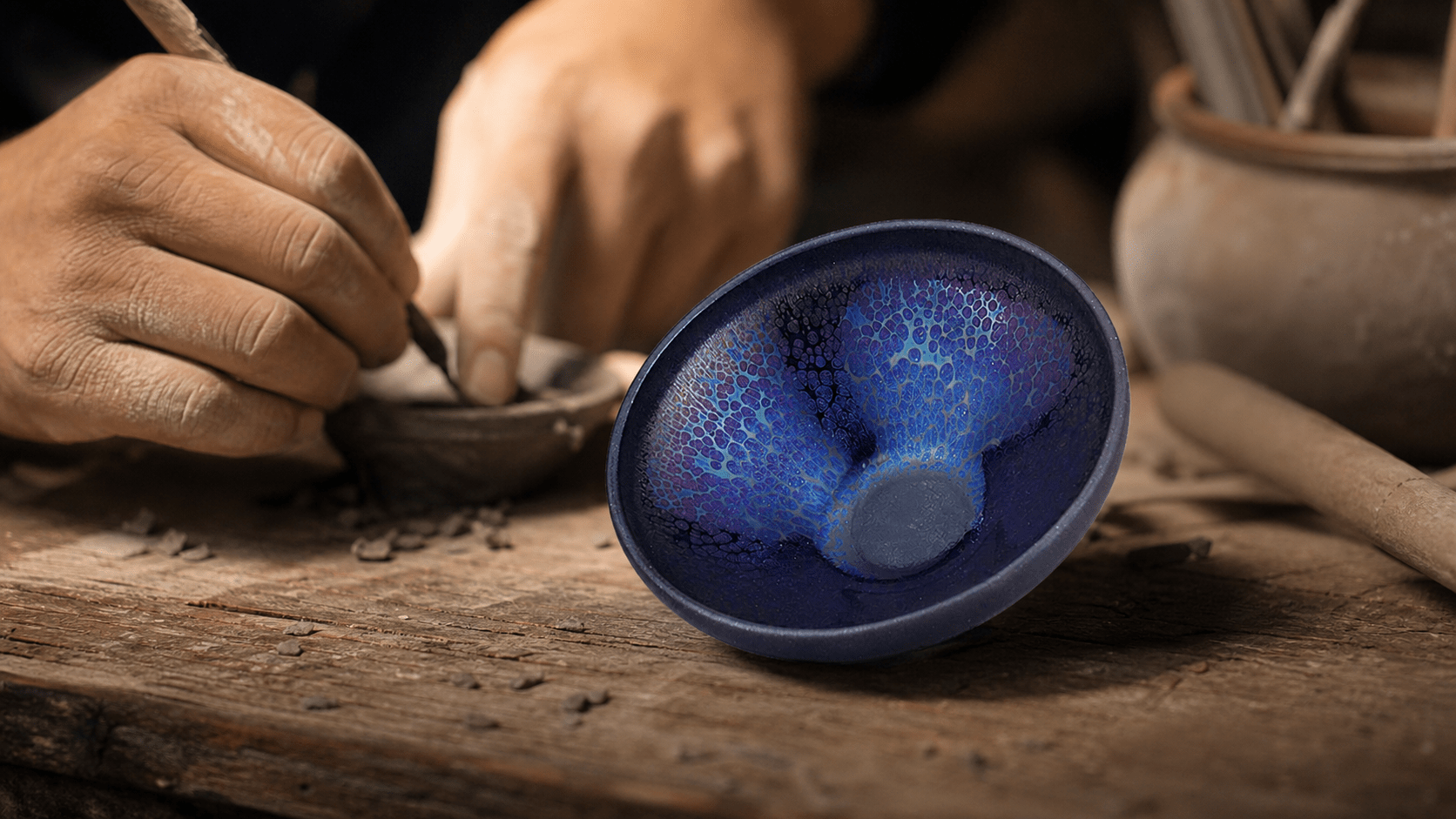
Traditional-style jianzhan begins with dark-bodied clay and a dark, iron-rich glaze associated with Jianzhan Tenmoku ceramic. The maker shapes and finishes each cup, then manages drying, glazing, placement in the kiln, firing conditions, and cooling. Every stage can affect the final surface.
For a US buyer, it may help to compare this to coffee. A supermarket pod is convenient and consistent. A carefully sourced single-origin coffee costs more because farming, processing, roasting, and limited supply influence the result. Neither is automatically “better” for every person, but they answer different needs.
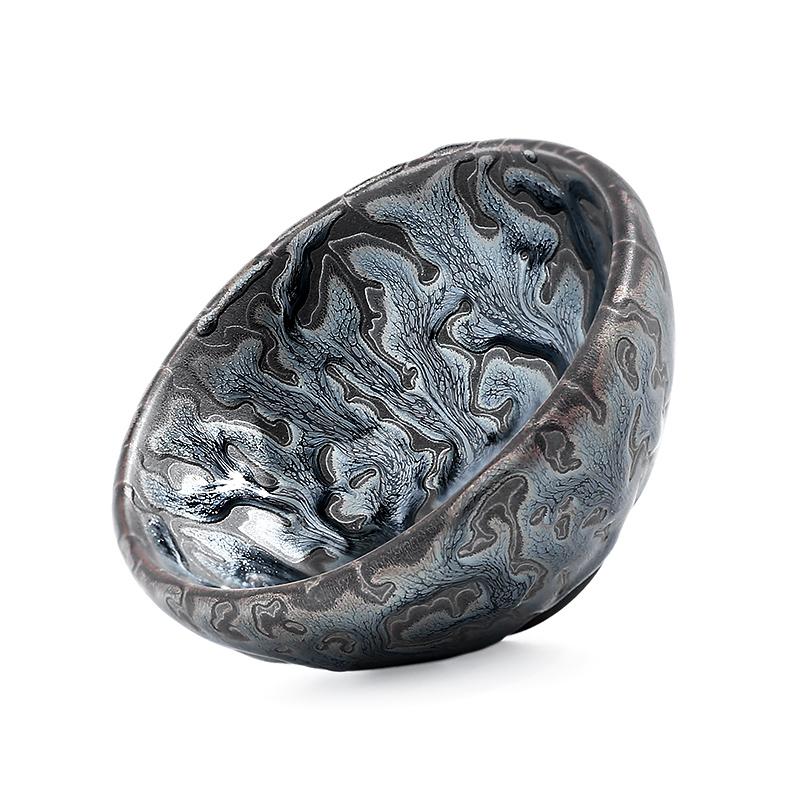
With Jianzhan, the surface you see after firing is not fully predictable. Heat movement, atmosphere, glaze thickness, mineral content, and placement can all influence the outcome. A piece may emerge with a dramatic oil spot field, fine hare's fur lines, or a partridge feather-like pattern. It may also emerge with an outcome the maker does not choose to sell.
That yield matters. The listed tenmoku tea bowl price is not only paying for the finished cup; it also reflects the labor and material invested in pieces that cracked, warped, glazed unevenly, or did not meet the maker's standard.
Why Tenmoku Is Expensive: What Are You Actually Paying For?
When people ask, “Why tenmoku is expensive?” they are often asking whether the difference is real or simply decorative marketing. The honest answer is that price can include both real craft value and brand positioning, so buyers should know what to look for.
| What influences price | What it means for the buyer | What to check |
|---|---|---|
| Hand-forming and finishing | Subtle differences in rim, foot, weight, and balance | Does it feel intentional and comfortable to hold? |
| High-temperature firing | More energy, more risk, and less certainty than basic commercial ware | Is the glaze description specific without making exaggerated claims? |
| Kiln change | One-of-a-kind visual variation from the firing process | Look for clear photos from multiple angles. |
| Glaze quality | Oil spot, hare's fur, or partridge feather effects can require careful firing control | Assess depth, coherence, and appeal rather than pattern names alone. |
| Maker and provenance | Established studios, documented process, and limited releases may command more | Confirm what is known; do not assume every cup is collectible investment art. |
A premium price is easier to justify when it is tied to concrete details: hand-finishing, a well-balanced form, transparent glaze information, accurate dimensions, and photography of the exact cup. It is less convincing when the description relies only on vague words such as “rare,” “masterpiece,” or “museum quality” without support.
It is also worth separating cultural influence from product identity. “Tenmoku” is widely used in English-language tea culture, while Japanese tea traditions helped make dark glazed bowls familiar to many modern tea drinkers. Japanese tea enthusiasts may recognize the visual appeal of dark, reflective glazes, but a contemporary jianzhan should be described according to its actual maker, materials, and origin rather than dressed up with unverified history.
What Determines Jianzhan Cost From Entry-Level to Collectible?
Jianzhan cost can range widely because “Jianzhan” describes a category of handmade black-glazed tea ware rather than one fixed level of craftsmanship. A practical buyer should think in tiers, not chase a single universal price.
Entry-level handmade cups
These are often a good starting point for daily gongfu tea. The glaze may be attractive but less intricate, the form may be simpler, and the piece may come from a larger studio output. This tier can offer an accessible handmade experience without requiring collector-level spending.
Refined studio pieces
At the middle level, you may see more deliberate shaping, cleaner finishing, richer glaze depth, better documentation, and individually photographed pieces. For many buyers, this is where the best value Jianzhan lives: enough craftsmanship to feel special, but practical enough to use often.
Limited or artist-led pieces
Higher-priced bowls may reflect an individual artist's reputation, a limited firing, especially compelling kiln change, demanding techniques, or a stronger record of provenance. These can be beautiful choices, but higher cost does not automatically make them the right purchase for every tea drinker.
Ask yourself one useful question: will this bowl become part of your weekly tea practice? A cup used for quiet morning tea, weekend gongfu sessions, or shared tastings can provide more personal value than a more expensive piece kept in a cabinet because it feels too precious to touch.
How Do Hare's Fur, Oil Spot, and Partridge Feather Affect Value?
These terms describe visual effects on a tenmoku tea bowl. They can influence desirability, but they should not replace a close look at the actual cup.
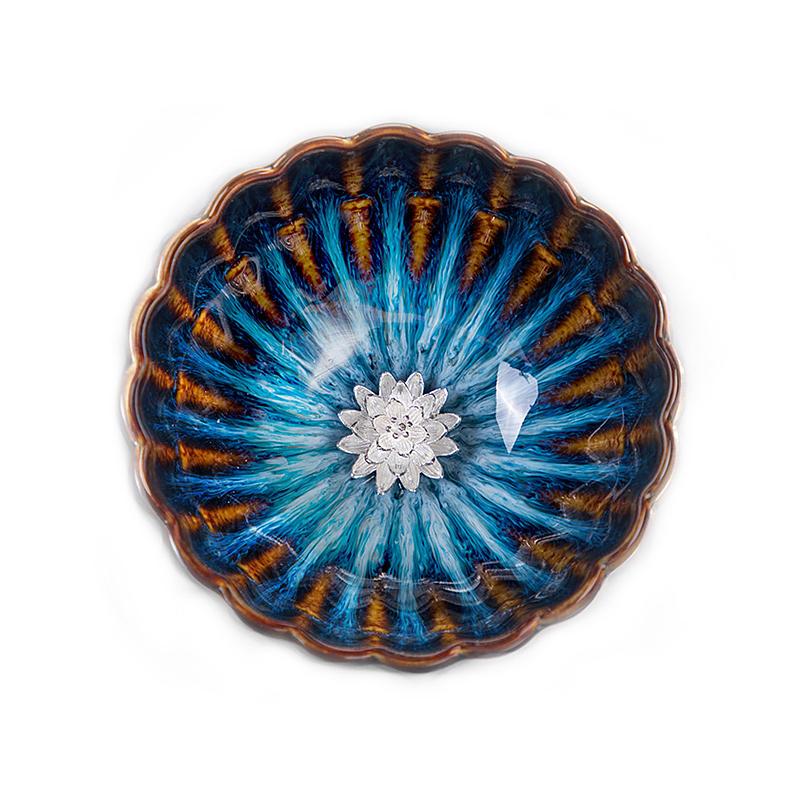
- Hare's fur: Fine streaks that may resemble delicate fur or rain lines running across a dark glaze. The effect can feel quiet, layered, and especially striking under warm tea light.
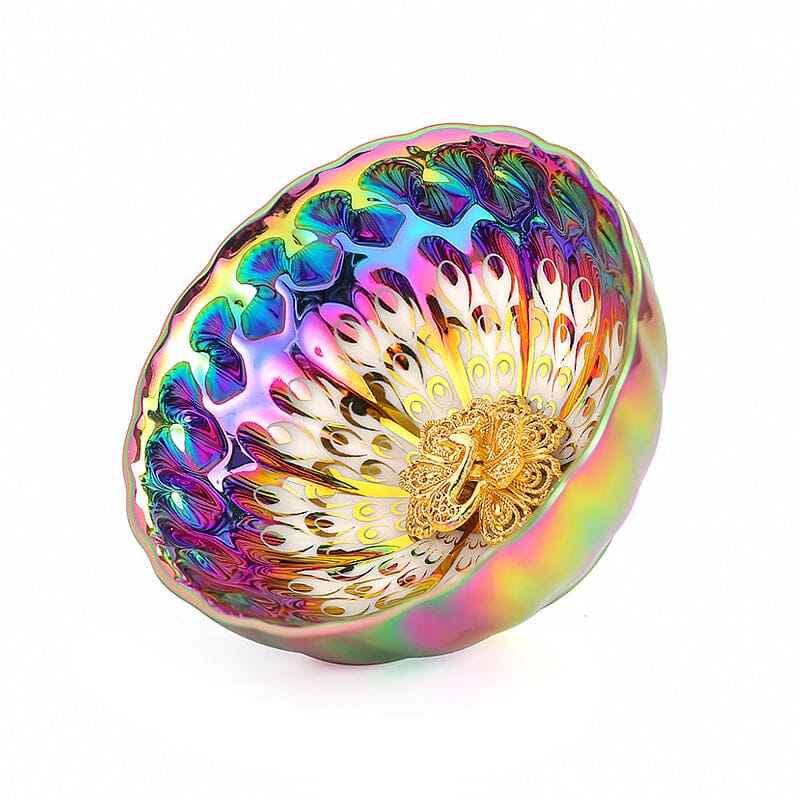
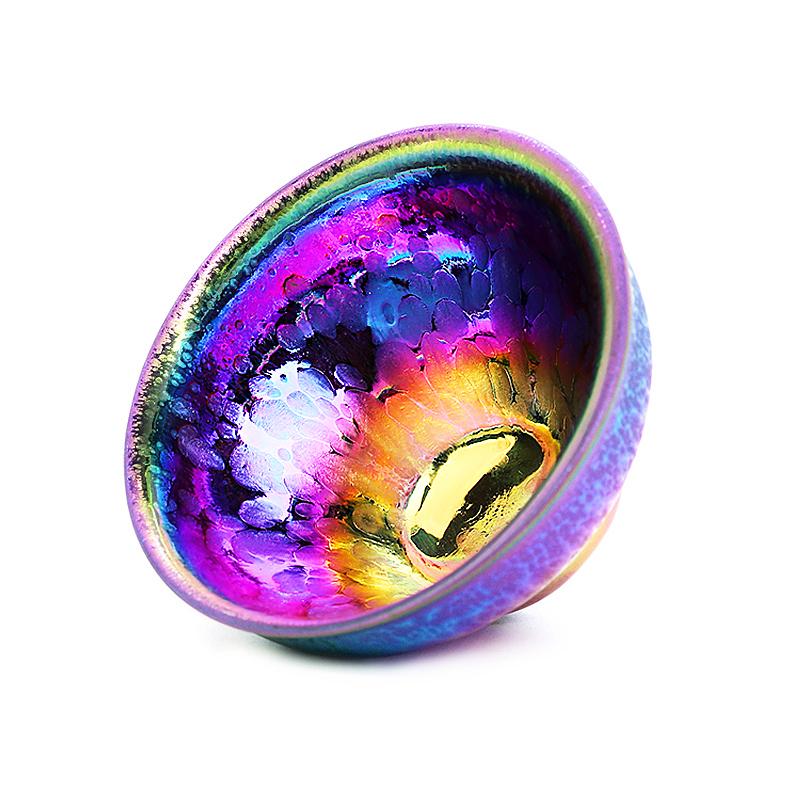
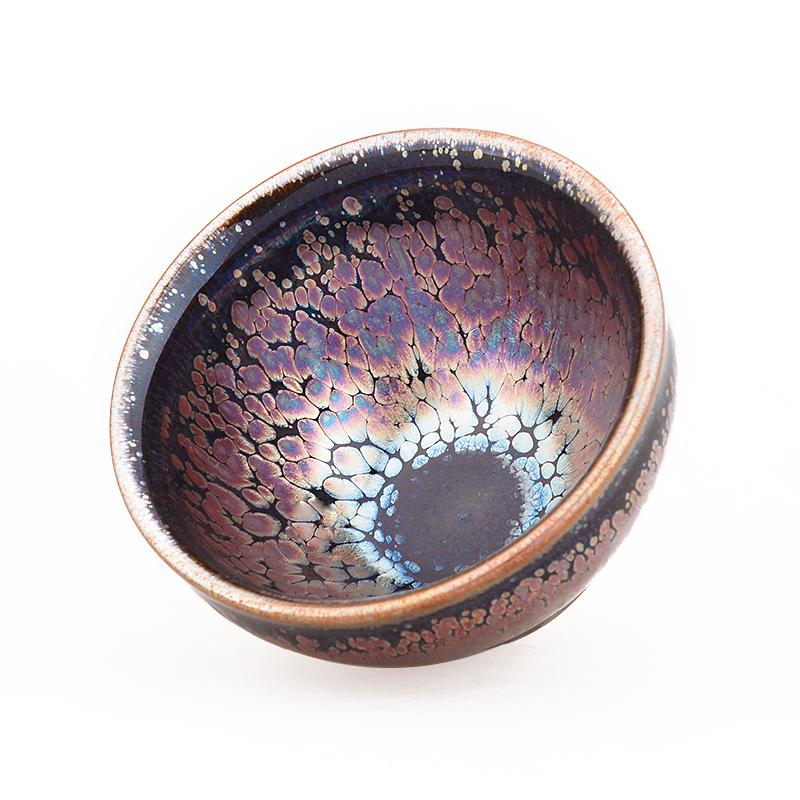
- Oil spot: Rounded, reflective spots that can look metallic, silvered, or iridescent depending on lighting and the specific glaze.
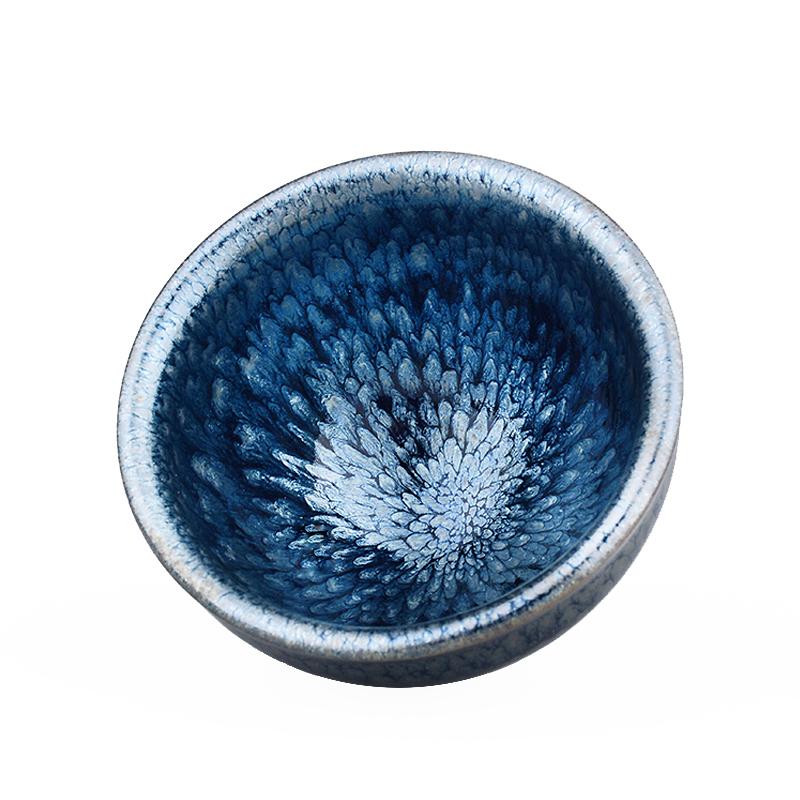
- Partridge feather: A speckled or patterned effect that may evoke feather-like markings. It is often appreciated for complexity and visual movement.
Lighting changes the experience. A bowl that appears nearly black on a shelf may reveal blue, gold, silver, or rust-toned details when tilted near a window. That shifting surface is part of the appeal of kiln change, but buyers should expect natural variation rather than a perfectly uniform graphic pattern.
For a useful starting point, Discover our collection of oil spot tenmoku cups. If you prefer more linear, quietly expressive glaze movement, Browse our hare's fur Jianzhan series.
What Is the Best Value Jianzhan for Gongfu Tea?
The best value Jianzhan is not necessarily the least expensive cup or the most dramatic-looking one. It is the one that brings together honest craftsmanship, a glaze you genuinely enjoy, and a form that works for your tea routine.
For gongfu tea, smaller cups are useful because they let you notice how each infusion changes. A good bowl should sit comfortably in the hand, have a rim that feels pleasant to drink from, and hold an amount that suits your brewing style. Exact size preferences vary, so check the stated capacity instead of relying on photos alone.
Use this buying checklist before choosing a tenmoku tea bowl for sale:
- Review photos of the actual piece, ideally in more than one angle or lighting condition.
- Read the dimensions and capacity so the bowl suits your gongfu tea setup.
- Look for a clear explanation of whether it is handmade and how the glaze is described.
- Examine the rim, foot, and interior for finishing details that affect everyday use.
- Choose a pattern that still feels compelling after the first burst of novelty.
- Buy within a comfortable budget; handmade tea ware should invite use, not anxiety.
If you are buying for someone else, a handmade tenmoku tea cup works particularly well for a person who enjoys tea rituals, design objects, Japanese-inspired tea aesthetics, or thoughtful home-bar and tabletop details. A jianzhan tea cup gift feels more personal when you include a short note explaining the glaze effect and suggesting a first tea to try.
Is a Handmade Tenmoku Tea Cup a Good Luxury Gift for Tea Lovers?
Yes—when the recipient appreciates objects with visible process and individual character. A handmade tenmoku tea cup is not a generic luxury gift. Its value is in the small details: the way the glaze catches light, the slight individuality of the form, and the pause it introduces into an ordinary tea break.
That makes it suitable for birthdays, housewarmings, anniversaries, Father's Day, holiday gifting, or a meaningful thank-you. It is especially useful for someone building a gongfu tea practice, since one good cup can make a tea table feel intentional without requiring a complete new set.
Keep the gift message grounded. Rather than claiming a bowl will transform tea or carry investment value, say what is true: it is a handmade object selected for its glaze, form, and place in a slower tea ritual.
FAQ: Tenmoku Tea Bowl Price and Buying Questions
Why is a tenmoku tea bowl expensive compared with ordinary ceramic cups?
A tenmoku tea bowl may cost more because it involves handwork, high-temperature firing, glaze risk, lower successful yield, and individual finishing. The exact value depends on the maker, workmanship, glaze quality, and documentation.
What is a fair tenmoku tea bowl price for a first handmade cup?
A fair price depends on the specific cup and seller. Focus less on finding one universal number and more on whether the listing clearly shows the actual piece, dimensions, materials, craftsmanship, and return or care information.
What makes the best value Jianzhan?
The best value Jianzhan has a comfortable form, an appealing glaze, credible handmade details, and a price you are comfortable using regularly. A mid-range studio cup is often a smart choice for a first serious gongfu tea bowl.
Does a more dramatic hare's fur or oil spot glaze always mean a higher-quality Jianzhan?
No. Dramatic glaze can increase desirability, but quality also includes form, finishing, comfort, glaze stability, accurate product information, and whether you enjoy the piece over time.
Why does Jianzhan cost vary so much between sellers?
Jianzhan cost varies with labor, firing method, glaze result, artist reputation, studio scale, provenance, photography, retail overhead, and market positioning. Compare the actual details rather than pattern names alone.
Is a handmade tenmoku tea cup suitable for daily use?
Many handmade cups are intended for regular tea drinking, but follow the seller's care guidance. Avoid assuming dishwasher, microwave, or extreme temperature compatibility unless it is specifically stated.
Conclusion: Buy the Bowl You Will Actually Reach For
A tenmoku tea bowl earns its price when the craft is visible, the information is honest, and the object becomes part of your life. Whether you are drawn to the deep calm of Jianzhan Tenmoku ceramic, the movement of hare's fur, or the reflective detail of oil spot glaze, the right cup should make your gongfu tea practice feel more considered—not more complicated.
Explore a tenmoku tea bowl for sale with a practical eye: choose the form that fits your hand, the glaze you want to see every day, and the level of craftsmanship that fits your budget. The most satisfying piece is usually not the one with the biggest claim; it is the one you keep reaching for when the kettle is warm.
Explore Our Collection
Ready to experience the world of tenmoku tea bowl? Browse our curated collection:
Disclaimer: This article is for informational purposes. Products and pricing subject to change.
Compartir:
Tenmoku Tea Bowl: Bring Craft and Calm to Every Tea Ritual