

1. Green Tea Brewing Methods: Classification and Adaptation Logic
(1) Classification of Three Brewing Methods
Top-pouring method: Pour water first, then add tea. Suitable for extremely tender, lightweight buds (such as Biluochun), avoiding bud damage from water flow impact;
Middle-pouring method: Pour 1/3 water first, add tea to moisten, then fill up. Suitable for moderately tender tea leaves (such as Huangshan Maofeng);
Bottom-pouring method: Add tea first, then pour water. This is the typical brewing method for West Lake Longjing—due to its flat, compact, and dense dry tea, adding tea first allows leaves to fully absorb heat and water, releasing flavor evenly.
The core difference lies in the "order of tea addition and water injection", essentially adapting to the tea's shape and tenderness through operation to maximize the fresh and crisp characteristics of green tea.
2. Basic Cognition of West Lake Longjing: Origin and Appearance Code
(1) Core Origin and Raw Material Characteristics
Core producing areas: Strictly limited to the West Lake region of Zhejiang Province, with Meijiawu, Hupao, Yunqi, and Longjing Village being the most famous. The local microclimate (foggy and humid) and soil (acid red soil) endow the tea with unique fragrance and sweetness;
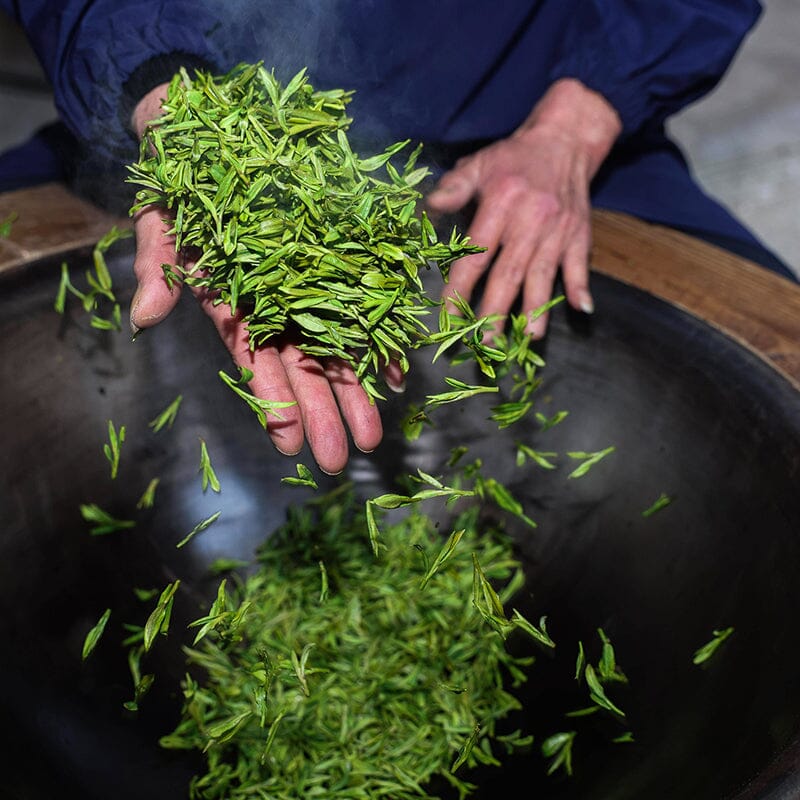
Appearance characteristics: Dry tea is flat in "bowl nail shape", pressed neatly and evenly, with raw materials mostly being one-bud-one-leaf or one-bud-two-leaves. This flat shape is formed through traditional "huiguo" (pan-frying) Craftsmanship, facilitating rapid flavor release during brewing and creating a unique visual beauty;
Quality correlation: High-quality Longjing dry tea is emerald green or tender green, without yellow stems or scorched spots. After brewing, leaves unfold completely, which is an important basis for judging raw material grade.
3. Selection of Brewing Utensils: "Breathable" Needs of Green Tea
(1) Three Reasons for Preferring Glass Utensils
Value: The transparent nature of glass allows intuitive observation of tea leaves unfolding in water—Longjing's "one flag and one spear" (bud as spear, leaf as flag) posture unfolds slowly, embodying the "beautiful shape" of green tea;
Avoiding yellowing from Stuffy: Glass utensils are lidless and breathable, preventing chlorophyll decomposition due to high-temperature Stuffy in a closed environment, avoiding yellowish soup color and dull taste;
Protecting aroma: Green tea's aroma is mainly fresh and chestnut-like, volatile when heated. Glass utensils dissipate heat quickly, reducing excessive aroma loss and preventing aroma variation (such as cooked or stuffy smells) from temperature accumulation in lidded utensils.
(2) Warning Against Lidded Utensils
Dull color: In a closed environment, uneven heating causes chlorophyll destruction, making the soup color change from green to yellowish-green or dark yellow;
Taste variation: Stuffy leads to excessive leaching of tea polyphenols and caffeine, making the originally fresh taste bitter and astringent, losing Longjing's inherent sweetness;
Aroma distortion: Fresh fragrance is easily transformed into "cooked aroma" or "burnt aroma" after Keep, masking Longjing's unique orchid or chestnut fragrance.

4. Core Brewing Steps for West Lake Longjing: Precise Practice of Bottom-pouring Method
(1) Preliminary Preparation: Cup Warming
Operation points: Pour a small amount of hot water (about 1/3 cup) into the glass, rotate the cup to ensure hot water evenly wets the cup wall, achieving both "cup warming and cleaning";
Core purpose: Raise the cup temperature to prevent subsequent hot water from cooling due to cold cups, ensuring tea leaves start unfolding at a suitable temperature; simultaneously remove residual impurities on the cup wall to ensure pure tea soup.
Detail reminder: After warming, pour out all water completely to avoid residual water diluting the tea concentration.
(2) Core Steps of Bottom-pouring Method
Add tea first: Precisely control tea amount
The core of the bottom-pouring method is "add tea first, then pour water": For a cup capacity (usually 150-200ml glass), the tea amount is 3-5 grams (about a small handful, covering 1-2 layers of the cup bottom). Add tea gently with a teaspoon to avoid crushing leaves, which affects soup color and taste.
Moistening soak: Awaken tea vitality
Water injection operation: Pour 1/3 volume of 80℃ hot water into the cup, with a slow, thin stream along the cup wall to avoid direct impact causing leaves to roll and break;
Core function: Let tea leaves fully absorb water and expand, similar to awakening oolong tea, preparing for subsequent flavor release; meanwhile, observe floating tea millimeter (more tea millimeter indicates tenderer raw materials and better quality);
Standing time: Let stand for 10-15 seconds after moistening until leaves initially unfold, no need for too long.
Formal brewing: Temperature and water flow control
Temperature standard: Formal water injection temperature is still around 80℃ (boiling water needs to cool for 30 seconds to avoid high temperature damaging tender leaf cells—Longjing buds are delicate, and temperatures over 85℃ easily cause chlorophyll decomposition, amino acid loss, and produce cooked or astringent tastes);
Water injection skill: The water flow is as thin as a "silk thread", poured Fixed point along the cup wall until the water level reaches 2/3 of the cup (leaving space to avoid overflow); during injection, observe leaves "rolling up and down" and gradually unfolding into complete leaves;
Standing time: Let stand for 1-2 minutes after injection until the soup color turns light green or light yellowish-green, then it's ready to drink.
(3) Multi-person sharing: Ingenious use of fairness cup
Fairness cup selection: Must use a lidless glass fairness cup, continuing the "breathable and non-stuffy" principle, while facilitating observation of soup color;
Tea distribution skill: Use a teaspoon to transfer both leaves and soup from the cup to the fairness cup, filtering debris with a strainer if needed; pour slowly during distribution to allow viewers to see leaves falling slowly in the fairness cup;
Water-saving tip: Hot water for warming the fairness cup can be reused to warm tasting cups, being environmentally friendly and efficient.
5. Purchasing and Tasting West Lake Longjing: Pitfall Avoidance and Timing Control
Mastering purchasing points and tasting timing allows you to truly enjoy the best flavor of West Lake Longjing.
(1) Purchasing misunderstanding: Identification of origin authenticity
Core misunderstanding: "On-site processing in West Lake ≠ origin fresh leaves"—some merchants use non-local fresh leaves (such as tea greens from other regions in Zhejiang, Anhui, or Sichuan) processed in the West Lake area to impersonate West Lake Longjing, with significantly different flavors from authentic origin;
Identification points: Authentic West Lake Longjing dry tea has uniform emerald green color, soft and flexible leaves after brewing, with a high and lasting aroma (orchid or chestnut); counterfeits often have yellowish or dull color, short aroma, and astringent taste.
(2) Tasting timing: New tea needs "storage to reduce fire"
West Lake Longjing has a strict tasting time window:
Warning: Newly fried Longjing needs to be stored for 15-30 days before drinking. Freshly fried tea has heavy "fire" (residual heat from high-temperature frying), and immediate drinking may cause internal heat;
Best period: Half a month to a month after frying, when the fire fades, the aroma is clearest and the taste is most sweet and refreshing;
Storage suggestion: Store in a cool place away from light and sealed (can be refrigerated), avoiding oxidation and deterioration from direct sunlight or high temperature.

6. Green Tea Process Classification: Essential Difference Between Longjing and Matcha
(1) Core Differences in Process Classification
Fried green tea (such as West Lake Longjing): Made through "fixation → rolling → drying" Craftsmanship, with fixation using high-temperature pan-frying, endowing the tea with fresh or chestnut aroma, a fresh taste possibly with slight burnt notes, and leaves retaining complete shape;
Steamed green tea (such as matcha): Fixation is done with steam, resulting in brighter color (dark green), a fresh taste without bitterness, but a lighter aroma than fried green; matcha is a special form of steamed green tea—tea leaves need to be ground into extremely fine powder.
(2) Correction of Matcha Cognition Misunderstandings
Cultural attribution: Although matcha is representative of Japanese tea ceremony, it originated from Chinese Tang Dynasty steamed green Craftsmanship and was later introduced to Japan for development;
Shape difference: Matcha is powdery and needs to be stirred with a bamboo whisk for drinking; West Lake Longjing is whole leaves, with leaves unfolding after brewing;
Applicable scenarios: Matcha is mostly used for desserts and drink flavoring, while Longjing is mainly enjoyed plain to taste its authentic flavor.
7. Knowledge Summary: Key Points of West Lake Longjing Brewing
Brewing West Lake Longjing is an elegant practice of "dialoguing with tenderness". From choosing a transparent glass cup to precisely controlling 80℃ water temperature; from adding tea first in the bottom-pouring method to patiently awakening with moistening soaks; from avoiding the misunderstanding of "drinking new tea immediately" to carefully identifying origin authenticity—each step carries the pursuit of green tea's "freshness, crispness, clarity, and elegance". When you watch flat dry tea unfold slowly in water, smell the delicate orchid fragrance pervade, and sip the sweet and fresh tea soup, you will understand why West Lake Longjing has become a classic among green teas—its brewing art is a gentle response to nature's gifts.




Share:
Brewing Keemun Black Tea: A Complete Guide from Cognition to Tasting
Practice of Biluochun's top-dip method and Huangshan Maofeng's middle-dip method (Part 1)