

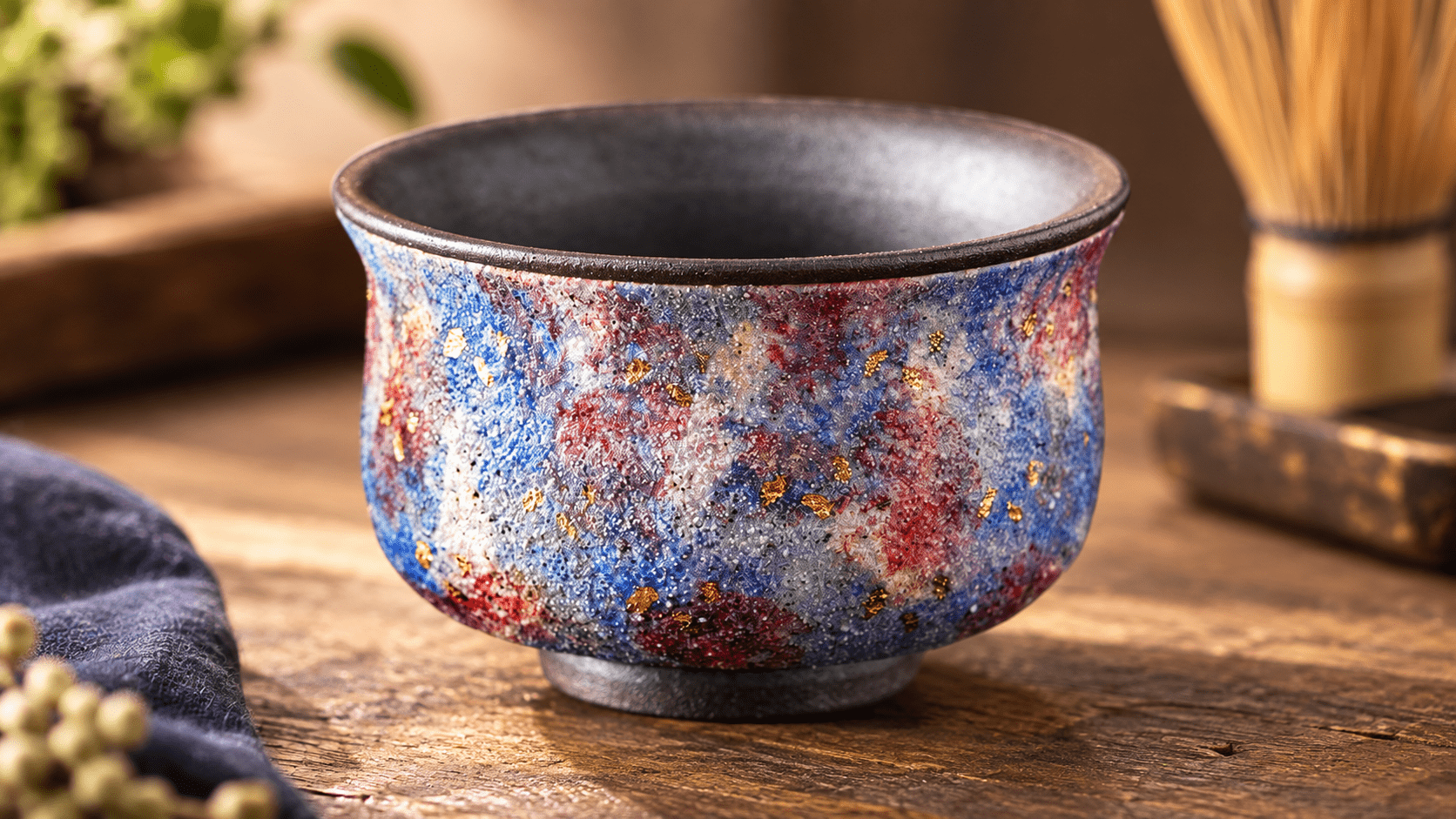

Tenmoku Tea Bowl: Spot the Real One Before You Buy
An authentic Jianzhan should be judged as a complete ceramic object, not by one dramatic glaze photo. Check the clay body, unglazed foot, fired glaze, seller disclosure, and product documentation before deciding whether a tenmoku tea bowl is honestly represented.
For someone brewing gongfu tea at home, a tenmoku tea bowl is both a daily drinking vessel and a piece of ceramic history. Jianzhan is the specific Chinese tradition many buyers mean when they see a dark, shimmering bowl; “tenmoku” is a broader term also used for related Chinese, Japanese, and modern wares.

What are the key takeaways when buying a tenmoku tea bowl?
- Know the terminology. Tenmoku is broad; Jianzhan is more specific and associated with Chinese black-glazed tea bowls and Jianyang.
- Use a five-part check. Clay, foot, glaze, firing evidence, and seller transparency matter more together than any single shortcut.
- Do not confuse handmade with antique. A contemporary handmade bowl can be authentic Jianzhan without being a Song Dynasty object.
- Question perfect repetition. Repeated prints, all-over metallic coatings, and missing foot photos warrant follow-up questions.
- Buy for use, not just display. The best jian zhan tea cup should suit your hands and tea ritual.
How to identify real Jianzhan: what should you check first?
The practical answer to “how to identify real jian zhan” is to ask whether the seller can explain what the bowl is, where it was made, and how it was fired. Think of it like buying handmade leather goods: the surface matters, but so do the maker, materials, construction, and willingness to stand behind the work.
Jianzhan refers to black-glazed tea bowls historically associated with kiln traditions in Jianyang, Fujian, China. Modern makers may work within that tradition in different ways, so an authentic jian zhan does not have to be centuries old. What matters is accurate representation: a contemporary handmade Jianzhan should be sold as contemporary, while a Song Dynasty claim needs much stronger evidence.
Start with the product listing. Strong listings show the interior, exterior, rim, and foot in clear light; include dimensions and capacity; identify the maker or workshop when possible; and describe materials and firing without vague prestige language. A seller who calls every dark cup “rare antique Tenmoku” but supplies no provenance is selling a story rather than verifiable information.
Then inspect the object itself. Handwork can leave small, coherent variations: a softly altered rim, slight differences in wall thickness, an irregular glaze stop, or trimming marks on the foot. These are clues, not proof. A rough surface does not automatically mean handmade, and a skilled studio can produce consistent work. The details should make sense together.
| What to inspect | More consistent with handmade, honestly described work | Reason to ask more questions |
|---|---|---|
| Seller information | Maker, workshop, production place, process, and return terms are clear. | Only “ancient,” “museum grade,” or “rare” language with no specifics. |
| Foot and clay | An unglazed foot is visible, with clay and trimming that look integral to the fired bowl. | No underside photo, an opaque painted base, or labels covering key areas. |
| Glaze pattern | Variation changes naturally with curve, light, pooling, and firing. | Identical motifs repeat like wallpaper or appear flat on the surface. |
| Product photos | Multiple angles show the same bowl, including close-ups and scale. | Only heavily edited hero images or inconsistent bowl photos. |
| Historical claim | Contemporary work is described as contemporary or Song-inspired. | A Song Dynasty attribution without provenance or specialist assessment. |
Use this as a screening tool, not a laboratory test. Authenticity is a chain of evidence: one unusual feature may be normal, while several unexplained inconsistencies should slow down the purchase.
Real vs fake tenmoku: is the name specific enough?
Not by itself. In a real vs fake tenmoku discussion, the first issue is often terminology rather than fraud. “Tenmoku” comes from the Japanese reading of Tianmu and is widely used in Japan and the West for dark, iron-rich glazes and tea bowls connected to that aesthetic.
Jianzhan points to a specific Chinese ceramic lineage and place association. A Japanese tea bowl can be a legitimate Tenmoku object without being Chinese Jianzhan. A modern bowl made elsewhere may still be beautiful and functional, but its listing should say so plainly rather than blending different traditions into one luxury label.
“Fake” is best reserved for misleading claims: a printed or coated decorative cup presented as kiln-fired Jianzhan, a factory-made piece passed off as a named maker’s handmade work, or a recent bowl marketed as a verified Song Dynasty antique. A bowl is not fake merely because it is affordable, modern, or made outside Jianyang.
That distinction is useful when choosing a gift for tea lovers. You do not need to chase an antique to give something meaningful. A clearly described handmade tenmoku tea cup can bring the visual drama of a tenmoku glaze to a real tea routine.
Jianzhan oil spot vs fake: what does a natural pattern look like?
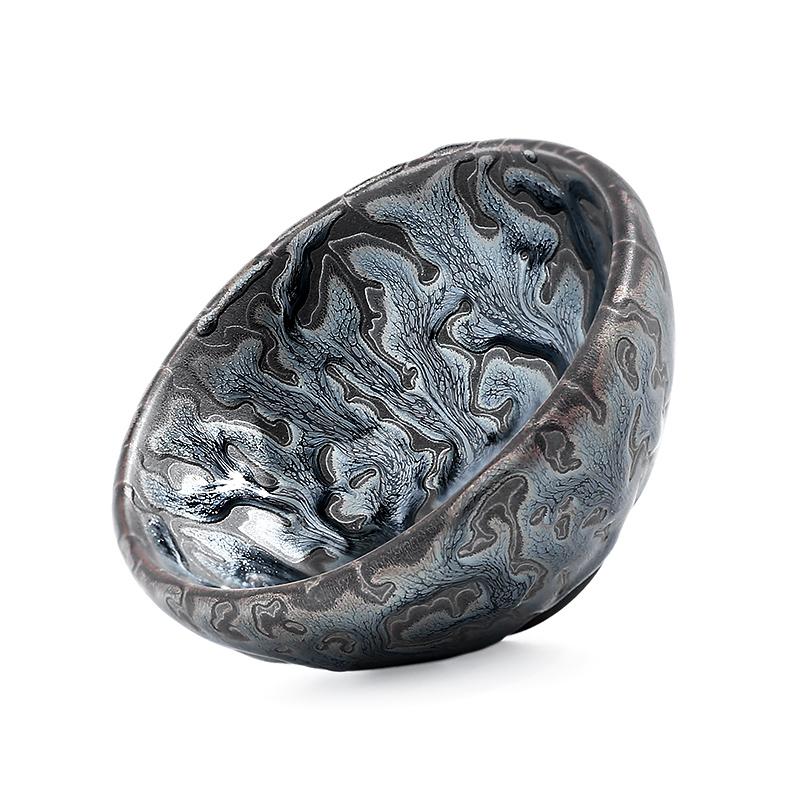
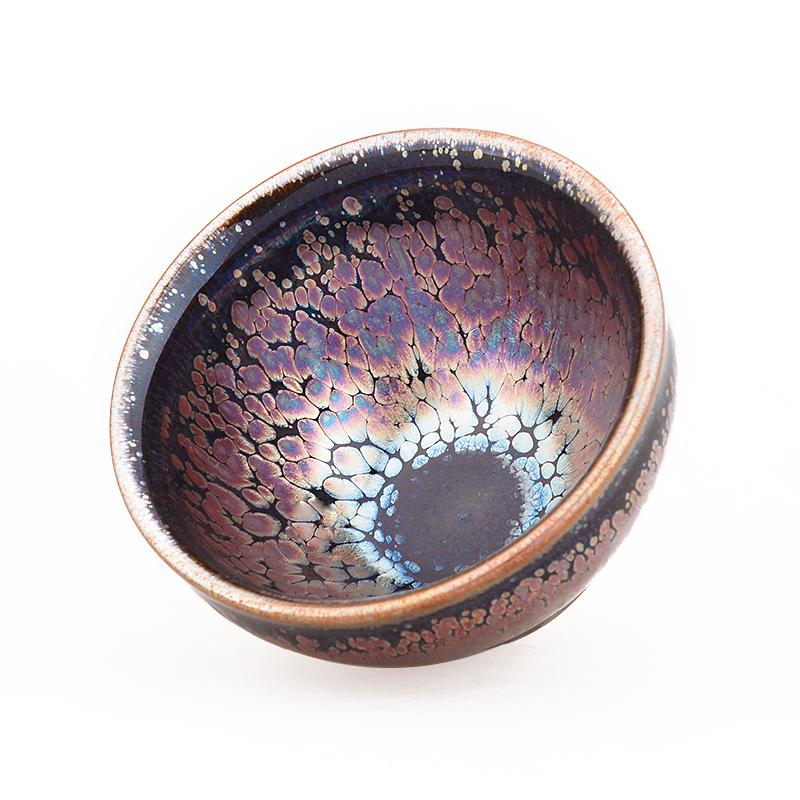
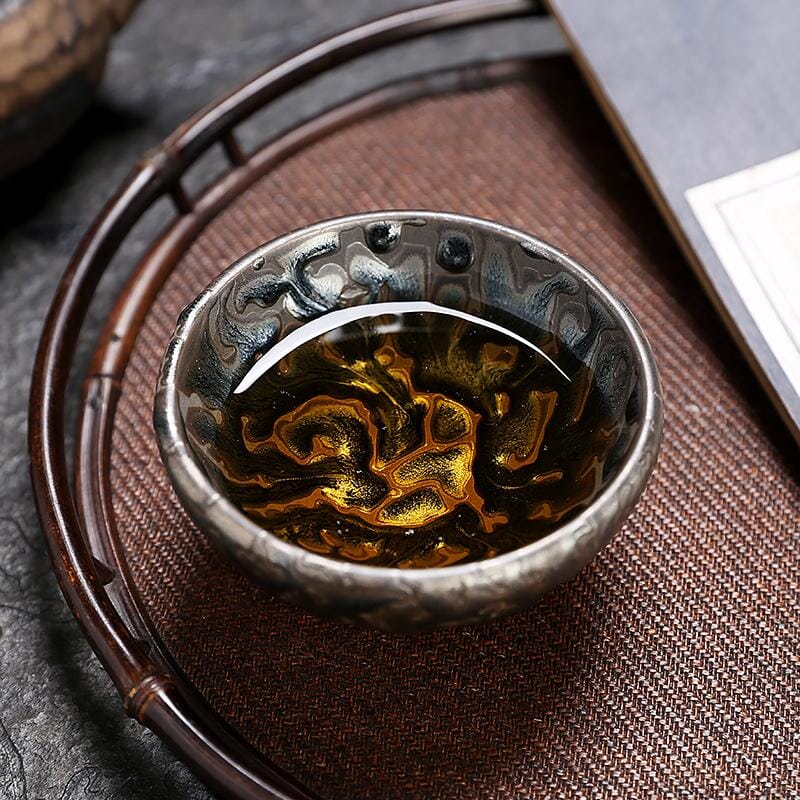
Oil spot is one of the most recognizable effects in Jianzhan. Under particular firing conditions, an iron-rich glaze can create round or haloed spots that seem to hover within a dark surface. As you rotate the bowl, the effect may shift in the light, much like sunlight moving across a dark lake.
When comparing jian zhan oil spot vs fake, look for relationship rather than perfection. On a fired glaze, spot size, color, spacing, and brightness often change across the rounded interior. Near the rim, wall, and well of the bowl, heat and glaze movement can create differences. Tiny pits, pooling, or interruptions can be normal parts of the fired surface.
Common imitations may use a transfer print, sprayed pigment, metallic plating, or a surface coating to mimic iridescence. Warning signs include exactly repeated circles, color that looks pasted on without depth, a rainbow sheen that remains unchanged over every contour, or a finish that appears separate from the ceramic glaze. If still photos are unclear, ask for an unfiltered daylight video.
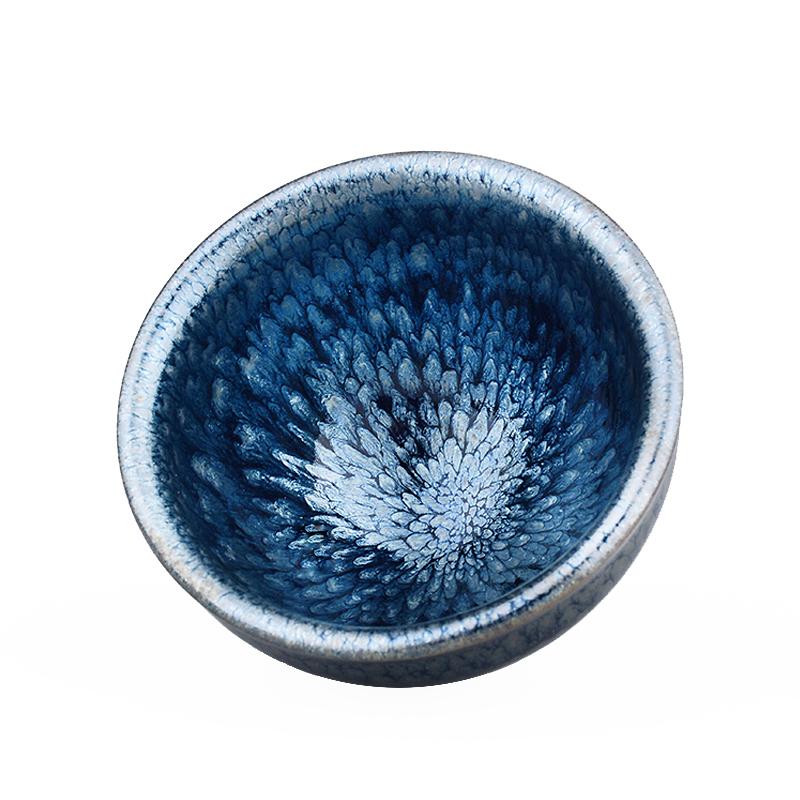
Hare’s fur and partridge feather are other descriptive terms you may encounter. Hare’s fur generally suggests elongated streaks; partridge feather refers to speckled or feather-like visual effects. These are appearance terms, not a universal grading system. A poetic glaze name should never replace basic facts about material, firing, and origin.

How do clay, foot, and firing mark an authentic Jianzhan?
Glaze gets the attention, but the underside often answers better questions. Ceramic tea bowls are glazed and fired as complete objects; the foot is commonly left unglazed so it can sit securely in the kiln. On a handmade piece, you may see trimming lines, a glaze boundary, exposed clay, or kiln-contact evidence. These details should look integral to the bowl, not added later as costume details.
Do not expect one mandatory clay color. Clay can range from dark brown to red-brown or other earthy tones depending on the body and firing. What matters is that exposed material looks like ceramic clay beneath the glaze, not plastic, resin, or a uniform paint layer. Likewise, a rough foot is not automatically better; it can indicate limited finishing as easily as it can indicate handwork.
Firing is the hidden part of the story. A tenmoku glaze develops through the interaction of mineral-rich glaze, heat, kiln atmosphere, and cooling. This is why two handmade Jianzhan tea cups can share a method yet never look identical. Variation is a normal result of kiln work, but visible variation alone does not prove a location, date, or maker.
If food use matters, ask a separate question. Authenticity and food-safety testing are not the same claim. Ask how the bowl is intended to be used, whether the seller provides care guidance, and what information they can share about the finished surface. Never assume a metallic-looking decorative cup is appropriate for hot tea merely because it is called ceramic.
How should you choose a handmade tenmoku tea cup for gongfu tea?
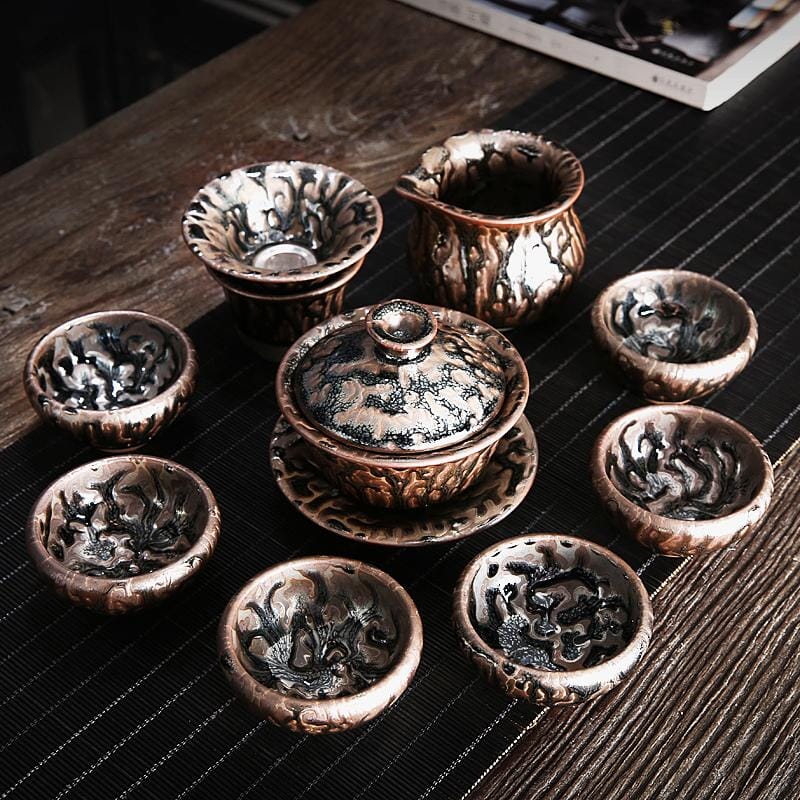
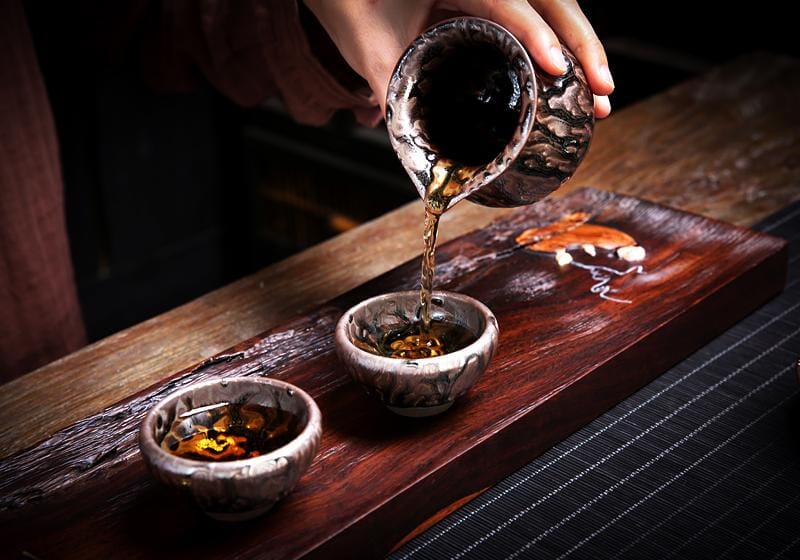
For gongfu tea, a smaller bowl lets you notice aroma, temperature, and color without turning each pour into a large serving. This is especially enjoyable with pu-erh tea, roasted oolongs, and other teas that reward short, repeated infusions. Choose a capacity that matches your gaiwan or teapot, pouring rhythm, and whether you usually drink alone or share.
Prioritize comfort before collector language. A smooth rim, stable foot, and bowl that does not overheat your fingers will matter more after fifty tea sessions than a spectacular product photograph. The best jian zhan tea cup is not automatically the darkest, shiniest, or most expensive one. It is the one whose form and provenance match the way you drink tea.
- Ask what it is. Is it Jianzhan from Jianyang, a Japanese Tenmoku-style tea bowl, or another handmade black-glazed cup?
- Ask who made it. A named maker or transparent workshop is stronger than an anonymous luxury description.
- Request underside and daylight images. Check the foot, glaze boundary, and pattern away from studio lighting.
- Match it to your ritual. Review capacity, rim diameter, height, and suitability for gongfu tea.
- Check the return policy. Handmade work varies; a fair return process lets you evaluate the actual bowl in hand.
When you are ready to compare clearly described pieces, Shop authentic Tenmoku tea bowls. For a smaller, everyday-focused selection, Explore our handmade Jianzhan tea cups. The right purchase should feel transparent before it feels luxurious.
What do buyers commonly ask about authentic Jianzhan?
Is a tenmoku tea bowl the same thing as Jianzhan?
Not always. Jianzhan is a specific Chinese black-glazed tea-bowl tradition associated with Jianyang. Tenmoku is a broader term covering related Chinese, Japanese, and contemporary dark-glaze bowls. Read the origin and maker details rather than relying on the name alone.
How can I identify real Jianzhan before I buy?
Review the maker or workshop, origin disclosure, underside photo, glaze and clay details, product consistency, and return policy. A single feature—such as oil spot, a rough foot, or a heavy feel—cannot authenticate a bowl alone.
What is the difference between Jianzhan oil spot vs fake oil spot?
A fired oil-spot glaze usually varies with the bowl’s curve and light. A questionable imitation may show a repeated print, a flat sprayed effect, or a uniform coating not integrated with the glaze.
Does a Song Dynasty glaze pattern mean the bowl is antique?
No. “Song Dynasty glaze” often means a contemporary maker drew inspiration from a historic style. A true antique claim requires provenance and specialist assessment.
Can a Japanese tea bowl be authentic Tenmoku?
Yes. Japan has its own authentic Tenmoku traditions. A Japanese tea bowl may be genuinely Tenmoku without being Jianzhan, which is a more specific Chinese designation.
What makes handmade Jianzhan tea cups a good gift for tea lovers?
Choose a bowl with a clear story, comfortable form, and glaze that looks compelling in ordinary light—not only in a styled product photo. Include care guidance and explain that variation is part of handmade character.
What is the smartest way to buy a tenmoku tea bowl with confidence?
Buy the evidence, not the shimmer. A real, worthwhile tenmoku tea bowl has a truthful identity: it is presented as Jianzhan, Japanese Tenmoku, or modern Tenmoku-style work with enough detail for you to understand the difference. Its clay, foot, glaze, and firing story should agree with the seller’s description.
For a personal gongfu tea ritual or a thoughtful gift for tea lovers, that honesty is part of the luxury. Choose a bowl you will reach for with pu-erh tea on an ordinary evening, and let its changing glaze be something you discover over time—not a claim you have to take on faith.
Explore Our Collection
Ready to experience the world of tenmoku tea bowl? Browse our curated collection:
Disclaimer: This article is for informational purposes. Products and pricing subject to change.


Share:
The Tenmoku Tea Bowl: Your At-Home Luxury Ritual for Mindful Living
Tenmoku Tea Bowl: The Handmade Story Behind a More Meaningful Tea Ritual