We use UPS & Fedex for fast and reliable shipping.

Tea is not only a daily drink but also a carrier of thousands of years of culture and natural wisdom. From recognizing the essence of tea from a botanical perspective to tracing the evolution of ancient people's tea-drinking methods, every bit of knowledge allows you to better understand the "language" of tea when tasting it. This article will take you into the systematic introduction of tea knowledge, from the scientific definition and morphological classification of tea to the key nodes in the history of ancient tea drinking, enabling "smelling tea to know it" to no longer be an exclusive skill of professional tea masters.

1. Scientific Cognition of Tea: From Botany to Morphological Characteristics

To understand tea, it is first necessary to clarify "what is tea" — in the botanical category, tea has a clear family-genus and identifiable characteristics, which are the core basis for distinguishing "true tea" from "non-tea beverages".

(1) Botanical Definition of Tea

Tea does not generally refer to all "plants that can be soaked in water for drinking", but a specific species with a clear family-genus and historical origin:

Family-genus characteristics: Tea belongs to the Theaceae Camellia genus, a perennial evergreen shrub in this family-genus. It has existed on Earth for about 50 million years, and its evolutionary history far exceeds the history of human tea drinking;

Same-family connection: Azaleas and tea belong to the same Theaceae Camellia genus, and they have similar requirements for the growing environment (especially soil pH and humidity). In tea-producing areas such as Yunnan, if azaleas are found blooming luxuriantly, it often means the local soil is suitable for tea tree growth, which can be used as a judgment signal for "potential tea areas";

Life cycle: Unlike annual crops such as rice and corn, tea trees are perennial plants, which can grow for a long time like pine trees (high-quality ancient tea trees can even survive for hundreds of years). Once planted, they can be harvested for many years, which also determines that the quality of tea leaves will accumulate unique flavors with the tree age and growing environment.

(2) Three Morphological Types of Tea Trees

Tea trees of different forms not only have significant differences in appearance but also directly affect the picking methods and flavor characteristics of tea leaves:

Arbor type: It has an obvious trunk, grows upright from the ground to a certain height, and then branches. Typical representatives are ancient tea trees in Yunnan (such as Bingdao and Laobanzhang). This type of tea tree is tall (up to several meters) with deep roots in the soil, which can absorb more minerals. The tea leaves have a richer and mellow flavor and need to be picked by climbing manually;

Shrub type: It has no obvious trunk and branches directly from the ground, growing in a clumped shape. It is the cultivated variety in most tea gardens at present (such as tea trees in the production areas of Fuding white tea in Fujian and West Lake Longjing in Zhejiang). Shrub-type tea trees are relatively short (usually 1-2 meters), facilitating mechanized or manual dwarfing picking. The tea leaves have uniform tenderness and are suitable for mass production;

Small arbor type: Between arbor and shrub, it has a short trunk (usually 1-2 meters high) and then branches. It is common in production areas such as Wuyi rock tea in Fujian and Fenghuang Dancong in Guangdong. This type of tea tree combines the deep-rooted nature of the arbor type and the easy picking of the shrub type, and the tea leaves have both rich and fresh flavors.

(3) Identification Characteristics of Tea Leaves

Leaves are the most intuitive basis for distinguishing "true tea" from "non-tea", with two key quantitative standards:

Leaf margin angles (serrations): The edges of true tea leaves are evenly serrated, which is professionally called "leaf margin angles". The number of serration pairs must be strictly controlled between 16-32 pairs (symmetrical serrations on the left and right are counted as one pair). If the serrations are too dense (more than 32 pairs) or too sparse (less than 16 pairs), it is probably not true tea;

Midrib and lateral veins: There is an obvious midrib running through the center of the leaf, showing a vertical direction. The lateral veins branching from both sides of the midrib are "fishbone-shaped" and stop near the leaf margin without connecting with the serrations (forming a "broken vein" characteristic). Moreover, the number of lateral vein pairs must be between 5-15 pairs. If it exceeds this range (such as Kuding tea has more than 16 pairs of lateral veins), it does not meet the standard of true tea;

Common misunderstandings: Although Kuding tea (Aquifoliaceae), chrysanthemum tea (Asteraceae), and rose tea (Rosaceae) are commonly called "tea" in daily life, from the botanical definition, they do not belong to the Theaceae Camellia genus. They are essentially "substitute teas", and their flavors and effects are significantly different from true tea.

2. History of Ancient Tea Drinking: From "Seasoned Soup Drink" to "Clear Drinking and Whisked Tea"

The way ancient people drank tea was not static but constantly evolved with the craftsmanship and cultural aesthetics of the times. Each reform promoted the deepening of tea culture.

(1) Origin of Tea and Early Usage (Shang and Zhou Dynasties - Early Tang Dynasty)

The initial use of tea was not "drinking" but a "functional ingredient" combined with food:

Origin legend: The earliest record of tea can be traced back to the period when Shennong tasted hundreds of herbs. At that time, tea was discovered for its "detoxification" effect. During the Shang and Zhou Dynasties, tea began to be used as an ingredient for "soup drinks" — tea leaves were boiled together with grains and vegetables to make food similar to soup, which had both satiety and health-care functions;

Core characteristics: During this period, tea had no concept of "tasting". It focused more on practicality, and tea leaves were only used as "seasonings" or "medicines", which was quite different from modern tea-drinking methods.

(2) Tang Dynasty: Lu Yu and the Reform of "Clear Drinking Method"

The Tang Dynasty was the "foundation period" of Chinese tea culture, and the "Classic of Tea" by Lu Yu, the Sage of Tea, completely changed the logic of tea drinking:

Previous boiling method: In the early Tang Dynasty, people still used to boil tea with ingredients such as red dates, longans, spinach, and mint, and even added salt for seasoning, trying to cover the bitterness of tea leaves with complex ingredients, but also masking the original taste of tea;

Lu Yu's reform: Lu Yu first advocated the "clear drinking method" in the "Classic of Tea" — only using tea leaves and water for brewing or boiling without adding any ingredients. He advocated that "the quality of tea lies in water; the quality of water lies in utensils", emphasizing the display of the natural aroma and taste of tea leaves through high-quality water and suitable utensils;

Cultural significance: The proposal of the "clear drinking method" marked the official transformation of tea from a "functional food" to a "tastable drink", laying a conceptual foundation for the development of tea culture in later generations.

(3) Song Dynasty: Whisked Tea Method and the Aesthetic of "Taking Whiteness as Beauty"
The way of drinking tea in the Song Dynasty reached the peak of "craftsmanship". The emergence of the whisked tea method upgraded tea drinking from a "taste experience" to a comprehensive art of "vision +

3. Knowledge Summary: Key Points of Tea Knowledge

Understanding tea is never about memorizing complex terminology, but rather understanding the natural laws and cultural context behind tea. From identifying the jagged edges of a genuine leaf to imagining the elegance of Song Dynasty literati brewing tea, every bit of knowledge can enhance your reverence for nature's gifts and your appreciation for our cultural heritage when you pick up a cup. When you can distinguish genuine tea from substitutes by its leaf characteristics, and connect tea drinking practices with the spirit of the Tang and Song dynasties, "identifying tea by its aroma" becomes more than a superficial aesthetic, but a profound cultural resonance.
Quick answers for Tenmoku teaware shoppers

Use this guide to connect the article topic with practical buying decisions: what Jianzhan Tenmoku teaware is, who it suits, how to choose a piece, and how to care for it after purchase.

How to use this guide before buying

Read the article first for the main explanation, then compare the product photos, glaze variation, form, seller clarity, return policy, and whether the piece fits daily tea, display, collecting, or gifting.

Common buying mistakes to avoid

Avoid choosing only by dramatic claims, copied photos, unusually low prices, or vague master language. A better decision uses visible product details, clear use case, realistic care needs, and trustworthy shop policies.

Recommended next step

After reading, compare a few real products side by side by size, glaze family, rim shape, capacity, price, and gift suitability instead of relying on one photo or one keyword.

What is Jianzhan Tenmoku teaware?

Jianzhan Tenmoku teaware is ceramic tea ware known for dark mineral-glaze effects and natural kiln variation. Common forms include tea cups, bowls, teapots, tea sets, and matcha bowls.

Who is it best for?

It is best for tea drinkers, ceramic collectors, and gift shoppers who value functional objects with visible handmade character. It is not ideal if you need every piece to look exactly identical.

How do I care for it?

Hand wash with warm water, avoid abrasive cleaners, and dry fully before storage. Gentle daily use helps preserve the surface and keeps the glaze easy to inspect over time.

How do I choose the right Tenmoku piece?

Choose by the main use first: daily tea, matcha, Gongfu brewing, display, or gifting. Then compare capacity, rim shape, glaze family, photos, and whether natural variation is acceptable for your needs.

Is Jianzhan Tenmoku teaware good as a gift?

Yes. It works well for tea lovers, ceramic collectors, birthdays, holidays, and housewarming gifts because it is both usable and visually distinctive. For gifts, choose an easy-to-use form and a glaze style with clear photos.

Related products and categories

Compare the guide above with real Tenmokus categories and representative pieces. Start with the use case, then compare glaze style, form, price, and whether the piece is mainly for daily tea, display, collecting, or gifting.

Handmade Tenmoku tea cups

Best for daily tea drinking, first Jianzhan purchases, ceramic gifts, and comparing glaze patterns across cup shapes.

Tenmoku tea sets

Best when you want a coordinated tea table, a hosting setup, or a complete gift instead of one individual cup.

Real vs fake Tenmoku guide

Use this guide to compare seller claims, glaze appearance, photos, and practical buying signals before choosing a piece.

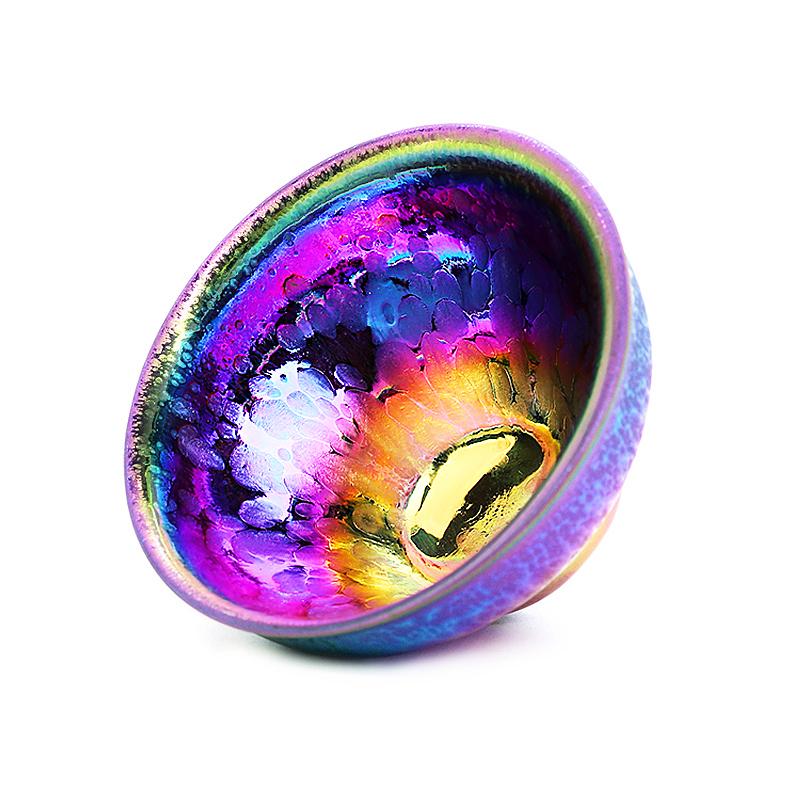
Vivid Peacock

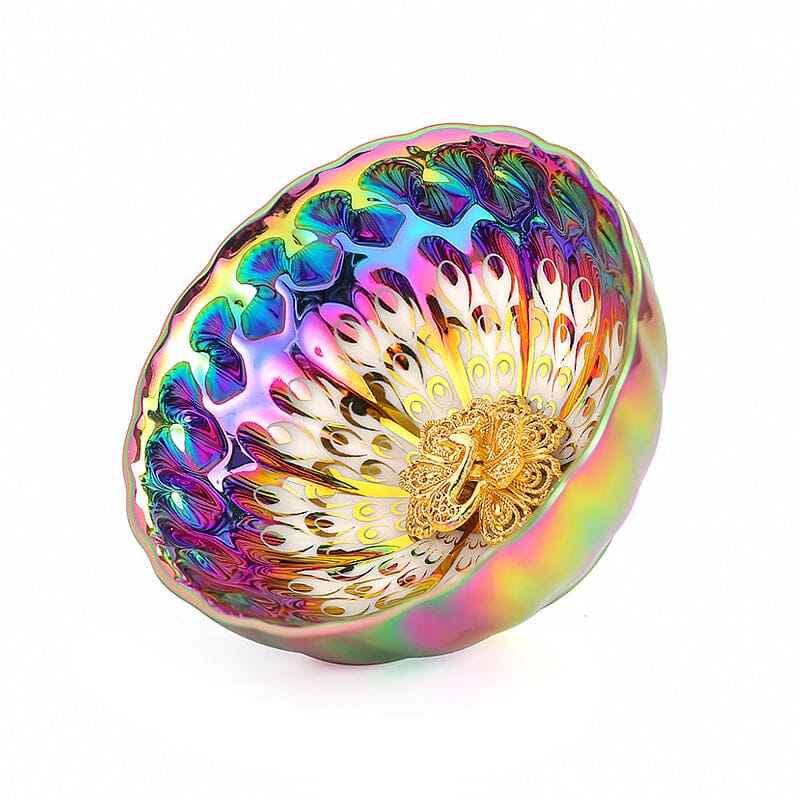
A representative Tenmoku tea cup to compare by glaze depth, cup shape, price, and gift fit.

Golden Peacock

Compare this piece when you want a clear visual reference for a gold-toned Tenmoku glaze style.

Fairy II

Use this product as another comparison point for handmade form, glaze variation, and gift suitability.

shop handmade Tenmoku tea cups compare Jianzhan teapots browse Tenmoku tea sets choose Tenmoku matcha bowls view Tenmoku tea cups read the real vs fake Tenmoku tea bowl guide browse Jianzhan buying guides learn about Tenmokus

From Tenmoku guide to teaware choice

Tenmokus is focused on handmade Jianzhan Tenmoku teaware for tea rituals, display, and gifting. If you are choosing after reading this guide, start with Tenmoku tea cups for daily tea tasting, Tenmoku teapots for loose leaf brewing, Tenmoku coffee cups for daily coffee, Tenmoku tea sets for coordinated gifts, Tenmoku matcha bowls for matcha preparation, Tenmoku beer cups for home bar drinkware, or Tenmoku sake sets for serving and display.

Related Tenmoku guides

Keep exploring Tenmoku care, gift ideas, teaware selection, and the difference between Tenmoku and Jianzhan.

View all

Tenmoku Tea Bowl Authenticity Guide: Buy Jian Zhan with Confidence

Tenmoku Tea Bowl Authenticity Guide: Buy Jian Zhan with Confidence

Tenmoku Tea Bowl Authenticity Guide: Choose a Better Cup for Gongfu Tea A real tenmoku tea bowl is more than a dark cup with shiny speckles: it is a high-fired ceramic piece whose clay, iron-rich glaze, and kiln atmosphere work...

Read more

How to Choose a Handmade Tenmoku Tea Bowl for Gongfu Tea (And Avoid Fake Jian Zhan)

If you’ve ever wanted to own a tenmoku tea bowl that feels uniquely yours, you’re not alone. These iron-rich glazed wonders from the Song Dynasty have captivated tea lovers for a thousand years—and today, a real jian zhan oil spot...

Read more

Transform Your Daily Ritual with a Handmade Tenmoku Tea Bowl: The Ultimate Luxury Wellness Upgrade

Transform Your Daily Ritual with a Handmade Tenmoku Tea Bowl: The Ultimate Luxury Wellness Upgrade

If you’ve ever swirled a fine wine in a hand-blown glass and felt the moment deepen, you already understand the power of a vessel. I’m Sophie Thompson, and as a lifelong tea lover and design curator, I want to introduce...

Read more