

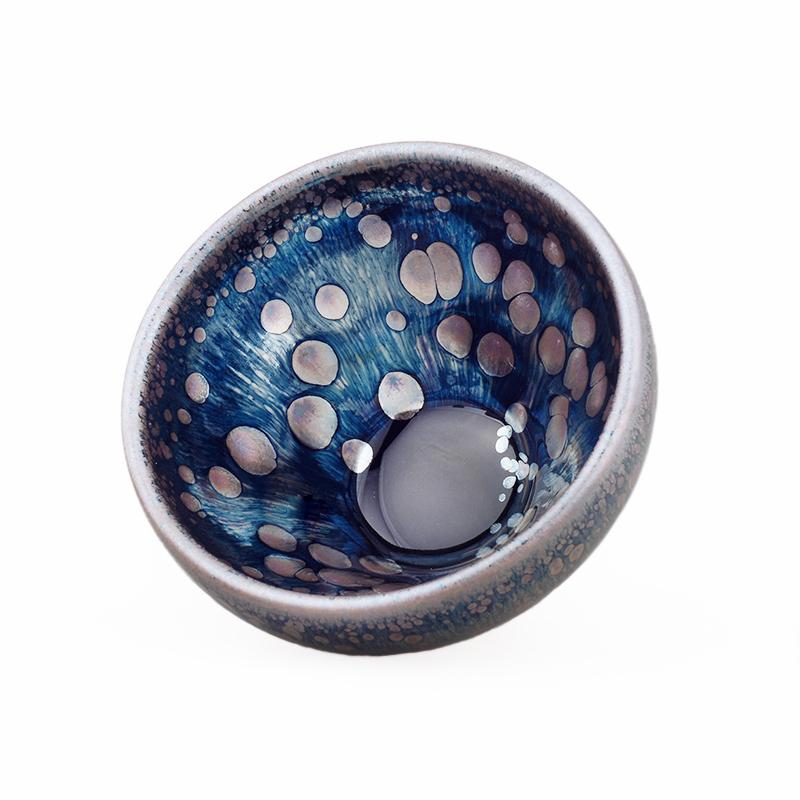
Photograph the same Tenmoku cup in five repeatable views: profile, interior, angled glaze, foot, and one frame with a size and color reference. Keep the light, background, camera position, and file notes consistent. The goal is a useful record of what the camera can see, not a dramatic image or a verdict about how the cup was made.
The five-view Tenmoku cup record
One attractive image is useful for sharing. A record needs views that answer different questions.
| View | What to include | Why it belongs in the record |
|---|---|---|
| Profile | Rim, wall, curve, and foot in one level frame | Shows the cup’s overall form and proportions |
| Interior | Full inner surface, centered above the cup | Records the visible distribution of color and pattern |
| Angled glaze | One close view where light moves across the surface | Helps separate reflection from visible surface detail |
| Foot and base | Foot ring and underside, photographed straight | Records an area that is easy to miss in display photos |
| Reference frame | The cup beside a small ruler and neutral color reference | Makes later size and color comparisons more useful |
Use the same order every time. A simple sequence such as profile-interior-angle-foot-reference makes two sessions easier to compare.
Use soft, repeatable light
Start with one stable setup. Place the cup on a plain neutral background near indirect window light, or diffuse an artificial light through a white surface. Turn off other lights if they add a different color. Avoid a direct phone flash: a curved glazed surface can return a bright reflection that hides the area you are trying to record.
The Canadian Conservation Institute’s lighting guide explains that changing the direction of light changes which surface qualities a photograph reveals. Its normal-light example uses two lights at 45 degrees for even illumination, while low-angle light emphasizes texture. For a home record, the useful lesson is to keep one neutral view and add one clearly labeled angled-light view rather than treating either as the single “true” appearance.
Canada’s guidance for photographing reflective artifacts specifically includes ceramics. It recommends a neutral background, diffused light, a color or grayscale reference, and care to keep the photographer’s reflection out of the object. The Smithsonian Archives describes the same practical problem in its note on documenting reflective surfaces: diffusion can reduce glare, but the lighting still has to match the detail you want to preserve.
Separate form, surface, and reflection
Do not ask one photograph to show everything. A level side view records form. An overhead view records the interior. A closer angled view records how reflections cross the glaze.

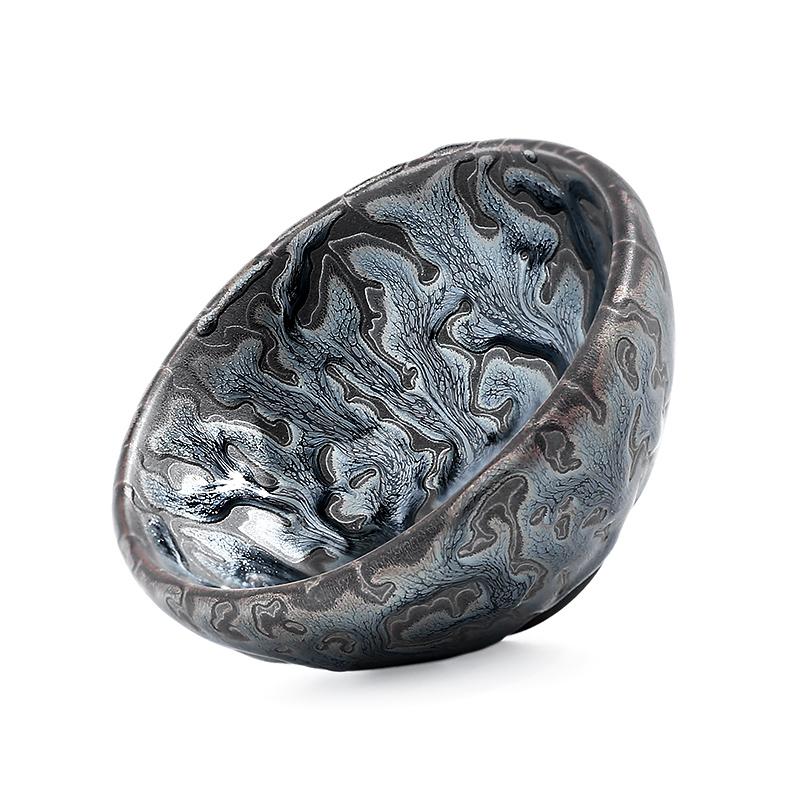
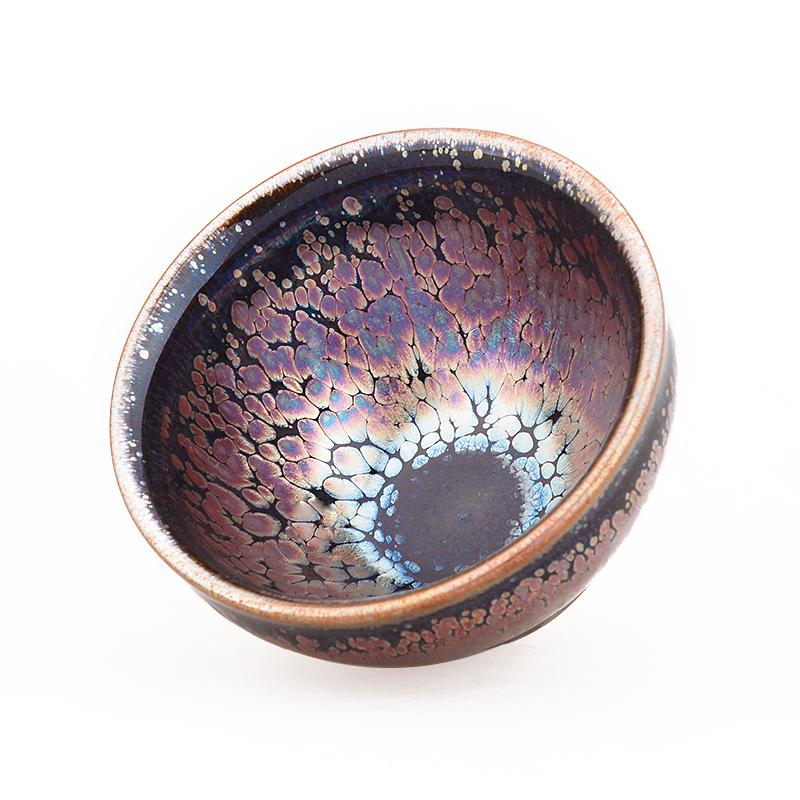
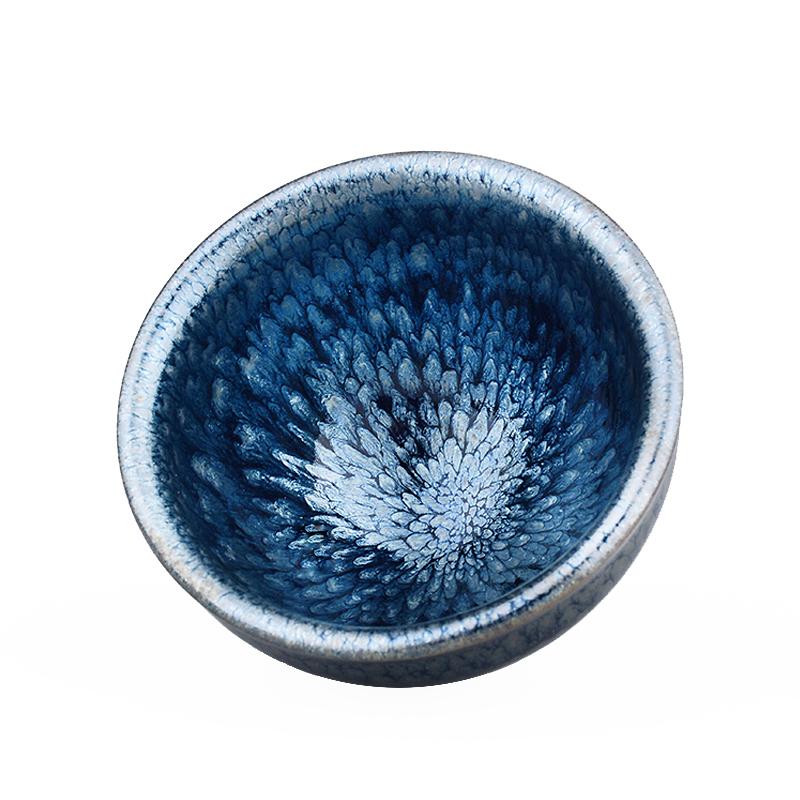
The current Tears Tenmoku cup page includes both an overhead interior image and a side-profile image. Used together, those views record more than either image alone: the first shows the inner surface, while the second shows the wall, rim, and foot. This is a visible-image observation only; the photographs do not independently verify material, origin, firing method, safety, or authenticity.
Add a reference frame before you finish
Photograph the cup once with a small ruler and a neutral white-grey-black or color reference in the frame. Then take a clean version without the reference. The Canadian Heritage Information Network recommends this paired approach for reflective artifacts because the reference improves documentation but can appear in the object’s reflection.
Keep automatic filters and heavy color edits off the record copy. If you edit a second image for sharing, retain the original and label the edited file. A useful record preserves the difference between what the camera captured and what was adjusted for presentation.
Save the conditions with the images
The notes can be short. Record:
- the date;
- the cup name or your own inventory number;
- the five view names;
- window light or artificial light;
- whether the reference card is present;
- any crop or color adjustment.
A file name such as 2026-09-18-cup-07-interior-window-light-original.jpg is more useful six months later than IMG_4821.jpg. If you repeat the session, keep the same view order and approximately the same camera distance.
What a photograph cannot prove
A photograph can document visible form, color, pattern, reflection, and condition at one moment. It cannot by itself prove where a cup was made, who made it, which materials were used, how it was fired, whether it meets applicable safety requirements, whether it is rare, or whether it is “authentic.” Those conclusions need separate product-level records and evidence.
Use photos as one layer of a collection record. Keep invoices, measurements, product details, and any maker or testing documents as separate sources. The Tenmokus Collector Cabinet and other tools can help organize a personal record, while the tea cup collection display guide covers what to do after the record is complete.
Put the method into practice
Choose one cup, make all five views in a single session, and save the unedited originals together. When you want another subject, compare current Jianzhan Tenmoku tea cups by their visible product images and verify all product-specific details on the individual product page.



Share:
Tenmoku Tea Bowl: The Handmade Story Behind a More Meaningful Tea Ritual