Halloween Sale: Buy 3 Get the 4th Free!

To match a gongfu tea strainer to a serving pitcher, check where the strainer rests, how far its basket extends below that support, and whether it can be lifted away without catching the rim. A matching color or a single diameter is not enough. Ask for an underside view and the relevant measurements before ordering; check the empty pieces together before brewing.

This guide covers a strainer that sits over a pitcher while tea is poured through it. The fit checks below are an editorial decision method from Tenmokus, not a physical test of the pictured set or a promise that two separately purchased pieces will fit.

Identify the contact points before comparing sizes

Look at the pitcher's opening from above. Note the inner opening, the rim where a strainer could rest, and the interruption made by the pouring spout. For an oval or irregular opening, record both the shorter and longer spans. A measurement taken across the spout may describe the longest part of the vessel rather than the space supporting the strainer.

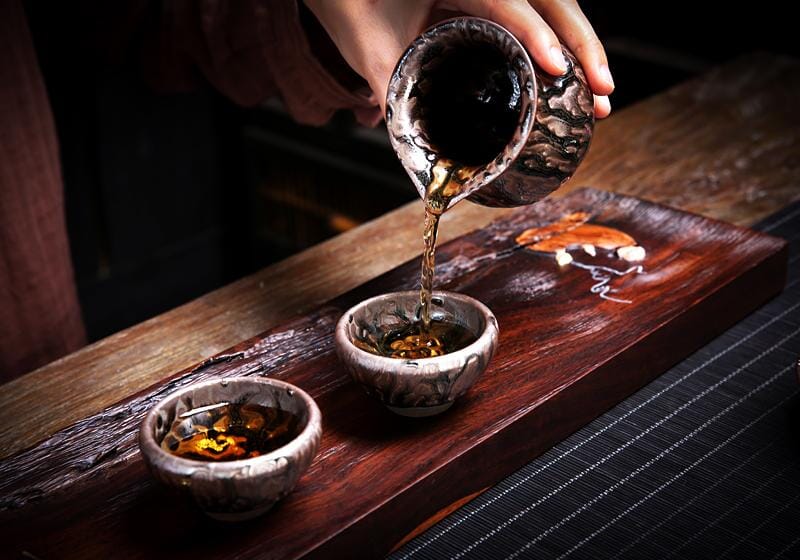
Hand-held Oni serving pitcher showing its open mouth and projecting spout above a wooden tea table
The current Oni Tea Set gallery shows a projecting spout and the shape of the opening. This view helps identify what to ask about; it does not provide a measured opening width or confirm accessory compatibility.

Then inspect the strainer's underside. Which part is intended to rest on the pitcher: a broad shoulder, a rim, or projecting supports? Which part must enter the opening? Compare those parts with the pitcher, rather than comparing the largest dimension of each object. Ask the seller to identify the support points if the photograph does not show them.

Separate overall width from basket depth

A strainer can be wide enough to span an opening while its lower basket is too wide or too deep to sit as intended. Request the basket width below the support and the distance it hangs beneath that support. Compare these with the pitcher's interior at the same depth, not only its top opening.

For example, Yunnan Sourcing USA's dual-layer strainer listing gives the large version's widest diameter as 7.2 cm and its total height as 3.5 cm. Those are that seller's stated dimensions for that item. They are not measurements of an Oni strainer, nor do they tell you the distance from the support surface to the bottom of its basket.

If the seller supplies only one width and one height, ask what each measurement includes. Do not subtract an assumed rim thickness or estimate a hidden basket from a perspective photograph. Keep millimeters or centimeters consistent across your notes.

Make a three-part fit note

Use this short note to compare one proposed strainer with one specific pitcher:

  • Support: pitcher opening and rim shape; strainer contact points; any gap at the spout.
  • Depth: basket width and depth below the support; corresponding interior space in the pitcher.
  • Removal: where to lift the strainer; whether it catches the rim; where it rests after removal.

Mark missing measurements as unconfirmed. There is no universal clearance number in this method, and an empty fit check cannot establish drainage speed, filtration performance, or suitability for hot use. Follow the instructions supplied for the specific pieces.

Check the empty pairing and its resting position

When the pieces arrive, start with both empty and at room temperature on a stable table. Set the strainer down without pressing it into place. Check that its intended supports meet the rim, that the basket does not jam against the interior, and that the strainer does not rock. Lift it out again. If it drops into the opening, wedges, or needs force, stop and ask the seller about the pairing before brewing.

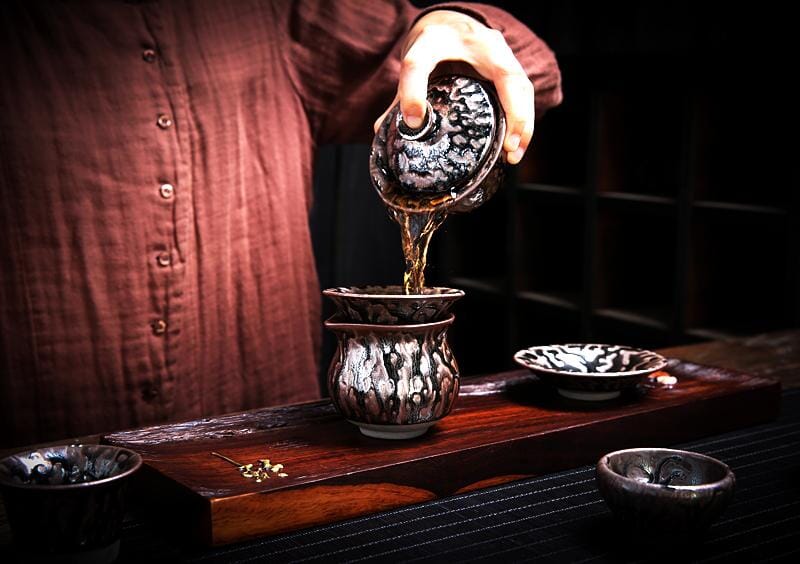
Oni tea strainer resting in its separate holder on a woven mat on a wooden table
This Oni gallery scene shows the strainer resting in a separate holder. Compare it with the cover photograph, where the strainer sits above the pitcher during a pour. The two positions serve different parts of the session; neither photograph proves fit with another pitcher.

Confirm whether the proposed strainer includes a holder. A display photograph alone is not an included-pieces list. For the surrounding space needed when you lift accessories off the vessels, use the separate tea tray layout check.

Ask a specific question before buying

Send the seller the pitcher's model and an overhead photo, then ask: “Which part of this strainer supports it on the pitcher? Please confirm the supported opening range, the basket width and depth below that support, and whether you have checked this exact pairing. Is its resting holder included?”

If the answer remains incomplete, leave compatibility unconfirmed rather than choosing by appearance alone. If you are selecting the whole arrangement, browse the current Tenmokus tea sets and confirm the included pieces and pairing details. For a different decision, the gaiwan serving-capacity guide helps plan the amount of tea that reaches the cups. Physical fit and serving volume need separate checks.
Quick answers for Tenmoku teaware shoppers

Use this guide to connect the article topic with practical buying decisions: what Jianzhan Tenmoku teaware is, who it suits, how to choose a piece, and how to care for it after purchase.

How to use this guide before buying

Read the article first for the main explanation, then compare the product photos, glaze variation, form, seller clarity, return policy, and whether the piece fits daily tea, display, collecting, or gifting.

Common buying mistakes to avoid

Avoid choosing only by dramatic claims, copied photos, unusually low prices, or vague master language. A better decision uses visible product details, clear use case, realistic care needs, and trustworthy shop policies.

Recommended next step

After reading, compare a few real products side by side by size, glaze family, rim shape, capacity, price, and gift suitability instead of relying on one photo or one keyword.

What is Jianzhan Tenmoku teaware?

Jianzhan Tenmoku teaware is ceramic tea ware known for dark mineral-glaze effects and natural kiln variation. Common forms include tea cups, bowls, teapots, tea sets, and matcha bowls.

Who is it best for?

It is best for tea drinkers, ceramic collectors, and gift shoppers who value functional objects with visible handmade character. It is not ideal if you need every piece to look exactly identical.

How do I care for it?

Hand wash with warm water, avoid abrasive cleaners, and dry fully before storage. Gentle daily use helps preserve the surface and keeps the glaze easy to inspect over time.

How do I choose the right Tenmoku piece?

Choose by the main use first: daily tea, matcha, Gongfu brewing, display, or gifting. Then compare capacity, rim shape, glaze family, photos, and whether natural variation is acceptable for your needs.

Is Jianzhan Tenmoku teaware good as a gift?

Yes. It works well for tea lovers, ceramic collectors, birthdays, holidays, and housewarming gifts because it is both usable and visually distinctive. For gifts, choose an easy-to-use form and a glaze style with clear photos.

Related products and categories

Compare the guide above with real Tenmokus categories and representative pieces. Start with the use case, then compare glaze style, form, price, and whether the piece is mainly for daily tea, display, collecting, or gifting.

Handmade Tenmoku tea cups

Best for daily tea drinking, first Jianzhan purchases, ceramic gifts, and comparing glaze patterns across cup shapes.

Tenmoku tea sets

Best when you want a coordinated tea table, a hosting setup, or a complete gift instead of one individual cup.

Real vs fake Tenmoku guide

Use this guide to compare seller claims, glaze appearance, photos, and practical buying signals before choosing a piece.

Vivid Peacock

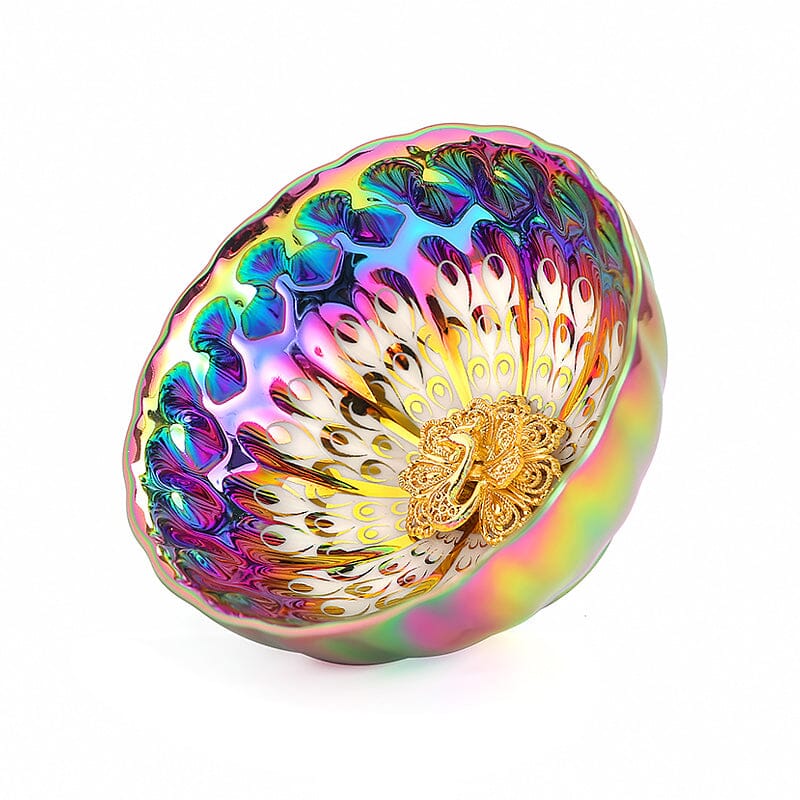
A representative Tenmoku tea cup to compare by glaze depth, cup shape, price, and gift fit.

Golden Peacock

Compare this piece when you want a clear visual reference for a gold-toned Tenmoku glaze style.

Fairy II

Use this product as another comparison point for handmade form, glaze variation, and gift suitability.

shop handmade Tenmoku tea cups compare Jianzhan teapots browse Tenmoku tea sets choose Tenmoku matcha bowls view Tenmoku tea cups read the real vs fake Tenmoku tea bowl guide browse Jianzhan buying guides learn about Tenmokus

From Tenmoku guide to teaware choice

Tenmokus is focused on handmade Jianzhan Tenmoku teaware for tea rituals, display, and gifting. If you are choosing after reading this guide, start with Tenmoku tea cups for daily tea tasting, Tenmoku teapots for loose leaf brewing, Tenmoku coffee cups for daily coffee, Tenmoku tea sets for coordinated gifts, Tenmoku matcha bowls for matcha preparation, Tenmoku beer cups for home bar drinkware, or Tenmoku sake sets for serving and display.

Related Tenmoku guides

Keep exploring Tenmoku care, gift ideas, teaware selection, and the difference between Tenmoku and Jianzhan.

View all

Will This Tea Strainer Fit Your Pitcher?

Will This Tea Strainer Fit Your Pitcher?

To match a gongfu tea strainer to a serving pitcher, check where the strainer rests, how far its basket extends below that support, and whether it can be lifted away without catching the rim. A matching color or a single...

Read more

Will Your Tea Set Fit on a Gongfu Tray?

Will Your Tea Set Fit on a Gongfu Tray?

A gongfu tea tray fits your tea set only when its usable surface holds the pieces you plan to use and lets you lift, pour, and return them without moving another vessel out of the way. Before buying, mark out...

Read more

How Many Tea Cups Does Your Gaiwan Fill?

How Many Tea Cups Does Your Gaiwan Fill?

To work out how many tea cups one gaiwan pour will fill, divide the amount of tea you actually decant by the portion you want in each cup. Count complete portions by rounding down. For example, 120 ml of finished...

Read more