Halloween Sale: Buy 3 Get the 4th Free!

Before ordering a gongfu tea set, match the selected option to a written list of pieces and quantities. Use the photographs to identify questions, then confirm the answers in the listing or with the seller. Keep brewing vessels, separate accessories, and scene props on different lines; a beautiful table arrangement is not an itemized order.

The checklist below is a Tenmokus editorial method for comparing a product scene with the contents you expect to receive. It is not a packing-list confirmation for any particular set.

Start with the exact option you intend to buy

Record the product name, selected option, and page link before counting anything. If the listing offers several combinations, ask which contents belong to the option in your cart. Do not combine an accessory mentioned under one option with a photograph of another.

Write down the number of drinking cups separately from the number of objects. A cup, a lid, a saucer, and a carrying case do different jobs. If a headline gives only a piece count, ask for the names and quantities behind that number instead of assuming it means that many drinking places.

Use the scene to make a question list

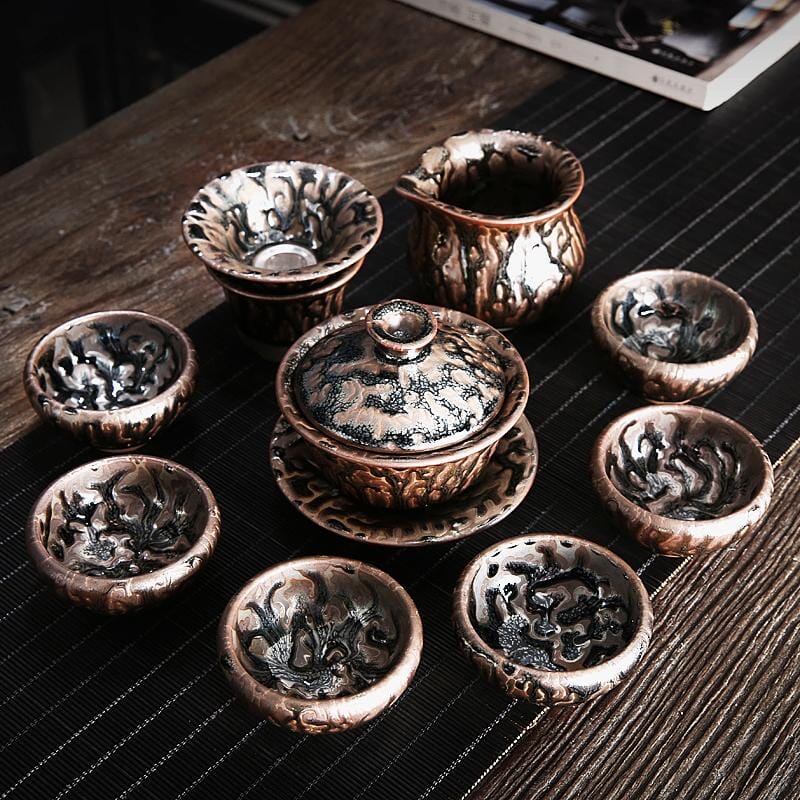
The cover photograph from the Oni Tea Set product gallery shows six small cups around a lidded bowl on a saucer, with a pitcher and a strainer resting in a holder. A dark mat, wooden tabletop, and part of a book are also visible. These are observations about that photograph; they do not confirm what is included in a current order.

Turn the scene into separate questions: How many cups come with my selected option? Does the brewing bowl include its lid and saucer? Is the strainer supplied with the holder beneath it? Is the mat listed as an included item? Leave an unanswered item marked β€œunconfirmed,” rather than deciding from its position in the photograph.

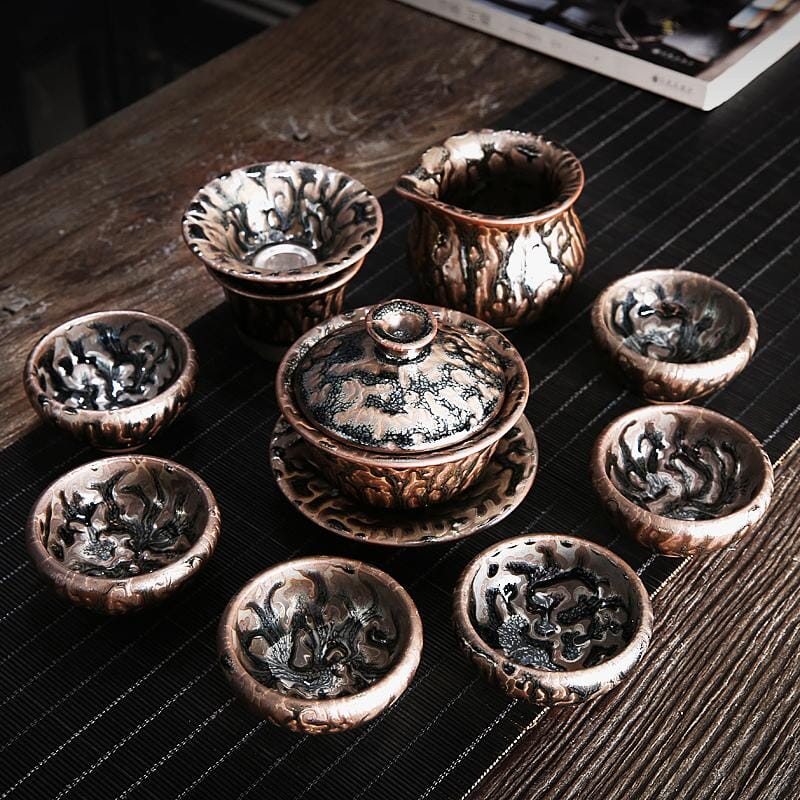
Oni tea strainer resting in a separate holder on a dark mat on a wooden table
The closer Oni gallery view separates the upper strainer from the holder underneath. Record them on separate checklist lines, then confirm whether the selected option includes both.

Make a four-column contents note

For each object, record its name, quantity, supporting statement, and unresolved question. This is more useful than copying a total piece count. Use the following examples as prompts, not as the contents of the Oni set:

  • Drinking cups: quantity stated for the selected option; ask if the photographs show extras.
  • Brewing vessel: bowl or pot plus its lid; list any separate saucer as another entry.
  • Serving accessories: pitcher, strainer, and strainer holder; confirm each item and quantity.
  • Table and transport items: tray, mat, cloth, and carrying case; record only what the selected listing explicitly includes.

A concrete example of itemized wording is Yunsho Tea’s starter-set listing: its β€œWhat’s Included” section lists one gaiwan, two cups, one pitcher, and one carrying case. Another section on that same page mentions a tea cloth. That difference is a reason to ask for confirmation before relying on the cloth being included. This example applies to that listing, not to Tenmokus products.

Resolve gaps before comparing sets

Mark each line as confirmed, explicitly excluded, or unconfirmed. If the photographs and written descriptions disagree, send one concise question with the selected option and the objects in doubt. Keep the reply with your order notes. Do not turn β€œnot mentioned” into either β€œincluded” or β€œdefinitely excluded.”

Copyable question: For [product link] and option [name], could you confirm the included pieces and quantities? Please specify the cup count, lid and saucer, pitcher, strainer and holder, and any tray, mat, cloth, or carrying case. Which objects in the photographs are for presentation only?

Then compare the confirmed list with the pieces you need for your own brewing routine. Set contents, serving quantity, and table space are separate decisions: use the gaiwan-to-cup serving plan for portion planning and the tea tray fit check for arranging the pieces you will use.

Choose with the list beside you

Browse the Tenmokus tea set collection, open a candidate product, and complete the contents note for that exact option. If a necessary piece remains unconfirmed, resolve it before ordering. The aim is a set that matches your intended routine, with a written record of what you expect to receive.
Quick answers for Tenmoku teaware shoppers

Use this guide to connect the article topic with practical buying decisions: what Jianzhan Tenmoku teaware is, who it suits, how to choose a piece, and how to care for it after purchase.

How to use this guide before buying

Read the article first for the main explanation, then compare the product photos, glaze variation, form, seller clarity, return policy, and whether the piece fits daily tea, display, collecting, or gifting.

Common buying mistakes to avoid

Avoid choosing only by dramatic claims, copied photos, unusually low prices, or vague master language. A better decision uses visible product details, clear use case, realistic care needs, and trustworthy shop policies.

Recommended next step

After reading, compare a few real products side by side by size, glaze family, rim shape, capacity, price, and gift suitability instead of relying on one photo or one keyword.

What is Jianzhan Tenmoku teaware?

Jianzhan Tenmoku teaware is ceramic tea ware known for dark mineral-glaze effects and natural kiln variation. Common forms include tea cups, bowls, teapots, tea sets, and matcha bowls.

Who is it best for?

It is best for tea drinkers, ceramic collectors, and gift shoppers who value functional objects with visible handmade character. It is not ideal if you need every piece to look exactly identical.

How do I care for it?

Hand wash with warm water, avoid abrasive cleaners, and dry fully before storage. Gentle daily use helps preserve the surface and keeps the glaze easy to inspect over time.

How do I choose the right Tenmoku piece?

Choose by the main use first: daily tea, matcha, Gongfu brewing, display, or gifting. Then compare capacity, rim shape, glaze family, photos, and whether natural variation is acceptable for your needs.

Is Jianzhan Tenmoku teaware good as a gift?

Yes. It works well for tea lovers, ceramic collectors, birthdays, holidays, and housewarming gifts because it is both usable and visually distinctive. For gifts, choose an easy-to-use form and a glaze style with clear photos.

Related products and categories

Compare the guide above with real Tenmokus categories and representative pieces. Start with the use case, then compare glaze style, form, price, and whether the piece is mainly for daily tea, display, collecting, or gifting.

Handmade Tenmoku tea cups

Best for daily tea drinking, first Jianzhan purchases, ceramic gifts, and comparing glaze patterns across cup shapes.

Tenmoku tea sets

Best when you want a coordinated tea table, a hosting setup, or a complete gift instead of one individual cup.

Real vs fake Tenmoku guide

Use this guide to compare seller claims, glaze appearance, photos, and practical buying signals before choosing a piece.

Vivid Peacock

A representative Tenmoku tea cup to compare by glaze depth, cup shape, price, and gift fit.

Golden Peacock

Compare this piece when you want a clear visual reference for a gold-toned Tenmoku glaze style.

Fairy II

Use this product as another comparison point for handmade form, glaze variation, and gift suitability.

shop handmade Tenmoku tea cups compare Jianzhan teapots browse Tenmoku tea sets choose Tenmoku matcha bowls view Tenmoku tea cups read the real vs fake Tenmoku tea bowl guide browse Jianzhan buying guides learn about Tenmokus

From Tenmoku guide to teaware choice

Tenmokus is focused on handmade Jianzhan Tenmoku teaware for tea rituals, display, and gifting. If you are choosing after reading this guide, start with Tenmoku tea cups for daily tea tasting, Tenmoku teapots for loose leaf brewing, Tenmoku coffee cups for daily coffee, Tenmoku tea sets for coordinated gifts, Tenmoku matcha bowls for matcha preparation, Tenmoku beer cups for home bar drinkware, or Tenmoku sake sets for serving and display.

Related Tenmoku guides

Keep exploring Tenmoku care, gift ideas, teaware selection, and the difference between Tenmoku and Jianzhan.

View all

Tea Set Contents: Check Before You Order

Tea Set Contents: Check Before You Order

Before ordering a gongfu tea set, match the selected option to a written list of pieces and quantities. Use the photographs to identify questions, then confirm the answers in the listing or with the seller. Keep brewing vessels, separate accessories,...

Read more

Will This Tea Strainer Fit Your Pitcher?

Will This Tea Strainer Fit Your Pitcher?

To match a gongfu tea strainer to a serving pitcher, check where the strainer rests, how far its basket extends below that support, and whether it can be lifted away without catching the rim. A matching color or a single...

Read more

Will Your Tea Set Fit on a Gongfu Tray?

Will Your Tea Set Fit on a Gongfu Tray?

A gongfu tea tray fits your tea set only when its usable surface holds the pieces you plan to use and lets you lift, pour, and return them without moving another vessel out of the way. Before buying, mark out...

Read more